
How to Repair Tire Sidewall Damage on a RAV4: Is It Possible?
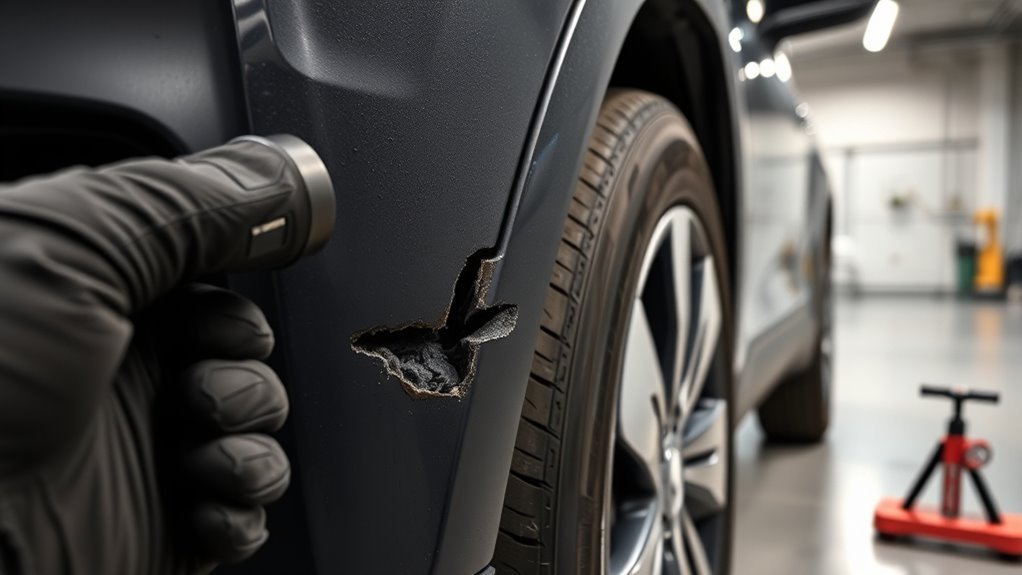
RAV4 tire sidewall damage is not something to “patch and hope for the best.” The sidewall carries load, flexes constantly, and protects the tire’s internal cords. A shallow scrape may only need monitoring, but a cut, bulge, exposed cord, air leak, or repeated pressure loss usually means the tire should be replaced, not repaired.
Quick Answer
Most RAV4 tire sidewall damage is not safely repairable. If the sidewall has a bulge, exposed fabric or cords, a deep cut, an air leak, or repeated pressure loss, replace the tire. Only shallow cosmetic scuffs with no leak, no bulge, and no cord exposure may be monitored after a professional inspection.
Key Takeaways
- Sidewall damage is different from a tread puncture; standard tire repairs are generally limited to the repairable tread area, not the sidewall.
- A bulge, bubble, exposed cord, visible fabric, air leak, or pressure loss means the tire should come off the vehicle and be replaced.
- Rubber cement is not a structural sidewall repair. At most, it can hold down a loose cosmetic rubber flap after the tire has been inspected.
- On an AWD RAV4, RAV4 Hybrid, or RAV4 Prime, replacement tires should closely match the other tires in size, type, tread pattern, and tread depth.
At a Glance
| Time Required | 5–10 minutes for a basic visual check; longer if a shop removes the tire for inspection. |
| Difficulty | Easy for spotting obvious damage; professional inspection is needed for any questionable sidewall damage. |
| Tools Needed | Flashlight, tire pressure gauge, tread-depth gauge or penny, soapy water, and your RAV4 tire placard or owner’s manual. |
| Cost | A visual check may be free, but structural sidewall damage usually means paying for replacement, mounting, balancing, and any needed tire matching. |
Can RAV4 Tire Sidewall Damage Be Repaired?
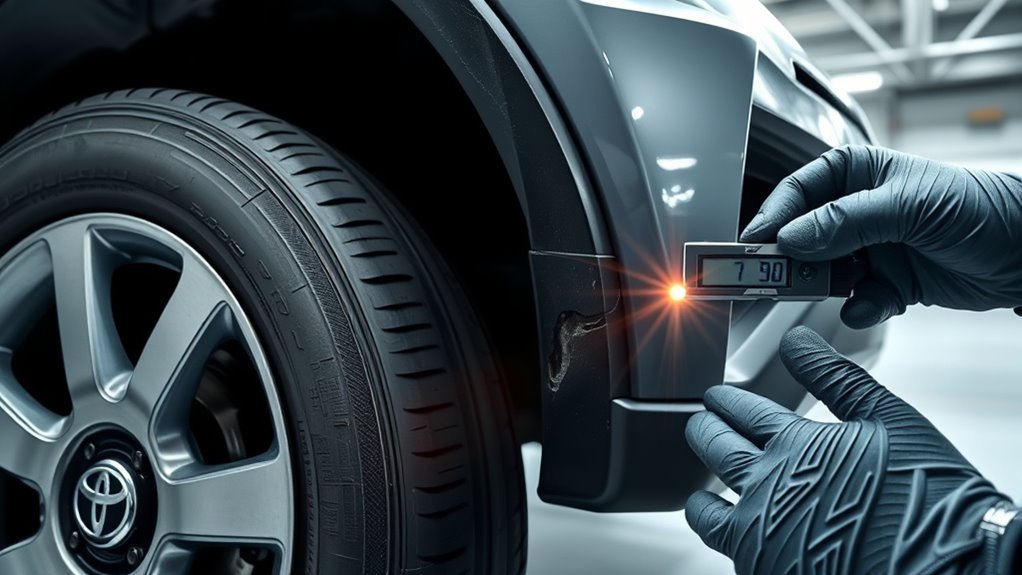
In most cases, RAV4 tire sidewall damage should not be repaired. Industry tire-repair guidance limits proper repairs to the tread area under strict conditions, not to the sidewall. The U.S. Tire Manufacturers Association says a repair should only be considered when the damage is in the tread area and the puncture injury is no larger than 1/4 inch.
The reason is simple: the sidewall bends every time the tire rolls. A patch, plug, glue, or rubber cement does not restore the tire’s internal cord strength. If the tire body is damaged, the weak spot can grow under heat, speed, load, and cornering forces.
Warning: Do not drive normally on a RAV4 tire with a sidewall bulge, exposed cords, a deep sidewall cut, or visible air loss. Slow down, pull over safely, and use the spare, emergency kit, or roadside assistance.
Sidewall Damage: Replace Now or Monitor?
Use this table as a first screen, not as a final diagnosis. When in doubt, have the tire removed from the wheel and inspected by a qualified tire technician.
| What You See | What It Usually Means | Best Action |
| Light curb scuff with no cut, no bulge, no exposed fabric, and normal pressure | Likely cosmetic outer-rubber abrasion | Monitor closely and ask a tire shop to inspect it during your next service. |
| Loose rubber flap but no visible cords and no pressure loss | May be cosmetic, but the depth matters | Have it inspected. Do not treat glue as a safety repair. |
| Cut, split, or crack deep enough to show fabric or cords | The tire casing may be compromised | Replace the tire. |
| Bulge, bubble, knot, or raised area on the sidewall | Internal cord damage or ply separation is likely | Stop using the tire and replace it. |
| Air bubbles during a soapy-water test or repeated pressure loss | The tire is leaking or cannot hold pressure reliably | Do not keep driving on it; have it inspected and replaced if the leak is in or near the sidewall. |
Signs Your Tire Needs Repair or Replacement
Not every tire mark is an emergency, but sidewall warning signs deserve fast attention. Toyota’s RAV4 tire guidance says tires should be replaced if they have cuts, splits, or cracks deep enough to expose fabric, bulges indicating internal damage, repeated flats, or damage that cannot be properly repaired because of its size or location. You can review Toyota’s tire guidance in the Toyota RAV4 owner’s manual.
Common Damage Indicators
Look for bulges, bubbles, cuts, cracks, missing chunks, exposed cords, or sidewall deformation. A bulge is one of the clearest signs of internal damage. Michelin explains that a sidewall bulge or bubble means the internal cords have been damaged, allowing air to move between tire layers; that is a replacement issue, not a cosmetic issue. See Michelin’s tire-repair guidance here: Can my tire be repaired?
Tread Wear Assessment
Sidewall damage is the main concern here, but tread condition still affects your replacement decision. New passenger tires often start around 10/32 or 11/32 inch of tread, while treadwear indicators appear at 2/32 inch. NHTSA notes that tires lose traction rapidly when worn to 2/32 inch, and Tire Rack recommends planning earlier replacement for wet or snowy driving. For practical safety, start shopping around 4/32 inch for frequent rain and around 5/32 inch for snow. See NHTSA’s treadwear indicator interpretation and Tire Rack’s replacement-depth guidance.
Structural Integrity Checks
Check the damaged area from several angles with a flashlight. If you see cords, fabric, a spreading crack, a bulge, or a low-pressure warning that returns after inflation, the tire’s structure may be compromised. Also check the inside sidewall if possible, because curb and pothole impacts can damage the inner sidewall where you cannot easily see it.
Note: Tire pressure printed on the tire sidewall is the tire’s maximum pressure, not your RAV4’s recommended inflation pressure. Use the tire placard on the driver’s door jamb or the owner’s manual.
How to Assess Tire Damage: A Step-by-Step Guide
- Park safely. Move away from traffic, set the parking brake, and turn on hazard lights if you are roadside.
- Check tire pressure. If the tire is losing air quickly, do not keep driving. Use the spare, emergency kit, or roadside assistance.
- Inspect the sidewall with a flashlight. Look for cuts, cracks, missing rubber, bubbles, knots, exposed fabric, or visible cords.
- Check for leaks. Spray soapy water on the suspicious area. Growing bubbles mean air is escaping.
- Measure tread depth. Use a tread-depth gauge if you have one. If tread is low, replacement may make more sense even if the sidewall mark is minor.
- Check the tire age. Find the DOT date code. Older tires may need closer professional inspection even if tread remains.
- Inspect the wheel and bead area. A curb strike can damage the rim or bead seal, causing slow leaks.
- Have the tire demounted if there is any doubt. A shop can inspect the inner liner and casing, which you cannot fully evaluate from the outside.
A sidewall that looks “almost fine” on the outside can still hide internal cord damage after a pothole or curb impact.
When to Use Rubber Cement for Tire Repairs?
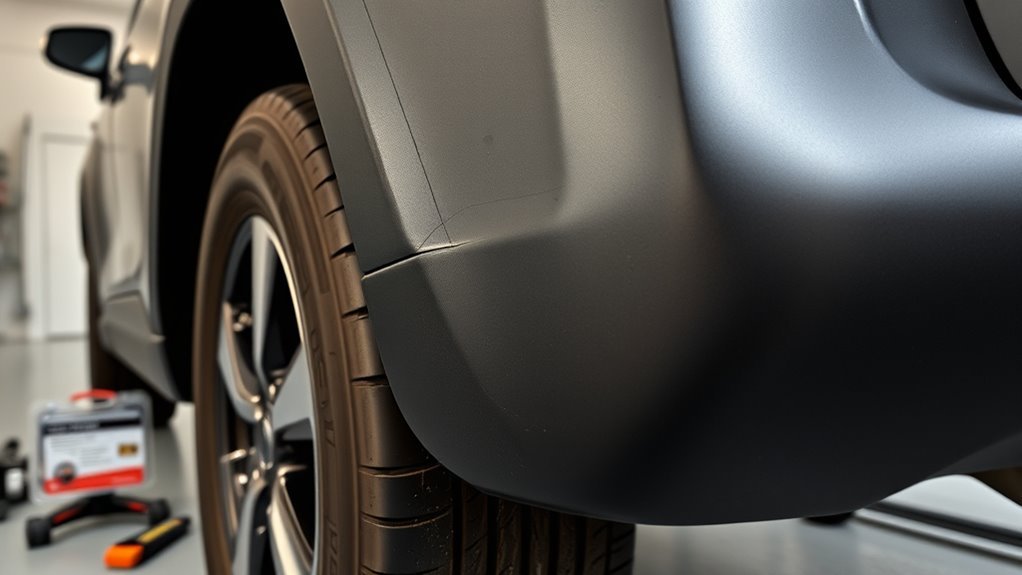
Do not use rubber cement as a structural tire sidewall repair. Rubber cement does not restore damaged cords, seal a dangerous sidewall injury, or make a bulge safe. If the sidewall is cut deeply, leaking, bulging, or showing fabric, the tire should be replaced.
The only narrow use case is cosmetic: a tire professional may approve trimming or tacking down a thin loose flap of outer rubber if there is no cord exposure, no leak, no bulge, and no internal damage. Even then, the rubber cement is only keeping the flap from peeling; it is not repairing the tire’s strength.
Pro Tip: Take a clear close-up photo of the damage and a wider photo showing the whole tire. This helps the tire shop understand the location and severity before you arrive.
What Happens If You Ignore Tire Damage?
Ignoring sidewall damage can lead to sudden tire failure, especially at highway speed, under heavy load, in hot weather, or after another pothole impact. NHTSA’s tire-safety guidance highlights tire pressure checks, rotation, tread checks, and inspection for cuts, bulges, bumps, cracks, and other irregularities as key steps for reducing tire-failure risk. You can review NHTSA’s tire safety information here: NHTSA TireWise.
On a RAV4, a damaged tire can also affect handling, braking, traction control, and AWD behavior. If one tire suddenly loses pressure, the vehicle may pull hard to one side. If the tire fails completely, steering control can become difficult very quickly.
Alternatives to Repair: Should You Get a New Tire?
If sidewall damage is structural, replacement is the safe alternative. The question then becomes whether you need one tire, two tires, or all four.
| Situation | Recommended Direction |
| One tire has sidewall damage; other tires are nearly new | A matching single replacement may be acceptable if size, model, load rating, speed rating, and tread depth are very close. |
| One tire is damaged; the other three are partly worn | Ask the shop whether a shaved new tire or a closely matched used tire is appropriate. Do not create a large tread-depth mismatch. |
| AWD RAV4, RAV4 Hybrid, or RAV4 Prime | Match all four tires as closely as possible. If tread depths differ significantly, replacing all four may protect the drivetrain. |
| Two tires are worn or damaged | Replace in pairs only if the remaining tires are compatible and safe. Many AWD situations still favor four matching tires. |
How to Choose the Right Replacement Tire for Your RAV4
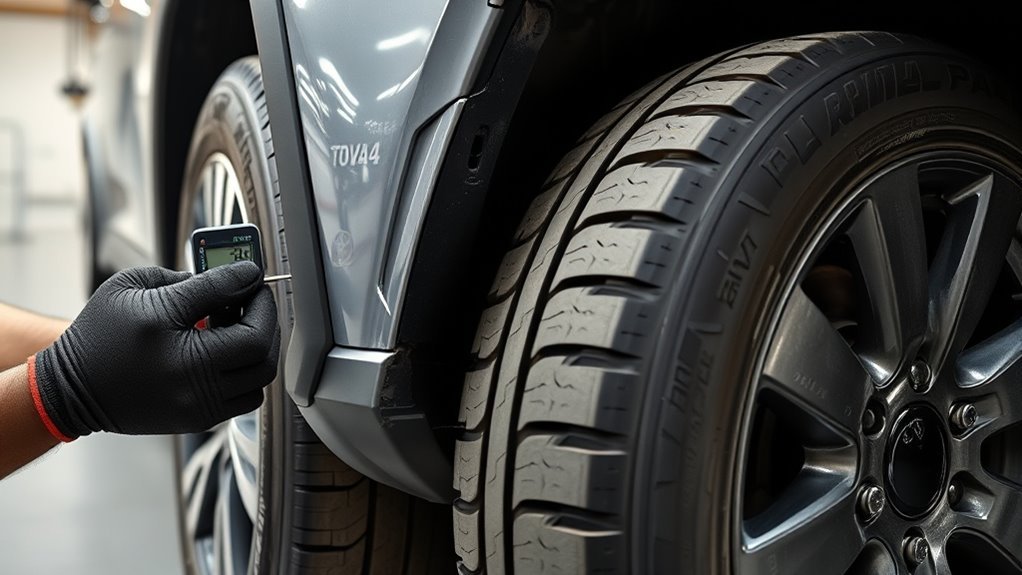
Start with the tire placard on the driver’s door jamb. Match the tire size, load index, speed rating, and recommended pressure for your exact RAV4 model and trim. Then match the tire type and category: all-season, all-weather, winter, touring, highway, or performance.
For AWD and hybrid RAV4 models, be extra careful about matching rolling diameter. Tires with very different tread depths can rotate at slightly different speeds, which may stress AWD components or confuse traction systems. If only one tire is being replaced, ask whether the new tire should be shaved to match the others or whether all four should be replaced.
Also avoid mixing run-flat and non-run-flat tires, different tread patterns on the same axle, or different load ratings unless Toyota and the tire manufacturer approve that setup for your vehicle.
Tips for Maintaining Tire Health for Long-Term Safety
- Check pressure monthly. Use the RAV4 door placard pressure, not the maximum pressure molded into the tire sidewall.
- Rotate tires on schedule. Follow the Toyota maintenance schedule or your tire shop’s recommendation to keep wear even.
- Inspect after impacts. Check the sidewall after hitting a curb, pothole, road debris, or sharp object.
- Use a tread-depth gauge. It is more accurate than guessing from appearance alone.
- Watch for vibration or pulling. These can point to tire, wheel, alignment, or suspension damage after an impact.
- Store seasonal tires correctly. Keep them cool, dry, clean, and away from direct sunlight and chemicals.
Frequently Asked Questions
How much does it cost to repair sidewall damage on a tire?
Most tire shops will not repair structural sidewall damage because it is not considered a safe standard repair. If the damage is cosmetic, the inspection may be inexpensive or free. If the sidewall is cut, bulging, leaking, or showing cords, budget for tire replacement, mounting, balancing, and any needed AWD tire matching.
How serious is tire sidewall damage?
It can be very serious. A shallow scuff may be cosmetic, but a bulge, exposed cord, deep cut, air leak, or repeated pressure loss can signal internal tire damage. Because the sidewall flexes constantly, structural damage can worsen quickly and may lead to sudden tire failure.
Can a tire shop fix the sidewall of a tire?
A reputable shop usually will not patch, plug, or glue a damaged sidewall. Standard passenger-tire repairs are generally limited to the repairable tread area. A shop may inspect a cosmetic scuff or loose rubber flap, but structural sidewall damage usually requires replacement.
How close to the sidewall is a tire not repairable?
If the injury is in the sidewall or shoulder area, treat it as non-repairable unless a qualified tire technician says otherwise after inspection. Proper repairs are generally limited to the tread/crown area and must meet strict size and location rules.
Can I drive my RAV4 with a small sidewall chunk missing?
Only if it is clearly a shallow cosmetic chunk with no exposed fabric, no cords, no leak, no bulge, and normal pressure. If you are unsure, do not take highway trips on it. Have a tire shop inspect it first.
Do I need to replace all four tires on an AWD RAV4?
Not always, but the replacement tire must closely match the others. On AWD models, tires should be as similar as possible in size, construction, tread design, and tread depth. If the other tires are worn, replacing all four or shaving the new tire may be the safer choice.
Sources
- U.S. Tire Manufacturers Association — Tire Repair Basics — supports the tread-area-only repair guidance and 1/4-inch puncture limit.
- NHTSA TireWise — supports tire-pressure, tread, rotation, and damage-inspection safety guidance.
- Toyota RAV4 Owner’s Manual — Tires — supports Toyota-specific replacement triggers for cuts, exposed fabric, bulges, repeated flats, and unrepairable damage.
- Michelin — Can My Tire Be Repaired? — supports the warning that sidewall bulges indicate internal cord damage and require replacement.
- NHTSA Interpretation 11497AWKM — supports the 2/32-inch treadwear-indicator reference.
- Tire Rack — When Should Tires Be Replaced? — supports practical tread-depth planning for wet and snowy conditions.
Conclusion
RAV4 tire sidewall damage is repairable only in the most limited cosmetic sense. A shallow scuff with no leak, no bulge, and no exposed fabric may be monitored, but structural sidewall damage should be replaced. If you see a bulge, cords, fabric, deep cracking, or pressure loss, do not rely on rubber cement or a patch. Put safety first, get the tire inspected, and choose a replacement that matches your RAV4’s tire placard and drivetrain needs.

Related Articles

Toyota RAV4 TPMS Reset: Easy Steps That Work
Unlock the secrets to resetting your Toyota RAV4's TPMS effortlessly—discover the essential steps to ensure your tires are always safe.
Read More
Toyota RAV4 Tire Rotation: DIY Steps & Pattern
Take control of your Toyota RAV4's tire maintenance with our simple DIY rotation guide—discover the best steps for optimal performance and longevity!
Read More
Mix Tire Brands on a Toyota RAV4? Expert Guide
Keeping your RAV4 safe? Learn when mixing tire brands risks traction, ABS/TCS and AWD damage — and what exact matches you must insist on.
Read More