
What Does 107T Mean on a Tire? Load, Speed & Rating Guide
A 107T tire marking tells you two important things about the tire: how much weight it can carry and the speed category it was tested for. The number 107 is the tire’s load index, and the letter T is its speed rating. Together, they help you decide whether a tire matches your vehicle’s size, weight, towing, and daily driving needs.
Quick Answer
A 107T tire has a load index of 107, which equals 2,149 pounds (975 kg) per tire, and a T speed rating, which equals 118 mph (190 km/h) under controlled test conditions. Use 107T only if it matches or exceeds your vehicle’s placard and owner’s manual requirements.
Key Takeaways
- 107 is the load index, meaning the tire can support up to 2,149 pounds (975 kg) when used at the correct inflation and load conditions.
- T is the speed rating, meaning the tire is rated up to 118 mph (190 km/h) in controlled testing, not as a recommended road speed.
- A 107T tire can suit many SUVs, crossovers, minivans, and larger passenger vehicles, but only if the size and ratings match the vehicle placard.
- Do not install a tire with a lower load index or speed rating than your vehicle requires unless the vehicle manufacturer allows it.
- For towing, the tire rating is only one limit. You still need to follow the vehicle’s GVWR, GAWR, trailer rating, tongue weight, and recommended cold tire pressure.
What Does 107T Mean on a Tire?
“107T” is a compact tire service description. The 107 tells you the tire’s load-carrying capacity, while the T tells you the tire’s speed category. You will usually see this code after the tire size on the sidewall, such as after a size like P235/65R17.
| Code | What It Means | Value | What You Should Check |
|---|---|---|---|
| 107 | Load index | 2,149 lb / 975 kg per tire | Vehicle placard, axle ratings, load needs, and tire pressure |
| T | Speed rating | 118 mph / 190 km/h | Vehicle speed-rating requirement and tire condition |
When you compare tires, do not look at 107T by itself. Check the full tire size, load index, speed rating, construction type, and your vehicle manufacturer’s recommendation. The right tire fitment depends on the whole tire code, not just the final two or three characters.
[Products Worth Considering]

EVOULTES heavy duty tire inflator with an integrated gauge delivers accurate pressure readings from 10–120 PSI, helping you inflate, deflate, and check tires in one tool. The 16.5-inch extended dual-head air chuck with swivel base reaches hard-to-access dual wheel valves on trucks and RVs. A brass trigger core and side-mounted air release valve make operation smooth, with standard 1/4" NPT threading and quick-connect compatibility for easy setup.
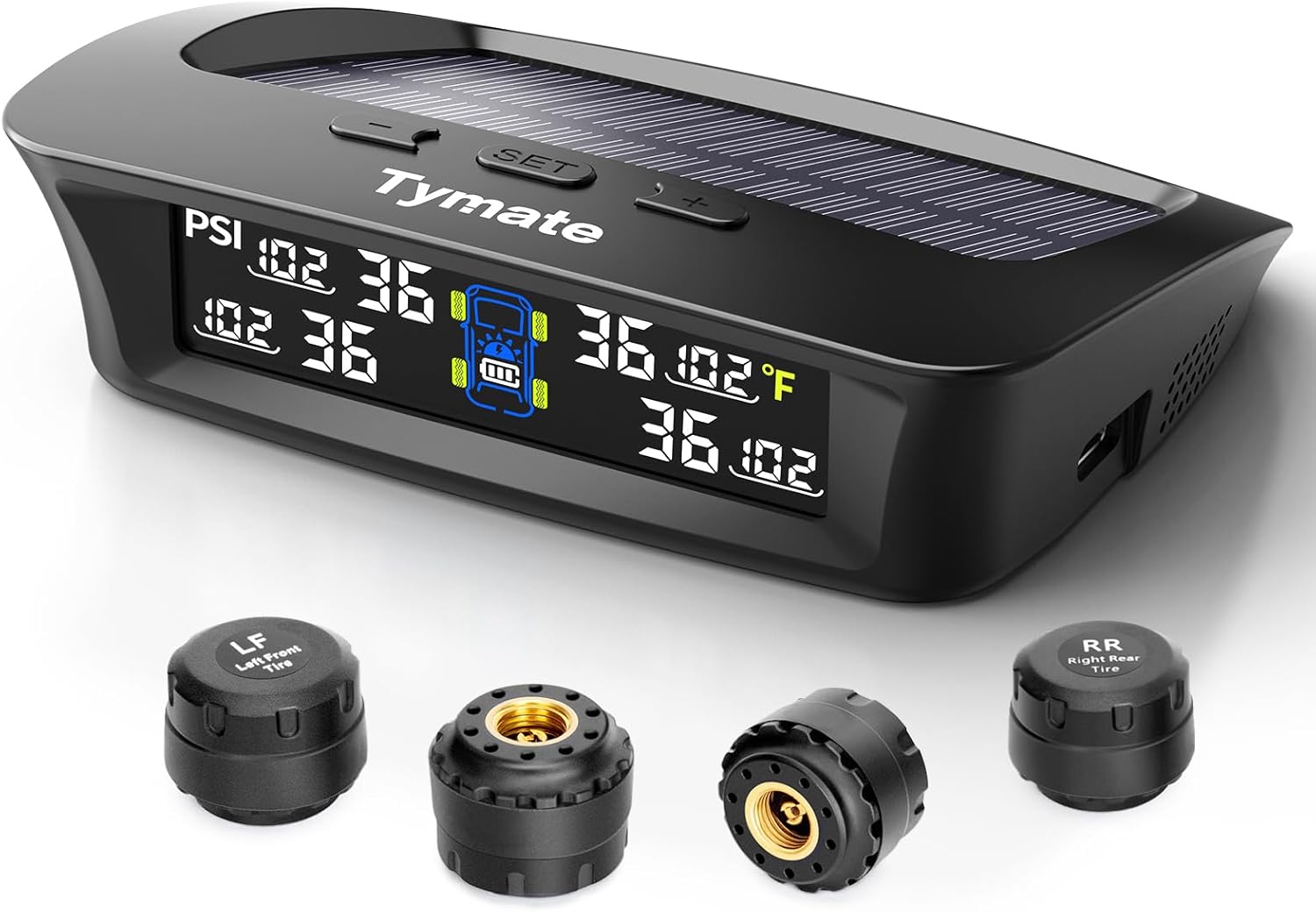
The Tymate TM3 RV TPMS delivers real-time tire pressure monitoring from 0 to 144 PSI with accurate readings and dependable wireless communication. It includes four external sensors with pre-pairing, six alarm modes for rapid leak, pressure extremes, temperature, and signal loss, plus an easy-reference setup for alert thresholds. Solar and USB-C charging help keep the display powered, while the color LCD and adaptive backlight improve visibility for safer driving and towing.

Keep RV, trailer, or truck dual-axle tires protected with waterproof, UV-resistant covers that help guard against sunlight, snow, rust, and dirt. The dual tire covers are easy to install with a rope/bungee fastener for a stable fit that won’t easily slip. Designed for 27–30 inch diameter wheels, they help maintain tire condition through harsh weather.
What the 107 Load Index Means
The 107 load index means one tire can carry up to 2,149 pounds (975 kg) under the correct load and inflation conditions. This rating is per tire, not the total payload your vehicle can carry.
That distinction matters. Four 107-rated tires may have a combined tire-load capacity that looks high on paper, but your vehicle’s actual safe carrying limit is still controlled by the manufacturer’s ratings, including GVWR, GAWR, tire size, and recommended cold tire pressure.
Note: Do not inflate a tire to the maximum pressure printed on the sidewall unless that pressure is required for the tire and load setup. For everyday driving, use the recommended cold tire pressure on the driver-side Tire and Loading Information Label or in the owner’s manual.
Choosing a tire with too low a load index can reduce safety margin, increase heat, and raise the risk of tire damage under load. A higher load index may be acceptable if the tire is the correct size and type for your vehicle, but it should not be used to ignore the vehicle’s weight limits.
Load index is also separate from the UTQG rating. UTQG helps compare treadwear, traction, and temperature grades on many passenger tires, while load index tells you how much weight the tire can carry.
What the T Speed Rating Means
The T speed rating means the tire is rated up to 118 mph (190 km/h) under controlled test conditions. It does not mean you should drive that fast. Real-world speed safety depends on legal limits, road surface, weather, load, tire pressure, tread depth, tire age, and vehicle condition.
| Speed Rating | Maximum Test Speed | Common Use |
|---|---|---|
| T | 118 mph / 190 km/h | Many passenger cars, crossovers, minivans, and SUVs |
| H | 130 mph / 210 km/h | Some touring, performance, and sport-oriented vehicles |
If your vehicle requires a T-rated tire, another T-rated tire in the correct size and load index may be suitable. If the placard or manual requires H, V, or another higher speed rating, do not downgrade to T unless the manufacturer specifically allows it. Seasonal tire type also matters, because consistent traction year-round depends on tread design, compound, and weather rating as well as speed rating.
Why Load and Speed Ratings Matter
Load and speed ratings define the tire’s operating limits. If the tire carries too much weight, runs underinflated, or is driven beyond its rating, it can build excess heat and stress. That can shorten tire life and increase the chance of failure.
The load index protects the tire from being overloaded. The speed rating shows the tire’s tested speed category. Both matter because a tire with the right tread pattern but the wrong load or speed rating may still be unsafe for your vehicle.
Warning: Never replace a tire with one that has a lower load index or speed rating than your vehicle requires unless the vehicle manufacturer approves that change. The lowest-rated tire on the vehicle can limit the whole set.
Tire ratings are not the only numbers to compare. You should also review tire size, service type, load range, treadwear ratings, traction grades, and age. Understanding treadwear ratings can help you compare tire life expectations, but treadwear does not replace the need for the correct load and speed rating.
Where to Find Tire Ratings on Your Vehicle
You can find tire information in two main places: the vehicle’s Tire and Loading Information Label and the tire sidewall. Use both, but understand that they do different jobs.
Tire Placard Location
The vehicle tire placard is usually on the driver-side door jamb. It lists the manufacturer’s recommended tire size and cold tire pressure. On some vehicles, similar information may also appear in the owner’s manual, glove compartment, or fuel filler area.
The placard is the best starting point when buying replacements because it tells you what the vehicle was designed to use. If your current tire sidewall shows 107T but the placard calls for a different size or rating, investigate before buying another set.
Sidewall Markings Check
The tire sidewall shows the tire’s actual size and service description. A marking like 107T tells you the load index and speed rating of that specific tire. You should check all four tires, not just one, because mismatched ratings can affect handling, braking, and stability.
The sidewall may also show DOT tire identification numbers, maximum pressure, maximum load, treadwear, traction, temperature, and tire type. These markings help you compare tires, but the recommended tire pressure should still come from the vehicle placard or owner’s manual.
When choosing replacements, also think about tire performance in rain and snow, because load and speed ratings do not tell you everything about wet braking, winter grip, or ride comfort.
Can You Use Tires Above or Below 107T?
You can usually use a tire with a higher load index or a higher speed rating than 107T if the tire is the correct size, construction type, and fitment for your vehicle. For example, a 107H tire has the same load index as 107T but a higher speed rating.
You should be much more careful about going below 107T. A lower load index reduces the amount of weight the tire is rated to carry. A lower speed rating can reduce heat resistance and high-speed capability. If the vehicle manufacturer requires 107T or higher, do not install 105T, 103T, or another lower-rated tire just because it fits the wheel.
Mixing ratings is also risky. If one tire has a lower load or speed rating than the others, that tire may become the limiting tire on the vehicle. For the most predictable handling, use matching tires across the axle, and ideally across all four wheel positions.
If you are comparing tires for long-term ownership, also consider the treadwear warranty, tread depth, road-noise reviews, wet traction, winter rating, and warranty terms.
[Products Worth Considering]
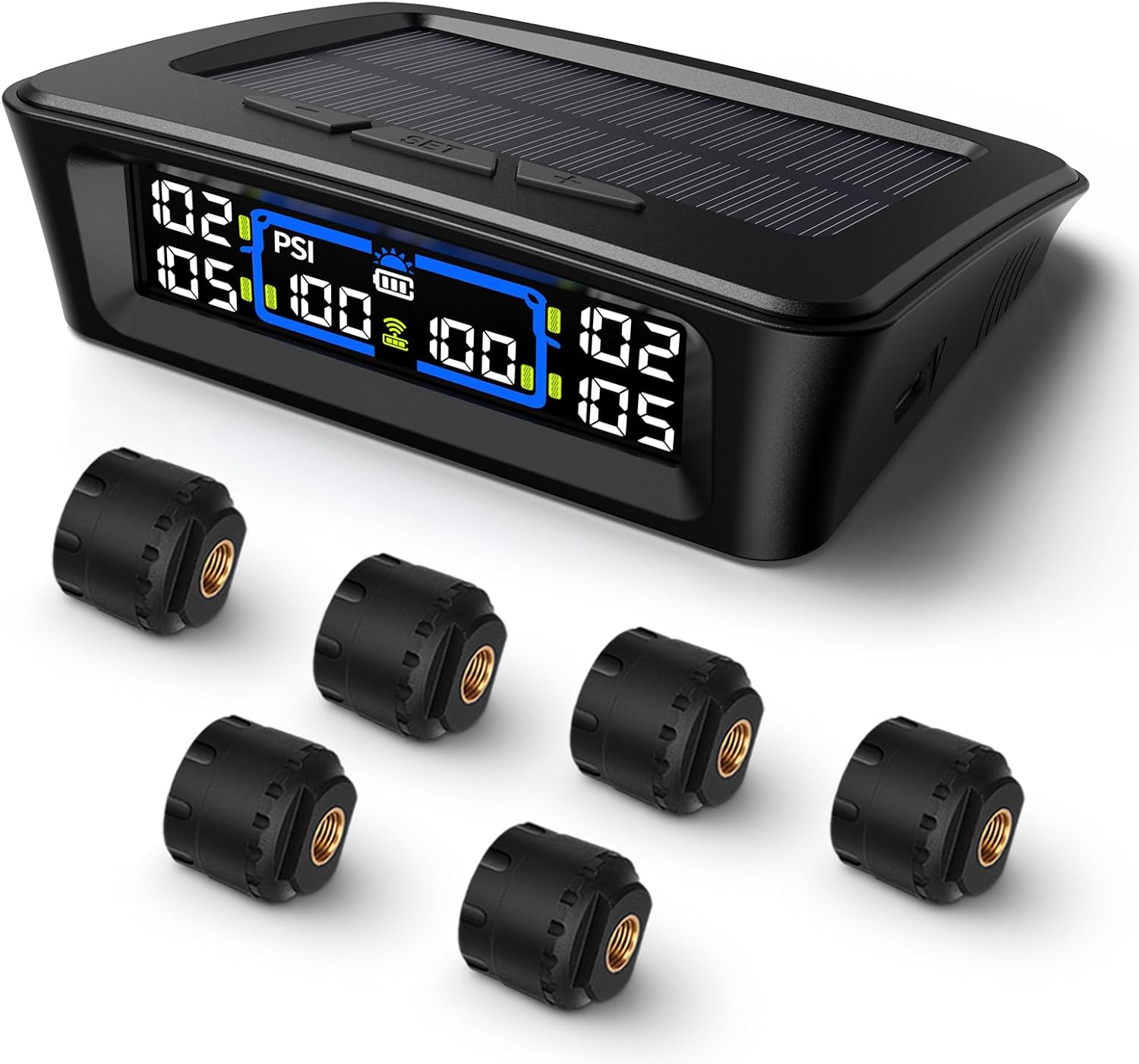
The Tymate TM12 RV TPMS delivers real-time tire pressure and temperature monitoring with a stable 433Hz display for safer long-distance driving. It supports simultaneous monitoring across vehicle and trailer zones, includes six alarm modes for pressure, temperature, leakage, battery, and signal loss, and features easy DIY installation with auto calibration. Power is supplied via USB-C charging or solar recharging, with a wide 0–144 PSI range and up to 50 ft signal coverage for RVs and towable trailers.
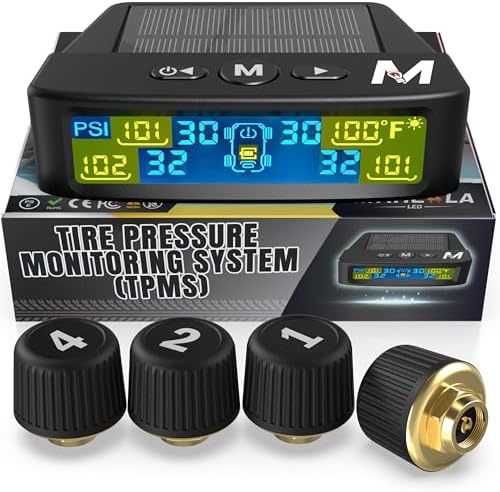
Marcala’s TPMS set of four sensors helps you monitor tire pressure and temperature in real time while driving, with updates every second. The bright color LCD uses auto-dimming for easy viewing, powered by dual solar and USB charging, and offers six alarm modes. Built for trailers, RVs, campers, trucks, and towing setups, the sensors support monitoring 1-4 wheels up to 98 PSI with IP67 waterproof protection.
Is 107T Good for Towing and Daily Driving?
A 107T tire can be a good fit for daily driving and light towing if your vehicle manufacturer specifies that rating or allows it. The 107 load index gives each tire a rated capacity of 2,149 pounds, and the T speed rating is above normal legal highway speeds in most places. Still, the tire rating is only one part of the full safety picture.
Towing Load Limits
For towing, do not treat 2,149 pounds per tire as your towing capacity. Your towing limit depends on the vehicle, hitch, axle ratings, trailer weight, tongue weight, cargo, passengers, tire size, and tire pressure.
| Towing Check | Why It Matters |
|---|---|
| Tire load index | Confirms the tire can support its rated share of vehicle and cargo weight. |
| GAWR | Shows the maximum allowed weight on each axle. |
| GVWR | Shows the vehicle’s maximum loaded weight. |
| Tongue weight | Adds weight to the rear axle and rear tires. |
| Cold tire pressure | Supports the rated load and helps control heat buildup. |
Before towing, check your owner’s manual, tire placard, trailer rating, and hitch rating. If you tow often or carry heavy cargo, ask a qualified tire professional whether your vehicle needs a higher load index, XL tire, LT tire, or a different pressure recommendation.
Daily Driving Fit
For everyday commuting, errands, and highway use, a 107T tire is often practical when it matches the vehicle’s required size and rating. It offers enough load capacity for many larger passenger vehicles and SUVs without requiring a high-performance speed category.
Keep the tires properly inflated, rotate them on schedule, inspect tread depth, and look for sidewall cracks, bulges, punctures, or uneven wear. In winter climates, the right winter tires can matter more for stopping and steering than a higher speed rating.
Pro Tip: When replacing tires, check the spare too. A full-size spare may age out even if it has plenty of tread because it spends years unused.
How to Match 107T Tires to Your Vehicle
To decide whether a 107T tire fits your vehicle, start with the vehicle placard and owner’s manual. Then compare the full tire code, not just the 107T service description.
- Match the tire size first. The size should match the placard unless the manufacturer or a qualified tire professional approves another size.
- Check the load index. The replacement tire should meet or exceed the required load index.
- Check the speed rating. The replacement tire should meet or exceed the required speed rating for your vehicle.
- Confirm tire type. Do not mix passenger, LT, XL, all-season, winter, or performance tires without understanding the effect on handling and load capacity.
- Check pressure guidance. Use the vehicle’s recommended cold tire pressure, and adjust only when the manufacturer or tire professional specifies it for the load.
- Check tire age. Review the DOT tire identification number, especially on old stock or seldom-used tires.
- Replace in matched sets when possible. Matching tires help maintain predictable steering, braking, traction, and stability-control performance.
If you want one tire to cover changing weather, compare tread pattern, compound, wet traction, winter rating, and all-season capability along with the 107T rating.
Load Index, Load Range, and XL: What Not to Mix Up
Load index and load range are related, but they are not the same marking. The 107 in 107T is a load index number. It tells you the tire’s rated carrying capacity from a standardized load-index chart.
Other markings can also appear on tires:
- SL usually means standard load on passenger tires.
- XL means extra load and may allow a higher load capacity at a higher inflation pressure, depending on the tire.
- LT means light truck tire construction and uses load ranges such as C, D, or E in many cases.
- Load Range C, D, or E is common on many LT tires and relates to strength and pressure capacity, not the same simple service description used on passenger tires.
This is why you should not assume that any 107T tire is automatically interchangeable with any other tire that looks similar. A passenger tire, XL tire, and LT tire can behave differently even when the size looks close.
Frequently Asked Questions
Which speed rating is better, H or T?
H has a higher speed rating than T. H is rated up to 130 mph, while T is rated up to 118 mph under controlled test conditions. That does not make H automatically better for every vehicle. The right choice is the tire that matches or exceeds your vehicle’s required size, load index, speed rating, and tire type.
What does 107 mean on a tire?
107 is the tire’s load index. A 107 load index equals 2,149 pounds, or 975 kg, per tire under the correct load and inflation conditions. It does not mean your vehicle can carry four times that number as payload, because vehicle weight limits and axle ratings still apply.
Is 103 better than 107 tires?
No, 103 is not better if your vehicle needs the higher load capacity of 107. A 103 load index carries less weight than 107. Choose the rating your vehicle requires, and do not downgrade load index just to save money or use a tire that happens to fit the wheel.
What is the difference between 105T and 107T tires?
The main difference is load capacity. A 105 load index carries 2,039 pounds per tire, while a 107 load index carries 2,149 pounds per tire. Both have the same T speed rating of 118 mph under controlled test conditions. If your vehicle calls for 107T, do not replace it with 105T unless the manufacturer allows it.
Can I replace 107T tires with 107H tires?
Usually yes, if the 107H tire is the correct size, type, and fitment for your vehicle. The load index is the same, and H has a higher speed rating than T. Still, check the vehicle placard and owner’s manual before changing speed rating, tire type, or load category.
Can higher tire pressure make a lower load index safe?
No. Do not use extra pressure to make up for a tire with a lower load index than your vehicle requires. Tire pressure must match the tire, vehicle, and load setup. If your vehicle requires 107T, choose a tire that meets or exceeds that rating.
Conclusion
A 107T tire means the tire has a 107 load index and a T speed rating. In practical terms, that means 2,149 pounds (975 kg) per tire and a 118 mph (190 km/h) controlled-test speed rating. Those numbers are useful, but they are not the whole decision.
Before buying 107T tires, check your vehicle placard, owner’s manual, tire size, axle ratings, towing needs, tire type, and cold pressure requirement. If 107T matches or exceeds the manufacturer’s requirement, it can be a sensible choice for daily driving and light-duty use. If your vehicle needs a higher rating, do not downgrade.
Sources
- NHTSA TireWise — tire safety, pressure checks, tire label guidance, inflation risks, and replacement basics.
- NHTSA Tire Buyers’ FAQ — owner’s manual and Tire and Loading Information Label guidance, tire types, and UTQG sidewall markings.
- NHTSA New Tire Purchase — monthly pressure checks, tire registration, and recall-alert guidance.
- Consumer Guide to Uniform Tire Quality Grading — treadwear, traction, and temperature grading background.

Related Articles

Best Tires for Audi Q5 2026: Premium SUV Tires for Smooth Daily Driving
You want tires that preserve the Audi Q5’s blend of comfort, composure and safety while you drive every day. Choosing the right set improves…
Read More
Best Michelin Tires for SUVs 2026: Premium Tires for Comfort, Grip, and Durability
You rely on your SUV for family trips, towing, commuting and everything in between, so choosing the right tires affects safety, ride quality and…
Read More
Best Tires for C5 Corvette 2026: Performance Tires for Grip, Handling, and Control
You drive a C5 Corvette for its agility and power, and the tires you choose are the single biggest factor that determines how that…
Read More