
How Weather Affects Mobile Tire Installation: What to Expect
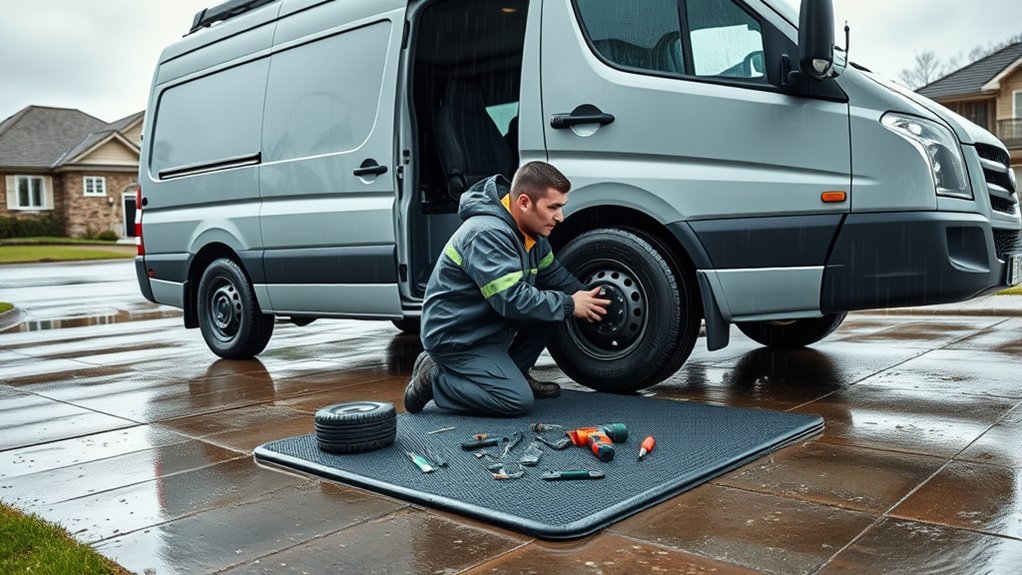
Weather can affect your mobile tire installation, especially when rain, snow, ice, wind, heat, or cold makes the work area harder to access. Light rain or mild temperature swings usually will not stop service, but severe storms, flooding, ice, poor visibility, or unsafe footing can delay the appointment. A few simple prep steps can help the technician work safely and keep your visit on schedule.
Quick Answer
Yes, weather can delay mobile tire installation when conditions make travel, lifting, tools, or footing unsafe. Light rain often allows service to continue, but heavy rain, snow, ice, high winds, lightning, flooding, or blocked access may require rescheduling. Heat and cold also affect tire pressure, so technicians should set pressure to the vehicle maker’s cold-pressure spec.
Key Takeaways
- Light rain may not stop service, but heavy rain, lightning, snow, ice, flooding, or poor visibility can delay the visit.
- Cold weather lowers tire pressure, while hot weather can raise it, so pressure should be checked against the vehicle placard when tires are cold.
- A flat, clear, well-lit work area helps the technician lift the vehicle and handle wheels safely.
- Snow, ice, and wet leaves can create slip hazards around the vehicle, so clear the driveway before the appointment.
- Keep your phone nearby because the provider may update your arrival window or reschedule if conditions become unsafe.
At a Glance
| Time Required | 5 to 10 minutes of prep before the technician arrives |
| Difficulty | Easy |
| Tools Needed | Phone, wheel lock key, tire pressure gauge, broom or shovel if the area is wet, snowy, or icy |
| Cost | Prep is usually free; service pricing varies by provider, tire size, travel distance, balancing, disposal, TPMS service, and emergency scheduling. |
How Weather Impacts Mobile Tire Installation
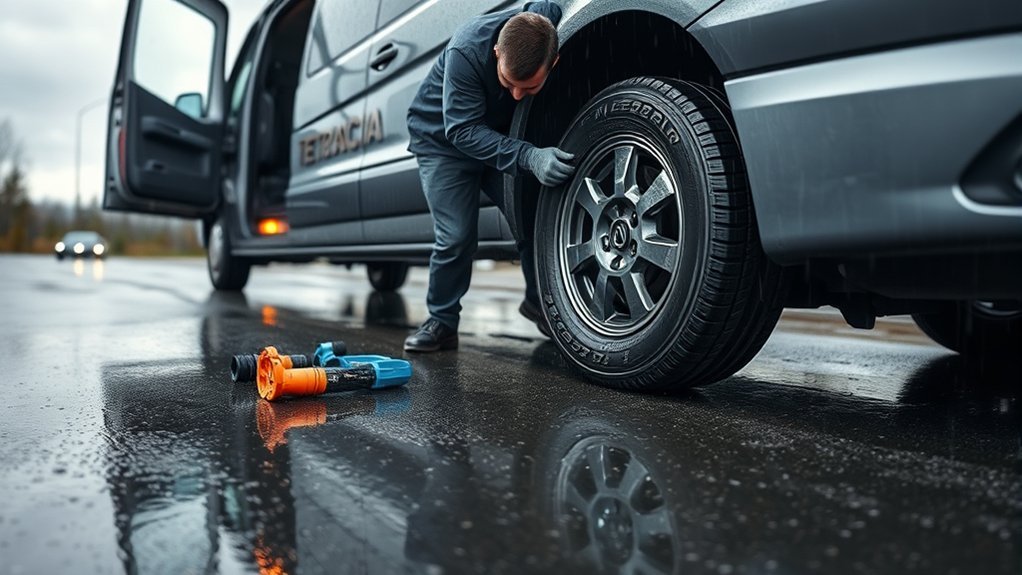
Weather affects mobile tire work in two main ways: it changes tire pressure, and it changes the safety of the work area. A technician needs stable footing, room for a jack or lift equipment, clear access to the vehicle, and enough visibility to handle lug nuts, wheels, and tire-pressure checks correctly.
Hot weather can raise tire pressure, while cold weather can lower it. Tire Rack explains that tire pressure changes by about 2% for every 10°F change in air temperature, which is often close to the common rule of about 1 PSI for many passenger tires. That is why the technician should set pressure based on the vehicle maker’s cold-pressure specification, not the maximum pressure shown on the tire sidewall.
The correct pressure is usually listed on the tire information placard on the driver’s door jamb or in your owner’s manual. NHTSA and Transport Canada both recommend using the vehicle manufacturer’s cold inflation pressure for safer tire performance.
Wet, snowy, or icy weather can also slow the job. Tools are harder to control when surfaces are slick, and the technician may need extra time to stabilize equipment and move wheels safely. Snow and ice can block the service vehicle, hide uneven ground, or create slip hazards around the car.
Warning: Do not ask a mobile tire technician to work in lightning, floodwater, deep snow, heavy ice, or on a narrow roadside shoulder. If the work area is unsafe, rescheduling is the right choice.
High winds can create another problem, especially when the technician is handling larger tires, working beside a van or SUV, or using equipment that needs steady positioning. The service may still happen, but the provider can delay it if wind makes lifting, wheel handling, or roadside travel unsafe.
Understanding the importance of all-season tires can also help you choose tires that fit changing weather, though proper installation conditions still matter on appointment day.
[Products Worth Considering]

EVOULTES heavy duty tire inflator with an integrated gauge delivers accurate pressure readings from 10–120 PSI, helping you inflate, deflate, and check tires in one tool. The 16.5-inch extended dual-head air chuck with swivel base reaches hard-to-access dual wheel valves on trucks and RVs. A brass trigger core and side-mounted air release valve make operation smooth, with standard 1/4" NPT threading and quick-connect compatibility for easy setup.

This portable cordless tire inflator delivers up to 160 PSI with fast 17 L/min airflow to help you quickly top up tires and get back on the road. It features dual power mode, running on a 21V rechargeable battery or a 12V DC adapter for convenient roadside use. An automatic shut-off with digital pressure gauge helps prevent overinflation, and a built-in LED light improves visibility in low-light conditions.

The JACO FlowPro Tire Inflator measures, inflates, and airs down tires up to 100 PSI with battery-free operation and ±2% accuracy after calibration. It features a glowing pressure dial for night visibility, a heavy-duty steel build with a hybrid hose, and a precision push-to-inflate thumb trigger. The patented Lightning Air Chuck locks on for a secure seal, and the kit includes quick-connect hardware for easy inline use with your air compressor.
When Mobile Tire Installation Gets Delayed
Mobile tire installation usually gets delayed when the technician cannot reach you safely or cannot work around the vehicle safely. Light rain, mild cold, or normal summer heat may only add a few minutes. Severe weather can stop the appointment completely.
Expect a possible delay if your area has heavy rain, flooding, snow buildup, ice, lightning, severe fog, strong winds, or blocked roads. These conditions affect visibility, travel time, footing, and equipment control. OSHA recommends clearing snow and ice from walking surfaces quickly to reduce slips, trips, and falls, which applies directly to the area around your parked vehicle.
Temperature can also affect timing. In cold weather, tire pressure may read low, valve stems may be stiffer, and snow or frozen ground can slow setup. In hot weather, the technician may wait for more stable readings or recheck pressure carefully if the vehicle has been sitting in direct sun.
Mobile tire service can usually handle normal weather, but it should not continue when travel, visibility, lifting, or footing becomes unsafe.
Most providers watch the forecast and may contact you before dispatching the technician. Keep your phone on, answer messages quickly, and be ready to offer a backup location if your driveway, parking lot, or street becomes unsafe.
For winter driving, dedicated winter tires can improve traction in cold conditions, but the installation still needs a safe place to work.
Can Rain, Snow, or Ice Stop Service?
Rain, snow, or ice can stop mobile tire service when the technician cannot work safely. The key question is not only whether the weather is uncomfortable. The real question is whether the technician can park, lift the vehicle, remove wheels, mount tires, torque lug nuts, and check pressure without avoidable risk.
- Light rain: Service often continues if the vehicle is parked on a flat, stable surface and the technician has room to work.
- Heavy rain: Service may be delayed if water reduces visibility, soaks the work area, or creates unsafe tool handling.
- Snow: Service may continue if the driveway or lot is cleared and the technician can access all four wheels.
- Ice: Service is more likely to be delayed because ice increases slip risk and can make jack placement unsafe.
- Lightning or severe storms: Service should pause or be rescheduled until conditions improve.
Wet weather also affects your first drive after the installation. AAA notes that proper tread depth and tire inflation are important for traction on wet roads. After the appointment, drive smoothly, avoid sudden braking, and give the new tires time to feel normal in the current conditions.
Note: A covered carport, garage opening, or level paved area can help in rain, but the technician still needs ventilation, safe lifting space, and enough room to move around the vehicle.
Before the visit, check the forecast and contact the provider if conditions worsen. Clear communication helps you avoid wasted time and gives the service team a chance to adjust the route, arrival window, or work location.
It also helps to understand how tire performance in wet conditions can affect your drive after installation, especially if rain starts right after the service.
How Heat and Cold Change Tire Pressure
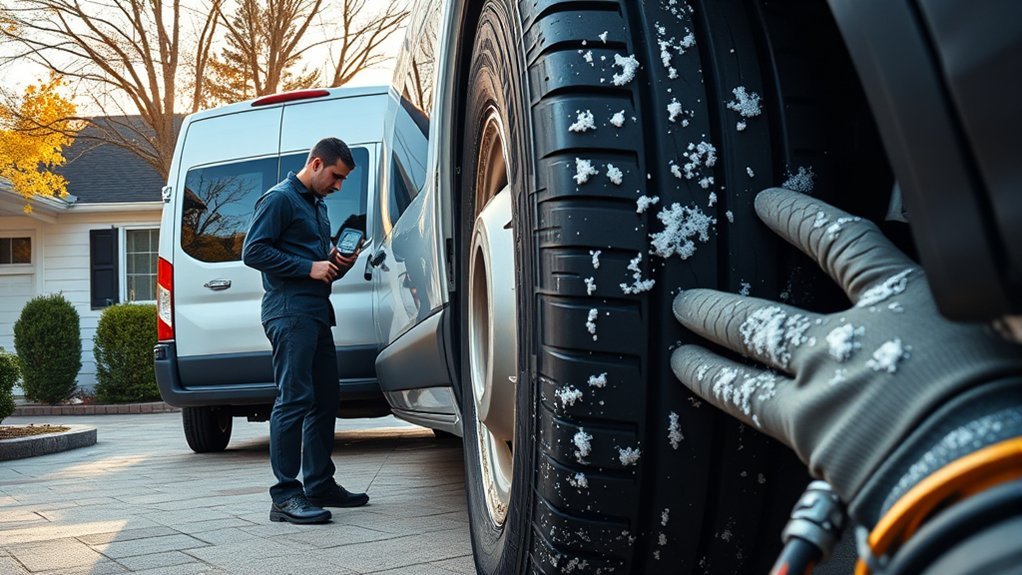
Heat and cold change the air pressure inside your tires. When the air gets warmer, pressure rises. When the air gets colder, pressure drops. That is why tire pressure warnings often appear after a cold night and why a pressure reading taken after driving may not match a cold reading taken in the morning.
A practical rule of thumb is that many passenger tires change by about 1 PSI for every 10°F change in temperature, though the exact amount depends on the tire and starting pressure. Tire Rack describes the change as roughly 2% for every 10°F. For everyday maintenance, the safest move is simple: check pressure when the tires are cold and match the vehicle placard.
Do not inflate tires to the maximum pressure printed on the sidewall unless that is specifically required for your vehicle and load setup. The sidewall number is a tire limit, not the normal recommended pressure for most passenger vehicles.
Underinflation can increase heat buildup, wear, and fuel use. Overinflation can reduce the tire’s contact patch and make the ride harsher. Both problems can reduce control, especially in rain or snow.
Pro Tip: If a technician installs tires on a very hot or very cold day, recheck the pressure the next morning before driving far. Use a reliable gauge and the pressure listed on your vehicle placard.
Maintaining proper tire pressure also supports better fuel efficiency, tread life, and wet-road traction.
How to Prepare for Weather Delays
Good preparation can help your appointment stay on track. You do not need to do the technician’s job, but you should make the vehicle easy and safe to reach.
- Check the forecast: Look 24 hours before the appointment and again on the morning of service.
- Park on a flat surface: Choose a driveway, paved lot, or level area with enough room around every wheel.
- Clear access: Remove snow, ice, wet leaves, debris, bikes, trash bins, and anything that blocks the technician’s path.
- Have the wheel lock key ready: Place it in the cup holder, center console, or another easy-to-find spot.
- Keep pets and children away: Give the technician a clear work zone.
- Improve lighting: Turn on exterior lights if the appointment is early, late, rainy, or cloudy.
- Answer provider updates: Keep your phone nearby in case the arrival window changes.
If you live in an apartment or use street parking, ask the provider what they need before the technician arrives. Some mobile tire companies need private-property access, a certain amount of clearance, or a safer alternate spot away from traffic.
You should also plan a backup date or backup location during storm season. A covered but open area can help with rain, while a cleared driveway can help after light snow. If the technician says the location is unsafe, do not argue. Move the vehicle if possible or reschedule.
Certain tire types, like all-season tires, can handle varied conditions, but tire type does not remove the need for safe installation access.
[Products Worth Considering]

This portable cordless tire inflator delivers fast, efficient inflation for cars, motorcycles, bikes, and sports balls with a digital pressure gauge. Use the one-click PSI preset with auto shut-off for accurate, hands-free topping to your target pressure up to 150 PSI. It’s compact and rechargeable with a built-in emergency LED light plus valve adapters and accessories for quick, ready-to-go use.
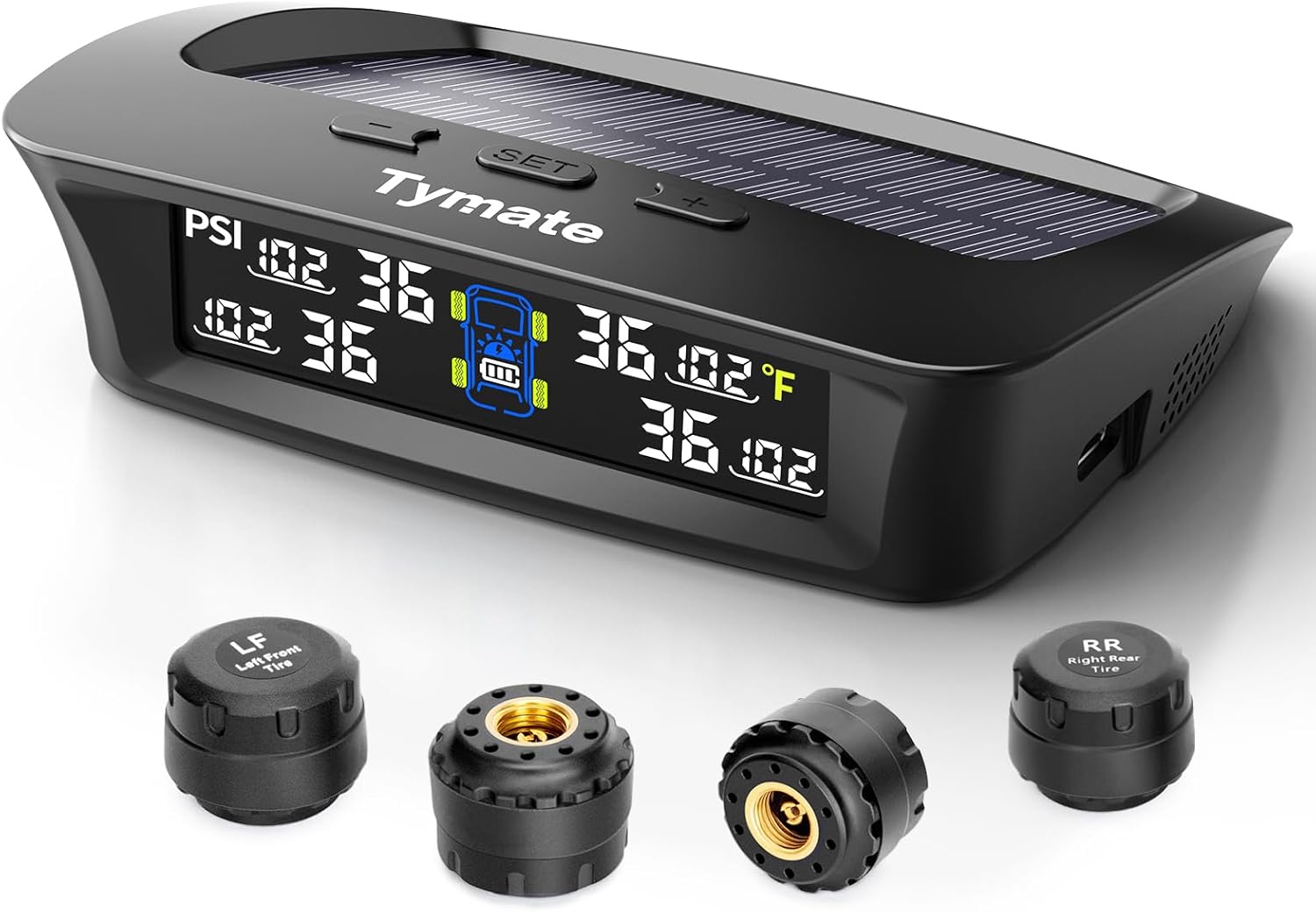
The Tymate TM3 RV TPMS delivers real-time tire pressure monitoring from 0 to 144 PSI with accurate readings and dependable wireless communication. It includes four external sensors with pre-pairing, six alarm modes for rapid leak, pressure extremes, temperature, and signal loss, plus an easy-reference setup for alert thresholds. Solar and USB-C charging help keep the display powered, while the color LCD and adaptive backlight improve visibility for safer driving and towing.
After-Installation Weather Checklist
Weather still matters after the technician leaves. Take two minutes to confirm the basics before your first long drive.
- Check tire pressure cold: Recheck pressure the next morning if the appointment happened during a major temperature swing.
- Watch the TPMS light: If the tire pressure monitoring system stays on after driving a short distance, contact the provider.
- Drive gently at first: Rain, snow, or ice can make new tires feel different until you adjust.
- Review the invoice: Confirm whether mounting, balancing, valve stems, TPMS service, disposal, or rotation was included.
- Follow torque guidance: If the provider recommends a lug nut recheck after a short driving distance, follow that instruction.
If the weather changes sharply after installation, do not rely only on yesterday’s reading. Tires respond to temperature changes quickly, and a cold morning can make pressure look lower than it did during a warm afternoon appointment.
Frequently Asked Questions
Can mobile tire installation happen in light rain?
Yes, mobile tire installation can often happen in light rain if the vehicle is parked on a flat, stable surface and the technician can work safely. Heavy rain, lightning, flooding, poor visibility, or slick footing may lead to a delay or rescheduled appointment.
What is the 3 tire rule?
The 3 tire rule usually means you should avoid replacing only one tire when the other three are badly worn. Many vehicles handle better when tires are replaced in pairs or as a full set, especially on all-wheel-drive vehicles. Check your owner’s manual and ask the tire provider before mixing new and worn tires.
What is the 7/7 rule for winter tires?
The 7/7 rule is a common winter-tire planning guideline: install winter tires when temperatures stay near 7°C or 45°F and below, and switch back when temperatures stay above that range. Transport Canada notes that all-season and summer tires begin to lose elasticity below 7°C, while winter tires keep better grip in colder conditions.
How much air does a mobile home tire take?
A mobile home or trailer tire does not use one universal pressure. The correct PSI depends on the tire size, load rating, axle load, and manufacturer guidance. Check the tire sidewall, vehicle placard, trailer documentation, or service manual before travel. Do not guess based on passenger-car tire pressure.
How much does mobile tire installation cost?
Mobile tire installation cost varies by provider, location, travel distance, tire size, vehicle type, mounting, balancing, valve stems, TPMS service, disposal fees, and emergency scheduling. Ask for a written quote before booking so you know what the visit includes.
Should I reschedule if my driveway is icy?
You should reschedule or clear the area first if the driveway is icy. The technician needs safe footing and a stable place to lift the vehicle. If you cannot remove the ice, ask the provider whether you can move the vehicle to a safer paved location.
Conclusion
Weather can slow or delay mobile tire installation, but normal light rain or mild temperature changes do not always stop the job. The appointment becomes a problem when storms, flooding, snow, ice, high winds, poor visibility, or blocked access make the work area unsafe.
You can prevent many delays by checking the forecast, parking on a flat surface, clearing snow or debris, keeping your wheel lock key ready, and answering provider updates. After installation, recheck tire pressure when the tires are cold, especially after a major temperature swing. That small step helps protect tire wear, traction, and your first drive after service.
Sources
- NHTSA TireWise — supports tire safety and vehicle placard pressure guidance.
- Transport Canada: Inflating Your Tires — supports cold inflation pressure and vehicle label guidance.
- Tire Rack: Temperature and Tire Air Pressure — supports the temperature-pressure rule of thumb.
- OSHA Winter Weather Hazards — supports snow and ice slip-hazard precautions.
- AAA Wet Weather Driving Tips — supports wet-road tire pressure and tread safety guidance.
- Transport Canada: Using Winter Tires — supports winter tire performance below 7°C.

Related Articles
How to Drive on Black Ice: Winter Safety Tips
Protect yourself on black ice with smart winter driving tips that could keep your car steady when the road turns dangerously invisible.
Read More
How to Pass Your Driving Test the First Time
Uncover simple driving test strategies that boost your chances of passing first time, and discover the one mistake most learners overlook.
Read More
How Long Can You Drive a Car Continuously?
Pushing your limits, discover how long you can really drive continuously before fatigue, vehicle stress, and safety risks change the answer.
Read More