
Where to Place a Tire Jack: Safe Jacking Points by Vehicle
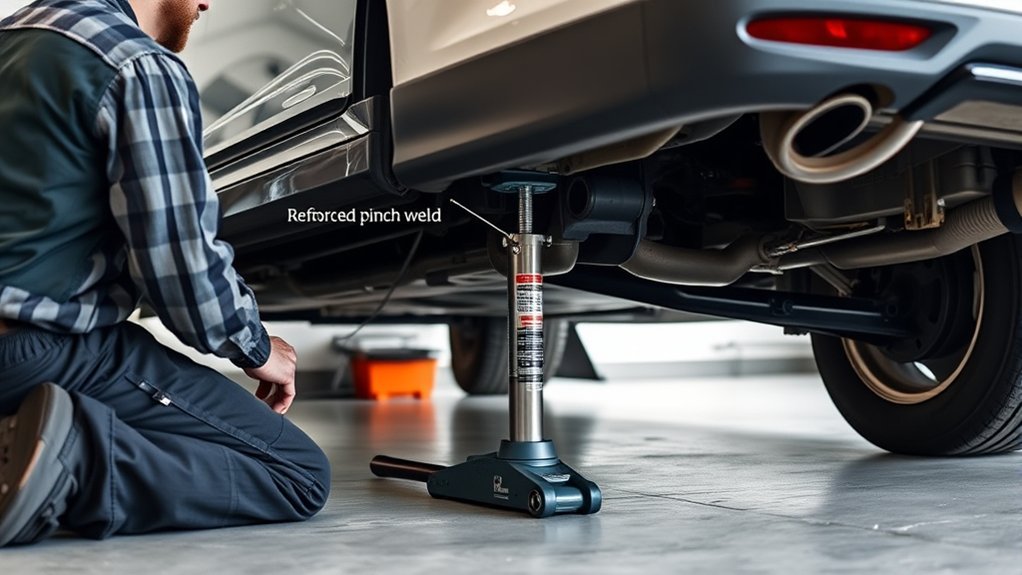
Place your tire jack at the vehicle’s approved jack points, not wherever the jack happens to fit. On many cars, those points are reinforced pinch welds behind the front wheels and ahead of the rear wheels. On many trucks and body-on-frame SUVs, they may be frame rails or other reinforced lift points. Your owner’s manual is the final authority because jack points vary by vehicle. Set the jack on flat, solid ground, center it on the marked point, and never lift on thin sheet metal, suspension arms, exhaust parts, plastic trim, or rust-damaged metal.
Quick Answer
Put a tire jack under the manufacturer-approved jack point closest to the tire you are changing. For many cars, that means the reinforced pinch weld behind a front wheel or in front of a rear wheel. For trucks and some SUVs, use the approved frame rail or lift point shown in the owner’s manual.
Key Takeaways
- Check the owner’s manual first because the correct jack point depends on the vehicle.
- Most unibody cars use reinforced pinch welds near each wheel, often marked by notches.
- Many trucks and body-on-frame SUVs use approved frame rails or reinforced lift pads.
- Always park on firm, level ground, set the parking brake, and chock the opposite wheels.
- Never work under a vehicle supported only by a jack; use properly rated jack stands at approved support points.
At a Glance
| Time Required | 15 to 30 minutes for a basic tire change |
| Difficulty | Beginner, if the vehicle is on safe ground and you follow the manual |
| Tools Needed | Vehicle jack, lug wrench, wheel chocks, spare tire, owner’s manual, flashlight, gloves, jack stands for under-vehicle work, torque wrench for final tightening |
| Cost | Usually $0 if your vehicle already has the jack and spare; extra tools may cost more |
Warning: A jack is a lifting tool, not a long-term support stand. If any part of your body will go under the vehicle, lower the vehicle onto properly rated jack stands at approved support points first.
Where Is the Jack Point on a Car?
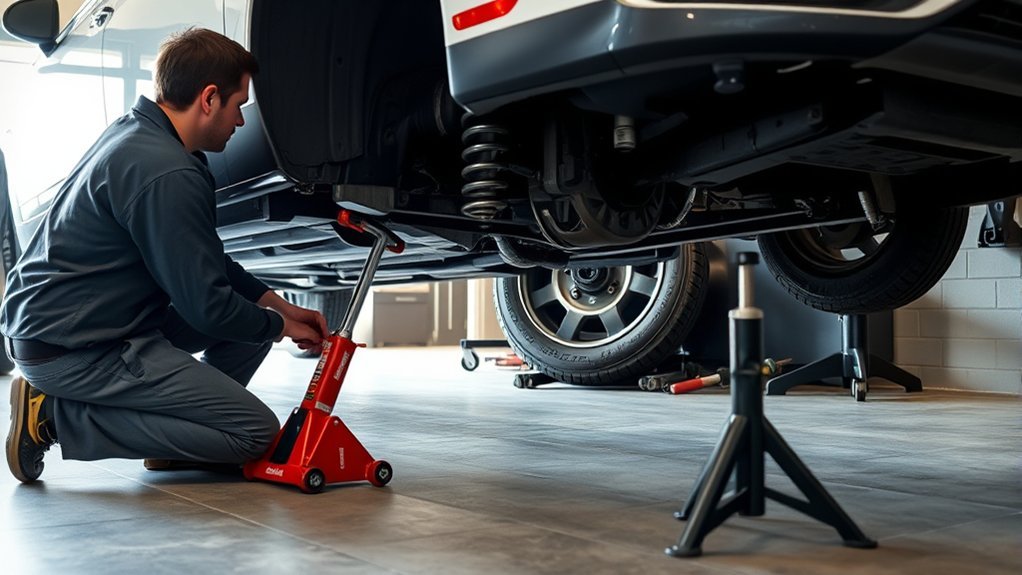
On many passenger cars, the jack point is along the lower body seam just behind the front wheel or just in front of the rear wheel. Look for a notch, arrow, reinforced pad, or thicker section of the pinch weld. That reinforced area is designed to take the load without crushing the rocker panel.
Do not guess from appearance alone. Some vehicles hide the jack points behind plastic trim. Some have a center front or rear lift point. Some performance cars, EVs, hybrids, and vehicles with air suspension have special lifting instructions. Check the owner’s manual before you lift.
Once you find the correct point, place the jack saddle squarely under it. If the jack has a flat metal saddle and the vehicle uses a pinch weld, use a compatible rubber jack pad or adapter so the seam sits securely without bending.
[Products Worth Considering]

Universal magnetic jack pad with aluminum grooved design to protect vehicle pinch welds during lifting. Durable nylon pad inserts are upgraded and secured with screws to resist damage and keep in place. Designed to fit most single vehicle pinpoint welds for safer, stable jacking when changing tires, repairs, or performing oil changes.

Camco Trailer Aid Plus tandem tire ramp lifts your trailer for quick, safe tire changes with ample clearance from its 5 1/2-inch lift. It helps you change a flat tire without unloading cargo, making roadside and routine maintenance more efficient. The heavy-duty, waterproof and rustproof polymer design supports up to 15,000 lb and is built for easy portability and storage.

This VEVOR tire bead breaker uses a slide-hammer impact and wedge tip to separate tire beads from rims quickly and efficiently without damaging hub surfaces. The long handle and sturdy steel construction help reduce user strain while providing reliable, portable tire changing for cars, trucks, and more. Ideal for home mechanics and repair shops handling multiple vehicle tire sizes.
Before You Lift: Safety Checklist
Good jack placement starts before the jack touches the car. Use this checklist every time:
- Pull as far away from traffic as safely possible.
- Turn on hazard lights if you are roadside.
- Park on firm, level ground. Avoid soft shoulders, gravel slopes, mud, sand, and steep driveways.
- Shift to Park on an automatic or into gear on a manual transmission.
- Set the parking brake.
- Chock the wheels that will stay on the ground.
- Check that the jack and jack stands are rated for the vehicle’s weight.
- Find the exact jack point in the owner’s manual.
- Loosen the lug nuts slightly before lifting the tire off the ground.
Pro Tip: Crack each lug nut loose about a quarter turn while the tire is still touching the ground. Once the wheel is in the air, it can spin and make lug-nut removal harder.
How to Find Jack Points by Vehicle Type
Different vehicle structures use different safe lifting areas. A unibody sedan is not lifted the same way as a body-on-frame pickup. Use the guidance below as a starting point, then confirm the exact location in your manual.
Sedan Jack Points
Most sedans, hatchbacks, coupes, and small crossovers use pinch weld jack points. These are usually behind the front wheels and ahead of the rear wheels along the lower side seam. Look for small notches or stamped marks in the metal.
Place the jack directly under the reinforced area, not beside it. If you miss the marked point, the jack can crush the rocker panel, damage trim, or slip as the vehicle rises.
SUV and Truck Frames
Many trucks and some larger SUVs use frame rails or reinforced lift pads. The safest point is usually close to the wheel you are lifting and directly under a strong frame section. Do not lift on thin body panels, running boards, exhaust brackets, or suspension links unless the manual names that part as a lift point.
| Area | When It May Be Used | What to Check |
|---|---|---|
| Pinch weld | Many unibody cars and crossovers | Notch, reinforced seam, correct adapter |
| Frame rail | Many trucks and body-on-frame SUVs | Solid, flat, rust-free reinforced section |
| Center lift point | Only when listed in the manual | Balanced load and correct jack capacity |
| Jack stand point | Supporting the vehicle after lifting | Approved support point and locked stand |
Owner Manual Guidance
Your owner’s manual is the most reliable source for jack points because it shows the exact lifting areas for your make, model, and body style. The manual may also show where to place the factory scissor jack, where to place a floor jack, and where jack stands can safely support the vehicle.
This matters because one model may have reinforced pinch welds, while another may require a specific frame point, central lift pad, or adapter. If the manual is missing, search the manufacturer’s official owner website or contact a dealer before lifting.
Step-by-Step: How to Jack Up a Car for a Tire Change
- Park safely: Stop on firm, level ground away from traffic when possible.
- Secure the vehicle: Set the parking brake and chock the wheels opposite the tire you are lifting.
- Find the jack point: Use the owner’s manual and look for the marked pinch weld, frame rail, or lift pad.
- Loosen the lug nuts: Break them loose slightly before lifting. Do not remove them yet.
- Position the jack: Center the saddle or adapter directly under the approved point.
- Lift slowly: Raise the vehicle only until the tire clears the ground enough to come off.
- Use jack stands if needed: If you will reach under the vehicle, lower it onto properly rated jack stands first.
- Remove the wheel: Finish removing the lug nuts and pull the wheel straight off.
- Install the spare or replacement wheel: Hand-start each lug nut to avoid cross-threading.
- Lower and tighten: Lower the tire until it touches the ground, tighten lug nuts in a star pattern, then torque them to the vehicle specification.
After driving a short distance, recheck the wheel and lug nuts if your manual recommends it. Also check the spare tire pressure. The National Highway Traffic Safety Administration recommends checking all tires, including the spare, at least monthly when the tires are cold.
Where to Place a Tire Jack on Front Tires
For a front tire change on many cars, place the jack just behind the front wheel at the designated front jack point. This is often a marked notch or reinforced section of the pinch weld. Center the jack under the mark so the vehicle rises straight instead of leaning or sliding.
Before lifting, engage the parking brake and chock the rear wheels. Loosen the lug nuts slightly while the tire is still on the ground. Then lift only as high as needed for the tire to clear the ground.
Front Jack Point Location
The front jack point is usually just behind the front wheel along the rocker-panel pinch weld on unibody vehicles. On trucks and some SUVs, the front lift point may be a reinforced frame rail or another manufacturer-approved contact point.
| Check | Action | Why It Matters |
|---|---|---|
| Location | Confirm the front jack point in the manual | Prevents body or suspension damage |
| Alignment | Center the saddle on the point | Keeps the load stable |
| Ground | Use firm, level pavement | Reduces sinking or tipping |
| Height | Lift only enough to remove the tire | Keeps the vehicle as stable as possible |
Pinch Weld Placement
If your vehicle uses pinch welds, the jack must sit under the reinforced notch, not beside it. A slotted rubber pad can help hold the seam and spread the load across the correct area.
- Find the notch, arrow, or thicker seam that marks the jack point.
- Align the jack directly under that point.
- Make sure the jack saddle or rubber pad seats firmly.
- Raise the vehicle slowly and watch for movement.
If the jack shifts, tilts, or starts to bend the seam, lower the vehicle and reset it.
Lift Safety Checks
Before removing the wheel, pause and inspect the lift. The jack should stand straight, the saddle should be centered, and the tire should be just clear of the ground. Keep hands and feet away from pinch points.
If you need to work under the vehicle, place jack stands under approved support points and lower the vehicle fully onto them. Then gently shake the vehicle to confirm it is stable. Do not perform the shake test while the vehicle is supported only by the jack.
Where to Place a Tire Jack on Rear Tires
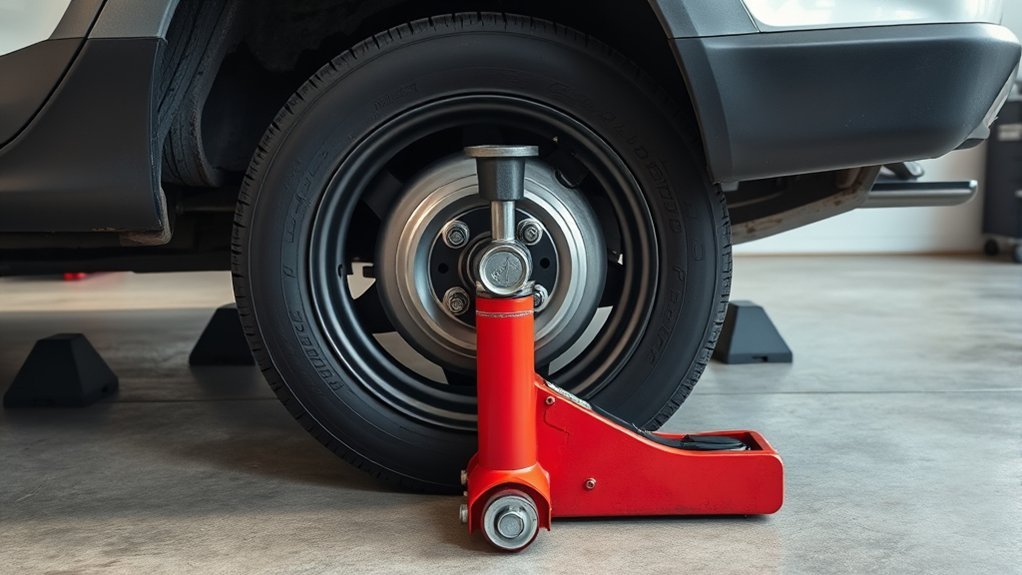
For a rear tire change on many cars, place the jack just in front of the rear wheel at the vehicle’s designated rear jack point. This is often a notch or reinforced section of the pinch weld. On many trucks and SUVs, the rear point may be an approved frame section instead.
- Check the owner’s manual for the exact rear jack point.
- Chock the front wheels before lifting the rear.
- Center the jack saddle under the marked area.
- Lift slowly and stop once the tire clears the ground.
- Use jack stands if you need to reach under the vehicle.
Do not assume the rear differential is safe for lifting. Some vehicles allow it, but many do not. Use the differential only if your owner’s manual clearly names it as an approved lift point.
How to Position a Jack on Pinch Welds
Pinch welds run along the lower sides of many unibody vehicles, just beneath the door sills. They are not all safe to lift from. You need the marked, reinforced section that the manufacturer designed as the jack point.
Set the jack on firm, level ground. Place a compatible rubber jack pad over the saddle if needed. Align the slot or saddle with the pinch weld notch, then pump the jack slowly. The seam should stay centered as the vehicle rises.
Note: A bent, rusty, or crushed pinch weld may not support the vehicle safely. Stop and use a different approved point, a professional lift, or roadside assistance.
[Products Worth Considering]

This spare tire tool kit is designed for the 2004 to 2018 Ford F-150 to help you loosen and tighten wheel lug nuts and manage the spare tire and provided jack functions from underneath the vehicle. It includes the lug nut wrench and extension pieces plus a convenient storage carrying case for organized transport. The jack itself is not included.

This roadside assistance kit helps drivers and passengers in urgent situations after an accident or breakdown, providing practical support while waiting for help. It includes a lightweight, compact tire inflator for fast inflation of standard vehicle tires, plus reinforced jumper cable protection for safer handling. Ideal for winter weather, road trips, camping, and travel, with everything stowed neatly in a trunk bag.
Where You Should Never Put a Jack
Never place a tire jack under parts that are not designed to carry the vehicle’s weight. The wrong contact point can bend, slip, break, or push the vehicle off balance.
- Suspension arms: They can move, flex, or slip under load unless the manual specifically approves the location.
- Exhaust parts: Pipes and mufflers are not structural lift points.
- Plastic trim or running boards: These can crack or collapse.
- Thin floor pans or rocker panels: These areas can crush easily.
- Rusted or bent metal: Damaged metal may fail suddenly.
- Battery trays or EV battery covers: EVs and hybrids may have high-voltage components that require special lift points.
- Soft or sloped ground: The jack can sink, roll, or tip.
The OSHA jack standard requires a jack to have enough rating for the load and calls for a firm foundation or blocking when needed. That same principle applies in a home garage or roadside tire change: if the base is not stable, do not lift.
How to Check Jack Placement Before Lifting
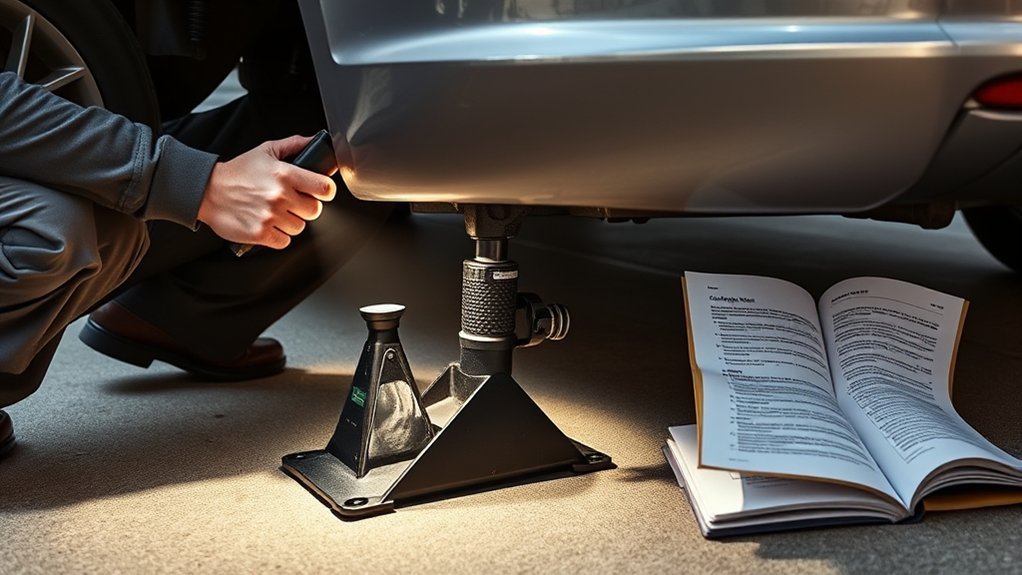
Before you lift the vehicle, confirm the jack point in your owner’s manual and line the jack up directly under the reinforced notch, frame rail, or lift pad. The saddle should sit squarely against metal, not plastic, trim, or a curved part that can slip.
Check the ground under the jack. It should be solid, level, and clean. If the jack rolls, leans, sinks, or does not sit flat, lower it and reset. Once the vehicle rises slightly, stop and inspect the contact point again. A properly placed jack should stay straight, steady, and centered.
If the jack point is unclear, the ground is unstable, or the vehicle shifts while lifting, stop. A delayed tire change is better than a damaged vehicle or serious injury.
Floor Jack vs. Scissor Jack Safety
A floor jack is usually more stable and easier to control than a factory scissor jack, so it is better for garage work. It still must be placed under an approved jack point, and the vehicle still needs jack stands before under-vehicle work.
A scissor jack is compact and useful for emergency tire changes. It is usually designed to fit a specific factory jack point on that vehicle. Because it has a smaller base and less side stability than a floor jack, it should be used only on firm, level ground and only for the quick tire-change task described in the manual.
| Tool | Best Use | Main Safety Rule |
|---|---|---|
| Floor jack | Garage tire changes and maintenance lifting | Use jack stands before working under the vehicle |
| Scissor jack | Emergency roadside tire changes | Use only at the factory jack point on firm, level ground |
| Bottle jack | Some trucks and high-clearance vehicles | Confirm the lift point and use a stable base |
When to Stop and Call Roadside Assistance
Do not force a tire change if the setup is unsafe. Call roadside assistance or a tow service if:
- The vehicle is on a narrow shoulder, hill, soft ground, snow, mud, or heavy traffic area.
- The jack point is rusted, crushed, hidden, or unclear.
- The lug nuts will not loosen with normal hand pressure.
- The spare tire is flat, damaged, or missing.
- The vehicle shifts while lifting.
- You have an EV, hybrid, lowered car, or air-suspension vehicle and cannot confirm the correct lift points.
Roadside safety comes first. A professional with the right lift equipment can prevent vehicle damage and reduce injury risk.
Frequently Asked Questions
Where do you put a safety jack on a car?
Put the jack under the manufacturer-approved jack point closest to the tire you are lifting. On many cars, that is the reinforced pinch weld behind the front wheel or in front of the rear wheel. Use the owner’s manual to confirm the exact point.
Is it safe to get under a car on jack stands?
Yes, but only if the stands are properly rated, placed on firm level ground, positioned at approved support points, and locked before you get under the vehicle. Never get under a vehicle supported only by a hydraulic jack or scissor jack.
What is the rule of thumb for jack stands?
Use jack stands any time a wheel, hand, arm, tool, or any part of your body will be under the vehicle. Place the stands at approved support points, lower the vehicle fully onto them, and shake the vehicle gently to confirm stability before working.
Where should I put the tire jack?
Place the tire jack at the approved jack point nearest the wheel you need to change. For many cars, use the marked pinch weld. For many trucks and SUVs, use the approved frame rail or lift pad. Do not lift on suspension arms, exhaust parts, plastic trim, floor pans, or rusted metal.
Can I jack up a car from the differential?
Only if your owner’s manual clearly lists the differential as an approved lift point. Some vehicles allow it, but many do not. If the manual does not approve it, use the marked jack point, frame rail, or lift pad instead.
Should I loosen lug nuts before or after jacking up the car?
Loosen the lug nuts slightly before lifting, while the tire still touches the ground. After installing the spare or replacement wheel, lower the vehicle and tighten the lug nuts in a star pattern to the torque specification in your owner’s manual.
Conclusion
The safest place to put a tire jack is the manufacturer-approved jack point closest to the tire you are lifting. On many cars, that is a reinforced pinch weld. On many trucks and body-on-frame SUVs, it may be a frame rail or dedicated lift pad. Always confirm the exact point in the owner’s manual, park on firm level ground, chock the wheels, and lift only as high as needed.
Never work under a vehicle supported only by a jack. If the jack point is unclear, the ground is unstable, or the vehicle shifts, lower it and reset the setup or call roadside assistance.
Sources
- OSHA 29 CFR 1910.244 — Other Portable Tools and Equipment — supports jack rating, firm foundation, blocking, and securing raised loads.
- NHTSA TireWise — supports tire-safety context, spare-tire pressure checks, and tire-maintenance guidance.
- Toyota Manuals and Warranties — example of an official manufacturer page for finding vehicle-specific owner’s manual instructions.

Related Articles

How to Book a Tire Appointment at Walmart
Mysterious steps make booking a Walmart tire appointment simpler than you think, but one crucial detail could save you time and money.
Read More
How to Book a Tire Appointment at Discount Tire
Online or by phone, booking a Discount Tire appointment is easy—just gather a few details first and discover the fastest way to get in.
Read More
How to Book a Tire Appointment at Sam’s Club
Know the quick steps to book a Sam’s Club tire appointment and avoid common booking mistakes before you head in.
Read More