
How to Balance Tires on a Toyota RAV4: What You Need to Know
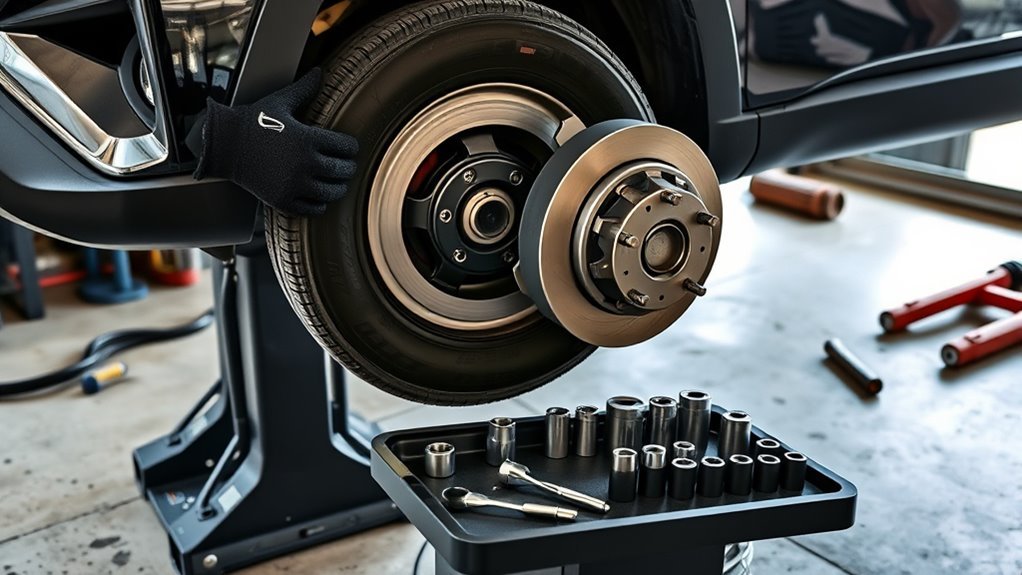
Balancing the tires on a Toyota RAV4 is not a driveway adjustment like checking air pressure. True wheel balancing requires a shop-grade balancer that measures heavy spots in the tire-and-wheel assembly, then tells the technician where to add corrective weights. What you can do at home is spot the symptoms early, check for obvious tire problems, and know when to schedule professional service.
Quick Answer
To balance Toyota RAV4 tires, have a qualified tire shop remove each wheel assembly, spin it on an electronic balancer, clean the rim, and install the correct stick-on or clip-on weights. Schedule balancing when you feel speed-related vibration, after tire installation or repair, after a hard pothole hit, or when uneven wear appears.
Key Takeaways
- RAV4 tire balancing corrects uneven weight in the tire-and-wheel assembly; alignment corrects the direction the wheels point.
- A vibration that gets stronger at certain speeds is the classic sign of tire imbalance, but tire damage, bad pressure, bent wheels, alignment, or suspension issues can feel similar.
- Toyota’s current RAV4 maintenance guide recommends scheduled maintenance every 5,000 miles or six months, and tire rotation appears at each 5,000-mile interval.
- Do not try to “balance” a tire that has a bulge, exposed cords, sidewall damage, rapid pressure loss, or tread worn to the replacement limit.
At a Glance
| Time Required | About 30–60 minutes at a tire shop for four wheels, depending on wait time, wheel condition, and whether tire repairs are needed. |
| Difficulty | Owner inspection is easy; actual balancing is professional service because it requires a calibrated wheel balancer. |
| Tools Needed | For checks: tire-pressure gauge, tread-depth gauge or penny, flashlight. For balancing: electronic spin balancer, wheel weights, torque wrench, and trained technician. |
| Cost | Varies by shop, region, wheel size, and whether balancing is bundled with tire rotation, tire repair, or new-tire installation. Ask for a per-wheel or four-wheel quote before service. |
How to Tell If Your RAV4 Tires Need Balancing
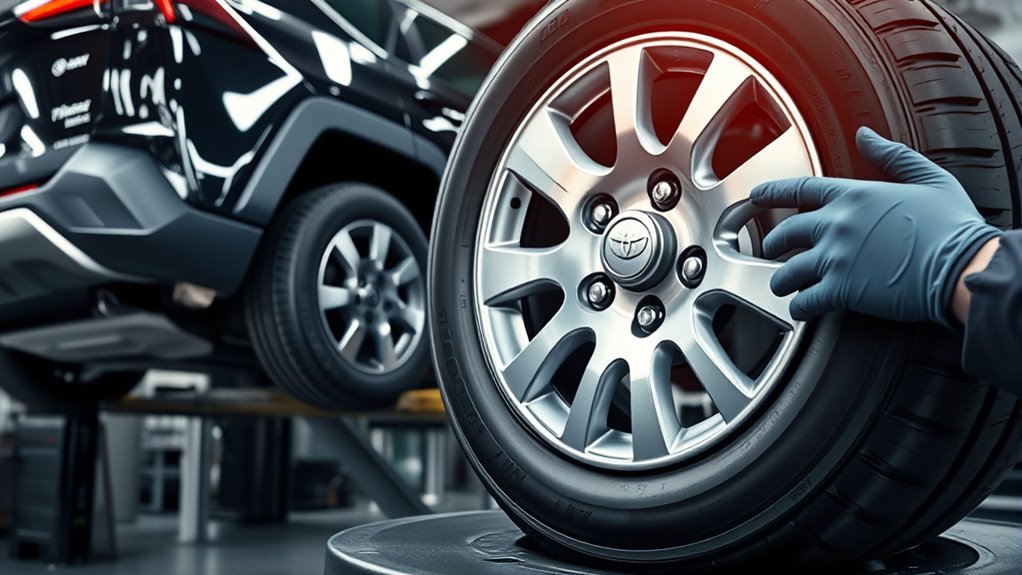
The most common tire-balancing symptom is a vibration that appears or gets worse at a certain speed. You may feel it in the steering wheel, floor, seat, or body of the RAV4. A front-wheel imbalance is often felt more through the steering wheel, while a rear-wheel imbalance may feel more like a seat or cabin vibration.
Before assuming the tires need balancing, check the basics. USTMA recommends checking tire pressure at least once a month when tires are cold, and uneven pressure can mimic or worsen vibration. Also inspect tread depth, sidewalls, valve caps, and the inside and outside edges of each tire.
- Speed-related vibration: A shake that comes in around highway speed and fades at lower speed often points to imbalance.
- Uneven or cupped tread wear: Scalloped or choppy tread blocks can come from imbalance, worn suspension parts, or alignment problems.
- Missing wheel weights: A clean rectangular mark on the wheel where a weight used to sit can indicate a lost stick-on weight.
- Recent impact: A pothole, curb strike, or rough road hit can bend a wheel, shift a weight, or damage a tire.
- Vibration after tire service: If the shake began right after new tires, tire repair, rotation, or wheel work, ask the shop to recheck balance.
Warning: Do not keep driving normally if the RAV4 has a tire bulge, exposed cords, sidewall cut, rapid air loss, loud thumping, or severe vibration. Install the spare if equipped and safe to do so, or have the vehicle towed to a tire professional.
[Products Worth Considering]

The AstroAI 2 pack air chucks provide a heavy-duty, closed-flow locking design that helps keep air flowing during inflation while securely attaching to the valve stem. Built with 250 PSI rated brass components and compatible with Schrader valves, they feature 1/4" female NPT threads for a wide fit with common inflators. The straight tip and locking clip make filling tires and monitoring pressure more convenient.

The JACO FlowPro Tire Inflator measures, inflates, and airs down tires up to 100 PSI with battery-free operation and ±2% accuracy after calibration. It features a glowing pressure dial for night visibility, a heavy-duty steel build with a hybrid hose, and a precision push-to-inflate thumb trigger. The patented Lightning Air Chuck locks on for a secure seal, and the kit includes quick-connect hardware for easy inline use with your air compressor.

EVOULTES heavy duty tire inflator with an integrated gauge delivers accurate pressure readings from 10–120 PSI, helping you inflate, deflate, and check tires in one tool. The 16.5-inch extended dual-head air chuck with swivel base reaches hard-to-access dual wheel valves on trucks and RVs. A brass trigger core and side-mounted air release valve make operation smooth, with standard 1/4" NPT threading and quick-connect compatibility for easy setup.
Why Tire Balancing Is Essential for Your RAV4
Tire balancing matters because even a small heavy spot in a rotating wheel assembly can create vibration once the tire is moving fast. Michelin explains that balancing controls how the tire rotates, while alignment controls where the tire points and how it contacts the road.
When a RAV4 wheel-and-tire assembly is out of balance, the tire can hop or oscillate slightly as it rotates. Over time, that can reduce ride comfort, contribute to uneven tread wear, and add stress to steering and suspension components. Bridgestone notes that out-of-balance tires and wheels can cause vibration and uneven tread wear.
A smooth RAV4 ride starts with four basics: correct tire pressure, healthy tread, regular rotation, and balanced wheel assemblies.
Tire Balancing vs. Wheel Alignment
Balancing and alignment are often confused because both can cause vibration, pulling, and uneven wear. They fix different problems.
| Tire Balancing | Corrects uneven weight around the tire-and-wheel assembly so it spins smoothly. |
| Wheel Alignment | Adjusts suspension angles so the tires point and contact the road correctly. |
| Common Clue | Balance problems usually feel like speed-related vibration. Alignment problems often show up as pulling, off-center steering, or rapid edge wear. |
Note: A RAV4 can need balancing and alignment at the same time. If vibration remains after balancing, ask the shop to inspect wheel runout, tire damage, suspension parts, and alignment.
Balancing Your RAV4 Tires: A Step-by-Step Guide
Use this process to diagnose the problem and make sure the shop performs the right service. The owner checks are simple; the actual balancing should be done with professional equipment.
Step 1: Check Tire Pressure and Visible Damage
Check pressure when the tires are cold and set it to the tire-and-loading label on the driver’s door jamb or the owner’s manual, not the maximum pressure printed on the tire sidewall. Inspect the tread and sidewall for cuts, bulges, nails, exposed cords, and uneven wear. If the tire is damaged or at the wear limit, replacement is safer than balancing.
Step 2: Look for Missing or Loose Wheel Weights
Look along the inside barrel and outer rim area for clip-on or stick-on wheel weights. A missing weight may leave a cleaner rectangle, adhesive residue, or a bare spot where the rim is otherwise dusty. Do not add random weights yourself; incorrect placement can make the vibration worse.
Step 3: Note When the Vibration Happens
Write down the speed range, road conditions, and where you feel the shake. A shop can diagnose faster if you can say, for example, “the steering wheel shakes between 60 and 70 mph after the last tire rotation.”
Step 4: Request Dynamic Spin Balancing
Ask for dynamic spin balancing on all wheels that show symptoms, or all four if the tires were recently installed. Dynamic balancing measures imbalance across the wheel’s inner and outer planes, which is important on modern alloy wheels. Static balancing only corrects up-and-down imbalance and may not solve side-to-side shimmy.
Step 5: Confirm Correct Weight Choice
RAV4 wheels may use stick-on weights, clip-on weights, or a combination depending on wheel design and shop procedure. Stick-on weights look cleaner on alloy wheels, but they need a clean, dry surface to stay attached. Clip-on weights can be effective on compatible rims but must not damage the wheel finish.
Pro Tip: After balancing, ask the shop to set tire pressure to Toyota’s recommended cold pressure and torque the lug nuts to the RAV4 specification for your model year.
Step 6: Road-Test the RAV4
After service, drive on a safe, smooth road at the speed where the vibration used to appear. If the vibration is still present, return to the shop and ask for a recheck. The issue may be a bent wheel, tire runout, belt separation, uneven tread, worn suspension, brake rotor issue, or alignment problem rather than a simple imbalance.
Top 5 Common Mistakes in Tire Balancing

- Balancing a damaged tire instead of replacing it: A bulge, separated belt, sidewall cut, or exposed cords cannot be fixed with weights.
- Ignoring tire pressure: Low or uneven pressure can create poor handling and irregular wear even when the wheel balance is correct.
- Using the wrong balancing method: Static balancing may not correct side-to-side vibration on wider modern wheels; dynamic balancing is usually the better request.
- Installing weights on a dirty wheel surface: Brake dust, old adhesive, moisture, and corrosion can keep stick-on weights from bonding.
- Skipping the follow-up road test: A smooth reading on the machine is helpful, but the final test is whether the RAV4 drives smoothly at the speed that caused the complaint.
[Products Worth Considering]

The Dr.Roc spare tire tool kit helps you release, lower, or raise your spare tire with reliable extension tools and a lug nut wrench. It is made from rustproof automotive-grade steel and includes an organized carry case for convenient storage. Designed for compatibility with select GM models from the late 1990s through 2019, it uses upgraded extension components to install and remove spare tires with less hassle.

This car emergency kit keeps essential roadside tools organized in a durable, portable bag so you can respond quickly during common driving emergencies. It includes battery jumper cables, a bright LED headlight, first aid supplies, a tire pressure gauge, and safety essentials like gloves and an emergency poncho. Designed for trunk or storage use, it helps you be prepared for dead batteries, minor malfunctions, and unexpected roadside issues.
Why Wheel Balancing Matters for Tire Longevity
Proper wheel balancing helps the tire rotate evenly instead of bouncing or wobbling at speed. That matters because vibration can create localized tread stress and contribute to cupping or patchy wear. It can also make the RAV4 feel less stable on long drives.
Balancing is not a substitute for rotation, pressure checks, alignment, or suspension repairs. It works best as part of a tire-care routine. NHTSA’s TireWise safety information emphasizes tire maintenance as part of safe driving, and USTMA identifies pressure, tread, rotation, and alignment as key ongoing tire-care items.
When to Schedule Professional Tire Services for Your RAV4
For current RAV4 guidance, Toyota’s 2025 RAV4 Warranty & Maintenance Guide recommends scheduled maintenance every 5,000 miles or six months, whichever comes first, and lists tire rotation at each 5,000-mile interval. Balancing is not always required at every rotation, but it should be checked when symptoms, tire service, or road impact suggest an imbalance.
Best Times to Balance RAV4 Tires
- When installing new tires.
- After a tire repair or remounting.
- When you feel speed-related vibration.
- After hitting a pothole, curb, or road debris.
- When a wheel weight is missing or loose.
- When uneven or cupped tread wear appears.
- When changing between seasonal wheel-and-tire sets.
Choosing a Qualified Shop
Choose a tire shop or Toyota service center that uses a calibrated electronic balancer and understands modern alloy-wheel weight placement. Ask whether they can check road-force variation if a standard balance does not solve the vibration. Road-force balancing can help identify tire stiffness variation, wheel runout, or tire-and-wheel matching problems.
If you use a dealer, confirm pricing and appointment availability before visiting. For example, Toyota of Clermont lists its service phone number as 352-404-7001, but service pricing and availability can change, so call or schedule online for the current quote.
Post-Service Checklist
- Make sure the tire pressures match the RAV4 door-jamb label.
- Confirm the shop torqued the lug nuts correctly for your model year.
- Check that stick-on weights are firmly attached and not hanging loose.
- Watch the TPMS light after driving; if it stays on, ask the shop to recheck the sensors and pressures.
- Road-test at the speed where the vibration used to occur.
Note: Toyota’s new-vehicle limited warranty treats wheel alignment and wheel balancing differently from most basic warranty items. In the 2025 RAV4 guide, alignment and balancing are covered for 12 months or 12,000 miles when the issue is a covered defect, not ordinary wear, impact damage, or maintenance.
Frequently Asked Questions
How much does Toyota charge for a four-wheel alignment?
There is no single Toyota price for a four-wheel alignment. Pricing depends on the dealer, region, model year, coupons, tire size, and whether extra repairs are needed. Call your local Toyota service department or tire shop for a current quote before approving the work.
What is better for a RAV4: balancing beads or wheel weights?
For most Toyota RAV4 street tires, traditional spin balancing with stick-on or clip-on wheel weights is the better first choice because it gives a measured correction at a shop. Balancing beads may be used in some truck, off-road, or specialty applications, but they are not the standard solution for most passenger SUV wheel vibration.
Can I balance Toyota RAV4 tires myself?
You can inspect pressure, tread, sidewall condition, and missing weights at home, but accurate balancing requires a wheel balancer. Guessing weight location or amount can make vibration worse and may hide a tire or wheel problem that needs professional attention.
How often should RAV4 tires be balanced?
Balance them when new tires are installed, after tire repair or remounting, after a strong pothole or curb impact, when a weight is missing, or whenever you feel speed-related vibration. RAV4 tire rotation should follow the maintenance guide for your model year; current guidance uses 5,000-mile or six-month scheduled maintenance intervals.
Does pulling to one side mean my tires need balancing?
Not usually by itself. Pulling is more often related to alignment, tire pressure, tire wear, brake drag, road crown, or a tire construction issue. Balancing is more closely linked to vibration at speed. If the RAV4 pulls and vibrates, ask the shop to check both balance and alignment-related causes.
Conclusion
Balancing your RAV4 tires keeps the wheel assemblies spinning smoothly, but it is only one part of tire maintenance. Start with simple owner checks: cold tire pressure, tread depth, sidewall condition, and missing weights. Then schedule professional dynamic balancing when vibration appears, after tire service, or after a road impact. If the tire is damaged, worn out, or the vibration is severe, treat it as a safety issue first and a balancing issue second.
Sources
- Toyota 2025 RAV4 Warranty & Maintenance Guide — RAV4 maintenance interval, tire rotation schedule, and warranty note for wheel alignment/balancing.
- NHTSA TireWise — tire safety and tire-maintenance guidance.
- USTMA Tire Care Essentials — pressure checks, tread depth, rotation, and alignment guidance.
- Michelin Wheel Alignment & Balancing Explained — difference between balancing and alignment and imbalance effects.
- Bridgestone Tire Rotation, Alignment, Balance & Rotation — rotation, balance, and uneven wear guidance.
- Toyota of Clermont Contact Page — local dealer service contact verification.

Related Articles

Toyota RAV4 TPMS Reset: Easy Steps That Work
Unlock the secrets to resetting your Toyota RAV4's TPMS effortlessly—discover the essential steps to ensure your tires are always safe.
Read More
Toyota RAV4 Tire Rotation: DIY Steps & Pattern
Take control of your Toyota RAV4's tire maintenance with our simple DIY rotation guide—discover the best steps for optimal performance and longevity!
Read More
Mix Tire Brands on a Toyota RAV4? Expert Guide
Keeping your RAV4 safe? Learn when mixing tire brands risks traction, ABS/TCS and AWD damage — and what exact matches you must insist on.
Read More