
Why Is the Outside of My Tire Wearing? Alignment & Pressure Fixes
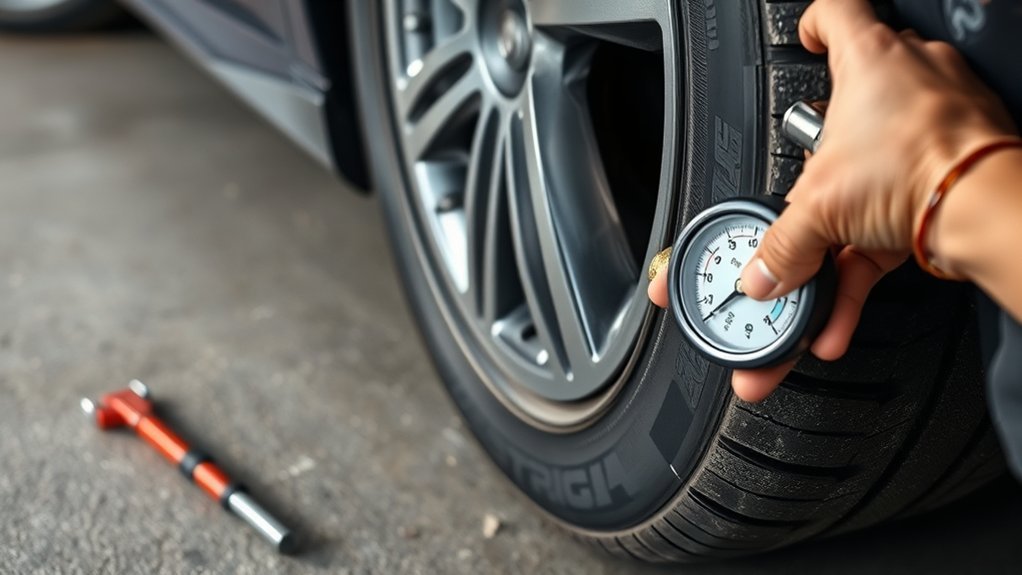
The outside of your tire usually wears because the tire is not sitting flat on the road, not tracking straight, or not carrying air pressure correctly. The most common causes are underinflation, excessive toe-in, positive camber, worn suspension parts, or repeated hard cornering. Start with tire pressure, then inspect the tread pattern, steering feel, and suspension before replacing the tire.
Quick Answer
Outside tire wear usually comes from low tire pressure, incorrect alignment, or worn suspension parts. If only one outer shoulder is wearing, alignment or suspension is more likely. If both tire shoulders are wearing, underinflation is more likely. Check cold pressure first, then inspect tread depth and schedule an alignment if the wear continues.
Key Takeaways
- Outer-edge tire wear often points to bad alignment, especially excessive toe-in or positive camber.
- Low tire pressure usually wears both shoulders, but it can make outside-edge wear worse.
- Worn ball joints, control arm bushings, tie rods, shocks, or struts can let the wheel move out of spec.
- Feathering, cupping, pulling, vibration, or an off-center steering wheel means you should inspect alignment and suspension soon.
- Replace the tire if tread reaches 2/32 inch, cords show, the sidewall is damaged, or you see bulges, cracks, or separation.
At a Glance
| Time Required | 10 to 15 minutes for a basic inspection; longer if a shop checks alignment and suspension |
| Difficulty | Easy for pressure and tread checks; professional help recommended for alignment and suspension diagnosis |
| Tools Needed | Tire pressure gauge, tread depth gauge or penny, flashlight, gloves, and your owner’s manual or door placard |
| Cost | A home inspection is free if you own the tools; alignment, tire replacement, or suspension repair is a paid shop service |
NHTSA reported 511 deaths in tire-related crashes in 2024, so uneven wear is more than a tread-life problem. It can become a safety problem if you ignore it.
What Causes Outside Tire Wear?
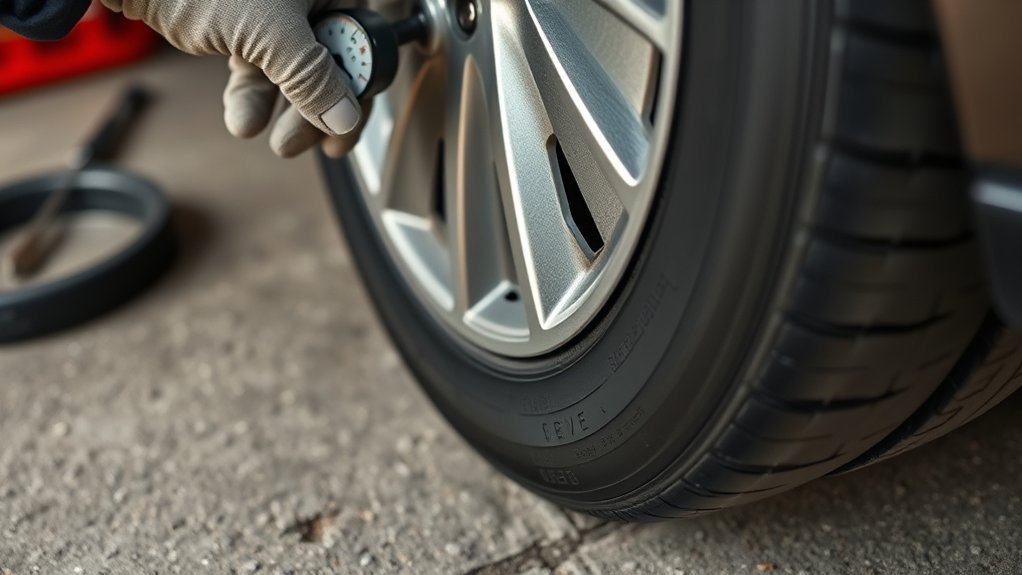
Outside tire wear usually means the outer shoulder is doing more work than it should. That can happen when the wheel points slightly inward, tilts outward, or moves around because of worn suspension parts. It can also happen when the tire runs low on air and the shoulders flex too much.
The first clue is the pattern. If both outside shoulders on the same tire are wearing, check pressure and vehicle load first. If only one outer edge is worn, focus on wheel alignment, camber, toe, and suspension play.
Do not assume the tire itself is the only problem. A new tire can wear the same way if you mount it on a vehicle with the same low pressure, bad alignment, loose bushing, bent component, or worn strut.
[Products Worth Considering]

EVOULTES heavy duty tire inflator with an integrated gauge delivers accurate pressure readings from 10–120 PSI, helping you inflate, deflate, and check tires in one tool. The 16.5-inch extended dual-head air chuck with swivel base reaches hard-to-access dual wheel valves on trucks and RVs. A brass trigger core and side-mounted air release valve make operation smooth, with standard 1/4" NPT threading and quick-connect compatibility for easy setup.

This portable cordless tire inflator delivers up to 160 PSI with fast 17 L/min airflow to help you quickly top up tires and get back on the road. It features dual power mode, running on a 21V rechargeable battery or a 12V DC adapter for convenient roadside use. An automatic shut-off with digital pressure gauge helps prevent overinflation, and a built-in LED light improves visibility in low-light conditions.

The JACO FlowPro Tire Inflator measures, inflates, and airs down tires up to 100 PSI with battery-free operation and ±2% accuracy after calibration. It features a glowing pressure dial for night visibility, a heavy-duty steel build with a hybrid hose, and a precision push-to-inflate thumb trigger. The patented Lightning Air Chuck locks on for a secure seal, and the kit includes quick-connect hardware for easy inline use with your air compressor.
Check Tire Pressure First
Start with cold tire pressure, because it is the fastest check and one of the most common causes of uneven wear. NHTSA recommends checking pressure at least once a month when the tires are cold, meaning the vehicle has not been driven for at least three hours.
Use the pressure listed on the driver-side door placard or in your owner’s manual. Do not use the maximum pressure molded on the tire sidewall as your normal target. The sidewall number is not the vehicle manufacturer’s recommended pressure for everyday driving.
Note: A Tire Pressure Monitoring System warning light is helpful, but it does not replace manual pressure checks. It may not warn you until a tire is already significantly underinflated.
If pressure is low, inflate the tire to the vehicle’s cold pressure spec. If pressure is high, release air slowly until it matches the placard. Then recheck the tire after a few days. If it loses pressure again, inspect for a nail, leaking valve stem, cracked wheel, or bead leak.
Outer Edge vs Both Shoulders vs Center Wear
The location of the wear tells you where to look first. Do not treat every bald edge the same way. A pressure problem, alignment problem, and suspension problem can all leave different clues.
| Wear Pattern | Likely Cause | What to Check |
|---|---|---|
| One outer edge only | Toe, camber, worn suspension, or bent steering part | Alignment printout, ball joints, tie rods, control arm bushings, struts |
| Both shoulders | Underinflation, overloading, or aggressive cornering | Cold pressure, vehicle load, tire size, driving habits |
| Center tread | Overinflation or incorrect pressure for the load | Door placard pressure and pressure gauge accuracy |
| Patchy dips or scallops | Cupping from worn shocks, struts, balance, or suspension looseness | Wheel balance, shocks, struts, bearings, and suspension play |
How Alignment Wears the Outer Edge
If pressure is correct but the outside edge still wears faster, look at wheel alignment. Alignment controls the direction and angle of the tires as they meet the road. When the wheel is not pointed or tilted correctly, the tread scrubs instead of rolling cleanly.
Excessive toe-in can drag the outer shoulder across the pavement. Positive camber, where the top of the tire leans outward, can also load the outside shoulder. Too little negative camber for your vehicle and driving style can make the outside edge wear faster in corners.
Alignment can drift after a pothole hit, curb impact, suspension repair, or tire replacement. Worn parts can also pull the wheel out of spec again after an alignment, so a shop should inspect the hardware before setting the angles.
- Check alignment if the steering wheel is off-center.
- Check alignment if the vehicle pulls on a straight, level road.
- Check alignment if one tire edge wears faster than the rest of the tread.
- Check alignment after a hard pothole or curb impact.
Toe and Camber Explained
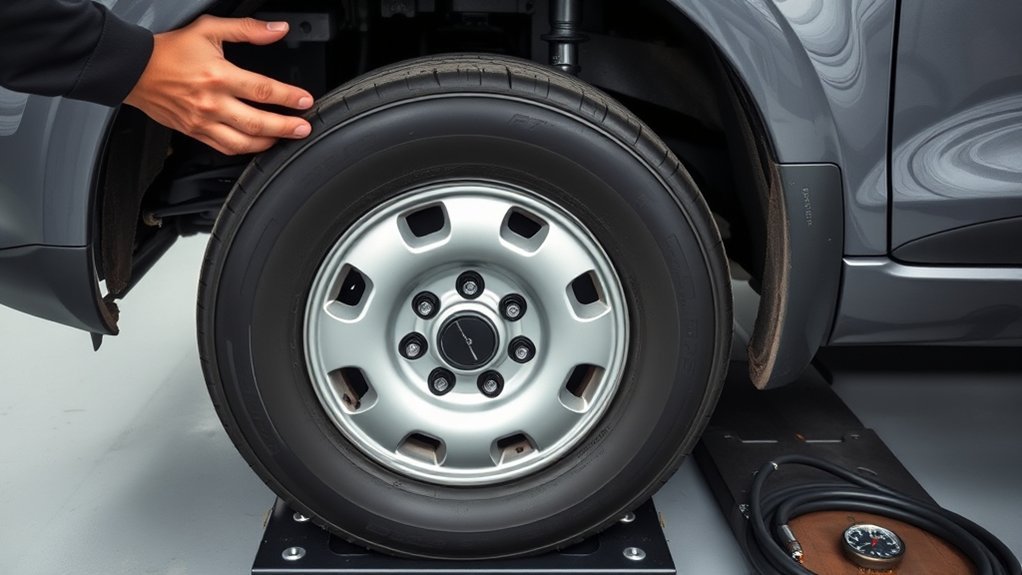
Toe and camber are two of the biggest alignment angles behind outside tire wear. You do not need to memorize alignment specs, but you should know what they mean when a shop shows you a printout.
Toe Alignment Effects
Toe describes whether the tires point slightly inward or outward when viewed from above. Too much toe means the tire is aimed slightly away from the direction the vehicle is traveling. That creates scrub, heat, and fast tread loss.
Toe problems often create a feathered or sawtooth feel across the tread blocks. Run your hand lightly across the tread in both directions. If one direction feels smooth and the other feels sharp, toe may be off.
- Too much toe-in can wear the outside shoulders faster on many front-end setups.
- Too much toe-out can wear the inside shoulders faster.
- Either direction can create feathering and poor straight-line tracking.
- Small toe errors can wear tires quickly, so do not ignore feathered tread.
Camber Wear Patterns
Camber describes how much the top of the tire tilts inward or outward when viewed from the front or rear. Positive camber means the top leans outward. Negative camber means the top leans inward.
Too much positive camber can load the outside shoulder. Too much negative camber can load the inside shoulder. A small amount of negative camber is normal on many vehicles, but the correct amount depends on the manufacturer’s specs.
Camber problems can come from worn ball joints, sagging springs, bent struts, damaged control arms, or previous collision damage. If camber is out of spec and cannot be adjusted, the shop should look for bent or worn parts before blaming the tire.
Suspension Problems to Watch For
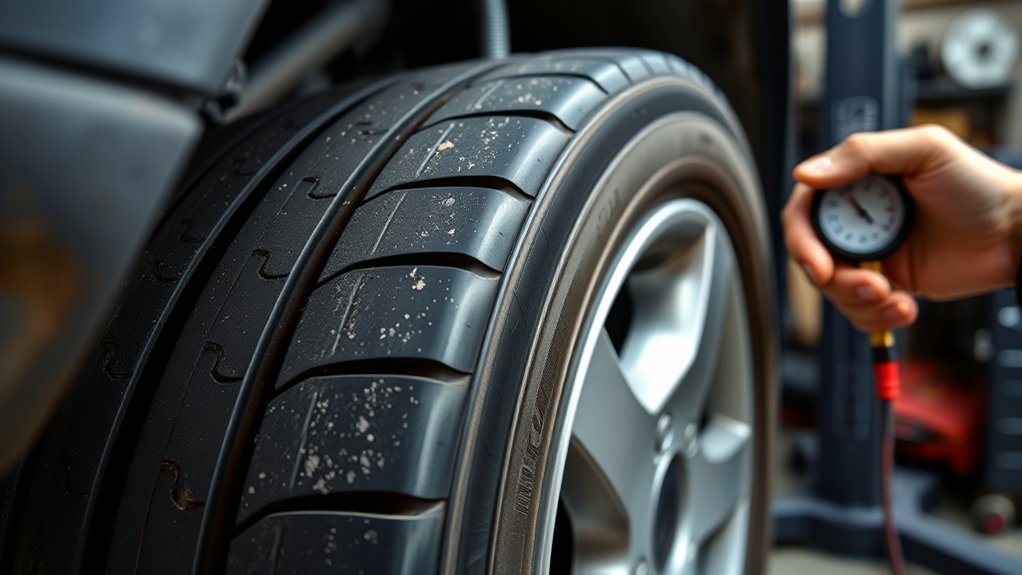
Worn suspension parts can let the wheel move while you drive. That movement changes toe and camber under load, even if the vehicle looked close to spec during a quick visual check.
Look for warning signs such as clunking, loose steering, vibration, uneven ride height, leaking struts, or a tire that keeps wearing unevenly after an alignment. These clues suggest the tire is reacting to a deeper mechanical problem.
- Check control arm bushings for cracks, tears, or movement.
- Check tie rods and ball joints for looseness.
- Inspect shocks and struts for leaks, dents, or weak rebound control.
- Compare ride height from side to side.
- Inspect wheels for bends after pothole hits.
Warning: Do not keep driving on a tire with exposed cords, a sidewall bulge, tread separation, rapid air loss, or deep sidewall damage. Replace it or have it inspected before highway driving.
Other Wear Patterns That Point to Alignment
Outer shoulder wear is not the only clue. Other tread patterns can help you separate alignment trouble from tire pressure, balance, or suspension problems.
Toe Wear Signs
Toe wear often feels rough before it looks severe. You may see feathering across the tread blocks, a diagonal scrub pattern, or faster wear on one shoulder. The vehicle may also feel nervous on grooved pavement or pull slightly after hitting a pothole.
- Inspect tread edges for feathering.
- Compare the left and right front tires.
- Check whether the steering wheel sits straight.
- Ask for an alignment printout before and after adjustment.
Feathered Tread Edges
Feathered tread edges form when each tread block wears more on one side than the other. This usually points to toe misalignment, but worn bushings or tie rods can create the same pattern by letting the wheel change direction while rolling.
If you catch feathering early, an alignment and worn-part repair may stop the pattern from getting worse. If the tread is already badly uneven, the tire may stay noisy even after the alignment is corrected.
Camber and Cupping
Camber wear usually shows as one shoulder wearing faster than the other. Cupping looks different. It creates patchy dips, scallops, or chopped spots around the tire.
Cupping can come from weak shocks or struts, worn suspension parts, bad wheel balance, bent wheels, or looseness in the wheel bearing or hub area. If you see cupping, ask the shop to check more than alignment. A simple toe adjustment may not fix it.
How to Check Your Tires for Wear
Park on level ground, turn the steering wheel so you can see the front tire tread, and inspect each tire across the full width. Do not check only the worst-looking spot. Tire wear can change around the tire, especially when cupping or feathering is present.
- Check cold pressure. Match the driver-side door placard or owner’s manual.
- Measure tread depth. Use a tread depth gauge, or use the penny test as a quick backup.
- Compare inner, center, and outer tread. Uneven depth across the tire points to pressure, alignment, or suspension issues.
- Feel for feathering. A sawtooth feel across tread blocks often points to toe problems.
- Look for damage. Check for cuts, cracks, bulges, exposed cords, nails, and tread separation.
- Compare both sides. If one front tire wears outside and the other does not, suspect alignment or a worn part on that corner.
NHTSA says tires are not safe and should be replaced when tread is worn down to 2/32 of an inch. Built-in treadwear indicators also show when the tread has reached its wear limit.
[Products Worth Considering]
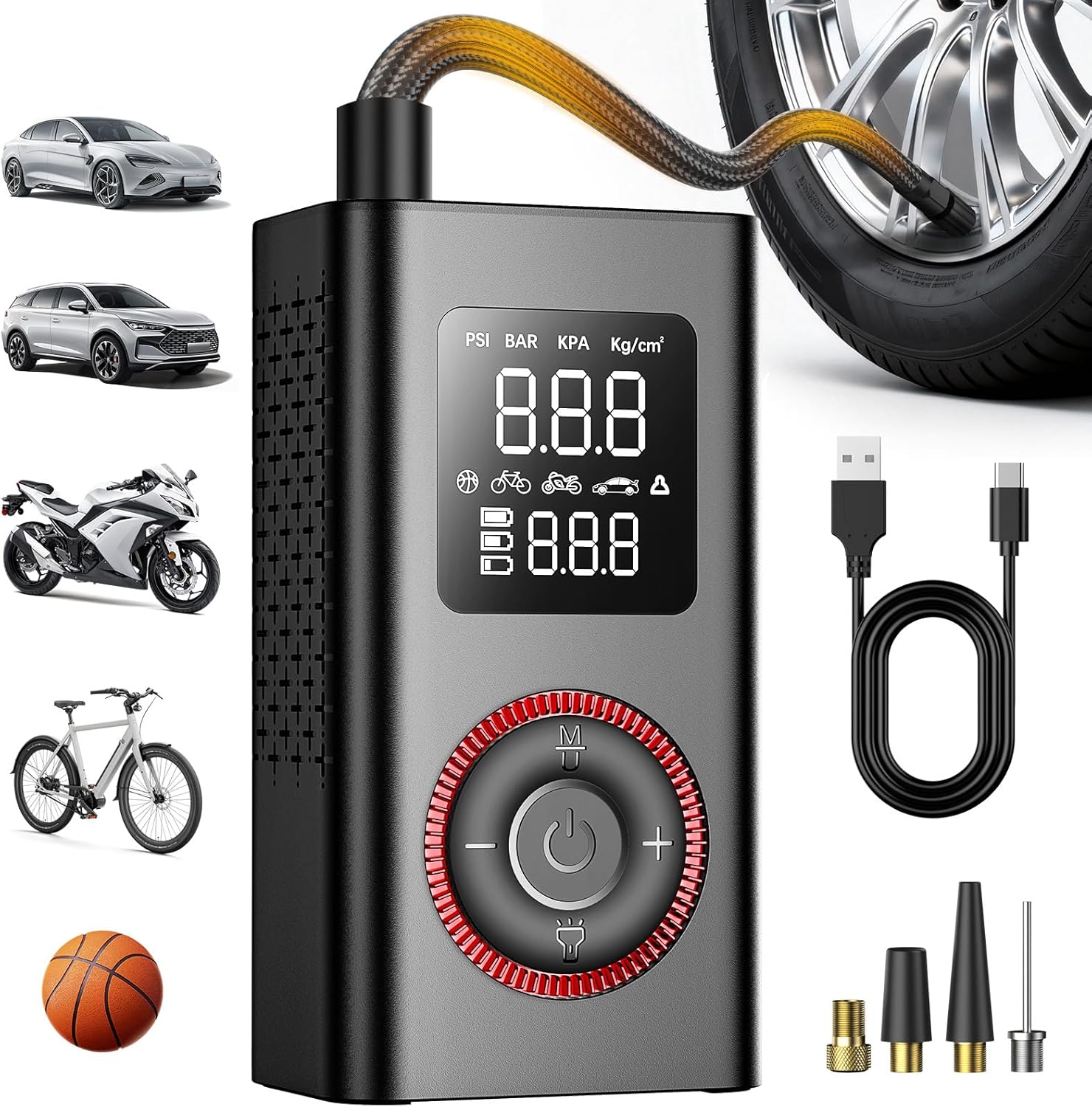
This portable tire inflator delivers fast, efficient inflation with a maximum 150 PSI rating and accurate pressure control for cars, motorcycles, bikes, and more. It features preset modes with automatic shutoff to help prevent overinflation, plus a real-time digital gauge and bright LED light for roadside use. Powered by a rechargeable 6000mAh battery with Type-C charging and a USB output, it’s also useful as an emergency power source for devices.

This portable cordless tire inflator delivers fast, efficient inflation for cars, motorcycles, bikes, and sports balls with a digital pressure gauge. Use the one-click PSI preset with auto shut-off for accurate, hands-free topping to your target pressure up to 150 PSI. It’s compact and rechargeable with a built-in emergency LED light plus valve adapters and accessories for quick, ready-to-go use.
How to Fix Outer Tire Wear
Fix the cause before you buy another tire. Otherwise, the new tire can develop the same outer-edge wear. Start with the simple checks, then move to alignment and suspension.
- Set cold tire pressure. Inflate all tires to the vehicle’s recommended pressure.
- Inspect the tire for replacement signs. Do not reuse a tire with exposed cords, bulges, major cracking, separation, or unsafe tread depth.
- Check for suspension looseness. Worn bushings, tie rods, ball joints, shocks, and struts can ruin an alignment.
- Get an alignment. Ask the shop to check toe, camber, caster, and thrust angle.
- Balance if needed. Vibration or cupping may also require wheel balancing or wheel inspection.
- Rotate only if safe. Do not rotate a severely worn or damaged tire to another position just to keep using it.
Pro Tip: Ask for the alignment printout. The before-and-after numbers show whether toe, camber, or caster was out of spec and help you spot a repeat problem later.
When to Get an Alignment Check
Get an alignment check when you see uneven tire wear, especially if the outside edge wears faster than the center or inner edge. You should also schedule one after a hard pothole hit, curb strike, suspension repair, steering repair, or new tire installation.
Other signs include a steering wheel that sits off-center, a vehicle that pulls on a straight road, or tires that squeal during normal turns. If the vehicle keeps drifting after the alignment, ask the shop to inspect tire condition, brake drag, wheel bearings, ride height, and suspension parts.
A proper alignment helps the tires roll straight, reduces scrub, and keeps the tread contact patch more even. It also helps protect steering response and braking stability.
What a Shop Should Check
A good tire or alignment shop should not only adjust toe and send you away. Outer tire wear can come from several connected problems, so the inspection should cover the full front end and tire condition.
- Toe: the direction the tires point from above.
- Camber: the inward or outward tilt of the tire.
- Caster: the steering pivot angle that affects stability and return-to-center feel.
- Thrust angle: whether the rear axle points squarely with the vehicle centerline.
- Suspension play: worn bushings, ball joints, tie rods, shocks, and struts.
- Wheel condition: bends, runout, or damage from potholes.
- Wheel bearing play: looseness, growling, or vibration that can affect tire contact.
- Tire safety: tread depth, age, punctures, sidewall damage, bulges, and exposed cords.
Is It Safe to Drive on Outside Tire Wear?
It depends on how severe the wear is. Light outer-edge wear may be safe for a short time while you schedule pressure correction, rotation, or alignment. Severe shoulder wear is different because the tire may have less wet traction and less rubber protecting the casing.
Do not drive at highway speed on a tire with exposed cords, a visible belt, a sidewall bulge, tread separation, or pressure loss. If the outer shoulder is bald but the rest of the tire looks better, the tire can still be unsafe because the weakest area controls the risk.
Frequently Asked Questions
Why is the outside of my tire going bald?
The outside of your tire can go bald from low pressure, excessive toe-in, positive camber, worn suspension parts, or aggressive cornering. If both shoulders are worn, check pressure first. If only the outer shoulder is worn, schedule an alignment and suspension inspection.
Will a bad wheel bearing cause outside tire wear?
Yes, a bad wheel bearing can contribute to uneven tire wear if it allows wheel play or changes how the tire contacts the road. It is not the most common cause of outside tire wear, but you should inspect it if you hear growling, feel vibration, or notice looseness at the wheel.
Can you patch the outer tread of a tire?
A tire professional may repair some punctures in the central tread area, but shoulder and sidewall damage is usually not safely repairable. If the puncture or damage is near the outer edge, sidewall, exposed cords, or a worn-out area, replace the tire instead of patching it.
How much sidewall damage is acceptable?
Minor surface scuffs may not require replacement, but cracks, bulges, deep cuts, exposed cords, bubbles, or damage that reaches the tire structure are not acceptable. Have the tire inspected before driving. Replace it if the sidewall structure is damaged.
Should I replace tires before or after alignment?
Fix worn suspension parts first, then align the vehicle, and replace unsafe tires as needed. If the old tire is badly worn, replace it before or during the alignment service so the shop can set the vehicle up with safe, even tires.
Can rotating tires fix outside tire wear?
Rotation can help even out normal wear, but it will not fix the cause of outside-edge wear. If pressure, alignment, or suspension is wrong, the wear pattern will continue. Do not rotate a tire that is unsafe, bald on one edge, or showing sidewall damage.
Conclusion
If the outside of your tire is wearing, check cold tire pressure first, then inspect the wear pattern across the full tread. Both-shoulder wear often points to underinflation, while one-sided outer shoulder wear usually points to alignment, camber, toe, or worn suspension parts.
Do not replace the tire and ignore the cause. Correct pressure, repair worn parts, align the vehicle, and replace any tire that has unsafe tread depth, exposed cords, sidewall damage, bulges, or separation. Fixing the root problem protects your tire life, handling, and safety.
Sources
- NHTSA TireWise: Tire Safety Ratings and Awareness — supports tire pressure, tread depth, TPMS, tire damage, blowout, rotation, and 2024 tire-related crash data.
- Tire Rack: What Are the Different Alignment Settings? — supports toe, camber, caster, thrust angle, suspension wear, pothole impact, and alignment timing guidance.
- NHTSA Consumer Guide to Uniform Tire Quality Grading — supports tire treadwear, traction, and temperature rating context.

Related Articles
Tire Balancing Weights: Types, Cost, and Why You Need Them
Precisely chosen tire balancing weights reduce vibration and wear, but which type fits your wheels and what it really costs may surprise you.
Read More
Tire Repair Kits: What’s Inside and How to Use One
Get the essentials of tire repair kits, learn how each tool works, and discover the simple steps that can save your trip.
Read More
How to Get More Miles Out of Your Tires: 10 Proven Tips
Maximize tire life with 10 proven tips that save money and boost safety—discover the simple habits that can add many more miles.
Read More