
What Causes a Tire to Feather? Alignment Issues & Solutions
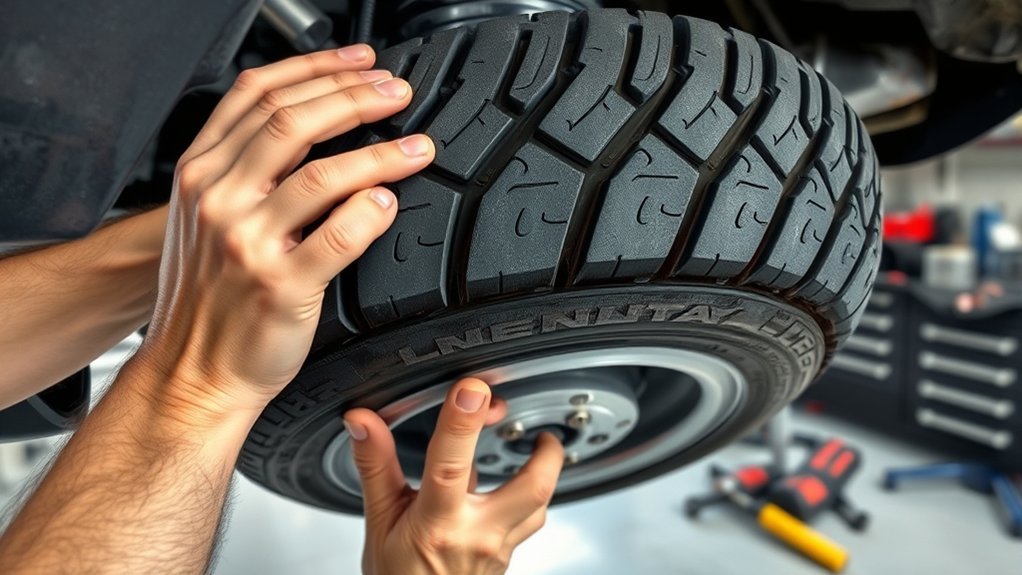
A tire feathers when each tread block wears unevenly, leaving one edge sharp and the opposite edge rounded. You usually feel it before you see it: run your hand across the tread in both directions, and one direction feels rough or sawtoothed. The most common cause is wheel misalignment, especially incorrect toe, but worn suspension parts and incorrect tire pressure can make the pattern worse.
Quick Answer
Tire feathering is uneven tread wear that feels sharp in one direction and smooth in the other. It is most often caused by toe misalignment, but worn bushings, ball joints, shocks, struts, and incorrect tire pressure can contribute. Fix the root cause first, then rotate or replace the affected tires.
Key Takeaways
- Tire feathering feels sharp or jagged in one direction and smoother in the opposite direction.
- Incorrect toe alignment is the most common cause because it makes the tire scrub instead of roll straight.
- Worn suspension parts can let the wheel move under load and create uneven tread contact.
- Underinflation and overinflation can distort the contact patch and speed up irregular tire wear.
- A mild case may improve after alignment and rotation, but severe feathering often means the tire needs replacement.
At a Glance
| Time Required | 10 to 15 minutes for a basic tire check; longer if a shop performs alignment or suspension diagnosis. |
| Difficulty | Easy for inspection; professional service needed for alignment or worn suspension parts. |
| Tools Needed | Tire pressure gauge, tread depth gauge or penny, flashlight, gloves, and your vehicle owner’s manual. |
| Cost | The inspection is usually free if you do it yourself. Shop costs vary by vehicle, alignment needs, and whether parts need replacement. |
What Is Tire Feathering?
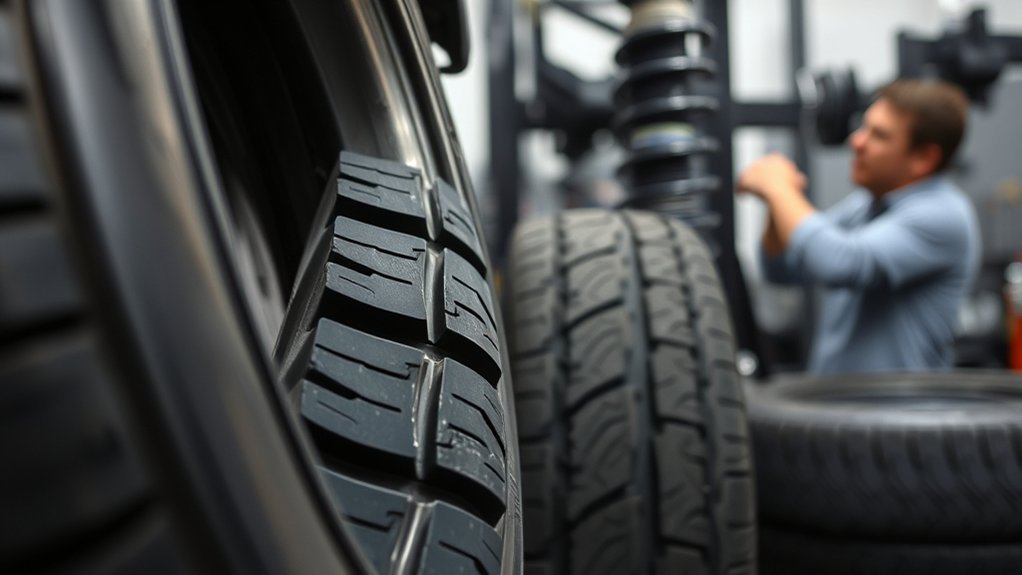
Tire feathering is a tread wear pattern where the tread ribs or blocks wear diagonally. One edge of a tread block feels raised or sharp, while the opposite edge feels rounded or smooth. That texture often feels like a sawtooth pattern when you slide your hand across the tread.
This is more than a cosmetic issue. Feathering means the tire is not meeting the road evenly. In many cases, the tire is being dragged slightly sideways because the wheel angle is off. That scrubbing can create noise, vibration, faster tread wear, and less predictable handling.
According to NHTSA TireWise, tire maintenance such as proper inflation, rotation, balancing, and alignment helps tires last longer and supports safe driving. If you catch feathering early, you may be able to correct the root cause before the tread becomes too uneven to save.
NHTSA reported 511 deaths in tire-related crashes in 2024, so uneven tire wear should be treated as a safety signal, not just a tire-life problem.
[Products Worth Considering]

EVOULTES heavy duty tire inflator with an integrated gauge delivers accurate pressure readings from 10–120 PSI, helping you inflate, deflate, and check tires in one tool. The 16.5-inch extended dual-head air chuck with swivel base reaches hard-to-access dual wheel valves on trucks and RVs. A brass trigger core and side-mounted air release valve make operation smooth, with standard 1/4" NPT threading and quick-connect compatibility for easy setup.

The JACO FlowPro Tire Inflator measures, inflates, and airs down tires up to 100 PSI with battery-free operation and ±2% accuracy after calibration. It features a glowing pressure dial for night visibility, a heavy-duty steel build with a hybrid hose, and a precision push-to-inflate thumb trigger. The patented Lightning Air Chuck locks on for a secure seal, and the kit includes quick-connect hardware for easy inline use with your air compressor.

This portable cordless tire inflator delivers up to 160 PSI with fast 17 L/min airflow to help you quickly top up tires and get back on the road. It features dual power mode, running on a 21V rechargeable battery or a 12V DC adapter for convenient roadside use. An automatic shut-off with digital pressure gauge helps prevent overinflation, and a built-in LED light improves visibility in low-light conditions.
How Do You Tell if Tires Are Feathered?
You can tell tires are feathered by using both a hand check and a visual check. Feathering is often easier to feel than to see, especially in the early stage. Always park on a flat surface, let the tires cool, and avoid dragging your hand over exposed cords, cuts, or sharp debris.
Warning: Do not keep driving on a tire with exposed cords, bulges, deep cracks, severe vibration, or tread at 2/32 inch. Use a safe spare if available and have the tire inspected before driving farther.
Tactile Wear Check
Run your hand lightly across the tread from the inside shoulder to the outside shoulder, then repeat in the opposite direction. A feathered tire feels rough, sharp, or jagged one way and smoother the other way. Check all four tires so you can compare the pattern across the vehicle.
If one front tire feels feathered and the other looks normal, you may have a localized alignment or suspension issue. If several tires show the same pattern, the vehicle may need a full alignment check and a broader suspension inspection.
Pro Tip: Mark the roughest tire with a small piece of tape before going to the shop. Ask the technician to compare that tire’s wear with the alignment printout and suspension inspection results.
Visual Wear Signs
Feathering may look like diagonal wear across the tread ribs. One edge of each tread block may look lower, smoother, or more polished than the opposite edge. Dirt and pollen can make the uneven zones easier to see.
| Visual sign | What it may mean |
|---|---|
| Sawtooth rib edges | Possible toe misalignment or tread scrub |
| Same pattern on both front tires | Front alignment or steering component issue |
| Feathering plus vibration | Uneven wear, imbalance, tire damage, or suspension wear |
| One shoulder worn more than the other | Possible camber issue, worn parts, or chronic underinflation |
| Tread wear bars flush with tread | Tire has reached replacement depth |
Tire Feathering vs. Cupping, Camber Wear, and Normal Wear
Feathering is easy to confuse with other tire wear patterns. The difference matters because each pattern points to a different likely cause.
- Feathering: Sharp edge one way, smooth edge the other way. Toe misalignment is the common suspect.
- Cupping or scalloping: High and low patches around the tire. Weak shocks, struts, imbalance, or loose suspension parts may contribute.
- Camber wear: One inner or outer shoulder wears faster than the rest of the tread. Camber angle or worn suspension parts may be involved.
- Center wear: The middle tread wears faster than both shoulders. Overinflation may contribute.
- Both-edge wear: Both shoulders wear faster than the center. Underinflation or overloading may contribute.
If you are not sure which pattern you have, check tire pressure first, measure tread depth across the tire, and ask for a professional alignment and suspension inspection.
What Causes Tire Feathering?
Tire feathering usually starts when the tire scrubs across the road instead of rolling cleanly. The three main causes are alignment problems, worn suspension or steering parts, and incorrect tire pressure. More than one issue can happen at the same time, which is why an alignment check should include a basic suspension inspection.
Alignment Problems
Misaligned wheels are the most common cause of feathered tire wear. Incorrect toe-in or toe-out makes the tire point slightly inward or outward as the vehicle moves forward. That small angle can drag the tread across the road and shave one edge of each tread block more than the other.
The U.S. Tire Manufacturers Association says misaligned wheels can lead to uneven, rapid tread wear and should be corrected by a tire dealer when trouble signs appear. Common signs include pulling, a crooked steering wheel, uneven tire wear, or new vibration after a pothole or curb strike.
- Check alignment after pothole hits, curb impacts, or suspension repairs.
- Ask for a printout showing before-and-after toe, camber, and caster readings.
- Correct worn parts before alignment if the wheels cannot hold spec.
- Recheck tires after a few weeks to confirm the wear pattern is not returning.
Suspension Wear
Worn suspension and steering parts can also create feathering. Loose bushings, ball joints, tie rod ends, control arms, shocks, or struts can let the wheel move under braking, turning, or bumps. That movement changes the tire’s contact with the road and can make alignment readings drift under load.
A proper inspection should check for looseness, torn rubber, leaking shocks or struts, clunks, steering play, and uneven ride height. Replace parts when they are worn, leaking, noisy, loose, or outside the vehicle manufacturer’s service limits. Do not rely on one universal mileage number for every vehicle.
Tire Pressure Issues
Incorrect tire pressure changes the contact patch. Underinflated tires can run hotter and wear unevenly. Overinflated tires may be more vulnerable to impact damage and may concentrate wear toward the center of the tread.
NHTSA recommends checking all tires, including the spare, at least once a month when the tires are cold. The correct pressure is on the Tire and Loading Information label on the driver’s door area or in the owner’s manual, not the maximum pressure printed on the tire sidewall.
- Check pressure before long trips, heavy loads, or towing.
- Use a real tire pressure gauge, even if your vehicle has TPMS.
- Adjust pressure when tires are cold for the most accurate reading.
- Recheck pressure after major temperature swings.
How to Diagnose Tire Feathering Step by Step
You can do a basic tire-feathering check at home before booking service. This will not replace a professional alignment, but it helps you explain the problem clearly.
- Park safely: Choose a flat surface, set the parking brake, and let the tires cool.
- Check pressure: Compare each tire to the placard pressure and correct it if needed.
- Measure tread depth: Use a tread depth gauge across the inner, center, and outer tread areas.
- Feel the tread: Slide your hand across each tire in both directions and note any sharp-to-smooth pattern.
- Compare tires: Look for patterns on one tire, one axle, or all four tires.
- Note symptoms: Write down pulling, vibration, humming, uneven steering, or recent pothole impacts.
- Book inspection: Ask for alignment readings and a suspension check before new tires are installed.
Note: If a shop aligns the vehicle without checking loose suspension parts, the new alignment may not hold. Worn parts should be repaired first.
How Alignment Problems Create Feathered Wear
When the toe setting is out of spec, the tire no longer points straight down the road. Instead, it drags slightly sideways while rolling. That sideways scrub creates a sawtooth edge on the tread blocks.
Camber and caster also matter for handling and tire contact, but toe error often creates the fastest feathering. That is why you should check alignment after curb strikes, potholes, steering repairs, suspension work, or new tire installation if the old tires showed uneven wear.
A correct alignment restores the wheel angles to the vehicle manufacturer’s specifications. It also helps the car track straight, reduces tread scrub, and gives new or rotated tires a better chance to wear evenly.
Suspension Parts That Contribute to Feathering
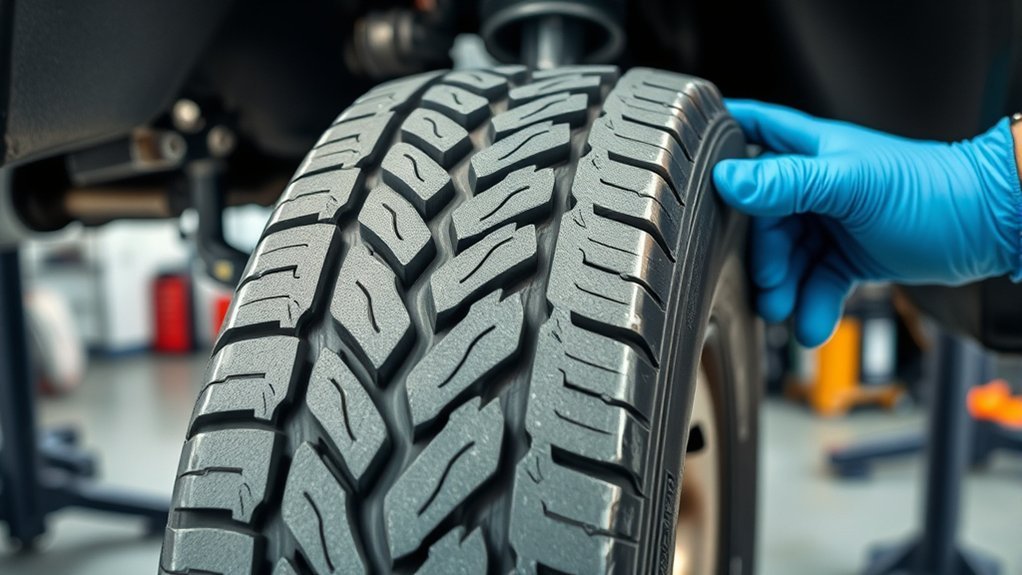
Even with a recent alignment, worn suspension parts can keep your tires from tracking cleanly. If a wheel moves more than it should, the tire may scrub during braking, cornering, or bumps.
Worn suspension parts can cause feathering by letting the tire lose steady, square contact with the road.
- Shocks and struts: Weak damping can let the tire bounce and create irregular wear.
- Bushings: Cracked or loose bushings can shift wheel position under load.
- Ball joints: Loose ball joints can allow unwanted wheel movement.
- Tie rod ends: Steering looseness can change toe while driving.
- Control arms: Bent or worn arms can prevent the vehicle from holding alignment.
Have these parts inspected if the car pulls, clunks, wanders, vibrates, or wears tires unevenly soon after an alignment.
[Products Worth Considering]

This portable cordless tire inflator delivers fast, efficient inflation for cars, motorcycles, bikes, and sports balls with a digital pressure gauge. Use the one-click PSI preset with auto shut-off for accurate, hands-free topping to your target pressure up to 150 PSI. It’s compact and rechargeable with a built-in emergency LED light plus valve adapters and accessories for quick, ready-to-go use.

This roadside assistance kit helps drivers and passengers in urgent situations after an accident or breakdown, providing practical support while waiting for help. It includes a lightweight, compact tire inflator for fast inflation of standard vehicle tires, plus reinforced jumper cable protection for safer handling. Ideal for winter weather, road trips, camping, and travel, with everything stowed neatly in a trunk bag.
Is Tire Feathering Bad for Driving?
Yes, tire feathering can be bad for driving because it signals uneven tread contact. Mild feathering may start as extra road noise, a rough tread feel, or light vibration. Severe feathering can reduce ride quality, shorten tire life, and make steering feel less predictable.
The bigger concern is the root cause. A vehicle with bad toe alignment, loose steering parts, worn suspension components, or very low tire pressure may not handle or brake as intended. If feathering appears with vibration, pulling, bulges, exposed cords, or low tread depth, have the tire and vehicle inspected before continuing normal driving.
How Do You Fix Tire Feathering and Alignment Issues?
To fix tire feathering, fix the cause first. If you rotate or replace tires without correcting alignment, suspension, or pressure problems, the new tread can feather again.
- Check tire pressure: Set each tire to the vehicle placard pressure while cold.
- Inspect tread depth: Replace tires at 2/32 inch or earlier if damage makes them unsafe.
- Check suspension and steering: Repair worn or loose parts before alignment.
- Perform a wheel alignment: Ask for before-and-after readings, especially toe.
- Rotate if safe: Mild feathering may become less noticeable after rotation, but rotation will not regrow lost tread.
- Replace if severe: Tires with deep uneven wear, vibration, exposed cords, or unsafe tread depth should be replaced.
When you visit a shop, ask whether the feathering matches the alignment readings. Also ask whether the tire can be safely rotated, should stay in place, or needs replacement.
Can Tire Feathering Be Prevented?
Yes, tire feathering can often be prevented with regular tire and suspension maintenance. The goal is to keep the tire rolling straight, evenly loaded, and properly inflated.
- Check pressure monthly: Use the placard pressure and check when tires are cold.
- Rotate on schedule: Follow the owner’s manual. If no interval is listed, USTMA recommends every 5,000 to 8,000 miles.
- Inspect tread monthly: Look for uneven wear, cuts, bulges, high-low patches, and treadwear bars.
- Align when needed: Check alignment after impacts, pulling, steering repairs, suspension work, or uneven tire wear.
- Inspect suspension: Replace loose, worn, bent, or leaking parts before they damage new tires.
- Drive smoothly: Avoid hard curb strikes, potholes, and repeated impacts when possible.
Prevention works best when you use measurements instead of guessing. A tire pressure gauge, tread depth gauge, and alignment printout tell you more than a quick glance.
When Do Feathered Tires Need Replacement?
Feathered tires need replacement when tread depth reaches 2/32 inch, when treadwear indicators are flush with the tread, or when the tire shows unsafe damage. NHTSA says tires are not safe and should be replaced when tread is worn down to 2/32 inch.
You should also replace a feathered tire if the uneven wear creates persistent vibration, loud humming, poor handling, exposed cords, cracking, bulges, or separated tread. Even if the tread is above 2/32 inch, a tire can still be unsafe if it is damaged.
- Use a tread depth gauge for the most accurate reading.
- Check inner, center, and outer tread areas.
- Replace tires in pairs or sets when needed for balanced handling.
- Fix alignment or suspension problems before mounting new tires.
If the feathering is mild and the tire has safe tread depth, a technician may recommend rotation after correcting alignment. If the tire is severely worn, replacement is the safer choice.
Frequently Asked Questions
Can tire feathering be fixed?
You can fix the cause of tire feathering, but you cannot restore rubber that has already worn away. If feathering is mild, alignment correction and rotation may reduce noise and slow further wear. If the tread is severely uneven, damaged, or near 2/32 inch, replacement is usually the safer option.
Is it okay to drive on feathered tires?
It depends on severity. Mild feathering may be drivable long enough to schedule service, but you should not ignore it. Do not keep driving normally if you feel strong vibration, see exposed cords or bulges, notice severe pulling, or measure tread at 2/32 inch.
How do you tell if a tire is feathered?
Run your hand across the tread in both directions. A feathered tire feels sharp, rough, or sawtoothed in one direction and smoother in the other. You may also see diagonal wear across the tread ribs or hear a humming sound that changes with speed.
What alignment angle causes feathering?
Toe misalignment is the alignment angle most associated with feathering. Toe-in or toe-out makes the tire point slightly inward or outward while driving, which can scrub the tread and create sharp edges. Camber, caster, and worn parts can also affect tire contact and handling.
Can rotating tires remove feathering?
Rotation can spread future wear more evenly, but it cannot replace rubber that is already worn away. Rotate only after checking that the tire is safe and after correcting the alignment, pressure, or suspension issue that caused the feathering.
Do feathered tires make noise?
Yes, feathered tires can make a humming, growling, or rough road noise, especially as speed increases. Tire noise can also come from cupping, balance issues, wheel bearings, or aggressive tread patterns, so pair the road test with a tire and suspension inspection.
Conclusion
Tire feathering is a warning sign that your tires are not wearing evenly. The most common cause is toe misalignment, but worn suspension parts and incorrect tire pressure can also contribute. Start with a pressure check, tread-depth measurement, and hand-feel inspection. Then correct alignment or worn parts before rotating or replacing tires.
If the tread feels sharp one way and smooth the other, do not wait for the wear to spread. Early action can reduce noise, protect tire life, and help your vehicle track safely and predictably.
Sources
- NHTSA TireWise: Tire Safety Ratings and Awareness — tire pressure, tread depth, treadwear indicators, rotation, alignment, and tire-related crash data.
- U.S. Tire Manufacturers Association: Tire Care Essentials — pressure, tread, rotation, alignment, and monthly tire inspection guidance.
- U.S. Tire Manufacturers Association: Tire Care & Safety — broader tire safety and maintenance guidance.
- Tire Rack: Alignment, Thrust, Camber, Caster and Toe — alignment angle terminology and tire-wear context.

Related Articles

Tire Squeal When Turning: Causes, Fixes, and Prevention
Lingering tire squeal while turning can signal pressure, wear, alignment, or brake issues—discover the simple fixes before costly damage gets worse.
Read More
Does Flex Seal Fix a Flat Tire? What Actually Works
I tested whether Flex Seal can fix a flat tire—and the answer may surprise you if you want a repair that actually lasts.
Read More
How to Recycle Old Tires: Where to Take Them and Costs
Learn where to recycle old tires, what it costs, and which free options might save you money before you decide where to take them.
Read More