
Tire Tread Depth: How to Check It and When to Replace Your Tires
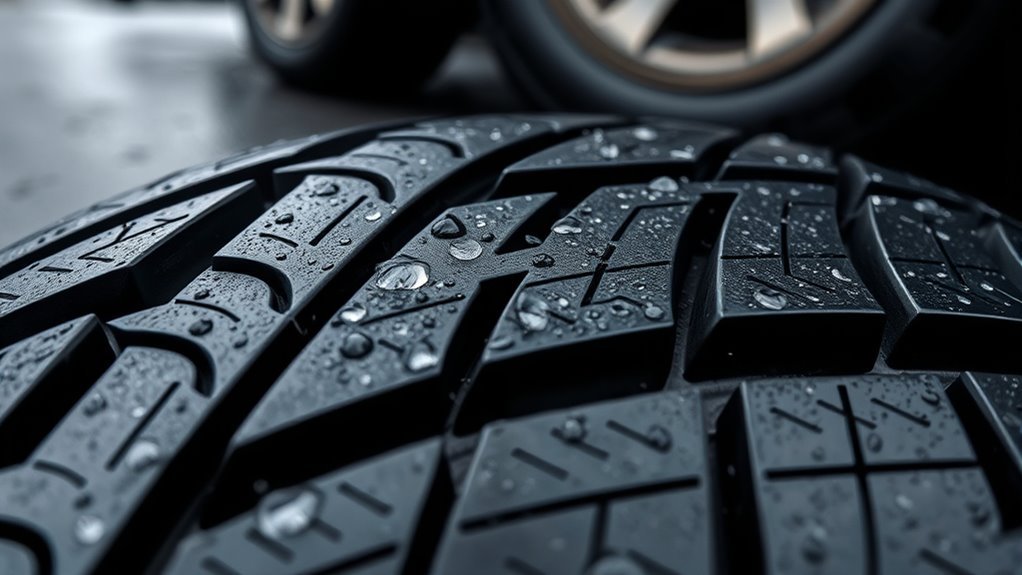
Tire tread depth is the vertical distance from the tire surface to the groove bottom. It controls your traction, braking, and hydroplaning risk. New tires start around 10–12/32″. Legally, you must replace tires at 2/32″, but safety experts recommend swapping them at 4/32″ for better wet performance. Use a gauge or penny/quarter tests and check multiple grooves for uneven wear. Keep pressure, rotate regularly, and continue below for detailed guidance.
Quick Answer
- New tires start with 10–12/32″ of tread depth.
- Replace tires at 4/32″ for safe wet-weather traction and braking.
- The legal minimum is 2/32″ in most states.
- Check tread with a gauge, penny test, or quarter test.
- Rotate tires every 5,000–7,500 miles and keep proper pressure to extend life.
What Tread Depth Measures and Why It Matters
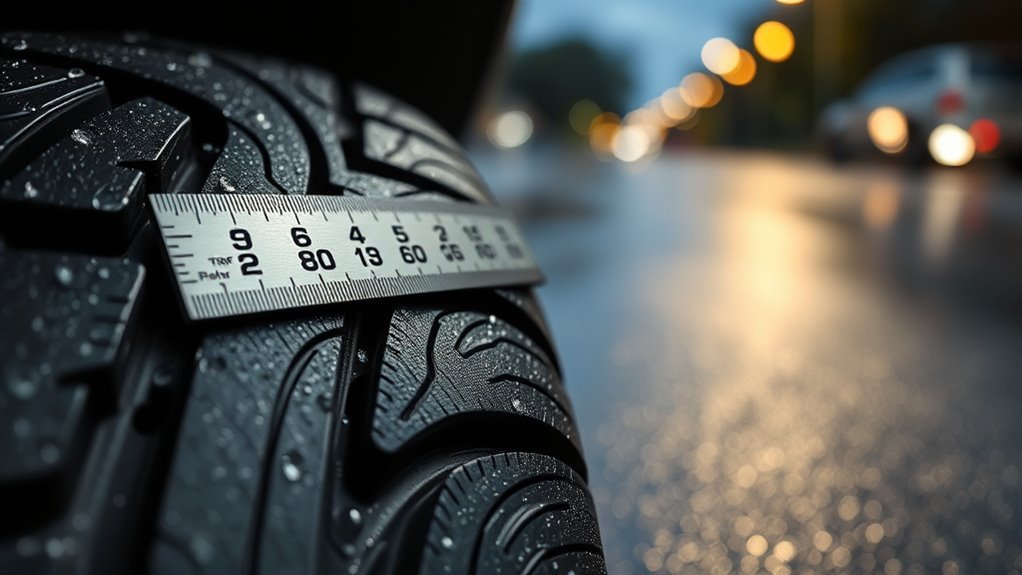
Tire tread depth is the vertical distance from the tread surface to the bottom of the grooves. It shows how well your tires grip the road and channel water away. Deeper grooves give better traction, shorter braking distances, and less hydroplaning risk.
When depth drops toward 4/32″, stopping distance grows by about 43% at 60 mph compared with new tires. Below 2/32″ the tire is legally and functionally bald. You need to replace it right away. Check depth regularly with a gauge or the built-in wear indicators. Plan to replace before 4/32″ so you keep control in wet or snowy conditions.
New Tire Tread: Typical Depths at Purchase
New tires usually come with 10/32″ to 12/32″ of tread. This depth helps channel water and gives good bite for wet or off-road driving. The 10/32″ level works well for most tires. The deeper 12/32″ suits winter or off-road designs.
Deeper tread moves water, snow, and debris more effectively. Performance drops as the tread wears, so the starting depth sets your expected service life. Measure tread depth from time to time. Track the numbers and plan rotations or replacements before safety suffers.
[Products Worth Considering]

The Milton 555e digital tire inflator delivers fast, accurate pressure readings with a backlit display and multiple unit options, making tire inflation quick and easy. Its durable 20" EPDM rubber hose and grip‑head chuck provide reliable connection, while the ±1 PSI accuracy ensures precise inflation for cars, bikes, and trucks.

This digital tire pressure gauge combines a sturdy pistol grip inflator with a backlit 0.1 PSI display for quick, accurate readings in any lighting condition. Its 360° swivel gauge and 20" rubber hose make it easy to use and store, while the integrated inflate/deflate trigger and ¼" NPT air inlet provide fast, reliable tire maintenance.

The WORKPRO digital tire pressure gauge with inflator offers precise 0.1 PSI resolution and ±1% accuracy for reliable tire inflation across vehicles and inflatables. Built with heavy‑duty aluminum alloy, brass, and rubber, it resists rust and drops while delivering deflation, inflation, and pressure checking functions. The kit includes valve caps, adapters, a twist‑on chuck, screwdriver, nozzles, needle, seal tape, and a storage bag with batteries, making it a versatile, portable solution for on‑the‑go tire maintenance.
Quick DIY Checks: Penny, Quarter, and Wear-Bar Tests
You can check tread depth with simple tools. For the penny test, insert a penny head-down into the groove. If Lincoln’s head shows completely, the tread is at or below 2/32″. For extra safety margin, use a quarter head-down. If Washington’s head shows fully, the tread is likely 4/32″ or less and you should replace the tire.
Also look at the built-in treadwear indicator bars. They sit flush with the tread at the legal 2/32″ minimum.
[Products Worth Considering]

The Milton 507KIT delivers fast, accurate tire inflation, deflation and pressure measurement with a backlit LCD gauge and 14" rubber hose. Its 3‑in‑1 design meets ANSI/ASME standards and provides readings from 0‑250 PSI with 0.1 PSI resolution. The ergonomic pistol‑grip body and brass lock‑on chuck make one‑handed operation effortless, while the auto‑off feature conserves battery life.
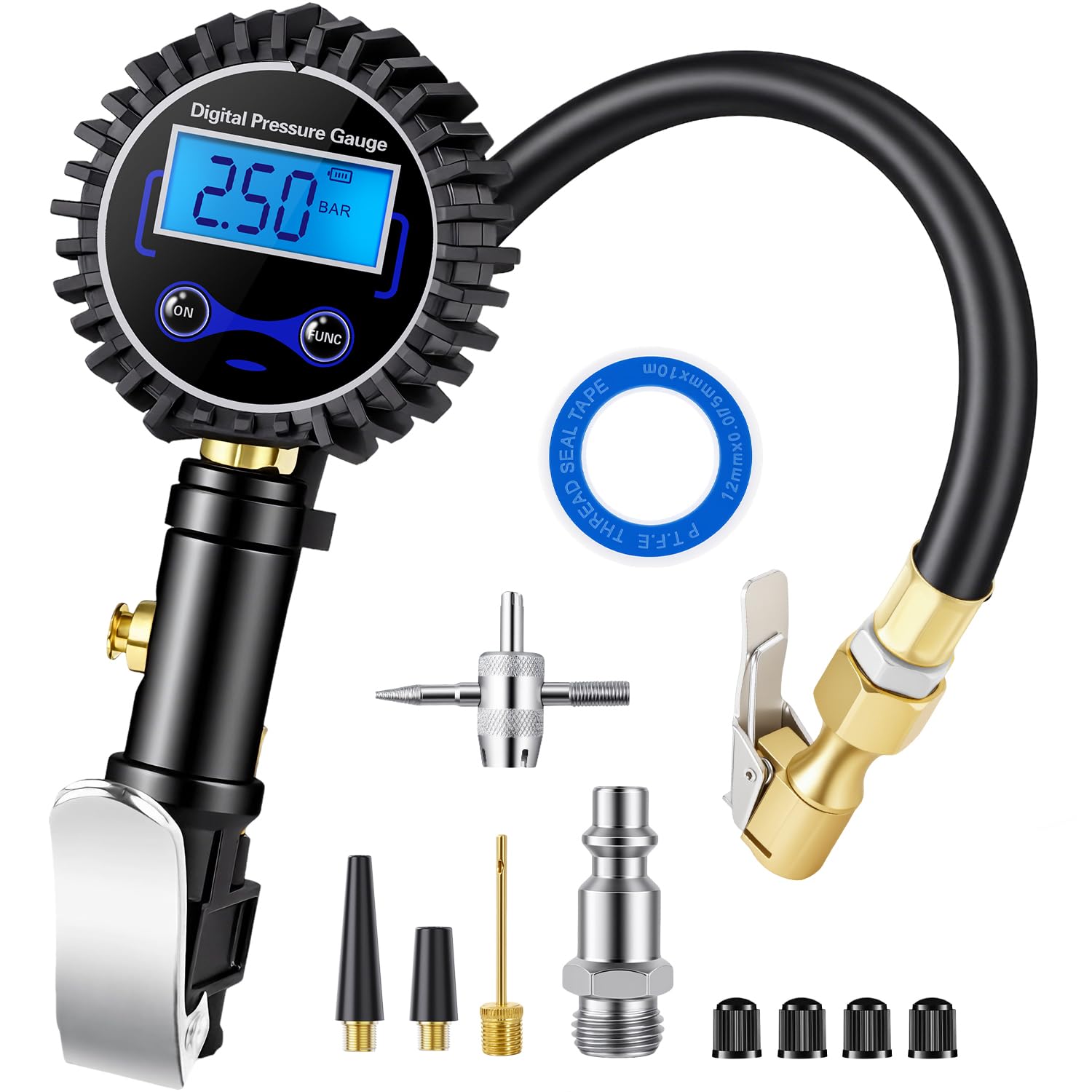
The Digital Tire Pressure Gauge with Inflator offers precise pressure readings with a high‑resolution LED display and four unit options, making tire maintenance quick and accurate. Built from stainless steel and brass, it includes a durable rubber hose, quick‑connect coupler, and a 3‑year warranty for reliable, everyday use across cars, RVs, bikes, and inflatables.

1.Accurate and Efficient: Different colors on the bar represents different scopes, the red range on bar: 0 - 3/ 32; Yellow range on bar: 3/ 32 - 6/ 32; Green range on bar: 6/ 32 - 32/ 32, allowing you easy and fast to read and calibrated
Penny Test Method
The penny test gives a fast check of tread depth. Insert the penny with Lincoln’s head facing down into the groove. If you see his entire head, the tread is too shallow and the tire needs replacing. Test several grooves around the tire. Uneven results mean irregular wear that needs closer inspection.
If the penny shows too much of Lincoln’s head, replace the tire before wet roads raise hydroplaning risk. Pair this test with wear-bar checks and a gauge for a complete routine.
Quarter Test Method
The quarter test is another easy check. Insert the quarter head-first into a groove. If the top of Washington’s head shows, the tread is under 4/32″ and you should plan to replace the tire. Test multiple grooves to catch uneven wear.
If several spots read below 4/32″, replace the tires for better wet-weather performance. This test gives a practical safety threshold rather than just the legal minimum. Combine it with a visual check for cuts, bulges, or odd patterns.
Tread Wear Bars
Tread wear bars give an instant visual cue when a tire reaches the legal 2/32″ minimum. These narrow raised sections sit across the grooves. When the surrounding tread wears even with the bars, it is time to replace the tire.
Use the bars together with the penny and quarter tests. This helps you spot uneven wear across the tire. Regular checks keep traction and handling safe.
| Check type | Indicator | Action |
|---|---|---|
| Wear bar | Bar level flush with tread | Replace tire |
| Penny test | Lincoln visible | Replace tire |
| Quarter test | Washington covered | OK/monitor |
Measure Accurately: Using a Tread Depth Gauge
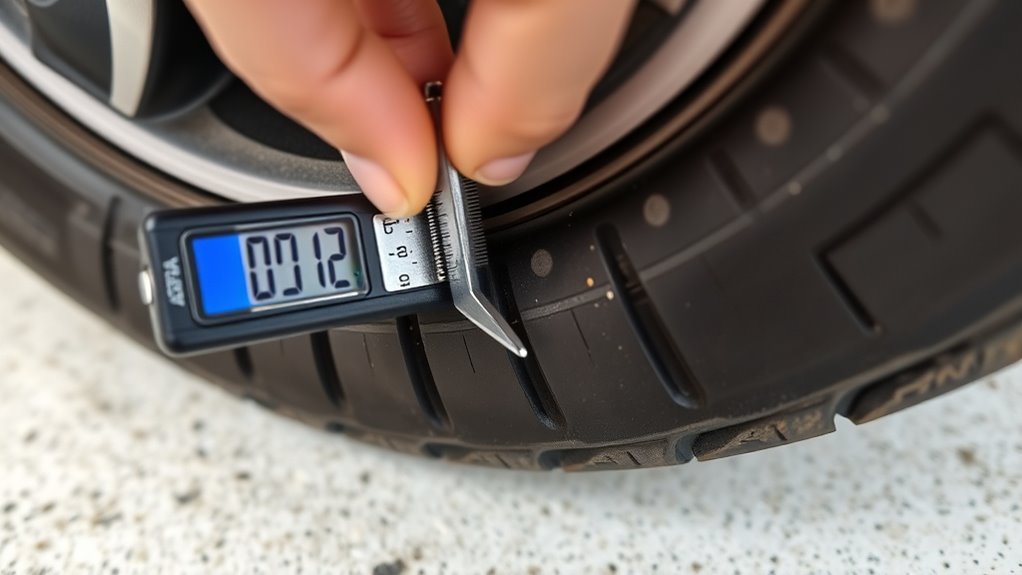
Place the gauge perpendicular to the tread and press the probe into the deepest part of a groove until the base sits flat. You get a direct reading in 32nds of an inch. Check several grooves on each tire and compare front to rear for uneven wear.
New tires start around 10–12/32″, so tracking the decline helps you plan replacements. A simple mechanical or digital gauge gives accurate results. Measure all four tires often, note the numbers, and replace any tire that nears the legal minimum. This keeps braking, traction, and hydroplaning resistance strong.
[Products Worth Considering]

1. Accurately measures tire tread depth gauge, Calibrated from 0 to 1 inch in 1/32 inch

Accurate measures tire tread depth gauge tool

1. Accurately measures tire tread depth gauge tool, Calibrated from 0 to 1 inch in 1/32 inch
Why 2/32″ Is the Legal Minimum : and Why 4/32″ Is Safer
Most states set 2/32″ as the legal minimum. At that depth the grooves can no longer move water away, so braking, cornering, and hydroplaning resistance drop sharply. The law gives the absolute floor, not the safe level.
Experts recommend replacing at 4/32″ because that depth still keeps enough groove volume and tread block strength. Tires under 4/32″ are three times more likely to cause problems. Depths below 5/32″ already hurt wet traction. Replace earlier so you keep predictable handling and lower risk.
How Reduced Tread Affects Stopping Distance and Hydroplaning
Worn tread makes stopping distances longer and hydroplaning more likely. At 4/32″ braking distance can be about 43% longer at 60 mph than with new tires. At 2/32″ the grooves are exhausted and water cannot be channeled away.
- At 4/32″ braking distance increases markedly, raising collision risk at highway speeds.
- Below 4/32″ grooves cannot evacuate water reliably, so hydroplaning likelihood rises.
- At 2/32″ tires are effectively bald and contact patch grip is lost on wet roads.
- Regular depth checks prevent degraded tire performance; worn tires can keep moving far after new tires stop.
State & DOT Tread Requirements for Cars and Trucks
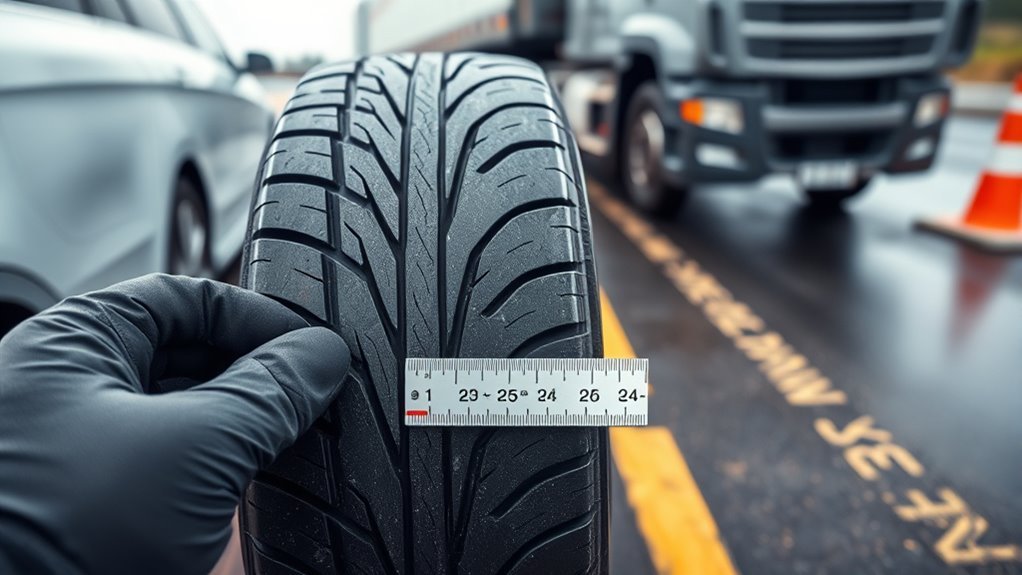
Federal and state rules set the legal limits. For commercial vehicles the DOT requires 4/32″ on steering axles and 2/32″ on other tires. Many states follow the 2/32″ rule for passenger cars, with exceptions such as California and Idaho at 1/32″ and Texas at 3/32″.
Federal And State Minimums
The DOT sets 4/32″ minimum for steering axles on commercial vehicles. Other commercial and passenger tires use 2/32″. NHTSA considers anything below 2/32″ bald. States vary: Texas often requires 3/32″ for inspections while 42 states use 2/32″.
Regular checks keep you ahead of hazards. Tires under 4/32″ already risk wet or snowy conditions. Follow federal rules first, then check your state’s inspection standards.
Commercial Vehicle Standards
Commercial operators follow DOT rules that require 4/32″ minimum on steering axle tires and 2/32″ on other commercial tires. Passenger cars legally need 2/32″, but experts advise earlier replacement. State rules can differ, so know the thresholds for the areas you drive.
For wet-weather performance, stay above 6/32″ when possible. Routine measurements and proactive replacement help you avoid safety issues and inspection failures.
Enforcement And Inspection Rules
Inspectors compare tires to DOT minima—4/32″ on steering axles for commercial vehicles and 2/32″ elsewhere—plus any stricter state standards. North Carolina fails vehicles below 2/32″. California and Idaho allow 1/32″. Texas needs 3/32″. Enforcement mixes federal rules, state programs, and officer judgment.
- Follow DOT minima for commercial vehicles; steering axles get priority.
- Track state-specific thresholds; they may override practical safety margins.
- Increase inspection frequency if you operate across multiple jurisdictions.
- Prioritize tire maintenance to reduce crash risk and inspection failures.
When to Replace Tires: Tread Depth, Age, Wear Patterns, and Damage
Replace tires before performance drops. Swap them when depth nears 4/32″ for strong wet traction. Although 2/32″ meets the law in many states, it is not safe for everyday driving.
Also replace tires by age. Manufacturers suggest new tires between 6 and 10 years old regardless of tread depth because rubber hardens and failure risk grows. Look for uneven wear patterns such as cupping, feathering, or one-sided wear. These signs mean you should replace the tires early.
Remove tires right away if you see bulges, visible cracks, or irreparable punctures. These defects matter more than tread depth.
Maintenance Checklist to Extend Tread Life (Pressure, Rotation, Alignment)
Keep tire pressure at the vehicle-recommended PSI. This prevents uneven wear and helps tread last longer. Rotate tires every 5,000–7,500 miles and balance them to spread wear evenly. Fix wheel alignment quickly to stop early edge or cupping wear.
Maintain Proper Tire Pressure
Check tire pressure at least once a month and after big temperature changes. Set it to the manufacturer’s recommended PSI. Proper pressure stops underinflation that causes uneven wear and raises hydroplaning risk.
- Measure cold tire pressure with a calibrated gauge before driving.
- Inflate to the placard psi; avoid overinflation that concentrates tread loading.
- Recheck after long trips or heavy loads; heat raises pressure and can mask low psi.
- Inspect for slow leaks, valve-stem damage, or tire sidewall issues that compromise pressure control.
Steady pressure, good alignment, and regular rotations give even tread wear, better fuel efficiency, and safe handling.
Rotate Tires Regularly
Rotate your tires every 5,000 to 7,500 miles. This promotes even tread wear and lengthens tire life. Follow the manufacturer’s pattern for your vehicle type. Check pressure before and after the rotation.
Inspect each tire for cuts, bulges, or odd patterns during rotation. These may signal damage or the need for replacement. Record mileage and dates so you stay on schedule. Good rotation improves traction and fuel efficiency when you combine it with pressure checks.
Wheel Alignment And Balance
Proper alignment and balance keep tires wearing evenly and lasting longer. Misalignment or imbalance creates irregular wear that shortens tread life and hurts handling. Check alignment after hitting curbs, doing suspension work, or every 10,000–12,000 miles.
- Inspect: scan for uneven wear patterns indicating camber/toe issues; correct alignment minimizes edge wear.
- Balance: have weights adjusted when you feel vibration; it prevents cupping and patchy wear.
- Pressure: maintain specified psi; under-inflation accelerates center/shoulder wear.
- Rotate: follow 5,000–7,500 mile intervals to equalize wear across positions.
After a Crash Involving Worn Tires: Safety Steps and Legal Options
If tire wear may have played a role in a crash, document tread depth right away. Take clear photos of all tires and valve stems. Note any visible damage or irregular wear patterns. Depths below 2/32″ fail safety standards and can serve as important evidence.
After you secure the scene and contact authorities, preserve vehicle positions and collect witness information. Keep inspection reports and maintenance logs. Get medical attention and talk with a lawyer who handles tire-defect or negligence claims. Many firms offer free case reviews. Good documentation supports both safety reviews and legal steps.
Frequently Asked Questions
What Is the Minimum Tire Tread Depth for Safety?
The minimum safe tread depth is 2/32 inch; you should replace tires before 4/32 inch. Monitor tread wear with indicators or a gauge. Worn tires increase stopping distance and hydroplaning risk.
What Tread Depth Is Safe to Drive On?
Safe driving uses 4/32 inches as the practical threshold. You should not drive with tread wear below that level. You will handle wet conditions better if you check depth regularly with a gauge or quarter test.
Conclusion
You now know what tread depth measures, how to check it, and why 4/32″ gives safer stopping than the legal 2/32″ minimum. Measure with a gauge or use the penny, quarter, or wear bars for quick checks. Replace tires that show uneven wear, age beyond 6–10 years, or damage. Keep pressure, rotation, and alignment on schedule to get the most from your tires. After any crash, document everything and talk with a lawyer if needed. Better safe than sorry.

Related Articles
What Does THE P Stand For on a Tire? Full Meaning Explained
I’ll explain what the “P” on a tire really means and why it could change how you choose your next set.
Read More
How to Use a Tubeless Tire Repair Kit: Complete Field Guide
Learn how to fix tubeless tire punctures fast with the right kit, because one small mistake can leave you stranded on the trail.
Read More
How to Tell a Tire’s Diameter: Easy Guide to Reading Tire Size
Want to decode tire sidewall numbers and find the right diameter, but wonder what those hidden digits really mean?
Read More
2 Comments