
How to Become a Tire Distributor: Startup Guide & Requirements

Becoming a tire distributor is a business setup project, not just a bulk tire purchase. You need to prove local demand, choose the right tire niche, qualify with suppliers, handle licenses and tax paperwork, set up safe storage, and build a system that helps dealers reorder from you again and again.
A strong distributor does more than move tires from a warehouse to a shop. You help tire dealers, repair shops, fleets, and installers get the right sizes on time, with clear pricing, dependable delivery, and support when warranty or recall questions come up.
Quick Answer
To become a tire distributor, research local tire demand, choose a profitable niche, register your business, get required permits, line up suppliers, fund inventory, set up storage and delivery, track tire identification details, and build repeat-order relationships with dealers, repair shops, and fleets.
Key Takeaways
- Start with market research: demand, vehicle mix, competitors, pricing, seasonality, and underserved tire categories.
- Choose a business model before buying inventory: wholesale, retail-wholesale, fleet supply, commercial truck, specialty, or regional delivery.
- Register the business, confirm local permits, arrange sales tax/resale paperwork, and check tire registration and disposal obligations.
- Compare suppliers by price, minimum order quantity, delivery time, warranty process, credit terms, brand access, and dealer support.
- Use inventory software, reorder points, tire aging checks, and clear payment terms to protect cash flow.
At a Glance
| Time Required | Several weeks to several months, depending on permits, supplier approval, funding, and warehouse setup |
| Difficulty | Moderate to hard because inventory, supplier terms, storage, delivery, and cash flow must work together |
| Tools Needed | Business plan, supplier list, resale/tax paperwork, inventory software, POS or order system, warehouse racks, delivery plan, insurance |
| Cost | Varies widely. A lean operation may start with limited inventory and outsourced delivery; a stocked warehouse can require six figures or more in inventory, space, systems, insurance, and working capital. |
What Does a Tire Distributor Do?

A tire distributor buys tires in volume and sells them to businesses that install, resell, or use tires. Your customers may include independent tire shops, repair garages, fleet operators, agricultural accounts, construction companies, used-car dealers, and mobile tire installers.
Your job is to keep the supply chain moving. That means you negotiate with manufacturers or wholesalers, stock the right sizes, manage delivery, process warranty questions, handle returns, and help customers avoid stockouts during busy seasons.
You also need product knowledge. A dealer may ask which tires fit a value-focused sedan customer, which commercial casing is suitable for retreading, or which all-terrain line fits local truck demand. If you understand categories like fuel-efficient tires, touring tires, winter tires, commercial tires, and off-road tires, you can support your accounts with better recommendations.
The U.S. replacement tire market is large, but your local opportunity depends on vehicle mix, weather, competition, delivery speed, and the tire segments your customers actually reorder.
[Products Worth Considering]

This compact capsule-style tire repair kit helps you quickly fix punctures and plug flats with minimal effort. The rugged stainless steel shell protects the contents for reliable roadside use, while the simple plug assembly makes repairs fast and tool-free. Suitable for motorcycles, cars, ATVs, UTVs, and even mountain bikes.

This AUTOWN flat tire repair kit is designed for quick, reliable puncture repairs using a plug kit and spiral probe tool to simplify installation. Built for durability and safe handling, it offers strong adhesion and flexibility to help maintain tire air tightness. With a portable storage case and a multi-vehicle approach, it’s suitable for cars, motorcycles, ATVs, tractors, lawn mowers, RVs, jeeps, and trucks.

The AUTOWN 31-piece flat tire repair kit helps you quickly fix punctures and get back on the road. It includes a T-handle and spiral probe for easy plug insertion, plus a portable storage case for convenient carry. Designed for multiple vehicle types, this kit supports repairs for cars, motorcycles, ATVs, tractors, and more with reliable sealing.
Choose Your Tire Distribution Business Model
Before you apply for supplier accounts, decide what kind of distributor you want to build. A clear model helps you pick inventory, warehouse size, delivery routes, pricing, and customers.
Common Distributor Models
- Wholesale distributor: You sell mainly to tire shops, repair shops, and installers. This model depends on volume, fast delivery, and tight margins.
- Retail-wholesale hybrid: You sell to both businesses and local consumers. This can create more revenue paths, but it may require installation equipment, front-counter staff, and different insurance.
- Fleet and commercial supplier: You focus on delivery vans, light trucks, semi-trucks, buses, trailers, farm equipment, or construction accounts. This model often needs stronger delivery, credit, and service support.
- Specialty tire distributor: You focus on off-road, performance, winter, trailer, agricultural, industrial, or EV-focused tire categories.
- Regional delivery partner: You carry fast-moving SKUs and win on same-day or next-day delivery in a defined area.
Note: A focused niche is usually easier to launch than trying to stock every brand, size, and segment from day one. Start with the tire categories your target accounts buy repeatedly.
Research Your Tire Niche
Start by analyzing market demand so you can see which tire segments have the strongest sales potential in your area. Look at passenger tires, light truck tires, commercial truck tires, winter tires, performance tires, off-road tires, trailer tires, and specialty applications.
The U.S. Small Business Administration recommends using market research to confirm demand, market size, customer location, pricing, competition, and market saturation before launching a business. SBA market research guidance is a good starting point for this step.
Market Demand Analysis
Build a simple demand file before you buy inventory. Include:
- Vehicle mix: Count common sedans, SUVs, pickups, vans, commercial trucks, trailers, and fleet vehicles in your service area.
- Seasonality: Winter tire demand, rainy-season demand, farming cycles, construction cycles, and fleet replacement schedules can change your inventory needs.
- Search demand: Review local searches for tire sizes, tire brands, “tires near me,” “commercial tires,” “truck tires,” and “winter tires.”
- Customer interviews: Ask shops what sizes they run out of, which brands customers ask for, and what delivery problems they face with current suppliers.
- Price gaps: Compare local retail and wholesale pricing so you know where margin exists.
Tire Segment Selection
Choose your tire niche by comparing local demand, supplier access, profit margin, storage needs, and reorder frequency. For example, passenger tires may move faster but face heavy competition. Commercial truck tires can require more capital but may bring repeat fleet accounts. Specialty tires can carry stronger margins, but demand may be narrower.
Use these filters before you commit:
- Demand: Do local shops and fleets already buy this category often?
- Supply: Can you get reliable access to brands, sizes, and replacement stock?
- Margin: Can you sell at a competitive price and still cover delivery, storage, financing, and returns?
- Storage: Do you have safe space for the size and volume of tires?
- Seasonality: Will sales spike at certain times and slow down at others?
- Knowledge: Can you advise customers clearly on fitment, load rating, tread type, and use case?
If your audience includes outdoor drivers, for example, demand for off-road tires may be worth studying. If your area is full of commuter vehicles, touring, all-season, and fuel-efficient tires may move faster.
Competitor Landscape Review
Review the local competitor landscape before you set your price sheet. Study large wholesalers, local warehouses, tire chains, independent shops that sell to other shops, online sellers, and mobile installers.
Compare competitors on:
- Brands and tire categories they carry
- Delivery speed and order cutoff times
- Minimum order rules
- Credit terms and payment methods
- Warranty and return handling
- Customer service quality
- Online ordering tools
- Reviews and complaints
Then look for a gap you can own. You might win by stocking hard-to-find sizes, offering better same-day delivery, serving small shops that large distributors ignore, or focusing on a niche such as commercial truck, trailer, winter, or high-performance tires.
Choose Your Business Structure and Permits
Your business structure affects liability, taxes, paperwork, and your ability to raise money. The SBA explains that structures such as sole proprietorships, LLCs, and corporations differ in personal liability, tax treatment, and registration requirements. Review the options on the SBA business structure guide, then speak with a local accountant or attorney before you file.
Many tire distributors choose an LLC or corporation because inventory, delivery, warehouse activity, and customer credit can create real business risk. The right choice depends on your state, partners, funding plan, and tax situation.
Permits, Licenses, and Tax Paperwork
Licensing rules vary by city, county, and state. The SBA notes that license and permit requirements depend on your business activity, location, and government rules. Review SBA license and permit guidance and confirm local rules before opening.
You may need some or all of the following:
- Business registration with your state
- Local business license
- Sales tax permit
- Resale certificate for wholesale buying
- Employer Identification Number if required for your setup
- Warehouse, zoning, or occupancy approval
- Commercial vehicle registration if you operate delivery vehicles
- Waste tire, scrap tire, or environmental permits if you store, haul, or handle used tires
- General liability, commercial auto, workers’ compensation, property, and product-related insurance
Warning: Do not assume another distributor’s permits apply to your business. Tire storage, tire disposal, sales tax, delivery vehicles, and warehouse zoning can vary by location. Confirm rules with your state, city, insurer, accountant, and legal advisor.
Understand Tire Registration, Recalls, and Disposal Rules
Tire distribution has safety and recordkeeping duties that many new sellers miss. In the United States, 49 CFR Part 574 covers tire identification and recordkeeping. It applies to tire manufacturers, brand owners, retreaders, distributors, and dealers of new and retreaded tires for motor vehicles.
If you sell or lease new tires to tire purchasers, you may need to provide tire registration forms, submit registration data, or electronically transmit information to the manufacturer or its designee. The required information can include the purchaser’s name and address, the full tire identification number, and the distributor or dealer details.
You also need a recall process. If a defect or noncompliance notice directs sellers to stop selling a group of tires, your team must be able to identify affected inventory fast and stop shipments.
Build a Compliance Checklist
- Record tire identification numbers where required.
- Train staff on tire registration forms and invoice notes.
- Keep supplier recall contacts current.
- Quarantine recalled or suspect inventory immediately.
- Use inventory software that can search by brand, model, size, DOT/TIN, and date code.
- Confirm state rules for scrap tire storage, hauling, and disposal.
End-of-life tire handling matters because millions of tires reach the end of use each year. USTMA reports that end-of-life tire recycling has improved, but the industry still needs strong markets and proper management to prevent stockpiles and illegal dumping. Review USTMA tire recycling information when planning used-tire handling or disposal partnerships.
Budget for Startup Costs

You need a clear startup budget before you open supplier accounts or sign a warehouse lease. The SBA recommends listing expenses, estimating actual costs, separating one-time and monthly expenses, and using those numbers to understand how much capital you need. The SBA startup cost guide is a useful framework.
There is no single startup cost that fits every tire distributor. A lean broker-style or small local wholesale operation may start with limited inventory and outsourced delivery. A stocked regional warehouse with delivery vehicles, staff, and broad brand coverage can require much more capital.
Startup Cost Breakdown
Plan for these cost categories:
- Inventory: Your first tire order, core sizes, seasonal stock, and specialty SKUs.
- Warehouse or storage: Rent, deposit, racking, fire safety, security, lighting, and loading access.
- Equipment: Pallet jacks, racks, scanners, computers, label printers, delivery carts, and safety gear.
- Vehicles and delivery: Van or truck purchase/lease, fuel, maintenance, insurance, route software, and driver costs.
- Software: Inventory management, accounting, POS/order portal, CRM, and payment processing.
- Permits and professional help: Business filing, permits, accountant, attorney, and insurance broker.
- Marketing and sales: Website, local SEO, dealer outreach, brochures, price sheets, and account visits.
- Working capital: Cash cushion for rent, payroll, utilities, supplier payments, returns, and slow-paying accounts.
Inventory and Equipment
Your inventory should match real demand, not guesswork. Start with fast-moving sizes and categories your target accounts request often. For consumer-focused accounts, compare common options such as the best tires for popular vehicles in your area, then build your opening order around confirmed demand.
For warehouse setup, choose equipment that protects tires and helps workers move orders safely. Use racks that keep tires stable, organize by size and brand, and keep aisles wide enough for safe picking. Store tires away from excessive heat, sunlight, ozone sources, oils, and chemicals that can damage rubber.
Funding and Cash Flow
Cash flow can make or break a tire distributor. You may pay suppliers before dealers pay you, especially if you offer net terms. Build a monthly cash-flow sheet before opening.
Include:
- Supplier payment due dates
- Expected customer payment timing
- Delivery and fuel costs
- Inventory reorder needs
- Slow season reserve
- Returns, warranty credits, and damaged stock
- Debt payments or investor obligations
Pro Tip: Do not offer generous credit terms to every new account. Start with card, ACH, COD, or small limits, then expand terms after a customer proves steady order volume and on-time payment.
Compare Tire Suppliers and Dealer Programs
When you compare tire suppliers and dealer programs, focus on more than the lowest unit price. The best supplier relationship gives you reliable inventory, predictable delivery, fair warranty support, and enough margin to serve your accounts.
[Products Worth Considering]

AUXITO’s portable tire inflator delivers up to 150PSI with fast 26L/min airflow to inflate car, motorcycle, bike, and ball tires quickly. Set your target pressure, and the auto-shutoff stops inflation when you reach the preset value. A dual-screen display shows real-time and preset pressure with ±1 PSI accuracy, while an LED flashlight and USB port add emergency and everyday utility.

AZUNO’s digital tire inflator delivers stable, accurate pressure readings with a bright LCD and a 0.1 resolution display for confident inflation. It supports one-handed operation for inflating and quick deflating, and it’s built with rugged steel and brass components for reliable shop or garage use. With multi-unit pressure display and compatibility across cars, SUVs, motorcycles, and trucks, it’s a convenient accessory for everyday tire maintenance.

BAIPENY’s portable tire inflator quickly powers you back on the road with fast inflation and an easy pressure gauge. Choose from car, motorcycle, bicycle, ball, or custom modes, set your target PSI, and the unit automatically stops when it’s reached. A large dual digital screen with multi-unit display and built-in LED light make roadside checks and emergencies simpler.
What to Compare Before Signing
- Brand access: Which consumer, commercial, economy, premium, and specialty brands can you buy?
- Minimum order quantity: Can you start small, or do you need pallet, container, or large monthly commitments?
- Pricing tiers: How do prices change with volume?
- Credit terms: Are terms prepaid, COD, net 30, net 60, or credit-line based?
- Delivery times: How quickly can they replenish stock?
- Warranty process: Who handles claims, credits, inspection, and customer communication?
- Marketing support: Do they provide product data, images, sell sheets, promotions, or training?
- Territory rules: Are there protected areas, online selling limits, or channel restrictions?
- Returns: What happens with wrong shipments, slow movers, damaged stock, or order errors?
Prepare Your Supplier Application Package
Many suppliers will want proof that you are a real business before approving a dealer or distributor account. Prepare these documents early:
- Business registration documents
- Business license if required
- Sales tax permit or resale certificate
- Business bank information
- Trade references
- Insurance certificate
- Warehouse or business address
- Expected monthly purchase volume
- Target market and sales plan
- Credit application if requesting payment terms
Ask each supplier how it handles treadwear warranty support, road-hazard programs, and sales training. Strong warranty coverage can help you build trust with dealers and fleets. For example, when you sell consumer replacement tires, knowing how treadwear warranties work can help you explain value beyond the first invoice price.
Set Up Ordering, Inventory, and Payments
A tire distributor needs accurate inventory. One wrong count can mean a missed dealer sale, a delayed fleet job, or cash tied up in tires that do not move.
Set up a streamlined ordering system around supplier lead times, reorder points, approvals, and real-time stock counts. Your system should show what is on hand, what is committed to customer orders, what is on purchase order, and what needs replenishment.
Inventory Management Basics
- SKU structure: Track brand, model, size, load index, speed rating, season, segment, and supplier.
- TIN/DOT tracking: Track tire identification details where required for compliance, recalls, and aging checks.
- Reorder points: Set minimum stock levels for fast-moving sizes.
- Aging inventory: Flag tires that sit too long so you can discount, bundle, or stop reordering them.
- Fill rate: Track how often you can fill customer orders without delay.
- Gross margin: Watch profit after freight, delivery, card fees, discounts, and returns.
If your market includes broad daily-driver demand, stock categories such as all-season tires. If your area has heavy truck, farm, or fleet use, create separate reorder rules for those segments.
Payment Terms and Customer Credit
Set payment rules before you start selling. For new dealers, you might require card, ACH, wire, or COD. For established accounts, you can offer a small credit line and review it monthly. Put terms in writing so every customer understands due dates, late fees, return rules, and credit holds.
Use accounting software that separates:
- Customer invoices
- Supplier bills
- Freight costs
- Warranty credits
- Sales tax collected
- Inventory value
- Accounts receivable aging
Set Up Warehouse, Storage, and Delivery
Your warehouse and delivery process can become a competitive advantage. Many dealers care as much about speed and accuracy as they do about price.
Warehouse Setup
Organize tires so staff can pick orders quickly and safely. Keep fast-moving SKUs closest to the loading area. Separate consumer tires, commercial tires, special orders, returns, warranty holds, and recall holds.
Use clear bin labels, barcode scanning, and cycle counts. A small daily count of high-volume SKUs is often more useful than waiting for one large annual count.
Delivery Planning
Decide your delivery promise before opening accounts. Same-day delivery can win business, but only if your routes, drivers, and inventory support it.
- Set order cutoff times.
- Create delivery zones.
- Charge fairly for long-distance or low-volume deliveries.
- Track missed deliveries and wrong picks.
- Give dealers delivery updates when possible.
- Keep proof of delivery for every order.
Grow Dealer Sales and Repeat Orders

To grow dealer sales and earn repeat orders, focus on the accounts that buy often and pay reliably. Your best customers are not always the largest shops. A smaller dealer with steady weekly orders, fast payment, and low return rates can be more profitable than a high-volume account that constantly demands discounts.
Build a Dealer Onboarding System
Give every new account a simple onboarding pack:
- Price sheet or online login
- Delivery zones and cutoff times
- Payment terms
- Return and warranty rules
- Contact person for urgent orders
- Top stocked brands and sizes
- Special-order process
Use Sales Data to Guide Growth
Track sales by account, size, brand, category, margin, and return rate. This helps you see which customers and tire lines actually make money.
Watch these numbers weekly:
- Fill rate
- Gross margin
- Inventory turns
- Average order value
- On-time delivery rate
- Accounts receivable aging
- Top 20 SKUs
- Dead or slow-moving stock
- Repeat order frequency
Use targeted campaigns instead of generic promotions. A dealer that sells trucks may care about traction and durability. A shop serving commuter SUVs may care about comfort, tread life, and price. If you sell to customers who need mud, snow, or off-road capability, explain practical traction features such as aggressive tread blocks, siping, void ratio, and compound design.
Launch Checklist for New Tire Distributors
Use this checklist before your first sales push:
- Define your customer type: dealers, repair shops, fleets, commercial accounts, specialty accounts, or a mix.
- Choose your tire niche and opening inventory list.
- Register your business and confirm structure with a professional.
- Apply for required licenses, tax permits, and resale documentation.
- Confirm warehouse zoning, storage, insurance, and safety needs.
- Build a supplier comparison sheet.
- Prepare supplier applications and trade references.
- Choose inventory, accounting, and ordering software.
- Create TIN/DOT, recall, return, and warranty workflows.
- Set customer payment terms and credit limits.
- Create delivery zones, fees, and cutoff times.
- Build a dealer onboarding packet.
- Set weekly KPIs for fill rate, margin, inventory turns, and receivables.
Frequently Asked Questions
What is the 77 Rule for tires?
The “77 Rule” is not a standard tire replacement rule used by NHTSA. For safety, tires should be replaced when tread reaches 2/32 inch, and they should also be removed for serious damage, bulges, cracking, irregular wear, or age-related concerns. Always follow the tire maker and vehicle maker guidance.
How much money is needed to start a tire distribution business?
The amount depends on your model. A small wholesale operation with limited stock may need far less than a stocked regional warehouse with delivery vehicles and staff. Build your budget around inventory, storage, software, permits, insurance, delivery, marketing, payroll, and working capital.
What is the 3/32-inch rule for tires?
The 3/32-inch rule is a conservative replacement guideline some shops use for wet-weather safety. NHTSA says tires are not safe and should be replaced at 2/32 inch tread depth. Replacing earlier, around 3/32 inch, can give customers more margin before reaching the minimum.
How do I become a Tireco dealer?
To become a Tireco dealer, contact Tireco directly through its official business channels and ask for current dealer requirements. Be ready with your business registration, resale certificate, location details, trade references, insurance, expected sales volume, and market plan. Requirements can change, so use the company’s current application process.
Do tire distributors need special software?
You can start with basic accounting and inventory tools, but tire distributors benefit from software that tracks SKUs, sizes, DOT/TIN details, stock levels, purchase orders, invoices, returns, delivery status, and customer credit. Good software reduces wrong picks, stockouts, and cash-flow surprises.
Can I start as a tire distributor without a warehouse?
You may be able to start lean by brokering orders, using dropship suppliers, renting small storage, or focusing on special orders. But if you promise fast local delivery, you will usually need some controlled inventory and a reliable pickup or delivery system.
Conclusion
Becoming a tire distributor takes research, capital discipline, supplier access, compliance planning, and strong dealer relationships. The opportunity can be strong because replacement tires are a constant need, but profit depends on local demand, accurate inventory, fast delivery, and clean payment habits.
Start narrow, prove demand, and build systems before you expand. When you know your niche, control your stock, follow tire registration and recall duties, and serve dealers reliably, you give your tire distribution business a better chance at long-term growth.
Sources
- U.S. Small Business Administration — Market Research and Competitive Analysis — supports demand research, competitor review, and market sizing.
- U.S. Small Business Administration — Choose a Business Structure — supports business structure, liability, tax, and registration guidance.
- U.S. Small Business Administration — Apply for Licenses and Permits — supports license and permit guidance.
- U.S. Small Business Administration — Calculate Startup Costs — supports startup cost planning and expense categories.
- eCFR — 49 CFR Part 574, Tire Identification and Recordkeeping — supports tire distributor and dealer recordkeeping and registration duties.
- NHTSA TireWise — supports tread-depth, tire safety, tire aging, tire recalls, and replacement guidance.
[Products Worth Considering]
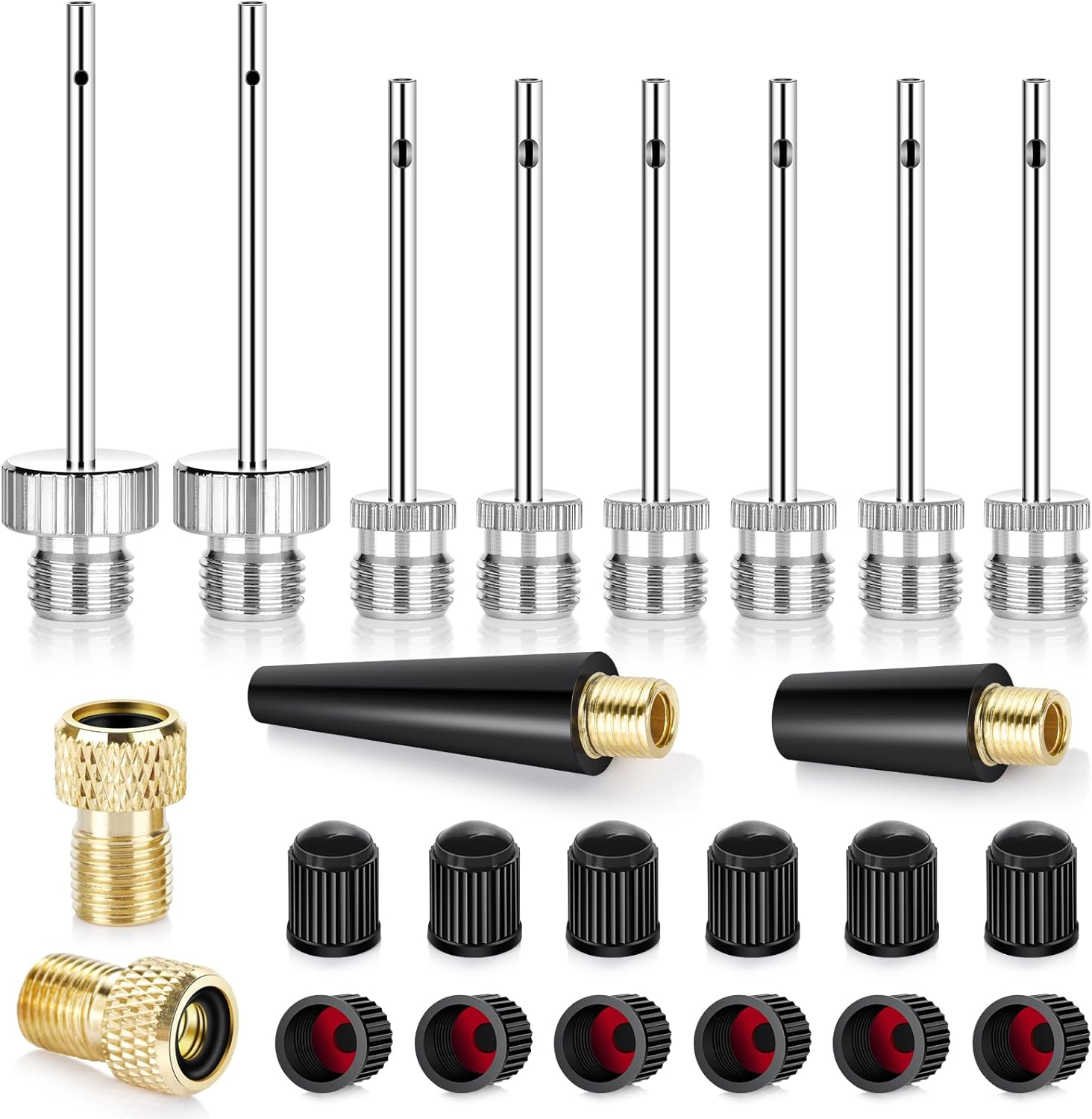
This ball pump needles kit includes brass ball needles for inflating footballs, soccer balls, basketballs, and volleyballs, plus conical nozzles for air mattresses, exercise balls, balloons, and swim rings. It also offers Presta to Schrader valve adapters for easy use with compatible bikes and rideables. The set includes sealed valve caps and a storage case, helping keep your equipment organized and ready to inflate quickly.

BAURATTI tire valve stem caps provide corrosion-resistant protection using anodized aluminum alloy with a plastic liner to help prevent rust and cracking. Designed for universal compatibility with standard Schrader valve stems, they install easily by hand and fit cars, SUVs, trucks, RVs, motorcycles, and bikes. Each pack includes 8 caps to support everyday replacement and sharing.

BESKAR foot scrubber mat lets you clean, exfoliate, and massage your feet in the shower or bathtub without bending or straining. Hundreds of flexible bristles scrub between toes and help remove dead skin and calluses, while suction cups keep the mat securely in place. The large silicone design provides a spacious area to reach pressure points and soothe tired, achy feet.

Related Articles

What Is a Demo Tire? Should You Buy One?
Usually near-new, a demo tire can save money—or hide surprises, so would you know what to inspect before buying one?
Read More
Tire Warranties: What to Look For Before You Buy
Fierce tire warranties can save money or cost more than expected—discover the hidden exclusions, mileage promises, and claim rules before you buy.
Read More
Why Are Tires So Expensive? Cost Breakdown
Premium tires cost far more than rubber alone, and this breakdown reveals the hidden materials, engineering, and brand factors driving prices.
Read More