
Is a 275 Tire the Same as a 33-Inch? Metric Comparison Guide
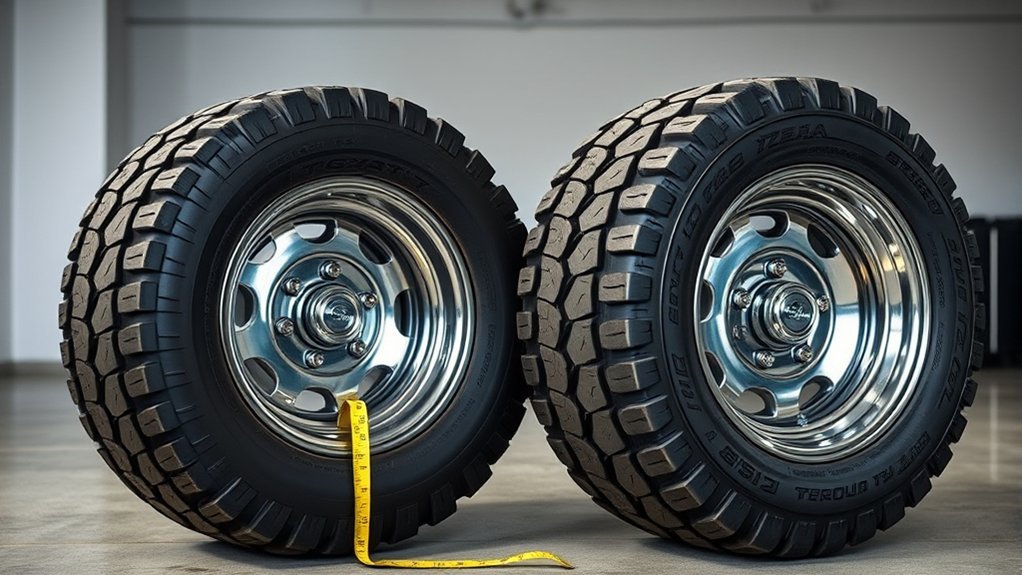
No, a 275 tire is not automatically the same as a 33-inch tire. The number 275 tells you the tire’s section width in millimeters, not its overall height. To know whether a 275 tire is close to 33 inches tall, you must also check the aspect ratio and wheel diameter.
Quick Answer
A 275 tire can be close to 33 inches, but only in certain sizes. A 275/70R18 is about 33.2 inches by calculation, while a 275/70R17 is about 32.2 inches. Width alone does not tell you tire height.
Key Takeaways
- A 275 tire is 275 mm wide, which is about 10.8 inches wide.
- A 33-inch tire describes overall diameter, not tread width.
- A 275/70R18 is close to 33 inches, while a 275/70R17 is closer to 32 inches.
- A 33×12.50 tire is usually much wider than a 275 tire, even if the height is similar.
- Always check the tire maker’s actual specs before buying, because real mounted diameter varies by model.
What Does a 275 Tire Size Mean?
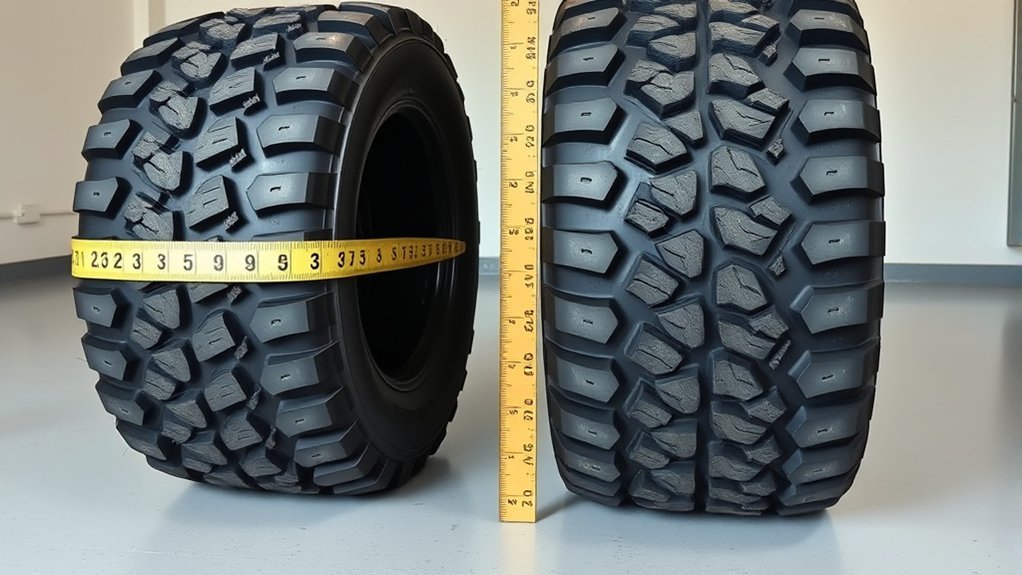
A 275 tire size means the tire’s nominal section width is 275 millimeters, measured from sidewall to sidewall. That equals about 10.8 inches wide because 275 ÷ 25.4 = 10.83.
That first number does not tell you the tire’s full diameter. A complete metric tire size includes three key parts:
- Width: the first number, measured in millimeters, such as 275.
- Aspect ratio: the second number, which is sidewall height as a percentage of width.
- Wheel diameter: the final number, measured in inches, such as 17, 18, or 20.
For example, in 275/70R18, the tire is 275 mm wide, the sidewall height is 70% of 275 mm, the tire uses radial construction, and it mounts on an 18-inch wheel. Goodyear explains tire sizing the same way: width comes first, aspect ratio follows, and rim diameter comes after the construction letter. Goodyear tire-size guide
[Products Worth Considering]

The Kurgo Seasonal Tire Tote helps protect your car interior, clothes, and garage from tire grime, brake dust, and residue during seasonal tire changes. Its universal design fits most passenger tires between 22" and 31" in diameter, making storage and transport simpler with less mess. Built for rugged, repeated use, it’s machine washable for easy care and comes with a lifetime warranty.

Keep your tires properly inflated with this analog VONDIOR tire pressure gauge, designed for fast, easy readings without batteries. The swiveling, two-axis hose and large glow dial help you measure at any tire angle with instant visibility. Built with a protective rubber shield, it supports durable, low-maintenance use for cars and trucks.

Upgrade your 2024-2026 Tesla Model 3 Highland with REEVAA all-weather mud flaps designed for seamless fit along the original body lines. The set of four delivers strong splash protection against mud, gravel, and road debris while using OEM-grade durable materials. Installation is non-destructive with original hole positions and snap-in clips, and the aerodynamic design helps minimize impact on efficiency.
How to Calculate a 275 Tire’s Diameter
To compare a 275 tire to a 33-inch tire, use the full size, not just the width. The standard estimate is:
Overall diameter = wheel diameter + 2 × (tire width × aspect ratio ÷ 25.4)
Here is the math for a common near-33-inch 275 size:
- 275/70R18 sidewall: 275 × 0.70 = 192.5 mm
- Convert sidewall to inches: 192.5 ÷ 25.4 = 7.58 inches
- Overall diameter: 18 + 7.58 + 7.58 = 33.16 inches
So a 275/70R18 is roughly a 33.2-inch tire by calculation. Tire Rack uses the same width, aspect ratio, and wheel-diameter approach for estimating tire dimensions, while also noting that exact manufacturer specs matter when fitment is tight. Tire Rack tire-dimension guide
Note: Calculated diameter is an estimate. The tire’s real mounted height can vary slightly by brand, tread design, load range, rim width, inflation pressure, and vehicle load.
How 275 Tires Compare to 33-Inch Tires
A 275 tire and a 33-inch tire describe different measurements. A 275 tire label usually describes width. A 33-inch tire label describes overall diameter. That is why the two labels do not convert one-to-one.
The closest 275 sizes to a 33-inch tire are usually 275/70R18, 275/75R17, and 275/60R20. Sizes like 275/65R18 and 275/70R17 are shorter and usually sit closer to 32 inches.
| Tire Size | Approx. Diameter | How It Compares to 33 Inches |
|---|---|---|
| 275/55R20 | 31.9 in | Shorter than 33 |
| 275/65R18 | 32.1 in | Closer to 32 |
| 275/70R17 | 32.2 in | Closer to 32 |
| 275/60R20 | 33.0 in | Very close to 33 |
| 275/70R18 | 33.2 in | Near 33 |
| 275/75R17 | 33.2 in | Near 33 |
Which 275 Sizes Are Closest to 33 Inches?
The closest common 275 sizes to 33 inches are usually:
- 275/60R20: about 33.0 inches
- 275/70R18: about 33.2 inches
- 275/75R17: about 33.2 inches
If you heard that a “275 tire is a 33,” the person probably meant one of those sizes. But if the size is 275/65R18, 275/70R17, or 275/55R20, it is not really a 33-inch tire.
Why Aspect Ratio Changes Tire Diameter
The aspect ratio controls sidewall height. A higher aspect ratio makes the sidewall taller, which increases the tire’s overall diameter. A lower aspect ratio shortens the sidewall, which reduces overall diameter even when the width stays the same.
That is why these two tires are both 275 mm wide but very different in height:
- 275/55R20: shorter sidewall, about 31.9 inches tall
- 275/60R20: taller sidewall, about 33.0 inches tall
The wheel diameter matters too. A 275/70R17 and 275/70R18 have the same width and aspect ratio, but the 18-inch version is about one inch taller overall because the wheel is one inch larger.
How to Read Metric and Inch Tire Sizes
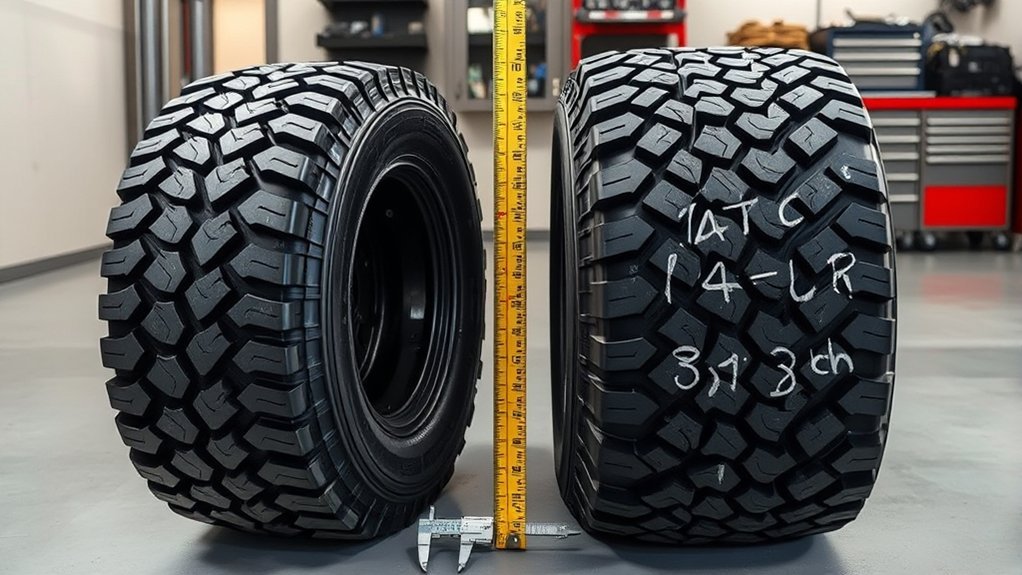
Metric and flotation tire sizes use different naming systems. Metric sizes, such as 275/70R18, list width, aspect ratio, construction, and wheel diameter. Flotation sizes, such as 33×12.50R20, list approximate overall diameter, approximate section width, construction, and wheel diameter.
- 275/70R18: 275 mm wide, 70% aspect ratio, radial, 18-inch wheel.
- 33×12.50R20: nominal 33-inch diameter, 12.50-inch width, radial, 20-inch wheel.
The important word is nominal. A tire sold as a 33-inch tire may not measure exactly 33.0 inches. For example, Tire Rack’s published specs for the BFGoodrich Mud-Terrain T/A KM3 list some 33×12.50 sizes at 32.5 inches overall diameter. Tire Rack BFGoodrich KM3 specs
Difference Between a 275 Tire and a 33×12.50 Tire
A 275 tire is about 10.8 inches wide. A 33×12.50 tire is about 12.5 inches wide. That means a 33×12.50 is usually around 1.7 inches wider than a 275 tire, even when the overall height is similar.
That extra width can change more than appearance. It can affect steering feel, fender clearance, wheel offset needs, mud-flap clearance, fuel economy, and road noise. It may also require a wider wheel than your current 275 setup uses.
Warning: Do not choose a tire only because the diameter looks close. Check width, wheel width range, load rating, speed rating, suspension clearance, fender clearance, and the tire maker’s spec sheet before mounting it.
[Products Worth Considering]

This manual duck head tire changer kit makes tire installation and removal simpler by letting you embed the duck head into the tire with applied pressure. The integrated design and durable steel construction help reduce friction and improve efficiency and safety during use. Suitable for 16–21 inch wheels, it’s convenient for cars, trucks, SUVs, and ATV tires, with 24-hour after-sales support.

This metal-free wheel and tire cleaning brush uses dense, fluffy synthetic wool to safely clean rims, spokes, fenders, and engine areas without worrying about damaging surfaces. Its flexible, comfortable design helps you reach detailed areas while maintaining durability, and the extra absorbent fibers work well with wheel spray cleaners for faster cleanup. Reusable and washable performance helps prevent grime and build-up for cleaner vehicles and easier maintenance at home.

Mount your spare tire directly to the inside wall of an enclosed trailer or garage to save space and keep your tire secure. This wall-mount spare tire carrier is designed for universal trailer tire fit and includes a fixed plate and chute for convenient screw replacement. Nylon insert hex lock nuts help prevent the tire from falling off, and wing hardware enables faster load and unload during maintenance.
Size, Clearance, and Fitment
A tire that is only one inch taller on paper can still rub if the width, wheel offset, or tread shoulder changes. Before switching from a 275 tire to a 33-inch tire, check these fitment points:
- Front fender liner clearance: turn the steering wheel fully left and right.
- Upper control arm clearance: wider tires can rub inside the wheel well.
- Outer fender clearance: wider tires may contact the fender lip during compression.
- Wheel offset and backspacing: these decide whether the tire sits inward or outward.
- Spare tire storage: a larger tire may not fit in the factory spare location.
- Load index and speed rating: the new tire must meet or exceed what your vehicle requires.
NHTSA recommends choosing the vehicle manufacturer’s original tire size or another size recommended by the manufacturer, and checking the owner’s manual or Tire and Loading Information Label when in doubt. NHTSA TireWise
Pro Tip: When clearance is tight, use the specific tire model’s published dimensions instead of relying only on a generic calculator. Two tires with the same printed size can have different measured diameters and tread widths.
How Tire Size Affects Gearing and MPG
A taller tire travels farther with each revolution. That effectively makes the gearing taller, which can reduce engine RPM at cruising speed but also reduce wheel torque. The result can be slower acceleration, more transmission hunting, and lower MPG, especially if the new tire is heavier or has more aggressive tread.
Tire diameter also affects the speedometer and odometer. If your original tire was 32 inches tall and you install a 33-inch tire, the new tire is about 3.1% taller. When your speedometer says 60 mph, your actual speed may be about 61.9 mph if the speedometer is not recalibrated.
Discount Tire notes that changing tire size can affect speedometer readings, which is why comparing tire dimensions before upsizing matters. Discount Tire tire size calculator
Common 275-to-33 Fitment Mistakes
The biggest mistake is treating “275” and “33” as if they measure the same thing. They do not. The 275 number is width. The 33 number is overall diameter.
A few other mistakes are common:
- Assuming all 275 tires are the same height: a 275/55R20 is much shorter than a 275/60R20.
- Forgetting the rim size: 275/70R17 is about 32.2 inches, while 275/70R18 is about 33.2 inches.
- Ignoring actual specs: real tire height and width vary by brand and tread design.
- Skipping load rating: the new tire must support the vehicle’s required load.
- Not checking rubbing: wider or taller tires can hit liners, control arms, bumpers, or mud flaps.
How to Check Tire Pressure After Upgrading
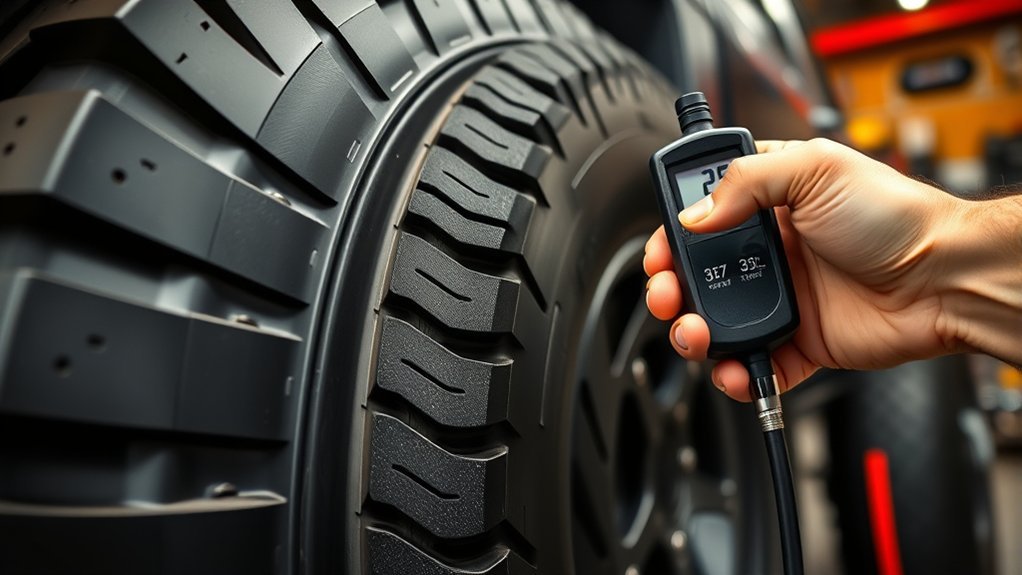
After changing tire size, start with the vehicle’s recommended cold inflation pressure from the Tire and Loading Information Label or owner’s manual. NHTSA says cold pressure means the tire has not been driven on for at least three hours, and it warns that the correct pressure is the vehicle manufacturer’s recommendation, not simply the maximum pressure printed on the tire sidewall. NHTSA tire pressure guidance
If you switch from a passenger tire to an LT tire, or you make a major load-range change, ask a qualified tire professional to confirm the correct load/inflation match. The pressure needed for safe load carrying may not be identical to the factory P-metric tire pressure.
Use this basic process:
- Check the pressure when the tires are cold.
- Set the pressure according to the vehicle placard, owner’s manual, or professional load/inflation recommendation.
- Drive normally and watch for pulling, vibration, harshness, or TPMS alerts.
- Recheck cold pressure after a few days.
- Inspect tread wear over time for center wear, shoulder wear, or cupping.
A chalk test can help show tread contact on some off-road setups, but it should not replace proper pressure guidance from the vehicle manufacturer, tire maker, or a tire professional.
Frequently Asked Questions
What size tire is equal to 275?
A 275 tire is about 10.8 inches wide, but there is no single inch-size equivalent unless you know the full tire size. A 275/70R18 is about 33.2 inches tall, while a 275/65R18 is about 32.1 inches tall.
What tire size is equal to a 33?
Common metric sizes close to 33 inches include 275/60R20, 275/70R18, 275/75R17, and 285/70R17. They are not all identical, so check the exact published diameter for the tire model you plan to buy.
Is a 275/70 tire a 33?
It depends on the wheel size. A 275/70R17 is about 32.2 inches tall, so it is not a 33. A 275/70R18 is about 33.2 inches tall, so it is very close to a 33-inch tire.
What is the difference between 275/55R20 and 33×12.50R20?
A 275/55R20 is about 31.9 inches tall and 10.8 inches wide. A 33×12.50R20 is a nominal 33-inch tire and about 12.5 inches wide. The 33×12.50R20 is usually taller, much wider, heavier, and more likely to need extra clearance.
Will 33-inch tires affect my speedometer?
Yes, if the 33-inch tire is taller than your original tire. A taller tire covers more distance per revolution, so the speedometer may read lower than your actual road speed unless it is recalibrated.
Conclusion
A 275 tire is not automatically a 33-inch tire. The 275 number only tells you width. To know the actual height, you need the aspect ratio and wheel diameter. A 275/70R18 or 275/75R17 is close to 33 inches, but a 275/70R17 or 275/55R20 is not.
So yes, the labels are a little sneaky. Tires insist on math. Before you buy, compare the full size, check the tire maker’s specs, confirm clearance, and make sure the load rating and pressure guidance match your vehicle.
Sources
- Goodyear: How to Find Tire Size — supports tire width, aspect ratio, construction, and rim-diameter definitions.
- Tire Rack: How Do I Calculate Tire Dimensions? — supports tire-diameter calculation and manufacturer-spec verification.
- Tire Rack: BFGoodrich Mud-Terrain T/A KM3 Specifications — supports real-world examples of published overall diameter by tire size.
- NHTSA TireWise — supports tire-size, load label, and cold tire-pressure safety guidance.
- Discount Tire Tire Size Calculator — supports comparing tire dimensions and speedometer impact when changing tire size.
[Products Worth Considering]

Secure a full-size spare on your trailer with this powder-coated steel spare tire mount bracket. It fits most 4-, 5-, and 6-lug wheel bolt patterns and mounts to trailer tongues up to 4 in wide and 5 in tall. Built for reliable carry with a max 150 lb load rating and includes zinc-plated hardware for straightforward installation.

This 3-piece wheel and tire brush set makes it easy to clean light, medium, and heavy dirt from wheels, rims, tires, and exterior surfaces. It includes both soft and stiff bristle options for gentle scrubbing and tough grime removal, helping lift brake dust and road buildup. The long-handle design supports comfortable cleaning across cars, trucks, SUVs, RVs, motorcycles, and more, with simple care instructions to restore brush shape.

This wheel brush kit delivers pro-level cleaning at home, lifting dirt, grime, and brake dust to help restore wheel appearance. It includes multiple brush styles and applicator pads for tackling different wheel surfaces, with gentle, metal-free bristles designed to reduce scratching risk. The flat and double-ended brushes are built for comfort and reach, making wheel care easier for cars, trucks, and RVs.

Related Articles
How Much Does Tire Retreading Cost?
Whether you’re pricing passenger or truck tires, tire retreading costs vary widely, and the real reasons behind the savings may surprise you.
Read More
Firestone Tire Installation Cost: Full Price Guide
Compare Firestone tire installation costs and discover what hidden fees could change your final bill.
Read More
Tire Rack vs Costco: Which Is Better for Tires?
Pick the better tire deal between Tire Rack and Costco before hidden differences change your choice.
Read More