
Hydroplaning in a RAV4: 7 Ways to Stay Safe in Rain
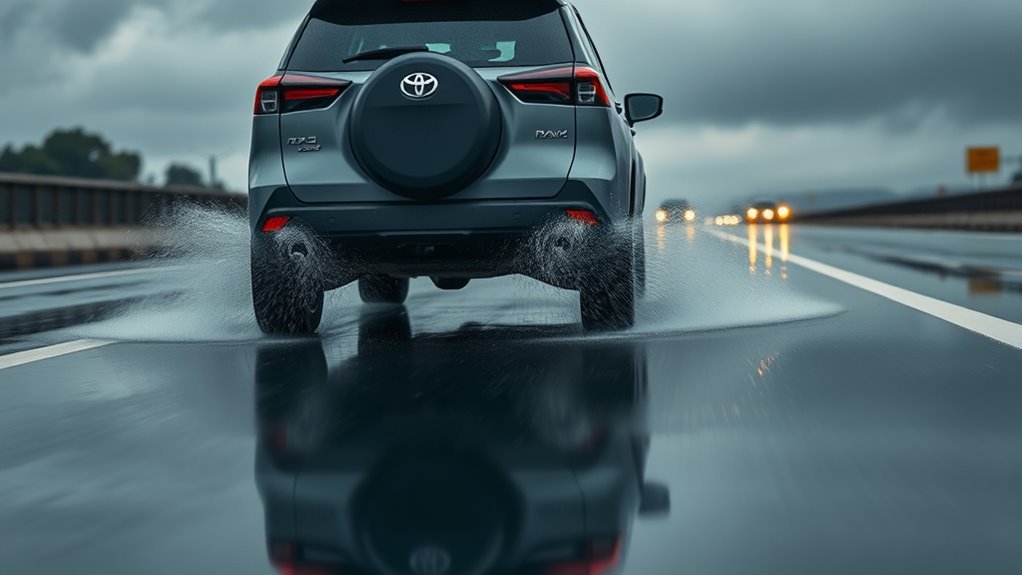
Your RAV4 can lose grip fast when rainwater builds between the tires and road. Hydroplaning can cut traction, steering, and braking control, especially at higher speeds or during the first minutes of rain when road oil mixes with water. This guide explains why it happens, how tire condition changes the risk, and what you should do if your RAV4 starts to slide.
Quick Answer
Hydroplaning happens when water lifts your RAV4’s tires off the pavement and reduces traction. Slow down before standing water, keep your tires properly inflated, replace worn tread, avoid cruise control in rain, and make smooth steering and braking inputs. If your RAV4 hydroplanes, ease off the gas and steer gently until the tires regain grip.
Key Takeaways
- Reduce speed before wet patches because hydroplaning risk rises as speed and water depth increase.
- Check tire pressure often because underinflated tires can shed water less well.
- Replace tires before tread gets too shallow for safe wet-road grip.
- Avoid cruise control in rain so you can adjust speed right away.
- Ease off the throttle and steer gently if your RAV4 starts to hydroplane.
What Hydroplaning Is and Why RAV4 Drivers Should Care
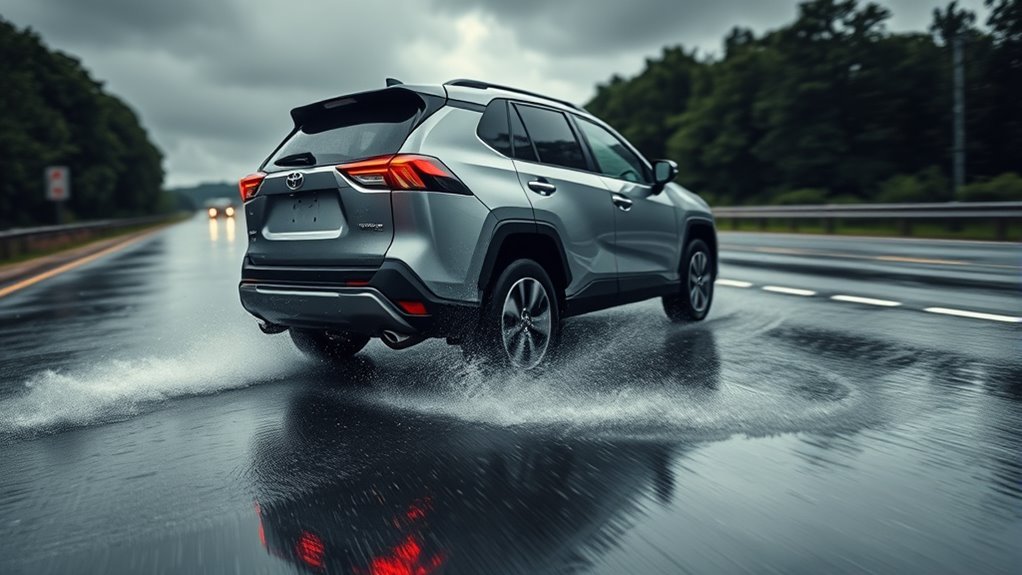
Hydroplaning happens when a layer of water separates your RAV4’s tires from the road. Your tires lose direct contact with the pavement, so your steering, braking, and acceleration can stop responding as expected.
You face the most risk in standing water, heavy rain, and the first few minutes after rain starts. Road oil, dirt, and water can create a slick surface before steady rain washes the road clean.
You can lower the risk with good tire care and smart driving. Keep tires at the pressure listed for your RAV4, check tread depth, rotate tires on schedule, and slow down before wet zones.
How Your RAV4’s Tires Actually Hydroplane
Hydroplaning starts where the tire meets the road. Water fills the tread grooves faster than the tire can push it away, so a thin water film forms under the contact patch.
Tread grooves act like channels. When they work well, they move water out from under the tire and help the rubber stay on the road.
Worn tread, uneven wear, and low tire pressure make that job harder. All-wheel drive can help your RAV4 move power between wheels, but it can’t create grip once water lifts the tires from the pavement.
Speeds and Water Depths That Cause Hydroplaning in a RAV4
You should treat any standing water as a warning sign. Hydroplaning risk can begin around highway speeds, and it rises as speed, water depth, tread wear, and tire pressure problems stack together.
Older or worn tires can hydroplane at lower speeds than fresh tires. A light vehicle load can also reduce tire contact pressure, which may make hydroplaning more likely in deeper water.
Speed Thresholds for Hydroplaning
Many safety guides use about 35 mph as a practical warning point for wet-road risk. That does not mean 34 mph is safe or 36 mph always causes hydroplaning.
Your real risk depends on water depth, road texture, tire tread, tire pressure, and how smoothly you drive. Use the table below as a cautious guide, not as a guarantee.
| Speed (mph) | Water depth | Risk level |
|---|---|---|
| Under 35 | Light surface water | Lower, but still possible |
| 35 to 45 | Shallow standing water | Increased |
| 45+ | Deeper standing water | High |
How Water Depth Changes Hydroplaning Risk
Deeper water gives your tires more fluid to move out of the way. If the tread cannot clear that water fast enough, pressure builds under the tire and reduces road contact.
Slow down well before you reach standing water. Avoid sudden braking at the puddle because abrupt inputs can make a loss of grip harder to control.
Warning: Never drive through water when you can’t judge its depth because deep water can stall or damage your vehicle.
How RAV4 Weight and Tires Affect Grip
Your RAV4’s weight, load, and tires affect how it handles wet pavement. More contact pressure can help a tire cut through water, while poor tread or low pressure can reduce water evacuation.
| Factor | Effect |
|---|---|
| Vehicle load | Changes tire contact pressure and handling |
| Tire pressure | Helps the tread keep its intended shape |
| Tread design | Moves water away from the contact patch |
Maintain proper tire pressure, monitor tread depth, and replace tires before wet grip drops. These steps reduce preventable loss of control.
How Tread, Pressure, and Width Affect RAV4 Hydroplaning Risk
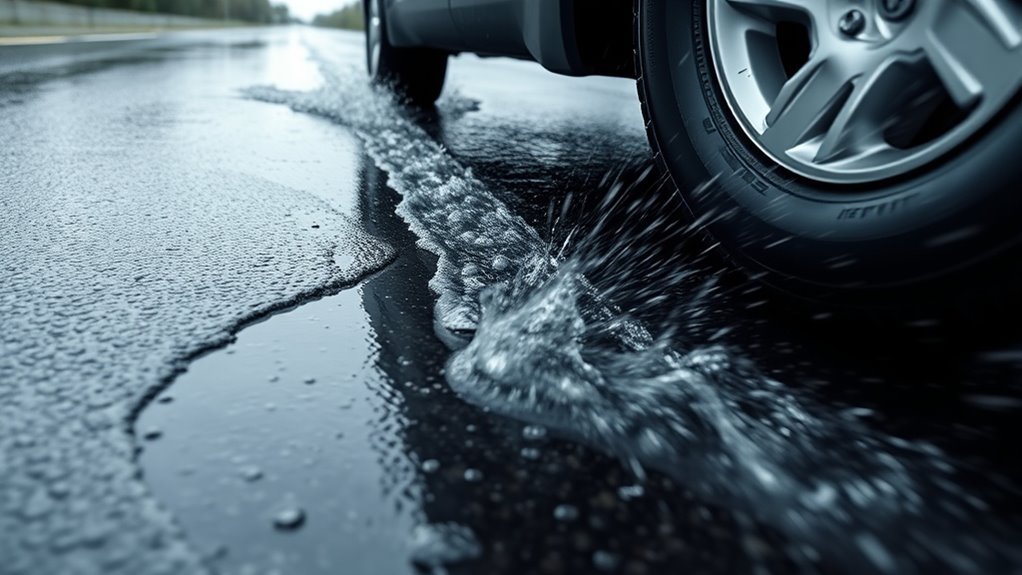
Tread depth matters because deeper grooves can move more water. Once grooves get shallow, they leave less space for water to escape.
Tire pressure matters because underinflation changes the contact patch. That can make the tire flex too much and reduce the tread’s ability to clear water.
Tire width also plays a role. Wider tires can offer strong dry grip, but they may ride up on water more easily when tread is worn or water is deep.
Best Tire Tread Types and Features for RAV4 Rain Performance
For better rain performance, choose tires with strong wet-traction ratings and clear water channels. Look for circumferential grooves, lateral channels, and tread blocks that help move water away.
All-season tires can work well for light to moderate rain if they still have enough tread. If you often drive through heavy rain, ask a tire professional about tires built for wet traction.
Stay with tire sizes approved for your RAV4 unless a qualified tire shop confirms a safe alternative. The wrong size can affect handling, ride height, and traction control behavior.
Pro tip: Check wet-traction ratings and tread depth together because a good tire design still needs enough groove depth to work.
Driving Techniques to Avoid Hydroplaning in Your RAV4
Good wet-road driving starts before your tires reach standing water. Slow early, look far ahead, and give yourself more room to stop.
Use smooth steering, gentle braking, and steady throttle control. Turn off cruise control in rain so your foot controls speed at all times.
Reduce Speed Early
Slow down before puddles, wheel tracks full of water, or heavy spray from other vehicles. Your tires need time and space to move water out from under the tread.
Leave more following distance than you use on dry pavement. That extra space lets you brake smoothly instead of making a sudden stop.
Use Smooth Steering Inputs
If your RAV4 starts to feel light or loose, keep your hands steady. Abrupt steering can make the slide worse.
- Hold the wheel with a firm, relaxed grip.
- Steer gently toward your intended path.
- Make small corrections instead of sharp turns.
- Ease off the throttle and avoid sudden braking.
Practice calm inputs before bad weather catches you off guard. Smooth control helps the tires regain grip more safely.
Avoid Cruise Control in Rain
Cruise control keeps speed steady even when road grip changes. In rain, you need quick control over throttle and braking.
Turn cruise control off before the road gets slick. Manual speed control helps you respond to puddles, spray, traffic, and changing pavement.
What to Do If Your RAV4 Starts to Hydroplane
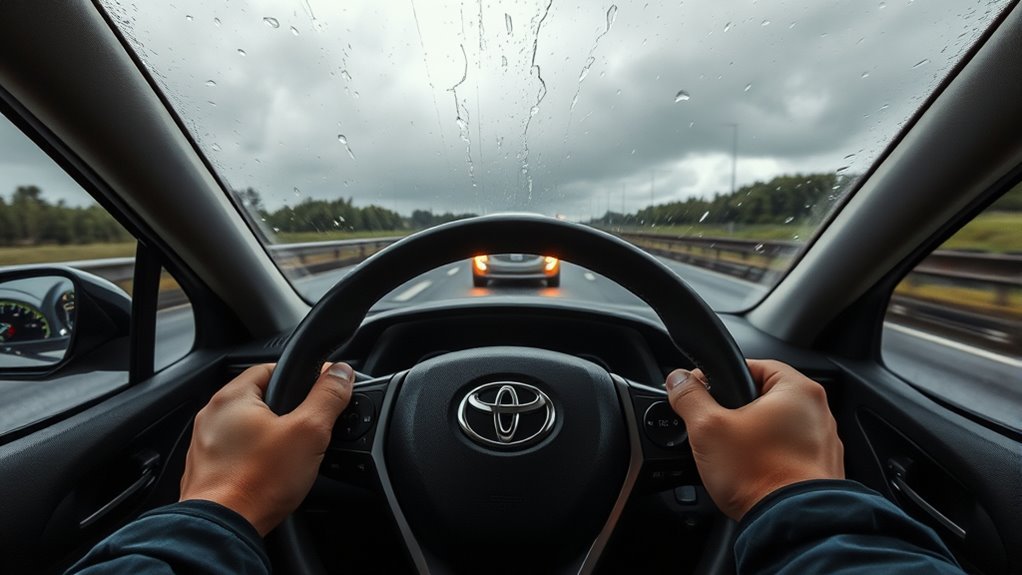
If your RAV4 starts to hydroplane, stay calm and ease off the accelerator. Do not slam the brakes or yank the steering wheel.
Look where you want the vehicle to go and steer gently in that direction. Once the tires regain contact, slow down and reassess the road conditions.
- Ease off the throttle to let the tires slow without a sharp weight shift.
- Hold the steering wheel steady and avoid overcorrecting.
- Use firm, steady brake pressure only if you must brake and your RAV4 has anti-lock braking system (ABS).
- Pull over safely if the road still feels slick or visibility drops.
Note: ABS helps you keep steering control during hard braking, but it does not prevent hydroplaning.
Routine Maintenance Checks to Reduce Hydroplaning Risk
Routine maintenance helps your RAV4 keep predictable grip in wet weather. Focus on the parts that affect tire contact, steering, braking, and visibility.
- Check tire pressure monthly and before long trips.
- Measure tread depth and inspect for uneven wear.
- Rotate tires on the schedule in your owner’s manual.
- Check alignment if the vehicle pulls or tires wear unevenly.
- Replace worn wiper blades so you can see puddles and lane markings.
Ask a technician to inspect suspension and brake parts during service visits. Worn shocks, loose steering parts, or weak brakes can make wet-road control harder.
Choosing and Replacing RAV4 Tires: When and What to Buy
Choose replacement tires based on your weather, driving style, and Toyota’s approved tire size. Wet traction, tread life, ride comfort, and road noise all matter.
Replace tires when tread gets too shallow for safe wet-road grip, even if they have not reached the legal minimum. Many drivers use 4/32 inch as a safer wet-weather replacement point.
- Choose tires with strong wet-traction ratings and clear water channels.
- Measure tread depth during each tire rotation.
- Keep tires at the pressure listed on your RAV4’s tire placard.
- Rotate tires on schedule to promote even wear.
Common Mistakes That Increase RAV4 Hydroplaning Risk
Small choices can raise your risk before you notice a problem. The biggest mistakes involve speed, tire neglect, and sudden inputs.
- Driving too fast through standing water.
- Using cruise control during rain.
- Ignoring low tire pressure warnings.
- Waiting too long to replace worn tires.
- Braking or steering sharply during a slide.
Correct these habits before the next storm. You gain more control by preventing hydroplaning than by reacting after it starts.
Frequently Asked Questions
What are two tricks to avoid hydroplaning?
Control your speed and maintain your tires. Slow down before standing water, avoid cruise control, keep tires properly inflated, and replace worn tread before wet grip drops.
What are the two biggest causes of hydroplaning?
The two biggest causes are too much water under the tire and not enough tire grip to move it away. Worn tread, low tire pressure, high speed, and deep standing water all make that combination worse.
Does all-wheel drive prevent hydroplaning in a RAV4?
No. All-wheel drive can help with traction when the tires still touch the road, but it can’t stop water from lifting the tires. You still need good tires and lower speed in wet conditions.
Should you brake when your RAV4 hydroplanes?
Avoid sudden braking when hydroplaning starts. Ease off the accelerator first, steer gently, and use steady brake pressure only if you must slow down and your vehicle has ABS.
When should you replace RAV4 tires for rain safety?
Consider replacing tires before tread gets too shallow for wet roads. Many safety-focused drivers use 4/32 inch as a practical wet-weather replacement point instead of waiting for the legal minimum.
Conclusion
Hydroplaning risk drops when you pair good tire care with slower, smoother wet-road driving. Check pressure, measure tread depth, and slow down before standing water instead of reacting at the last second.
If your RAV4 starts to hydroplane, ease off the accelerator and steer gently until grip returns. With the right habits, you can drive through rain with more control and less stress.

Related Articles

Toyota RAV4 TPMS Reset: Easy Steps That Work
Unlock the secrets to resetting your Toyota RAV4's TPMS effortlessly—discover the essential steps to ensure your tires are always safe.
Read More
Toyota RAV4 Tire Rotation: DIY Steps & Pattern
Take control of your Toyota RAV4's tire maintenance with our simple DIY rotation guide—discover the best steps for optimal performance and longevity!
Read More
Mix Tire Brands on a Toyota RAV4? Expert Guide
Keeping your RAV4 safe? Learn when mixing tire brands risks traction, ABS/TCS and AWD damage — and what exact matches you must insist on.
Read More