
Can I Drive With a Bubble in My Tire? Why It’s Dangerous
No, you should not drive with a bubble in your tire. A tire bubble or sidewall bulge usually means the tire’s internal cords or layers are damaged, often after a pothole, curb strike, or other hard impact. The tire can fail suddenly, so the safe move is to stop using it, install a safe spare if available, or have the vehicle towed for tire replacement.
Quick Answer
Do not drive with a bubble in your tire. A tire bubble means the internal structure is damaged, and the tire can blow out without warning. Move the vehicle only if needed to get out of danger, then use a spare, call roadside assistance, or have the tire replaced.
Key Takeaways
- A tire bubble is not cosmetic; it usually means the tire’s inner cords or plies are damaged.
- A bubbled tire can blow out suddenly, especially at highway speed, in heat, or under heavy load.
- A tire bubble cannot be safely patched, plugged, or repaired.
- Use a safe spare or tow the vehicle instead of driving on the damaged tire.
- After a pothole or curb hit, inspect the wheel, rim, and nearby suspension parts too.
Warning: Do not try to pop, patch, plug, or “watch” a tire bubble. A bubble is a structural failure, and the tire should be removed from service as soon as possible.
Can You Drive With a Tire Bubble?
No, you should not drive with a tire bubble. A raised bulge in the sidewall usually means the tire’s internal reinforcement has been damaged and air has moved into an area where it does not belong. That weak spot can split open suddenly, causing a blowout and loss of control.
If the vehicle is in traffic or another unsafe spot, move it only as far as needed to get to a safe location. After that, do not continue the trip on the bubbled tire. Install a safe spare if your vehicle has one, call roadside assistance, or have the vehicle towed to a tire shop.
The safety concern is real. The National Highway Traffic Safety Administration’s TireWise program reports that tire-related crashes happen every year and emphasizes proper tire pressure, tire inspection, load limits, and tire aging awareness as key safety steps. NHTSA TireWise is a good reference for general tire safety, recalls, pressure, tread, and aging information.
[Products Worth Considering]

EVOULTES heavy duty tire inflator with an integrated gauge delivers accurate pressure readings from 10–120 PSI, helping you inflate, deflate, and check tires in one tool. The 16.5-inch extended dual-head air chuck with swivel base reaches hard-to-access dual wheel valves on trucks and RVs. A brass trigger core and side-mounted air release valve make operation smooth, with standard 1/4" NPT threading and quick-connect compatibility for easy setup.

This roadside assistance kit helps drivers and passengers in urgent situations after an accident or breakdown, providing practical support while waiting for help. It includes a lightweight, compact tire inflator for fast inflation of standard vehicle tires, plus reinforced jumper cable protection for safer handling. Ideal for winter weather, road trips, camping, and travel, with everything stowed neatly in a trunk bag.

This spare tire tool kit is designed for the 2004 to 2018 Ford F-150 to help you loosen and tighten wheel lug nuts and manage the spare tire and provided jack functions from underneath the vehicle. It includes the lug nut wrench and extension pieces plus a convenient storage carrying case for organized transport. The jack itself is not included.
What a Tire Bubble Means
A tire bubble is a raised bulge on the sidewall or, less commonly, the tread area. It usually forms when the inner liner and reinforcing cords are damaged. Once those layers are weakened, air pressure can push outward and create a visible lump.
A normal sidewall indentation can sometimes appear where the tire’s body plies overlap during manufacturing, but that indentation dips inward. A bubble pushes outward. If you are not sure which one you are seeing, treat it as unsafe and have a qualified tire technician inspect it before driving.
Note: A tire can still hold air and still be unsafe. Holding pressure in the driveway does not mean the damaged sidewall can handle speed, heat, cornering, braking, or load.
Why a Tire Bubble Is Dangerous
A tire bubble is dangerous because the tire’s structure is already weakened. The sidewall flexes constantly as you drive, and that repeated flexing can make the damaged area grow. Heat, speed, rough pavement, and extra vehicle weight can increase the stress on the weak spot.
Driving on a bubbled tire can cause:
- Sudden sidewall rupture or blowout.
- Loss of steering control, especially if the damaged tire is on the front axle.
- Longer braking distance or unstable braking.
- Vibration, pulling, or poor handling.
- Damage to the wheel, fender, or nearby components if the tire fails.
A tire bubble is a warning that the tire has lost strength. The safest fix is replacement, not repair.
What to Do Right Away If You Spot a Tire Bubble
At a Glance
| Time Required | 5–15 minutes to inspect and arrange a spare, tow, or roadside help |
| Difficulty | Easy inspection; tire replacement should be handled by a qualified technician unless you are safely installing a spare |
| Tools Needed | Flashlight, tire pressure gauge, vehicle manual, safe spare tire, jack, lug wrench, or roadside assistance |
| Cost | Inspection may be free; replacement cost depends on tire size, type, brand, mounting, balancing, and disposal fees |
If you spot a bubble in a tire, follow these steps:
- Pull over safely. Avoid sudden steering or hard braking if the tire is still rolling.
- Do not keep driving. Move only far enough to get out of traffic or danger.
- Inspect from a safe position. Look for a raised bulge, cuts, exposed cords, rim damage, or air loss.
- Use a safe spare if available. Follow your owner’s manual and the spare tire’s speed and distance limits.
- Call roadside assistance or a tow truck if needed. This is safer than driving on the bubbled tire.
- Replace the tire. Ask the shop to inspect the wheel, rim, and nearby suspension parts if the bubble appeared after a pothole or curb impact.
Pro Tip: Take clear photos of the bubble, DOT/TIN code, tread, and wheel before replacement. Photos can help if you have road-hazard protection, a tire warranty claim, or an insurance question.
Can a Tire Bubble Be Repaired?
No. A tire bubble cannot be safely repaired. A patch, plug, sealant, or tire inflator cannot rebuild damaged cords or restore the tire’s original strength. Tire repair rules for small tread punctures do not apply to sidewall bubbles.
Industry repair guidance from the U.S. Tire Manufacturers Association limits proper puncture repairs to the repairable tread area and requires the tire to be removed from the wheel for internal inspection. A bubble is not just an air leak; it is structural damage.
Repair Not Possible
A tire with a sidewall bubble should be removed from service. Even if the tire has plenty of tread, the damaged area is weak. Driving on it can turn a visible bulge into a sudden blowout.
Do not:
- Patch the bubble.
- Plug the sidewall.
- Inject sealant and keep driving.
- Pop the bubble.
- Lower the pressure to “reduce” the bulge.
Those shortcuts do not fix the broken internal structure and can make the situation more dangerous.
Replace the Tire
The correct fix is to replace the damaged tire with one that matches your vehicle’s required size, load rating, and speed rating. Check the tire information placard on the driver’s door jamb or the owner’s manual for the correct specifications.
If the tire is part of an all-wheel-drive vehicle or the remaining tires have significant wear, ask the tire shop whether one tire can be replaced safely or whether the vehicle needs matched tread depth. Some AWD systems are sensitive to large tread-depth differences.
Can You Drive Slowly to a Tire Shop?
You should avoid driving on a bubbled tire, even slowly. Low speed reduces some risk, but it does not remove the structural damage. The tire can still fail while turning, braking, hitting a bump, or carrying weight.
The only exception is moving the vehicle a very short distance out of immediate danger, such as from a traffic lane to a safe shoulder or parking lot. For transportation to a shop, use a safe spare or tow the vehicle.
[Products Worth Considering]

This AUTOWN flat tire repair kit is designed for quick, reliable puncture repairs using a plug kit and spiral probe tool to simplify installation. Built for durability and safe handling, it offers strong adhesion and flexibility to help maintain tire air tightness. With a portable storage case and a multi-vehicle approach, it’s suitable for cars, motorcycles, ATVs, tractors, lawn mowers, RVs, jeeps, and trucks.

This portable cordless tire inflator delivers up to 160 PSI with fast 17 L/min airflow to help you quickly top up tires and get back on the road. It features dual power mode, running on a 21V rechargeable battery or a 12V DC adapter for convenient roadside use. An automatic shut-off with digital pressure gauge helps prevent overinflation, and a built-in LED light improves visibility in low-light conditions.
What Causes a Tire Bubble?
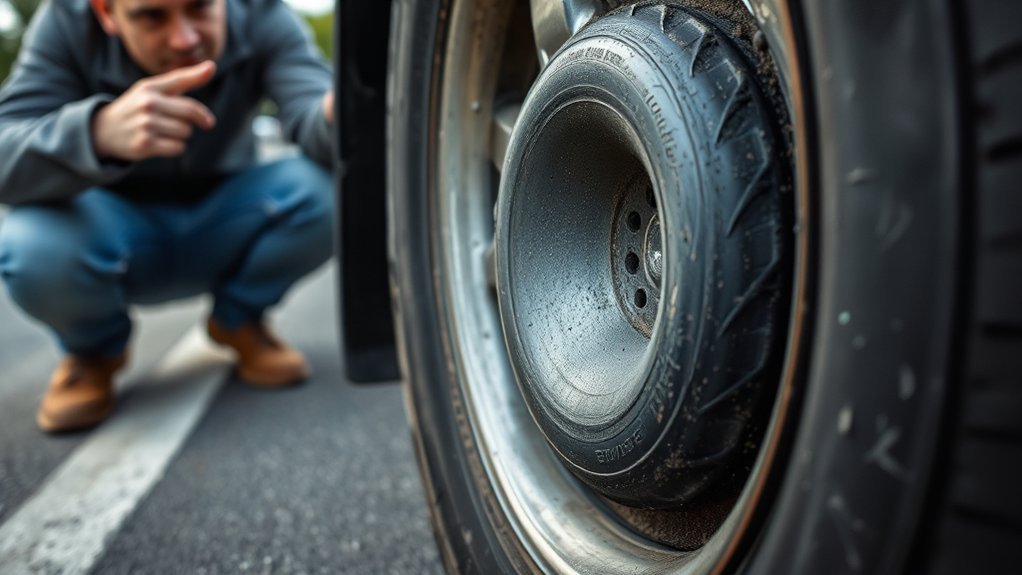
Tire bubbles usually form after impact damage. A hard hit can pinch the tire between the road hazard and the wheel, breaking or weakening the inner cords. Air then pushes into the damaged layers and creates a visible bulge.
Common causes include:
- Potholes: A sharp pothole impact can bruise or break the internal sidewall structure.
- Curb strikes: Hitting a curb while parking or turning can damage the sidewall.
- Road debris: Metal, rocks, or broken pavement can create hidden internal damage.
- Driving while flat or severely underinflated: The sidewall can overflex and weaken.
- Overloading: Carrying more weight than the vehicle or tire is rated for increases stress.
- Manufacturing defects: Less commonly, a new tire may develop a bulge because of a defect. This may be a warranty issue.
If the bubble appeared soon after installation and there was no impact, contact the tire seller or manufacturer. If it appeared after hitting a pothole or curb, it is more likely impact damage or road-hazard damage.
Will a Tire Warranty Cover a Bubble?
It depends on the cause and the coverage you bought. A standard manufacturer defect warranty may cover a bubble caused by a confirmed manufacturing defect. It usually will not cover pothole damage, curb impact, underinflation, overloading, or other road hazards.
Road-hazard protection, if you purchased it, may help with pothole or debris damage. Keep the damaged tire until the shop or warranty provider tells you it can be discarded, and save your receipt, photos, DOT/TIN code, and inspection notes.
How to Prevent Tire Bubbles
You cannot prevent every pothole or road-hazard impact, but you can reduce the risk of tire bubbles with careful driving and basic tire maintenance.
- Avoid hard impacts when possible. Slow down for potholes, broken pavement, speed bumps, railroad crossings, and road debris.
- Do not clip curbs. Sidewall impacts during parking are a common cause of bubbles.
- Check tire pressure monthly when cold. Use the pressure on the vehicle placard, not the maximum pressure printed on the tire sidewall.
- Do not rely only on TPMS. A tire pressure monitoring system warns you when pressure is already significantly low; it is not a replacement for monthly checks with a gauge.
- Respect load limits. Do not overload the vehicle, and adjust pressure for heavy loads only as directed by the owner’s manual or tire placard.
- Inspect tires regularly. Look for bulges, cuts, cracks, exposed cords, uneven wear, and objects stuck in the tread.
- Rotate and align as recommended. Rotation and alignment will not repair a bubble, but they help you catch uneven wear and other tire problems earlier.
- Check tire age and recalls. Use the DOT/TIN code on the sidewall to check for recalls through NHTSA recalls or the USTMA tire recall lookup.
Frequently Asked Questions
How long can I drive around with a bubble in my tire?
You should not drive around with a bubble in your tire. A bubble means the tire has structural damage and can fail without warning. Move only far enough to reach a safe location, then use a spare, call roadside assistance, or have the vehicle towed for tire replacement.
What if I hit a pothole and my tire has a bubble?
Stop driving on that tire. A bubble after a pothole hit usually means impact damage inside the sidewall. Use a safe spare or tow the vehicle, replace the tire, and ask the shop to inspect the wheel, rim, and suspension for related damage.
How do I fix a small bubble in a tire?
You cannot safely fix a small tire bubble. Size does not make it safe. A bubble means the tire’s internal structure is damaged, so patching, plugging, or sealant will not restore the tire’s strength. Replace the tire.
Can I drive with a small bulge in my tire?
No. A small outward bulge can still be a sign of broken or weakened cords inside the tire. It can grow or fail suddenly while driving. Replace the tire before using the vehicle again.
Is a tire sidewall bubble covered by warranty?
Sometimes. If the bubble is caused by a manufacturing defect, the tire manufacturer or seller may cover it. If it is caused by a pothole, curb strike, underinflation, overloading, or road debris, it usually requires road-hazard coverage rather than a standard defect warranty.
What does a tire bubble look like?
A tire bubble looks like a raised lump or blister on the sidewall or tread. A bubble pushes outward. A normal sidewall indentation usually dips inward. If you are not sure, do not drive on it until a tire professional inspects it.
Conclusion
If you spot a tire bubble, do not keep driving on it. A bubble means the tire has internal damage and can fail suddenly. The safe solution is to remove the tire from service, use a safe spare or tow the vehicle, and replace the damaged tire. After a hard impact, also have the wheel and nearby suspension checked so the same problem does not turn into a second roadside emergency.
Sources
- NHTSA TireWise — tire safety, pressure, maintenance, aging, and recalls.
- Michelin: Sidewall Problems — Bulge or Bubble — explains why tire bubbles indicate damaged cords and require replacement.
- U.S. Tire Manufacturers Association: Tire Repair Basics — industry repair guidance for passenger and light truck tires.
- U.S. Tire Manufacturers Association: Tire Care Essentials — monthly pressure checks, tread, inspection, and TPMS guidance.
- NHTSA Recalls — vehicle, tire, and equipment recall lookup.

Related Articles
Why Put a Plastic Bottle on Your Tire? The Viral Trick Explained
Mysterious plastic bottle on your tire? Discover the viral trick’s surprising truth and what it really means before you assume it’s protecting your car.
Read More
What Happens When a Tire Blows Out at Highway Speed? Full Guide
Buckle up to discover what really happens when a tire blows out at highway speed, and why your next move could change everything.
Read More
What Does V Mean on a Tire? Load, Speed & Rating Guide
Need to know what “V” means on a tire and how load and speed ratings affect safety?
Read More