
How to Use Harbor Freight Tire Changer: Full Operation Guide
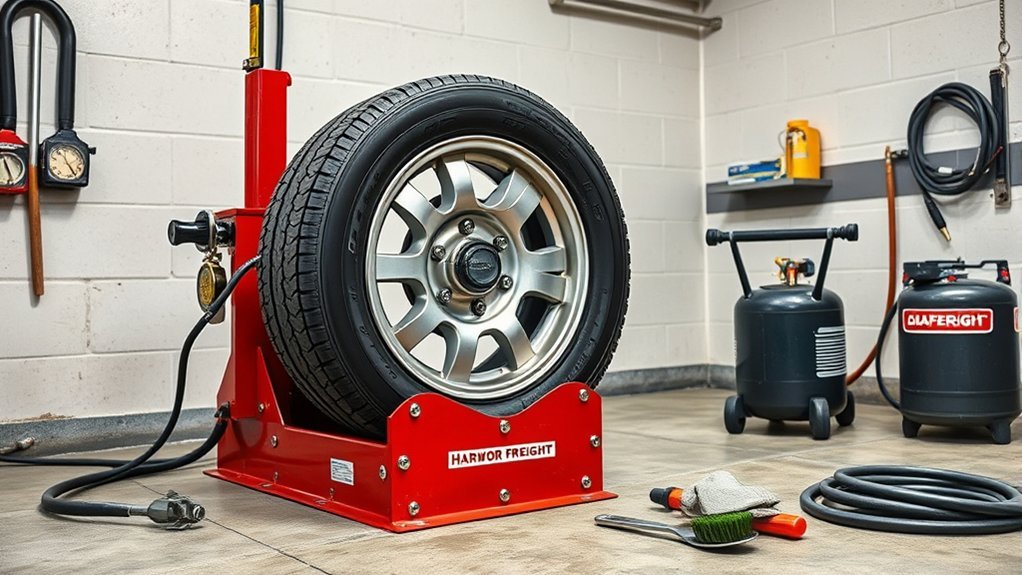
A Harbor Freight manual tire changer can save time on basic tire swaps, but only when it is mounted solidly, used within its capacity, and handled with respect for compressed air and rim damage. The current PITTSBURGH Manual Tire Changer is a center-post, bead-breaker, mount/demount-bar tool, not a powered clamp-style machine. Check your exact owner’s manual first, deflate the tire completely, lubricate the bead, and stop if the tire, rim, or tool does not match the job.
Quick Answer
To use a Harbor Freight manual tire changer, mount it securely, deflate the tire, lubricate the bead, break both beads with the bead breaker, lock the wheel on the center post, remove the old tire with the mount/demount bar, lubricate and mount the new tire, inflate to the vehicle’s specified PSI, check for leaks, and have the wheel balanced.
Key Takeaways
- Mount the tire changer to a secure, level floor or heavy base before using it.
- Deflate the tire completely and remove the valve core before bead breaking.
- Use real tire bead lubricant on the bead and rim mating surfaces; do not use petroleum grease.
- Work within the tool’s stated capacity and avoid high-end, polished, low-profile, run-flat, or specialty rims unless you have the right protection and experience.
- Inflate to the vehicle placard or owner’s manual PSI, check for leaks, and have the wheel balanced before road use.
At a Glance
| Time Required | 45 minutes to 2 hours per tire, depending on rust, bead stiffness, tire size, and experience |
| Difficulty | Moderate; harder on stiff, old, rusty, low-profile, or tube-type tires |
| Tools Needed | Harbor Freight manual tire changer, mounting anchors or heavy base, tire bead lubricant, valve core tool, tire pressure gauge, air source, leak-check spray, gloves, safety goggles, rim protectors, and balancing service or balancer |
| Cost | Usually $0–$40 in supplies after you own the tool, plus any professional balancing fee |
Warning: Tire service can cause serious injury if the tire is pressurized, the wheel is damaged, the tool is unstable, or the bead seats suddenly. Read the Harbor Freight owner’s manual and safety instructions for your exact item number before use. Wear safety goggles and heavy-duty gloves, keep bystanders away, and get professional help if anything feels unsafe.
Get the Harbor Freight Tire Changer Ready
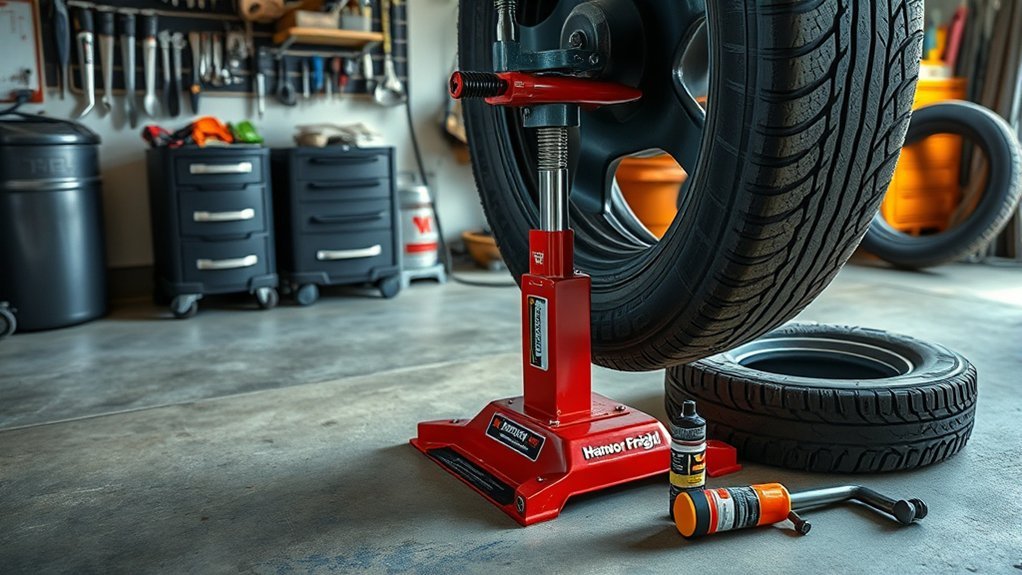
Start by confirming which Harbor Freight tire changer you have. The current PITTSBURGH Manual Tire Changer, SKU 58731, is listed for tires from 8 inches to light-truck tires, including flotation tires up to 12.5L16. The manual also warns not to exceed the stated capacity, not to use it on standard tires over 16 inches, and not to use it on high-end rims because the process can scratch or slightly mar the wheel.
Choose a secure, level mounting surface that can support the manual tire changer and the tire assembly. A concrete floor is usually the most stable choice, but the manual also allows a properly supported floor or heavy base. Before drilling, make sure there are no hidden utility lines below the surface. Tighten all hardware, check the center post, bead breaker handle, bead breaker shoe, clevis pins, R-clips, slider, washer, post cap, and mount/demount bar, then make sure nothing is bent, cracked, loose, or missing.
Note: The product dimensions for the current Harbor Freight manual tire changer are about 36 inches high, 9 inches long, and 9 inches wide, but you still need extra room around the tool to swing the bead breaker handle and mount/demount bar safely.
[Products Worth Considering]

This VEVOR tire bead breaker uses a slide-hammer impact and wedge tip to separate tire beads from rims quickly and efficiently without damaging hub surfaces. The long handle and sturdy steel construction help reduce user strain while providing reliable, portable tire changing for cars, trucks, and more. Ideal for home mechanics and repair shops handling multiple vehicle tire sizes.
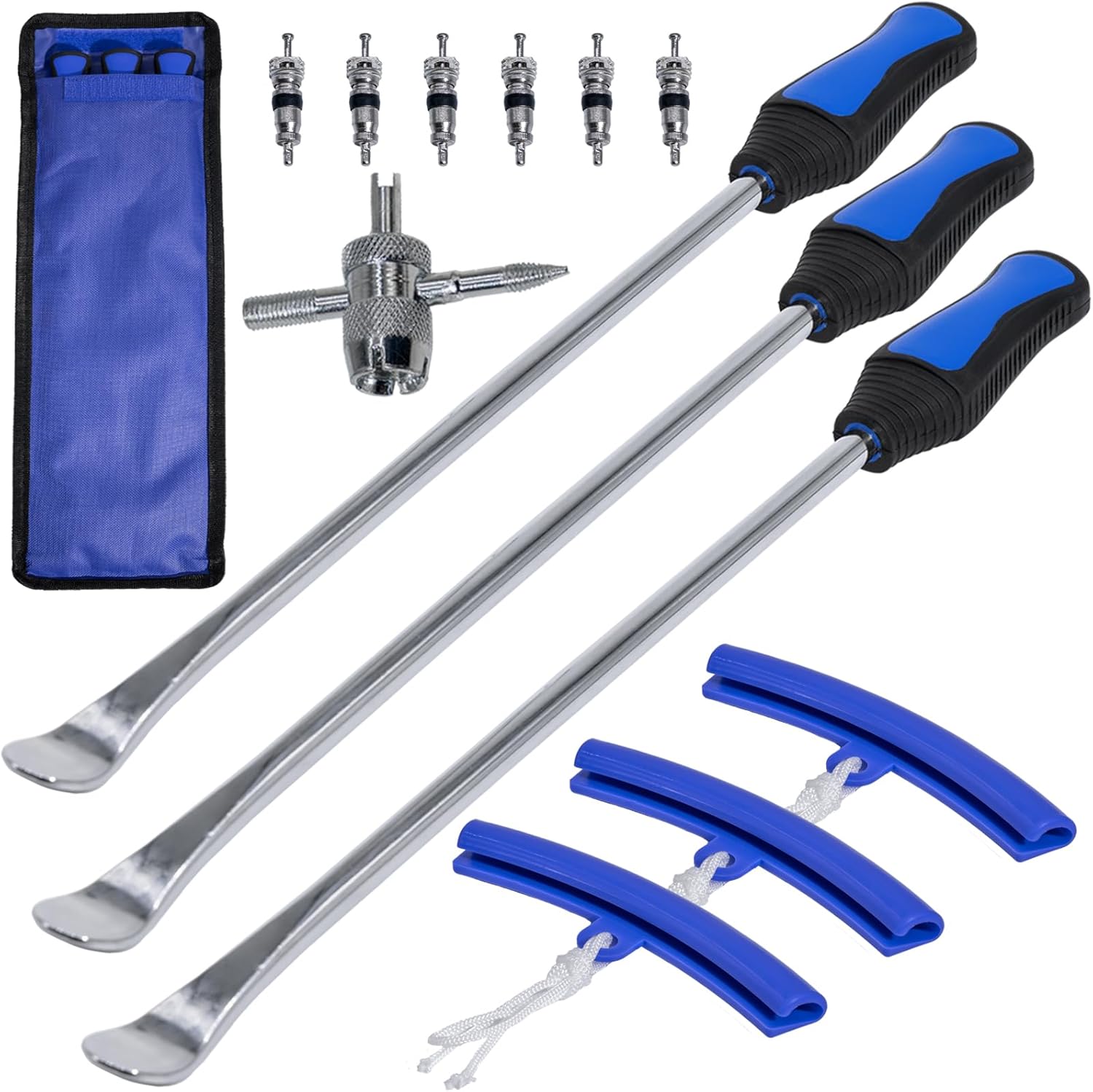
This tire spoon set helps you remove and install motorcycle, dirt bike, lawn tractor, and bicycle tires with extra leverage from a 14.5-inch spoon length. The kit includes tire removal tools, rim protectors, and a valve tool to simplify repairs and help protect rims during changing. Designed for quick, on-the-go service, it’s convenient for garage work, trails, and track-side fixes.

Universal magnetic jack pad with aluminum grooved design to protect vehicle pinch welds during lifting. Durable nylon pad inserts are upgraded and secured with screws to resist damage and keep in place. Designed to fit most single vehicle pinpoint welds for safer, stable jacking when changing tires, repairs, or performing oil changes.
Check Tire and Rim Compatibility First
Before you put force on the tire, confirm that the tire and wheel match each other and that the assembly fits the tool. Check the tire size, rim diameter, rim width, wheel condition, and whether the tire is tubeless or tube-type. Do not use the manual tire changer on damaged wheels, cracked rims, badly rusted bead seats, mismatched tire-and-rim sizes, or expensive rims you are not willing to risk marking.
For ordinary passenger-car, trailer, small equipment, and light-truck-style work within the tool’s capacity, the Harbor Freight manual tire changer can be useful. For low-profile tires, run-flat tires, performance wheels, motorcycle wheels without the right stand or adapter, multi-piece truck rims, or any assembly that has been driven severely underinflated, professional tire equipment is the safer choice.
Set Up Safety Gear and Supplies
Lay out your supplies before you begin: ANSI-approved safety goggles, heavy-duty gloves, tire bead lubricant, a valve core remover, a tire pressure gauge, an air source with a controlled chuck, leak-check spray or soapy water, rim protectors, and wheel weights or access to a balancing service. Keep the work area clean and bright so you can see the bead, rim edge, and tool contact points.
Use tire bead lubricant made for mounting tires. Bead lubricant helps the bead slide over the rim, lowers the chance of tearing rubber, and helps the bead seat evenly during inflation. Avoid petroleum grease, motor oil, or harsh solvents because they can attack rubber and leave a slippery mess on the rim.
Deflate the Tire Before Breaking the Bead
Remove the valve cap and take out the valve core so the tire deflates completely. Keep the valve stem uncovered while you work so any trapped air can escape. Never try to break a bead on a pressurized tire. If the tire still holds air, stop and confirm the valve core is out before using the bead breaker.
Warning: Do not hammer on a pressurized tire, do not force a damaged rim, and do not stand over the tire during inflation. For professional tire service, OSHA’s rim-wheel rules emphasize training, inspection, proper tools, lubrication, and staying out of the trajectory during inflation; those are good safety habits even when the exact regulation does not apply to a basic DIY passenger-car tire.
Break the Bead Without Damaging the Rim
Brush tire bead lubricant around the bead area. Set the tire on the longer end of the base with the rim against the mounting tab so the wheel cannot slide away. Position the bead breaker shoe against the tire bead near the rim edge, not against a painted or polished rim surface.
- Insert the mount/demount bar into the bead breaker handle.
- Push the handle down steadily so the shoe presses the tire bead off the rim seat.
- Lift the handle, rotate the tire, and repeat around the wheel.
- Flip the tire over, lubricate the second bead, and repeat the same process.
- Stop and reposition if the shoe slips toward the rim face.
Old tires can be stubborn because the bead may be stuck with rust, dried rubber, or dirt. Add more bead lubricant, work in small bites, and keep the shoe square to the bead. Do not use sudden impacts to make the tool do more than it can handle.
Secure the Wheel on the Center Post
Once both beads are broken, remove the post cap, slider, and washer from the center post. Set the wheel over the center post with the lug pin passing through a lug hole and into the slot on the circular base. Reinstall the washer and slider, then thread the post cap down and tighten it with the flat end of the mount/demount bar.
The wheel should sit flat and should not wobble. If it moves, loosen the post cap, reset the wheel, and tighten it again. A loose wheel makes the bar harder to control and increases the chance of scratching the rim or tearing the bead.
Mount Base Stability
A stable tire changer starts with a solid mount. Recheck the floor anchors, bolts, post base, side bases, and center post before each session. If the base shifts, rocks, or flexes, stop and correct the mounting before you apply more force. The tire changer should stay planted while you pull the bar around the rim.
Protect the Rim
Manual tire changers can mark rims. Use rim protectors, plastic blocks, tape, or other sacrificial protection anywhere the bar or tool may contact a finished wheel. If the rim is polished, painted, expensive, rare, or cosmetically important, take it to a tire shop instead of risking damage.
Remove the Old Tire From the Rim
Place the mount/demount end of the bar against the upper tire bead. Push the bar down to force the bead away from the rim edge, then use the post cap as the pivot point and pull the bar around the rim. Keep your free hand clear of pinch points and use steady pressure instead of jerking the bar.
After the upper bead comes off, pull the tire upward so the lower bead is near the upper rim edge. Set the bar against the lower bead and repeat the same motion around the rim. Once the lower bead clears, remove the tire from the rim and set the wheel aside for inspection.
Inspect and Clean the Rim
Clean the bead seat before mounting the new tire. Remove dirt, loose rust, old rubber buildup, adhesive residue, and debris. Inspect the rim flanges, bead seat, valve stem area, and lug holes. Do not mount a tire on a cracked, bent, heavily pitted, or otherwise damaged rim.
Replace a damaged or leaking valve stem before installing the tire. A new tire on a bad valve stem can still lose air, and you may have to break the bead again to fix it.
Apply Tire Lubricant Before Mounting
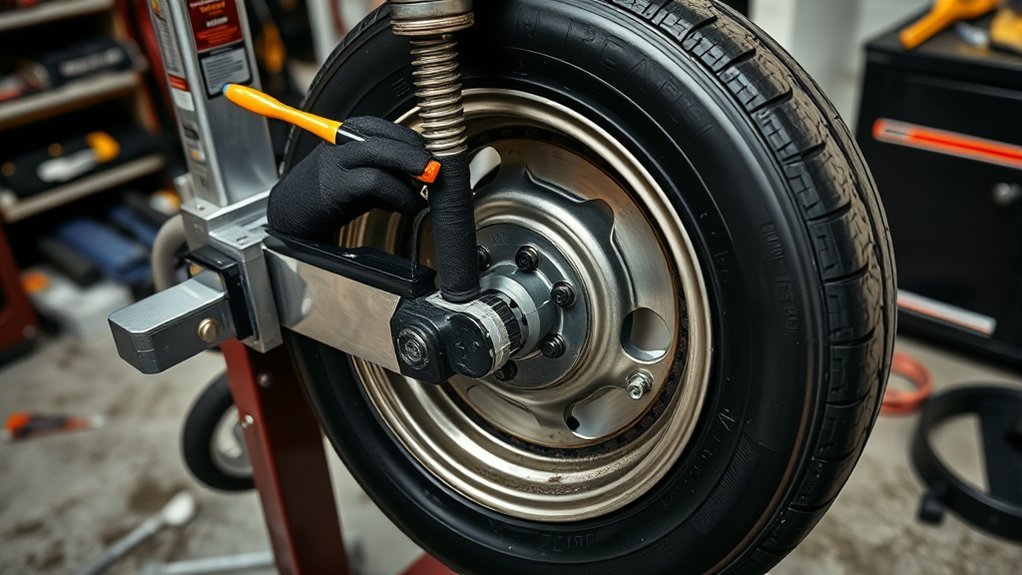
Brush a generous, even coat of tire bead lubricant onto the upper and lower tire beads and the rim bead-seat area. Full coverage matters. A dry bead drags, folds, tears, or makes you use more force than the tool needs. A properly lubricated bead slides more smoothly and is less likely to pinch an inner tube on tube-type tires.
Pro Tip: Keep the opposite side of the bead pushed into the rim’s drop center while you work the bar. That small amount of extra slack is what lets the bead climb over the rim without excessive force.
[Products Worth Considering]

This multi-function tire valve stem removal tool set makes it fast to remove, install, bleed, and clean valve cores for easier tire maintenance. It includes valve core removers, a 4-way spool tool, replacement valve caps, and spare cores to handle replacements and repairs with confidence. Universal compatibility suits cars, trucks, motorcycles, bicycles, and more for roadside convenience.

This 4-in-1 tire valve core removal tool helps you deflate, unblock, and remove or install valve cores quickly for easier tire repair. The multifunction design also supports re-taping damaged threads and reaming inside the valve stem for smoother service. Included as a 2-pack, it’s compact for convenient carry and works for cars, bicycles, and motorcycles.
Mount the First Bead Over the Rim
Set the tire on the rim in the correct direction. Check directional arrows, outside/inside markings, white lettering, and valve-stem orientation before you start. Push down on opposite sides of the tire to start the lower bead over the rim. For many standard tires, the first bead will go on with hand pressure and lubricant.
If the bead resists, use the flat end of the mount/demount bar through the tire and work gradually around the rim. Keep the bead lubricated and centered. Do not pry against a finished rim surface without protection.
Prepare Bead and Rim
The bead and rim should be clean, wet with bead lubricant, and aligned before you apply leverage. If the tire has a tube, lightly inflate the tube just enough to remove folds, then keep it away from the bar. If the bead starts to bind, stop, push the opposite side deeper into the drop center, and add lubricant.
Position the First Bead
Start the first bead at the side of the rim that gives you the most natural bar angle. Work slowly and keep the bead from climbing out of the drop center. The goal is to roll the bead over the rim edge, not stretch it violently.
Work the Bead Over the Rim
Use smooth, even motion as you move around the wheel. If the bead hangs up, do not force the bar harder. Reposition the tire, add lubricant, and make sure the opposite side of the bead is down in the wheel well.
Install the Second Bead
With the lower bead in place, switch the mount/demount bar so the hook side is pressed against the rim as described in the owner’s manual. Push the bar down so the hook end guides the upper bead under and over the rim edge. Work around the rim in short sections until the upper bead is fully mounted.
Watch the bead line all the way around both sides. If you see a high spot, twisted tube, pinched sidewall, or section that did not drop into the rim correctly, stop before inflation. Deflate, reset, lubricate, and correct the issue while the tire is still unpressurized.
Inflate, Check for Leaks, and Set the Right PSI
Before inflating, confirm the tire size matches the wheel and the bead is evenly positioned. Add air slowly. Do not overinflate. Use the vehicle manufacturer’s recommended cold tire pressure from the Tire and Loading Information Label or the vehicle owner’s manual, not the maximum pressure molded on the tire sidewall.
As the beads seat, keep your body out of the likely path of the tire and rim. If the bead will not seat with normal lubrication and controlled air pressure, stop and get professional help. After inflation, spray soapy water or leak-check solution around the bead and valve stem. Bubbles mean the assembly is leaking and needs correction.
Balance the Tire for a Smooth Ride
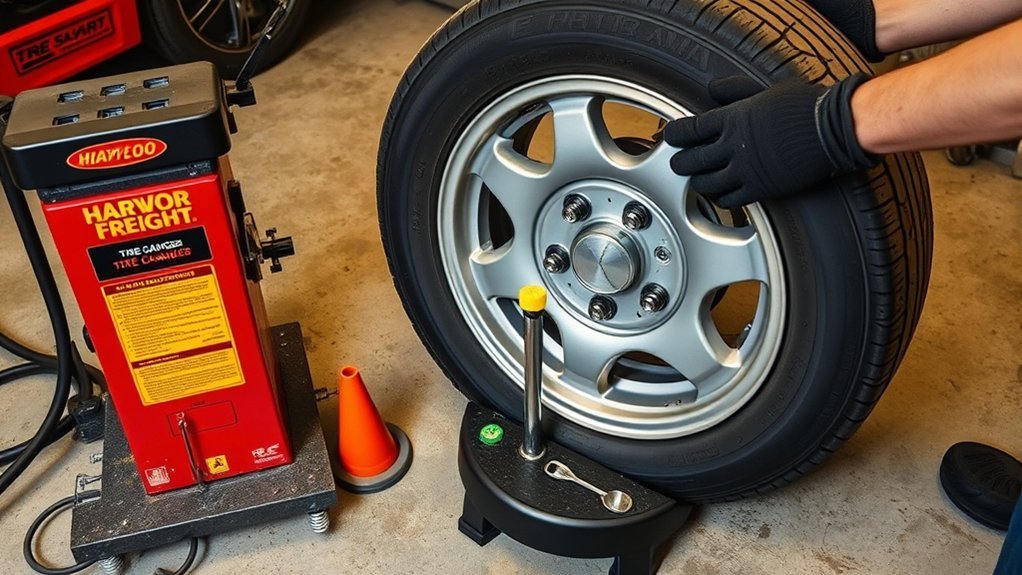
Balancing is not optional for road use. Harbor Freight’s manual says to have the tire balanced by a qualified automotive technician, and NHTSA tire safety guidance says new tires should always be balanced when installed. A tire that is not balanced can cause vibration, uneven wear, and poor ride quality.
You can use a quality static balancer for some small equipment, trailer, ATV, or motorcycle applications if you know the correct method, but passenger vehicles are best checked on a professional dynamic balancer. After installation, recheck the tire pressure cold, torque the wheel nuts to the vehicle specification, and test-drive carefully. If you feel vibration, pulling, thumping, or air loss, stop and inspect the assembly.
Fix Harbor Freight Tire Changer Problems
If the Harbor Freight tire changer feels unstable, difficult, or rough on rims, the problem is usually setup, lubrication, compatibility, or technique. Use the table below before applying more force.
| Problem | Likely Cause | Fix |
| Tool rocks or slides | Base is not anchored or surface is weak | Stop and mount the tool to a secure, level floor or heavy base before continuing. |
| Bead will not break | Dry bead, rust, wrong shoe position, or stiff old tire | Add bead lubricant, reposition the shoe close to the bead seat, rotate the tire, and work in smaller sections. |
| Rim is getting scratched | Metal tool contact or unsuitable rim finish | Use rim protectors and stop using the tool on high-end, polished, painted, or specialty wheels. |
| Tube keeps pinching | Tube is folded, dry bead, or bar is catching the tube | Lightly inflate the tube to shape it, use more bead lubricant, and keep the bar away from the tube. |
| Bead will not seat during inflation | Dry bead, dirty bead seat, incompatible tire/rim, or damaged wheel | Deflate, relubricate, inspect the bead seat, confirm compatibility, and use a professional tire machine if it still will not seat. |
Maintain the Manual Tire Changer
After each use, wipe excess bead oil off the tire changer and inspect all connections. Check the bead breaker handle, shoe, post cap, slider, washer, lug pin, base bolts, clevis pins, and R-clips. Replace damaged parts before the next use. Store the tool dry so rust does not weaken the hardware or roughen contact points.
Do not modify the tire changer or use accessories that are not suitable for the job. If you need parts, refer to the owner’s manual and Harbor Freight product support for the correct item number and UPC.
Frequently Asked Questions
Can this tire changer handle motorcycle tires?
Sometimes, but it is not the best default choice. The manual tire changer is designed around a center-post setup for standard-size tires within its capacity. Motorcycle wheels are narrower and easier to scratch, and many need a motorcycle-specific stand, rim protectors, spoons, or adapters. Harbor Freight also sells a separate motorcycle tire change stand for that kind of work.
What rim sizes work with Harbor Freight manual tire changers?
For the current PITTSBURGH Manual Tire Changer, Harbor Freight lists capacity from 8-inch tires to light-truck tires, including flotation tires up to 12.5L16. The manual warns not to use it on standard tires exceeding 16 inches or flotation tires over 12.5L16. Always check the manual for your exact SKU or UPC because older and specialty models can differ.
How often should moving parts be lubricated?
Wipe the tool after each use and inspect the connections regularly. If the bead breaker pivot, slider, or contact points drag, clean away grit first and apply a light lubricant where metal parts move. Do not leave thick grease where it can attract dirt or get on the tire bead.
Does the tire changer need to be bolted to the floor?
Yes. The owner’s manual says not to use the tire changer without mounting it to the floor and to mount it only to a secure, level surface that can support the tool and tire assembly. If you cannot anchor it safely, do not use it until you have a rigid mounting solution.
Can bead breaking be done with low-profile tires?
Low-profile tires can be difficult and risky on a manual changer because the sidewalls are stiff and the rims are often more expensive. The Harbor Freight manual says the tool works best with standard-sized tires and warns that high-end rims can be scratched or marred. Use a professional tire machine for low-profile, run-flat, performance, or expensive wheel assemblies.
Should I balance the tire after using a Harbor Freight tire changer?
Yes. Mounting a tire changes the wheel-and-tire assembly, and new tires should be balanced when installed. The owner’s manual says to have the tire balanced by a qualified automotive technician. Skipping this step can cause vibration and uneven wear.
What PSI should I inflate the tire to after mounting?
Use the vehicle manufacturer’s recommended cold tire pressure from the driver-door tire placard or the vehicle owner’s manual. Do not use the maximum pressure printed on the tire sidewall as the normal inflation target unless the vehicle manufacturer specifically calls for it.
Conclusion
Using a Harbor Freight manual tire changer correctly is about preparation, not brute force. Mount the tool securely, deflate the tire completely, stay within the stated capacity, lubricate the bead, work the tire over the rim in controlled sections, inflate only to the correct pressure, and have the wheel balanced before road use. If the rim is expensive, the bead will not seat, the wheel is damaged, or the tire is outside the tool’s capacity, stop and use a qualified tire shop.
Sources
- Harbor Freight PITTSBURGH Manual Tire Changer product page — current SKU, product capacity, dimensions, and product support.
- Harbor Freight Owner’s Manual & Safety Instructions for Item 58731 — safety warnings, assembly, operation, bead breaking, mounting, inflation, balancing, and maintenance steps.
- NHTSA Tire Safety / TireWise — tire pressure, balancing, tire maintenance, and safe-use guidance.
- OSHA 29 CFR 1910.177, Servicing Multi-Piece and Single-Piece Rim Wheels — professional rim-wheel servicing safety principles, including training, inspection, lubrication, and inflation trajectory precautions.

Related Articles
How to Use a Tire Spoon: Pro Technique for Mounting Tires
Careful technique makes tire mounting easier, but the real pro trick for using a tire spoon starts with one overlooked step.
Read More
How to Unmount a Tire: Tools, Steps & Pro Tips for Clean Removal
Start unmounting a tire with the right tools and pro tricks, then discover the cleanest way to avoid costly damage.
Read More
How to Tie a Tire Swing: Safe Knot & Hanging Guide
D**iscover the safest knot, rope, and branch choices for a tire swing, plus expert tips that could prevent a dangerous mistake.
Read More