
How Heavy Is a Car Tire? Average Weight by Size & Type
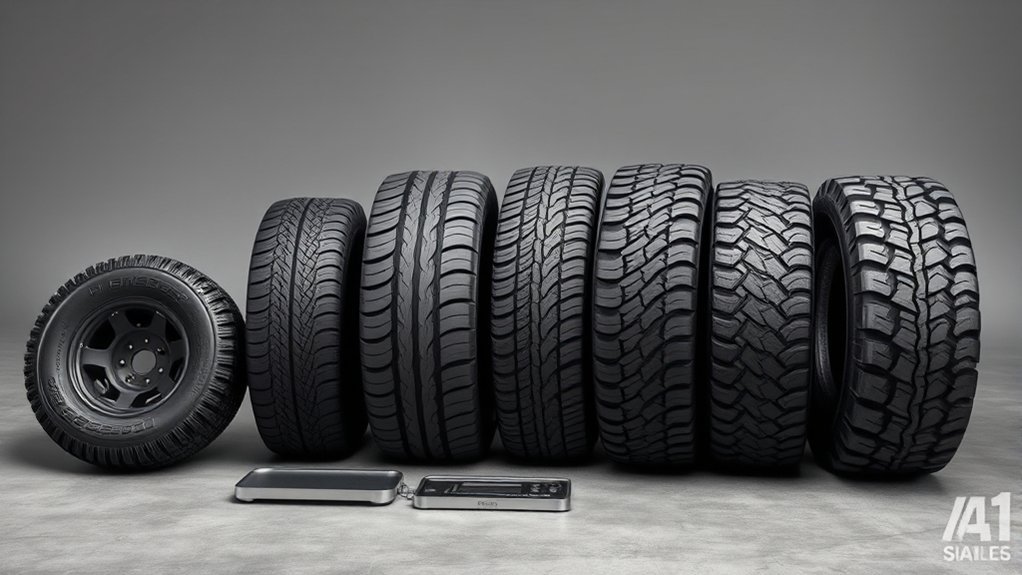
A car tire usually weighs about 15 to 25 pounds, or about 7 to 11 kilograms, when you are talking about a common passenger-car tire without the wheel. Larger crossover, SUV, light-truck, and off-road tires can weigh much more because they use more rubber, stronger sidewalls, deeper tread, and heavier internal reinforcement. The exact number depends on the tire size, load rating, construction, and tread design.
Quick Answer
Most passenger car tires weigh about 15 to 25 pounds each, while many crossover and SUV tires fall around 25 to 45 pounds. Light-truck and large off-road tires can range from about 45 to 110 pounds, depending on size, load range, and tread design.
Key Takeaways
- A typical passenger car tire weighs about 15–25 lb, with many compact and sedan tires near 20 lb.
- Crossover and SUV tires are often heavier than sedan tires, but true light-truck tires are usually heavier still.
- Tire weight rises with diameter, width, load range, tread depth, sidewall strength, and internal reinforcement.
- A heavier tire can affect acceleration, braking feel, ride response, and fuel use, but rolling resistance and inflation pressure matter more for MPG than scale weight alone.
- Always choose replacement tires by the vehicle placard, owner’s manual, load index, speed rating, and cold tire pressure before considering weight.
How Heavy Is a Car Tire?
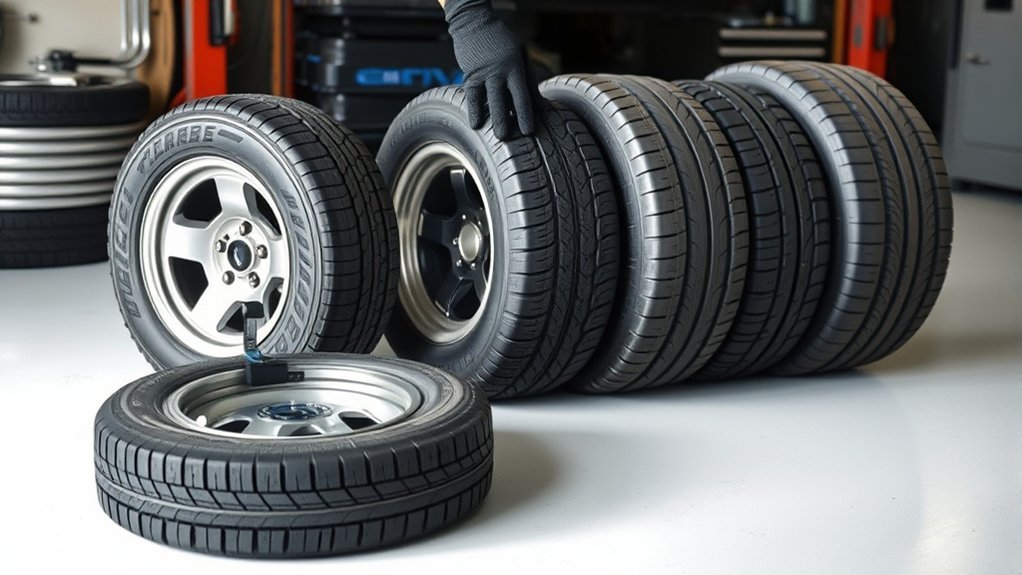
A standard passenger-car tire usually weighs about 15 to 25 pounds. In metric terms, that is roughly 7 to 11 kilograms. Smaller compact-car tires can be lighter, while larger sedan, performance, and touring tires often sit closer to the upper end of that range.
For a real-world example, Tire Rack lists a Goodyear Assurance WeatherReady2 in 205/55R16 at 21 pounds. That size is common on many compact and midsize cars, so it lines up well with the normal passenger-tire range.
Once you move into larger SUV, pickup, and off-road sizes, the tire gets heavier fast. A Goodyear Wrangler DuraTrac in LT275/70R18 is listed at 54 pounds, while a Nitto Trail Grappler M/T in 40×13.5R17LT is listed at about 103 pounds. That is why the correct answer depends heavily on the tire category.
Note: Tire weight means the rubber tire by itself unless stated otherwise. A mounted tire-and-wheel assembly weighs much more because the wheel, valve stem, balance weights, and sometimes TPMS sensor are included.
[Products Worth Considering]

This 100-piece tire repair screw plug kit provides a fast, self-service solution for punctures on the road. Choose the correct plug size, insert it into the break, and screw it in to help seal the puncture and temporarily restore tire pressure. Thickened threads and rubber-wrapped plugs improve bite and sealing while remaining compact and easy to carry.
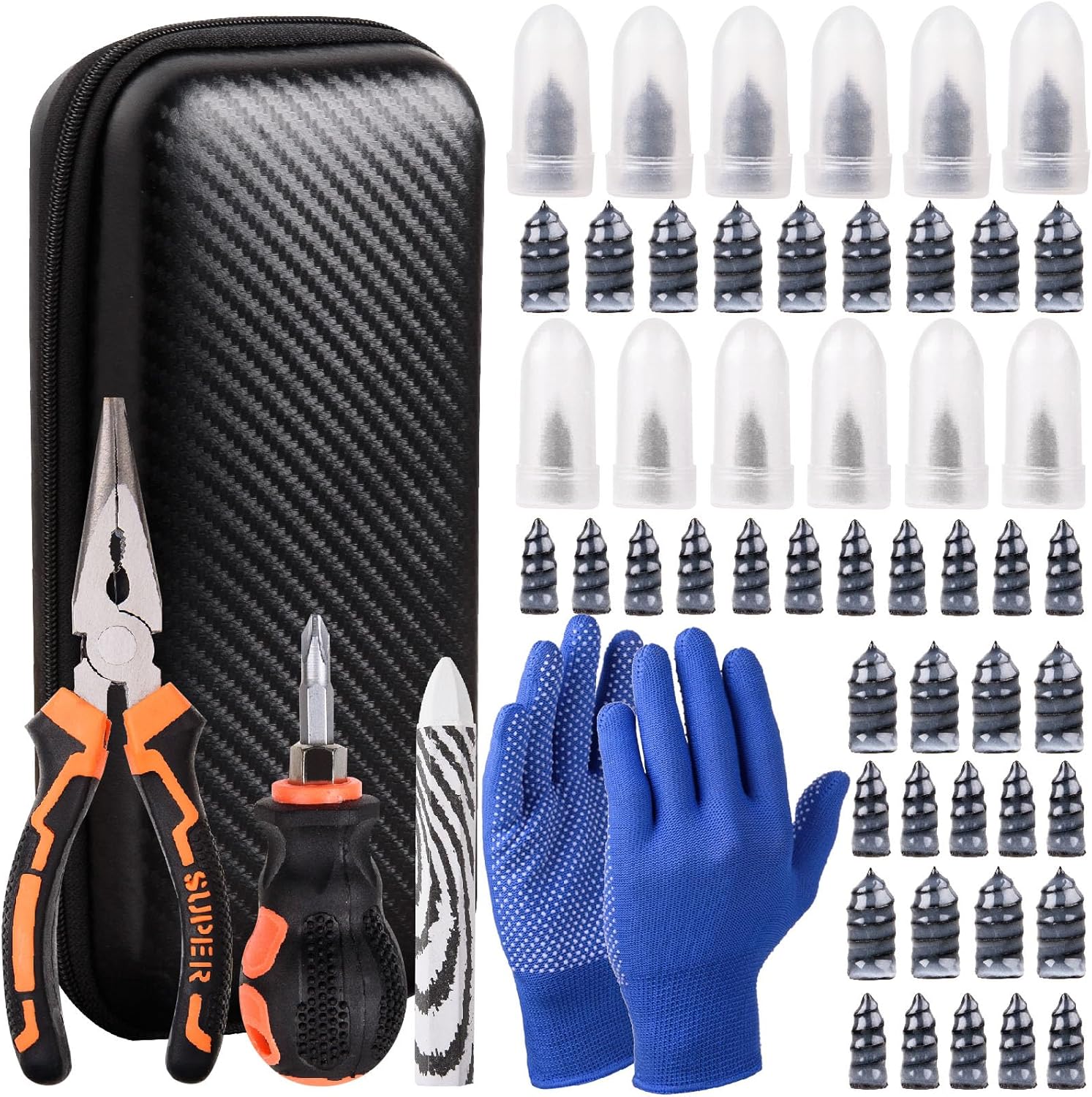
This tire sidewall puncture repair kit fixes flats fast without removing the tire, helping you get back on the road in minutes. It includes self-tapping repair nails, essential tools, gloves, and a portable storage bag for convenient roadside use. Designed for tubeless tires, it helps create a tight, leak-resistant seal for cars, motorcycles, trucks, SUVs, and ATVs.

This professional wheel and rim cleaning brush set lifts brake dust, grime, and dirt with soft, scratch-free microfiber and synthetic wool fibers. The rim brush bends up to 360 degrees for easy access to hard-to-reach areas around spokes, lips, and faces. Ideal for thorough cleaning of car, truck, motorcycle, bicycle, RV, and more wheel and tire surfaces.
Average Car Tire Weights by Vehicle Type
You can estimate tire weight by vehicle type, but treat these as practical ranges rather than fixed rules. Two tires with the same outer diameter can weigh differently if one has a deeper tread, higher load range, stronger sidewall, or more aggressive off-road construction.
| Tire type | Typical weight | Typical use |
|---|---|---|
| Compact car tire | 15–22 lb / 7–10 kg | Small cars, hybrids, commuter vehicles |
| Sedan / touring tire | 18–28 lb / 8–13 kg | Midsize cars, daily drivers, all-season tires |
| Performance car tire | 20–35 lb / 9–16 kg | Wider tread, larger wheels, higher speed ratings |
| Crossover / SUV tire | 25–45 lb / 11–20 kg | Crossovers, small SUVs, family SUVs |
| Light-truck tire | 45–80 lb / 20–36 kg | Pickups, vans, towing, hauling, LT sizes |
| Large mud-terrain / off-road LT tire | 70–110 lb / 32–50 kg | Lifted trucks, 35-inch to 42-inch off-road tires |
Very large commercial, agricultural, construction, and mining tires can weigh hundreds or even thousands of pounds, but those are not normal car tires. For a passenger vehicle, SUV, pickup, or trail rig, the useful range is usually closer to the table above.
What Affects Car Tire Weight?
Car tire weight changes because tires are built for different loads, speeds, surfaces, and ride goals. The biggest factor is size: a taller, wider tire needs more rubber, more casing material, and usually more reinforcement. That is why a 20-inch SUV tire weighs much more than a 15-inch compact-car tire.
Tread design also matters. A low-rolling-resistance touring tire often uses a shallower, smoother tread pattern than a mud-terrain tire. A mud-terrain tire has large tread blocks, deeper voids, thicker shoulders, and stronger sidewall protection, so it naturally weighs more.
Load range and construction make another major difference. A Standard Load passenger tire is built for normal car use. An LT tire for towing or hauling may use a stronger casing, higher inflation pressure, and heavier internal materials. Michelin explains that the tire’s load rating and speed rating are part of the tire’s service description and must meet or exceed the vehicle manufacturer’s specifications.
- Diameter: Larger tires use more material.
- Width: Wider tires have more tread rubber and casing area.
- Tread depth: Deeper tread adds rubber and weight.
- Load range: Higher-load tires often use stronger, heavier construction.
- Sidewall strength: Off-road and LT tires may use reinforced sidewalls.
- Compound and belt package: Steel belts, textile plies, cap plies, and rubber compounds all affect mass.
How Car Tire Weight Affects Driving
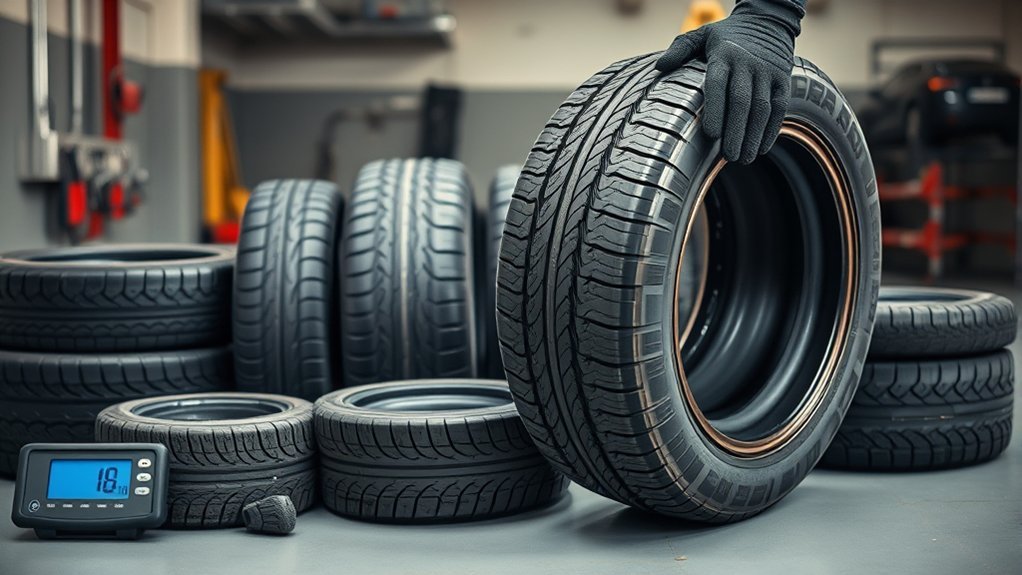
Tire weight affects driving because a tire is both unsprung weight and rotating weight. Unsprung weight is the mass that moves with the wheel instead of being supported by the suspension. Rotating weight takes energy to speed up and slow down. All else equal, a heavier tire can make acceleration feel slower, braking feel less sharp, and suspension response feel less lively.
That does not mean the lightest tire is always the best tire. A heavier tire may be heavier because it has a stronger casing, a deeper tread, or a higher load rating that your truck or SUV actually needs. For towing, hauling, rough roads, or off-road use, durability and correct load capacity matter more than saving a few pounds.
Fuel economy is more complicated than tire weight alone. NHTSA explains that tire design, materials, construction, tread design, and rolling resistance influence fuel efficiency. The U.S. Department of Energy also notes that a 10 percent reduction in rolling resistance can reduce fuel use by about 1 to 2 percent for typical vehicles. That is about rolling resistance, not a fixed fuel-economy change for every pound of tire weight.
The tire’s weight matters, but it should never be judged alone. Size, load rating, tread pattern, pressure, and rolling resistance all shape how the vehicle feels and how much fuel it uses.
Tire Only vs. Tire and Wheel Weight
When people ask how heavy a car tire is, they often mean one of two different things:
- Tire only: The rubber tire without the rim. This is the weight ranges covered in this article.
- Mounted tire and wheel: The tire plus the rim, valve stem, balance weights, and possibly a TPMS sensor.
A tire-and-wheel assembly can easily weigh 35 to 60 pounds on a small car and much more on a truck or SUV. A steel wheel is often heavier than an aluminum wheel, and large aftermarket wheels can add a lot of mass. If you are comparing tire weight for performance, towing, fuel economy, or shipping, make sure you know whether the listed number is for the tire alone or the full assembly.
[Products Worth Considering]

Upgrade your tire inflating setup with this 12-inch hose adapter featuring a brass locking quick-connect chuck for secure, leak-proof attachment. The extended, flexible design helps reach hard-to-access valve stems, while the self-locking mechanism enables hands-free inflation with no pressure loss. It’s compatible with most portable air compressors and inflators, making it ideal for cars, trucks, motorcycles, and bicycles.

This professional wheel and rim brush kit makes it easy to lift brake dust, grime, and dirt from wheels and tires without scratching finishes. The brushes feature soft, metal-free wool heads and a flexible 360-degree rim brush design for reaching hard-to-clean areas. Includes multiple brush types plus accessories for thorough car, motorcycle, and general vehicle detailing.

Upgrade your wheelbarrow, garden wagon, hand truck, or trolley with solid flat-free 13 inch replacement tires designed to avoid punctures and eliminate inflation time. Built with durable polyurethane and thickened steel for impact resistance and smooth rotation, the serrated tread improves traction on wet or slippery surfaces. Includes spacers and pins for easier installation and a universal 5/8 inch axle bore hole for a stable fit.
How to Find Your Exact Tire Weight
The fastest way to find the exact tire weight is to search by the full tire size and model, not just the vehicle. A tire size looks like 205/55R16, 225/65R17, or LT275/70R18. The model name might be something like a touring all-season, all-terrain, or mud-terrain tire.
- Read the tire size on the sidewall or on the driver-side door placard.
- Find the tire brand and model name.
- Search the manufacturer or a reputable tire retailer’s spec page.
- Look for “tire weight,” “weight,” or “specifications.”
- Confirm whether the number is for the tire only or a mounted assembly.
Pro Tip: If two tires are the same size but one is an all-terrain or mud-terrain tire, expect the more aggressive tire to weigh more because it usually has deeper tread and stronger sidewalls.
How to Choose the Right Tire
Start with fit and safety, not weight. The vehicle manufacturer has already specified the correct tire size, load rating, speed rating, and cold inflation pressure for the vehicle. NHTSA says the correct size is listed in the owner’s manual or on the Tire and Loading Information Label on the driver-side door edge or post.
Warning: Do not choose a replacement tire just because it is lighter. The tire must match the vehicle’s required size, load index, speed rating, and cold inflation pressure guidance. Under-rated or underinflated tires can overheat, wear unevenly, and fail.
Bridgestone’s replacement tire guidance says replacement tires should be selected with the same size, load index, and speed symbol shown on the vehicle tire placard or in the owner’s manual. NHTSA also says the recommended cold tire pressure is the pressure listed by the vehicle manufacturer, not the maximum pressure molded onto the tire sidewall.
After the tire meets those requirements, weight can be a useful comparison point. A lighter touring tire may help ride response and efficiency on a daily driver. A heavier LT or all-terrain tire may be the better choice for towing, hauling, gravel roads, job-site use, or off-road driving. The right tire is the one that matches the vehicle and the job.
Frequently Asked Questions
How heavy is a tire without a rim?
A passenger-car tire without a rim usually weighs about 15 to 25 pounds. Larger SUV tires, LT tires, and off-road tires can weigh much more. Once the tire is mounted on a wheel, the full assembly can be far heavier.
How heavy is a car tire in kg?
A typical passenger-car tire weighs about 7 to 11 kg. Larger crossover and SUV tires often weigh about 11 to 20 kg, while many LT and off-road truck tires can weigh 20 to 50 kg.
How many tires equal 1 ton?
Using a U.S. short ton of 2,000 pounds, about 100 standard 20-pound passenger tires equal 1 ton. If the tires weigh 25 pounds each, it takes about 80 tires. If they are 50-pound truck tires, it takes about 40 tires.
How heavy is a 40 inch tire?
A 40-inch light-truck off-road tire commonly weighs around 90 to 110 pounds, depending on width, load range, and tread design. For example, Tire Rack lists the Nitto Trail Grappler M/T in 40×13.5R17LT at about 103 pounds.
Are heavier tires bad?
Not always. Heavier tires can reduce acceleration response and add rotating mass, but they may also provide the stronger construction needed for towing, hauling, or off-road use. The safest choice is the correct tire for your vehicle’s size, load index, speed rating, and driving conditions.
Does tire weight affect fuel economy?
Yes, but not by a simple pounds-to-MPG formula. Heavier tires add rotating mass, while rolling resistance, tread compound, tire pressure, and tread design also affect fuel use. For fuel economy, look for the correct size, proper inflation, and low-rolling-resistance design where appropriate.
Conclusion
Most passenger car tires weigh about 15 to 25 pounds, but that is only the starting point. Crossover, SUV, light-truck, and off-road tires can be much heavier because they are larger and built for higher loads or tougher surfaces. If you need the exact number, look up the tire’s full size and model on a manufacturer or reputable retailer spec page.
Use tire weight as a comparison tool, not the main buying rule. The best tire is the one that fits your vehicle’s placard requirements, supports the correct load, matches your driving conditions, and maintains proper cold inflation pressure. Once those safety boxes are checked, weight can help you compare ride feel, response, and efficiency.
Sources
- Tire Rack — Goodyear Assurance WeatherReady2 205/55R16 specifications — backs up a real passenger-tire weight example.
- Tire Rack — Goodyear Wrangler DuraTrac LT275/70R18 specifications — backs up a real light-truck tire weight example.
- Tire Rack — Nitto Trail Grappler M/T specifications — backs up large off-road LT tire weight examples.
- NHTSA TireWise — supports tire pressure, tire placard, maintenance, rolling resistance, and safety guidance.
- Michelin — Tire markings explained — supports load rating, speed rating, and sidewall-code explanations.
- Bridgestone Americas — Replacement Tire Selection Manual — supports replacement tire selection by placard size, load index, and speed symbol.
[Products Worth Considering]

This 13-inch flat-free wheelbarrow tire uses solid polyurethane foam construction with steel rims, so it will not puncture, rot, or go flat. The anti-skid tread improves stability and maneuverability across garden, lawn, and mixed terrain. It includes pre-installed 5/8-inch bearings plus extra 3/4-inch bearings and a versatile adapter kit to fit compatible wheel sizes and cart hubs.

This 15-inch tire spoons kit makes tire removal and installation easier with added leverage, reducing time and effort for everyday repairs. It includes tire spoons, rim protectors, a valve tool, and valve cores/caps, helping protect rims and streamline deflation and re-sealing. Built with durable hardened steel and a non-slip ergonomic grip for confident use on motorcycles, dirt bikes, ATVs, and lawn equipment.

Inflate car tires, bicycles, and sports balls quickly with a fast 50-second inflation design and a digital pressure gauge for confident pressure control. The 12V DC inflator features auto shut-off to stop at your preset PSI, plus an emergency LED light for added visibility. Continuous use supports no-rest inflation across all four tires, with low vibration and low noise operation for easier handling.

Related Articles
305 Tire Size Explained: How Big Is It?
I explain how big a 305 tire really is—and why the exact fit can surprise you.
Read More
Tire Ply Rating Explained: What the Numbers Mean
Tire ply ratings reveal more than numbers, hinting at strength, load capacity, and hidden tradeoffs you’ll want to understand before choosing.
Read More
2 Ply Vs 4 Ply Tires: What’s the Real Difference?
I’ll explain the real difference between 2-ply and 4-ply tires, and the choice may surprise you depending on where you drive.
Read More