
Why Does My Tire Have a Bubble? Causes, Dangers & What to Do
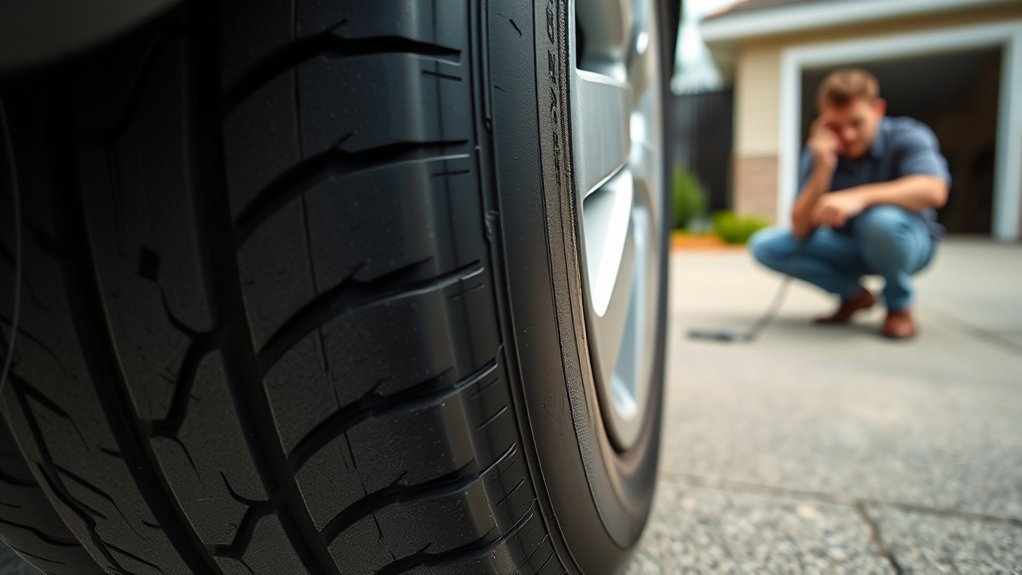
A tire bubble is a visible bulge on a tire’s sidewall or tread that usually means the tire’s internal cords or plies have been damaged. It is not a cosmetic mark, and it is not something to “watch for a few more days.” A bubbled tire can fail suddenly, so the safe move is to stop normal driving, use a spare or tow if needed, and replace the damaged tire.
Quick Answer
A tire bubble means the tire’s internal structure has weakened, often after a pothole hit, curb strike, underinflation, overload, or possible defect. You should not keep driving on it. A sidewall bubble cannot be safely repaired; the tire needs professional inspection and replacement.
Key Takeaways
- A tire bubble is a bulge caused by internal cord, ply, or sidewall damage.
- Common causes include potholes, curbs, road debris, low tire pressure, overloading, and occasional manufacturing defects.
- Driving on a bubbled tire is unsafe because the weakened area can rupture without warning.
- A bubbled tire cannot be patched, plugged, or sealed back to safe condition.
- Replace the tire, inspect the wheel for impact damage, and check whether warranty, road-hazard coverage, or a recall applies.
At a Glance
| Time Required | 5 minutes to spot the bubble; replacement should be arranged before the next normal trip. |
| Difficulty | Easy to identify visually, but replacement and internal inspection should be handled by a tire professional. |
| Tools Needed | Flashlight, tire pressure gauge, owner’s manual, spare tire or roadside assistance. |
| Cost | Inspection is often low-cost or included with tire service; replacement cost depends on tire size, brand, vehicle type, and whether the wheel or alignment also needs work. |
Warning: Do not use a tire with a visible bubble for normal driving. If you are already on the road, move only as far as needed to get out of traffic safely, then install the spare or call for roadside assistance.
What Is a Tire Bubble?
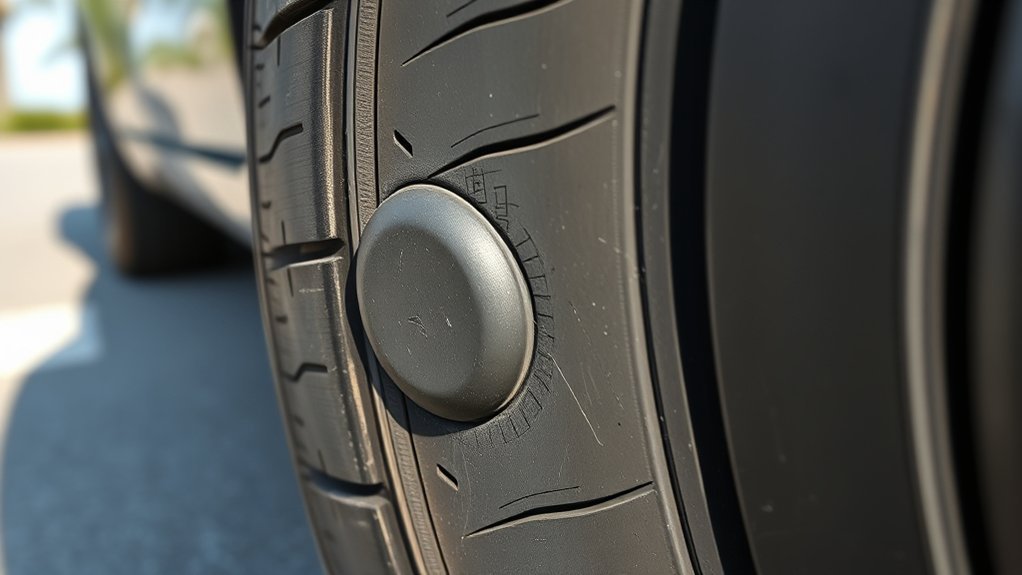
A tire bubble is an outward bulge that breaks the tire’s normal shape. It can appear on the sidewall or, less commonly, in the tread area. The bulge forms when part of the tire’s internal structure can no longer hold pressure evenly.
In many cases, the damage starts after a hard impact. The tire gets squeezed between the road hazard and the wheel, internal cords break, and pressurized air moves between tire layers. Michelin explains that a sidewall bulge or bubble generally indicates damaged cords and that the tire should be replaced.
Do not treat a bubble like a nail puncture. A puncture may sometimes be repaired if it is small and limited to the repairable tread area. A bubble means the tire’s casing has lost strength, and a patch or plug cannot rebuild that structure.
[Products Worth Considering]

EVOULTES heavy duty tire inflator with an integrated gauge delivers accurate pressure readings from 10–120 PSI, helping you inflate, deflate, and check tires in one tool. The 16.5-inch extended dual-head air chuck with swivel base reaches hard-to-access dual wheel valves on trucks and RVs. A brass trigger core and side-mounted air release valve make operation smooth, with standard 1/4" NPT threading and quick-connect compatibility for easy setup.

This VEVOR tire bead breaker uses a slide-hammer impact and wedge tip to separate tire beads from rims quickly and efficiently without damaging hub surfaces. The long handle and sturdy steel construction help reduce user strain while providing reliable, portable tire changing for cars, trucks, and more. Ideal for home mechanics and repair shops handling multiple vehicle tire sizes.

This roadside assistance kit helps drivers and passengers in urgent situations after an accident or breakdown, providing practical support while waiting for help. It includes a lightweight, compact tire inflator for fast inflation of standard vehicle tires, plus reinforced jumper cable protection for safer handling. Ideal for winter weather, road trips, camping, and travel, with everything stowed neatly in a trunk bag.
Why Are Tire Bubbles Dangerous?
Tire bubbles are dangerous because they mark a weak spot in a pressurized, load-bearing part of the vehicle. The tire still has to carry the car, absorb road impacts, handle heat, and maintain grip. Once the internal cords are damaged, that weakened area can rupture suddenly.
The risk is not theoretical. NHTSA’s TireWise page reports that 511 people died in tire-related crashes in 2024. Older NHTSA TireWise material also cited nearly 11,000 tire-related crashes in annual estimates. Proper tire care reduces risk, but a visible bubble means the tire is already compromised.
| Risk | What It Means | Safe Response |
|---|---|---|
| Sudden blowout | The weakened area can rupture under load, speed, or heat. | Stop normal driving and replace the tire. |
| Loss of control | Rapid air loss can affect steering and braking. | Use a spare or tow instead of continuing the trip. |
| Hidden wheel damage | The same impact that damaged the tire may have bent the rim or affected alignment. | Have the wheel and suspension inspected. |
What Causes a Tire Bubble?
A tire bubble usually starts when the internal cords, plies, or liner are damaged. The outside rubber may still look mostly intact, but the tire can no longer support pressure evenly at that spot.
- Pothole impacts: A sharp hit can pinch the tire and break internal cords.
- Curb strikes: Parking impacts and hard sidewall hits can weaken the tire casing.
- Road debris: Metal, broken pavement, or large objects can damage the sidewall or tread structure.
- Underinflation: Low pressure increases sidewall flex and heat, which can contribute to tire failure. NHTSA says underinflated tires and overloaded vehicles are a major cause of tire failure.
- Overloading: Carrying more weight than the vehicle or tire is rated for stresses the tire structure.
- Driving on a flat: Even a short distance on a flat tire can crush the sidewall and create hidden internal damage.
- Manufacturing defects: Less commonly, a weak spot from production can cause a bubble without an obvious impact mark.
Note: A Tire Pressure Monitoring System can warn you when pressure is significantly low, but it may not warn you about every structural tire problem. A visible bulge still needs immediate attention even if the TPMS light is off.
Why Tire Bubbles Can Form Without Visible Damage
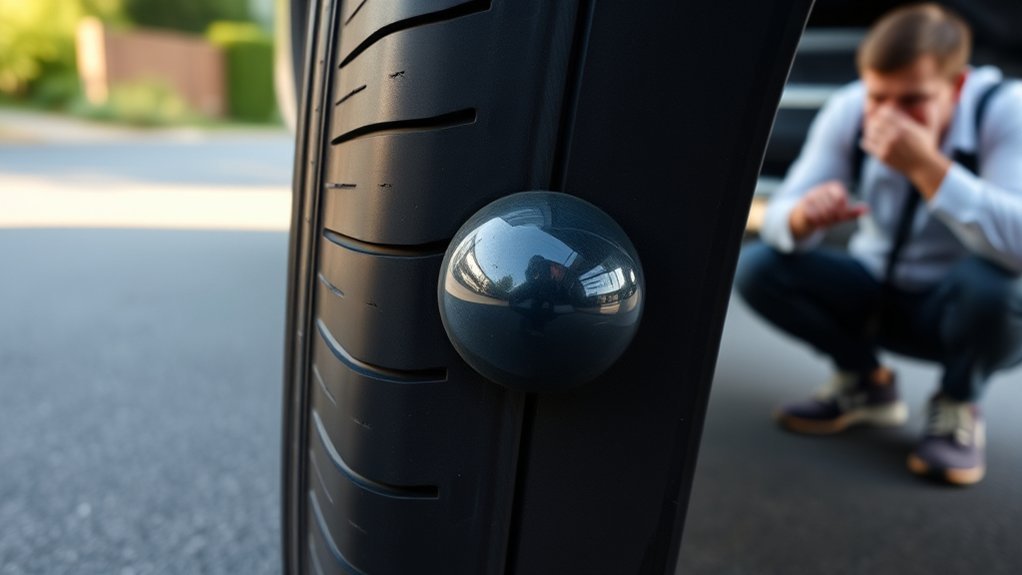
Sometimes a tire bubble appears even though you do not remember hitting anything. That can happen because the impact was minor enough to forget, the damage was hidden inside the tire, or the tire has a possible manufacturing defect.
Continental notes that a sidewall bulge may indicate internal damage that is not visible from the outside, and that the tire often needs to be removed from the wheel to inspect the internal structure and determine whether warranty coverage applies.
Internal Tire Defects
An internal defect can leave a weak spot in the tire’s casing, belt package, or inner liner. When the tire is inflated and driven, that weak spot may expand into a visible bubble. This is why a tire with no obvious curb scrape or cut still needs professional inspection.
If the tire is newer, take clear photos before removal, write down the tire brand, model, size, DOT tire identification number, mileage, and purchase date, then visit the selling dealer or an authorized tire dealer.
Warranty, Road-Hazard, and Recall Checks
A bubble may or may not be covered. The answer depends on the cause and the coverage you bought.
- Manufacturer warranty: may apply if inspection finds a warrantable defect.
- Road-hazard coverage: may apply if the bubble came from a pothole, curb, or debris impact and you purchased that coverage.
- Recall: check tire recalls through NHTSA’s recall lookup, especially if several tires from the same set show unusual bulging, vibration, or separation.
Sidewall Bulge vs. Sidewall Indentation
A sidewall bulge pushes outward and may indicate internal structural damage. A sidewall indentation is an inward-looking dimple and can be a normal sidewall appearance on some tires. If you are unsure, do not guess. Have a tire professional inspect it, especially if the area is raised, soft, growing, or paired with vibration or pressure loss.
Can You Drive on a Tire Bubble?
No, you should not continue normal driving on a tire bubble. A bubble means the tire is structurally compromised. Speed, heat, cargo weight, another pothole, or a sharp turn can turn that weak spot into a sudden blowout.
If you notice the bubble while parked, do not start a normal trip on that tire. If you notice it while driving, slow down smoothly, avoid hard braking, and pull over where it is safe. Then use the spare tire if your vehicle has one, or call roadside assistance.
If you must move the vehicle out of an unsafe traffic lane, move only the minimum distance needed to reach a safer location. That is different from “driving to see how long it lasts.” There is no reliable way to predict when a bubbled tire will fail.
What to Do When You Find a Tire Bubble
- Stop normal driving. Park safely and keep the vehicle off high-speed roads if possible.
- Check the tire visually. Look for a raised bubble, cut, scrape, exposed cords, pressure loss, or tread separation.
- Use the spare or call for a tow. Do not rely on sealant, a plug kit, or extra air to make a bubbled tire safe.
- Replace the tire. The damaged tire should be removed from service.
- Inspect the wheel. Ask the shop to check for a bent rim, bead-seat damage, and signs of impact.
- Check alignment if needed. Pulling, vibration, uneven steering wheel position, or repeated tire wear after an impact can point to alignment or suspension issues.
- Document the damage. Photos and purchase records help with warranty or road-hazard claims.
Pro Tip: Photograph the bubble before the tire is removed. Include one close-up, one full tire photo, and one photo showing the DOT tire identification number on the sidewall.
How to Spot a Tire Bubble Early
Inspect your tires after any hard pothole hit, curb strike, or unexplained vibration. A bubble often starts as a small raised area that is easier to see in good light.
[Products Worth Considering]

The JACO FlowPro Tire Inflator measures, inflates, and airs down tires up to 100 PSI with battery-free operation and ±2% accuracy after calibration. It features a glowing pressure dial for night visibility, a heavy-duty steel build with a hybrid hose, and a precision push-to-inflate thumb trigger. The patented Lightning Air Chuck locks on for a secure seal, and the kit includes quick-connect hardware for easy inline use with your air compressor.

This spare tire tool kit is designed for the 2004 to 2018 Ford F-150 to help you loosen and tighten wheel lug nuts and manage the spare tire and provided jack functions from underneath the vehicle. It includes the lug nut wrench and extension pieces plus a convenient storage carrying case for organized transport. The jack itself is not included.
Sidewall and Tread Bulges
Look for any bump that interrupts the tire’s smooth round shape. Sidewall bubbles are the most common, but tread-area bulges can also signal separation or internal damage. Rotate the tire slowly and compare the same area on the opposite side of the tire if you can do so safely.
- Use a flashlight in bright, even light.
- Check both sidewalls where possible.
- Look for scrapes or cuts near the bulge.
- Run your eyes along the tread for raised or wavy areas.
- Do not press hard on a suspicious bubble; the tire is already weakened.
Early Warning Signs
| Sign | What to Check | What to Do |
|---|---|---|
| Raised bulge | Sidewall or tread surface | Stop normal driving and replace the tire. |
| Vibration or thumping | Speed-related shaking or rhythmic noise | Inspect the tire and wheel immediately. |
| Pulling or vague steering | Vehicle drift after an impact | Check tire condition, wheel damage, and alignment. |
| Recurring pressure loss | Pressure drop after inflation | Have the tire removed and inspected. |
Why Tire Bubbles Can’t Be Repaired
A tire bubble cannot be safely repaired because the problem is structural. A patch, plug, or sealant can address some punctures in the repairable tread area, but it cannot restore broken internal cords or separated plies.
The U.S. Tire Manufacturers Association says repairs should only be considered when damage is limited to the tread area and the puncture injury is no greater than 1/4 inch. It also says the tire must be removed from the wheel and inspected internally before repair. A sidewall bubble is outside that safe repair category.
Adding air is not a fix. Tire sealant is not a fix. A plug is not a fix. The safe correction is to remove the tire from service and replace it.
A tire bubble is not a leak problem; it is a strength problem. Once the tire’s structure is damaged, replacement is the safe repair.
When to Replace a Tire Bubble
Replace a tire with a bubble immediately. Even a small bubble can grow or rupture without much warning. The tire should not be used for commuting, highway driving, towing, hauling, or “one more trip.”
Whether you replace one tire, two tires, or a full set depends on your vehicle, drivetrain, tread depth, and manufacturer guidance. On many vehicles, replacing the damaged tire with the same size, load rating, and speed rating may be enough if the other tires are still close in tread depth. On some all-wheel-drive vehicles, mismatched tread depth can cause drivetrain issues, so follow the owner’s manual or tire dealer guidance.
Also ask the shop to inspect the wheel. A pothole hard enough to create a bubble can bend a rim or disturb alignment, and that can damage the replacement tire if left unfixed.
How Mechanics Inspect Tire Bubbles
A tire technician will usually start with a visual inspection, then remove the tire from the wheel if the cause or warranty status needs to be confirmed. The goal is to identify whether the damage came from impact, internal separation, a manufacturing issue, or another tire problem.
- Sidewall inspection: checks the bubble, cuts, scuffs, cracks, exposed cords, and bead area.
- Tread inspection: checks for separation, uneven wear, punctures, and deformation.
- Internal inspection: looks for liner breaks, cord damage, or hidden impact marks.
- Wheel inspection: checks the rim for bends, cracks, corrosion, or bead-seat damage.
- Pressure and leak check: confirms whether the tire is also losing air.
- Warranty review: compares the damage pattern with manufacturer or road-hazard coverage rules.
How to Prevent Tire Bubbles
You cannot prevent every pothole or hidden defect, but you can lower the risk by reducing impact damage and keeping the tire from running overloaded or underinflated. NHTSA recommends maintaining proper tire pressure, observing tire and vehicle load limits, avoiding road hazards, and inspecting tires for cuts, slashes, and irregularities.
Avoid Road Hazards
Potholes, curbs, broken pavement, and debris are common triggers for tire bubbles. When traffic allows, scan ahead and slow before rough pavement instead of braking hard while you hit it.
- Slow down before potholes, speed bumps, and railroad crossings.
- Avoid rubbing or climbing curbs while parking.
- Leave space behind other vehicles so you can see road hazards earlier.
- After a hard hit, inspect the tire the same day.
Check Tire Pressure
Check tire pressure at least monthly and before long trips. Use the pressure listed on the vehicle’s tire placard or owner’s manual, not the maximum pressure molded into the tire sidewall. NHTSA recommends checking tires when they are cold, meaning the vehicle has not been driven for at least three hours.
Low pressure lets the sidewall flex too much, creating heat and stress. Too much pressure can reduce the tire’s ability to absorb impacts. Correct pressure helps the tire carry the load it was designed to carry.
Inspect Tires Regularly
Make tire inspection part of routine maintenance. Look at the tread and sidewalls, then check for uneven wear, cuts, cracks, embedded objects, and bulges. NHTSA also recommends checking tread monthly and replacing tires when tread reaches 2/32 inch.
- Use steady light and inspect both sides when possible.
- Check after pothole hits, curb strikes, or sudden vibration.
- Watch for recurring pressure loss.
- Have tires balanced and alignment checked when vibration or pulling appears.
- If your vehicle manufacturer recommends it, rotate tires every 5,000 to 8,000 miles or sooner if uneven wear appears.
Respect Load Limits
Do not overload the vehicle. Tire and vehicle load limits are listed on the vehicle placard and in the owner’s manual. Extra cargo, towing tongue weight, and passenger weight all add stress to the tire structure. Overloading plus low pressure is especially risky.
Frequently Asked Questions
Can I drive on a tire with a bubble?
No. A tire bubble means the tire’s structure is weakened. Do not use it for normal driving. If you are already moving, pull over safely, then use the spare tire or call roadside assistance.
What should I do if a bubble is in my tire?
Stop normal driving, photograph the damage, install the spare if it is safe to do so, or have the vehicle towed. Then replace the tire and ask the shop to inspect the wheel and internal tire damage.
How long will a tire with a bubble last?
There is no safe timeline. It might fail quickly or it might appear unchanged for a while, but the structure is already compromised. Replace it immediately instead of trying to predict how long it will survive.
How fast can I drive with a tire bulge?
There is no safe normal driving speed for a tire with a bulge. If you must move out of traffic, move only the minimum distance needed to reach a safer spot, then use a spare or tow.
Can a tire bubble be patched or plugged?
No. A bubble is structural damage, not a simple puncture. Patches and plugs are only for certain tread-area punctures after proper internal inspection. They cannot rebuild damaged sidewall cords or separated plies.
Will a warranty cover a tire bubble?
It depends on the cause. A manufacturer defect may be covered after inspection. Impact damage from potholes or curbs is usually handled under separate road-hazard coverage if you bought it. Keep photos, receipts, mileage, and the DOT tire identification number.
Is a sidewall indentation the same as a tire bubble?
No. A bubble protrudes outward and can indicate internal structural damage. An indentation dips inward and may be a normal sidewall appearance on some tires. If you are unsure, have a tire professional inspect it before driving.
Conclusion
A tire bubble is a warning sign that the tire’s internal structure has failed or weakened. It may look small, but it can lead to sudden air loss and loss of control. Do not patch it, plug it, seal it, or keep driving on it. Replace the tire, inspect the wheel, and use the problem as a reminder to check pressure, avoid hard impacts, respect load limits, and inspect your tires regularly.
Sources
- NHTSA TireWise — tire safety, pressure checks, tread checks, rotation guidance, TPMS limits, and 2024 tire-related fatality data.
- NHTSA Tire Safety Brochure — tire pressure, load limits, road hazards, inspections, and tire failure prevention.
- Michelin: Sidewall Bulge or Bubble — why tire bubbles indicate damaged cords and require replacement.
- Continental Tire: Sidewall Bulge — internal inspection, impact damage, and warranty evaluation.
- U.S. Tire Manufacturers Association: Tire Repair Basics — tire repair limits, tread-area repairs, and internal inspection requirements.
- NHTSA Recalls — checking tire, vehicle, and equipment recalls.

Related Articles
Why Put a Plastic Bottle on Your Tire? The Viral Trick Explained
Mysterious plastic bottle on your tire? Discover the viral trick’s surprising truth and what it really means before you assume it’s protecting your car.
Read More
What Happens When a Tire Blows Out at Highway Speed? Full Guide
Buckle up to discover what really happens when a tire blows out at highway speed, and why your next move could change everything.
Read More
What Does V Mean on a Tire? Load, Speed & Rating Guide
Need to know what “V” means on a tire and how load and speed ratings affect safety?
Read More