
What Does Passenger Tire Mean? Full Guide to Tire Classifications
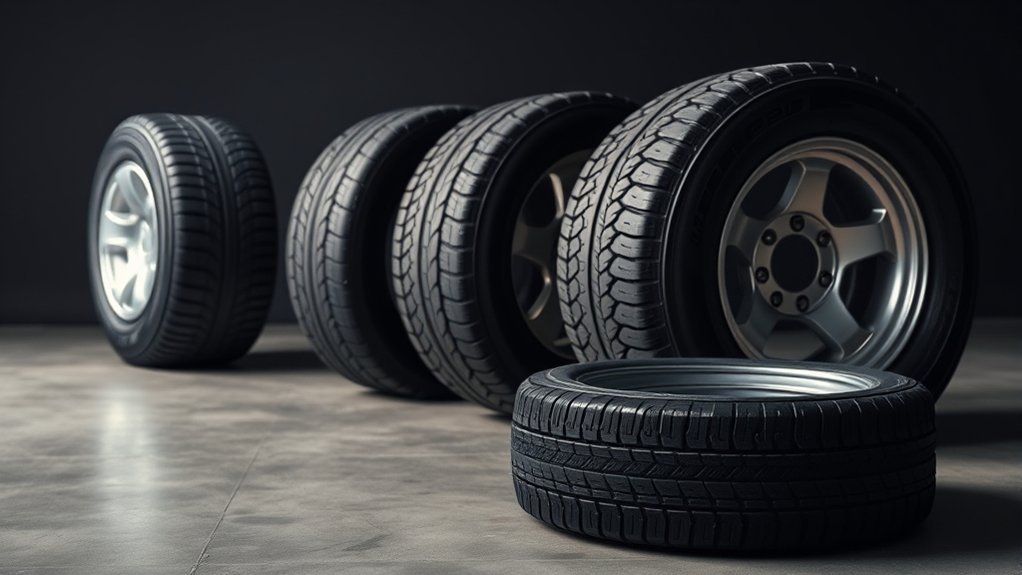
A passenger tire is a P-metric tire made for cars, minivans, and crossovers. You’ll see a “P” on the sidewall, followed by size, load index, and speed rating details. These tires use softer construction for a smoother ride, better wet and dry traction, and everyday paved-road use. They differ from LT tires, which handle heavier loads and rougher work. Keep going, and you’ll see how to match the right tire to your vehicle.
Key Takeaways
- Passenger tires are “P”-marked tires designed for cars, minivans, and crossovers, prioritizing comfort and everyday road traction.
- Their size code includes width, aspect ratio, rim diameter, load index, and speed rating, which define fit and performance.
- Compared with LT tires, passenger tires use lighter 4-6 ply construction and are not built for heavy towing or off-road use.
- Common passenger tire types include all-season, performance, touring, low rolling resistance, and winter tires.
- Choose the right passenger tire by matching load and inflation specs, driving conditions, and regular tread and sidewall inspections.
What Is a Passenger Tire?
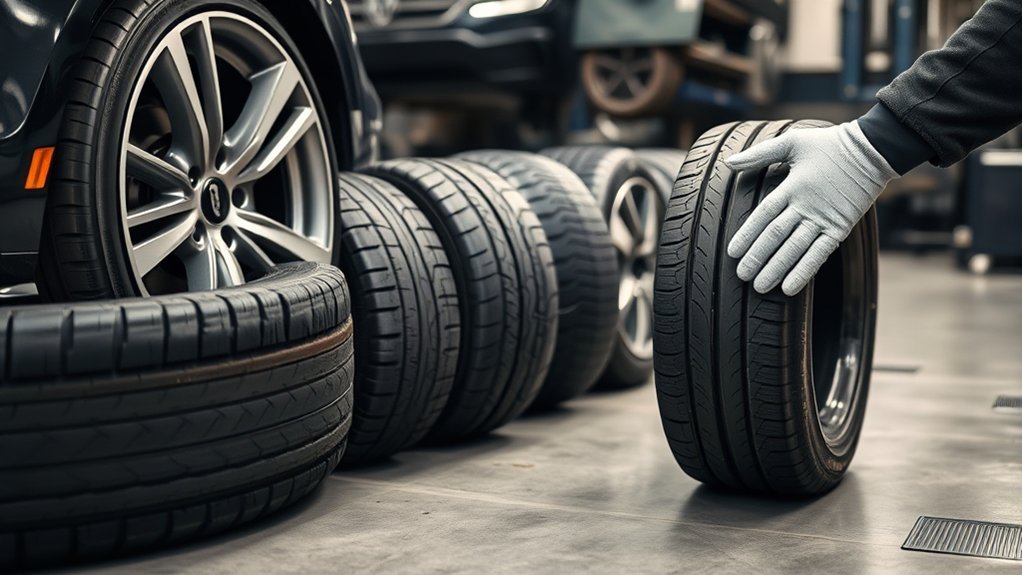
A passenger tire is a tire marked with a “P” on the sidewall and designed for lighter vehicles such as sedans, minivans, and crossovers. You use passenger tires to get a smoother ride, strong wet and dry traction, and dependable everyday road control. Their softer 4-ply or 6-ply construction improves comfort, but it won’t match the durability of light truck tires. You should choose these tires for paved-road driving, not for towing, hauling, or off-road work. Within passenger tires, types include all-season, performance, and fuel-efficient options, so you can match the tire to your driving demands and environmental conditions. Additionally, tire performance factors are essential to consider when selecting the right tires for your vehicle. You free your vehicle from unnecessary compromise when you select the right type for your needs. Always follow the manufacturer’s recommendations for tire size and type on the Tire and Loading Information Label, because your vehicle’s specifications set the safe, correct path.
How Passenger Tire Sizes and Labels Work
Passenger tire sizes tell you exactly what fits your vehicle, and the code usually starts with a “P” followed by numbers for width in millimeters, aspect ratio, and rim diameter, such as P205/55R16. You can read this label to identify the tire type and match passenger tires to your vehicle needs without guesswork. The first number shows width, the second shows sidewall height as a percentage of width, and a lower aspect ratio means a shorter sidewall and sharper handling. After the size, the load index tells you how much weight the tire can carry, so you can keep safety and performance aligned. The speed rating, shown as a letter, tells you the highest safe speed; S and H are common examples. When you decode these markings, you’re not relying on labels alone—you’re choosing fit, control, and freedom on the road. Additionally, understanding all-season tire characteristics can help you select options that enhance your driving experience.
Passenger Tires vs. LT Tires
Though they may look similar at a glance, passenger tires and LT tires serve very different roles: passenger tires are built for lighter vehicles like sedans, crossovers, and minivans, where ride comfort, traction, and paved-road performance matter most, while LT tires use thicker plies and reinforced sidewalls to handle the heavier loads and harsher demands of trucks and larger SUVs. Additionally, selecting the right tire type can greatly influence ride comfort and fuel economy, ensuring optimal performance for your vehicle.
| Feature | Passenger Tires | LT Tires |
|---|---|---|
| Vehicle fit | Lighter vehicles | Trucks, SUVs |
| Construction | 4-ply or 6-ply | 8-ply or 10-ply |
| Priority | Comfort, traction | Durability, load |
| Road use | Paved roads | Off-road, heavy-duty |
| Risk if mismatched | Failure on heavy vehicles | Noisier, less efficient |
You should choose among these different types based on vehicle weight, load demands, and terrain. Passenger tires usually deliver better ride quality and fuel economy, but LT tires offer higher load capacity and stronger resistance to abuse. If you’re matching tires to your vehicle’s engineered requirements, you protect performance, safety, and freedom on the road.
Common Types of Passenger Tires
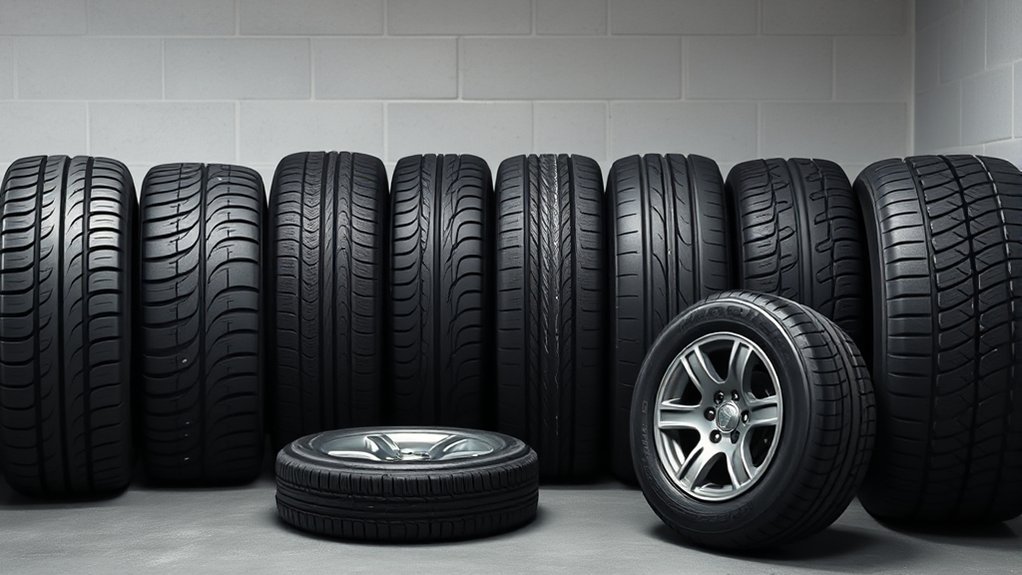
Five common passenger tire types cover most driving needs: all-season tires balance year-round versatility and are often marked “M+S,” performance tires sharpen handling and steering response, low rolling resistance tires help cut fuel use, touring tires emphasize comfort and long tread life for highway driving, and winter tires use specialized tread compounds and tread patterns to maximize grip on snow and ice. In the common types of passenger tires, you’ll see distinct design priorities. All-season tires give you dependable traction across dry and wet roads, while performance tires deliver quicker cornering and more precise steering feedback. Low rolling resistance tires reduce energy loss as you drive, supporting better fuel economy. Touring tires suit you when comfort, stable high-speed behavior, and durability matter most. Winter tires stay flexible in cold temperatures, helping you maintain control on snow-packed or icy pavement. Additionally, understanding tire classifications can help you choose the best option for your driving style and conditions. By matching tread design to conditions, you keep your vehicle responsive and your driving freedom intact.
How to Choose the Right Passenger Tire
Once you know the main passenger tire types, the next step is matching them to your vehicle and driving pattern. Passenger tires are designed for lighter vehicles like sedans, crossovers, and minivans, so start by checking the P-metric marking, load index, and inflation specs. When choosing the right tires, compare tread patterns for your driving conditions: all-season tires balance wet and dry grip, while performance tires sharpen response. If you spend most miles on highways, low rolling resistance models can improve fuel economy; if you take longer trips, touring tires may give you better mileage warranties and a quieter ride. Never exceed the rated load, because under-spec tires can reduce safety and handling. Inspect sidewalls, tread depth, and wear regularly, and keep pressures at the manufacturer’s recommendation. That discipline lets you drive with more control, less waste, and greater freedom on the road. Additionally, consider all-season performance to ensure your tires can handle varied weather conditions effectively.
Frequently Asked Questions
What’s the Difference Between a Regular Tire and a Passenger Tire?
A regular tire can mean either a passenger tire or a light truck tire, while a passenger tire is built for lighter vehicles like sedans and crossovers. You’ll notice differences in tire construction, load capacity, and ride comfort. Passenger tires use softer sidewalls for quieter tire performance, while LT tires have reinforced plies for tougher tire applications. Choose the tire your vehicle spec requires, so you stay safe and keep control.
Does It Matter if a Tire Says Passenger Tire?
Yes, it does matter if a tire says passenger tire, because that label gently signals what you can ask it to do. You’ll get better tire performance, comfort, and quieter road manners, but you shouldn’t expect high load capacity or rugged use. The tread design suits lighter vehicles and everyday roads, not heavy hauling. If you match the tire to your vehicle, you keep control, efficiency, and freedom on the road.
Does Passenger Tire Mean Passenger Side?
No, a passenger tire doesn’t mean the passenger side. You’re seeing a tire category, not a position on the vehicle. It’s built for cars, minivans, and small SUVs, and you should check tire specifications, vehicle compatibility, and load capacity before buying. The “P” marking tells you it’s engineered for everyday paved-road use, smoother ride quality, and standard loads, not the left or right side of your vehicle.
Why Do They Call It a Passenger Tire?
They call it a passenger tire because you use it on cars that carry people, not cargo. Like a well-tuned instrument, it balances comfort and control. You get tire performance tuned for paved roads, with tread design that boosts wet and dry traction. Its load capacity fits sedans, minivans, and crossovers, but it isn’t built for heavy hauling. That naming helps you choose freedom, safety, and efficient everyday driving.
Conclusion
When you choose a passenger tire, you’re choosing the quiet foundation beneath every mile. You’ll see the tread grip the road, feel the sidewall flex over bumps, and notice the steady balance it brings to daily driving. By matching the tire’s size, load rating, and construction to your vehicle, you keep your ride safe, efficient, and smooth. The right tire doesn’t just roll forward—it carries you with confidence, mile after mile.

Related Articles
What Is a Passenger Tire? Types, Ratings & How to Choose
Tired of guessing the right passenger tire? Discover types, ratings, and smart choosing tips to find your perfect fit.
Read More
Best All-Terrain Tires for Highway Driving 2026
Best All-Terrain Tires for Highway Driving in 2026 Last updated: June 12, 2026 Best All-Terrain Tires for Highway Driving in 2026 All-terrain tires are…
Read More
Summer Performance Tires: 7 Best Picks for Grip
Best Performance Summer Tires: 7 Top Picks for Grip Best Performance Summer Tires for Dry Grip, Wet Braking, and Confident Handling Choosing summer performance…
Read More