
What Do Tire Dimensions Mean? How to Read Your Tire Size
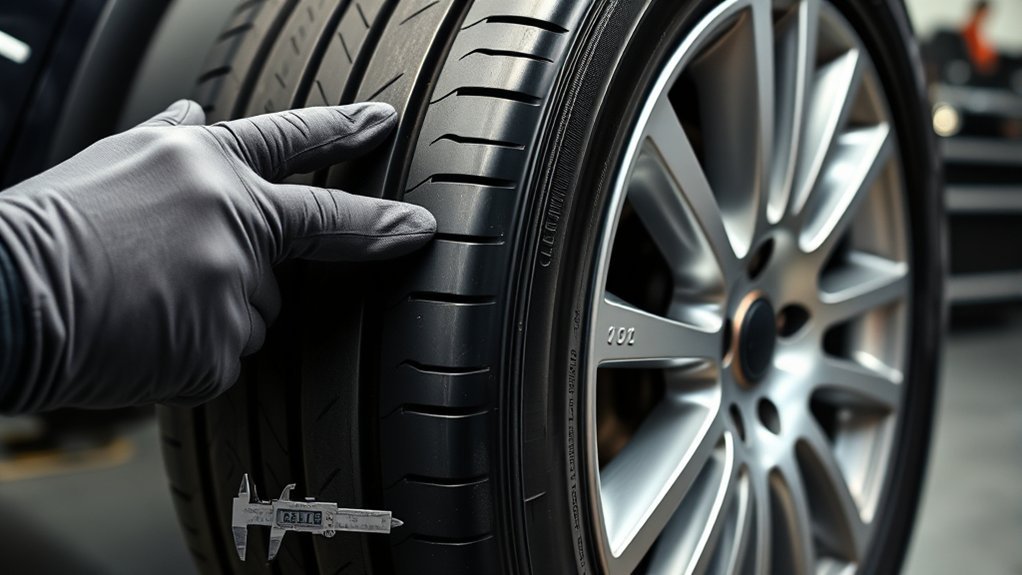
You can find your tire size on the driver’s doorjamb Tire and Loading Information Label, in the owner’s manual, or on the tire sidewall. A code like 225/50R16 89V tells you the tire width, sidewall height, construction type, wheel diameter, load capacity, and speed rating. Once you know how to read each part, you can buy replacement tires that fit your vehicle safely instead of guessing from looks alone.
Quick Answer
To read tire size, start with the driver-door placard or owner’s manual, then decode the sidewall from left to right. In 225/50R16 89V, 225 is width in millimeters, 50 is sidewall height as a percentage of width, R means radial, 16 is wheel diameter, 89 is load index, and V is speed rating.
Key Takeaways
- Use the vehicle’s door placard or owner’s manual as the main source for the correct replacement tire size.
- A tire code like 225/50R16 tells you width, aspect ratio, construction type, and rim diameter.
- The load index and speed rating after the size code must meet or exceed the vehicle manufacturer’s requirements.
- Sidewall “MAX PRESS” is not the same as your vehicle’s recommended tire pressure.
- DOT date codes, UTQG grades, M+S, and 3PMSF markings provide extra safety and performance information.
At a Glance
| Time Required | 2–5 minutes |
| Difficulty | Easy |
| Tools Needed | Owner’s manual, door placard, tire sidewall, and a flashlight if the markings are hard to see |
| Cost | Free to check; replacement tire cost depends on size, type, brand, and installation |
Where to Find Your Tire Size
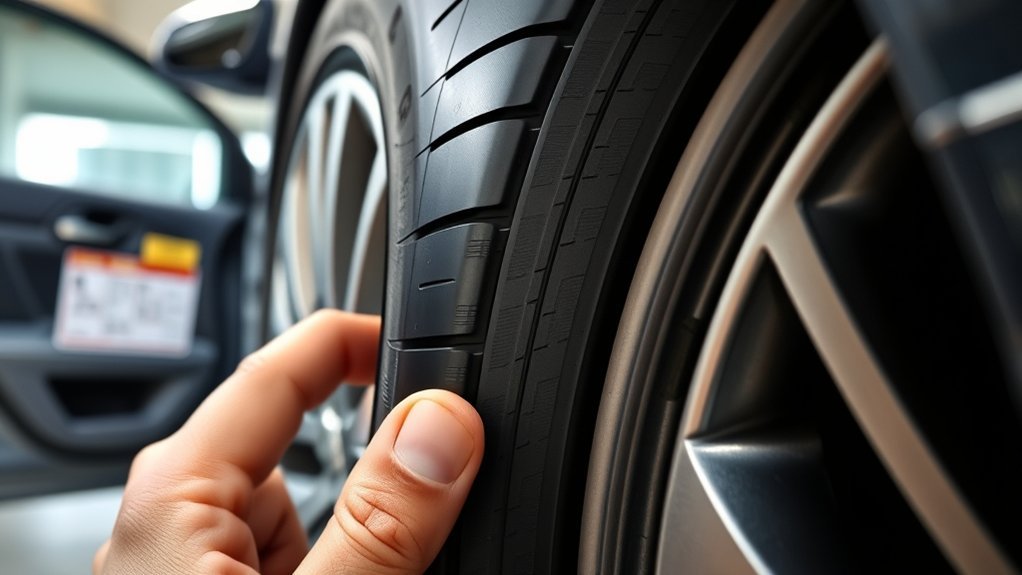
The best place to confirm the correct tire size is the Tire and Loading Information Label on the driver’s side door edge or doorjamb. You can also check the vehicle owner’s manual. The National Highway Traffic Safety Administration recommends using those vehicle sources when deciding what size tires to buy.
The tire sidewall is also useful, but use it with care. If the tires currently on the vehicle are the original size or a confirmed correct replacement, the sidewall code can help you match them. If a previous owner installed the wrong size, the sidewall only tells you what is mounted now, not necessarily what the vehicle should use.
Warning: Do not rely on the tire pressure monitoring system, or TPMS, to identify approved tire sizes. TPMS is designed to warn about low tire pressure, not to replace the door placard, owner’s manual, or manufacturer fitment data.
[Products Worth Considering]

Inflate Presta and Schrader bike and car tires with one compressor attachment, including tubeless setups. The digital gauge lets you monitor 2–200 PSI readings in 0.1 PSI increments with ±2 PSI accuracy, while the adjustable lever and built-in bleed button help you dial in precise pressure. Quick-connect coupler, hose, and a complete Presta service kit with spare cores and caps make it ready for fast maintenance.

DAPAWIN white permanent paint markers deliver long-lasting, opaque coverage with a non-toxic, low-odor, quick-dry waterproof oil-based ink. These paint pens work on metal and many other surfaces including tires, wood, plastic, rocks, fabric, ceramic, canvas, rubber, and glass for outdoor and craft projects. The rounded medium tip helps create clean lines for labeling, decorating, and quick fixes, while the caps and nib guidance help reduce leaking.
This universal magnetic jack pad is designed to protect pinch welds when lifting vehicles, helping prevent seam damage or warping. Crafted from solid aluminum with a nylon pad insert, it provides reinforced structural support and a secure fit for most single-vehicle pinch welds. Slotted for strong magnet holding, it supports safe jacking for cars, SUVs, trucks, and more.
How to Read Tire Size Numbers
A tire size such as 225/50R16 89V is read from left to right. Each number or letter gives a different piece of information about the tire’s fit, construction, load capacity, or speed rating. The Tire Industry Association explains these sidewall markings as a sequence of tire type, width, aspect ratio, construction, rim diameter, and service description.
| Code Part | What It Means | Example |
| P, LT, ST, T, or no prefix | Tire type or intended use | P = passenger; LT = light truck |
| 225 | Section width in millimeters | 225 mm wide |
| 50 | Aspect ratio, or sidewall height as a percentage of width | 50% of 225 mm |
| R | Construction type | R = radial |
| 16 | Wheel or rim diameter in inches | Fits a 16-inch wheel |
| 89V | Load index and speed rating | 89 = load index; V = speed symbol |
What Tire Type Prefixes Mean
Some tire sizes begin with a letter. That prefix tells you the tire’s intended application:
- P: Passenger vehicle tire.
- LT: Light truck tire, often built for heavier loads or towing applications.
- ST: Special trailer tire, intended for trailer use rather than passenger-car steering or drive axles.
- T: Temporary spare tire.
- No prefix: Often a Euro-metric passenger tire size.
- XL, HL, Reinforced, or Extra Load: A tire designed to carry more load than a standard tire of the same size when used at the correct pressure.
Do not swap tire types casually. For example, an LT tire may fit the wheel diameter but ride differently and require different pressure than a P-metric tire. Match the placard, owner’s manual, and tire professional guidance before changing tire type.
What the Width Number Means
The first three-digit number in the tire size is the tire’s section width in millimeters. In 225/50R16, the tire is about 225 millimeters wide from sidewall to sidewall when mounted on an approved rim width.
A wider tire can increase the contact patch and may improve dry grip or cornering feel when the wheel width, alignment, suspension, and tire compound are suited to it. But wider is not automatically better. A tire that is too wide can rub the fender liner, change steering feel, reduce fuel economy, or perform worse in standing water and snow.
Pro Tip: When comparing 265 vs. 275, or any other width change, check rim-width approval, fender clearance, suspension clearance, overall diameter, and load rating before buying.
How Tire Aspect Ratio Affects Profile
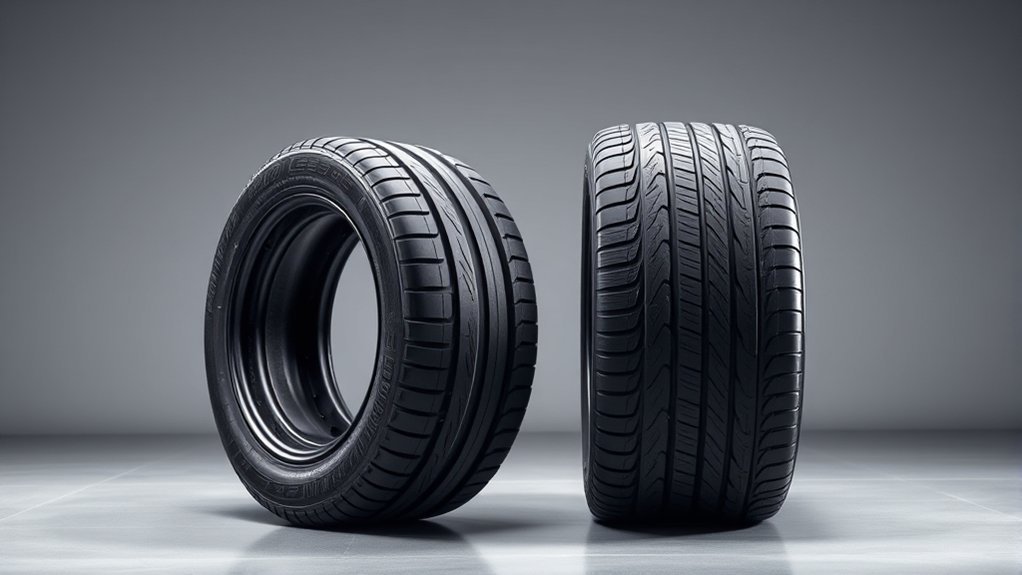
The aspect ratio is the second number in the tire size. It tells you the sidewall height as a percentage of the tire width. In 225/50R16, the sidewall height is 50% of 225 mm, or about 112.5 mm.
| Aspect Ratio | Typical Effect |
| 40 or lower | Shorter sidewall, sharper steering response, less impact cushioning |
| 50–60 | Balanced profile for many cars and crossovers |
| 65–75 | Taller sidewall, more cushioning, often used on SUVs, trucks, and comfort-focused setups |
Changing aspect ratio changes sidewall height and can also change overall tire diameter. That affects wheel-well clearance, gearing feel, anti-lock braking behavior, odometer accuracy, and speedometer accuracy. Stay close to the manufacturer-approved size unless a qualified tire professional confirms the change is safe.
Why Construction Type Matters
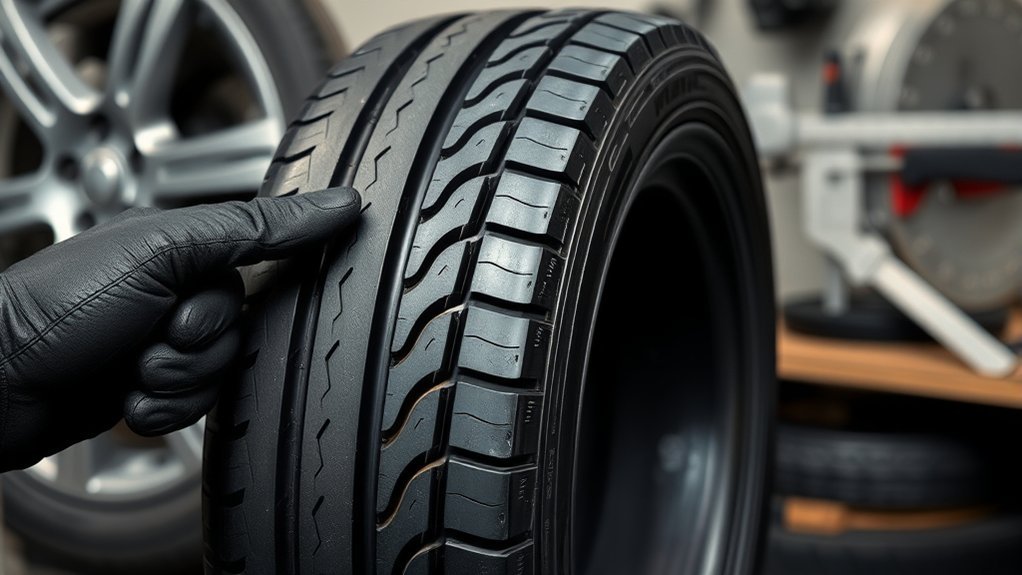
The construction letter tells you how the tire is built. The most common marking is R, which means radial construction. Radial tires are the standard for most modern passenger vehicles and light trucks.
You may also see older or specialty markings such as D, B, or a dash, which indicate bias or bias-belted construction. These are not direct replacements for radial tires unless the vehicle, trailer, or equipment manufacturer specifies them.
What Rim Diameter Tells You
The last number in the core tire size tells you the wheel diameter the tire is built to fit. In 225/50R16, the tire fits a 16-inch wheel. A 16-inch tire cannot be safely mounted on a 17-inch wheel, and a 17-inch tire cannot be safely mounted on a 16-inch wheel.
Rim diameter is not the same as overall tire diameter. Overall tire diameter also depends on width and aspect ratio. That is why two tires can both fit 16-inch wheels but still have different heights, ride quality, and speedometer effects.
What Load Index and Speed Rating Mean
The number and letter after the tire size are called the service description. The number is the load index, and the letter is the speed rating. In 225/50R16 89V, 89 is the load index and V is the speed rating.
The load index is not the weight itself. It is a code that corresponds to the maximum load one tire can carry when properly inflated. The speed rating is the maximum speed capability under specified test conditions. It is not permission to drive at that speed, and it does not override road conditions, vehicle limits, or the law.
Warning: Replacement tires should meet or exceed the vehicle manufacturer’s required load index and speed rating unless the manufacturer or a qualified tire professional confirms a different specification is safe.
[Products Worth Considering]
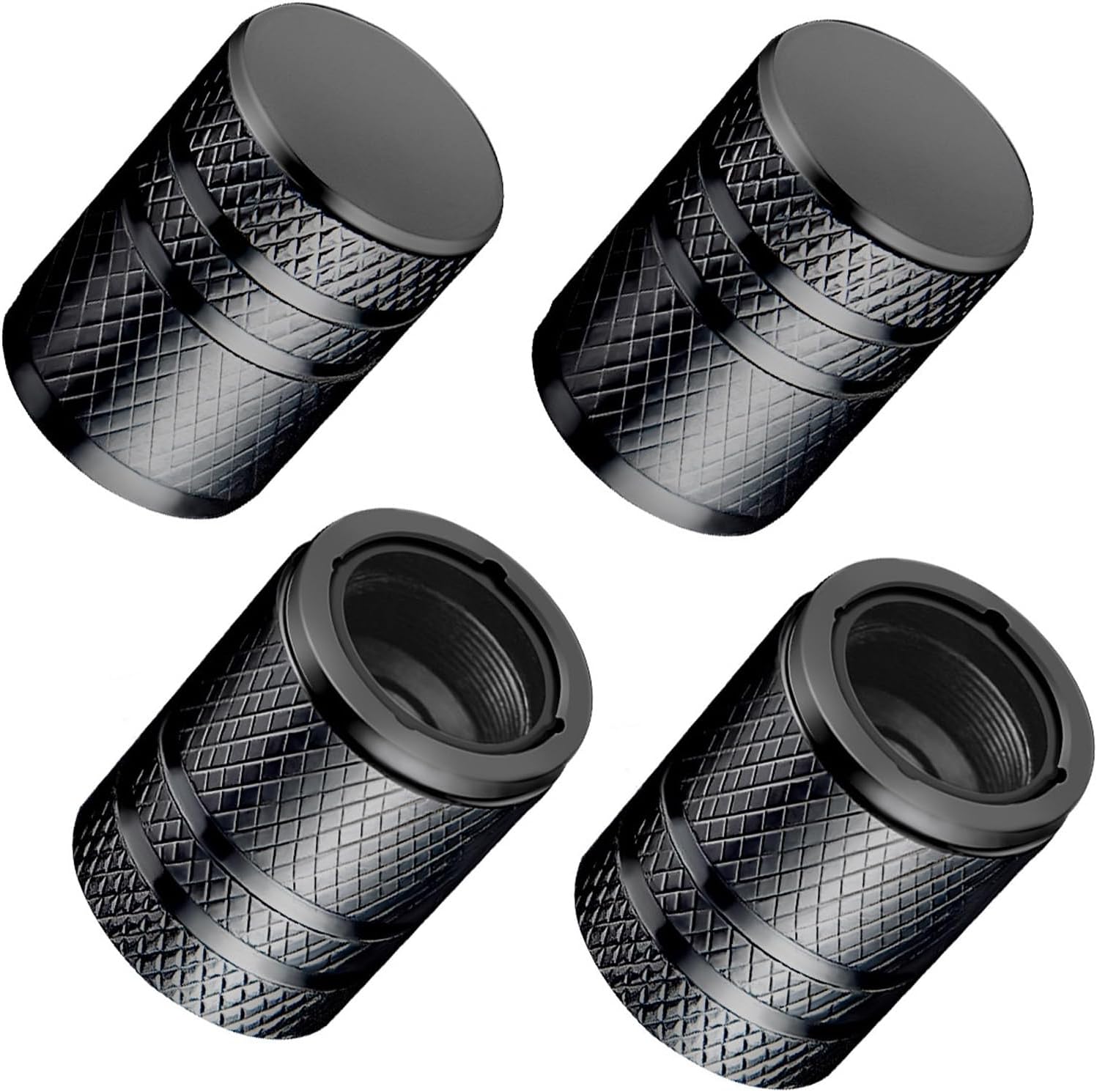
Upgrade your tires with DESOUL premium valve stem caps featuring a corrosion-resistant metal shell and plastic liner. The built-in sealing ring helps prevent leaks and protects tire pressure, while the universal Schrader fit works for cars, trucks, SUVs, motorcycles, bikes, and RVs. Easy by-hand installation is built in with a secure grip design.

This digital tire pressure gauge with built-in inflator helps you accurately check and adjust tire pressure for safer driving and better fuel efficiency. It supports multiple units (PSI, KPA, BAR, KG/CM²) and reads within 1% for reliable results. The 3-in-1 design inflates, deflates, and measures, with a quick-connect air chuck and compatible hose setup for cars, trucks, SUVs, RVs, and motorcycles.

Upgrade your vehicle with genuine Dodge tire stem valve caps featuring the SRT logo. These valve caps help protect the valve stems while adding a branded, sporty look. Built to meet specifications for fit, form, and function, they’re designed to fit your specific Dodge vehicle.
Sidewall Pressure vs. Recommended Tire Pressure
The pressure molded on a tire sidewall is usually a maximum pressure marking, not the recommended everyday pressure for your vehicle. For normal driving, use the cold tire inflation pressure listed on the driver-door placard or in the owner’s manual.
This matters because two vehicles can use the same tire size but require different inflation pressures because of weight, suspension tuning, and load requirements. Check pressure when the tires are cold, before driving far or after the vehicle has been parked for several hours.
Note: TPMS is helpful, but it is not a substitute for regular pressure checks. A tire can be below ideal pressure before the warning light turns on.
How to Read the DOT Date Code
Most tires sold for road use include a DOT Tire Identification Number, often called the DOT code or TIN. The final four digits show the week and year the tire was manufactured. For example, 2910 means the tire was made in the 29th week of 2010.
The DOT date code does not tell you whether a tire is automatically safe or unsafe. Age, tread depth, cracking, puncture repairs, storage conditions, and impact damage all matter. Still, the date code is useful when checking used tires, old spares, or tires that have been sitting in storage.
UTQG: Treadwear, Traction, and Temperature
Many passenger tires sold in the United States also show UTQG ratings for treadwear, traction, and temperature. NHTSA describes the Uniform Tire Quality Grading system as a government rating system for treadwear, wet traction performance, and temperature resistance.
- Treadwear: A comparative rating within controlled testing. It is not a mileage guarantee.
- Traction: A wet-stopping traction grade, commonly AA, A, B, or C.
- Temperature: A heat-resistance grade, commonly A, B, or C.
UTQG can help you compare tires, but do not use it alone. Tire category, compound, tread design, season rating, and vehicle fit matter just as much.
M+S and 3PMSF Markings
You may see M+S, M/S, or MS on an all-season or all-terrain tire. This means “mud and snow,” but it is based on tire design criteria and does not prove true winter performance.
The 3PMSF symbol, also called the Three-Peak Mountain Snowflake, means the tire has met a standardized winter-traction performance requirement. If you regularly drive in snow, ice, or mountain winter conditions, look for 3PMSF rather than relying on M+S alone.
Can You Change Tire Size?
You can sometimes change tire size, but the new size must fit the wheel, clear the suspension and bodywork, carry the vehicle’s load, and keep overall diameter close enough to avoid drivability and speedometer problems. A small width change, such as 265 to 275, can work on some vehicles and fail on others.
Before changing size, confirm these points:
- The wheel diameter matches exactly.
- The tire is approved for your rim width.
- The load index meets or exceeds the placard requirement.
- The speed rating meets or exceeds the manufacturer’s requirement.
- The tire clears the fenders, suspension, brakes, and steering components at full lock and full suspension travel.
- The overall diameter does not create unsafe speedometer, gearing, or driver-assistance-system issues.
The safest replacement tire is usually the size, load index, speed rating, and type listed on the vehicle placard or in the owner’s manual.
Frequently Asked Questions
What does 275/35R19 mean?
275/35R19 means the tire is about 275 mm wide, the sidewall height is 35% of that width, the tire uses radial construction, and it fits a 19-inch wheel. This is a low-profile size, so it can sharpen steering response but may ride more firmly than a taller-sidewall tire.
What does 20 LT mean on a tire?
In a tire size, 20 usually refers to a 20-inch wheel diameter. LT means light truck. A tire marked LT is built for light-truck use and may have different load, pressure, and ride requirements than a passenger tire. Always match the full tire size and load information, not just the 20-inch wheel diameter.
Can I fit 275 tires instead of 265?
Maybe. A 275 tire is 10 mm wider than a 265 tire, but fit depends on rim width, tire model, sidewall shape, vehicle clearance, offset, suspension, and overall diameter. Check the manufacturer’s approved rim-width range and confirm clearance before switching.
Are 35 or 37 tires better?
For many trucks and SUVs, 35-inch tires are the better balance because they usually require less trimming, less gearing correction, and less drivetrain stress than 37s. Choose 37-inch tires only if you need the extra off-road clearance and have the suspension, gearing, brakes, and clearance to support them safely.
Is the pressure on the tire sidewall the correct pressure to use?
Usually no. The sidewall pressure is commonly a maximum pressure marking. Use the cold tire pressure listed on the driver-door placard or in the owner’s manual for normal driving.
What do the last four digits of the DOT code mean?
The last four digits show the tire’s manufacture week and year. For example, 2910 means the tire was made during the 29th week of 2010.
Conclusion
Reading tire size is simple once you break the code into parts. The width tells you how wide the tire is, the aspect ratio tells you sidewall height, the construction letter tells you how the tire is built, and the rim diameter tells you what wheel it fits. The load index and speed rating show whether the tire meets the vehicle’s carrying and performance requirements.
For the safest replacement, start with the driver-door placard or owner’s manual, then confirm the sidewall code, load index, speed rating, tire type, and pressure guidance. When changing sizes, get professional fitment confirmation before buying.
Sources
- NHTSA TireWise — supports vehicle placard guidance, tire safety ratings, and tire-buying safety context.
- Tire Industry Association: Reading a Tire Sidewall — supports sidewall code, width, aspect ratio, construction, rim diameter, service description, DOT code, and UTQG explanations.
- Michelin: Tire Markings Explained — supports tire prefixes, load/speed ratings, max pressure guidance, DOT date code, wear indicators, M+S, and 3PMSF markings.
- eCFR 49 CFR 571.138: Tire Pressure Monitoring Systems — supports TPMS purpose and low-pressure warning requirements.
[Products Worth Considering]

Dr. Scholl’s self-heating foot mask warms gently to relax and soothe tired, achy feet for immediate relief. The booties infuse Epsom salt and menthol for deep comfort, while shea butter and essential oils help moisturize and revitalize your skin. Designed for easy, mess-free use, it’s a convenient self-care step after a long day.

The Dr.Roc spare tire tool kit helps you release, lower, or raise your spare tire with reliable extension tools and a lug nut wrench. It is made from rustproof automotive-grade steel and includes an organized carry case for convenient storage. Designed for compatibility with select GM models from the late 1990s through 2019, it uses upgraded extension components to install and remove spare tires with less hassle.

This Dr.Roc tire valve stem puller tools set helps install or remove snap-in tubeless valve stems safely and efficiently. It includes ozone-resistant EPDM snap-in valve stems, a valve stem installer, and a valve core remover for quick core removal or installation during tire service. Designed for reliable tubeless tire repair on motorcycles, ATVs, lawn equipment, cars, and trucks.

Related Articles
305 Tire Size Explained: How Big Is It?
I explain how big a 305 tire really is—and why the exact fit can surprise you.
Read More
Tire Ply Rating Explained: What the Numbers Mean
Tire ply ratings reveal more than numbers, hinting at strength, load capacity, and hidden tradeoffs you’ll want to understand before choosing.
Read More
2 Ply Vs 4 Ply Tires: What’s the Real Difference?
I’ll explain the real difference between 2-ply and 4-ply tires, and the choice may surprise you depending on where you drive.
Read More