
CO2 Bike Tire Inflator Kit Review: 5 Cartridges with Glueless Repair Patches
Disclosure: As an Amazon Associate, we earn from qualifying purchases. If you click a link on this page and make a purchase, we may receive a small commission at no extra cost to you.
A flat tire can turn a short ride into a long walk, especially when you do not want to carry a full-size pump and repair bag. The Kadacha CO2 Inflator Kit combines a compact aluminum inflator head, five threaded 16 g CO2 cartridges, and basic inner-tube repair tools in one bundle. It is a convenient emergency option for road and mountain bike riders, but each cartridge is single-use and the included round patches are not tubeless tire plugs. This review explains the kit’s verified contents, best uses, safety limits, and buying tradeoffs.
Quick Verdict
Rating: 8.0/10, recommended with caveats
Best For: Riders who want fast emergency inflation plus basic inner-tube patch tools in a compact kit
Bottom Line: The Kadacha kit offers a useful mix of dual-valve compatibility, five cartridges, tire levers, patches, and an insulating sleeve. Its main tradeoffs are disposable cartridges, limited capacity for high-volume tires, and no pressure gauge.
Key Specifications
| Specification | Detail |
|---|---|
| Brand | Kadacha |
| Product type | Portable bicycle CO2 inflator and inner-tube repair kit |
| Amazon listing | ASIN B09D9GHW9D |
| Valve compatibility | Presta and Schrader |
| Cartridges | Five threaded 16 g CO2 cartridges |
| Inflator material | Aluminum |
| Listed dimensions | 2 x 3 x 1 inches |
| Listed item weight | 16 g, the listing does not clarify whether this refers only to the inflator head |
| Repair accessories | Three tire levers, six round glueless patches, and one metal rasp |
| Other included item | One insulating sleeve for handling a cold cartridge |
| Best use | Emergency inflation and temporary inner-tube puncture repair |
| Key limitation | No gauge, cartridges are single-use, and one 16 g cartridge may not fully inflate a large-volume tire |
[Products Worth Considering]

Convert Presta bicycle valves to accept standard Schrader pump nozzles for fast, hassle-free inflation. This kit includes durable brass adapters with leak-resistant connections, plus sports inflation needles and protective valve caps for convenient use on bikes and ball sports equipment.

This 4-pack kit converts Presta bike valves to standard Schrader valves so you can inflate with any regular pump or air compressor. The solid brass adapters include an O-ring for a tight, leak-proof seal and provide a simple screw-on setup. Compatible with road bikes, mountain bikes, e-bikes, and e-scooters, it’s designed for convenient, everyday carry readiness.

Tiakia’s mini high-pressure frame pump delivers up to 260 PSI for faster, more efficient inflations with an optimized intake volume. It features a double-head valve design compatible with Schrader and Presta, plus a conversion for Donlop, making it versatile for bikes and many inflatables. The lightweight anodized aluminum build includes a mounting bracket for convenient carry, while the flexible high-pressure hose and IPX4 waterproof body support outdoor use.
Kadacha CO2 Inflator Kit

What Is the Kadacha CO2 Inflator Kit?
The Kadacha kit is a compact emergency inflation set for bicycles with Presta or Schrader valves. Instead of using a hand pump, you thread a 16 g CO2 cartridge into the aluminum inflator head and release the compressed gas into the tire. This can restore riding pressure in seconds, although the final pressure depends on tire volume, starting pressure, cartridge temperature, and how much gas escapes during connection.
The bundle also includes three tire levers, six round glueless patches, a metal rasp, and an insulating sleeve. Those repair pieces are intended for common inner-tube punctures. They do not replace a tubeless plug kit, spare tube, sidewall boot, or workshop repair for a damaged tire casing.
Before You Buy: The included round patches are for punctured inner tubes. They are not plugs for sealing holes in a tubeless tire tread, and they cannot safely repair a cut sidewall or damaged tire casing.
Who Should Buy It?
Best For
- Road and mountain bike riders who want very fast emergency inflation
- Commuters and group riders who need a compact saddlebag repair bundle
- Riders using either Presta or Schrader valves who want one inflator head
Skip If
- You want a reusable pump for regular pressure checks and top-offs
- You need a pressure gauge or precise inflation control
- You mainly ride high-volume tires that may require more than one 16 g cartridge
Feature-by-Feature Review
Dual-Valve Compatibility
The inflator head works with both Presta and Schrader valves, which covers most modern road, mountain, hybrid, and commuter bikes. That reduces the chance of carrying the wrong adapter and makes the kit easier to share within a group. Before a ride, test the head on your actual valve type so you know how far it needs to thread on without damaging the valve core.
Five Threaded 16 g Cartridges
Five cartridges give you more backup capacity than a single-cartridge kit. A 16 g cartridge can provide enough gas for many road tires and some mountain bike tires, but pressure varies with tire size. The product listing states that one cartridge can reach up to 100 psi in a road tire or about 40 psi in a mountain bike tire, but those figures should be treated as estimates rather than guaranteed results.
For wide mountain, gravel, fat-bike, or plus-size tires, one cartridge may provide only partial inflation. Carrying a compact hand pump or an extra cartridge is safer on remote rides where a second puncture would otherwise leave you stranded.
Aluminum Inflator Head
The listed aluminum construction keeps the inflator head compact and suitable for regular saddlebag storage. Metal also provides a more solid connection than a thin plastic body, but the small gasket and valve seal remain important wear points. Keep the threads clean, avoid cross-threading, and replace the head if it leaks or shows visible damage.
Inner-Tube Repair Tools
The kit includes three tire levers, six round glueless patches, and a metal rasp. This is enough for a basic roadside tube repair when the puncture is small and the tube can be cleaned and dried. Glueless patches are convenient because you do not need to wait for separate rubber cement to cure, but they are best treated as a get-home repair until you can inspect or replace the tube.
Portability and Storage
The inflator head and cartridges take up less space than most full-size hand pumps. They fit more easily in a jersey pocket, saddlebag, or compact tool roll. The listing does not show a dedicated hard case, so secure the cartridges and metal tools to prevent rattling, abrasion, or damage to a spare tube.
Pro Tip: Practice using one cartridge at home with an old tube. You will learn how quickly the cartridge chills, how the head connects to your valve, and how much pressure one 16 g cartridge delivers to your tire size.
How It Performs in Real Use
Daily Commuting
For commuting, the main benefit is speed. You can remove the wheel, patch or replace the tube, and inflate without spending several minutes pumping by hand. The downside is that CO2 gives you one attempt per cartridge, so a poorly seated tube or leaking valve can waste your supply.
Road and Group Rides
Road tires have lower air volume than wide mountain tires, which makes a 16 g cartridge a practical emergency option for many setups. The dual-valve head is also useful in a mixed group. Still, you should check the tire with a gauge later because this kit does not show the final pressure.
Mountain Bike Rides
The kit can provide a quick refill after replacing or patching a tube, but large-volume mountain tires may not reach your preferred pressure from one cartridge. Tubeless riders should carry a proper plug kit and a spare tube because the included round patches do not plug the tire from the outside.
Travel and Long Rides
CO2 is attractive for travel because it saves space, but transport rules can limit compressed-gas cartridges on airplanes. Check the current rules of your airline and transportation authority before packing them. For long unsupported rides, pair the kit with a mini pump so you still have a reusable inflation method after the cartridges are spent.
How to Use It Correctly
- Find the cause of the flat and remove any glass, thorn, or sharp object from the tire.
- Inspect the tire casing and sidewall. Replace or boot the tire if it has a cut that a tube patch cannot address.
- For a small tube puncture, clean and dry the area, lightly roughen it with the rasp, and press the glueless patch firmly in place.
- Put the tube back inside the tire without pinching it, then reseat the tire bead.
- Place the insulating sleeve over the cartridge before use because rapid gas release makes the metal extremely cold.
- Thread the cartridge into the inflator only when you are ready to inflate. Attach the head securely to the Presta or Schrader valve.
- Release gas carefully and stop when the tire is firm enough to ride safely. Use a separate gauge when accurate pressure matters.
- Check for leaks before riding and refill with normal air when you reach a pump.
[Products Worth Considering]

This PXZBLG bike repair kit helps you tackle common tire and on-the-ride issues with a compact, ride-ready tool collection. It includes a mini tire pump supporting both Presta and Schrader valves, a 16-in-1 bike multitool, tire levers, glueless patches with a plastic box, plus 4mm and 5mm Allen wrenches. A convenient bike bag stores everything so you can mount it on your road bike or mountain bike for lightweight, portable preparedness.
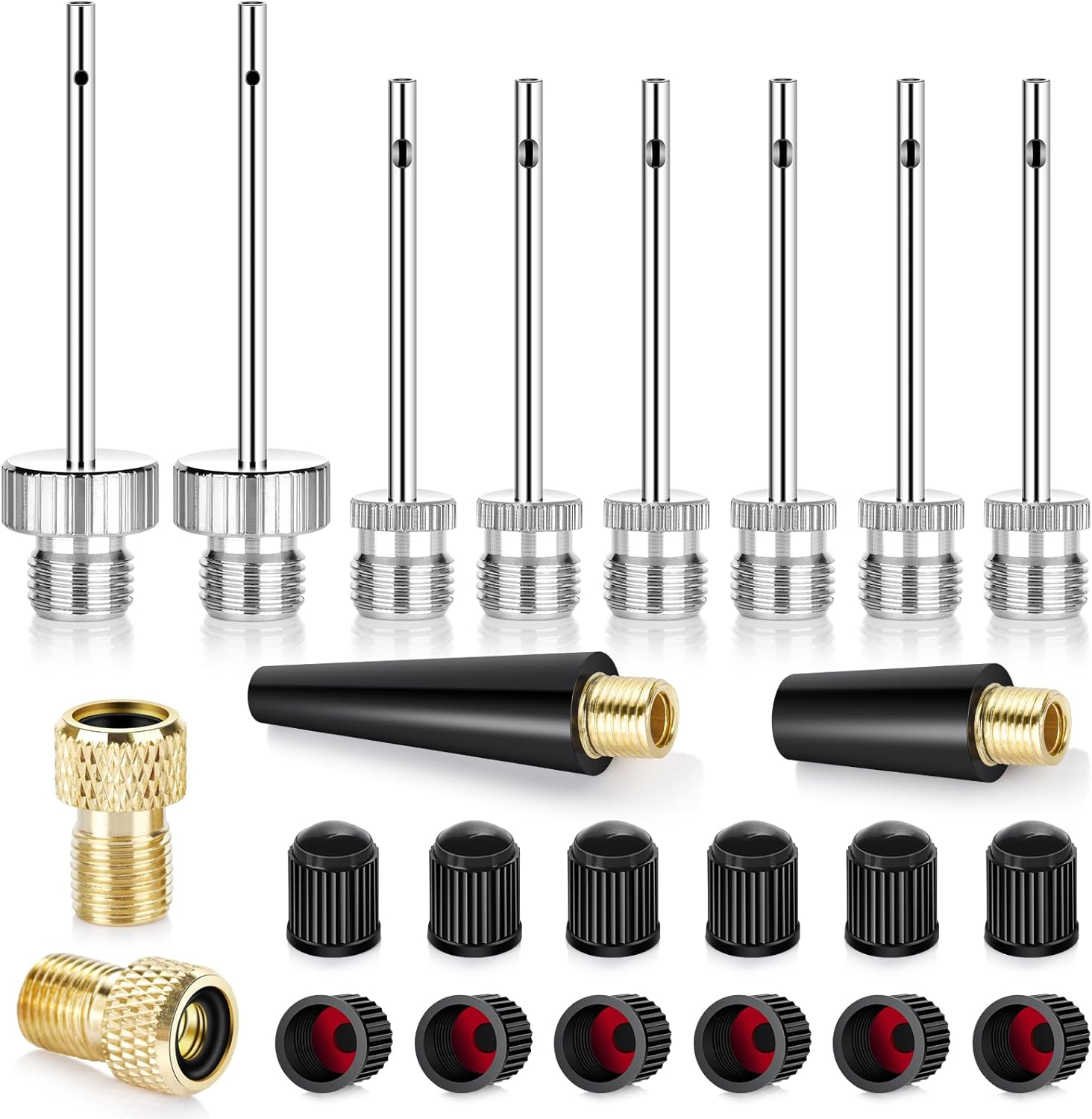
This ball pump needles kit includes brass ball needles for inflating footballs, soccer balls, basketballs, and volleyballs, plus conical nozzles for air mattresses, exercise balls, balloons, and swim rings. It also offers Presta to Schrader valve adapters for easy use with compatible bikes and rideables. The set includes sealed valve caps and a storage case, helping keep your equipment organized and ready to inflate quickly.
Safety and Reliability
CO2 cartridges contain compressed gas and become very cold while discharging. Use the included insulating sleeve, keep bare skin away from the exposed cartridge during release, and never point the inflator toward your face or body. Do not inhale the gas, puncture a cartridge outside the inflator, or use it for food or beverage applications.
Store unused cartridges away from direct sunlight, heaters, flames, and hot vehicles. Do not leave a cartridge threaded into the inflator during storage. Inspect the gasket, threads, and valve connection before each ride, especially because the source article summarized occasional buyer reports of seal or gasket leakage.
What People Say
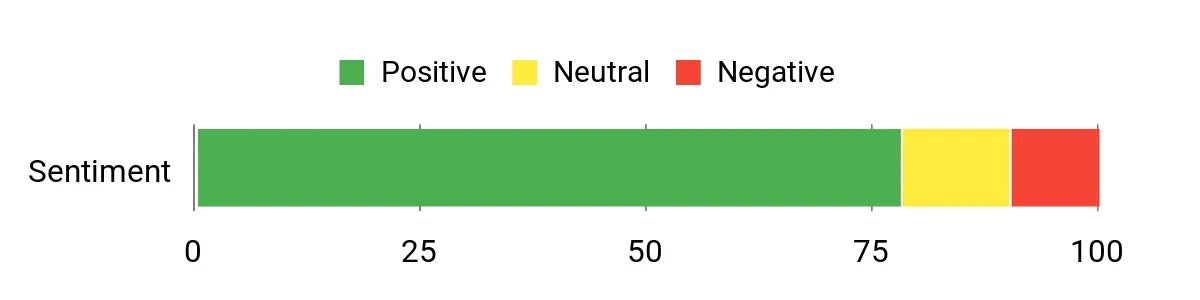
The buyer feedback summarized in the source article is mostly positive about the kit’s value, quick inflation, dual-valve head, and included repair pieces. The most useful criticism concerns occasional gasket or seal problems, which makes a home test worthwhile before you depend on the kit during a long ride.
Overall Sentiment: Positive
Pros and Cons
Pros
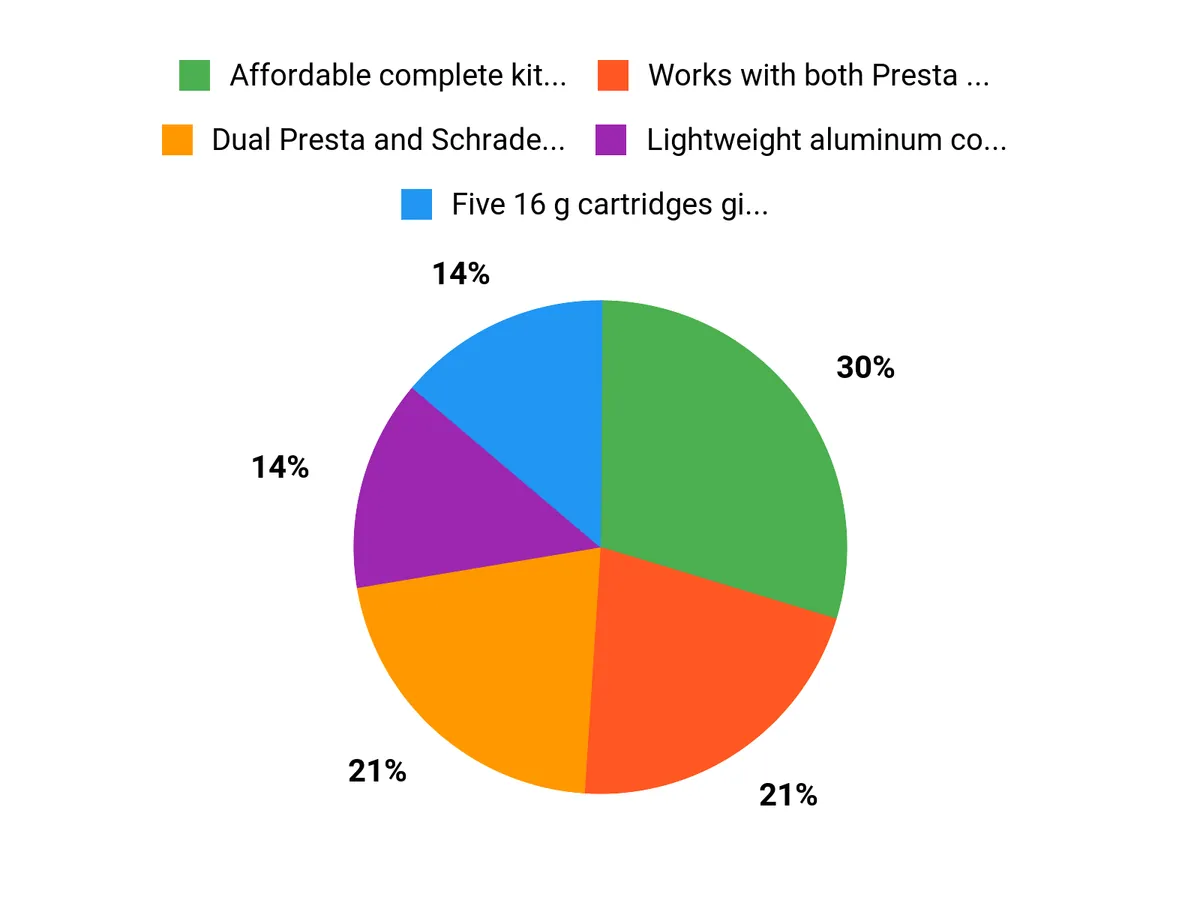
- Works with both Presta and Schrader bicycle valves
- Includes five threaded 16 g cartridges instead of only one
- Bundles tire levers, six patches, a rasp, and an insulating sleeve
- Compact aluminum head fits easily in a saddlebag or jersey pocket
- Inflates much faster than a small manual pump during an emergency
Cons
- Cartridges are single-use and can be wasted by a poor connection
- No pressure gauge is included
- Round patches repair inner tubes, not tubeless tire punctures or sidewall cuts
Is It Worth the Price?
The Kadacha kit sits in the budget-oriented part of the emergency inflation market because it combines the inflator, five cartridges, and basic tube-repair tools. That bundle can offer strong value for the price when you are building a saddlebag kit from scratch and do not already own tire levers or patches.
It is less economical for routine pressure adjustments because every cartridge is disposable. A reusable mini pump is the better long-term choice for frequent top-offs, while this kit makes more sense as a fast emergency backup. The Amazon page did not display a current featured price during this review, so check the live listing before judging its value against other kits.
How It Compares to Alternatives
The Muc-Off Road Inflator Kit and Lezyne Control Drive are worth comparing if you care more about a refined chuck, controlled gas flow, and premium build quality. The Topeak Micro AirBooster is another compact dual-valve option for riders who want a slim inflator head. Kadacha’s advantage is the broader bundle, which includes five cartridges and tube-repair accessories, while the better-known alternatives may appeal more to riders who already own repair tools and want a higher-end inflator.
Frequently Asked Questions
Will one 16 g cartridge fully inflate my tire?
It may fully inflate many road tires and some mountain bike tires, but the result depends on tire volume and starting pressure. Wide mountain, gravel, or fat-bike tires may need a second cartridge or a hand pump.
Does the inflator fit both Presta and Schrader valves?
Yes. The verified Amazon listing states that the inflator head is compatible with both valve types. Test the connection at home so you know how to attach it without cross-threading or loosening a removable valve core.
Can the included patches repair a tubeless tire?
No. The round glueless patches are intended for inner tubes. A tubeless setup needs a compatible plug kit, sealant, or an internal tire repair, depending on the puncture.
Does the kit include a pressure gauge?
No gauge is listed. Inflate cautiously, check firmness by hand for a temporary roadside result, and use a separate gauge before returning to normal riding pressure.
Why does the cartridge get so cold?
Rapidly expanding CO2 cools the metal cartridge during discharge. Use the included insulating sleeve and avoid touching exposed metal until it warms.
Should I store a cartridge attached to the inflator?
No. Keep unused cartridges separate and thread one into the head only when you are ready to inflate. Store all cartridges away from heat, direct sunlight, flames, and hot vehicles.
Should this replace a mini pump or spare tube?
For short rides, some riders may accept CO2 as their only inflation source, but a mini pump gives you reusable backup. A spare tube is also valuable when a puncture is too large, the patch area is wet, or the valve has failed.
Why Riders Choose
Riders choose this Kadacha kit because it combines fast CO2 inflation with the basic tools needed to remove a tire and patch a small tube puncture. Its five-cartridge bundle and dual-valve head make it more complete than a bare inflator, but it works best when you understand its limits and carry a spare tube or mini pump on longer rides.
The Bottom Line
The Kadacha CO2 Inflator Kit is a practical choice for road, mountain, hybrid, and commuter riders who want quick emergency inflation plus basic inner-tube repair tools. Skip it as your only inflation method if you use large-volume tires, need precise pressure control, or want a reusable pump for regular maintenance.
Its strongest point is the complete five-cartridge bundle with dual-valve compatibility. Its main limitation is that every cartridge is single-use, and the included patches cannot repair tubeless tread punctures or damaged tire casings.
Ready to Buy?
Check the latest price, seller, return terms, and package details before you decide.

Related Articles

Best Westlake Tires 2026: Affordable Tires for Daily Driving and All-Season Use
You spend a lot of time on the road, and the tires you choose affect safety, comfort, fuel economy, and long-term costs. Westlake offers…
Read More
Best Sailun Tires 2026: Affordable Tire Picks for Everyday Driving
You rely on tires for safety, fuel economy and ride comfort, so choosing the right Sailun model matters more than just price. This guide…
Read More
Best Snow Tires for Trucks 2026: Winter Truck Tires for Safe Cold-Weather Driving
Winter tires are one of the most effective upgrades you can make to keep your truck safe when temperatures drop and roads become snow-…
Read More