
Donut Spare Tire Limitations: Speed, Distance & Safety
Last updated: July 8, 2026
If you are driving on a donut spare tire, treat it as an emergency tire only: stay at or below 50 mph or 80 km/h, keep the trip near 50 miles or less, and follow the lowest limit printed on the spare sidewall, vehicle placard, or owner’s manual. Before you move, check the cold tire pressure, confirm the spare is mounted securely, and choose the shortest safe route to tire service.
Quick Answer
Do not drive faster than 50 mph on a donut spare, and plan to repair or replace the damaged tire within about 50 miles unless your owner’s manual gives a stricter limit. Check the spare’s cold tire pressure first, avoid hard braking or sharp turns, and drive directly to a tire service location.
Key Takeaways
- A compact donut spare is for temporary emergency use only.
- The common safe limit is 50 mph and about 50 miles, but your vehicle manual and spare sidewall come first.
- Many compact spares require high cold inflation pressure, often around 60 psi, but you should verify the exact pressure on the tire or placard.
- Handling, braking, traction, and drivetrain behavior can change, especially on AWD, 4WD, and limited-slip vehicles.
- Inspect the spare’s age, pressure, tread, and sidewall condition before you rely on it again.
- Replace the donut with a safe, full-size tire as soon as possible.
At a Glance
| Maximum Speed | Usually 50 mph or less on a compact donut spare |
| Maximum Distance | About 50 miles as a safe default; follow your manual if stricter |
| Pressure Check | Check cold pressure before driving; many compact spares are around 60 psi |
| Best Route | Use slower roads when practical and drive directly to service |
| Avoid | Cruise control, towing, snow chains, hard maneuvers, and long highway trips unless your manual allows them |
| Next Step | Repair or replace the regular tire as soon as possible |
Before You Drive: Read the Sidewall and Manual
The safest limit is the strictest limit you can find on your vehicle. Check three places before you drive: the spare tire sidewall, the tire and loading information placard, and the owner’s manual. If one source lists a lower speed, shorter distance, different axle position, or special pressure, follow that lower limit.
- Speed label: Look for “Temporary Use Only,” “Max 50 MPH,” or “Max 80 km/h.”
- Cold pressure: Use the pressure listed for the spare, not the pressure listed for your normal tires.
- Vehicle restrictions: AWD, 4WD, front-wheel-drive, and limited-slip vehicles may have axle-placement rules.
- Age and damage: Check the DOT date code, tread, cracks, bulges, exposed cords, corrosion, and whether the spare holds air.
Note: A spare can age even when it sits unused. If the tire is old, cracked, badly underinflated, or damaged, call roadside assistance instead of treating it as safe.
[Products Worth Considering]

This roadside assistance kit helps drivers and passengers in urgent situations after an accident or breakdown, providing practical support while waiting for help. It includes a lightweight, compact tire inflator for fast inflation of standard vehicle tires, plus reinforced jumper cable protection for safer handling. Ideal for winter weather, road trips, camping, and travel, with everything stowed neatly in a trunk bag.

Universal magnetic jack pad with aluminum grooved design to protect vehicle pinch welds during lifting. Durable nylon pad inserts are upgraded and secured with screws to resist damage and keep in place. Designed to fit most single vehicle pinpoint welds for safer, stable jacking when changing tires, repairs, or performing oil changes.

This portable cordless tire inflator delivers up to 160 PSI with fast 17 L/min airflow to help you quickly top up tires and get back on the road. It features dual power mode, running on a 21V rechargeable battery or a 12V DC adapter for convenient roadside use. An automatic shut-off with digital pressure gauge helps prevent overinflation, and a built-in LED light improves visibility in low-light conditions.
Is a Donut Spare Different From a Full-Size Spare?
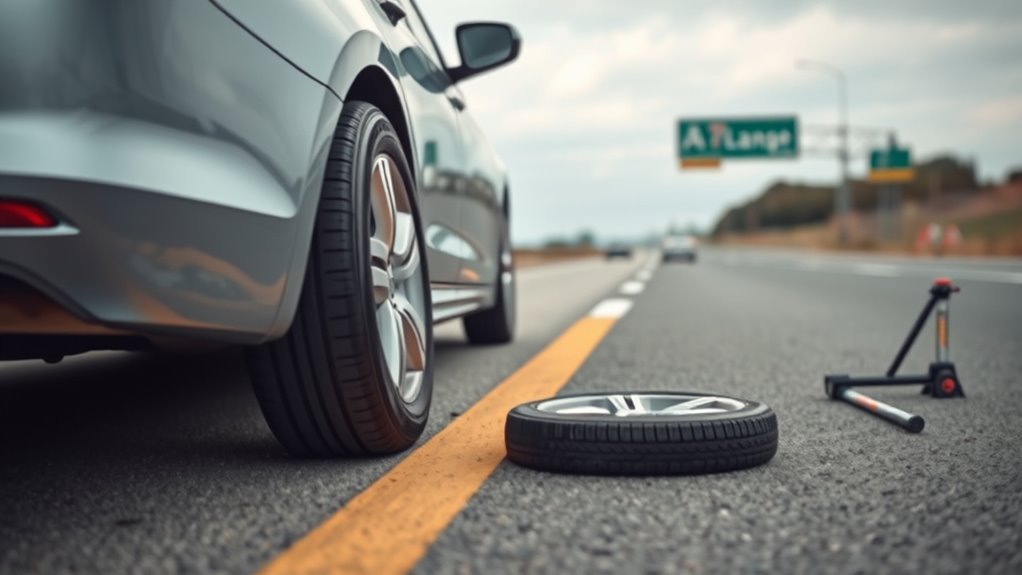
A donut spare, also called a compact temporary spare, is smaller, narrower, lighter, and easier to store than a normal tire. That space-saving design is useful in an emergency, but it comes with trade-offs: less tread, a smaller contact patch, reduced grip, and stricter speed and distance limits.
A full-size spare may allow more normal driving only when it truly matches the other tires in size, load rating, tread type, tread depth, and inflation. A full-size spare that is old, worn, underinflated, or mismatched can still affect handling, braking, and drivetrain stress.
| Spare Type | Best Use | Main Limit |
|---|---|---|
| Donut / compact spare | Short emergency drive to a repair shop | Usually 50 mph and about 50 miles |
| Matching full-size spare | Temporary replacement with more normal handling | Must match the vehicle’s tires and be roadworthy |
| Run-flat tire | Limited driving after pressure loss | Requires a working TPMS and model-specific limits |
| Tire mobility kit | Small tread punctures only | Does not fix sidewall damage, blowouts, or large punctures |
Note: Your owner’s manual, tire placard, and spare tire sidewall are the final authority for your vehicle. If they list a lower speed, shorter distance, special wheel position, or different pressure, follow that instruction.
How Fast and How Far Can You Drive on a Donut Spare?
The common rule for a donut spare is the 50/50 rule: stay at or below 50 mph and drive no more than about 50 miles. That is a safe default because compact spares are not built for long highway trips, heavy cornering, or repeated daily use.
Many temporary spare tires are labeled for temporary use and limited speed. Federal rules for non-pneumatic spare tire assemblies, for example, require markings such as “FOR TEMPORARY USE ONLY” and “MAXIMUM 80 KM/H (50 M.P.H.).” For most pneumatic compact spares, the tire sidewall and owner’s manual are still the practical sources to follow.
Michelin also advises drivers not to exceed 50 mph on a compact spare and to avoid aggressive acceleration, hard braking, and sharp cornering. If traffic conditions would force you above the spare’s limit, exit, pull over safely, or call roadside assistance.
[Products Worth Considering]
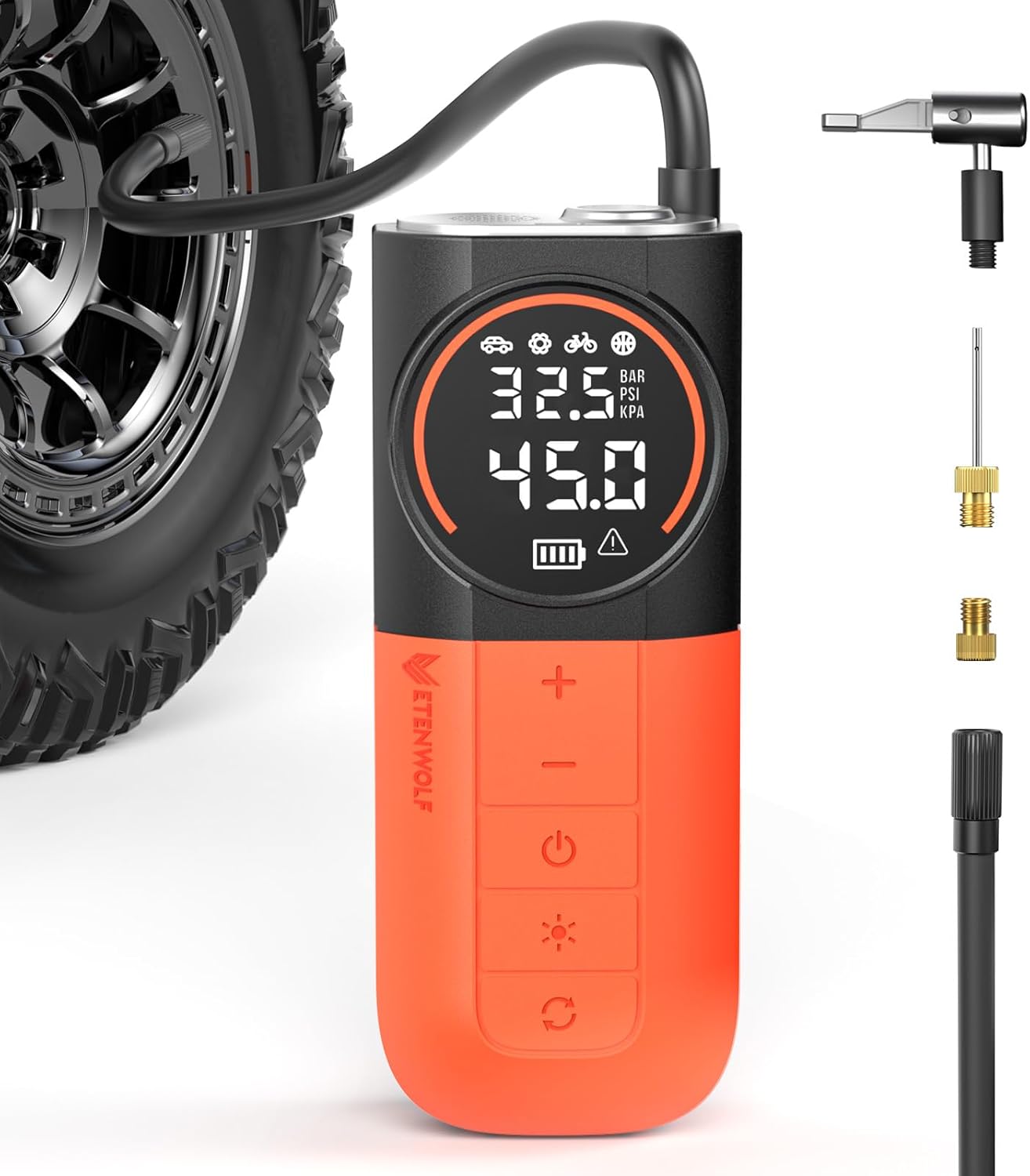
The ETENWOLF S1 cordless tire inflator delivers ultra-fast inflation with up to 160 PSI and a 20 L/min airflow for quicker tire top-offs. Its 5200mAh battery and cooling system support inflating many tires and sports balls on a single charge, while the digital pressure gauge and multi-unit display help you reach the right pressure accurately. With preset modes, pressure memory, an auto-stop feature, and an LED flashlight, it’s built for easy roadside and everyday use.
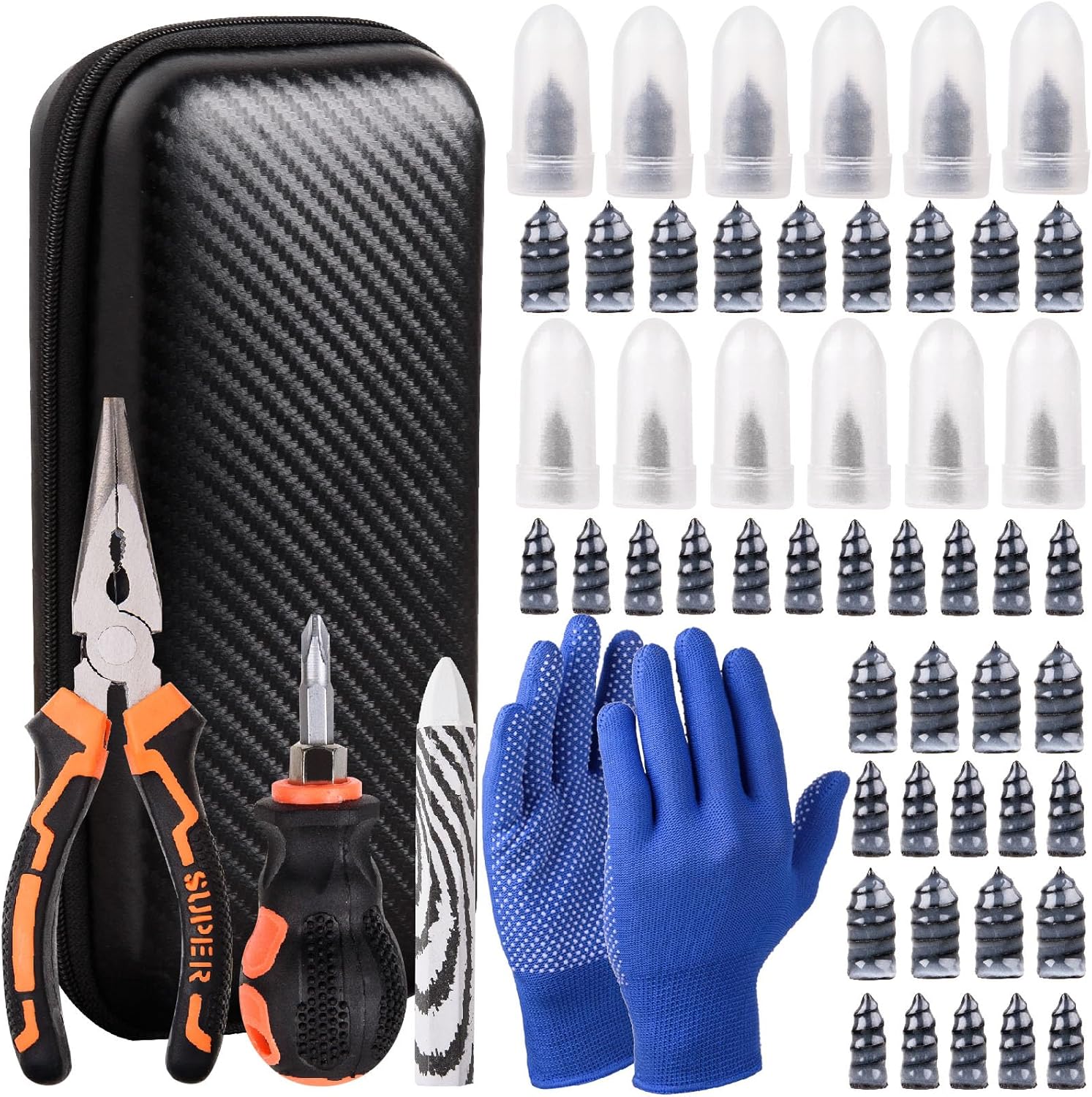
This tire sidewall puncture repair kit fixes flats fast without removing the tire, helping you get back on the road in minutes. It includes self-tapping repair nails, essential tools, gloves, and a portable storage bag for convenient roadside use. Designed for tubeless tires, it helps create a tight, leak-resistant seal for cars, motorcycles, trucks, SUVs, and ATVs.
Why Is 50 MPH the Limit?
The 50 mph limit helps reduce heat buildup, tread stress, handling problems, and the risk of tire failure. A donut spare has less rubber on the road than a normal tire, so it cannot deliver the same braking, cornering, and wet-road traction.
- Keep speed at or below the limit printed on the spare.
- Use the right lane and avoid fast highway merging when possible.
- Accelerate gently and brake earlier than normal.
- Avoid sudden steering, hard cornering, and evasive lane changes.
Warning: Do not use cruise control, tow a trailer, mount snow chains on a compact spare, or use more than one temporary spare at a time unless your vehicle manual specifically allows it.
How Many Miles Can You Drive?
A donut spare is meant to get you to a safe service location, not through the rest of your week. Aim for the nearest practical tire shop, dealer, or repair facility. If the shop is farther than your manual’s limit, call roadside assistance instead of pushing the spare beyond its intended use.
Driving too far on a donut can increase tire heat, uneven wear, steering pull, braking imbalance, and driveline stress. It can also turn a small tire problem into a more expensive vehicle problem.
Why the Limit Exists: Heat, Grip, and Drivetrain Stress
The 50 mph / 50-mile guideline is not just a cautious suggestion. It is tied to how compact temporary spares are built and how your vehicle responds when one tire is smaller, narrower, or shaped differently than the others.
Heat Buildup Risks
Compact spares often have a smaller physical size, narrower tread, and reduced tread depth compared with regular tires. At higher speeds, that smaller tire can heat up faster. Heat weakens rubber and internal tire structure, which raises the risk of sudden failure.
- Higher speed creates more heat inside the spare.
- Underinflation makes heat buildup worse.
- Longer trips increase the time the spare is under stress.
- Wet, icy, or hot pavement leaves less room for error.
Reduced Grip and Longer Stopping Distance
A donut spare has a smaller contact patch, so it may not grip like the other three tires. Expect less traction, longer braking distance, and less stability during emergency maneuvers. Leave more space ahead, slow down earlier, and avoid driving in severe weather unless you have no safer choice.
Drivetrain Stress
If the spare has a different rolling diameter, it may rotate at a different speed than the other tires. On a driven wheel, that difference can make the driveline work harder. This matters most on AWD, 4WD, and limited-slip differential vehicles, where mismatched rolling speed can increase heat, wear, or noise.
Warning: If your manual says the compact spare must be used only on a certain axle, follow that rule. Some vehicles require moving a good tire to the driven axle and placing the donut on a non-driven axle.
How a Donut Can Affect Your Car: Drivetrain, Brakes, and Electronics
A donut spare can change how your car feels and responds. The most common issues are reduced grip, longer stopping distance, steering pull, vibration, warning lights, and added stress on drivetrain parts.
- Drivetrain: A smaller rolling diameter can make the differential or AWD system compensate more than normal.
- Brakes: Reduced traction can increase stopping distance and make sudden braking less stable.
- Steering: The vehicle may pull or feel less settled in turns.
- TPMS and stability systems: Some vehicles may show tire-pressure or stability warnings because wheel speed and rolling radius are different.
These issues are why a donut should be treated as a short-term emergency part. Once the full-size tire is repaired or replaced, the vehicle can return to its normal handling and braking behavior.
How Should You Drive With a Donut Spare?
Before you drive, check the spare’s cold inflation pressure. Many compact spares call for about 60 psi, but you should verify the exact number on the spare tire sidewall, vehicle placard, or owner’s manual. A spare that is low on air can overheat and fail faster.
- Check pressure before moving. Do not judge by appearance alone.
- Confirm the wheel is seated. Tighten lug nuts in the proper pattern and recheck them according to your manual.
- Plan a short route. Choose slower roads when practical.
- Drive smoothly. Avoid hard acceleration, hard braking, sharp turns, and sudden lane changes.
- Increase following distance. Give yourself more time to stop.
- Watch the weather. Rain, snow, ice, and high wind make the spare’s reduced grip more noticeable.
Pro Tip: Check your spare tire every time you rotate your tires or before a long trip. Look for low pressure, cracks, bulges, corrosion on the wheel, and missing tools such as the jack, lug wrench, and wheel-lock key.
After Using a Donut Spare: What Should You Check Before Storing It Again?
Do not toss the spare back into the trunk and forget it. Once the regular tire is repaired or replaced, inspect the compact spare before storage. Check the tread, sidewall, wheel, valve stem, pressure, and DOT date code. If you exceeded the speed or distance limit, drove on it while underinflated, or see heat damage, cracks, bulges, exposed cords, or uneven wear, replace the spare before you need it again.
Replacing the Donut: Repair Options, Costs, and Next Steps
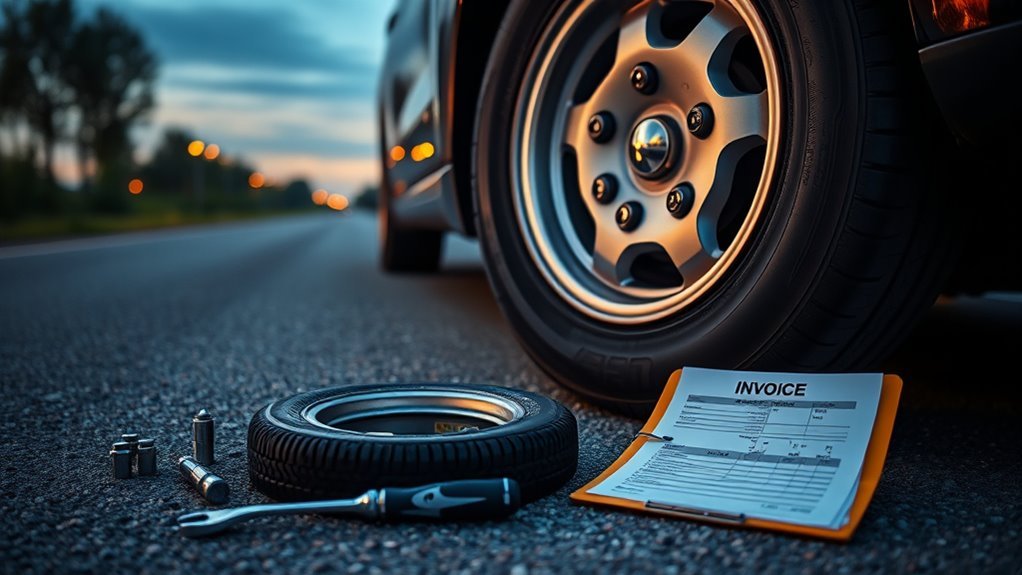
Once the donut is installed, your next job is to restore a proper full-size tire. A tire professional can inspect the damaged tire and tell you whether it can be safely repaired or must be replaced.
A repair may be possible when the puncture is small, no greater than 1/4 inch, and located in the repairable tread area. A proper permanent repair usually requires removing the tire from the wheel, inspecting the inside, filling the injury with a rubber stem or plug, and sealing the inner liner with a patch. A plug alone or patch alone is not considered a proper permanent repair by major tire-industry guidance.
Replacement is usually required when the damage is in the sidewall or shoulder, the puncture is too large, the tire was driven flat, the tire has internal damage, the tread is too worn, or the tire is too old or cracked.
A donut spare buys you time. It does not restore full traction, braking, load capacity, or drivetrain balance.
- Ask whether the original tire can be repaired safely.
- If replacing one tire, match size, load rating, speed rating, and type to your vehicle’s requirements.
- For AWD vehicles, ask whether tread-depth matching is required.
- Have the wheel, valve stem, TPMS sensor, and lug torque checked.
- Put the repaired or replacement tire back on as soon as possible.
Frequently Asked Questions
How far can I go on a donut spare tire?
Use about 50 miles as the safe default unless your owner’s manual or the spare sidewall gives a different limit. The goal is to reach the nearest safe tire service location, not to keep driving normally.
What are the limitations of a donut tire?
A donut tire has lower speed capability, shorter usable distance, reduced tread depth, less grip, and different handling than a normal tire. It can also create drivetrain stress if it is used too long or on the wrong axle.
Can I drive on the highway with a donut spare?
Avoid highways when you can. If you must use one, stay at or below the spare’s speed limit, use the right lane, leave extra following distance, and exit as soon as it is safe.
Is 60 psi always the right pressure for a donut spare?
No. Many compact spares use about 60 psi, but the correct cold inflation pressure is the number printed on your spare tire, vehicle placard, or owner’s manual. Do not use the pressure listed for your normal tires unless the manual says to.
Can I put a donut spare on the front?
It depends on the vehicle. Some manuals allow it, while others recommend using the compact spare only on a non-driven axle. This is especially important for front-wheel drive, AWD, 4WD, and limited-slip vehicles.
Can I reuse a donut spare after driving on it?
Usually yes, if it was used within its limits and still has safe tread, pressure, and no damage. Inspect it after use and replace it if it shows cracks, bulges, uneven wear, exposed cords, or damage from overheating.
What if my car does not have a spare tire?
Some vehicles come with run-flat tires or a tire mobility kit instead of a spare. Read your manual before an emergency so you know whether your kit can handle the damage. Sealant kits usually help only with small tread punctures and do not fix sidewall damage or blowouts.
How do I know if my donut spare is too old?
Check the DOT Tire Identification Number on the sidewall. The last four digits show the week and year the tire was made. If the spare is old, cracked, bulged, or cannot hold pressure, replace it before relying on it.
What should I do if the nearest tire shop is more than 50 miles away?
Do not stretch the trip just because the car can still move. Stop in a safe place and call roadside assistance, a tow service, or a mobile tire service if the distance would exceed your manual’s limit.
Conclusion
A donut spare tire is a temporary safety tool. Keep your speed low, keep the distance short, check the pressure, and drive gently to the nearest practical repair location. The common safe default is 50 mph and about 50 miles, but your vehicle manual and spare sidewall should always guide the final decision. Repair or replace the damaged tire quickly so your vehicle gets back its normal traction, braking, and drivetrain balance.
Sources
- NHTSA TireWise — tire safety, maintenance, pressure checks, tire aging, labeling, and tire-related crash context
- eCFR 49 CFR 571.110 — federal tire selection, temporary spare, placarding, and labeling requirements
- Michelin: Driving on a Spare Tire — compact spare speed, highway, pressure, and handling guidance
- Tire Rack: Temporary / Compact Spare Tire Use — 60 psi guidance, handling limits, and driveline stress explanation
- Mastercraft Tires: How to Care for a Spare Tire — spare inspection, compatibility, and temporary spare precautions
- U.S. Tire Manufacturers Association: Tire Repair Basics — proper puncture repair methods and repair limitations

Related Articles
Why Put a Plastic Bottle on Your Tire? The Viral Trick Explained
Mysterious plastic bottle on your tire? Discover the viral trick’s surprising truth and what it really means before you assume it’s protecting your car.
Read More
What Happens When a Tire Blows Out at Highway Speed? Full Guide
Buckle up to discover what really happens when a tire blows out at highway speed, and why your next move could change everything.
Read More
What Does V Mean on a Tire? Load, Speed & Rating Guide
Need to know what “V” means on a tire and how load and speed ratings affect safety?
Read More