
Tire Pulling to One Side: Alignment, Pressure & Other Causes
If your car pulls to one side, start with the simple checks: tire pressure, tread condition, and whether the pull happens while cruising, braking, or accelerating. A steady drift often points to tire pressure, tire wear, road crown, or alignment. A sharp tug under braking can point to brake drag, a sticking caliper, uneven pads, or suspension movement. Work through the checks in order so you fix the real cause instead of paying for an alignment that may not solve the problem.
Quick Answer
A car usually pulls to one side because of uneven tire pressure, tire damage or wear, wheel alignment problems, brake drag, worn steering or suspension parts, or a bent rim. Check tire pressures first, then test whether the pull happens while cruising, braking, or accelerating before deciding on repairs.
Key Takeaways
- Unequal tire pressure is the first thing to check because it is common, quick, and inexpensive to correct.
- A pull only during braking often points to brake drag, uneven pad friction, a sticking caliper, or worn suspension parts shifting under load.
- A steady pull on a flat road can come from tire conicity, mismatched tires, camber/caster differences, toe problems, or road-impact damage.
- Alignment should be done after worn tires, brake faults, loose suspension parts, and bent wheels are checked or repaired.
At a Glance
| Time Required | 10–30 minutes for basic home checks; longer if shop diagnosis is needed |
| Difficulty | Easy for tire pressure and visual checks; moderate to advanced for brake and suspension inspection |
| Tools Needed | Tire pressure gauge, tread-depth gauge or penny, flashlight, notebook, and a safe test-drive route |
| Cost | Free to low cost for pressure checks; shop repairs vary by alignment, tires, brakes, wheels, or suspension parts |
Quick Guide: What to Do If Your Car Pulls to One Side
If your car pulls to one side, follow a simple diagnostic order before buying parts or scheduling an alignment:
- Check tire pressures cold. Inflate each tire to the vehicle manufacturer’s pressure listed on the door placard or in the owner’s manual, not the maximum pressure printed on the tire sidewall. NHTSA recommends measuring tire pressure when tires are cold for the most accurate reading.
- Inspect tire condition. Look for uneven wear, cupping, feathering, bubbles, cuts, exposed cords, mismatched sizes, or a tire that looks different from the others.
- Road-test carefully. On a straight, level road, note whether the pull is constant, changes with speed, appears only under braking, or appears only during acceleration.
- Check brakes if the pull happens while stopping. A sticking caliper, seized slide pin, uneven pad wear, contaminated pad, or restricted brake hose can create uneven braking force.
- Inspect wheels, steering, and suspension. Bent rims, loose tie rods, worn bushings, ball joints, control arms, and wheel bearings can all shift wheel angle or add drag.
- Get a professional alignment last. Alignment is important, but worn tires, dragging brakes, or loose suspension parts can make a fresh alignment fail to fix the pull.
Warning: If the steering suddenly yanks, the brake pedal feels unsafe, you smell burning, one wheel is extremely hot, or the vehicle changes lanes without much input, stop driving when it is safe and have the vehicle inspected before continuing.
[Products Worth Considering]

EVOULTES heavy duty tire inflator with an integrated gauge delivers accurate pressure readings from 10–120 PSI, helping you inflate, deflate, and check tires in one tool. The 16.5-inch extended dual-head air chuck with swivel base reaches hard-to-access dual wheel valves on trucks and RVs. A brass trigger core and side-mounted air release valve make operation smooth, with standard 1/4" NPT threading and quick-connect compatibility for easy setup.

This portable cordless tire inflator delivers up to 160 PSI with fast 17 L/min airflow to help you quickly top up tires and get back on the road. It features dual power mode, running on a 21V rechargeable battery or a 12V DC adapter for convenient roadside use. An automatic shut-off with digital pressure gauge helps prevent overinflation, and a built-in LED light improves visibility in low-light conditions.

The JACO FlowPro Tire Inflator measures, inflates, and airs down tires up to 100 PSI with battery-free operation and ±2% accuracy after calibration. It features a glowing pressure dial for night visibility, a heavy-duty steel build with a hybrid hose, and a precision push-to-inflate thumb trigger. The patented Lightning Air Chuck locks on for a secure seal, and the kit includes quick-connect hardware for easy inline use with your air compressor.
How to Tell If Your Car Is Really Pulling: Simple Road Tests
Before assuming something is broken, confirm that the car is truly pulling. Many roads are slightly crowned for water drainage, which can make a vehicle drift gently toward the road edge. Test on a safe, level road and repeat the test in both directions. If the car pulls the same way both times, the vehicle is more likely the issue. If the drift changes with the road direction, road crown may be part of what you feel.
Straight-Road Drift Test
Drive at a steady, moderate speed on a flat, quiet road. Hold the steering wheel lightly, not loosely, and note whether the vehicle needs constant correction to stay centered in the lane. A consistent drift during steady cruising points first to tire pressure, tire pull, uneven tire wear, alignment, road crown, wheel damage, or suspension wear.
Before the test, set all tire pressures to the vehicle placard specification. After the test, inspect tread for irregular wear, one-sided shoulder wear, feathering, or cupping. These patterns help separate tire problems from alignment or suspension problems.
Braking Pull Check
In a safe area, drive straight at a moderate speed and apply the brakes smoothly while keeping both hands lightly on the wheel. If the vehicle tracks straight while coasting but veers consistently during braking, focus on the brake system first.
Common causes include a sticking caliper, seized caliper slide pins, uneven pad wear, contaminated brake pads or rotors, a restricted brake hose, or suspension movement under braking. A brake-related pull often gets worse as the brakes heat up.
Acceleration Pull Check
If the car pulls mainly when you press the accelerator, especially in a front-wheel-drive vehicle, the cause may be torque steer, unequal tire grip, worn engine or transmission mounts, worn control-arm bushings, or unequal axle/driveline angles. A mild tug during hard acceleration can be normal on some high-output front-wheel-drive cars, but a new or severe pull deserves inspection.
Tire Pressure Re-Check
Check tire pressures again when the tires are cold. A tire that loses pressure after 24–48 hours may have a slow leak at the tread, valve stem, bead, or wheel rim. Under-inflation on one side increases rolling resistance and can make the vehicle drift toward the softer tire.
Pro Tip: Write down the PSI for all four tires before and after correction. If the same tire keeps dropping, you have evidence of a leak rather than a random pressure difference.
Tire Pressure and Pulling: Check, Correct, and Why It Matters
Tire pressure is the fastest home check because even a small side-to-side difference can change rolling resistance and steering feel. NHTSA tire safety guidance recommends checking tire pressure at least once a month and measuring pressure when the tires are cold.
Check Tire Pressures Regularly
Use a reliable tire pressure gauge and compare each tire with the pressure listed on the vehicle’s tire placard. The placard is usually on the driver-side door edge, door jamb, glove-box door, fuel door, or inside the trunk lid. Do not use the maximum PSI molded on the tire sidewall as your normal inflation target.
- Check pressure before driving or after the vehicle has been parked for several hours.
- Record readings for all four tires and the spare if your vehicle has one.
- Correct side-to-side differences immediately.
- Replace leaking valve stems or damaged valve caps.
- Have a tire inspected if it repeatedly loses air.
Inflate to the Specified PSI
When one tire is low, its contact patch changes and rolling resistance increases. That can steer the car toward the under-inflated side. Inflate each tire to the vehicle manufacturer’s specified cold pressure, then road-test again.
| Action | Why It Helps |
|---|---|
| Measure cold PSI | Gives an accurate baseline |
| Inflate to the placard | Balances side-to-side rolling resistance |
| Recheck after 24–48 hours | Finds slow leaks |
| Road-test again | Confirms whether pressure caused the pull |
Monitor for Slow Leaks
A slow leak can create a pull that comes back a few days after you inflate the tire. Inspect the tread for nails, screws, glass, sidewall damage, or uneven wear. Also check the valve stem and the rim bead area. If a tire loses pressure repeatedly, have it inspected and repaired properly or replaced.
Tire Problems That Cause Pull: Uneven Wear, Conicity, and Mismatches
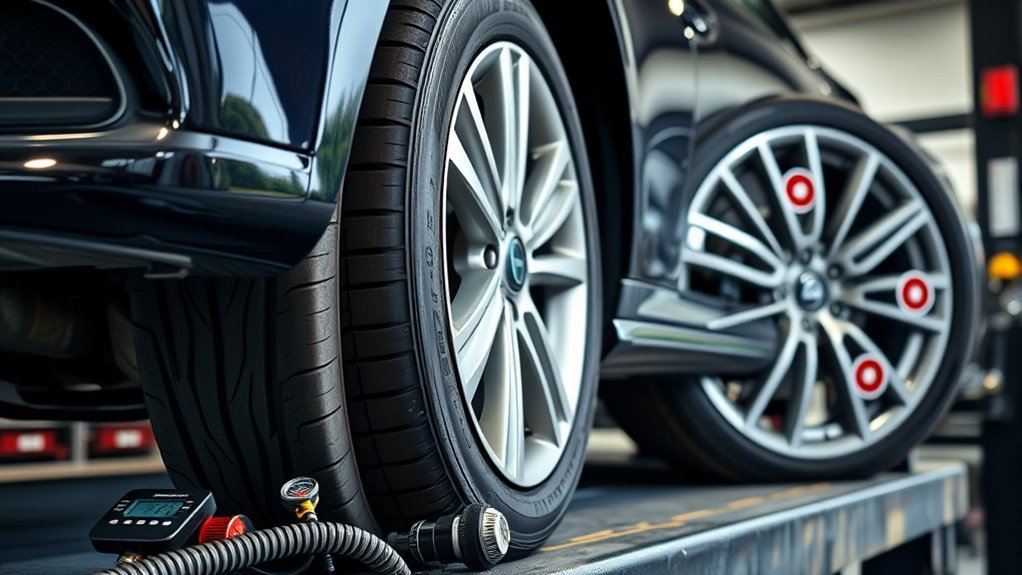
Tires can make a car pull even when the alignment numbers look correct. Start by checking tread depth, shoulder wear, tire age, visible damage, and whether the tires match across each axle. USTMA tire care guidance recommends following the vehicle owner’s manual for rotation intervals; if none is listed, a 5,000–8,000 mile interval is a common guideline.
Uneven Tire Wear
Uneven wear changes grip from left to right. One-sided shoulder wear often points to alignment or suspension problems. Cupping can suggest worn shocks, struts, bearings, or balance issues. Feathering may point to toe problems. If one front tire is more worn than the other, the car may pull toward the tire with less effective grip or greater rolling resistance.
Tire Conicity or Radial Pull
Tire conicity, sometimes called radial pull, happens when a tire’s internal construction makes it roll slightly like a cone. The vehicle may pull even with correct air pressure and good alignment. A shop can often isolate this by rotating front tires side-to-side, performing a road-force balance, or measuring tire-generated lateral force.
Note: If the pull changes direction after rotating tires side-to-side, the tire or wheel assembly is more likely than the alignment.
Mismatched Tires
Mismatched tires can create uneven grip and rolling resistance. Avoid mixing different sizes, load ratings, construction types, tread designs, or heavily different tread depths on the same axle. Federal inspection guidance for vehicles also emphasizes matching tires on the same axle by size and construction, which helps preserve predictable handling.
Wheel Alignment: How Camber, Caster, and Toe Create Pulling
Wheel alignment controls how the tires meet the road. If camber, caster, toe, or thrust angle is outside specification, the car may pull, the steering wheel may sit off-center, or the tires may wear quickly. The Car Care Council lists pulling to one side and uneven tire wear as common signs of an alignment problem.
Camber Pull
Camber is the inward or outward tilt of the wheel when viewed from the front of the vehicle. A vehicle commonly drifts toward the side with more positive camber or away from the side with more negative camber, depending on the suspension design and tire behavior. Unequal camber can also wear one edge of the tire faster.
Caster Pull
Caster is the forward or rearward angle of the steering axis. It affects steering return and straight-line stability. Unequal caster can make the vehicle drift toward the side with less positive caster. Caster problems often appear after a curb strike, pothole impact, or bent suspension part.
Toe and Thrust Angle
Toe describes whether the tires point slightly inward or outward when viewed from above. Incorrect toe usually causes rapid tire wear and an off-center steering wheel, but severe or uneven toe can also add a pull. Thrust angle matters too: if the rear wheels are not tracking straight behind the front wheels, the car can feel like it is being pushed sideways.
Do not use alignment as the first and only fix. Tire pressure, tire condition, brake drag, bent wheels, and worn suspension parts should be checked before final alignment.
Brake Causes of Pull: Sticking Calipers and Pull Under Braking
If your car pulls more strongly when you brake, focus on the brake system and suspension movement under braking. A sticking caliper can keep one brake partly applied, creating heat, uneven pad wear, and a pull toward the affected side. A restricted brake hose or seized slide pin can also cause one wheel to brake harder or release slower than the other.
Stuck Caliper Symptoms
A stuck or dragging caliper can show several warning signs:
- Vehicle pulls to one side while braking.
- One wheel feels much hotter than the others after a short drive.
- Burning smell near one wheel.
- Grinding, scraping, or metallic brake noise.
- Uneven brake pad wear on one side.
- Reduced fuel economy or sluggish acceleration from constant drag.
Brake Drag Diagnosis
After a short drive without heavy braking, carefully compare heat near each wheel without touching hot brake parts. A noticeably hotter wheel can point to brake drag or bearing problems. A shop can confirm the cause by inspecting pad thickness, caliper slide movement, piston retraction, rotor condition, brake hose flow, and wheel bearing play.
Caliper Repair Options
Repair depends on what is sticking or damaged. Common fixes include cleaning and lubricating slide pins with brake-safe high-temperature grease, replacing pads and hardware, rebuilding or replacing a caliper, replacing a restricted hose, resurfacing or replacing rotors, and bleeding the brake system after hydraulic work.
Warning: Brake work affects stopping distance and vehicle control. If you are not trained and equipped to service brakes safely, have a qualified technician inspect and repair the system.
Suspension, Steering, and Wheel Bearings That Shift Geometry
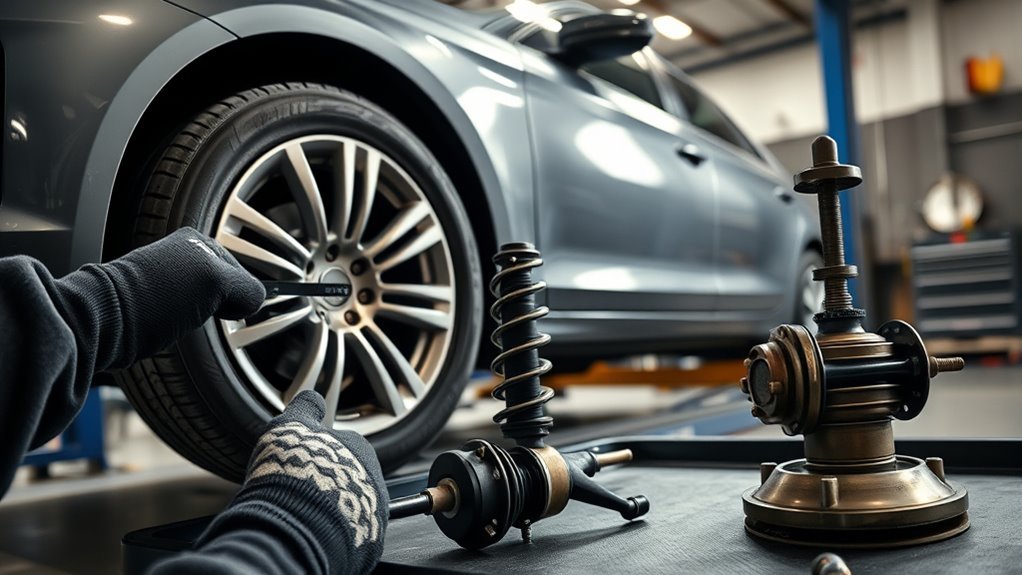
Suspension and steering parts hold the wheels at the correct angles. When bushings, tie rods, ball joints, control arms, struts, springs, or wheel bearings wear out, the wheel can move under load and create a pull that changes during braking, cornering, or acceleration.
[Products Worth Considering]

The AstroAI L7 Air Tire Inflator refills car tires quickly with up to 150PSI max pressure and a fast 1-minute inflation claim. It includes 5 preset modes for car, motorcycle, bicycle, balls, and manual use, along with an auto shutoff to help prevent overinflation. Designed for convenience, it features a digital gauge with unit switching, a top LED light with multiple modes, and USB-C/USB ports for backup power.
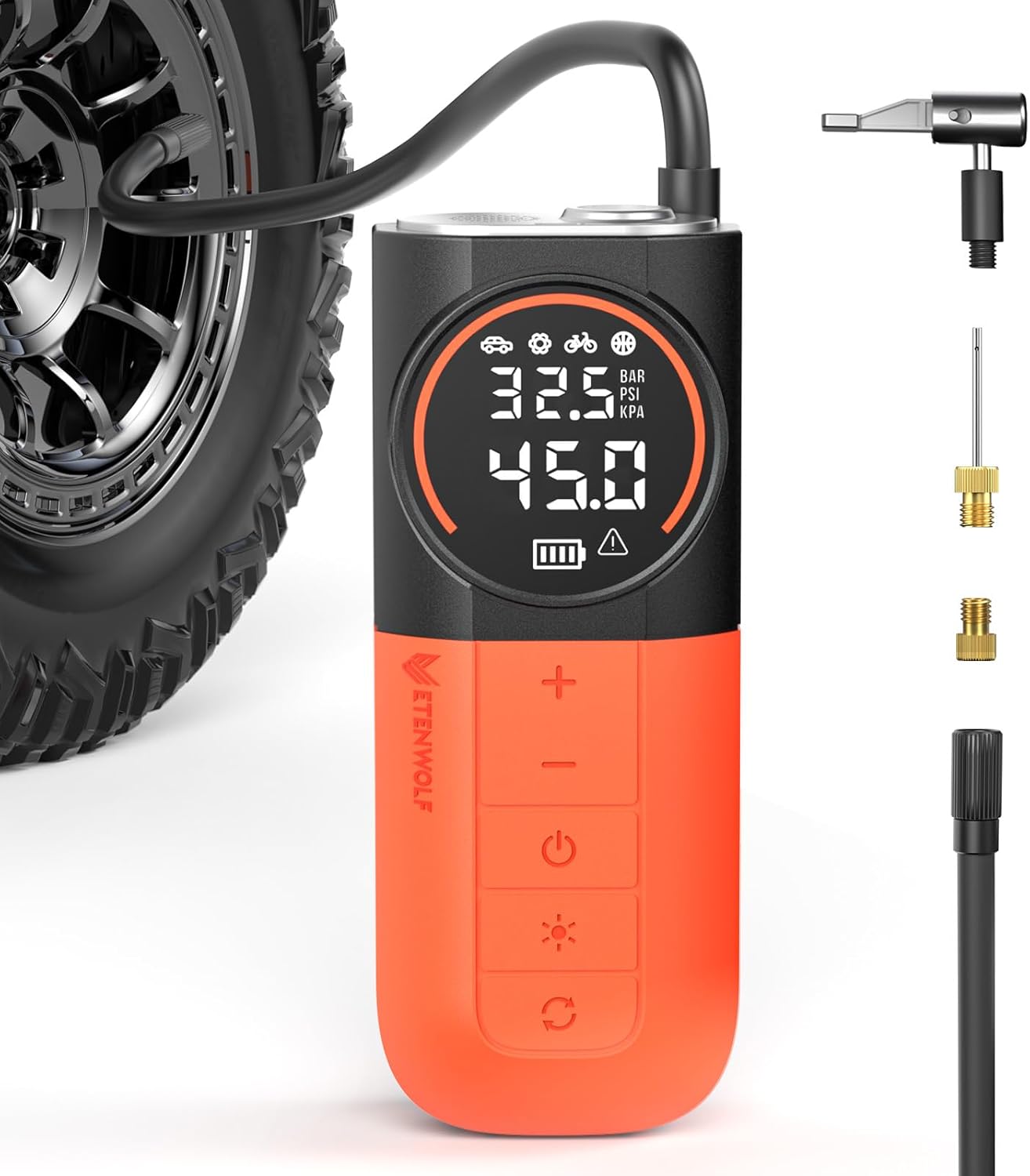
The ETENWOLF S1 cordless tire inflator delivers ultra-fast inflation with up to 160 PSI and a 20 L/min airflow for quicker tire top-offs. Its 5200mAh battery and cooling system support inflating many tires and sports balls on a single charge, while the digital pressure gauge and multi-unit display help you reach the right pressure accurately. With preset modes, pressure memory, an auto-stop feature, and an LED flashlight, it’s built for easy roadside and everyday use.
Worn Bushings and Control Arms
Control-arm bushings allow controlled movement while keeping the wheel located. If a bushing tears, softens, or separates, the wheel can shift backward, forward, inward, or outward under braking and acceleration. That changes caster, camber, and toe dynamically even if the alignment looked fine while the car was sitting on the rack.
Tie Rods, Ball Joints, and Steering Play
Loose tie rods, worn ball joints, or steering rack play can create wander, delayed steering response, clunks, and uneven tire wear. These parts should be inspected before alignment because a loose joint can make precise alignment impossible.
Wheel Bearing Problems
A failing wheel bearing can cause humming, grinding, vibration, looseness, and extra drag. Bearing play can also let the wheel angle change slightly while driving. If a pull is paired with a growling noise that changes with speed or turning direction, include wheel bearings in the diagnosis.
Rims, Wheel Balance and Torque Steer: Dents, Imbalance, and FWD Quirks
Wheel and rim problems can mimic alignment issues. A bent rim can change how the tire contacts the road. An out-of-balance wheel usually causes vibration, but vibration plus uneven tire wear can contribute to steering pull. Torque steer can also make some front-wheel-drive cars tug under hard acceleration.
- Bent rim: May cause vibration, bead leaks, uneven tire contact, and a steady or speed-related pull.
- Wheel imbalance: Usually feels like vibration at certain speeds and can accelerate irregular tire wear.
- Road-force variation: A tire and wheel assembly may be round enough to balance but still create a pull or vibration under load.
- Torque steer: More noticeable during acceleration in some front-wheel-drive vehicles, especially with unequal tire grip or worn mounts.
If the pull began after hitting a pothole, curb, or road debris, inspect wheels and tires before assuming the alignment alone is at fault.
Step-by-Step Troubleshooting: Home Checks vs. Shop Repairs
Use this order to avoid wasting money. Start with what you can safely check at home, then take clear notes to a shop if the problem remains.
| Home Checks | What a Shop Can Confirm |
|---|---|
| Check cold tire pressures with a gauge | Tire leaks, TPMS issues, tire condition |
| Inspect tread wear and visible damage | Tire conicity, road-force variation, internal tire defects |
| Test whether pull happens cruising, braking, or accelerating | Brake drag, suspension movement, driveline or mount problems |
| Look for bent rims or missing wheel weights | Wheel balance, bent wheel, hub runout |
| Note noises, heat, vibration, and when the pull began | Alignment angles, thrust angle, steering and suspension play |
Diagnostic Flowchart
- Pull is mild and constant: Check tire pressure, tread wear, mismatched tires, road crown, and alignment.
- Pull changes after tire rotation: Suspect tire conicity, a damaged tire, wheel runout, or wheel balance.
- Pull happens only while braking: Inspect brake pads, calipers, slide pins, rotors, hoses, and suspension bushings.
- Pull happens mainly while accelerating: Consider torque steer, tire grip differences, worn mounts, axle issues, or front suspension movement.
- Pull comes with vibration or humming: Check wheel balance, bent wheels, tire defects, and wheel bearings.
- Pull started after impact: Inspect tires, rims, control arms, tie rods, struts, and alignment.
When Alignment Won’t Fix It: Repair Priorities and Service Checklist
An alignment will not fix every pull. Alignment adjusts wheel angles, but it cannot correct a defective tire, dragging brake, bent wheel, loose tie rod, worn bushing, or failing bearing. Toyota service information hosted by NHTSA also notes that pulling can come from tire lateral force, vehicle damage, road crown, or worn components rather than alignment alone.
- Repair tire problems first: Correct pressure, fix leaks, replace damaged tires, and avoid mismatched tires on the same axle.
- Repair brake faults before alignment: A dragging brake can make the car pull even when the wheels are aligned.
- Replace loose suspension or steering parts: Alignment should be done after worn parts are replaced, not before.
- Inspect wheels and hubs: Bent rims, hub runout, and wheel-bearing play can mimic alignment problems.
- Finish with a four-wheel alignment: Set camber, caster, toe, and thrust angle to manufacturer specifications, then road-test.
Is It Safe to Drive If Your Car Pulls to One Side?
A slight drift caused by road crown or a small tire pressure difference may not require emergency towing, but you should correct it soon. A strong pull, a braking pull, smoke, a burning smell, a hot wheel, grinding, vibration, or sudden steering change is a safety concern. The more steering correction the vehicle needs, the less margin you have in an emergency stop or lane-change situation.
Do not keep driving normally if the pull is getting worse. Check tire pressure first, then have the vehicle inspected if the pull remains.
Frequently Asked Questions
What most often causes a vehicle to pull to one side?
The most common causes are uneven tire pressure, tire wear or tire conicity, wheel alignment problems, brake drag, worn suspension or steering parts, and bent wheels. Start with tire pressure because it is quick to check and often overlooked.
Why does my car feel like it is pulling me to the side?
A car pulls when forces are unequal from left to right. One tire may have lower pressure, more wear, or an internal pull. The wheel alignment may be off, one brake may be dragging, or a worn suspension part may let the wheel shift while driving.
How do you fix a car that pulls to one side?
Fix it by diagnosing in order: set tire pressures cold, inspect tires and wheels, road-test to see when the pull happens, inspect brakes if it pulls while stopping, check suspension and steering parts, then perform a four-wheel alignment after mechanical faults are corrected.
Can low tire pressure make a car pull?
Yes. A low tire changes the contact patch and increases rolling resistance on that side, which can make the car drift toward the under-inflated tire. Check all tires cold and inflate them to the vehicle placard pressure.
Why does my car still pull after an alignment?
If the car still pulls after alignment, the cause may be tire conicity, mismatched tires, brake drag, a bent rim, worn steering or suspension parts, wheel-bearing play, road crown, or an alignment done before the vehicle’s mechanical problems were repaired.
Why does my car pull only when braking?
A pull only while braking usually means braking force is uneven. Common causes include a sticking caliper, seized slide pins, uneven pads, contaminated brake friction surfaces, a restricted hose, or worn suspension bushings that shift when braking load is applied.
Conclusion
A car that pulls to one side is a sign of unequal force at the tires, brakes, wheels, steering, or suspension. Start with the easy items: check cold tire pressure, inspect tread and tire condition, and note when the pull happens. If pressure and tires are not the answer, check brakes, rims, bearings, suspension, steering parts, and alignment in that order. Repair the faulty part, align the vehicle after mechanical issues are fixed, and road-test again to confirm the car tracks straight.
Sources
- NHTSA TireWise: Tire Safety Ratings and Awareness — supports tire pressure, cold inflation, tire safety, and tire maintenance guidance.
- NHTSA Tire Safety: Everything Rides on It — supports monthly tire-pressure checks and cold-pressure measurement.
- U.S. Tire Manufacturers Association Tire Care Essentials — supports tread inspection, tire rotation, and tire-care best practices.
- 49 CFR 570.9: Tires — supports tire inspection and same-axle tire matching guidance.
- Car Care Council — supports alignment warning signs such as uneven tire wear and pulling to one side.
- Toyota Technical Service Bulletin: Vehicle Pull, Steering Wheel Off Center, and Alignment Best Practices — supports the point that tire lateral force, road crown, vehicle damage, and worn components can mimic alignment pull.

Related Articles
Tire Balancing Weights: Types, Cost, and Why You Need Them
Precisely chosen tire balancing weights reduce vibration and wear, but which type fits your wheels and what it really costs may surprise you.
Read More
Tire Repair Kits: What’s Inside and How to Use One
Get the essentials of tire repair kits, learn how each tool works, and discover the simple steps that can save your trip.
Read More
How to Get More Miles Out of Your Tires: 10 Proven Tips
Maximize tire life with 10 proven tips that save money and boost safety—discover the simple habits that can add many more miles.
Read More