
Valve Stem Leaking Air: Quick Diagnosis & Repair Steps
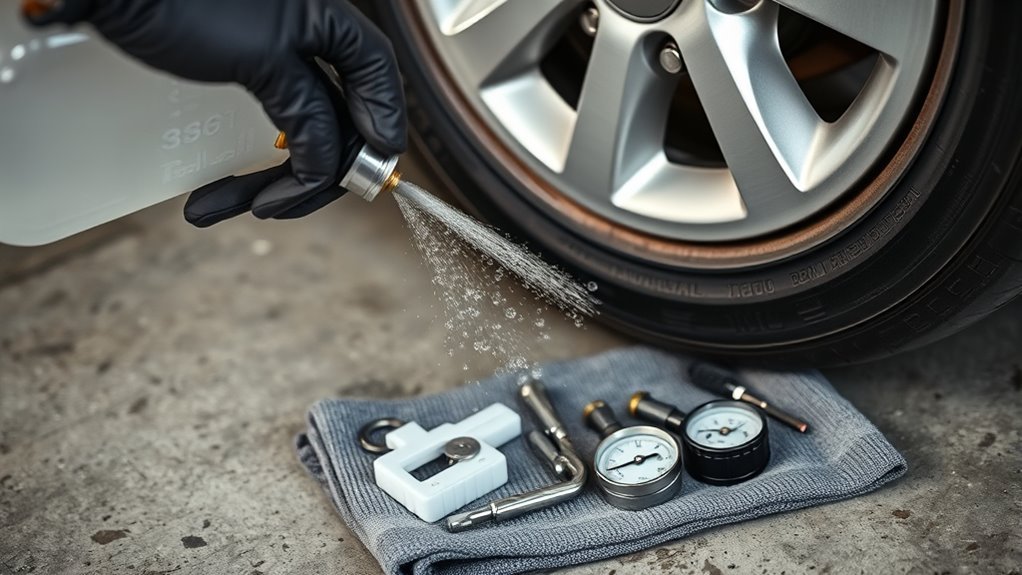
If your tire is losing air at the valve stem, start with a simple leak check before replacing parts. Remove the valve cap, listen for a hiss, and spray soapy water around the valve tip, stem base, and rim bead. Bubbles show where air is escaping. A loose or dirty valve core is often a quick fix, but a cracked stem, corroded rim, TPMS issue, or fast pressure loss needs professional tire service.
Quick Answer
To fix a leaking tire valve stem, confirm the leak with soapy water, then tighten or replace the valve core if bubbles come from the valve tip. If bubbles appear at the stem base, rim bead, or TPMS valve hardware, have a tire shop inspect and replace the valve stem or service kit.
Key Takeaways
- Use soapy water to locate the leak before removing parts.
- Bubbles at the valve tip usually point to a loose, dirty, or worn valve core.
- Bubbles at the stem base, rim bead, or TPMS hardware usually require tire dismounting and shop repair.
- Inflate only to the pressure listed in the owner’s manual or door placard, not the tire sidewall.
- Do not drive far on a leaking or underinflated tire; use roadside assistance if pressure drops quickly.
At a Glance
| Time Required | 10–20 minutes for diagnosis or valve-core replacement |
| Difficulty | Easy for valve-core work; shop-level for valve-stem or TPMS replacement |
| Tools Needed | Soapy water spray, valve-core tool, replacement valve cores, tire-pressure gauge, tire inflator, safety glasses |
| Cost | Low for DIY valve cores; higher if the tire must be dismounted or TPMS parts are replaced |
Confirm the Valve Stem Is Leaking
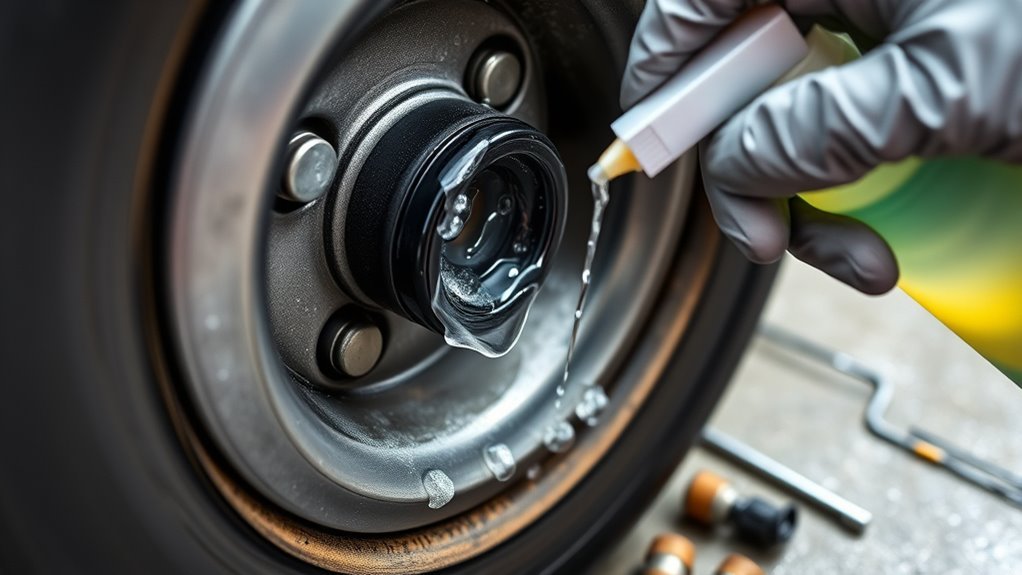
Start with the tire inflated close to its recommended pressure. Spray a mix of dish soap and water around the valve area and watch closely for bubbles for at least 20–30 seconds. Test three spots: the center valve pin, the rubber or metal stem body, and the base where the stem passes through the wheel.
| Where Bubbles Appear | Likely Problem | Best Fix |
|---|---|---|
| Center of the valve tip | Loose, dirty, damaged, or worn valve core | Tighten gently or replace the valve core |
| Side of the rubber stem | Cracked or aged valve stem | Have the valve stem replaced |
| Base of the stem at the wheel | Bad stem seal, corrosion, or TPMS service-kit issue | Shop repair; tire usually must be dismounted |
| Rim bead or tire tread | Bead leak, rim corrosion, puncture, or tire damage | Professional inspection and proper tire repair |
Also check the valve cap. A cap is not a substitute for a sealing valve core, but it helps keep dirt, water, and road salt out of the valve. Replace cracked, missing, or loose caps.
Warning: If the tire loses pressure quickly, do not keep driving. Low pressure builds heat, worsens handling, and can lead to tire failure. Install the spare, use a repair kit only as directed, or call roadside assistance.
Tools for Fixing a Leaky Valve Stem
You only need a small kit for basic valve-core diagnosis and repair. Keep these items together in your garage or roadside kit:
- Soapy-water spray bottle: Mix a small amount of dish soap with water to reveal leaks.
- Valve-core tool: Used to tighten, remove, or install a Schrader-style valve core.
- Replacement valve cores: Use new, compatible cores rather than reusing a suspect one.
- Tire-pressure gauge: Use a reliable gauge to set the tire to the correct pressure.
- Tire inflator or air compressor: Refill the tire after testing or replacing the core.
- Safety glasses: Protect your eyes from dirt, debris, and sudden air release.
- Replacement valve caps: Keep spares so the valve stays protected after repair.
[Products Worth Considering]

This multi-function tire valve stem removal tool set makes it fast to remove, install, bleed, and clean valve cores for easier tire maintenance. It includes valve core removers, a 4-way spool tool, replacement valve caps, and spare cores to handle replacements and repairs with confidence. Universal compatibility suits cars, trucks, motorcycles, bicycles, and more for roadside convenience.

This 4-in-1 tire valve core removal tool helps you deflate, unblock, and remove or install valve cores quickly for easier tire repair. The multifunction design also supports re-taping damaged threads and reaming inside the valve stem for smoother service. Included as a 2-pack, it’s compact for convenient carry and works for cars, bicycles, and motorcycles.

The AstroAI 2 pack air chucks provide a heavy-duty, closed-flow locking design that helps keep air flowing during inflation while securely attaching to the valve stem. Built with 250 PSI rated brass components and compatible with Schrader valves, they feature 1/4" female NPT threads for a wide fit with common inflators. The straight tip and locking clip make filling tires and monitoring pressure more convenient.
Essential Valve Tools
The most important tool is a valve-core remover. It fits over the small core inside the valve stem and lets you loosen, tighten, or remove it. A basic tool is enough for most DIY checks, but a torque-limiting valve-core driver is safer if you work on tires often.
Do not force the tool. If the core feels seized, corroded, or cross-threaded, stop and let a tire technician inspect it. Forcing a damaged core can break the valve stem or make the leak worse.
Replacement Valve Cores
If bubbles come from the valve tip after gentle tightening, replace the valve core. Match the replacement to the valve type and pressure range. Most passenger vehicles use standard Schrader-style tire valves, but some TPMS and specialty applications use specific cores.
When in doubt, replace the core instead of reinstalling a dirty or damaged one. A new core is inexpensive, and the seal is the part doing the work. If the core was removed because it leaked, treat it as suspect.
Leak Detection Supplies
Soapy water is the easiest leak detector. Spray enough solution to wet the valve tip, stem sides, stem base, and nearby bead area. Slow leaks may need a few seconds before bubbles form. After each repair step, spray again and confirm that the bubbles have stopped.
Pro Tip: Check the tire when it is cold whenever possible. Vehicle manufacturers list recommended cold tire pressure in the owner’s manual or on the driver-door placard.
Install or Tighten a Valve Core Step by Step
If your leak is coming from the center of the valve tip, the valve core is the first part to check. Work slowly, wear safety glasses, and be ready for a small burst of air when the core is loosened.
[Products Worth Considering]

This solid brass tire inflation hose adapter screws into your inflator and uses a locking press clip to securely clamp onto the tire valve stem. It helps reduce air leakage for fast, efficient pumping and is designed for reliable performance with a wide range of vehicles and inflator setups.
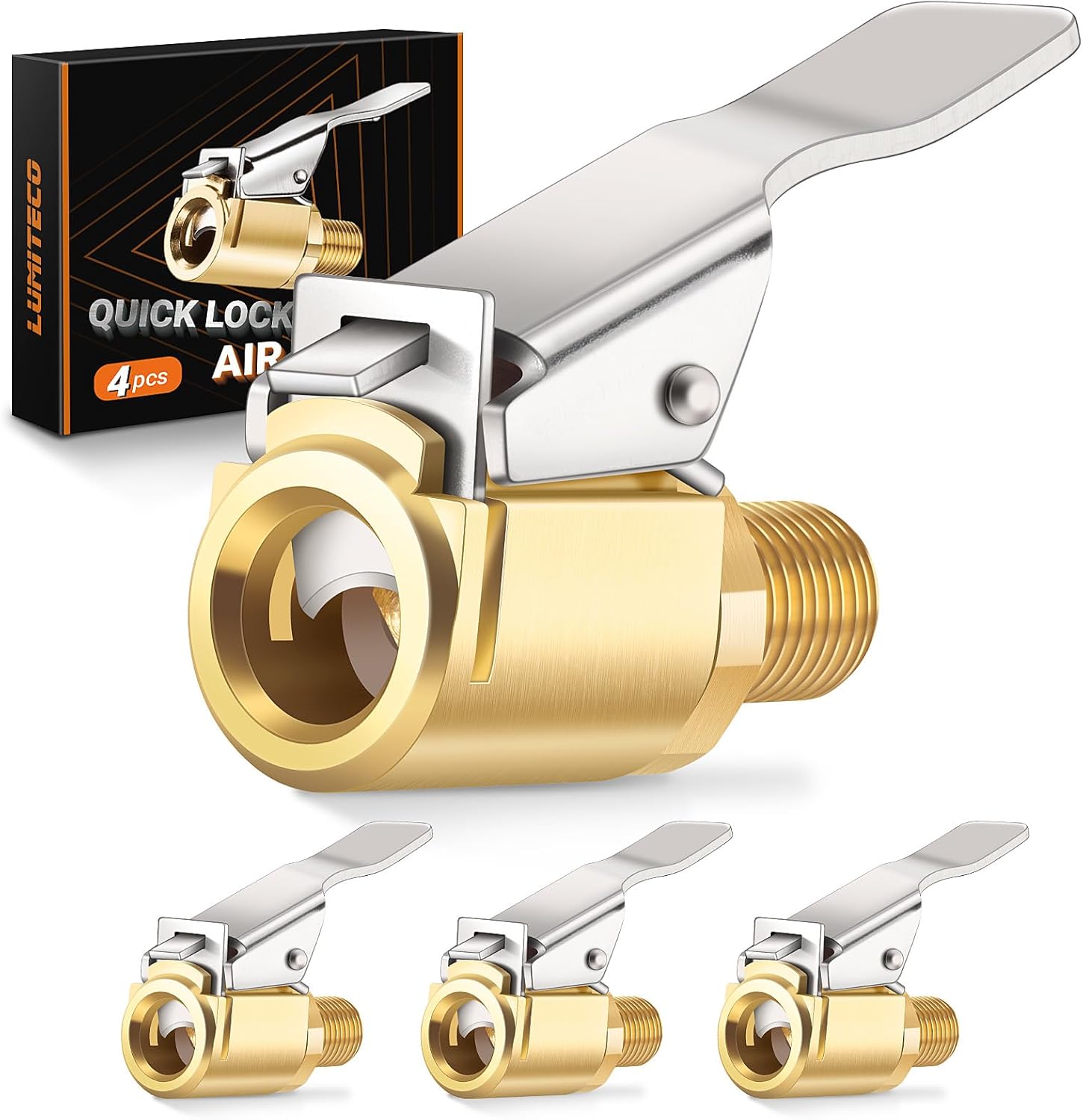
This brass air chuck adapter converts a screw-on inflator connection into a lock-on quick connect for hands-free, no-leak tire inflation. Clip the chuck onto Schrader valve stems and lock it in place to simplify inflating car, bike, and motorcycle tires. Built for durability with a corrosion-resistant brass body and strong quick operation.
Check Valve Core Tightness
- Remove the valve cap and set it somewhere clean.
- Place the valve-core tool over the core.
- Turn clockwise gently until the core feels snug.
- Do not overtighten. If you use a torque driver, follow the valve or tool maker’s specification; many automotive valve-core torque drivers are pre-set around 3–4 in-lb.
- Inflate the tire to the recommended pressure.
- Spray soapy water on the valve tip again and check for bubbles.
If bubbles stop, reinstall the valve cap and check the pressure again the next day. If bubbles continue, replace the core.
Install New Valve Core
- Wear safety glasses.
- Use the valve-core tool to turn the old core counterclockwise.
- Let the remaining air escape in a controlled way.
- Remove the old core and inspect the inside threads for dirt or corrosion.
- Thread the new core in by hand first so it does not cross-thread.
- Snug it with the valve-core tool. Stop when it seats; do not crush or strip it.
- Inflate the tire to the recommended pressure.
- Spray soapy water on the valve tip, stem base, and rim bead.
- Reinstall a clean valve cap.
If the new core still leaks, the problem may be the valve stem body, TPMS valve assembly, or wheel seal rather than the core.
Check Valve Stem and Rim Edge for Corrosion or Damage
Inspect the valve stem and rim edge closely. Look for cracks, splits, dry rubber, bent metal stems, loose TPMS nuts, corrosion, embedded dirt, or old sealant around the bead. Any of these can let air escape even when the valve core is new.
Rubber stems can age and crack. Metal clamp-in TPMS stems can corrode, especially in areas with road salt. The rim bead can also leak if corrosion or debris prevents the tire from sealing evenly against the wheel.
Spray soapy water around the valve-stem base and the tire bead. If bubbles appear at either spot, the tire usually needs to be dismounted so the wheel, bead seat, valve stem, and TPMS parts can be cleaned or replaced safely.
Note: If your vehicle has TPMS, the valve stem may be attached to a pressure sensor inside the wheel. Do not twist, pry, or overtighten TPMS hardware unless you have the correct service information and tools.
TPMS Valve Stems: What to Know Before DIY Repair
Most newer passenger vehicles use a tire pressure monitoring system. Some systems use sensors attached to the valve stem inside the wheel. That means a “simple” valve-stem leak may involve a service kit, rubber grommet, seal, nut, sensor screw, or full TPMS sensor replacement.
You can still check for bubbles and replace a basic valve core if it is clearly leaking at the valve tip. But if the leak is at the stem base, if the stem is metal and corroded, or if the TPMS light appears after repair, schedule tire service. Many TPMS valve components are meant to be replaced when the tire is serviced or dismounted.
After TPMS-related tire service, some vehicles relearn sensor positions automatically. Others need a reset procedure or scan tool. Check the owner’s manual or ask the tire shop to confirm the TPMS system is reading correctly before you leave.
[Products Worth Considering]

Direct replacement - the components in this tire pressure monitoring system valve kit are designed to match the original parts required to service the TPS on specified vehicles

【Compatibility 】This tire pressure sensor valve stem (TPMS) are compatible with Audi, for BMW, for Toyota, for Honda, for Mazda, for Dodge, for Chevrolet, for Chevy, for Ford, for Hyundai, for Infiniti, for Chrysler, for Jaguar, for Volvo, for Jeep, for Acura, for Peugeot, for Land Rover Valve Stem.
Refill the Tire and Re-Check for Leaks
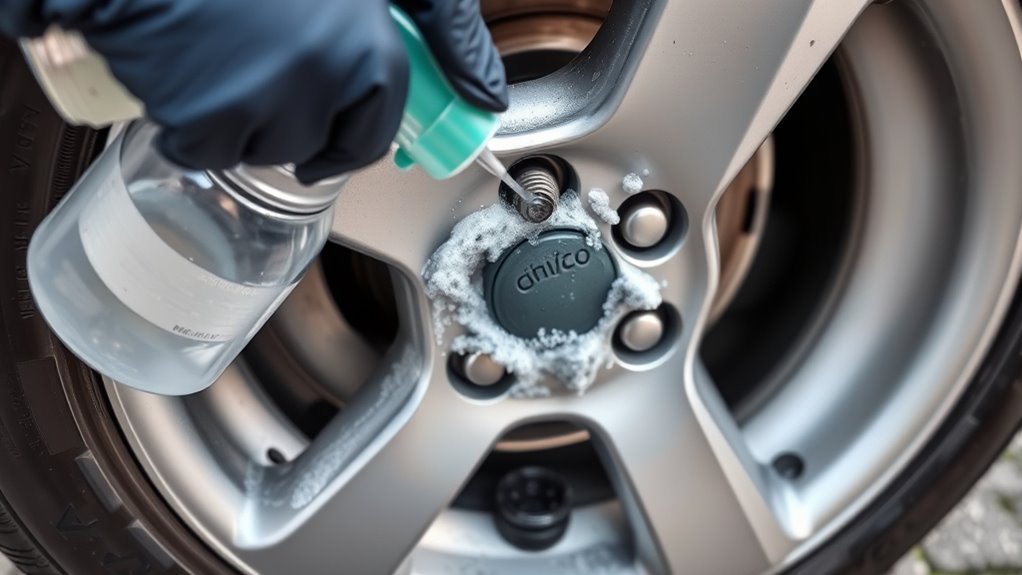
After tightening or replacing the valve core, inflate the tire to the vehicle manufacturer’s recommended pressure. You can usually find it in the owner’s manual or on the placard inside the driver’s door opening. Do not use the maximum pressure printed on the tire sidewall as your normal inflation target.
- Inflate the tire to the recommended cold PSI.
- Wait a few minutes for the pressure reading to stabilize.
- Spray soapy water on the valve tip, stem sides, stem base, and rim bead.
- Watch for bubbles and listen for hissing.
- If no bubbles appear, reinstall the valve cap.
- Check the tire pressure again after a few hours or the next morning.
A tire that keeps losing pressure after a new valve core needs a full tire and wheel inspection, not repeated inflation.
Temporary Fixes and When to Drive to a Shop
A slow leak at the valve core can sometimes be fixed long enough to keep you moving by gently tightening the core or replacing it. If the cap is cracked or missing, replace it too. Then recheck with soapy water.
Emergency tire sealant should be a last resort, not a normal valve-stem repair. Use only a product that is compatible with your tire type and TPMS system, and follow the product label exactly. Sealant can make later tire service messier, and it may not fix a leak at the valve base, cracked stem, bead, sidewall, or damaged wheel.
Warning: Pressure sealants and other emergency repairs are temporary. Drive cautiously and only far enough to reach a full-service tire facility. If the tire is visibly low, overheating, damaged, or losing air quickly, do not drive on it.
Go to a tire shop right away if:
- The tire drops several PSI in a short time.
- Bubbles appear at the valve-stem base or rim bead.
- The rubber stem is cracked or the metal stem is corroded.
- The TPMS light stays on after pressure is corrected.
- You see sidewall damage, tread punctures, bulges, or exposed cords.
- The wheel is bent, heavily corroded, or recently hit a pothole or curb.
Prevent Valve Leaks: Caps, Checks, and When to Replace
Good valve maintenance is simple. Keep caps installed, check pressure monthly, and inspect the stems whenever you wash the vehicle, rotate tires, or prepare for a long trip.
- Keep valve caps installed: Caps help block dirt, water, and road salt from reaching the valve core.
- Check pressure monthly: Use a reliable gauge and check when the tires are cold.
- Test suspicious leaks: Use soapy water on the valve tip, stem base, and rim bead.
- Replace aged or damaged stems: Replace stems when tires are replaced, when a tire is dismounted for service, or sooner if the stem is cracked, corroded, bent, or leaking.
- Service TPMS parts correctly: Use the correct service kit and torque specs for TPMS valve hardware.
Do not ignore slow leaks. Repeatedly topping off the same tire may hide a valve, bead, rim, puncture, or TPMS problem that can become unsafe at highway speed.
Frequently Asked Questions
What should I do if air is leaking around the valve stem?
Spray soapy water around the valve tip, stem body, stem base, and rim bead. If bubbles come from the valve tip, gently tighten or replace the valve core. If bubbles come from the stem base, cracked rubber, corroded metal, or rim bead, have a tire shop inspect and replace the stem or service the wheel.
How much does it cost to fix a leaking valve stem?
Replacing a valve core is usually inexpensive if you do it yourself. A full valve-stem replacement costs more because the tire may need to be dismounted. TPMS stems, service kits, or sensors can raise the price. Ask the shop whether the quote includes tire dismounting, balancing, TPMS service, and new seals.
What should I spray around a valve stem and core to detect air leaks?
Spray soapy water. A small amount of dish soap mixed with water works well because escaping air forms visible bubbles. Coat the valve tip, sides of the stem, stem base, and nearby rim bead, then watch for bubbles for at least 20–30 seconds.
Can I drive with a leaking valve stem?
Only drive if the leak is very slow, the tire is inflated to the correct pressure, and you are going directly to a repair location. Do not drive on a visibly low tire or one that keeps dropping pressure quickly. Use a spare tire or roadside assistance instead.
Can a valve cap stop a tire leak?
A good valve cap helps keep dirt and moisture out, and some caps have seals that may slow a tiny valve-core leak. But the valve core should be the main seal. If soapy water bubbles at the valve tip, tighten or replace the core rather than relying on the cap.
Do I need a tire shop for a valve stem leak?
You can often handle a leaking valve core at home with a valve-core tool and a new core. You need a tire shop if the stem body is cracked, the leak is at the stem base or bead, the wheel is corroded, the vehicle has TPMS hardware involved, or the tire is losing air quickly.
Conclusion
A leaking valve stem is usually easy to diagnose with soapy water. If bubbles come from the valve tip, tighten or replace the valve core, refill the tire to the correct cold PSI, and recheck for bubbles. If the leak comes from the stem base, rim bead, cracked rubber, corrosion, or TPMS hardware, get professional tire service. Fixing the real leak early protects the tire, wheel, and vehicle handling—and helps prevent a roadside flat.
Sources
- NHTSA TireWise: Tire Safety Ratings and Awareness — TPMS basics and tire-pressure safety guidance.
- Michelin Routine Tire Care Tips — monthly pressure checks, cold-tire guidance, and where to find recommended PSI.
- Michelin: How to Properly Inflate Your Car Tires — inflation steps, valve/rim leak causes, and valve replacement guidance.
- Dill Air Controls 5414 TPMS Tool — valve-core torque-driver reference.
- Bartec USA TPMS Service Kits — TPMS service-kit components and replacement guidance.
- Cooper Tire Service Bulletin #108 — temporary nature of pressure sealants and emergency tire repairs.

Related Articles
AWD Tire Rotation Pattern: How Often and How to Do It
W**ondering the right AWD tire rotation pattern and timing? Discover the simple method, ideal schedule, and mistakes to avoid before your tires wear unevenly.
Read More
Wheel Damage: Types, Repair Options, and Costs
Many wheel damages look minor, but some hide costly safety risks—learn which repairs are worth it and when replacement is smarter.
Read More
Tire Balancing Weights: Types, Cost, and Why You Need Them
Precisely chosen tire balancing weights reduce vibration and wear, but which type fits your wheels and what it really costs may surprise you.
Read More