
Center Tire Wear: 5 Causes, Fixes, and Safety Checks
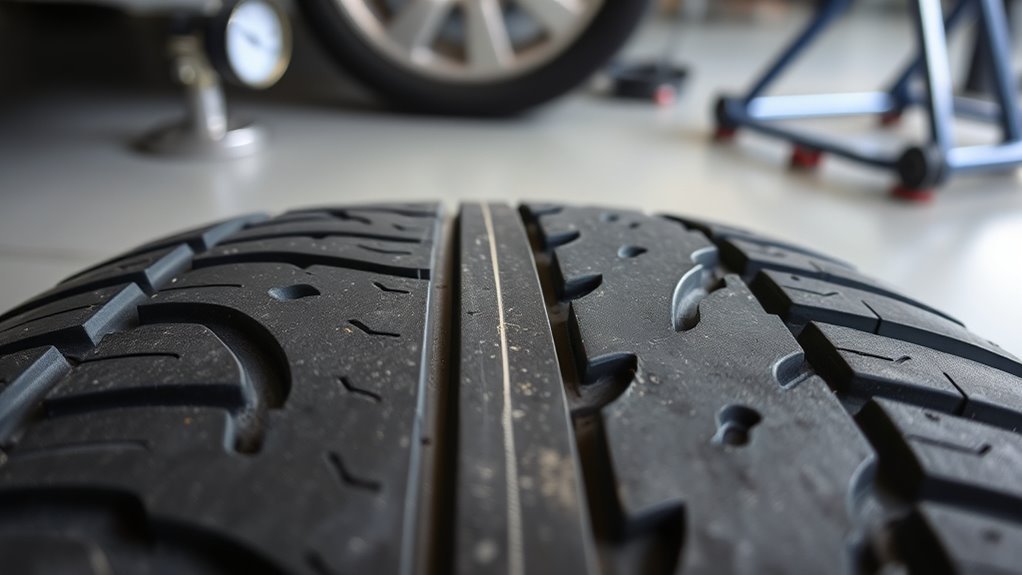
Center tire wear can make a tire look fine at the edges while the middle wears out fast. That pattern often points to overinflation, but alignment, load, balance, driving style, and heat can also speed up mid-rib wear. Use the checks below to confirm the pattern, correct the cause, and decide when the tire needs replacement.
Quick Answer
Center tire wear means the middle tread wears faster than the shoulders. Overinflation causes it most often because extra air pressure pushes the center of the tread harder against the road. Check cold tire pressure, compare center and shoulder tread depth, inspect alignment, and replace any tire that has unsafe tread depth or visible damage.
Key Takeaways
- Check cold tire pressure against the number listed by your vehicle maker, not the tire sidewall maximum.
- Measure tread depth at the center and both shoulders to confirm the wear pattern.
- Correct alignment, balance, load, and pressure issues before they damage the next tire.
- Replace tires with unsafe tread depth, exposed cords, bulges, cracks, or severe uneven wear.
What Center Tire Wear Looks Like and Why It Matters
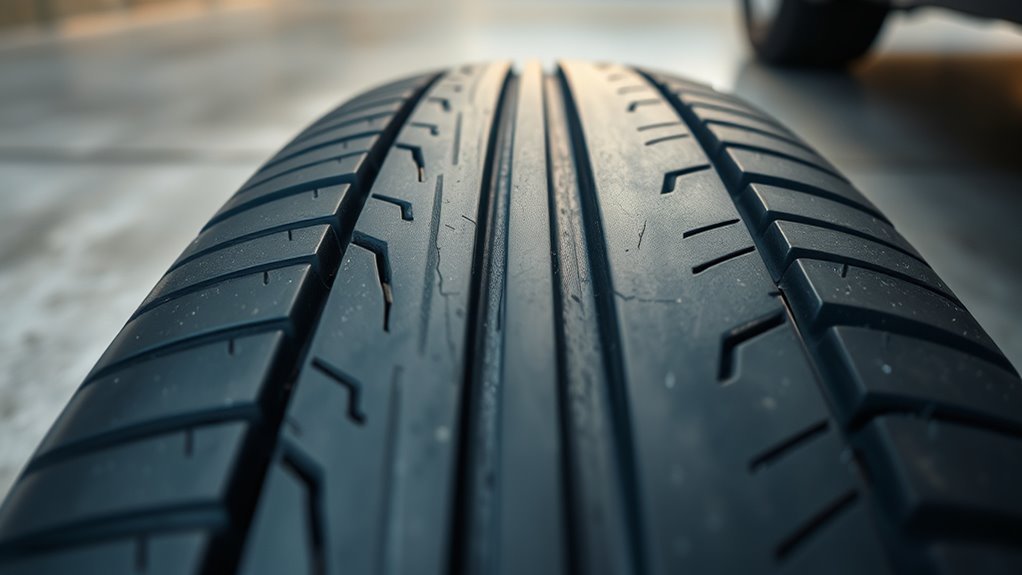
When the tread wears down mainly in the middle while the shoulders stay deeper, you have classic center tire wear. The center ribs may look flatter, smoother, or shallower than the outer ribs.
This pattern matters because the tire no longer shares road contact evenly across the tread. You may notice less wet grip, harsher ride feel, quicker heat buildup, or less steady steering.
Start with a simple check: measure the center tread and both shoulder ribs with a tread depth gauge. Then compare cold tire pressure with the pressure listed on the driver door placard or owner’s manual.
Why Center Tire Wear Happens: Overinflation, Alignment, and Driving
Overinflation causes center wear most often. Too much air can push the middle of the tread outward, which puts more load and abrasion on the center ribs.
Other faults can make the pattern worse. Incorrect toe, camber problems, poor tire balance, heavy loads, high speeds, and hard acceleration can all add heat and slip.
- Maintain the vehicle maker’s recommended tire pressure.
- Schedule an alignment when the vehicle pulls, the steering wheel sits off-center, or wear looks uneven.
- Inspect for toe or camber faults that shift load across the tread.
- Use smooth throttle, braking, and steering inputs to reduce heat and scrub.
- Track wear changes so you can fix small issues before they become unsafe.
How to Spot and Measure Center Tire Wear: Quick Checks
Start with a direct visual and hand check. Look for shallow tread in the middle ribs, then run your hand across the tread to feel for uneven depth or a rounded center.
Next, measure the tread with a depth gauge at three points: center rib, inner shoulder, and outer shoulder. A lower center reading than both shoulders confirms center wear.
Check the tire while it’s cold, before driving or after the vehicle has sat for several hours. Heat from driving can raise pressure and give you a false reading.
Note: The pressure on the tire sidewall shows the tire’s maximum limit, not the correct pressure for your vehicle.
Also inspect the tire for bulges, cracks, exposed cords, punctures, and uneven patches. Any of these signs call for prompt tire service.
[Products Worth Considering]

EVOULTES heavy duty tire inflator with an integrated gauge delivers accurate pressure readings from 10–120 PSI, helping you inflate, deflate, and check tires in one tool. The 16.5-inch extended dual-head air chuck with swivel base reaches hard-to-access dual wheel valves on trucks and RVs. A brass trigger core and side-mounted air release valve make operation smooth, with standard 1/4" NPT threading and quick-connect compatibility for easy setup.

This portable cordless tire inflator delivers up to 160 PSI with fast 17 L/min airflow to help you quickly top up tires and get back on the road. It features dual power mode, running on a 21V rechargeable battery or a 12V DC adapter for convenient roadside use. An automatic shut-off with digital pressure gauge helps prevent overinflation, and a built-in LED light improves visibility in low-light conditions.

The JACO FlowPro Tire Inflator measures, inflates, and airs down tires up to 100 PSI with battery-free operation and ±2% accuracy after calibration. It features a glowing pressure dial for night visibility, a heavy-duty steel build with a hybrid hose, and a precision push-to-inflate thumb trigger. The patented Lightning Air Chuck locks on for a secure seal, and the kit includes quick-connect hardware for easy inline use with your air compressor.
How to Fix Center Tire Wear Now: Pressure, Alignment, and Replacement
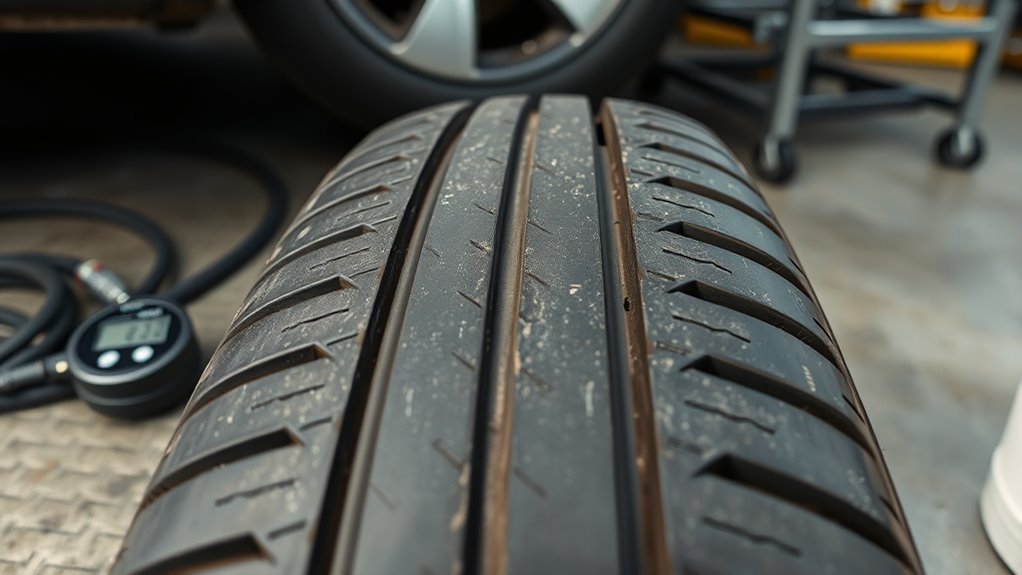
Once you confirm center wear, correct the cause before it damages more tread. Start by setting cold tire pressure to the vehicle maker’s specification.
Then inspect the tire and wheel system. If the wear continues after pressure correction, have a technician check alignment, balance, suspension parts, and load condition.
- Set cold tire pressure to the vehicle maker’s listed specification.
- Have a technician correct toe and camber faults if alignment is out of spec.
- Check tire balance if the vehicle shakes or the wear looks patchy.
- Replace any tire with unsafe tread depth, bulges, exposed cords, or major damage.
- Record pressure checks, rotations, alignment work, and tire age.
Warning: Do not keep driving on a tire with a bulge, exposed cords, or tread below the legal limit.
[Products Worth Considering]
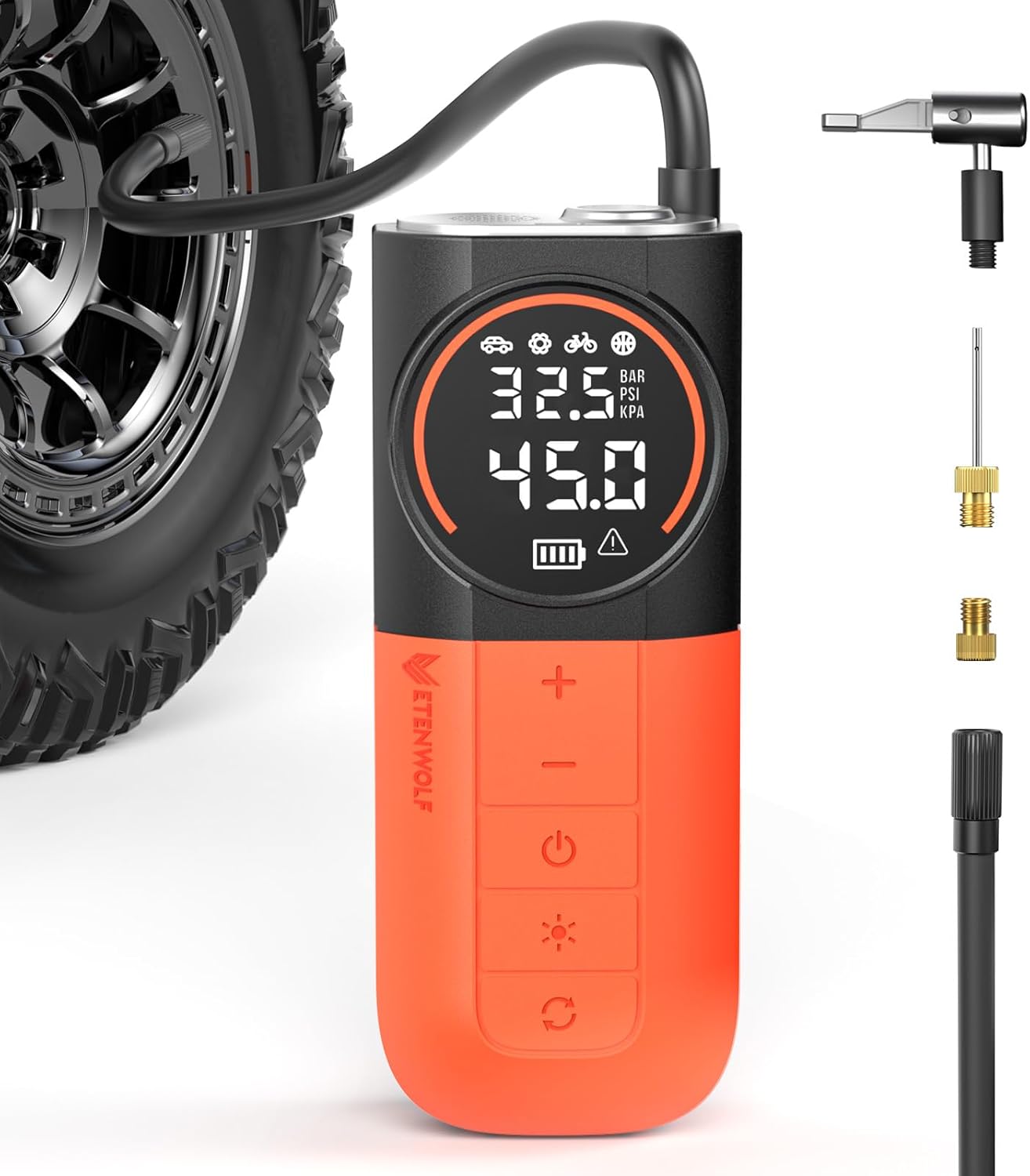
The ETENWOLF S1 cordless tire inflator delivers ultra-fast inflation with up to 160 PSI and a 20 L/min airflow for quicker tire top-offs. Its 5200mAh battery and cooling system support inflating many tires and sports balls on a single charge, while the digital pressure gauge and multi-unit display help you reach the right pressure accurately. With preset modes, pressure memory, an auto-stop feature, and an LED flashlight, it’s built for easy roadside and everyday use.

This portable cordless tire inflator delivers fast, efficient inflation for cars, motorcycles, bikes, and sports balls with a digital pressure gauge. Use the one-click PSI preset with auto shut-off for accurate, hands-free topping to your target pressure up to 150 PSI. It’s compact and rechargeable with a built-in emergency LED light plus valve adapters and accessories for quick, ready-to-go use.
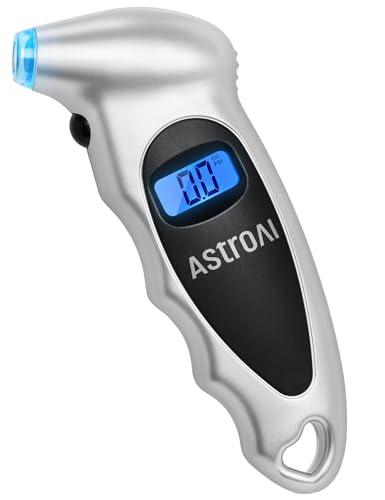
Accurate, Dependable Readings: Factory‑calibrated to ±1 PSI, so you can confidently match your vehicle’s recommended PSI (check the door jamb sticker). Ideal for monthly checks and road trips — consistent results every time, cold or warm.
How to Prevent Center Tire Wear: Rotation, Pressure, and Driving Habits
Prevent center tread wear with steady pressure checks, regular rotations, and smoother driving. Check pressure monthly with a quality gauge and adjust tires only when cold.
Rotate tires on the schedule in your owner’s manual, or about every 5,000 to 8,000 miles if your vehicle maker allows that range. Rotation helps spread normal wear across all tires.
Keep loads within the vehicle’s gross vehicle weight rating (GVWR). If you carry heavy cargo, balance the load and recheck tire pressure before long trips.
| Action | Target |
|---|---|
| Pressure monitoring | Vehicle maker’s listed pressure |
| Rotation | Owner’s manual schedule |
| Load control | Within GVWR |
| Driving input | Smooth acceleration and braking |
When Center Tire Wear Means You Need a New Tire
Pressure and alignment fixes can stop new wear, but they can’t rebuild lost tread. Replace the tire if the center tread has reached the legal limit or the wear bars sit flush with the tread.
You should also replace the tire if you see sidewall bulges, exposed cords, deep cracks, or severe vibration. Those signs can point to structural damage, not just normal tread wear.
If only one tire has heavy center wear, inspect the matching tire on the same axle too. Uneven tread depth across an axle can affect braking, traction, and handling.
[Products Worth Considering]
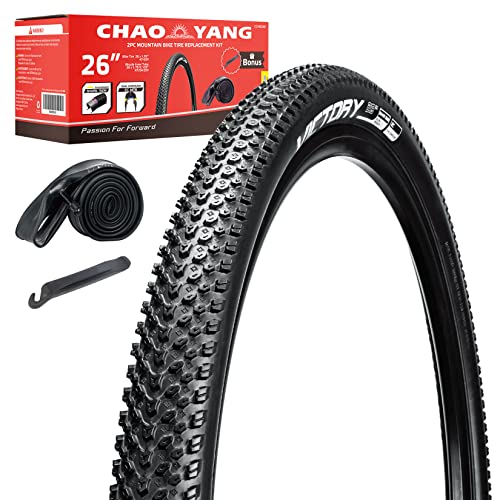
Product parameters: Size: 26’’×1.95(47-559); Pattern: H-5129; Weight: 1 LB; Max load: 198 LB; Min pressure: 270 Kpa (40 PSI); Max pressure: 440 Kpa (65 PSI)

Designed to be compatible with a 26" diameter internal rim, with widths ranging from 19mm to 29mm

Flat-Free Design: This 4.10/3.50-4 tire and wheel holds 440 lbs per unit, solid build eliminates punctures and the need for inflation, making it an ideal upgrade for hand trucks and dollies
Frequently Asked Questions
What causes the center of your tire to wear out?
Overinflation causes center tire wear most often because it puts more road force on the middle tread. Alignment faults, tire balance problems, heavy loads, high speeds, and aggressive driving can also speed up center wear.
What kind of tire wear does overinflation cause?
Overinflation usually causes faster wear along the center of the tread. It can also reduce ride comfort and traction because the tire does not contact the road as evenly.
Can you reverse center tire wear?
You can’t reverse lost tread. You can stop the pattern from getting worse by correcting tire pressure, alignment, balance, and load problems.
Should you lower tire pressure if the center tread is worn?
Do not guess or lower pressure below the vehicle maker’s specification. Set the tire to the cold pressure listed on the driver door placard or in the owner’s manual.
Is center tire wear dangerous?
Center tire wear can become dangerous when tread depth gets low or the tire shows damage. Low tread reduces wet grip and can make the vehicle harder to control in poor conditions.
Vehicle Safety Disclaimer: This article is for informational purposes only and does not replace advice from a qualified tire technician or mechanic. Have a professional inspect any tire with severe wear, vibration, bulges, exposed cords, or air loss.
Conclusion
Center tire wear usually means the tire has carried too much pressure or load through the middle tread. Check cold tire pressure first, then measure tread depth across the tire and inspect alignment if the pattern continues.
Replace any tire that no longer has safe tread depth or shows visible damage. With steady pressure checks, tire rotations, and smoother driving, you’ll get safer handling and longer tire life.

Related Articles
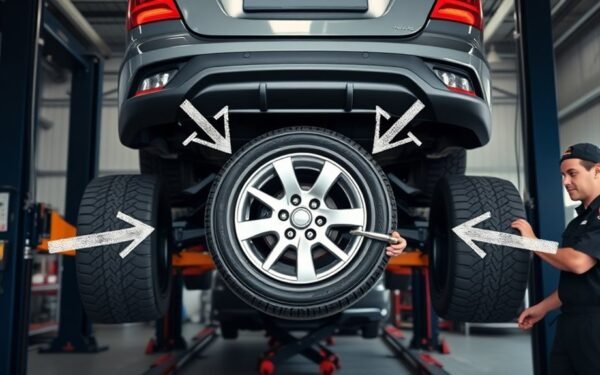
AWD Tire Rotation Pattern: How Often and How to Do It
W**ondering the right AWD tire rotation pattern and timing? Discover the simple method, ideal schedule, and mistakes to avoid before your tires wear unevenly.
Read More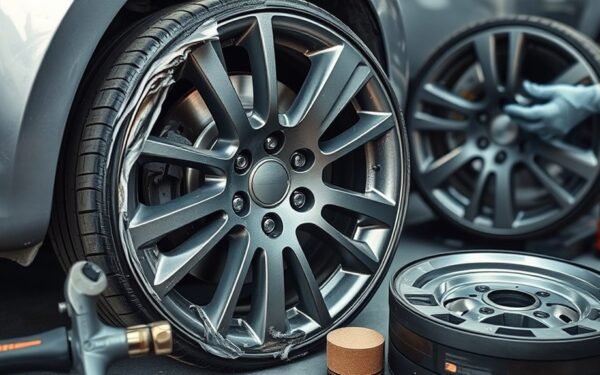
Wheel Damage: Types, Repair Options, and Costs
Many wheel damages look minor, but some hide costly safety risks—learn which repairs are worth it and when replacement is smarter.
Read More
Tire Balancing Weights: Types, Cost, and Why You Need Them
Precisely chosen tire balancing weights reduce vibration and wear, but which type fits your wheels and what it really costs may surprise you.
Read More
One Comment