
How to Clean Honda Accord Tires Without Damaging Them
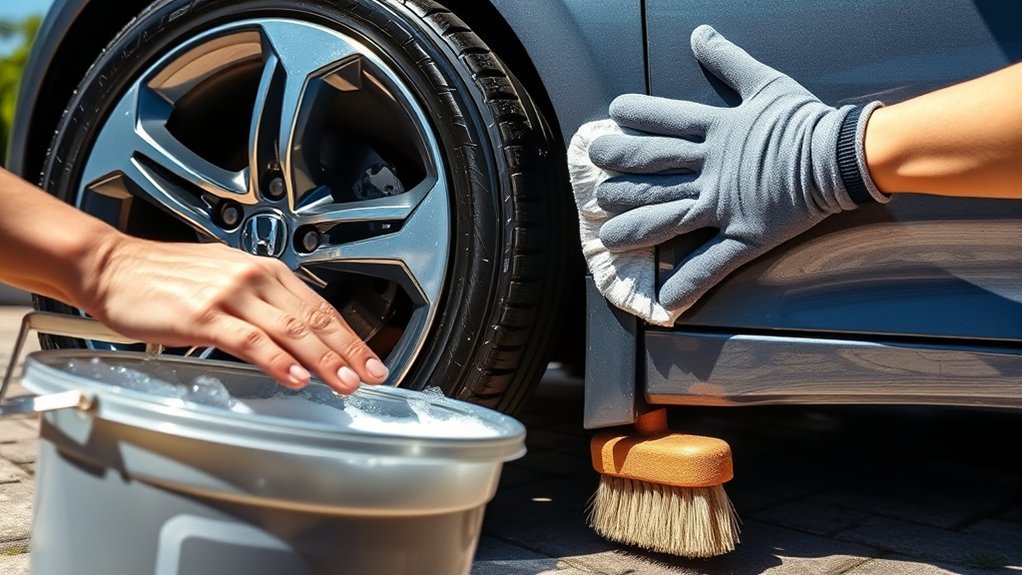
Cleaning your Honda Accord tires is not just about making the sidewalls look darker. A safe tire-cleaning routine removes road grime, brake dust, old dressing, and oily residue without weakening the rubber, staining the wheels, or leaving slippery product on the tread.
Quick Answer
To clean Honda Accord tires safely, let the tires cool, rinse away loose grit, scrub the sidewalls with a tire-safe cleaner and soft or medium tire brush, rinse fully, and dry with microfiber. Apply tire shine only to the sidewalls, never the tread, brake parts, or wheel surface.
Key Takeaways
- Clean tires when they are cool to the touch and out of direct sun so cleaner does not dry too fast.
- Use a tire-safe cleaner, a dedicated tire brush, clean water, and microfiber towels instead of harsh household chemicals.
- Rinse thoroughly because leftover cleaner can leave streaks, white residue, or discoloration.
- Use tire shine only on the sidewall. Product on the tread can reduce traction.
- After cleaning, inspect pressure, tread, cracks, bulges, and uneven wear as part of your regular tire-care routine.
At a Glance
| Time Required | 20 to 35 minutes for all four tires, plus cooling time after driving |
| Difficulty | Easy |
| Tools Needed | Hose or low-pressure sprayer, bucket, tire-safe cleaner, dedicated tire brush, microfiber towels, tire-shine applicator, gloves |
| Cost | About $10 to $30 if you already have a hose, towels, and a brush |
Prep Your Tires for Safe Cleaning
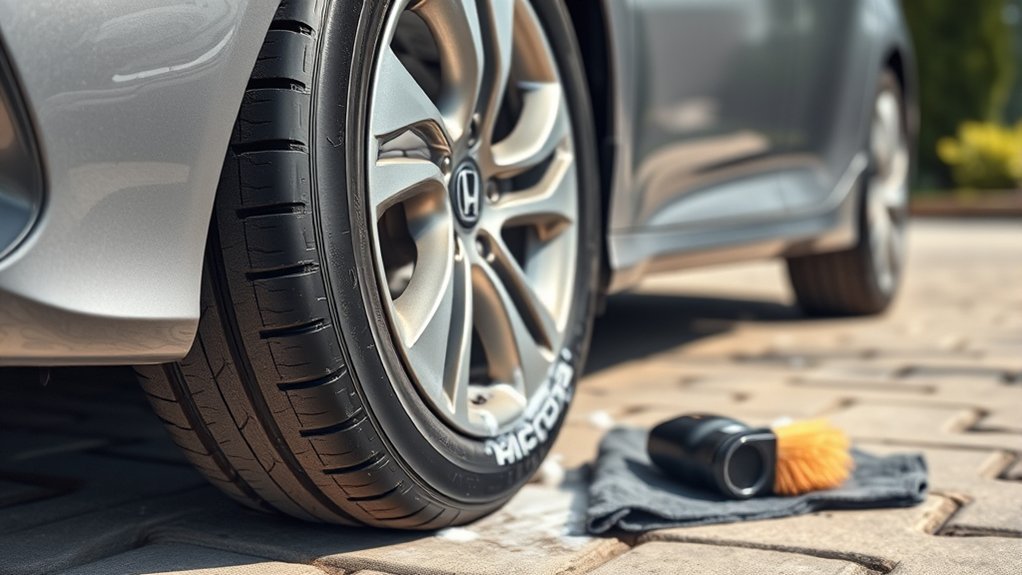
Before you clean your Honda Accord tires, park in a shaded spot and let the tires, wheels, and brakes cool. A tire that is only warm from normal driving may need 30 to 60 minutes before cleaning. If you plan to check tire pressure, wait until the tires are truly cold. NHTSA says cold tire pressure should be checked when the vehicle has not been driven for at least three hours.
Do a quick inspection before water or cleaner touches the tire. Look for cracks, cuts, bulges, exposed cords, nails, screws, uneven wear, or a TPMS warning light. Cleaning will not fix a damaged tire. If you see sidewall damage, a deep cut, or a bulge, have the tire checked by a qualified tire professional before driving far.
Warning: Do not spray cold water or cleaner onto very hot wheels, brake rotors, or tires right after a hard drive. Let everything cool first to reduce the risk of streaking, cleaner residue, and thermal stress on wheel finishes.
[Products Worth Considering]

Adam’s Pro Tire Hex Grip applicators are molded foam sponges designed for precise, even tire dressing application. The ergonomic grip helps you spread product without overapplying, reducing sling that can splash onto paint and helping keep your hands clean during wheel and trim detailing. They’re durable, washable, and reusable for repeated detailing sessions.

This oesee 8-piece wheel care kit helps you clean, scrub, and dry wheels safely with purpose-built brushes and towels. The scratch-free microfiber wheel brush lifts brake dust and grime, while the stiff pro-grip tire brush removes tire browning and embedded dirt. A twist loop microfiber drying towel and an applicator help achieve a streak-free finish and cleaner, more even product application.

Blackline Blackout is a water-based trim and tire dressing that restores rubber, vinyl, and plastic with a rich satin, blackout look. Its no-sling formula dries quickly and helps prevent messy transfer onto paint. The coating repels water and offers UV protection to help prevent fading, cracking, and discoloration for a clean, long-lasting finish.
Gather the Right Tire Cleaning Supplies
You do not need a professional detailing kit, but using the right supplies helps prevent scratches, residue, and tire browning. Keep your tire tools separate from your paint tools because tires and lower wheel areas collect heavy grit.
| Supply | Why It Helps |
|---|---|
| Tire-safe cleaner | Breaks down road film, old tire dressing, and grime without relying on harsh household cleaners. |
| Dedicated tire brush | Scrubs textured sidewalls without using a brush that may later scratch paint. |
| Microfiber towels | Dry the sidewalls and wheel edges without leaving lint or water spots. |
| Foam applicator pad | Controls tire shine so it stays on the sidewall instead of the tread, wheel, or brake area. |
| Gloves | Keep cleaner, brake dust, and old dressing off your hands. |
Note: If your Accord has aftermarket wheels, matte wheels, chrome wheels, or damaged clear coat, test any cleaner on a small hidden area first and follow the wheel manufacturer’s directions.
Step-by-Step Guide to Cleaning Your Tires
Work on one tire at a time so the cleaner does not dry on the rubber or wheel. This method works for normal road grime, light browning, and old tire dressing.
- Pre-rinse the tire and wheel. Use clean water to remove loose dirt, sand, and brake dust. Rinse the tread blocks, sidewall, valve stem area, lug area, and lower wheel barrel.
- Apply tire cleaner to the sidewall. Spray the cleaner onto the rubber, not into the brakes. Let it dwell only as long as the label recommends.
- Scrub the sidewall. Use a dedicated tire brush and moderate pressure. Do not use a wire brush or abrasive pad on rubber or wheel finishes.
- Rinse thoroughly. Rinse until the foam, brown runoff, and cleaner residue are gone. Leftover cleaner can dry into streaks or white marks.
- Repeat if needed. If the tire still looks brown or greasy, clean it a second time instead of using a stronger chemical right away.
- Dry the tire and wheel. Use a microfiber towel to dry the sidewall, wheel face, lug area, and valve stem area.
Pro Tip: If your tire brush turns your rinse water dark brown, that is often old dressing and tire bloom coming off the rubber. Keep rinsing the brush and repeat the cleaning pass until the foam looks cleaner.
Select the Best Cleaning Products for Your Honda Accord Tires
The safest cleaner is one that is labeled for automotive tires and compatible with your wheel finish. Avoid strong household degreasers, undiluted all-purpose cleaners, and abrasive powders unless the product label clearly says they are safe for rubber and your specific wheel finish.
| Product Type | Best Use | Caution |
|---|---|---|
| Dedicated tire cleaner | Routine sidewall cleaning, old dressing, road film, and brown residue | Do not let it dry on the tire or wheel. |
| pH-balanced car wash soap | Light maintenance cleaning when tires are not heavily stained | May not remove old silicone dressing or heavy grime. |
| Wheel cleaner | Brake dust and wheel-face grime | Use only if it is safe for your wheel finish. Keep strong wheel cleaners off bare or damaged metal. |
| Water-based tire dressing | Clean satin or mild-gloss sidewall finish | Apply thinly and wipe excess to reduce sling. |
| Dish soap | Emergency light wash only if nothing else is available | Not ideal for regular vehicle washing because it can remove wax or sealant from nearby painted and wheel surfaces. |
Proven Methods to Eliminate Stains and Grime on Tires
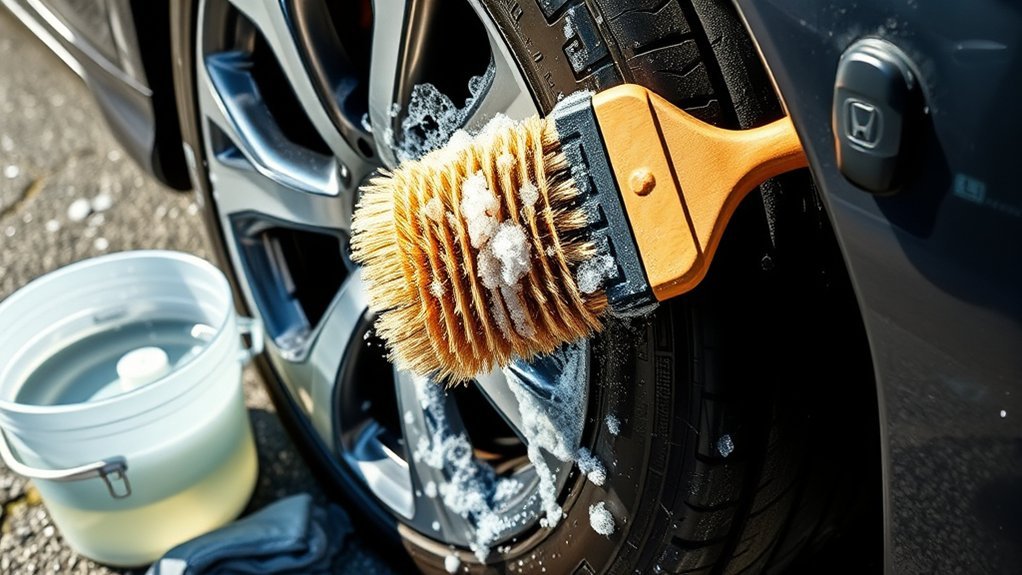
Most tire stains come from road grime, brake dust, old dressing, tire bloom, mud, or residue from cleaners that were not rinsed fully. The fix depends on what you see after the first wash.
Brown Tire Sidewalls
Brown sidewalls are often caused by tire bloom, old dressing, or grime trapped in textured lettering. Clean the sidewall twice with a tire-safe cleaner and brush, rinsing fully between passes. Do not jump straight to harsh degreasers, because aggressive cleaners can stain wheels or dry out rubber when misused.
Mud and Road Film
For mud, rinse first until loose grit is gone. Scrubbing before rinsing can drag sand across the sidewall and wheel finish. After the rinse, apply tire cleaner, let it dwell briefly, scrub, and rinse again.
Old Tire Shine or Greasy Residue
If the sidewall feels oily, use a dedicated tire cleaner and a second cleaning pass. Greasy dressing residue can prevent new tire shine from bonding evenly, which leads to blotchy shine or sling on the fender after driving.
White Residue After Cleaning
White streaks usually mean cleaner dried on the tire or was not rinsed fully. Re-wet the tire, scrub lightly, rinse longer, and dry with a microfiber towel.
Rinse and Dry Your Tires Correctly
Rinsing is where many tire-cleaning jobs succeed or fail. A quick splash is not enough after using tire cleaner. Rinse the sidewall, tread edge, wheel face, valve stem, lug nut pockets, and lower wheel barrel until the water runs clear.
Proper Rinse Techniques
- Start high and work down. Rinse the wheel face, then the tire sidewall, then the tread edge.
- Use controlled pressure. A normal hose or wide fan spray is safer than blasting the tire from inches away.
- Avoid spraying directly into sensitive areas. Do not aim high pressure directly at valve stems, wheel weights, brake components, or damaged wheel clear coat.
- Check for leftover foam. Cleaner can hide in raised lettering and rim edges.
Effective Drying Methods
Dry the sidewalls before applying tire dressing. Moisture left on the rubber can dilute the dressing and cause patchy shine. Use an older microfiber towel dedicated to tires and wheels. Dry around the valve stem and lug nuts too, because trapped water can leave mineral spots on the wheel finish.
How Often Should You Clean Your Tires?
For most Honda Accord daily drivers, cleaning the tires every 2 to 4 weeks works well for appearance and grime control. Clean sooner if you drive through road salt, mud, construction dust, oily puddles, or heavy brake dust. If the car is garaged and lightly driven, cleaning with each normal wash may be enough.
Cleaning is separate from tire safety inspection. NHTSA recommends checking tire pressure and tread at least once a month. Proper pressure also matters for fuel economy and tire life. FuelEconomy.gov notes that properly inflated tires are safer, last longer, and can improve gas mileage.
A clean tire is easier to inspect. After washing, take one minute to check for cracks, bulges, nails, uneven wear, and low-pressure warnings.
[Products Worth Considering]

This wheel brush kit delivers pro-level cleaning at home, lifting dirt, grime, and brake dust to help restore wheel appearance. It includes multiple brush styles and applicator pads for tackling different wheel surfaces, with gentle, metal-free bristles designed to reduce scratching risk. The flat and double-ended brushes are built for comfort and reach, making wheel care easier for cars, trucks, and RVs.

Cristal Products Untouchable Tire Shine Spray delivers a deep, wet-look gloss that enhances your vehicle’s tires. It’s quick-drying and spreads smoothly for consistent, streak-free coverage, while forming a protective coating against UV rays, road grime, and weather. Suitable for all tire types, it helps restore dull, faded tires to a showroom-quality finish.
Apply Tire Shine Safely for Best Results
Tire shine can improve the look of your Honda Accord tires, but it must be applied carefully. Start with tires that are clean and dry. Put a small amount of dressing on a foam applicator, spread it thinly over the sidewall, and wipe away excess product after a few minutes.
Warning: Never apply tire shine to the tread. The tread is the part of the tire that grips the road, especially in wet conditions. Also keep dressing off brake rotors, brake pads, pedals, and the wheel face unless the product label says it is safe for that surface.
For the cleanest finish, choose the level of shine you actually want. A satin finish often looks closer to new rubber, while heavy gloss can sling onto paint if applied too thickly or driven before it dries. If product lands on the tread edge, wipe it off before driving.
Common Tire Cleaning Mistakes to Avoid
- Cleaning in direct sun: Heat can make cleaner dry too fast and leave residue.
- Using the same brush on tires and paint: Tire grit can scratch painted panels.
- Letting cleaner dry: Dried cleaner can stain rubber or wheel finishes.
- Using a wire brush: It can damage rubber, lettering, and wheel coatings.
- Overusing tire shine: Thick dressing can sling onto paint and attract dust.
- Skipping the rinse: Residue left in sidewall lettering can create white streaks.
- Ignoring damage: Cleaning should never replace inspection for cuts, bulges, cracks, or exposed cords.
Post-Cleaning Safety Check
Once the tires are clean and dry, check the basics. Look at the tread depth, scan the sidewalls for cracks or bulges, and inspect for nails or screws. If you plan to check pressure, use a gauge when the tires are cold. Bridgestone explains that vehicle manufacturers specify tire pressure for cold tires and recommends checking pressure monthly.
Use the tire pressure shown on the Accord’s driver-side doorjamb label or owner’s manual, not the maximum pressure printed on the tire sidewall. If the TPMS light is on, check pressure as soon as possible and inspect the tire for damage.
Frequently Asked Questions
Can I wash my tires with Dawn dish soap?
It is better not to use Dawn dish soap as your regular tire cleaner. A few diluted drops in an emergency light wash are unlikely to ruin a tire, but dish soap is made to cut grease and may remove wax or sealant from nearby painted and wheel surfaces. A tire-safe cleaner or pH-balanced car wash soap is the better choice.
Can I use a pressure washer on Honda Accord tires?
Yes, but use care. Keep the nozzle back, use a wide fan spray, and avoid blasting the valve stem, wheel weights, brake parts, or damaged wheel finish from close range. A normal hose is safer for routine tire cleaning.
Why do my tires still look brown after cleaning?
Brown sidewalls can come from tire bloom, embedded road grime, brake dust, or old tire dressing. Clean the tire a second time with a tire-safe cleaner and brush, rinse fully, and let it dry before applying dressing.
Should I clean the tread too?
You can rinse mud and loose debris from the tread, but do not apply tire shine or dressing to it. The tread must stay clean and dry enough to grip the road.
How long should tire shine dry before driving?
Follow the product label, but many dressings need several minutes to set. Wipe excess product from the sidewall before driving to reduce sling onto the fender and doors.
Conclusion
Cleaning your Honda Accord tires safely comes down to the right order: cool the tires, inspect them, rinse away grit, use a tire-safe cleaner, scrub with a dedicated brush, rinse fully, dry with microfiber, and apply dressing only to the sidewalls. Keep the process simple and consistent, and your tires will look better while staying easier to inspect for pressure, tread wear, cracks, bulges, and road damage.
Sources
- NHTSA TireWise — tire pressure, tread, rotation, tire aging, and tire safety guidance.
- Bridgestone: How to Check Tire Pressure — cold-tire pressure, monthly checks, and proper inflation guidance.
- FuelEconomy.gov: Keeping Your Vehicle in Shape — proper tire inflation, fuel economy, and tire-life benefits.

Related Articles
How Tall Is a 305 70 R17 Tire? Exact Height, Width & Dimensions
Curious how tall a 305 70 R17 tire really is—and whether it fits your truck?
Read More
Can-Am Defender Tire Size Guide: Stock Specs & Upgrade Options
Just how big can you go on a Can-Am Defender before mods become necessary?
Read More
How Tall Is a 275 65 20 Tire? Exact Height, Width & Dimensions
Check the exact height, width, and hidden fitment effects of a 275/65R20 tire before you buy or upgrade.
Read More