
When to Swap Summer Tires for Winter on Your Honda Accord

When the forecast starts showing steady cold, snow, freezing rain, or icy morning roads, your Honda Accord needs tires that can stay flexible and grip in winter conditions. A good rule is to switch to winter tires when daily driving temperatures are consistently around 7°C (45°F) or lower, and always before the first real snowfall or ice event.
Quick Answer
Put winter tires on your Honda Accord when regular driving temperatures stay near or below 7°C (45°F), or earlier if snow, freezing rain, or icy mornings are in the forecast. In cold climates, that usually means booking the swap in October or early November rather than waiting for the first storm.
Key Takeaways
- Use 7°C (45°F) as the main temperature trigger for switching to winter tires.
- Install four matching winter tires, not just two, for balanced braking, steering, and stability.
- Check your Honda Accord’s driver-door tire placard or owner’s manual for the correct tire size and cold tire pressure.
- In Quebec, most registered passenger vehicles must have compliant winter tires from December 1 to March 15.
- Remove winter tires in spring only after temperatures are consistently above 7°C (45°F) and winter weather risk has passed.
At a Glance
| Time Required | 30–60 minutes at a tire shop; longer if wheels need mounting or TPMS service. |
| Difficulty | Easy if done by a shop; moderate if you swap mounted wheels at home with proper tools. |
| Tools Needed | Tire pressure gauge, tread depth gauge, torque wrench, jack and stands if swapping mounted wheels yourself. |
| Cost | Varies by tire size, wheel setup, mounting, balancing, storage, and TPMS needs. |
When Should You Swap to Winter Tires on Your Honda Accord?

You should swap your Honda Accord to winter tires when temperatures are consistently around 7°C (45°F) or lower, especially if your commute happens early in the morning or at night. That is when cold pavement, frost, slush, and light snow can reduce the grip of tires that are not designed for winter driving.
Do not wait for the first snowfall. Tire shops often book up quickly after the first storm warning, and driving on the wrong tires during that rush can leave you with weaker braking and less control. In many cold-weather regions, the practical window is late October through mid-November, but your local forecast matters more than the calendar.
Warning: Do not install only two winter tires on a Honda Accord. Mixing winter tires on one axle with non-winter tires on the other can make the car harder to control during braking, cornering, or emergency maneuvers. Use four matching winter tires whenever possible.
[Products Worth Considering]

The JACO FlowPro Tire Inflator measures, inflates, and airs down tires up to 100 PSI with battery-free operation and ±2% accuracy after calibration. It features a glowing pressure dial for night visibility, a heavy-duty steel build with a hybrid hose, and a precision push-to-inflate thumb trigger. The patented Lightning Air Chuck locks on for a secure seal, and the kit includes quick-connect hardware for easy inline use with your air compressor.

EVOULTES heavy duty tire inflator with an integrated gauge delivers accurate pressure readings from 10–120 PSI, helping you inflate, deflate, and check tires in one tool. The 16.5-inch extended dual-head air chuck with swivel base reaches hard-to-access dual wheel valves on trucks and RVs. A brass trigger core and side-mounted air release valve make operation smooth, with standard 1/4" NPT threading and quick-connect compatibility for easy setup.

This multi-function tire valve stem removal tool set makes it fast to remove, install, bleed, and clean valve cores for easier tire maintenance. It includes valve core removers, a 4-way spool tool, replacement valve caps, and spare cores to handle replacements and repairs with confidence. Universal compatibility suits cars, trucks, motorcycles, bicycles, and more for roadside convenience.
How to Identify When to Switch to Winter Tires
Use three signals together: temperature, forecast, and road conditions. If any one of them points toward winter driving, book the tire change early.
| Signal | What It Means | Action |
|---|---|---|
| Temperatures near 7°C / 45°F | Winter tires begin to make sense for regular driving. | Book or complete the swap. |
| Frosty mornings | Bridges, shaded roads, and ramps may be slick. | Switch before icy commutes become routine. |
| Snow or freezing rain forecast | Road conditions can change quickly. | Do not wait for accumulation. |
| Quebec winter-tire period approaching | Legal compliance matters in addition to safety. | Install before December 1 if the rule applies to your vehicle. |
For your Accord, also check the tire size and load rating before buying. The correct size is listed on the driver-side door placard and in the owner’s manual. If your winter tires are on separate wheels, confirm the wheel size, bolt pattern, offset, and TPMS setup are compatible with your model year.
Pro Tip: Book your winter tire appointment when the 10-day forecast first shows steady temperatures near 7°C (45°F), not when snow is already falling. You will avoid the rush and get safer traction before conditions turn messy.
What Temperature Signals Winter Tire Use?
The simplest winter-tire rule is this: when your normal driving temperatures stay around 7°C (45°F) or lower, winter tires are the safer choice. That does not mean your Accord becomes unsafe the moment the thermometer touches 45°F, but it does mean cold-weather tire performance should be part of your decision.
Temperature Thresholds Explained
Winter tires use rubber compounds and tread designs intended for cold pavement, snow, slush, and ice. Summer tires are designed for warm-weather grip and are not meant for freezing roads. All-season tires cover a wider range, but they still do not match the cold-weather traction of dedicated winter tires in snow and ice.
If daytime temperatures hover above 7°C (45°F) but your commute happens at dawn when roads are frosty, treat the colder commuting temperature as your real guide. Bridges, shaded roads, and elevated ramps can freeze before open pavement.
Seasonal Weather Patterns
Seasonal timing depends on where you drive. A Honda Accord in Montreal, Ottawa, Minneapolis, or Denver may need winter tires weeks earlier than one in a milder region that only sees occasional cold snaps. Watch for repeated frost, early snow warnings, and nighttime lows that stay below freezing.
| Condition | Best Tire Decision |
|---|---|
| Consistently above 7°C / 45°F with no winter forecast | Winter tires are usually not needed yet. |
| Near 7°C / 45°F for several days | Schedule the winter tire swap. |
| Below freezing overnight | Switch if you drive early or on shaded roads. |
| Snow, slush, ice, or freezing rain forecast | Install winter tires before the weather arrives. |
Why Timing Your Tire Switch Matters
Good timing gives you traction before you need it. Waiting until after the first storm means you may drive through the riskiest early-winter conditions on tires that are not ideal for cold roads. Switching too late also means longer shop wait times and less flexibility if your tires need mounting, balancing, or replacement.
Switching too early can also be a problem. Winter tires are softer than warm-weather tires, so long stretches of warm pavement can increase wear and make the car feel less precise. That is why the 7°C (45°F) guideline works better than a fixed calendar date for most drivers.
How Winter Tires Improve Your Driving Safety
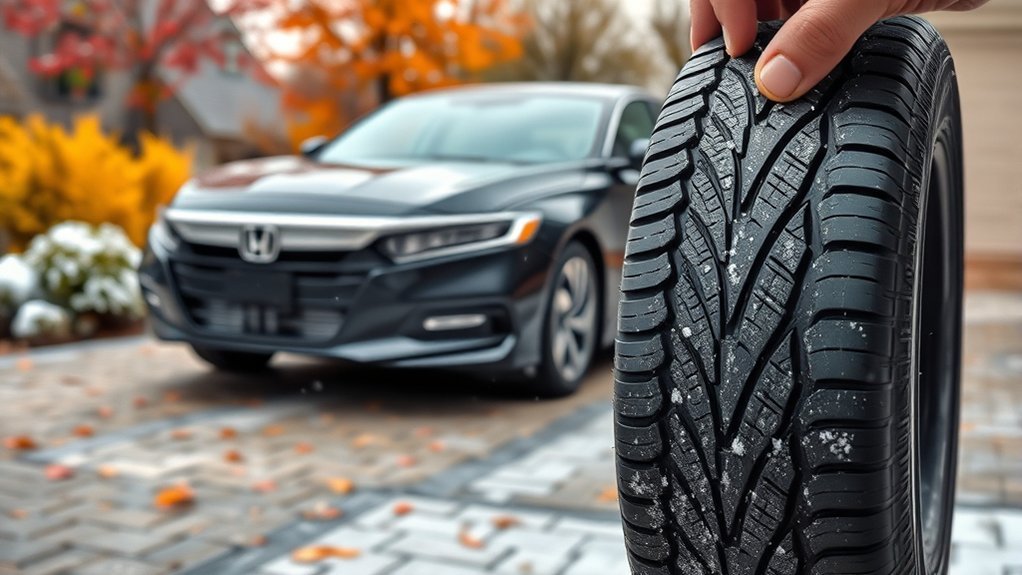
Winter tires improve safety by helping your Accord maintain grip on cold, snowy, slushy, and icy roads. Their tread blocks, grooves, and sipes are designed to bite into winter surfaces and move slush away from the contact patch. Their rubber compounds are also built to stay more flexible in cold weather than tires designed mainly for warm pavement.
Enhanced Traction and Control
On snow and slush, winter tires can help your Honda Accord start, steer, and stop with more confidence. The tread pattern creates more biting edges than a typical summer tire, and the deeper grooves help manage snow and water.
- More biting edges help grip packed snow.
- Open tread channels help move slush and water.
- Cold-weather rubber helps the tread stay flexible.
- Using four matching tires keeps front and rear grip balanced.
Better Braking Performance in Winter Conditions
Winter tires can shorten stopping distances in many cold-weather conditions compared with tires not designed for winter use. Exact stopping distance depends on road surface, speed, tire model, tread depth, vehicle load, and driver reaction time, so avoid relying on a single percentage claim.
| Feature | Why It Helps |
|---|---|
| Cold-weather compound | Helps the tire stay flexible as temperatures fall. |
| Deep grooves | Help evacuate snow, slush, and water. |
| Sipes | Create extra biting edges for snow and ice. |
| Four-tire installation | Keeps braking and cornering more balanced. |
Optimized Handling in Winter
A Honda Accord is a front-wheel-drive sedan in many trims, which helps with traction when accelerating, but it does not replace winter tires. Front-wheel drive does not improve the grip of the rear tires during braking or cornering. That is why all four tires need to be suited to winter conditions.
How to Choose Winter Tires for a Honda Accord
Choose winter tires that match your Accord’s size, load rating, and driving conditions. Start with the Tire and Loading Information Label on the driver-side door jamb, then confirm the details in your owner’s manual or with a qualified tire professional.
- Look for the 3PMSF symbol: The three-peak mountain snowflake mark identifies tires designed for severe snow service.
- Do not rely on M+S alone: M+S means mud and snow tread characteristics, but it is not the same as a dedicated winter tire rating.
- Match all four tires: Use the same winter tire model, size, and tread depth range on all four corners when possible.
- Check wheel compatibility: If you buy a second wheel set, confirm wheel diameter, width, bolt pattern, offset, and TPMS compatibility.
- Match your climate: Ice-heavy regions may need tires focused on ice grip, while deep-snow regions may need a more aggressive snow tread.
Note: Some winter tires have lower speed ratings than performance all-season or summer tires. That is normal, but you should still choose a tire that meets your vehicle’s load requirements and your driving needs.
Legal Rules for Winter Tire Use in Quebec: What You Need to Know
In Quebec, most registered passenger vehicles must be equipped with compliant winter tires from December 1 to March 15. To be compliant, winter tires generally need the three-peak mountain snowflake pictogram or must be studded where allowed. You can review the current Government of Quebec winter tire requirements before the season starts.
| Requirement | Details |
|---|---|
| Mandatory Period | December 1 to March 15 for most Quebec-registered passenger vehicles. |
| Recommended Installation | Before December 1, and earlier if temperatures or forecasts call for winter conditions. |
| Compliant Marking | Look for the three-peak mountain snowflake pictogram or approved studded tires. |
| Post-March Decision | Do not switch back until temperatures are consistently above 7°C (45°F) and winter weather risk has passed. |
| Outside Quebec | Check your province, state, or local road requirements because rules vary. |
[Products Worth Considering]

This portable cordless tire inflator delivers up to 160 PSI with fast 17 L/min airflow to help you quickly top up tires and get back on the road. It features dual power mode, running on a 21V rechargeable battery or a 12V DC adapter for convenient roadside use. An automatic shut-off with digital pressure gauge helps prevent overinflation, and a built-in LED light improves visibility in low-light conditions.

This portable cordless tire inflator delivers fast, efficient inflation for cars, motorcycles, bikes, and sports balls with a digital pressure gauge. Use the one-click PSI preset with auto shut-off for accurate, hands-free topping to your target pressure up to 150 PSI. It’s compact and rechargeable with a built-in emergency LED light plus valve adapters and accessories for quick, ready-to-go use.
Debunking Myths About Winter Tires
Winter tires are simple, but a few common myths can lead to unsafe choices.
- Myth: All-season tires are always enough. Reality: all-season tires may work in mild conditions, but dedicated winter tires are built for snow, ice, slush, and colder pavement.
- Myth: Front-wheel drive means you do not need winter tires. Reality: front-wheel drive can help acceleration, but it does not replace tire grip for braking and cornering.
- Myth: Two winter tires are fine. Reality: installing only two can create uneven grip and unstable handling. Use four matching winter tires.
- Myth: Winter tires should stay on all year. Reality: warm pavement can wear winter tires faster and reduce crisp handling.
- Myth: You should wait for the first snowfall. Reality: cold rain, frost, and black ice can arrive before visible snow accumulation.
Tips for Maintaining Your Winter Tires
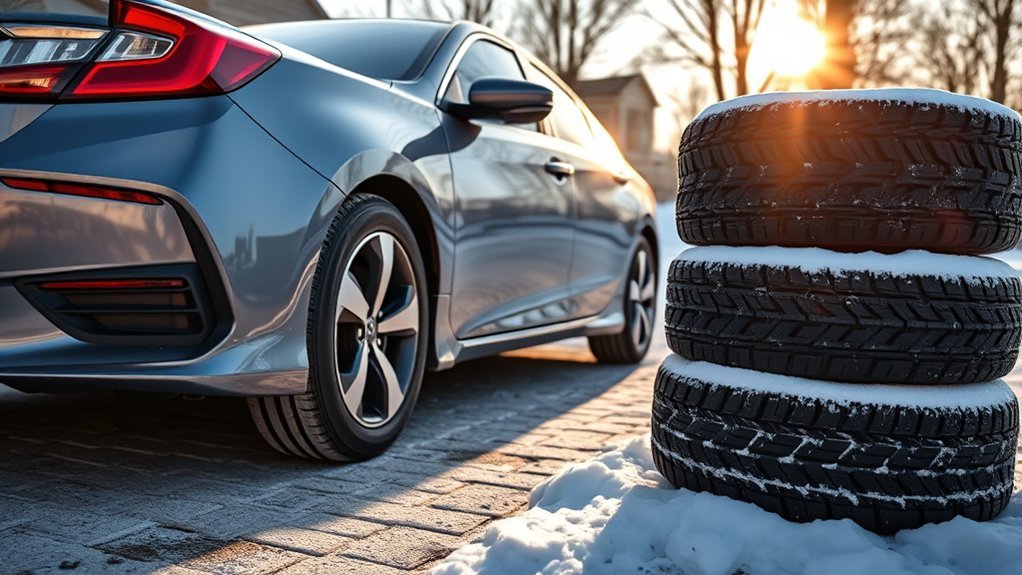
Winter tires still need regular maintenance. Cold air lowers tire pressure, potholes can damage wheels, and worn tread reduces winter grip.
| Maintenance Tip | Details |
|---|---|
| Check Cold Tire Pressure | Use the pressure on your Honda Accord’s door placard or owner’s manual, not the number molded on the tire sidewall. The NHTSA TireWise guide recommends checking pressure monthly when tires are cold. |
| Inspect Tread Depth | Replace tires that are at the legal wear limit, and consider more tread depth for winter traction before deep snow season. |
| Rotate Tires | Follow the Honda owner’s manual. Many vehicles use a 5,000–8,000 mile rotation interval when rotation is recommended. |
| Watch TPMS | If the TPMS light appears after a tire swap or cold morning, check pressure with a gauge and recalibrate or service the system if required. |
| Store Tires Properly | Store off-season tires in a cool, dry, shaded place away from oil, solvents, and direct sunlight. |
When to Switch Back to All-Season or Summer Tires
Switch back when temperatures are consistently above 7°C (45°F) and the risk of snow, freezing rain, and icy mornings has passed. In many colder regions, March can still be too early even if the legal winter-tire period has ended. April is often a safer target, but the forecast should decide.
If your winter tires stay on during warm weather, they may wear faster and feel less responsive. If you use summer tires, be especially careful not to reinstall them while overnight temperatures are still near freezing.
Frequently Asked Questions
Is October too early to put winter tires on?
October is not too early if temperatures are already near 7°C (45°F), frost is showing up, or snow is in the forecast. In warmer regions, wait until the cold pattern is consistent so you do not wear the tires unnecessarily on warm pavement.
What is the 7/7 rule for winter tires?
The 7/7 rule means switching when temperatures are around 7°C (45°F) for about seven straight days. It is a practical planning rule, not a law. If snow, freezing rain, or icy mornings are forecast sooner, switch earlier.
Is March too early for summer tires?
March can be too early in cold climates. Wait until temperatures are consistently above 7°C (45°F) and the forecast no longer shows snow, freezing rain, or icy mornings. If you live in Quebec, also keep the legal winter-tire period in mind.
What month do you put summer tires on?
Many drivers switch to summer tires in April, but the right month depends on your climate. Use the forecast, not the calendar. Summer tires should go back on only after cold snaps and freezing mornings are unlikely.
Do I need winter tires on all four wheels of a Honda Accord?
Yes. Use four matching winter tires. Installing winter tires only on the front can create uneven grip between the front and rear of the car, which can make the Accord less stable during braking or cornering.
How do I know which winter tire size fits my Honda Accord?
Check the Tire and Loading Information Label on the driver-side door jamb and confirm the tire size in your owner’s manual. If you use separate winter wheels, confirm wheel fitment and TPMS compatibility before installation.
Conclusion
For a Honda Accord, the best time to switch to winter tires is when your regular driving temperatures stay around 7°C (45°F) or lower, or before snow, freezing rain, frost, or icy roads arrive. Use four matching winter tires, check your Accord’s tire placard for size and cold pressure, and follow local laws such as Quebec’s December 1 to March 15 winter-tire requirement. Smart timing gives you safer cold-weather grip without wasting tread on warm pavement.
Sources
- Government of Quebec — Requirements for winter tires — backs up Quebec’s mandatory winter-tire period and compliant tire markings.
- NHTSA TireWise — backs up tire pressure, tread, tire size, rotation, and tire-maintenance guidance.
- U.S. Tire Manufacturers Association — Application of Winter/Snow Tires — backs up using winter tires as a full set for balanced vehicle handling.
- UNECE Regulation No. 117 — backs up severe snow tire and winter tire marking standards.

Related Articles
How Tall Is a 305 70 R17 Tire? Exact Height, Width & Dimensions
Curious how tall a 305 70 R17 tire really is—and whether it fits your truck?
Read More
Can-Am Defender Tire Size Guide: Stock Specs & Upgrade Options
Just how big can you go on a Can-Am Defender before mods become necessary?
Read More
How Tall Is a 275 65 20 Tire? Exact Height, Width & Dimensions
Check the exact height, width, and hidden fitment effects of a 275/65R20 tire before you buy or upgrade.
Read More