
Disclosure: As an Amazon Associate, we earn from qualifying purchases. If you click a link on this page and make a purchase, we may receive a small commission at no extra cost to you.
A slow tire leak can leave you choosing between a spare, roadside assistance, or a temporary seal that gets you out of immediate trouble. The Tire Repair Nails Kit gives you 20 screw-in plugs in two sizes, a screwdriver, and a compact storage box for tubeless-tire emergencies. Its main strengths are portability and simple outside-in installation, but it is not an industry-approved permanent repair. This review explains what is included, where the plugs may help, and the safety limits you should understand before relying on them.
TL;DR
Quick Verdict
Editorial Rating: 6.5/10, recommended with major safety caveats
Best For: Drivers who want a compact, low-cost emergency stopgap for a small tread puncture in a tubeless tire
Bottom Line: The kit is easy to store and includes two plug sizes, but a screw-in plug alone does not replace a proper internal inspection and combination plug-patch repair by a trained tire technician.
|
Specification |
Detail |
|---|---|
| Brand | Generic |
| Model | TRN Tire Repair Nails Kit |
| Manufacturer | Rewdut |
| Product type | Screw-in emergency tire plugs |
| Selected package | 20 plugs in two sizes |
| Small plug size | 0.21 × 0.46 inches (5.3 × 11.7 mm) |
| Large plug size | 0.27 × 0.50 inches (6.8 × 12.7 mm) |
| Plug material | Rubber with an iron core |
| Included accessories | Screwdriver and storage box |
| Compatibility | Seller lists most tubeless tires, subject to tire-maker restrictions |
| Repair status | Temporary emergency measure only, not a proper permanent repair |
Tire Repair Nails Kit (20 pcs)
What Is the Tire Repair Nails Kit?
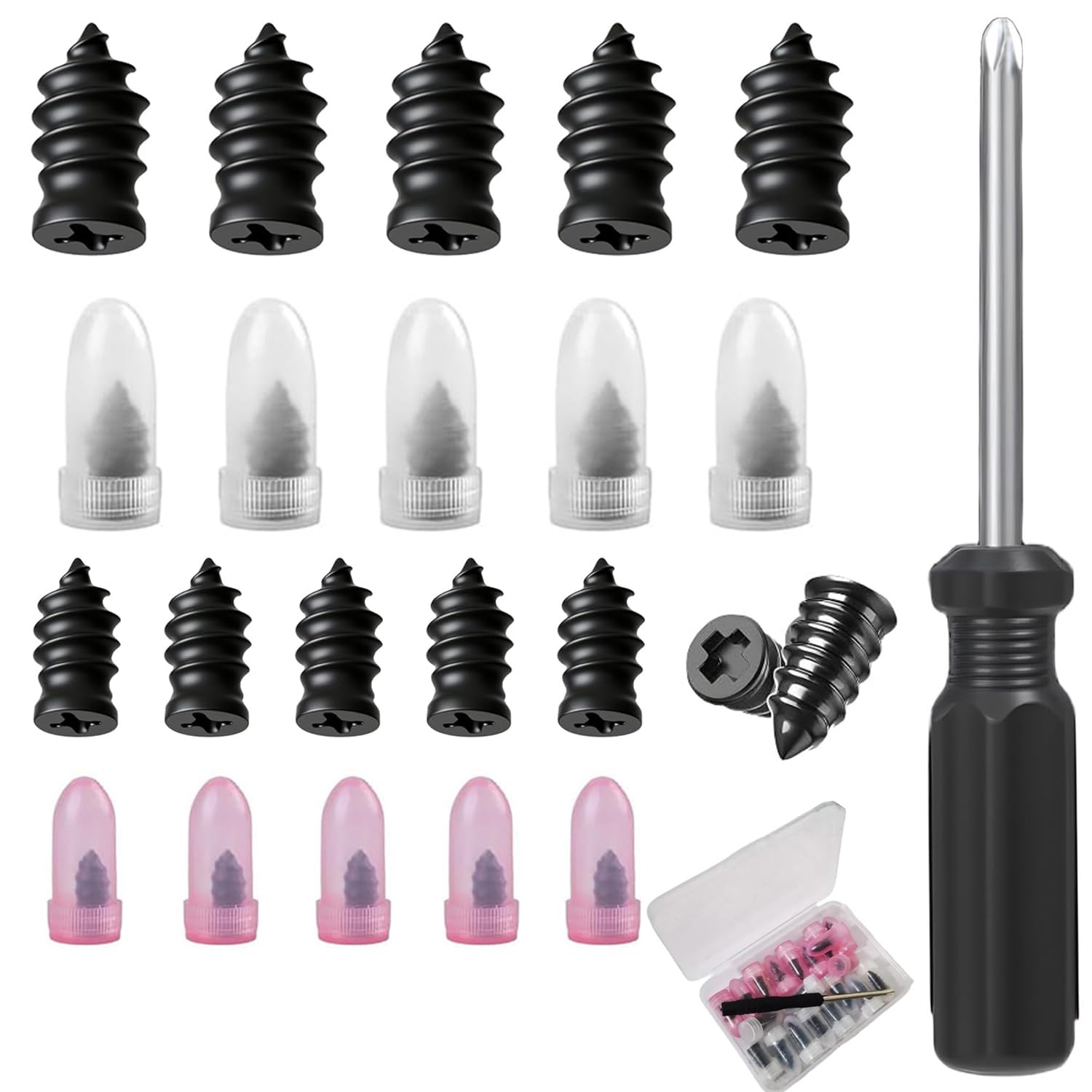
This is a compact set of self-tapping rubber plugs designed to screw into an existing puncture from the outside of a tubeless tire. The selected listing is identified as the Generic TRN kit, manufactured by Rewdut, and includes 20 plugs, a screwdriver, and a storage box. The two plug sizes give you a small and large option instead of forcing one diameter into every puncture.
The threaded plugs use rubber around an iron core. Their small case makes the kit easy to keep in a glove box, trunk organizer, motorcycle luggage compartment, or workshop drawer. The key tradeoff is repair quality: installation is convenient because you do not remove the tire, but that same outside-in approach prevents a full inspection of the tire’s inner liner and internal structure.
Before You Buy: A screw-in plug by itself is not an industry-standard permanent tire repair. Do not use it for sidewall or shoulder damage, a visible cut or bulge, a tire that was driven while flat, or any puncture a tire professional says is outside the repairable tread area.
Who Should Buy It?
Best For
- Drivers building a compact roadside emergency kit
- Owners of compatible tubeless tires who understand this is only a temporary measure
- People who already carry a pressure gauge and portable inflator
Skip If
- You want a permanent, industry-compliant repair
- The damage is in the sidewall, shoulder, or outside tread area
- You cannot safely stop, inspect, reinflate, and monitor the tire
Design, Materials, and Included Parts
The kit’s main advantage is its small footprint. Twenty plugs and the screwdriver fit inside the supplied box, so loose repair parts are less likely to scatter around your trunk. The plugs have a threaded shape that lets the screwdriver turn them into a puncture channel without a full T-handle plug-kit setup.
The listing describes the plugs as rubber with an iron core. That construction gives the screwdriver something firm to engage, while the rubber exterior is intended to fill the puncture channel. You still need separate tools for a complete roadside setup, including pliers to remove the object, a tire-pressure gauge, and an inflator to restore pressure.
Fit and Compatibility
The seller describes the kit for tubeless tires used on cars, motorcycles, trucks, buses, and agricultural equipment. That is broad listing compatibility, not a guarantee that every tire can be repaired. Tire type, speed rating, puncture location, previous repairs, internal damage, and the tire manufacturer’s policy all affect whether continued use is safe.
The two plug sizes measure about 5.3 × 11.7 mm and 6.8 × 12.7 mm. Choose only a size that fits the puncture channel without forcing excessive damage into the tread. Do not enlarge a hole simply to make a plug fit, and do not assume the larger plug makes a larger injury repairable.
Ease of Use
Compared with a conventional string-plug kit, the screw-in design has fewer steps and less bulky hardware. You remove the puncturing object, select a plug, and use the included screwdriver to turn it into the tread injury. That simplicity is useful in an emergency, but locating the leak and restoring pressure can take longer than inserting the plug itself.
The included screwdriver is a basic installation tool. It does not replace pliers, a valve tool, an inflator, or proper lifting equipment. You should never crawl under a vehicle or work beside moving traffic, and you should not attempt a repair in an unsafe roadside location.
Pro Tip: Store the kit with a digital pressure gauge, work gloves, pliers, a portable inflator, and a small spray bottle of soapy water. The plug is only one part of checking and managing a slow leak.
What People Say
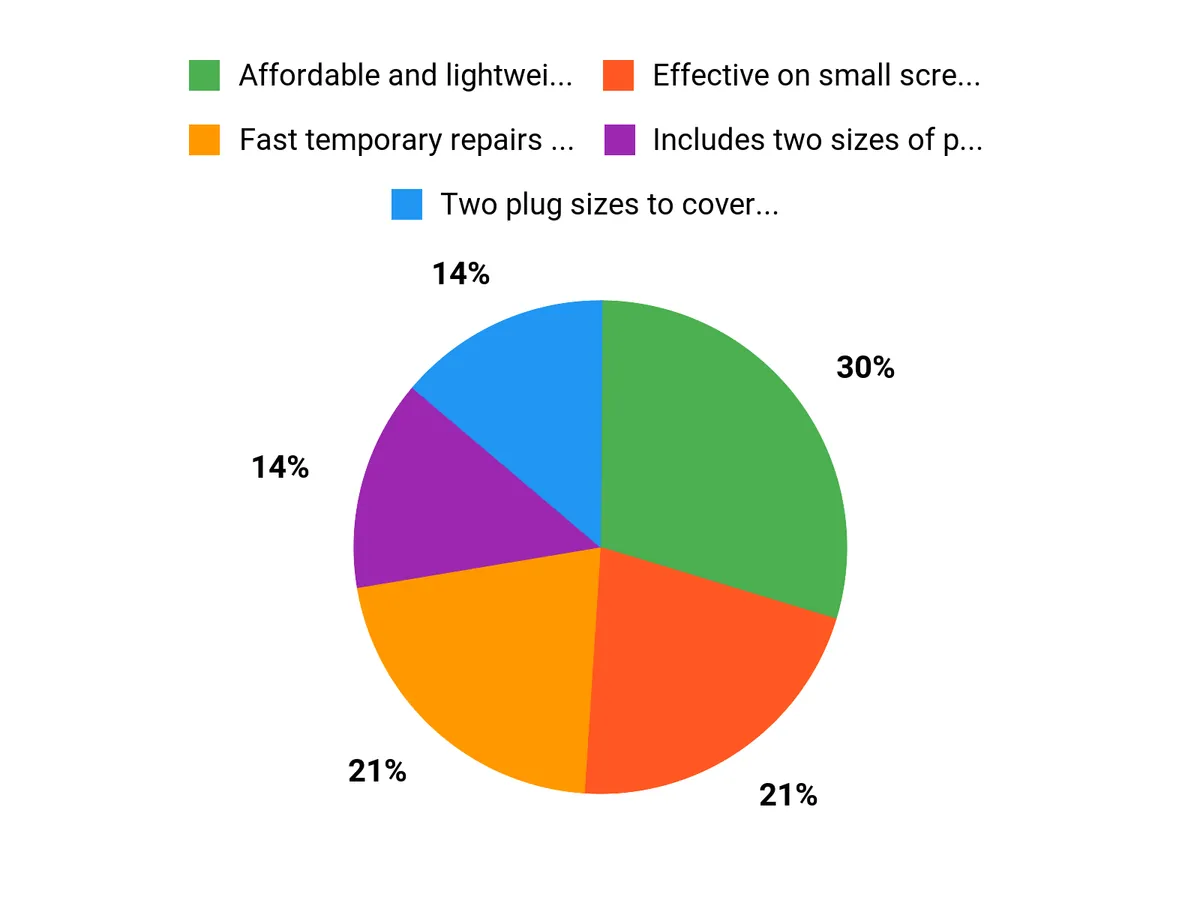
The supplied buyer-sentiment summary is positive, with convenience, compact storage, and the included plug count presented as the main benefits. The most useful criticism is also the most important buying point: this small kit does not provide the equipment or inspection needed for a proper internal tire repair.
Live price, star rating, and review-count details were not consistently visible during the product check, so those changing figures are not used as part of this verdict. Treat the current listing, seller, package count, and product details as items to confirm before ordering.
Overall Sentiment: Positive, with safety and repair-quality caveats

Pros and Cons
Pros
- Twenty plugs provide multiple emergency uses
- Two sizes give you more flexibility than a single-size pack
- Compact box keeps the screwdriver and plugs together
- Screw-in design is simpler than a full string-plug kit
- Easy to pair with an inflator in a small roadside kit
Cons
- Plug-only, outside-in repairs are not accepted as permanent repairs
- No inflator, pressure gauge, or pliers are included
- Package-count wording on the live listing is inconsistent across sections
How It Performs in Real Use
Small Tread Puncture at Home
When a tire has a slow leak from a small object in the central tread, the kit gives you a quick way to attempt a temporary seal before arranging professional service. Working at home is safer than working roadside because you can inspect the tire, use proper lighting, and monitor pressure without traffic nearby.
Roadside Emergency Backup
The compact box is easy to carry, but the kit should not be your only roadside plan. A spare tire, roadside-assistance membership, pressure gauge, and inflator may be safer choices depending on the puncture, traffic, weather, and your experience. Use the plug only when the vehicle is parked in a secure location and the damage appears limited to a small tread puncture.
Motorcycle, ATV, or Equipment Storage
The seller lists compatibility with several tubeless-tire applications, which makes the small case convenient for a toolbox or luggage compartment. Compatibility still depends on the tire maker and the specific damage. A two-wheel vehicle also places a higher demand on each tire, so professional inspection is especially important before normal riding resumes.
Temporary Mobility Before Tire Service
The most reasonable role for this product is short-term mobility, not extending tire life for weeks or months. After installation and reinflation, check for continued air loss. Stop driving if pressure drops, the tire develops a bulge, vibration appears, or steering and handling change.
How to Use It More Safely
- Move the vehicle to a stable location away from traffic, set the parking brake, and follow the vehicle maker’s roadside-safety instructions.
- Inspect the tire. Do not continue if the damage is in the sidewall or shoulder, the tire was driven flat, cords are visible, or the tire has a cut, bulge, or other structural damage.
- Mark the tread puncture and remove the object with pliers only when you are ready to seal and reinflate the tire.
- Select the smaller suitable plug first. Use the included screwdriver and follow the product instructions rather than forcing the plug or enlarging the injury.
- Inflate the tire to the cold pressure on the vehicle’s tire-information label, not the maximum pressure printed on the tire sidewall.
- Check the area with soapy water and recheck pressure. Arrange an internal inspection and proper repair or replacement as soon as practical.
Do not trim, heat, glue, drill, or modify the plug unless the product instructions specifically call for it. Because the supplied listing does not provide a verified vehicle-speed or distance limit, follow your tire and vehicle manufacturer’s guidance and use conservative judgment.
Compatibility and Safety
The U.S. Tire Manufacturers Association says a repairable passenger or light-truck puncture should be limited to the tread area and no greater than 1/4 inch (6 mm). It also says the tire should be removed from the wheel for inspection and that a proper repair must fill the injury with a rubber stem or plug and seal the inner liner with a patch.
The Tire Industry Association treats on-the-wheel plug repairs as temporary because hidden inner-liner or sidewall damage cannot be checked from outside. Tires with shoulder or sidewall punctures, overlapping repairs, severe wear, or evidence of being driven flat may need replacement rather than repair.
Run-flat tires, motorcycle tires, commercial tires, and specialty equipment may have stricter repair policies. Check the tire manufacturer’s instructions and ask a trained technician before returning the tire to normal service.
Storage and Maintenance
Keep the box closed, dry, and away from high heat, fuels, solvents, and sharp tools that could damage the rubber. Check the contents when you rotate tires or service your vehicle so you know the screwdriver is present and the plugs have not hardened, cracked, or become contaminated.
A roadside kit is only useful when the rest of the equipment works. Charge or test your portable inflator, inspect your pressure gauge, and confirm that your spare tire is properly inflated. Replace any questionable plug rather than trusting old material during an emergency.
Is It Worth the Price?
This is a budget-oriented emergency accessory rather than a complete tire-repair system. You get the most value if you want a small backup that fits beside an inflator and pressure gauge, and you understand that professional service is still required.
It is less compelling if you expect one tool to diagnose damage, restore pressure, and create a permanent repair. The listing did not show a stable live price during verification, so check the current price and selected 20-piece variant before comparing value.
How It Compares to Alternatives
A conventional T-handle string-plug kit usually includes a reamer and insertion tool, which gives you more control but takes more space and effort. A tire sealant and inflator kit may be faster when you cannot locate the puncture, but sealant can complicate later service and is still temporary.
A trained shop’s combination plug-patch repair is the better choice for a repairable puncture because the tire is removed and inspected from the inside. A spare tire or roadside-assistance call is also preferable when the location is unsafe or the damage cannot be assessed confidently.
Why Customers Choose
The appeal is straightforward: the kit is compact, includes 20 plugs in two sizes, and needs only a screwdriver for plug installation. It makes the most sense as one layer in a broader emergency plan, not as a replacement for a spare tire, inflator, inspection, or professional repair.
Frequently Asked Questions
Is a screw-in tire plug a permanent repair?
No. Industry guidance calls for removing the tire, inspecting it internally, filling the injury, and sealing the inner liner with a patch. Treat this plug as a temporary emergency measure until a trained technician evaluates the tire.
Can you use it on a sidewall puncture?
No. Sidewall and shoulder damage is outside the normal repairable tread area and can affect the tire’s structure. Replace or professionally evaluate the tire instead of inserting a plug.
What comes in the 20-piece kit?
The selected listing title identifies 20 screw-in plugs in two sizes, one screwdriver, and a storage box. Check the variant at checkout because other quantity options and inconsistent count wording appear on the live product page.
Does the kit include an air pump?
No inflator or pressure gauge is listed. You need a separate inflator to restore pressure and a gauge to set the tire to the vehicle manufacturer’s cold-pressure specification.
What puncture size can be professionally repaired?
USTMA guidance limits repair consideration to tread-area punctures no greater than 1/4 inch (6 mm), followed by internal inspection and a proper combination repair. The tire manufacturer may set stricter limits.
Can you use these plugs on a motorcycle tire?
The seller lists motorcycles among compatible tubeless applications, but the tire maker’s repair policy controls. Because a motorcycle relies on only two tires, arrange professional inspection before returning to normal riding.
What should you carry with this kit?
Carry pliers, gloves, a pressure gauge, a portable inflator, and soapy water for leak checking. A reflective vest, warning triangle, flashlight, and roadside-assistance plan also improve your safety.
The Bottom Line
The Tire Repair Nails Kit is worth considering if you want a tiny, 20-piece emergency backup for a compatible tubeless tire and already carry the tools needed to reinflate and monitor it. Skip it as your only flat-tire solution or if you expect a permanent repair, because the kit cannot inspect hidden damage or seal the inner liner from inside.
Ready to Buy?
Confirm the 20-piece variant, current price, and product details before you decide.