

Disclosure: As an Amazon Associate, we earn from qualifying purchases. If you click a link on this page and make a purchase, we may receive a small commission at no extra cost to you.
A small nail in a tire can turn a routine drive into a tow bill, but not every quick-fix product is suitable for every puncture. The Ypoyney 60PCS Tire Repair Rubber Nail Kit gives you 60 screw-in plugs in two sizes for temporary use on compatible tubeless tires. Its low-cost, compact design is useful for emergency preparation, but an outside-in plug is not an industry-approved permanent tire repair. This review explains what is included, where the plugs may help, and when you should use a spare tire or call a professional instead.
Quick Verdict
Rating: 6.5/10, recommended with major safety caveats
Best For: Drivers who want a compact emergency backup for a small, accessible tread puncture in a tubeless tire.
Bottom Line: The 60-piece count and two plug sizes make this an inexpensive kit to divide among several emergency bags. However, it does not replace professional inspection and an internal plug-and-patch repair.
| Specification | Detail |
|---|---|
| Brand | Ypoyney |
| Product | 60PCS Tire Repair Rubber Nail Kit |
| Amazon ASIN | B0FW4SHZSN |
| Product type | Screw-in emergency tire plugs |
| Total quantity | 60 plugs |
| Small size | 30 plugs measuring approximately 5.3 × 12 mm |
| Large size | 30 plugs measuring approximately 6.8 × 15 mm |
| Listed materials | Rubber and carbon steel |
| Intended tire type | Compatible tubeless tires, subject to tire-maker restrictions |
| Installation design | Spiral plug that screws into an accessible puncture from outside the tire |
| Tool inclusion | Not confirmed for this exact 60-piece package, check the current listing before purchase |
| Safety note | Emergency use only. Do not use on a sidewall, shoulder, cut, bulge, damaged belt, or tire driven while flat. |
Ypoyney 60PCS Tire Repair Rubber Nail Kit
What Is the Ypoyney Tire Repair Rubber Nail Kit?
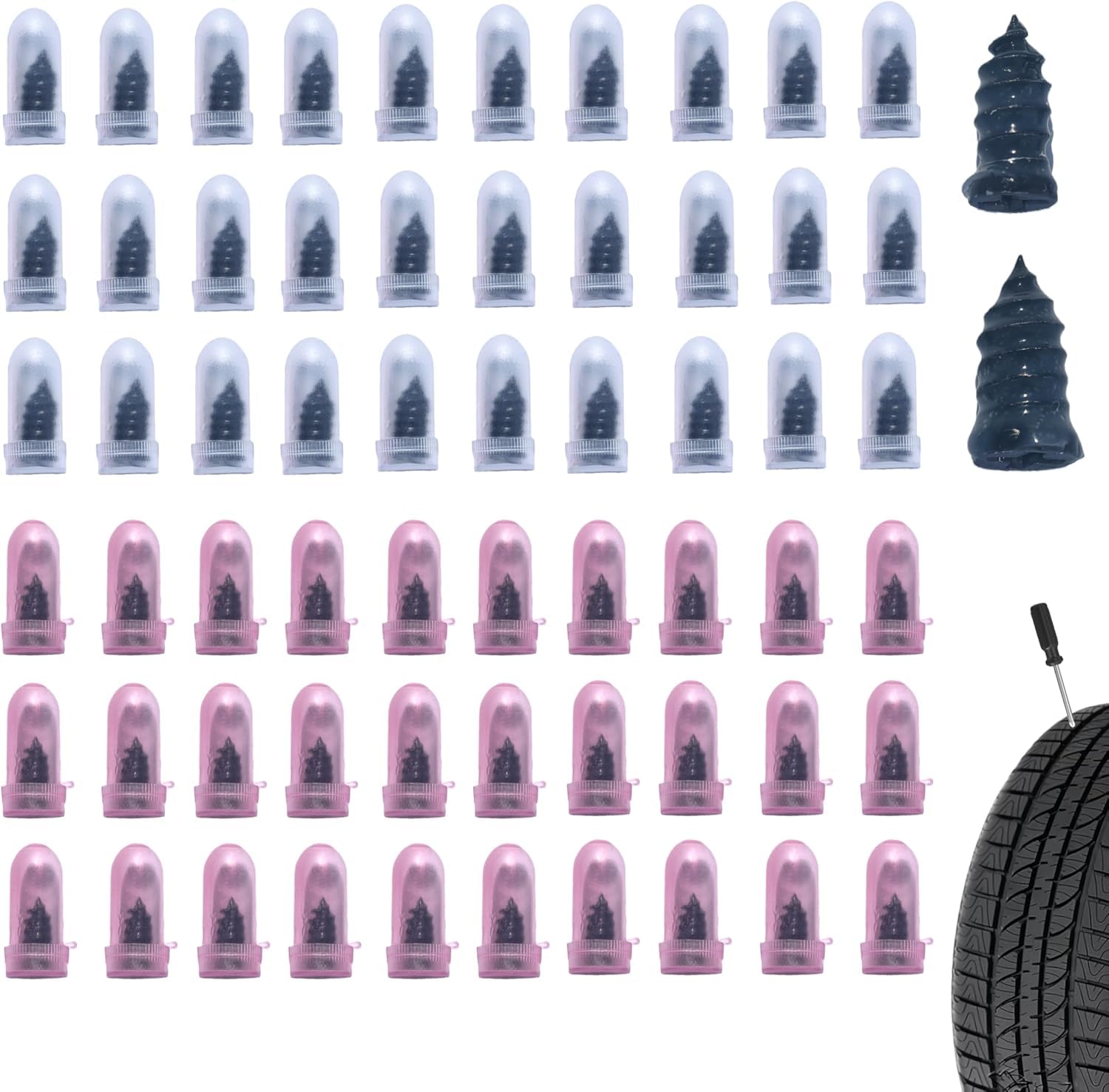
The Ypoyney kit is a collection of 60 compact, screw-shaped tire plugs. The listed assortment contains 30 small plugs measuring about 5.3 × 12 mm and 30 large plugs measuring about 6.8 × 15 mm. This gives you two sizes for small puncture openings instead of one universal plug.
Each piece combines rubber with a carbon-steel core and uses a spiral profile that threads into the puncture. The design differs from a traditional sticky rope plug, which normally requires a reaming tool and T-handle insertion needle. It is intended for quick outside access when removing the tire is not practical.
The seller lists broad compatibility with tubeless tires used on cars, motorcycles, trucks, tractors, and bicycles. That compatibility claim does not mean every puncture or tire can be repaired. Your tire manufacturer, vehicle maker, tire type, puncture location, and internal damage all affect whether the tire can safely return to service.
Before You Buy: This product performs an outside-in repair without removing the tire. Tire-industry guidance does not consider a plug by itself a proper permanent repair for passenger or light-truck tires. Use it only as an emergency measure and arrange professional inspection as soon as possible.
Who Should Buy It?
Best For
- Drivers building an emergency kit for a compatible tubeless tire
- Households that want to divide 60 plugs among several vehicles or toolboxes
- People who already carry a pressure gauge, inflator, pliers, gloves, and a suitable driver
Skip If
- You need a complete kit with clearly confirmed tools, sealant, gauge, and inflator
- The damage is on the sidewall or shoulder, or the tire has a cut, bulge, exposed belt, or rapid air loss
- You want a permanent repair that meets passenger and light-truck tire-industry procedures
Feature and Performance Review
Two Plug Sizes
The mixed-size package is more useful than a bulk bag containing one size. You can start with the smallest plug that matches the puncture instead of forcing an oversized piece into a narrow opening. However, plug size cannot make an unsafe puncture repairable. Damage near the shoulder, an angled injury, or internal damage still requires professional evaluation.
Rubber and Carbon-Steel Construction
The listed rubber exterior helps fill the puncture opening, while the carbon-steel core gives the screw enough structure to turn into the tire. The spiral profile is designed to grip as it is installed. Because the plug remains exposed to heat, flexing, water, road debris, and pressure cycles, you should not assume that an apparently sealed puncture will remain safe indefinitely.
Compact Emergency Storage
Sixty small plugs take up little room compared with a spare wheel or large roadside kit. You can store portions in a car, motorcycle luggage case, garage, utility-vehicle toolbox, or travel bag. Keep them dry, protected from dirt, and away from high heat or direct sunlight that could age the rubber.
Package Contents and Required Equipment
The exact 60-piece package clearly identifies the plug assortment, but the current package contents should be checked before purchase. Do not assume that a screwdriver, reamer, pliers, tire inflator, pressure gauge, sealant, or storage case is included.
For practical roadside use, you still need a way to remove the puncturing object, install the plug, and restore pressure. A plug without a working inflator will not help when the tire has already lost too much air.
What Buyers Report
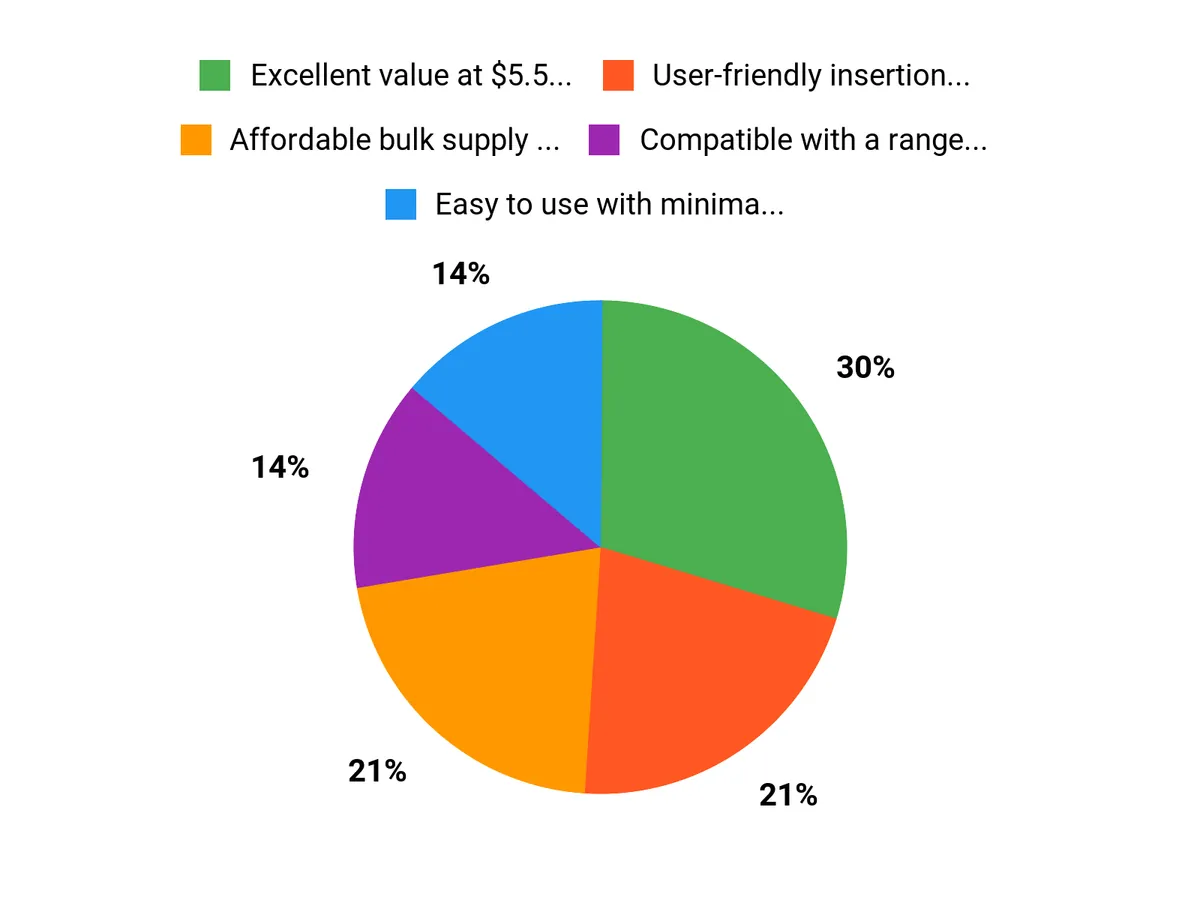
The source article summarized buyer feedback as generally positive, with ease of installation, compact storage, and the large plug count receiving the most praise. Some reported seals held for an extended period, but those reports should not be treated as proof that an outside plug is a safe permanent repair.
Overall Sentiment: Positive, based on the source article’s customer-summary data.

Pros and Cons
Pros
- Includes 60 plugs for emergency kits, garages, or multiple vehicles
- Provides 30 small and 30 large plugs instead of one size
- Compact pieces are easy to store without taking up much cargo space
- Screw-in design may be simpler to handle than a traditional rope plug
- Rubber-and-steel construction gives each plug a firm threaded core
Cons
- A plug alone is not an industry-approved permanent passenger or light-truck tire repair
- The exact 60-piece package may not include the tools or inflator needed roadside
- It cannot make sidewall, shoulder, belt, tear, or run-flat damage safely repairable
How It Performs in Real Use
Small Tread Puncture on a Passenger Vehicle
The kit is most relevant when a small nail or screw enters the central tread area of a tubeless tire and the tire has not been driven flat. The plug may slow or stop air loss long enough to reach a safe location. You still need to monitor pressure and have the tire removed and inspected by a trained technician.
Roadside Emergency
The screw-in format can reduce the amount of force needed compared with some rope-plug tools. That can help when you are working in a parking area or driveway. It does not make a dangerous roadside location safe, so move away from traffic before inspecting or touching the tire.
Motorcycle or Two-Wheel Use
The seller lists motorcycles and bicycles among compatible applications, but two-wheel tire failure carries serious consequences. Motorcycle and bicycle tire makers may have different repair restrictions, especially for speed-rated tires. Follow the tire manufacturer’s instructions and seek professional guidance before returning a repaired tire to normal riding.
Multiple Vehicles and Garage Storage
The 60-piece count is the kit’s clearest value advantage. You can separate the two sizes into labeled containers and place a small supply in several vehicles. Each vehicle should also have an inflator, pressure gauge, gloves, lighting, and the correct tools.
How to Use It Correctly
- Stop in a safe location. Park away from moving traffic, switch on the hazard lights, apply the parking brake, and follow your vehicle’s roadside procedures.
- Inspect before removing anything. Do not pull out a nail or screw until you are ready to address the resulting air loss. Use roadside assistance when the location is unsafe or you lack an inflator.
- Reject unsafe damage. Do not install a plug in the sidewall, shoulder, a split tread, an exposed belt, a bulge, or a tire that was driven while flat.
- Follow the product instructions. Select the plug size specified for the puncture and use the proper installation tool. Do not enlarge the hole simply to make a plug fit.
- Install it flush. The plug should be seated according to the seller’s instructions rather than left projecting far above the tread.
- Restore the correct pressure. Inflate to the cold-tire pressure on the vehicle door placard or owner’s manual, not the maximum pressure printed on the tire sidewall.
- Check for continuing leakage. Watch the pressure closely and stop driving if the tire loses air, vibrates, becomes hot, or handles differently.
- Arrange professional inspection. Have the tire removed from the wheel so a technician can inspect the inner liner, belts, puncture angle, and surrounding damage.
Pro Tip: Build a complete puncture bag instead of storing the plugs alone. Add locking pliers, a compatible driver, an accurate pressure gauge, a 12-volt inflator, gloves, a flashlight, and the phone number for roadside assistance.
Compatibility and Safety
The most important limitation is puncture location. Sidewall and shoulder areas flex heavily and are not suitable for this type of repair. A tire with a cut, bulge, torn cord, damaged bead, exposed steel, or evidence of running while flat should be removed from service until professionally evaluated.
The U.S. Tire Manufacturers Association’s tire repair guidance limits repairable passenger and light-truck punctures to the tread area and a maximum diameter of 1/4 inch, or 6 mm. It also states that the tire should be removed for inspection and repaired with both a plug or stem and an internal patch.
NHTSA tire safety guidance likewise says that proper puncture repair requires a plug in the injury and a patch inside the tire. It warns that sidewall punctures should not be repaired and that the tire must be removed from the rim for proper inspection.
Run-flat tires, high-performance tires, motorcycle tires, commercial tires, and tires covered by a manufacturer warranty may have stricter limits. Check the tire maker’s repair policy rather than relying only on the plug seller’s compatibility list.
Why Customers Choose
Buyers consider this Ypoyney kit because it offers a large quantity in a very small package. The two-size assortment is also more flexible than a single-size refill pack, especially for a household maintaining several vehicles or pieces of tubeless equipment.
The main buying reason should be emergency preparedness, not avoiding proper tire service. Used with that expectation, the kit fills a narrow but practical role.
Is It Worth the Price?
This is a budget refill-style product rather than a complete roadside system. Its value comes from the 60-piece quantity and the inclusion of two plug sizes. It makes the most financial sense for someone who already owns the needed tools and wants inexpensive emergency supplies for several locations.
It offers less value when you still need to buy a driver, pliers, gauge, inflator, storage case, and other accessories separately. A complete traditional tire-plug kit may cost more upfront but can be more useful during an actual roadside incident.
The largest limitation is not cost. It is the difference between stopping an air leak temporarily and completing a proper repair. Budget for a professional inspection even when the plug appears to hold pressure.
How It Compares to Alternatives
A traditional T-handle rope-plug kit from a brand such as Slime or Boulder Tools normally includes a reamer, insertion needle, rubber-cement-style material, and storage case. Those kits require more physical effort, but they give you the tools needed to prepare and fill a tread puncture. They are still emergency products rather than substitutes for an internal repair.
An inflator-and-sealant mobility kit is faster when you cannot locate the puncture, but sealant can create cleanup work and may not handle larger damage. A professional combination plug-and-patch repair costs more and requires removing the tire, but it is the appropriate long-term option when the puncture meets the tire maker’s repair criteria.
Frequently Asked Questions
Is the Ypoyney screw-in plug a permanent tire repair?
No. Treat it as an emergency outside-in seal only. Proper passenger and light-truck tire repair requires removing the tire, inspecting it internally, filling the injury, and sealing the inner liner with a patch.
What tires can these plugs be used on?
The seller lists compatibility with tubeless tires used on several vehicle types. Actual repair eligibility depends on the tire’s construction, puncture location, damage, speed rating, manufacturer policy, and whether the tire was driven while underinflated.
Can I use one on a tire sidewall or shoulder?
No. Do not plug sidewall or shoulder damage. Replace the tire or have it evaluated by a qualified professional because those areas flex and are outside the normal repairable tread zone.
How large can a repairable puncture be?
USTMA guidance limits potentially repairable passenger and light-truck tread punctures to 1/4 inch, or 6 mm, in diameter. A puncture within that size can still be unsafe because of its angle, location, internal damage, or overlap with an earlier repair.
Does the 60-piece package include an installation tool?
Tool inclusion was not clearly confirmed for this exact ASIN during verification. Check the current Amazon package description and images before ordering, especially when you need a complete roadside kit rather than refill plugs.
Can I drive at highway speed after installing one?
Do not treat an outside plug as permission to resume normal or high-speed driving. Monitor pressure, drive only as necessary to reach a safe location or service facility, and stop immediately if the tire loses pressure, vibrates, heats up, or handles differently.
Are these plugs suitable for motorcycles?
Motorcycles appear on the seller’s compatibility list, but motorcycle tire makers may restrict or prohibit repairs based on tire type, damage, and speed rating. Because tire failure on two wheels is especially hazardous, follow the tire manufacturer’s policy and seek professional advice.
What should I carry with the plugs?
Carry a compatible installation tool, locking pliers, gloves, an accurate pressure gauge, a working tire inflator, a flashlight, and your roadside-assistance information. A suitable spare tire remains the better option when damage cannot be safely assessed.
The Bottom Line
The Ypoyney 60PCS Tire Repair Rubber Nail Kit is worth considering as a compact emergency backup for drivers who understand its narrow purpose and already carry the supporting tools. Its 60-piece, two-size assortment offers convenient value, but buyers seeking a complete kit or a permanent repair should choose a more comprehensive solution and professional tire service.
Ready to Buy?
Check the latest package contents, price, and product details before you decide.

