Cold Weather Tire Grip: Why You Lose Traction and How to Fix It
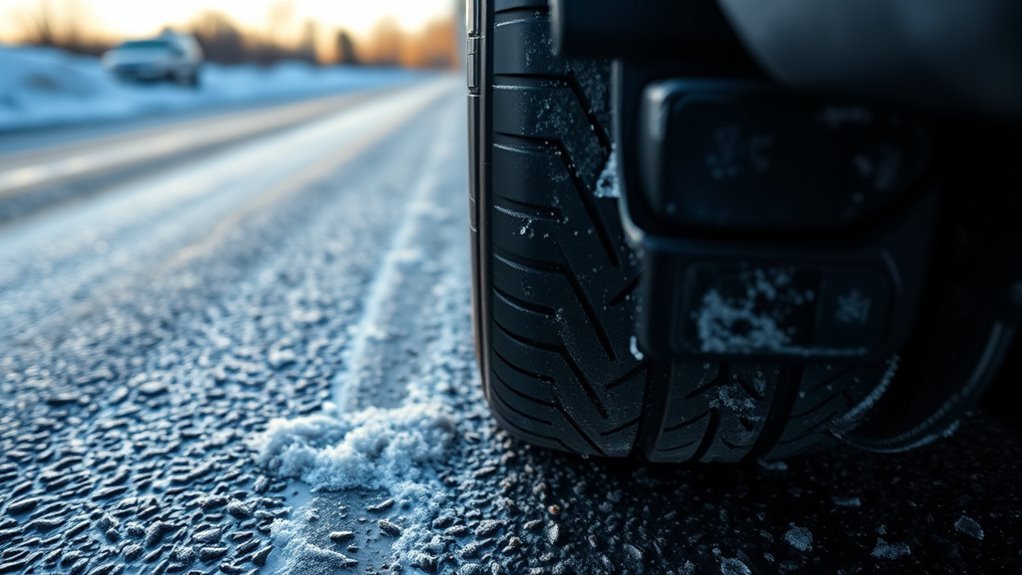
You’ll lose noticeable grip in cold weather because falling temperatures both lower tire pressure and stiffen the rubber so the tread can’t conform to road texture. Pressure drops roughly 1 to 2 PSI for every 10°F decrease, which changes the contact patch and load distribution. Stiffer rubber raises the compound’s stiffness and cuts micro-level contact with the road, leading to longer stopping distances and duller steering response. Check and top off pressures, use winter-rated tires, and follow a maintenance schedule to keep traction reliable.
Quick Answer
Cold air shrinks the air inside your tires, dropping pressure by about 1 to 2 PSI for every 10°F temperature decrease. At the same time, cold rubber stiffens and can’t grip the road as well. Together, these two effects mean longer braking distances, less responsive steering, and faster tire wear. The fix is straightforward: check your tire pressure at least monthly (more often in winter), keep tires inflated to the manufacturer’s recommended PSI, and switch to winter-rated tires once temperatures consistently fall below 45°F (7°C).
[Products Worth Considering]

EVOULTES heavy duty tire inflator with an integrated gauge delivers accurate pressure readings from 10–120 PSI, helping you inflate, deflate, and check tires in one tool. The 16.5-inch extended dual-head air chuck with swivel base reaches hard-to-access dual wheel valves on trucks and RVs. A brass trigger core and side-mounted air release valve make operation smooth, with standard 1/4" NPT threading and quick-connect compatibility for easy setup.

This portable cordless tire inflator delivers up to 160 PSI with fast 17 L/min airflow to help you quickly top up tires and get back on the road. It features dual power mode, running on a 21V rechargeable battery or a 12V DC adapter for convenient roadside use. An automatic shut-off with digital pressure gauge helps prevent overinflation, and a built-in LED light improves visibility in low-light conditions.

The JACO FlowPro Tire Inflator measures, inflates, and airs down tires up to 100 PSI with battery-free operation and ±2% accuracy after calibration. It features a glowing pressure dial for night visibility, a heavy-duty steel build with a hybrid hose, and a precision push-to-inflate thumb trigger. The patented Lightning Air Chuck locks on for a secure seal, and the kit includes quick-connect hardware for easy inline use with your air compressor.
Quick Actions: Measure and Top Off Tire Pressure in Cold Weather
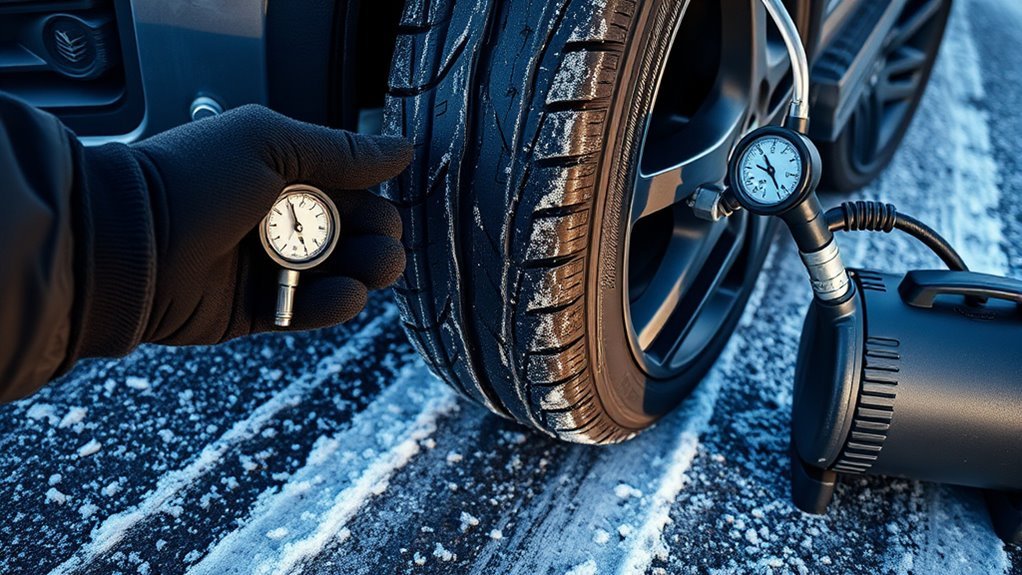
Check your tire pressure every morning during cold snaps. Air contracts about 1 to 2 PSI for every 10°F drop, so even new tires can lose pressure quickly overnight.
Measure pressure with a reliable gauge before driving, when the tires are still cold. This gives you the most accurate reading. If a reading falls below the vehicle’s recommended PSI, top off right away to restore the ideal contact patch and prevent uneven wear.
For consistent results, record your readings and adjust routinely after cold nights. You might also consider nitrogen for tire inflation. Because nitrogen reacts less to temperature changes, it helps hold a steadier PSI and means fewer adjustments. When you do top off, avoid overinflation. Stick to the manufacturer’s spec and account for any extra load on the vehicle.
This quick routine keeps traction and stability in your hands rather than leaving them to the weather.
How Cold Air Lowers Tire Pressure
Once you’ve topped off your tires, it helps to understand why pressure drops in the first place. As temperatures fall, air molecules slow down and crowd closer together. That reduces the force they push against the inside of the tire wall.
Think of tire pressure as a physical variable tied directly to temperature. The rule of thumb is roughly 1 to 2 PSI lost for every 10°F drop. That means an overnight cold snap can produce measurable deflation without any leak at all.
The cause is simple: slower, denser air molecules create lower internal pressure and a slight reduction in tire volume. Routine checks catch these drops before they affect performance. Monitor pressure more often in winter, use a calibrated gauge on cold tires, and adjust to the manufacturer’s recommended PSI. Understanding the cause puts you in control of your safety and handling instead of passively accepting worse traction.
Why Cold Tires Lose Grip
When temperatures drop, your tires stiffen and lose the flexibility they need to press into the tiny textures on the road surface. That cuts frictional contact and hurts braking performance.
You’ll notice cold tire performance decline because the rubber’s stiffness increases. The tread can’t flow into small surface irregularities, so the real contact area drops and the friction-generating processes that create traction are reduced. Material hardening is also a factor. Summer compounds can crack and fail to generate grip in freezing conditions.
At the same time, contracting air reduces internal volume and changes the shape of the contact patch. Reduced pressure shifts load distribution and lowers effective traction. These combined effects make steering inputs less responsive and braking distances longer.
To get predictable grip back on cold pavement, prioritize cold-rated rubber, monitor pressure frequently, and understand that compound chemistry and contact mechanics matter more than driving style in winter. Addressing these factors restores predictable handling on slippery surfaces.
How Tire Underinflation Worsens Winter Handling and Wear
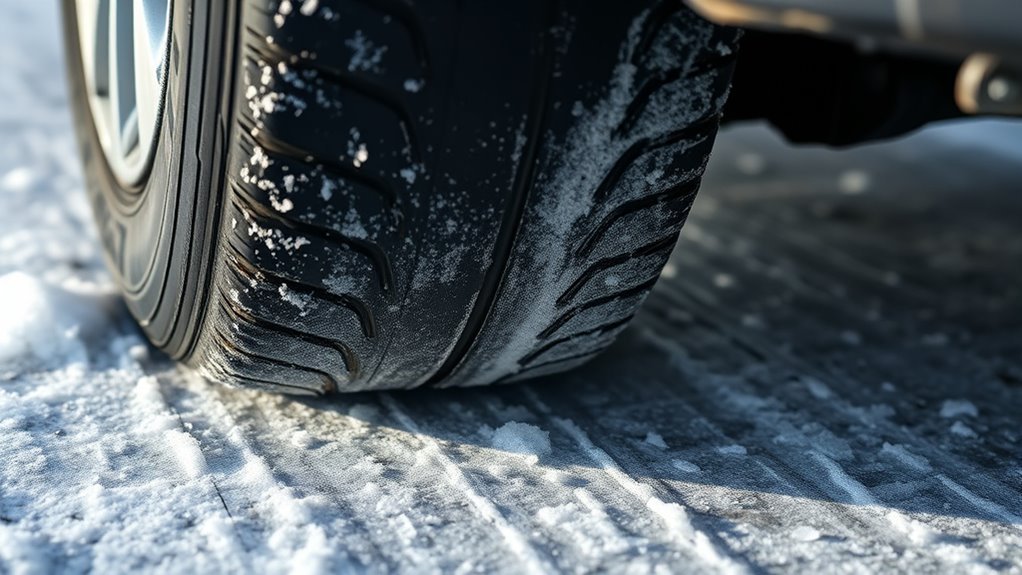
Even a small drop in pressure alters contact geometry. Underinflation sharply worsens winter handling and accelerates wear. A larger, flatter contact patch increases tread flexing and heat buildup, reduces the tire’s ability to grip cold pavement textures, and shifts load away from the tread ribs that do the most work. The result: degraded traction, steering precision, and braking grip.
You’ll feel the consequences right away. The extra surface area amplifies tire flexing, causing excessive deformation each revolution. In cold rubber that’s already stiff, the tire can’t follow micro-texture, so traction loss compounds. You get reduced bite, longer stopping distances, and vague steering. Heat from repeated flexing raises internal stress, accelerating tread fatigue and increasing blowout risk even in winter.
A one-PSI drop measurably alters stability. Cumulative underinflation accelerates tread wear across the shoulder and center unpredictably. You preserve control and extend tire life by keeping pressure where it should be through disciplined upkeep and awareness of pressure’s outsized role.
[Products Worth Considering]

This cordless portable tire inflator delivers fast, safe inflation with an automatic shutoff when the target pressure is reached, helping prevent overinflation. The built-in LED lighting and real-time digital display make it easier to check pressure and handle roadside tire changes at night. It includes multiple nozzles for use on cars, motorcycles, bicycles, and inflatables like balls and swimming rings.

This portable cordless tire inflator delivers fast, efficient inflation for cars, motorcycles, bikes, and sports balls with a digital pressure gauge. Use the one-click PSI preset with auto shut-off for accurate, hands-free topping to your target pressure up to 150 PSI. It’s compact and rechargeable with a built-in emergency LED light plus valve adapters and accessories for quick, ready-to-go use.
Signs Your Tires Are Losing Grip in Cold Weather
Cold-weather grip loss doesn’t always announce itself with a dashboard warning. Pay attention to these signals while driving:
Longer stopping distances are one of the earliest clues. If your car takes noticeably more road to stop at the same speed, cold-stiffened rubber or low pressure is likely to blame. Vague or sluggish steering is another giveaway, especially on cold mornings before the tires warm up. You might also notice the car pulling to one side, which can happen when tires lose pressure unevenly.
Your TPMS warning light is a useful backup, but it only triggers when pressure is significantly low. By the time it lights up, you’ve already lost traction. That’s why manual checks with a gauge remain the most reliable early-warning system.
When and How to Check Tire Pressure in Cold Weather
Check tire pressure at least once a month during colder months and any time there’s been a sudden overnight chill. Pressure falls roughly 1 to 2 PSI for every 10°F decrease, so cold snaps can catch you off guard.
Inspect in the morning before driving so residual heat doesn’t mask true readings. Driving warms the tires and gives falsely high pressure numbers. Use a quality tire pressure gauge (digital preferred) for consistent, repeatable measurements.
Find the manufacturer’s recommended pressure in the owner’s manual or on the driver’s door-frame sticker and compare measured values to that target. If pressure is low after a cold snap, reinflate to the specified value. Document the change so you can track patterns tied to cold temperatures. Check all four tires and the spare if it’s accessible.
Accurate tire pressure maintains the contact patch and predictable handling, reduces uneven wear, and keeps you in control when temperatures drop. Be methodical and timely.
Preventive Steps: Seasonal Tires, Gauges, and Maintenance Schedule
Choose seasonal tires with softer winter compounds so they stay flexible and grip cold, icy surfaces, and make the switch before temperatures consistently fall below about 45°F (7°C). Use a quality pressure gauge to monitor PSI weekly and adjust to the vehicle’s recommended pressure. You can also consider nitrogen for more stable readings. Put tire checks on a fixed maintenance schedule that includes monthly inspections, pre-trip checks, and seasonal swaps to preserve traction and reduce failure risk.
Seasonal Tire Selection
When temperatures drop, switch to winter-rated tires. Their softer rubber compounds and specific tread patterns maintain flexibility and traction where summer tires stiffen and lose grip. Pair that change with a quality tire pressure gauge and a monthly inspection routine to keep inflation within the vehicle manufacturer’s specification. Account for roughly a 1 to 2 PSI loss per 10°F decrease, and consider nitrogen inflation if you need more stable pressure in variable cold conditions.
Choose tires with an aggressive tread pattern and verified low-temperature rubber compounds. Match size and load ratings to your vehicle. Rotate and inspect for uneven wear, cuts, or embedded debris monthly. Store off-season tires clean, dry, and shielded from UV to preserve compound integrity. For detailed guidance on tire selection, Michelin’s tire comparison guide is a helpful resource.
Tire Pressure Monitoring
Tire pressure monitoring is a simple, high-impact preventive step in your winter maintenance routine. Check tire pressure monthly and whenever outside temperatures drop sharply, since pressure falls about 1 to 2 PSI per 10°F decrease and underinflation reduces contact patch and grip.
Use a quality digital tire pressure gauge for consistent readings and follow the vehicle’s recommended PSI on the door sticker or manual. Consider nitrogen inflation to reduce temperature-related variance if you want greater stability.
If your vehicle has TPMS (tire pressure monitoring system), don’t treat it as a substitute for physical checks. TPMS alarms only go off once pressure is already quite low. A better approach: measure cold tires monthly, record values, and correct pressure before driving.
Scheduled Maintenance Checks
Now that you’ve set up regular pressure checks, expand that habit into a scheduled maintenance plan covering seasonal tire swaps, gauge use, and inflation choices.
Set a calendar: monthly pressure checks and a pre-winter inspection. Use a quality digital tire pressure gauge for repeatable accuracy. Record readings and compare to recommended PSI adjusted for ambient temperature changes (about 1 to 2 PSI per 10°F). Swap to certified winter tires when temperatures consistently drop below 45°F (7°C). They retain flexibility and grip that summer tires lose.
Consider nitrogen inflation to reduce pressure variation from temperature swings, but continue routine checks regardless. This maintenance protocol prevents underinflation, uneven wear, and blowouts, giving you reliable performance and safety through the cold months.
Frequently Asked Questions
Do Tires Have Less Grip in Cold Weather?
Yes. Tire compounds stiffen as temperatures drop, reducing how well the rubber conforms to the road. This cuts traction. Winter-specific compounds and regular pressure monitoring help maintain grip.
What Is the Science Behind Winter Tires?
Winter tires use rubber formulations that stay flexible in cold temperatures. Their tread patterns feature extra biting edges and sipes (thin slits in the tread) that channel snow and water away from the contact patch. Together, these design choices help you stop shorter and maintain control.
Conclusion
Cold air drops tire pressure by about 1 to 2 PSI for every 10°F decrease, so check and top off pressures before you drive. Underinflated, cold tires deform, reduce contact patch control, and heat unevenly, degrading grip and accelerating wear. Steering goes vague and stopping distances grow. Use a calibrated gauge, check tires cold, and swap to seasonal rubber when temps drop. These small, precise steps keep traction predictable and wear minimal.

Related Articles
Can You Drive on Tires With Cords Showing?
Hoping to keep driving on tires with cords showing, but what’s really at risk may surprise you.
Read More
What Is Hydroplaning? Causes and How to Prevent It
Glide into the surprising causes of hydroplaning and the simple ways to stop it before your tires lose grip.
Read More
Can You Drive on a Tire With a Bulge? Safety Risks
Can you drive on a tire with a bulge, or is a sudden blowout lurking around the corner?
Read More