
When to Use Tire Chains: Laws, Conditions & Safety

You need chains when Caltrans or CHP posts R‑level restrictions or when roads are icy, snowy, or unsafe for normal traction. Follow R‑1, R‑2, R‑3 rules for which vehicles must carry or fit chains, put chains on drive axles, and guarantee trailers and braked axles are chained as required. Studded tires and automatic traction devices have limits too. Drive slowly, check tension, and remove chains on clear pavement—keep going and you’ll get detailed rules, fitment tips, and safety steps.
Quick Answer: Do You Need Chains in California Right Now?
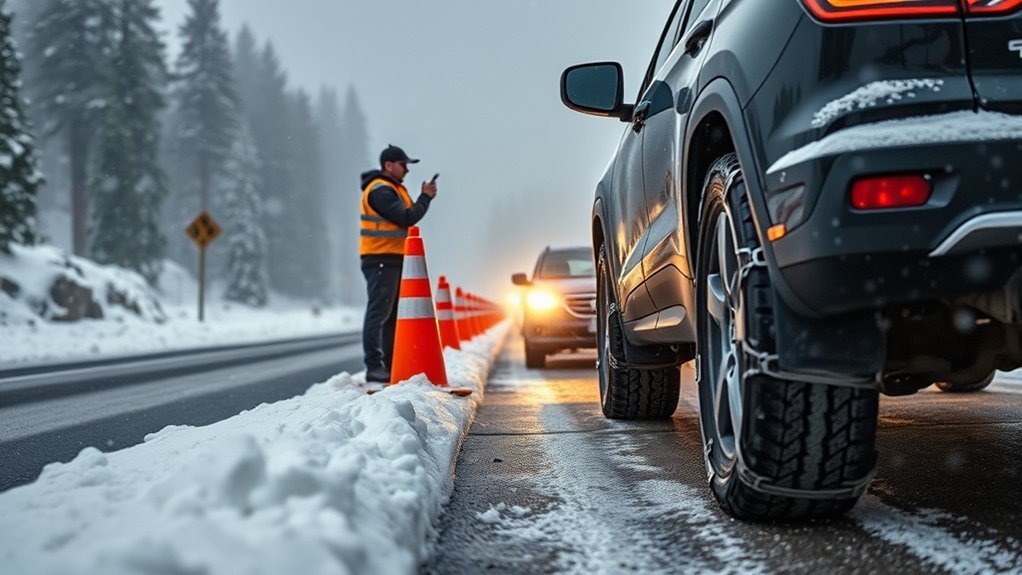
Wondering whether you need chains right now? You check posted signs on mountain routes like I-5, I-80, and US 50—those signs set the rule: R-1, R-2, or R-3. You follow R-1 when chains are required for most vehicles (light trucks with snow tires may be exempt). You obey R-2 unless you’re in a 4WD under 6,500 lbs. You respect R-3 because no exceptions apply. You also know heavy-duty vehicles over 6,500 lbs must carry chains regardless. For chain safety and winter preparedness, carry appropriate traction devices if you plan to travel these passes and keep weight and tire type in mind. You’ll face fines or citations for ignoring Caltrans or CHP orders, so don’t gamble. Before you go, check Caltrans QuickMap or equivalent for current conditions; that quick check frees you from uncertainty and keeps you moving safely and lawfully.
How to Check Chain Controls and Live Road Conditions
Now that you know how chain requirement levels work and where they apply, check chain controls and live road conditions before you head into the mountains. Use Caltrans QuickMap for real‑time updates on chain requirements and road status across California; it’s the authoritative source for planning. Couple that with the Caltrans mobile app and official social channels for immediate alerts. Don’t ignore posted road signs—those reflect current weather impacts and legal obligations.
Also monitor CHP advisories for closures or specific restrictions that affect your route and freedom to travel. Know the R‑levels so you can interpret controls quickly and decide if you’ll carry or fit chains. Prioritize chain safety: inspect equipment, practice fitting, and confirm your vehicle meets any weight or drive‑type rules. Checking these sources right before departure lets you adapt plans, avoid hazards, and keep moving toward your destination with confidence and autonomy.
R‑1, R‑2, R‑3 Explained : What Each Restriction Requires
When you see R‑1, R‑2, or R‑3 signs, know exactly what exemptions and requirements apply so you can act quickly. R‑1 allows light vehicles under 6,000 lbs with proper snow tires and tread to proceed without chains, while R‑2 exempts four‑wheel‑drive vehicles under 6,500 lbs only if they have snow tires on all wheels. R‑3 leaves no exceptions—chains are required for every vehicle and routes may close before it’s posted.
R‑1: Light‑Vehicle Exceptions
In R‑1 conditions, chains are required on all vehicles except light‑duty trucks under 6,000 pounds that are fitted with suitable snow tires. You should know the light duty exemptions and follow snow tire regulations precisely: if your truck meets weight limits and has appropriate snow-rated tires, you can proceed without chains. Check posted signs—R‑1 is declared where slipperiness demands it, often on mountain stretches of I‑5, I‑80, and US‑50. Compliance is mandatory; ignoring chains or signage risks fines and danger. Stay alert to changing conditions and be willing to stop and fit chains if signs change or traction falters. This rule gives you freedom to travel safely when you meet the exemption criteria.
R‑2: 4WD And Snow Tires
Because R‑2 is declared for particularly hazardous winter conditions, you’ll need chains on most vehicles unless you drive a four‑wheel‑drive under 6,500 pounds that’s fitted with snow tires on all wheels. Under R‑2, authorities prohibit vehicles without adequate traction devices from entering chain control zones, so you won’t be allowed through without chains or qualified snow tires. R‑2 exists to force traction compliance and keep mountain roads moving safely in ice and heavy snow. If you have a 4WD vehicle, recognize the 4WD benefits only apply when all wheels have suitable snow tires; that combination can exempt you from chains. Always check Caltrans or local advisories before travel so you can choose chains or exploit snow tire advantages lawfully and confidently.
R‑3: Full Closure Mandate
If conditions worsen to R‑3, expect full closures and mandatory chains for every vehicle without exception—this is the highest alert for severe winter hazards. You must stop, prepare, and comply: R‑3 means chains on all vehicles, enforced on high mountain passes like I‑80 and US‑50 in California. Authorities often use R‑3 before closing roads, so immediate chain installation is required when posted. Do not attempt travel without chains; highways may be closed to prevent unsafe entry. Follow Caltrans and CHP directions and posted signage to avoid fines or rescue situations. Learn quick chain installation techniques and keep tools and practice ready. Embrace the rule: it’s about collective freedom to travel safely, not individual shortcuts during extreme winter driving.
Which Vehicles Must Carry or Use Chains in California

You need to know which vehicles are legally required to carry or use chains so you can comply with R‑1, R‑2, and R‑3 restrictions. Commercial vehicles over 6,500 lbs have strict chain and carriage rules, while passenger vehicles have limited exceptions depending on weight, drivetrain, and tire type. Don’t forget that trailers with brakes and the towing vehicle also face specific chaining requirements.
Commercial Vehicles Requirements
When mountain roads require chains, commercial vehicles over 6,500 pounds must carry and use them, and you’ll be expected to follow posted chain controls without exception. You’ll need to know chain types, perform compliance checks, and fit chains to driven axles; trailers with brakes must have at least one axle chained. Under R-1, R-2 and R-3 controls chains are mandatory, with R-3 demanding chains on all vehicles—no exceptions. Automatic Traction Devices (A.T.D.s) are allowed as substitutes but may still require additional chains on outside wheels, so carry spares and the right tools. California Vehicle Code Section 605 empowers officers to enforce these rules and levy fines, especially if noncompliance causes blockages. Stay prepared, comply, and keep roads moving.
Passenger Vehicle Exceptions
Having covered commercial vehicle obligations, let’s look at which passenger vehicles must carry or use chains in California. You’ll follow tire chain regulations that vary by road condition codes. In R-1 you must carry or fit chains unless you drive a light-duty truck under 6,000 lbs with snow tires; in R-2 you’ll need chains unless you have a 4WD vehicle under 6,500 lbs with snow tires on all wheels. R-3 leaves no exceptions: everyone fits chains. If you run all-weather or all-terrain tires, you might qualify for passenger vehicle exemptions only when tread depth, Mud & Snow designation and full-wheel coverage meet standards. Know the code posted at road checks and act decisively—compliance frees you to travel safely and legally.
Trailer And Towed Vehicles
If you’re towing a trailer in California, be prepared to carry and fit chains whenever road signs or conditions require them—regardless of the tow vehicle’s size, at least one drive axle on the towing vehicle must have chains, and any braked trailer must have at least one chained axle in snowy conditions. You’ll carry chains on trailers and tow vehicles to meet posted requirements, protect others, and avoid fines. Vehicles over 6,500 lbs, including those towing, face the same obligations; commercial rigs are closely enforced. Follow towing guidelines: inspect fit, secure chains on the correct axles, and practice installation before storms. Prioritize trailer safety to keep freedom of movement—not restriction—by complying with chain orders and preventing accidents on icy roads.
Chains, A.T.D.s, and Studded Tires: California Legality Compared
Wondering what traction gear you can legally use in California? You need to know the legal requirements and traction options so you can move freely and responsibly in winter conditions. Chains are required when signs or conditions invoke R-1, R-2, or R-3 restrictions; requirements vary by vehicle type and weight under CVC Section 605. Studded tires are allowed Nov 1–Apr 30 but they don’t exempt you from chain rules during chain control. All-weather tires with M+S and proper tread can count as snow tires, yet vehicles without chains can’t enter chain control zones.
| Device | When Allowed | Notes |
|---|---|---|
| Chains | When posted (R-1/2/3) | Vary by vehicle class |
| Studded Tires | Nov 1–Apr 30 | Still subject to chain orders |
| All-Weather (M+S) | Year-round if tread OK | Not a chain substitute in control zones |
Follow the code, carry proper gear, and assert your freedom safely.
Automatic Traction Devices (A.T.D.s): How They Work and When Allowed
You’ll want to understand that Automatic Traction Devices (A.T.D.s) mount under the vehicle and mechanically deploy chain segments to the drive wheels when you activate them, giving instant traction on snow or ice. In California they’re legal as a substitute for conventional chains if they meet compliance standards, but you may still need additional chains on outside wheels to satisfy chain requirements. Keep them well maintained and test their deployment so they’ll work reliably when you need them.
How A.T.D.s Work
Automatic Traction Devices (A.T.D.s) mount beneath commercial, emergency, and bus drive axles and let you deploy chain segments on the fly to regain traction in snow and ice. You get clear A.T.D. benefits: instant deployment, no manual crawling, faster response in emergencies, and reduced downtime. Know A.T.D. limitations too: they may not replace full chain sets and can require outside-wheel chains for compliance.
- Visualize a hidden mechanism touching the tire as you flip a switch
- Picture chain segments snapping into place under load
- Sense immediate grip returning on packed snow
- Imagine staying mobile through storm closures
- Feel the freedom of avoiding roadside installations
You’ll use A.T.D.s when you need quick, controlled traction without stopping.
Legal Use Conditions
When conditions require chains, you can rely on A.T.D.s as a legally recognized option for commercial, emergency, and bus drive axles in California—provided the units meet the specs in Vehicle Code Section 605 and any required outside-wheel chains are fitted to meet weight or configuration rules. You’ll deploy an A.T.D. at your discretion when traction worsens; it’s designed to add chain segments automatically to drive wheels to restore control. Know A.T.D. regulations: devices must conform to code, and some vehicles still need outside-wheel chains for full compliance. Check traction device compatibility with your axle layout and vehicle weight before travel. Follow manufacturer instructions and legal specs so you stay safe, compliant, and free to move when storms hit.
Choosing the Right Chains or Traction Device for Your Tires
Before buying chains or any traction device, check your vehicle owner’s manual and the tire size placard so you pick a product that actually fits and is approved for your car. You want chain compatibility ahead of impulse buys. Measure tire size, note clearance limits, and confirm manufacturer recommendations so you won’t damage bodywork or braking systems.
Choose snug-fitting chains or approved traction alternatives—metal cables, composite or polyurethane devices—when link-type chains won’t work. Verify compliance with California Vehicle Code Section 605 if you’ll travel where chain rules apply. Think practical: ease of installation, storage, and durability matter.
Visualize options and outcomes:
- Tight-fitting link chain biting into compact tread for grip
- Low-clearance wheel well forcing a thin cable or polymer strap
- Compact storage case slotted under a trunk mat
- Quick-deploy plastic device snapping on in minutes
- A compliant tag or label showing legal approval
Select the device that liberates your travel, protects your car, and meets legal standards.
Installing Chains: Which Axle, Step‑by‑Step Tips, and Common Mistakes
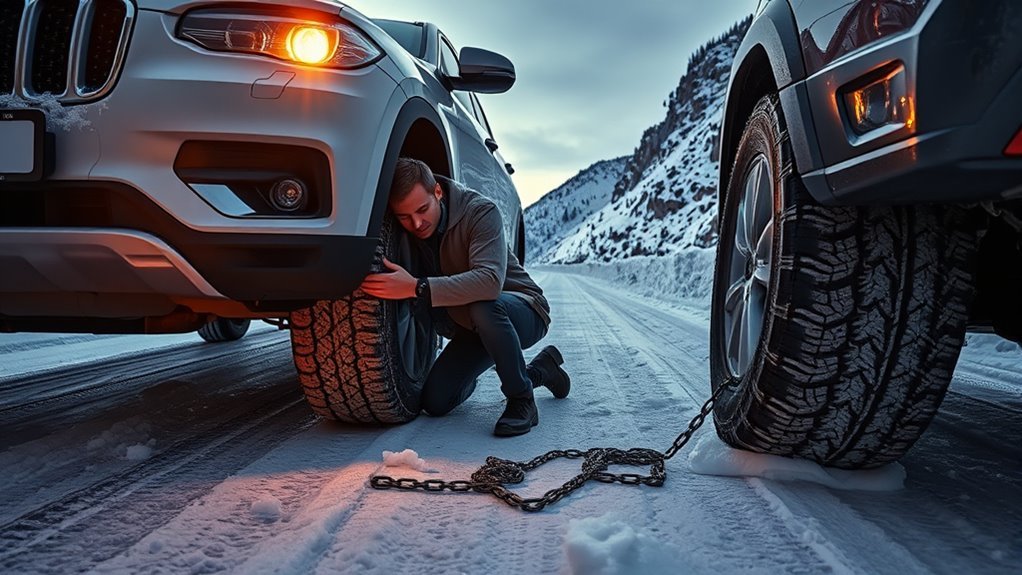
Install tire chains on the drive axle — that’s the axle your vehicle uses to put power to the road — because putting them elsewhere won’t give you effective traction and can harm handling. Lay chains flat first, check size against your tire, and clear debris or kinks. Use basic installation tools—gloves, a flashlight, and any tensioners or tighteners supplied—to simplify the job.
Drape the chain over the top of the tire, work it down evenly, connect fasteners, then move the vehicle a few feet and recheck alignment. Tighten per manufacturer instructions; loose chains chafe tires and fling metal. For liberation-minded drivers, mastering this lets you move freely in winter without dependence.
Common mistakes: wrong-size chains, tangled links, forgetting final tension, and driving on dry pavement. Those errors damage tires, chains, and roads. Follow a routine: inspect, size-check, lay out, install top-to-bottom, tension, and re-tension after a short drive. Regular tire chain maintenance extends life and keeps you safer.
Driving With Chains: Safe Speeds, Handling, and When to Remove Them
Drive at a steady 20–30 MPH with chains on, and don’t push the limits—higher speeds increase vibration, risk of chain failure, and tire damage. You control traction and freedom by staying slow, steering smoothly, and avoiding sudden maneuvers. Use these driving techniques to move confidently and protect equipment.
- Imagine steady progress: gentle throttle, calm steering, measured braking.
- Picture chains biting snow, not scraping dry pavement that ruins tread.
- Visualize checking tension at a safe stop, feeling secure before continuing.
- See yourself removing chains where roads clear, liberating speed and comfort.
- Envision a trailer axle fitted with chains, matching your commitment to safety.
Follow chain maintenance tips: inspect for broken links, retighten after short runs, and never drive on bare pavement. Remove chains as soon as road conditions allow to prevent damage. Check local signage and rules, but prioritize smart, controlled driving that keeps you free to go farther—safely.
Enforcement, Penalties, and Practical Travel Checklist for Chain Season
After you’ve mastered safe speeds and proper chain care, you’ll also need to know how rules and enforcement affect your travel plans. You must follow posted chain requirements (R-1, R-2, R-3 in California) and obey Caltrans and CHP signs on routes like I-80 and US 50; in California you get roughly one mile to install chains after signs appear. Enforcement methods include patrol checks, checkpoints, and signage-triggered orders during adverse conditions. Penalty escalation is real: fines commonly run $250–$750 for non-compliance that disrupts traffic, and can jump higher during snow emergencies (Colorado fines can escalate from $50 to $1,000 for not carrying chains between Sept 1–May 31). Practical checklist: carry correct chains, a hammer and gloves, practice installs, chain at least one axle on trailers, check fit before travel, watch for level-specific signs, and plan alternate routes. Stay prepared, comply quickly, and protect your freedom to travel safely.
Frequently Asked Questions
When Should You Not Use Tire Chains?
You shouldn’t use tire chains on dry pavement, when conditions improve or warming’s expected, if you’ve got compliant snow/all‑weather tires, or where tire chain restrictions or signs prohibit them—avoid fines, damage, and adverse weather misuse.
Do I Need Chains if I Have AWD and All Season Tires?
Like a shield that’s sometimes pierced, you still might need chains. You’ll gain AWD benefits and decent all season performance, but you’ll have to follow chain signs and rules — they can be mandatory in severe conditions.
Conclusion
When winter roads call for chains, be ready—think of chain controls like a lighthouse guiding you through fog. Check current R‑rules before you go, carry the right device for your axle, and practice installation so it’s second nature when snow hits. Drive cautiously, obey limits, and remove chains on clear pavement to avoid damage. Follow these steps and you’ll navigate California’s chain season confidently, legally, and without surprises.
Related Articles

Run-Flat Tires Explained: Safe Zero-Pressure Driving
Hesitant to change a tire? Discover how run‑flat technology lets you keep driving safely after a puncture—and what limits you must never ignore.
Read More
Signs You Need New Tires: Visual & Performance Clues
Lifelong safety starts with spotting tread wear, bulges, or vibration—learn the simple checks that tell you when tires must be replaced.
Read More
Tire Wear Indicator Bars: Built-In Safety Markers Decoded
On the brink of legal tread limits? Discover how tire wear indicator bars reveal danger and when to replace—read on to protect your ride.
Read More