
When to Use All-Terrain Tires on a Toyota RAV4: A Use-Case Guide
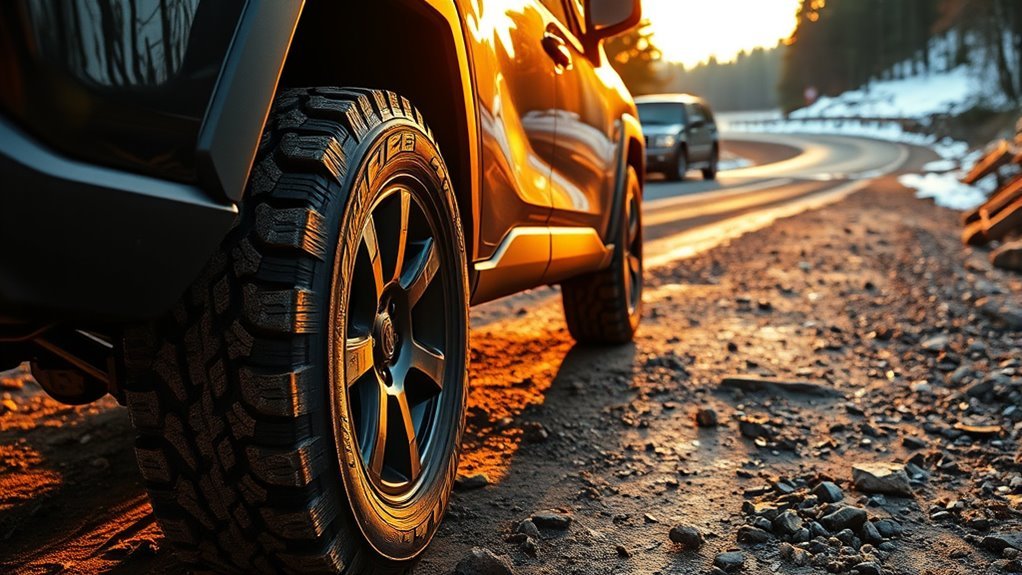
If you regularly drive unpaved roads, haul heavy gear, or face gravel and winter backroads, fit all‑terrain tires on your RAV4 for better traction, reinforced sidewalls, and puncture resistance; they match factory sizes (e.g., 225/65R17), must meet load and speed ratings, and require pressure checks to avoid underrating. Expect higher road noise, firmer ride, and a modest MPG drop. Follow fitment and safety checks before swapping, and the guide explains specifics and tradeoffs.
Quick Decision: Should a RAV4 Get All‑Terrain Tires?
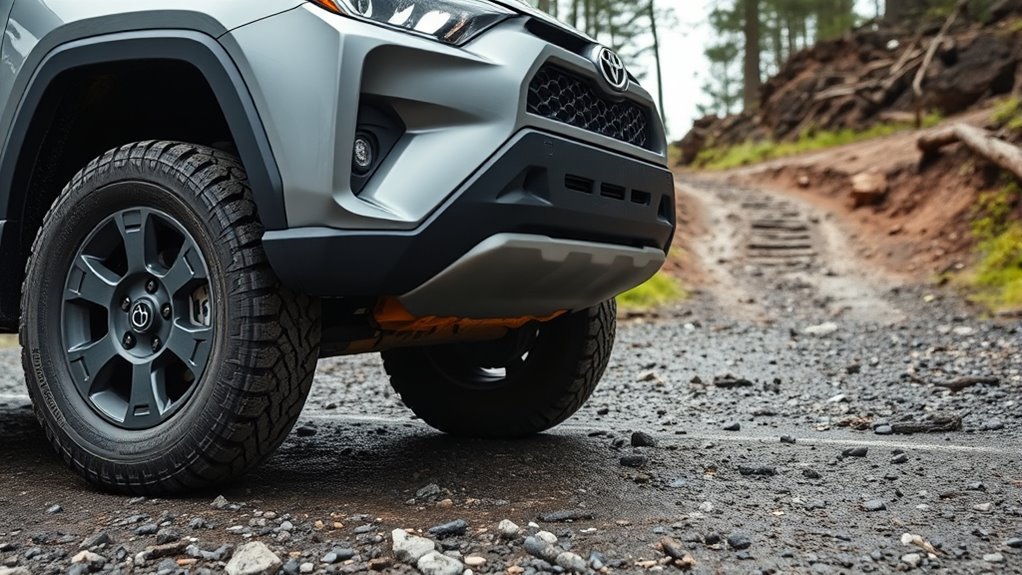
Thinking about all‑terrain tires for your RAV4? You should pick them if you regularly split time between paved roads and loose surfaces; their rugged tread patterns boost grip on gravel, dirt, and mud, so you’ll move with confidence off the beaten path. Inspect reinforced sidewalls for load capacity and puncture resistance if you haul gear or face rough trails, since they reduce the chance of a roadside failure. Expect a tradeoff: all‑terrain tread and increased rolling resistance can shave MPG and raise noise levels on highways, so weigh fuel cost and cabin quiet against freedom to explore. Prioritize safety—choose sizes and load ratings that match your RAV4, maintain correct pressures, and monitor wear to preserve braking and handling. If your driving habit liberates you from strict pavement-only routes, all‑terrain tires give measurable capability; if you mostly commute on smooth roads and prize low noise and economy, stick with all‑season rubber.
Match Your Driving: Commute vs. Weekend Adventure
If you mostly commute on paved roads, all‑terrain tires will give you more noise and higher rolling resistance than highway‑oriented tires, so you’ll sacrifice fuel economy and cabin quiet for off‑road capability; conversely, if your weekends take you onto gravel, mud, or snow‑packed trails, all‑terrain rubber delivers the traction and reinforced sidewalls needed for safer, more stable outings. Decide by quantifying how you use the RAV4: daily miles on pavement versus miles or hours off road.
- Assess usage: log commuting preferences — percent paved commute, frequency of weekend trips, typical surfaces — then compare expected fuel and noise tradeoffs.
- Gear and load: if you carry heavy gear, choose AT tires with reinforced sidewalls for load support and consistent handling when you push off road readiness.
- Weather and safety: prioritize tires rated for light snow and mud if you need year‑round confidence; prioritize highway tires if liberation means efficient, quiet city driving.
Match tire selection to measured habits, not aspiration.
RAV4 Fitment Rules: Sizes, Load & Speed Ratings
Because your RAV4’s tires are a primary safety component, stick to correct sizes, load ratings and speed codes to preserve handling, braking and fuel economy. Use the factory 225/65R17 or an approved equivalent to keep steering geometry and clearance intact. Check load indexes (typically 94–102) so each tire supports 1,477–1,764 lb; underrating sacrifices safety. Observe speed ratings—T or H—to match legal and dynamic limits. When fitting all‑terrain tires, confirm no rubbing in turns or on suspension travel.
| Item | Typical RAV4 Range |
|---|---|
| Tire size | 225/65R17 |
| Load rating | 94–102 |
| Load per tire | 1,477–1,764 lb |
| Speed rating | T (118 mph), H (130 mph) |
| Fit concern | Clearance/turning rub |
Respect tire specifications to control the vehicle’s behavior; improper fits change handling and fuel use. You’ll stay safe and free to explore when you choose tires that balance rugged capability with verified performance implications.
What You’ll Give Up (And Gain) With AT Tires
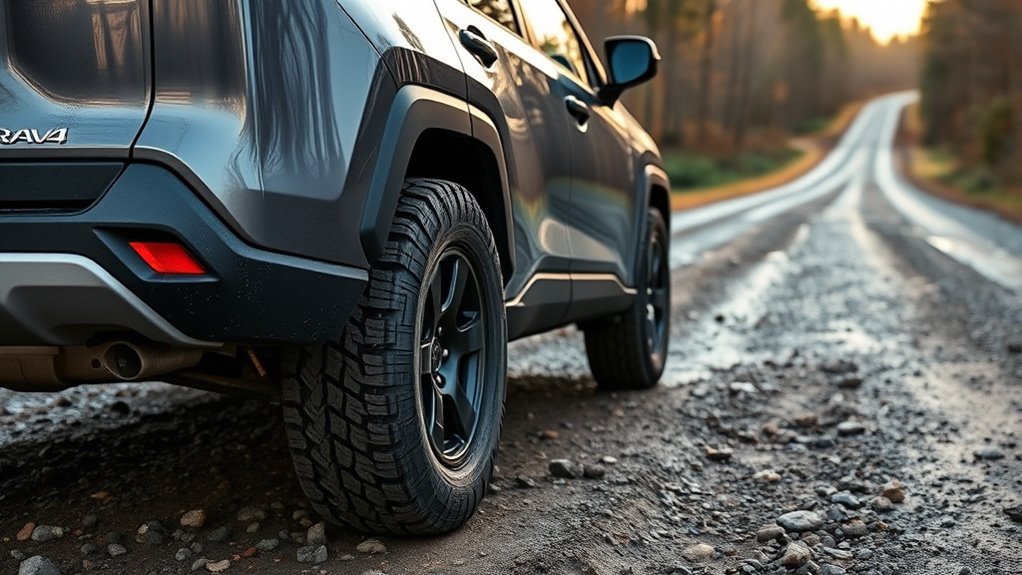
Switching your RAV4 to all‑terrain tires means you’ll trade a quieter, softer highway ride and a bit of MPG for tougher traction and durability off‑road. Expect more road noise, firmer ride feedback, and slightly higher rolling resistance that can reduce fuel economy and alter pavement braking distances. If you regularly tackle gravel, mud, or rugged trails, the gains in puncture resistance and surface grip improve safety and capability where it counts.
Ride Quality Trade-Offs
When you fit all‑terrain tires on a RAV4, expect a noticeable trade‑off between off‑road capability and on‑road comfort. You’ll gain grip on dirt, gravel, and mud, but ride comfort and noise levels will change: firmer sidewalls make bumps sharper and aggressive treads raise highway noise, which you should plan for on long drives.
- Handling: You’ll lose some steering precision and responsiveness in tight turns compared to highway tires; adjust speeds and line choice accordingly for safety.
- Cushioning: Expect a firmer ride—minor road imperfections transmit more—so inspect tire pressure and suspension to maintain control.
- Noise management: Use wheel balancing and noise-damping measures inside the cabin to reclaim calm without sacrificing freedom.
Fuel Economy Losses
If you fit all‑terrain tires on your RAV4, expect measurable fuel economy losses: AT tires raise rolling resistance and can cut fuel efficiency by roughly 10–20% versus all‑season rubber. You’ll commonly see a 1–3 MPG drop, with aggressive tread designs (Falken Wildpeak AT Trails among them) producing notable reductions in tire performance on pavement. That means more frequent fill‑ups and altered trip planning if you value range. Stay safe and liberated by matching tire choice to mission: reserve ATs for mixed‑surface routes and switch back for long highway commutes. Monitor real‑world MPG, maintain proper inflation, and track tread wear—those hands‑on steps minimize losses and let you control the trade‑offs between traction and on‑road efficiency.
Off-Road Capability Gains
Although you’ll gain noticeably better traction on gravel, mud, and dirt thanks to AT tires’ open-tread patterns and reinforced sidewalls, you’ll also accept trade-offs in on-road behavior and comfort. You get clear traction improvement and terrain adaptability that let you push farther off pavement with confidence and reduced puncture risk. Still, expect more cabin noise, lower MPG, and longer braking distances on highways; plan routes and speeds accordingly.
- Durable construction — reinforced sidewalls let you carry heavier loads and resist cuts on technical trails.
- Grip and control — aggressive tread increases bite in loose surfaces, improving climb and cornering safety off-road.
- On-road compromises — higher rolling resistance reduces fuel economy and can blunt steering feedback; adjust driving style.
Best AT Tires for Different RAV4 Uses
Because your RAV4 sees different duties—from daily commuting to muddy trails,you should match tire characteristics to the task: Falken Wildpeak features give you a balanced choice for daily driving with occasional light off‑road use—rugged tread without excessive noise. If you push into mud and rock regularly, choose BFGoodrich performance‑oriented All‑Terrain T/A KO2 for its aggressive lugs and proven durability. When you want reduced cabin noise and predictable handling across mixed surfaces, the General Grabber comfort‑focused ATX preserves versatility with quieter tread engineering. For winter routes, opt for Goodyear winter‑equipped Wrangler All‑Terrain Adventure to retain traction in snow and ice while keeping off‑road capability. If you prize lower rolling resistance and longer range between fills, the Toyo efficiency‑minded Open Country A/T III minimizes fuel penalty without giving up competent trail grip. Match tire choice to your dominant use, inspect tread and pressures before trips, and prioritize load ratings and traction for safe, liberated exploration.
How AT Tires Affect MPG, Noise, and Ride on RAV4
When you fit all‑terrain (AT) tires to a RAV4, expect measurable trade‑offs in fuel economy, cabin noise, and on‑road comfort that will affect daily safety margins and trip planning. You’ll gain off‑road traction performance but lose some efficiency and refinement; Falken Wildpeak‑style aggressive tread patterns increase rolling resistance and can reduce fuel efficiency by up to ~20% versus highway tires. That affects range and acceleration under load.
- Fuel and performance: Higher rolling resistance cuts MPG and slightly dulls throttle response; plan fuel stops and adapt driving habits to conserve range.
- Noise and cabin impact: Deep tread blocks raise noise levels at highway speeds; secure cargo and reduce in‑car distractions to maintain safety.
- Comfort and control: Stiffer tread and sidewalls degrade ride comfort and braking feel on pavement; reduce speeds on uneven surfaces to keep control.
Choose ATs when you need liberation off‑road, but respect these quantifiable trade‑offs on daily roads.
Quick Checklist: Keep Stock Tires or Upgrade to AT?
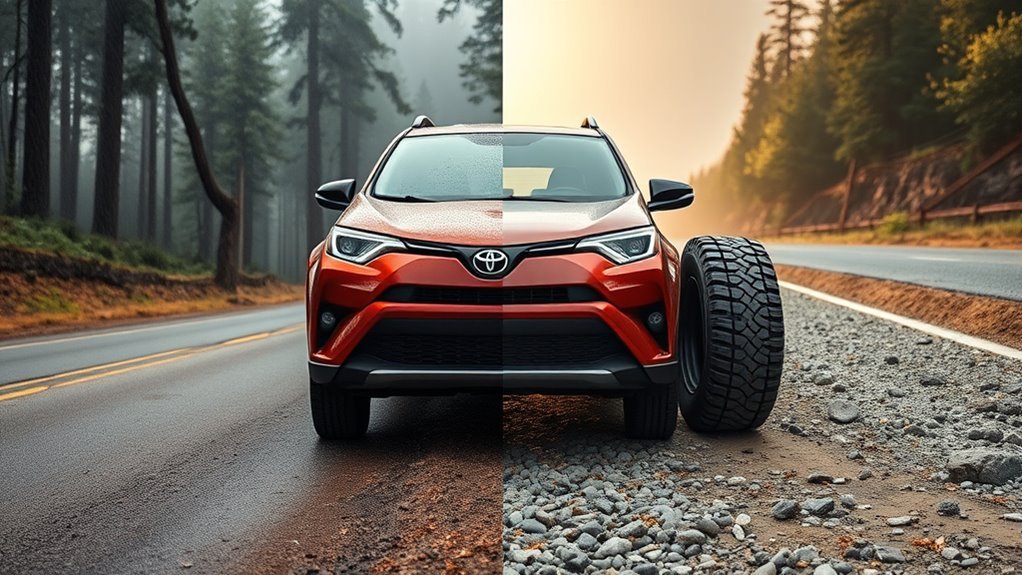
Need help deciding whether to keep your RAV4’s stock tires or step up to all‑terrains? Assess these decisive factors and act with purpose.
1) Driving patterns: If you regularly tackle unpaved roads, gravel, or trails, upgrade—ATs give measurable traction and stability improvements. Perform a terrain evaluation: log frequent surfaces and hazard types.
2) Weather and seasonality: For mixed wet/dry climates, ATs deliver year‑round reliability. If you live in mild, paved-only regions, stock tires suffice.
3) Load and usage: Carrying heavy gear? Choose ATs with reinforced sidewalls to reduce puncture risk and structural strain. This protects you and your payload.
4) Comfort and economy: Expect increased road noise and slightly reduced fuel efficiency; weigh liberation from limitations against these tradeoffs.
5) Maintenance and safety: Keep strict tire maintenance—proper pressure, rotation, and inspections—regardless of choice.
If your answers favor off‑pavement, weight, or variable weather, upgrade. If comfort, MPG, and quiet matter most, keep stock.
Frequently Asked Questions
When to Use All-Terrain Tires?
Use all-terrain tires when you split driving between pavement and trails; they deliver off road benefits, improved traction and tire durability, so you’ll confidently tackle gravel, mud, or snow while prioritizing safety and adventurous freedom.
Is RAV4 Ground Clearance Enough for Trails?
Yes — your RAV4’s ground clearance generally handles moderate trail conditions, but you’ll want all-terrain tires and possibly vehicle modifications for aggressive routes; prioritize traction, skid protection, and conservative lines to stay safe and free.
Conclusion
Decide based on how you drive: keep stock tires for quiet, efficient commuting; choose all‑terrain for weekend trails, snow routes, or rough jobs. Match tire size, load and speed ratings to your RAV4, expect a small MPG and noise tradeoff, and accept firmer steering feedback. Inspect tread, rotations, and pressures more often. Prioritize correct fitment and braking performance, and swap back if your daily miles, comfort, or fuel economy matter more.

Related Articles

Upsizing Wheels on a Toyota RAV4: Pros, Cons, and Considerations
Boost your Toyota RAV4's performance with larger wheels, but discover the hidden trade-offs that could impact your ride before you decide.
Read More
Can I Change Tire Size on My Toyota RAV4? Rules and Recommendations
Are you considering changing the tire size on your Toyota RAV4? Discover the essential rules and recommendations before making a decision.
Read More
What to Do If the TPMS Light Comes On in Your RAV4
Understand the steps to take when the TPMS light illuminates in your RAV4, as overlooking it could lead to serious tire problems.
Read More