
What Is Hydroplaning and How to Avoid It in Your RAV4
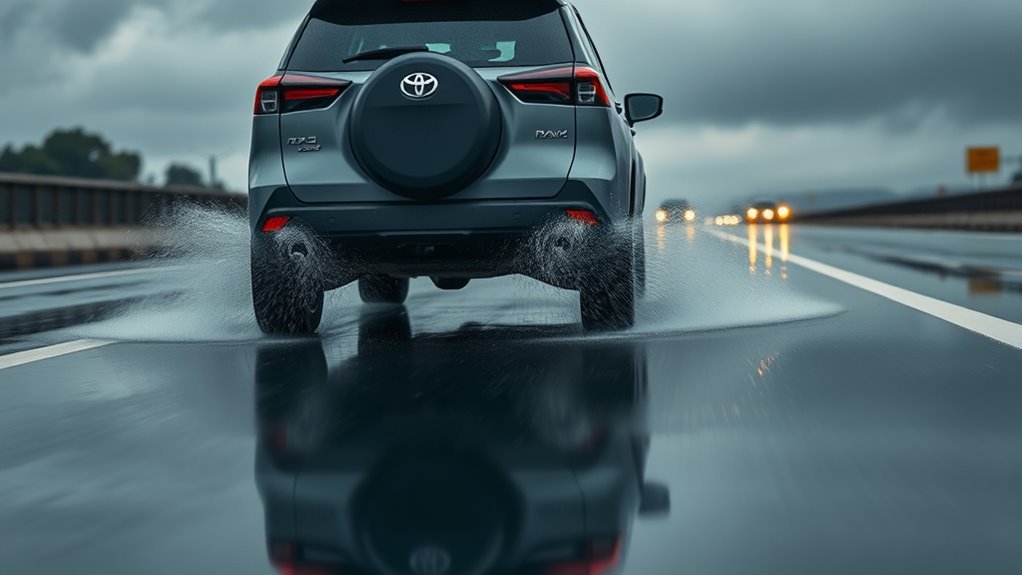
Hydroplaning happens when water lifts your RAV4’s tires off the road, cutting traction and steering control—often above ~35 mph or in the first minutes of rain when oil mixes with water. To avoid it, keep tires at manufacturer pressure, replace tread below 4/32″, slow before wet zones, disable cruise control, and follow farther for smooth inputs. If it occurs, ease off the throttle and steer gently until grip returns. Continue for practical tire and technique specifics.
What Hydroplaning Is and Why RAV4 Drivers Should Care

When a thin layer of water separates your RAV4’s tires from the road, your vehicle loses traction and steering/braking control — that’s hydroplaning, and it’s a real hazard in wet conditions. You need to recognize hydroplaning effects as a loss of contact that renders steering inputs and braking ineffective, especially above 35 mph. That speed threshold isn’t arbitrary; dynamic lift and reduced friction combine to float the tire on water. The first 10 minutes of rain are particularly treacherous because roadway oils mix with water, lowering friction dramatically. You’re not powerless: disciplined tire maintenance—correct inflation, sufficient tread depth, scheduled inspections and rotations—reduces the risk by preserving channels that evacuate water. Practically, you’ll slow sooner when rain begins, avoid abrupt maneuvers, and treat wet surfaces with suspicion. This technical awareness liberates you from false confidence, letting you make precise choices that keep control when conditions degrade.
How Your RAV4’s Tires Actually Hydroplane
Although you may not feel it, hydroplaning starts at the tire surface: water fills tread channels faster than the rubber can evacuate it, creating a pressurized film that lifts the contact patch off the pavement. You rely on tread patterns to channel water away; when they can’t, a continuous hydrodynamic wedge forms between rubber and road, cutting lateral and longitudinal grip. Worn tread depth below 4/32 inches, or irregular wear from poor tire maintenance, reduces channel capacity and raises the film’s pressure more quickly. Under-inflation compounds this by altering the contact patch shape, making displacement less efficient. Your RAV4’s AWD can help stabilize yaw, but it won’t restore traction once a film separates rubber from asphalt. To reclaim control, you’ll need disciplined inspection: measure tread depth, monitor pressure, rotate and replace tires before performance degrades. These precise actions free you from false security and directly lower the physical conditions that allow hydroplaning to occur.
Speeds and Water Depths That Cause Hydroplaning in a RAV4
You should expect hydroplaning to start around 35 mph on just 0.1 inch of standing water, and the hazard rises rapidly above 40 mph as water depth increases. Consider that deeper puddles substantially raise the speed at which tires lose contact, while worn tread or lighter vehicle weight—both possible with a RAV4—lower those thresholds. Use reduced speed and route choices based on puddle depth and your tire condition to maintain traction.
Speed Thresholds For Hydroplaning
Because even modest water depths can overwhelm tire contact, a RAV4 with standard tires can begin to hydroplane at about 35 mph when water is deeper than 0.1 inch, and the risk climbs rapidly with speed—around 40 mph shallow water may already cause loss of traction, while depths of 0.25 inch or more make hydroplaning likely above roughly 45 mph; low tire pressure, light vehicle weight, and tread below 4/32 inch further lower these thresholds. You need hydroplaning awareness and disciplined tire maintenance to stay free: monitor pressure, check tread, and reduce speed in wet conditions.
| Speed (mph) | Water depth | Likelihood |
|---|---|---|
| 35 | ≥0.1 in | Possible |
| 40 | Shallow | Increased |
| 45+ | ≥0.25 in | Likely |
Water Depth Impact Estimates
When water depth reaches about 0.1 inch, a RAV4 can begin to hydroplane at roughly 35 mph, and your risk climbs sharply above 40 mph even in shallow standing water; depths of 0.25 inch or more make hydroplaning likely at higher speeds, especially with tread below 4/32 inch or underinflated tires. You should treat the water surface as an active layer that impedes tire contact area; at increasing depths the dynamic lift overcomes friction, reducing steering and braking control. Monitor speed relative to depth: reduce well below 35–40 mph in measurable standing water. Inspect tire materials and tread depth regularly, and correct inflation to maintain channeling performance. These practical limits preserve your agency and let you control momentum in wet conditions.
RAV4 Weight And Tires
Vehicle mass and tire condition directly change how a RAV4 interacts with standing water, and they’ll determine the speeds and depths at which hydroplaning becomes likely. You should recognize that RAV4 weight affects contact pressure: lighter load raises hydroplaning susceptibility at higher speeds. At over 40 mph, more than 1/10″ of water can induce hydroplaning, especially with worn tread or improper pressure.
| Factor | Effect |
|---|---|
| RAV4 weight | Lower mass → higher risk at given speed |
| Tire maintenance | Worn tread/low pressure → reduced water expulsion |
| Tread design | Improves grip; critical for safety |
Maintain proper tire pressure, monitor tread depth, and replace tires on schedule. These steps free you from avoidable loss of control.
How Tread, Pressure, and Width Affect RAV4 Hydroplaning Risk
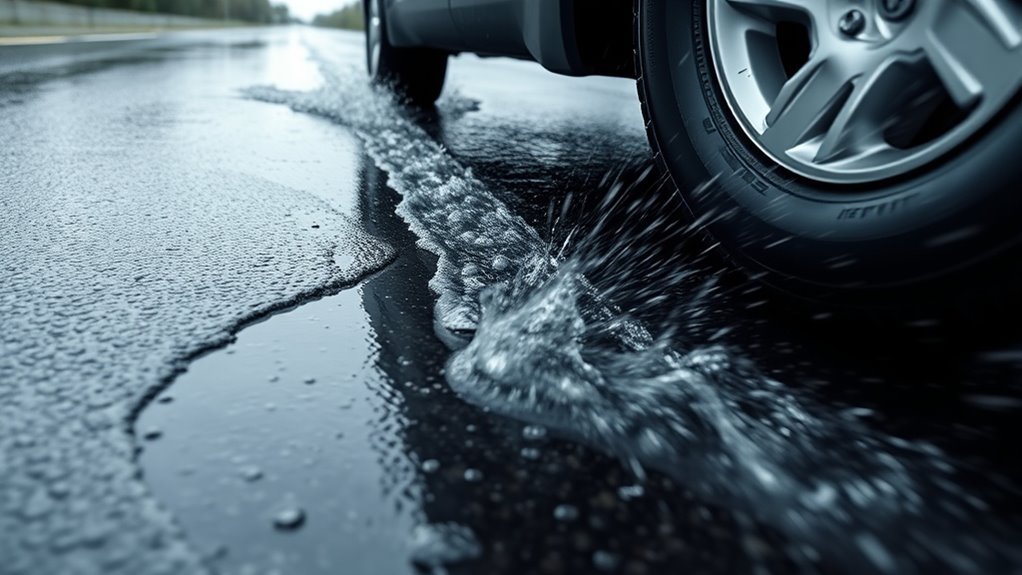
If you want to reduce hydroplaning risk on your RAV4, pay attention to tread depth, tire pressure, and width: tires with at least 4/32″ of tread expel water more effectively, correctly inflated tires maintain proper road contact, and appropriate tire width balances water displacement with hydroplaning susceptibility. You should practice disciplined tire maintenance—regular rotation preserves even wear so tread patterns remain effective across all four corners. Check pressure monthly and before long trips; under-inflation flattens the contact patch, reduces water-shearing ability, and raises hydroplaning likelihood. Consider width pragmatically: excessively narrow tires can cut through standing water but may reduce overall grip; overly wide tires increase contact area and can shed more water but may also ride higher on deep water if tread is worn. Your freedom to drive confidently in rain comes from predictable, maintained tires—measure tread depth, keep correct inflation, and rotate on schedule to sustain wet-weather performance and minimize hydroplaning risk.
Best Tire Tread Types and Features for RAV4 Rain Performance
Start by prioritizing tread depth and pattern: deeper grooves and larger voids evacuate water faster, reducing hydroplaning potential on your RAV4. Select tire tread designs with pronounced circumferential channels and wide lateral voids to force water out from under the contact patch; this directly lowers film thickness and restores rubber-to-road contact. Favor dedicated wet-traction compounds that stay pliable at lower temperatures and boost adhesive grip on slick surfaces. All-season designs offer compromise performance—adequate in light rain and dry conditions—but for liberation from risk in heavy rain, choose tires engineered specifically for wet performance. Maintain recommended inflation; even the best tread can’t perform if under-inflated. Inspect tread depth regularly and replace tires before grooves approach legal minimums to preserve evacuation capability. Finally, match tread width to typical load and speed: excessive width can increase hydroplaning tendency by reducing pressure per unit area, so choose a balanced size specified for your RAV4.
Driving Techniques to Avoid Hydroplaning in Your RAV4
Start by reducing speed well before wet zones—keeping your RAV4 under about 35 mph preserves tire contact and hydraulic traction. Use smooth, deliberate steering inputs and avoid abrupt corrections so you don’t break traction if water reduces grip. Disable cruise control in rain so you can modulate speed and respond immediately to any loss of control.
Reduce Speed Early
When roads are wet, slow down well before you hit standing water so your RAV4’s tires can maintain contact and channel water away; reducing speed to under 35 mph sharply lowers hydroplaning risk and gives you time to respond to deeper puddles. You should practice speed awareness as a deliberate habit, reducing throttle input when you see puddles or rising spray. Don’t rely on cruise control in rain — manual control prevents abrupt acceleration that can induce hydroplaning. Keep increased following distance to permit smooth deceleration and controlled inputs. Verify tire pressure and tread depth regularly; proper inflation and adequate tread let your tires displace water more effectively. Dispel hydroplaning myths that imply you can outdrive physics; proactive speed reduction liberates control.
Smooth Steering Inputs
Although your RAV4 may feel like it’s sliding out from under you, keep your hands steady and make small, deliberate steering inputs to regain traction; abrupt or large movements will worsen lateral slip. You’ll rely on measured steering techniques and calm judgment to restore vehicle control. Apply these steps precisely:
- Keep grip firm but relaxed; avoid jerky corrections.
- Steer gently toward your intended path, matching wheel input to road feedback.
- Make incremental adjustments—think degrees, not turns—to prevent oversteer.
- Combine smooth inputs with steady throttle or light deceleration; avoid sudden braking.
Maintain tire pressure and tread to support responsive steering. Practicing these techniques frees you from panic, letting disciplined inputs and calibrated vehicle control reclaim stability in wet conditions.
Avoid Cruise Control
Because cruise control holds speed regardless of changing road grip, you should disengage it in wet conditions to retain full, immediate control over your RAV4’s throttle and braking. You want direct input over speed so you can reduce velocity proactively when you detect standing water or decreased traction. Cruise control can mask subtle loss of grip and may command acceleration into patches of water, increasing hydroplaning risk. Maintain a cautious, manually controlled pace, modulating throttle smoothly and anticipating surface changes. If hydroplaning begins, avoid sudden inputs; lift off the accelerator and steer straight until traction returns. Reject automation that inhibits rapid response — manual control in wet conditions preserves your ability to adapt and liberates you from system-imposed risk.
What to Do If Your RAV4 Starts to Hydroplane
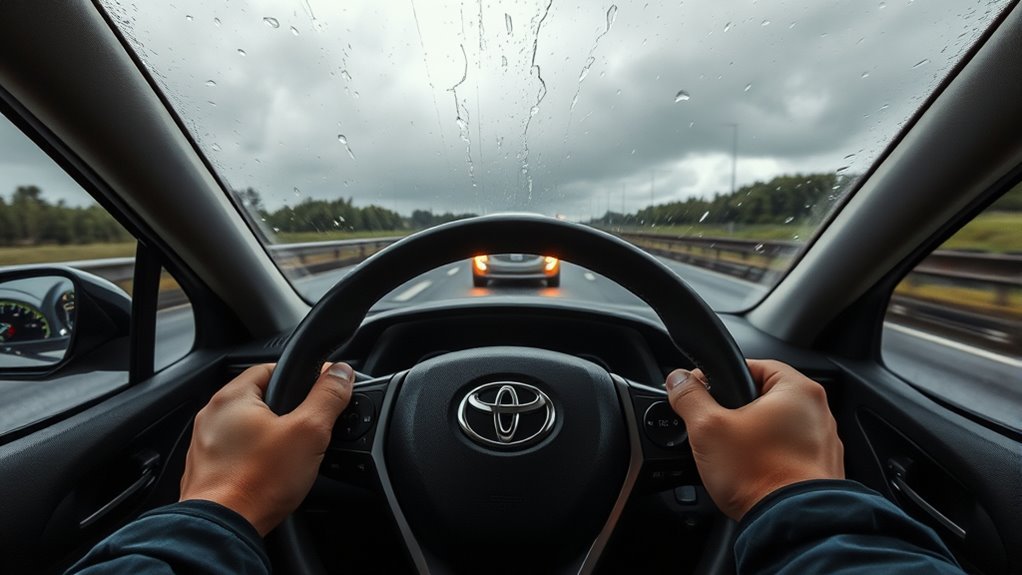
If your RAV4 starts to hydroplane, ease off the accelerator gently to let the tires regain contact with the road and avoid abrupt braking that can worsen the loss of traction. Stay calm; panic inputs amplify instability. Steer smoothly in the direction you want the front to go and resist overcorrection. If your vehicle has ABS, apply steady pressure—don’t pump the brakes.
- Keep hands steady and make measured steering corrections to reclaim directional control.
- Maintain a composed breathing and focus routine to prevent reflexive, destabilizing inputs.
- Use ABS properly: firm, continuous pressure preserves steering authority during braking.
- After control returns, evaluate conditions and address hydroplaning myths—recognize that speed and water depth, not fate, dictate risk.
You’ll liberate yourself from fear by practicing measured responses and prioritizing tire maintenance—tread depth and correct inflation reduce recurrence and restore confidence on wet roads.
Routine Maintenance Checks to Reduce Hydroplaning Risk
1 key way to cut your hydroplaning risk is to keep the vehicle’s underpinnings and contact surfaces in spec through routine maintenance checks. You should verify tire pressure to manufacturer specifications monthly; under‑inflation raises the contact patch and increases hydroplaning propensity. Measure tread depth with the Lincoln penny test and plan replacement when tread reaches 4/32 in. Rotate tires on schedule and inspect for uneven wear—address issues promptly to preserve wet traction.
Include tire alignment checks during service intervals because misalignment causes uneven wear and reduces water evacuation. Perform a suspension inspection to confirm dampers, bushings, and linkages maintain ride height and wheel control; compromised suspension degrades stability when water reduces tire grip. Check brakes for consistent modulation and replace windshield wipers as needed to maintain clear visibility. These targeted, routine tasks free you from avoidable risk and keep your RAV4 poised to respond when roads get wet.
Choosing and Replacing RAV4 Tires: When and What to Buy
Having kept your RAV4’s inflation, tread depth, alignment, and suspension in spec, the next safeguard is selecting and replacing tires that maintain wet traction. You’ll prioritize tire selection and tread maintenance to resist hydroplaning rather than react to it. Look for deeper tread patterns and consider all-season or dedicated rain tires to improve water evacuation and channeling. Use the Lincoln penny test and replace tires at 4/32″ for peak wet performance. Inflate to manufacturer pressure and rotate tires on schedule to preserve even wear.
- Choose tires with deep, asymmetric grooves for efficient water displacement.
- Replace at 4/32″ and document tread measurements each inspection.
- Maintain recommended PSI; under-inflation raises hydroplaning risk.
- Rotate every 5,000–7,500 miles to equalize wear and sustain grip.
These practical measures free you from unnecessary risk, letting you drive confidently in wet conditions while maximizing safety and control.
Frequently Asked Questions
What Are Two Tricks to Avoid Hydroplaning?
You’ll use tire maintenance and speed control: keep tires properly inflated with sufficient tread and monitor pressure; reduce speed in standing water, avoid cruise control, and drive in cleared tracks so you stay liberated and safely in control.
What Are Two Biggest Causes of Hydroplaning?
The two biggest causes are poor tire maintenance—worn or underinflated tires failing to displace water—and excessive water accumulation on the roadway; you’ll want proactive upkeep and route choices to reclaim control and reduce risk.
Conclusion
Hydroplaning can strike quickly, so stay proactive: check tread depth, tire pressure, and replace wide, worn tires before wet seasons. Drive at reduced speeds in standing water, follow tracks of vehicles ahead, and avoid abrupt steering or braking—your RAV4 must be treated like a precision instrument, not a bumper car. If you start to hydroplane, gently ease off the accelerator and steer straight until grip returns. Routine inspections cut risk like a scalpel.

Related Articles

Upsizing Wheels on a Toyota RAV4: Pros, Cons, and Considerations
Boost your Toyota RAV4's performance with larger wheels, but discover the hidden trade-offs that could impact your ride before you decide.
Read More
Can I Change Tire Size on My Toyota RAV4? Rules and Recommendations
Are you considering changing the tire size on your Toyota RAV4? Discover the essential rules and recommendations before making a decision.
Read More
What to Do If the TPMS Light Comes On in Your RAV4
Understand the steps to take when the TPMS light illuminates in your RAV4, as overlooking it could lead to serious tire problems.
Read More