
What Are Tires Made Of? A Look at Toyota RAV4 Tire Composition
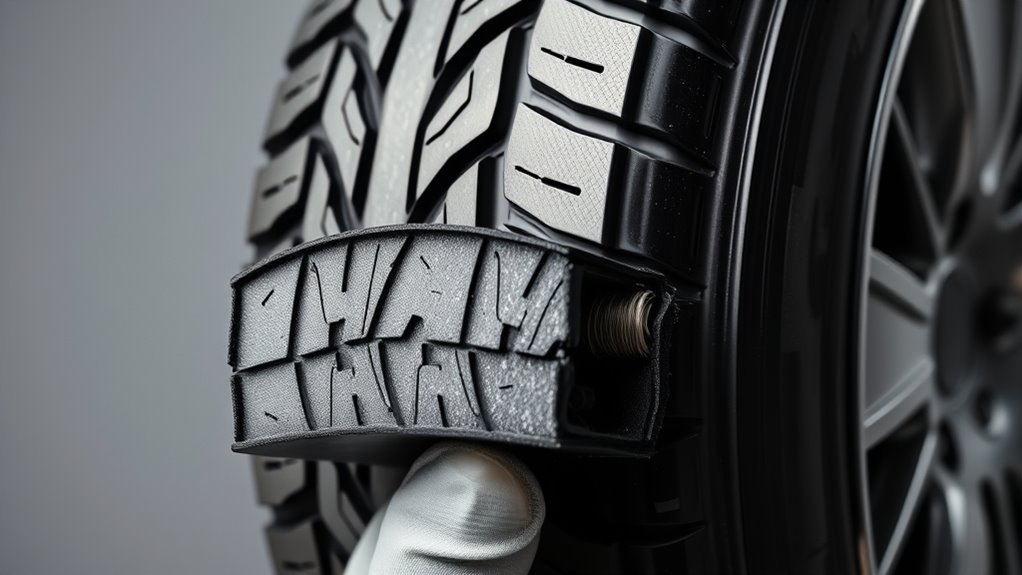
Your RAV4’s tires use a calculated mix of natural and synthetic rubbers, steel belts, and textile cords to balance grip, wear, and fuel efficiency. Natural rubber provides flexibility and tear resistance; synthetics improve heat tolerance and rolling resistance. Steel belts and bead cores stabilize the tread and rim interface, while nylon, polyester, or aramid cords shape strength and ride. Fillers like carbon black and silica tune durability and traction, and internal liners retain air — keep going to get the specifics.
What RAV4 Owners Need to Know About Tire Materials (Quick Take)
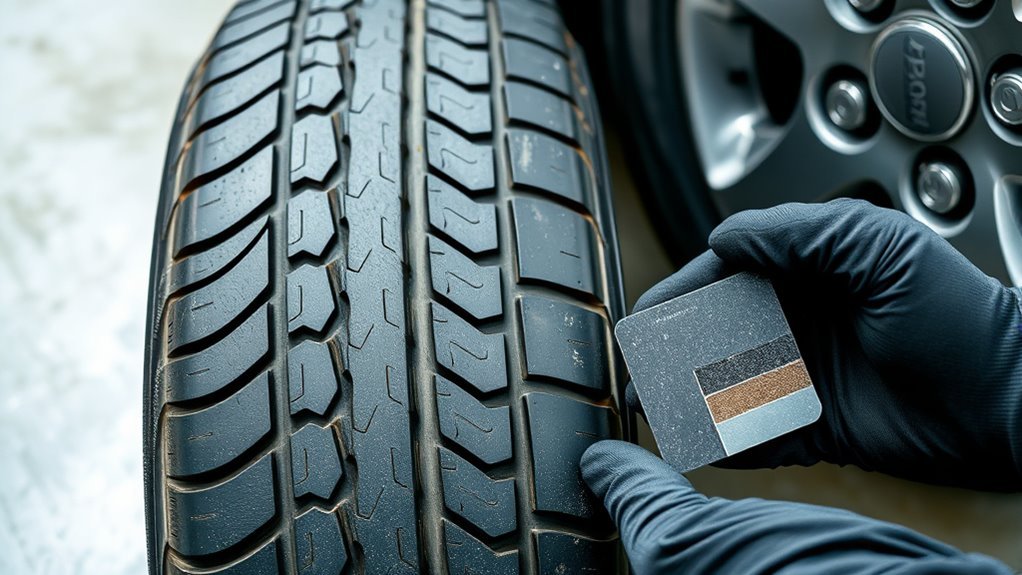
Although you may not notice them, the tires on your Toyota RAV4 combine natural and synthetic rubbers with steel cords and textile reinforcements to balance tear resistance, grip, and structural stability. You’ll appreciate that natural rubber—about 28% of tire weight—provides sidewall flexibility and tear resistance, while synthetic rubbers like styrene-butadiene are compounded in the tread to optimize grip across conditions and extend tire longevity. Steel cords form the carcass’s backbone, delivering lateral strength that sharpens handling and reduces irregular wear, and textile plies fine-tune ride compliance. Fillers such as carbon black and silica lower rolling resistance and bolster durability, improving fuel efficiency without sacrificing traction. Evaluating these components against quantifiable performance metrics—treadwear ratings, rolling resistance coefficients, and tensile strength—lets you choose tires that free you from frequent replacement cycles and constrained performance. You’ll then select rubber and reinforcement balances aligned with your liberation-focused driving priorities.
Natural vs. Synthetic Rubber in RAV4 Tires
You’ll see natural rubber in RAV4 tires imparting superior traction, flexibility, and tear resistance—especially in the sidewall where it accounts for roughly 28% of tire weight. You’ll also encounter synthetic rubbers like styrene-butadiene in the tread, which improve temperature resilience and reduce rolling resistance but can trade off some low-temperature grip and biodegradability. Evaluating blends and carbon-black filler lets you quantify the balance between comfort, wear life, and performance for your driving conditions.
Natural Rubber Benefits
Because natural rubber combines high tear and fatigue resistance with viscoelastic damping, it plays a critical role in RAV4 tire performance by improving traction, durability, and ride comfort across variable road and weather conditions. You’ll recognize natural rubber advantages when you evaluate tire performance factors: about 28% of a tire’s weight, it provides superior tear and fatigue resistance that extends service life on rough terrain. Its viscoelasticity absorbs impact energy, maintaining grip and reducing vibration, so your ride stays smoother and more controlled. When blended with synthetic elastomers, natural rubber helps optimize rolling resistance, supporting fuel efficiency and lower emissions. This composition strategy gives you reliable traction and durability without sacrificing comfort, aligning technical performance with practical freedom on diverse roads.
Synthetic Rubber Tradeoffs
Moving from natural rubber’s strengths, you now need to weigh how synthetic elastomers alter tire behavior and trade off against natural compounds. You’ll find synthetic rubber advantages include improved rolling resistance, enhanced heat tolerance, and greater longevity under varied temperatures, which collectively raise fuel efficiency and service life for the RAV4. Natural rubber still supplies superior tear and fatigue-crack resistance and contributes to wet/dry traction, so blends target complementary properties. You should assess synthetic rubber limitations—dependency on petroleum feedstocks and typically reduced inherent resilience versus natural polymers—against performance gains. The engineered compromise balances cost-effectiveness and safety: by calibrating compound ratios, manufacturers free you from one-size-fits-all constraints and optimize real-world reliability.
Steel Belts & Bead Cores for RAV4: What They Do
You’ll find the steel belts in a RAV4 tire maintain tread geometry at speed, using high‑strength steel to lower rolling resistance and marginally improve fuel economy. The bead core—steel wire embedded in rubber—locks the tire to the rim, ensuring a consistent contact patch and crisp steering response. Together, these elements raise directional stability and handling precision, improving control during turns and under load.
Steel Belt Function
One key structural element in RAV4 tires is the steel belt, which uses high-tension steel cords to stiffen the tread area, maintain shape under load, and reduce high-speed deformation. You’ll find steel belt advantages in stability, wear resistance, and lower rolling resistance, delivering measurable performance enhancements and fuel-efficiency gains. The belts preserve tread geometry, so handling remains precise and predictable even under cornering forces. You benefit from extended service life and consistent response, aiding liberation from frequent replacements.
| Function | Effect | Benefit |
|---|---|---|
| Rigidity | Reduces deformation | Improved handling |
| Shape retention | Maintains footprint | Consistent wear |
| Low rolling resistance | Less energy loss | Better fuel economy |
Bead Core Purpose
After stiffening the tread with steel belts to preserve footprint and reduce deformation, the tire’s bead core takes over at the rim interface to lock the tire to the wheel. You rely on the bead core — steel wire embedded in rubber — to form a mechanically precise seal that prevents slippage and maintains tire stability under load. That embedded steel resists radial and circumferential forces while bead reinforcement of nylon or aramid fibers boosts directional control. Together with the belts, the bead core preserves structural geometry across speed and terrain, enabling predictable, liberated mobility. You expect durability and secure mounting; the bead core delivers by anchoring the tire to the rim, minimizing interface movement and protecting overall tire integrity.
Impact On Handling
While the steel belts and bead core may be unseen, they directly shape how your RAV4 responds to steering inputs and road forces by preserving tire geometry and wheel interface under load. You’ll notice firmer lateral stability and reduced tread distortion during high-speed cornering because steel belts add axial and radial rigidity, improving tire performance and limiting uneven wear. The bead core’s steel wire secures the tire to the rim, delivering immediate steering response and refined directional stability, especially under braking or abrupt maneuvers. Steel reinforcement sustains carcass shape across load variations and aids heat dissipation, lowering blowout risk and extending service life. Together, these engineered elements refine handling dynamics, giving you controlled, predictable feedback that supports confident, liberated driving.
Textile Cords: Why Nylon, Polyester, and Aramid Matter to RAV4 Drivers
Because textile cords form the internal skeleton of RAV4 tires, choosing the right fibers—nylon, polyester, and aramid—directly affects strength, flexibility, thermal behavior, and overall performance. You rely on textile reinforcement to translate suspension inputs into predictable contact-patch behavior; nylon adds durability and puncture resistance, polyester maintains shape and high-speed stability, and aramid reduces weight while improving heat tolerance. This engineered mix optimizes handling, fuel efficiency, and service life without compromising liberation-driven control.
- Nylon: impact resistance and durability for varied roads.
- Polyester: dimensional stability and shape retention at speed.
- Aramid: high strength-to-weight ratio and thermal resilience.
You’ll appreciate how each fiber’s mechanical properties address specific tire demands, letting you push boundaries with measured confidence. The technical balance of elasticity, modulus, and thermal response determines ride quality and safety; selecting cords aligned to your driving aims yields tangible performance gains and extended tire longevity.
Fillers & Additives: Carbon Black, Silica, Antioxidants and Effects
Textile cords set the tire’s structural behavior, but the rubber compound—modified with fillers and additives—controls how that skeleton performs under real-world conditions. You’ll find carbon black reinforcing the rubber matrix, reducing heat buildup and improving wear resistance to extend tire longevity. Silica lowers rolling resistance and sharpens wet traction, shifting the performance balance toward efficiency without sacrificing grip. Antioxidants and antiozonants stabilize the polymer against oxygen, heat, and ozone, preventing surface cracking and molecular breakdown that shorten service life.
| Additive | Primary Effect |
|---|---|
| Carbon Black | Reinforcement, heat dissipation |
| Silica | Lower rolling resistance, wet grip |
| Antioxidants | Prevent oxidative degradation |
| Antiozonants | Protect against ozone cracking |
You’ll assess compounds by trade-offs: more carbon black favors durability; more silica favors fuel efficiency and traction. The optimized mix enforces safety, efficiency, and liberated choice in tire selection.
Internal Structure: Inner Liner, Sidewall, and Cap Ply Explained
Think of the tire’s internal layers as a coordinated system where each element controls pressure retention, structural support, and high-speed stability. You rely on the inner liner — usually butyl rubber — to act as an impermeable barrier that preserves inflation in tubeless designs, a primary contributor to tire durability. The sidewall, reinforced with rubber-coated steel wires, sustains lateral loads and resists cuts and environmental degradation while allowing controlled flex. The cap ply, commonly nylon in rubber, stabilizes the carcass at speed, limiting distortion and aiding consistent contact patch behavior.
Internal tire layers—liner, sidewall, cap ply—work together to retain pressure, resist damage, and stabilize performance at speed
You’ll assess these components as linked performance factors: the liner keeps pressure, the sidewall provides integrity, the cap ply maintains shape under centrifugal and cornering forces. Their combined design balances flexibility and stiffness so your tire adapts to the road yet retains form. Consider this internal architecture a freedom-enabling matrix that prioritizes safety, longevity, and measured responsiveness.
- Inner liner: air retention
- Sidewall: structural protection
- Cap ply: high-speed stability
How RAV4 Driving Conditions (AWD, Towing, Winter) Shape Material Choice
Having outlined how the inner liner, sidewall, and cap ply work together to preserve pressure, resist lateral loads, and stabilize the carcass at speed, we can now examine how specific RAV4 operating demands drive material choices. You’ll see AWD systems push manufacturers to blend natural and synthetic rubbers to balance wet/dry grip and abrasion resistance across mixed terrain, a direct performance optimization for traction transfer. When you tow, engineers add high-strength steel belts and reinforced textile cords to raise load capacity and limit deformation under sustained weight, which preserves handling and extends tire longevity. In winter, specialized low-temperature rubber compounds and aggressive tread sipes maintain flexibility and bite on ice and snow, trading some wear rate for cold-weather safety. Tread geometry—deeper grooves, directional siping—and optional run-flat constructions are selected to sustain mobility and control in failure modes. Each material decision is analytical: you gain optimized traction, stability, and predictable wear patterns tailored to RAV4 duty cycles.
Choosing and Caring for RAV4 Tires Based on Composition
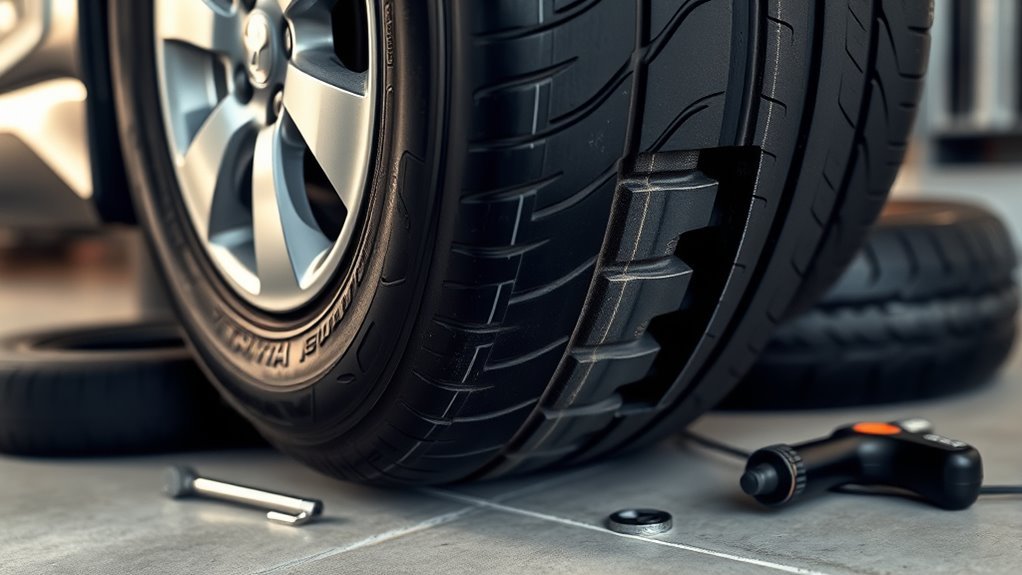
Because tire composition directly shapes performance, you should choose RAV4 tires by matching rubber blends, belt construction, and tread geometry to your typical use—city commutes, mixed-terrain AWD driving, towing, or winter conditions. You’ll prioritize a blend of natural and synthetic rubber for balanced grip and wear, and steel belts plus textile reinforcements for stability and load-bearing. Check tread pattern specifics to align grip characteristics with your liberation of movement—where you drive defines the compound you need.
Perform these maintenance actions to sustain tire longevity and enable performance optimization:
- Monitor and correct inflation frequently to preserve compound behavior and fuel economy.
- Rotate tires on schedule and verify alignment to prevent uneven wear and maintain belt integrity.
- Inspect tread and sidewalls for damage; replace when composition degradation compromises safety.
Be systematic: record pressures, rotations, and inspections. That analytical discipline maximizes lifespan, safety, and the freedom to drive where you choose.
Frequently Asked Questions
What Kind of Tires Does RAV4 Use?
You’ll typically use all-season RAV4 tire brands like Michelin, Bridgestone, and Continental, specified in RAV4 tire sizes ranging 17–19 inches; you’ll demand balanced tread, reinforced steel belts, low rolling resistance, and durable rubber compounds.
Are Car Tires Natural or Synthetic Rubber?
Are you asking if tires use purely one type? You’ll find car tires blend natural rubber and synthetic rubber, combining elasticity and engineered properties so you’re freed from premature wear, optimizing traction, durability, and performance systematically.
Conclusion
So, your RAV4’s tires aren’t mystical black donuts but engineered multi-material beasts: natural and synthetic rubbers, steel belts, textile cords, silica, carbon black and antioxidants, each chosen for load, grip and longevity. Picture a tire conference where polymers argue with steel about traction while silica sips antifreeze—precise, efficient, and only slightly dramatic. You’ll choose and care for them based on driving, load and season, because these calculated compromises keep you rolling.

Related Articles

Upsizing Wheels on a Toyota RAV4: Pros, Cons, and Considerations
Boost your Toyota RAV4's performance with larger wheels, but discover the hidden trade-offs that could impact your ride before you decide.
Read More
Can I Change Tire Size on My Toyota RAV4? Rules and Recommendations
Are you considering changing the tire size on your Toyota RAV4? Discover the essential rules and recommendations before making a decision.
Read More
What to Do If the TPMS Light Comes On in Your RAV4
Understand the steps to take when the TPMS light illuminates in your RAV4, as overlooking it could lead to serious tire problems.
Read More