
UV Damage to Tires: How Sunlight Degrades Rubber
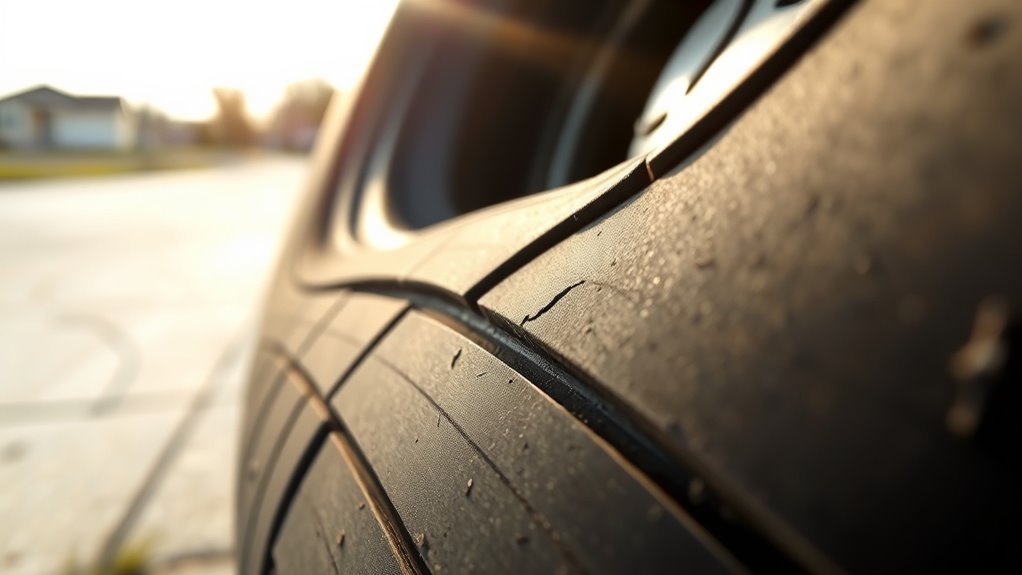
You’ll want to treat UV damage as a serious failure mode: sunlight and ozone break polymer chains, leach protective additives, and embrittle rubber, causing surface and deep cracking, stiffness, and traction loss. Treads show initial microcracks, sidewalls go brittle and risk blowouts, and older tires fail fastest, especially in hot, high‑UV climates or with prolonged outdoor parking. Regular inspections, covers, shade, cleaning, and UV inhibitors slow degradation, and the sections below explain how to spot, protect, and decide on replacement.
Quick Answer: Is UV Tire Damage Serious?
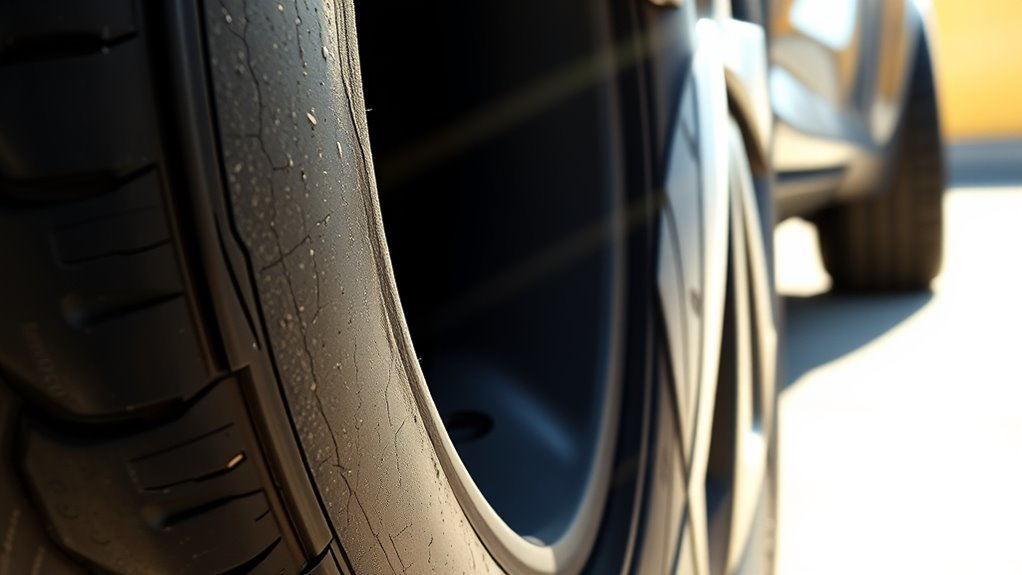
How serious is UV damage to tires? You should treat it as a critical safety issue: UV exposure induces rubber cracking, stiffness, and loss of elasticity that compromise traction and structural integrity. For effective tire maintenance, inspect for color fading and surface cracks regularly; these are clear indicators the compound is drying and losing mechanical resilience. You’ll find older tires especially at risk—manufacturers and safety experts recommend limiting service life in hot, high-UV regions to about six years, even when visual wear seems minimal. Environmental factors like altitude and elevated ozone intensify degradation, so operating in high-exposure zones demands more frequent checks and conservative replacement schedules. If you ignore UV damage, you increase the likelihood of unexpected tire failure and hazardous driving conditions. Prioritize proactive steps that extend rubber longevity: store vehicles shaded, rotate and inspect tires, and replace aging units before performance deficits translate into loss of control or accidents.
How UV And Ozone Chemically Break Down Tire Rubber
When you expose tire rubber to UV, high-energy photons break polymer chains (chain scission), reducing molecular weight and making the compound brittle and less elastic. Concurrently, ozone formed in sunlight reacts with double bonds at the tire surface, creating microcracks that propagate under stress. Together these processes accelerate aging, cause color fading, and markedly shorten tire lifespan, especially after about six years.
UV-Induced Polymer Chain Scission
Although you might think tires just harden with age, UV photons initiate polymer chain scission by cleaving the carbon–carbon and carbon–heteroatom bonds in rubber macromolecules, rapidly reducing molecular weight and consequently elasticity. You observe polymer degradation as a molecular-level loss of entanglement density; chains shorten, mechanical cohesion falls, and tensile strength declines. UV exposure generates excited states and free radicals that attack backbone bonds, propagating scission events. Natural rubber and many synthetics used in tires are vulnerable; resistant elastomers like EPDM or silicone fare better. You should treat sunlight as an active agent of material failure: repeated exposure accelerates aging, lowers fatigue life, and degrades performance even before surface cracking appears. Protecting tires restores functional autonomy and extends service life.
Ozone-Induced Surface Cracking
Because UV photons both break polymer bonds and generate ozone in the surrounding air, you get a coupled degradation pathway where photochemistry and ozone attack act synergistically on tire rubber. You’ll see polymer chain scission reduce rubber elasticity, creating microcracks that concentrate stress. Elevated ozone concentration accelerates oxy‑addition and cleavage of double bonds in unsaturated elastomers, propagating fissures across sidewalls and tread. Photodegradation and ozone reaction aren’t independent; UV sustains reactive ozone while also producing radicals that make rubber more susceptible to ozonolysis. You’ll observe dry, brittle surfaces and radial cracking that compromise mechanical integrity and safety. To resist this decay and claim autonomy over maintenance, monitor ozone concentration, apply UV/ozone protective treatments, and store tires under covers to preserve elasticity.
Which Tire Parts Sunlight Attacks First
If exposed to sunlight for long periods, the tread usually shows the first signs of UV damage, developing fine surface cracks and reduced grip; the sidewalls follow, becoming brittle and prone to blowouts as the rubber’s elasticity degrades. You should inspect tread patterns first because UV-driven breakdown of compounds reduces traction and signals progressive failure. Sidewalls, thinner and flexing constantly, lose elasticity and can fail catastrophically. Fading occurs across both areas, exposing degraded polymer networks.
| Part | Vulnerability |
|---|---|
| Tread | High — surface cracking, traction loss |
| Sidewall | Very high — embrittlement, blowout risk |
| Shoulder | Moderate — compound fatigue |
| Overall rubber | Progressive — elasticity loss, color fade |
Select tires with UV-resistant compounds to delay onset. Practice routine tire maintenance and apply UV protection measures (covers, shaded storage) to preserve freedom of movement and safety.
Common Signs Of UV Tire Damage: Cracking, Fading, Stiffness
Inspect your tires regularly for three telltale signs of UV damage: surface cracking, color fading, and increased stiffness. You’ll spot microcracks on sidewalls and tread when UV has dehydrated rubber compounds; those fissures indicate fiber and matrix breakdown and reduced durability. Fading—loss of deep black pigment to gray or dull hues—signals depletion of protective additives and UV stabilizers, a visible cue that chemical defenses are compromised. Stiffness is measurable: press the tread and flex the sidewall; reduced elasticity and slower rebound show embrittlement and altered viscoelastic properties that will degrade handling and traction. For liberation from unnecessary risk, integrate targeted tire maintenance: document visual changes, measure flexibility periodically, and replace tires exhibiting combined cracking, fading, and stiffness. Don’t rely on appearance alone—structural integrity declines before catastrophic failure. These signs let you act decisively to preserve safety and performance by replacing compromised rubber compounds before they endanger you.
How Age, Climate And Parking Accelerate UV Damage
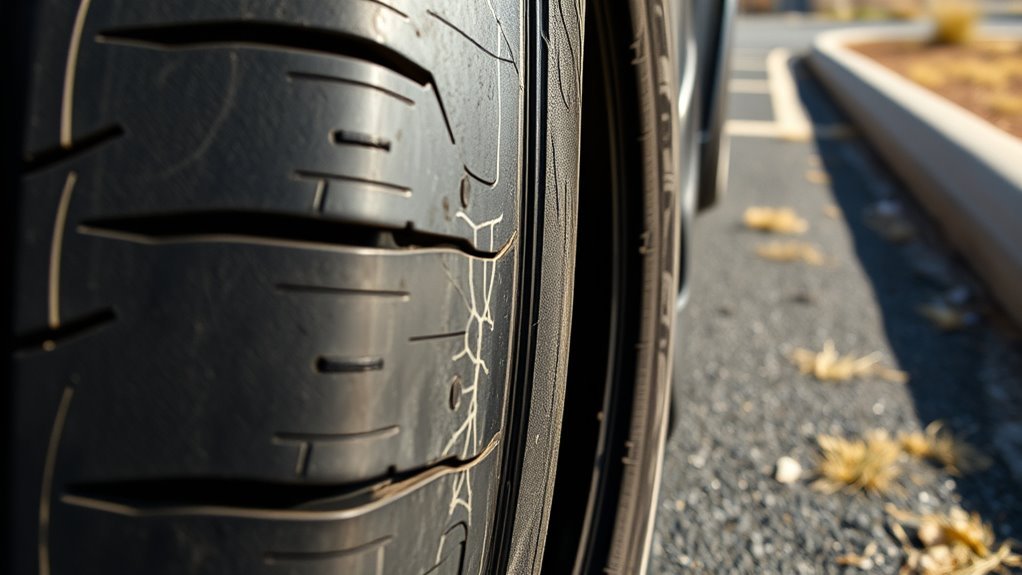
You should treat tire age as a primary risk factor: rubber compounds lose protective additives over time, so tires older than about six years in hot climates (and up to ten years in cooler areas) are far more susceptible to UV-induced cracking. Climate intensity—higher solar irradiance at lower latitudes, greater temperature swings, and altitude—amplifies photochemical degradation and mechanical fatigue. Parking choices matter: prolonged outdoor exposure in direct sun accelerates fading, surface embrittlement, and uneven wear, especially on already aged or flexed tires.
Tire Age Effects
Because rubber compounds harden and microcrack over time, tires older than about six years—and sooner in hot, high-UV climates—lose elasticity and become much more prone to UV-induced cracking and failure. You must treat age as a critical variable: even visually intact tires can be structurally compromised. Check the DOT code to confirm manufacture week/year and prioritize replacements when age thresholds are reached. Climate and parking exposure accelerate polymer degradation; outdoor, sun-exposed storage raises UV flux and deepens embrittlement. Implement tire maintenance and longevity strategies: rotate, inspect for microcracks, maintain proper inflation, and store vehicles shaded or indoors. These interventions reduce UV-driven oxidation and preserve tread adhesion and flexibility, giving you actionable control over safety and extending usable service life without false confidence.
Climate Intensity Impact
When climate intensity rises—through higher temperatures, stronger sunlight, or prolonged direct exposure—your tires’ polymers oxidize and embrittle far faster than in moderate conditions. You must treat age, climate and parking as linked environmental factors that drive UV-initiated chain scission and crosslinking. Hot, sunny regions and high-altitude areas both increase photon flux and thermal stress, so older tires—especially beyond recommended service life—fail chemically before mileage predicts. Prioritize proactive tire maintenance to retain flexibility, inspect for surface cracking, and replace per climate-specific schedules.
- Hot climates raise polymer reaction rates, accelerating cracking and hardness.
- High altitude increases UV intensity despite cooler air.
- Older tires show accelerated degradation even when unused.
- Direct outdoor exposure compounds photochemical damage.
- Regular inspections counteract compounded environmental factors.
Parking Exposure Choices
Although parking choice might seem trivial, it directly changes how age and climate combine to drive UV-initiated polymer breakdown in tires. You should treat parking exposure as a control variable: outdoor sun + older rubber = faster cracking and loss of elasticity. High-UV regions and thermal cycling accelerate molecular embrittlement; Colorado’s milder UV loads still permit age-related decline, while Florida speeds it. Inspect tires regularly for fissures and fading. Consider tire storage and parking alternatives—covered, shaded, or climate-controlled—to slow degradation and reclaim agency over lifespan.
| Condition | Effect |
|---|---|
| Direct sun | Rapid UV-induced cracking |
| Older tires | Higher susceptibility |
| High UV region | Accelerated breakdown |
| Temp swings | Uneven deterioration |
| Covered parking | Slows degradation |
How To Protect Tires: Covers, Shade, Cleaners And UV Sprays
One effective strategy combines tire covers, strategic parking in shade, routine cleaning, and periodic application of UV-protection sprays to limit UV-driven rubber degradation and preserve tread integrity. You’ll implement a straightforward tire maintenance regimen that maximizes longevity and performance while resisting photochemical breakdown.
- Use fitted tire covers as a physical barrier against direct sunlight; they reduce UV penetration and thermal cycling.
- Park in shade or under structures to cut cumulative UV exposure and slow oxidative aging.
- Wash tires regularly with mild detergent and water to remove particulates and chemicals that accelerate UV damage.
- Apply manufacturer-recommended UV protection sprays periodically to form a stabilizing film that resists color fade and surface embrittlement.
- Track service intervals and replacement thresholds so you can act decisively, maintaining mobility and safety.
This protocol is technical, actionable, and aligned with a liberating mindset: protect assets through deliberate, minimal interventions that restore control over environmental wear.
Inspection Checklist: Spot Early UV Damage
Having established a protection routine with covers, shade, cleaning, and UV sprays, you should also perform regular inspections to catch early signs of sun-related rubber degradation. For disciplined tire maintenance, conduct seasonal inspections—at minimum spring and fall—and after prolonged heat exposure. Visually scan sidewalls and treads for fine and deep cracking; note location, length, and progression with photos and dates. Inspect for color fading to gray or dull tones, a clear indicator of UV-initiated polymer breakdown. Physically test for brittleness and dryness by flexing sidewalls gently; loss of elasticity demands prompt attention. Measure and record tread wear patterns; uneven wear combined with surface degradation can signal structural compromise. Log tire manufacture date and calculate service age; prioritize replacement within 6–10 years depending on climate severity. Use a concise checklist: cracking, color change, brittleness, uneven wear, age. Act on any positive findings—liberate your mobility by preventing avoidable failures.
Best Tire Materials For Sun Exposure (EPDM, Silicone, FKM)
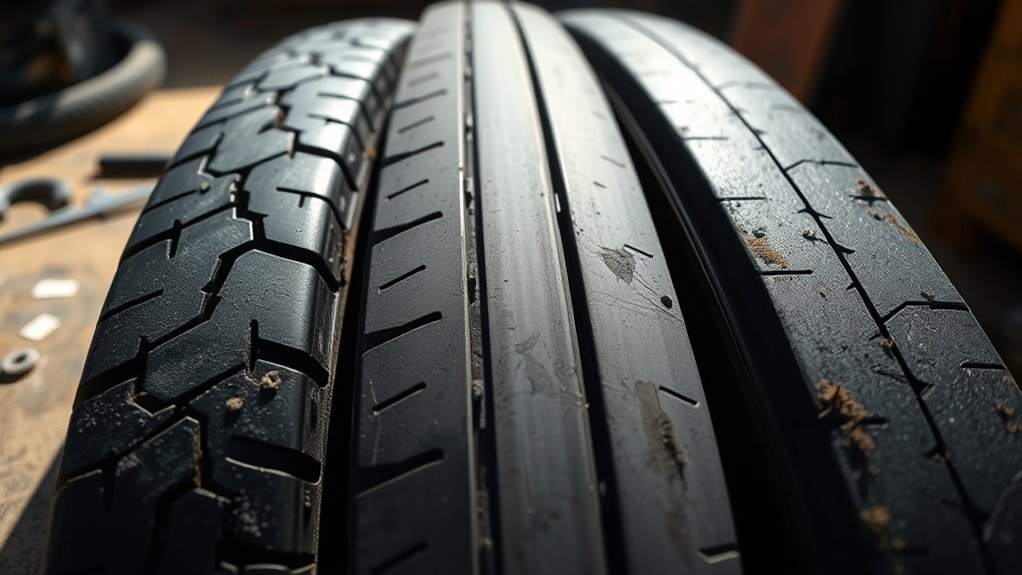
When you need tires or rubber components to withstand prolonged sun and ozone exposure, select base compounds with proven UV resistance—EPDM for broad outdoor durability, silicone for sustained flexibility and color stability, and FKM (Viton®) where chemical and high‑temperature resistance must join UV/ozone resilience. You’ll choose materials that maximize tire longevity benefits by matching rubber material properties to service conditions.
- EPDM: excels at UV/ozone resistance and weathering; use where long outdoor life and low maintenance matter.
- Silicone: sustains flexibility across temperature extremes, resists fading, and preserves seal integrity under sunlight.
- FKM (Viton®): offers superior chemical and heat resistance while maintaining UV resilience for harsh environments.
- Alternatives: neoprene and many general rubbers give moderate protection but reduce expected service life under intense sun.
- Selection strategy: prioritize compound performance data, field-proven formulations, and design for liberation from frequent replacements and repairs.
When To Repair Or Replace A Tire After Sun-Related Deterioration
After choosing UV‑resistant compounds like EPDM, silicone, or FKM, you still need a clear inspection and replacement policy for tires exposed to sunlight. Inspect regularly for cracks, fading, and brittleness; these are primary indicators of UV-related deterioration that shorten tire lifespan. If you see surface cracks on sidewalls or treads, treat them as structural degradation and prioritize replacement rather than temporary repair. Color fading or excessive dryness also warrants evaluation under replacement guidelines, since compromised rubber degrades traction and handling.
For tires older than six years—especially in sunny climates—plan for replacement even without visible defects; age itself reduces rubber integrity and increases failure risk. Use a tire professional for thorough assessment when any UV damage is suspected, and document findings to inform service intervals. Your maintenance policy should combine scheduled inspections, conservative age limits, and clear replacement guidelines to preserve safety and sustain your freedom to move without fear of preventable tire failure.
Frequently Asked Questions
Does UV Light Degrade Rubber?
Yes — you’ll see UV exposure effects that cause rubber composition changes: sunlight breaks polymer chains, reduces elasticity, increases stiffness and cracking; you should use UV-resistant compounds or coatings to preserve function and extend lifespan.
Does Rubber Degrade in the Sun?
Yes — you’ll watch rubber betray you: sun exposure breaks bonds, hardens compounds, and yields cracks, reducing tire longevity; you’ll need resistant compounds, shields, and maintenance to reclaim mobility and resist that slow, irradiated decay.
Conclusion
UV and ozone steadily break rubber’s polymers, so you should take sunlight seriously: studies show UV can reduce tensile strength by up to 40% over a few years. Inspect sidewalls and tread for surface cracking, embrittlement and color loss, and prioritize protected parking, covers, or UV inhibitors if you’re in hot, sunny climates. Replace tires showing deep cracks or flex-fatigue; minor surface checks call for cleaning and UV protectant applications to slow further degradation.
Related Articles
When to Replace Tubeless Sealant: Timing & Signs
Be warned: tubeless sealant can fail in weeks or months—learn the signs, testing tips, and exact replacement timing to avoid flats.
Read More
The Penny Test for Tread Depth: How to Do It Right
Better learn the penny test correctly—discover when Lincoln’s head reveals dangerous tread wear and what to do next.
Read More
Tire Rotation Schedule: How Often & Why It Matters
Optimizing tire life? Discover why rotating every 5,000–8,000 miles matters for safety and savings—read on to learn exact patterns and tips.
Read More