
Toyota Camry Tire Feathering: What Causes It and How to Prevent It
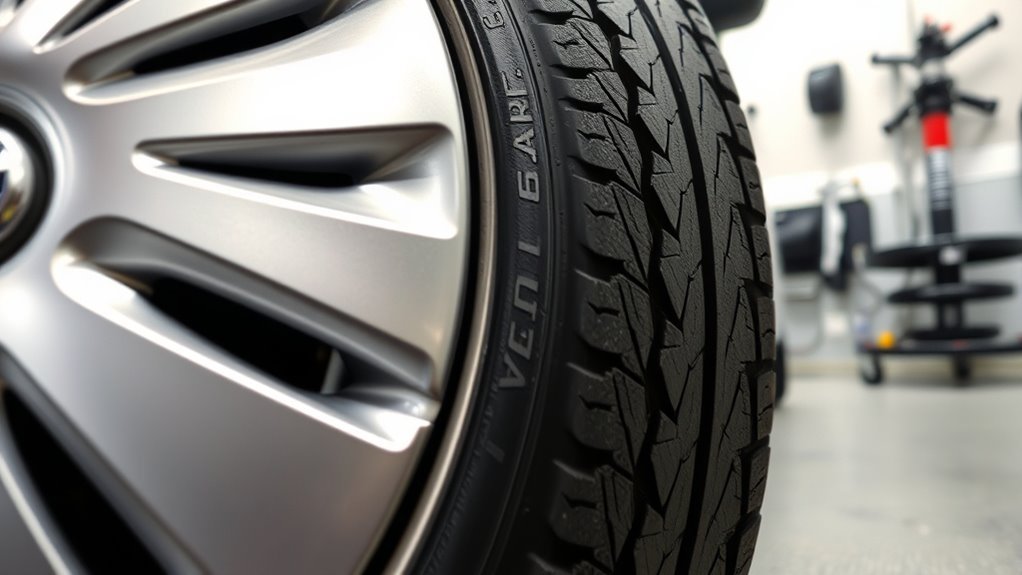
Camry tire feathering shows up as tread blocks that feel smooth in one direction and sharp in the other. It often comes with road hum, a growling tire noise, steering vibration, or uneven tread that looks “brushed” across the edges. On a Toyota Camry, the most common things to check first are wheel alignment, tire pressure, tire rotation history, and worn steering or suspension parts.
Quick Answer
Camry tire feathering is uneven tread wear where each tread block feels rounded on one edge and sharp on the other. It usually points to toe alignment problems, worn suspension or steering parts, incorrect tire pressure, missed rotations, or aggressive driving. Check the tread by hand, verify cold tire pressure from the door-jamb label, and schedule an alignment inspection.
Key Takeaways
- Feathering feels like a saw-tooth edge across the tread blocks, not just normal tire wear.
- Incorrect toe alignment is a common cause, but worn struts, shocks, ball joints, bushings, tire pressure problems, and missed rotations can also contribute.
- Use the Camry’s Tire and Loading Information Label or owner’s manual for pressure, not the maximum PSI printed on the tire sidewall.
- If feathering comes with vibration, pulling, exposed cords, bulges, or very low tread, have the tires and suspension inspected before more driving.
At a Glance
| Time Required | 5–10 minutes for a driveway tread check; 45–90 minutes for a professional alignment and tire inspection. |
| Difficulty | Easy for spotting symptoms; moderate to professional for alignment, suspension diagnosis, and tire replacement decisions. |
| Tools Needed | Tire pressure gauge, tread depth gauge or penny, flashlight, maintenance records, and a qualified alignment rack for final diagnosis. |
| Cost | Basic checks are free if you own a gauge. Alignment, tire balancing, suspension repair, or tire replacement costs depend on local labor rates and what the inspection finds. |
Camry Tire Feathering Symptoms
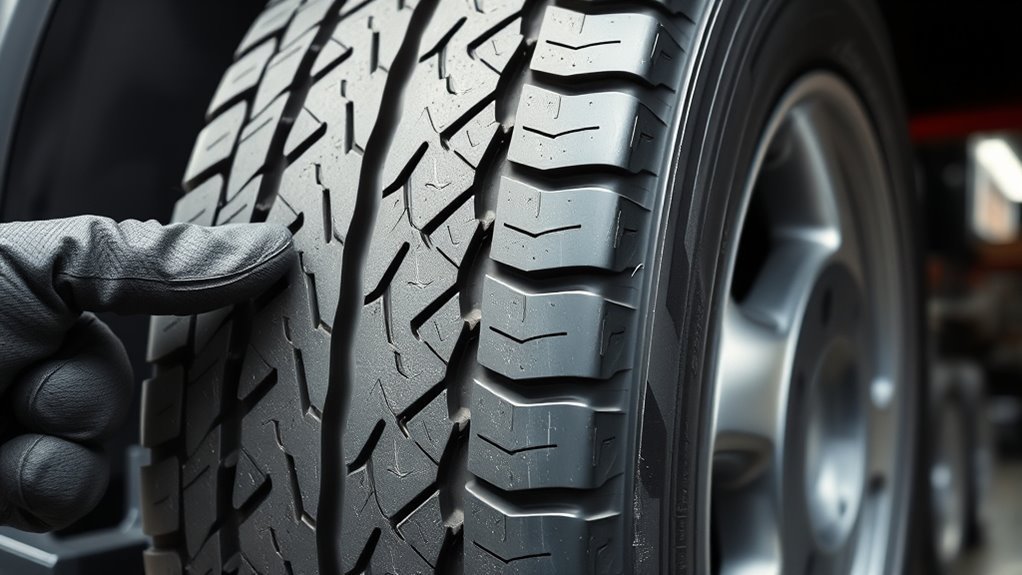
Camry tire feathering shows up as uneven tread wear, with one side of each tread block feeling rounded and the opposite side feeling sharp. The quickest check is a simple texture test: run your hand lightly across the tread from inside to outside, then from outside to inside. If it feels smooth one way and rough or sharp the other way, the tire may be feathered.
Feathering often appears with tire noise, especially a humming, growling, or droning sound that gets louder at highway speeds. You may also feel vibration through the steering wheel, seat, or floor. If the tread pattern changes, the car pulls, or the noise gets worse after rotation, treat it as a sign to inspect the tires, pressure, alignment, and suspension soon.
Warning: Do not ignore feathering if you also see exposed cords, bubbles, deep cuts, sidewall damage, recurring pressure loss, or tread at 2/32 inch. Those are safety concerns, not just comfort problems.
[Products Worth Considering]

EVOULTES heavy duty tire inflator with an integrated gauge delivers accurate pressure readings from 10–120 PSI, helping you inflate, deflate, and check tires in one tool. The 16.5-inch extended dual-head air chuck with swivel base reaches hard-to-access dual wheel valves on trucks and RVs. A brass trigger core and side-mounted air release valve make operation smooth, with standard 1/4" NPT threading and quick-connect compatibility for easy setup.

The JACO FlowPro Tire Inflator measures, inflates, and airs down tires up to 100 PSI with battery-free operation and ±2% accuracy after calibration. It features a glowing pressure dial for night visibility, a heavy-duty steel build with a hybrid hose, and a precision push-to-inflate thumb trigger. The patented Lightning Air Chuck locks on for a secure seal, and the kit includes quick-connect hardware for easy inline use with your air compressor.

This portable cordless tire inflator delivers up to 160 PSI with fast 17 L/min airflow to help you quickly top up tires and get back on the road. It features dual power mode, running on a 21V rechargeable battery or a 12V DC adapter for convenient roadside use. An automatic shut-off with digital pressure gauge helps prevent overinflation, and a built-in LED light improves visibility in low-light conditions.
What Causes Camry Tire Feathering?
Tire feathering on a Toyota Camry usually starts when the tire is being scrubbed across the pavement instead of rolling straight. The most common alignment-related cause is incorrect toe, which means the tires point slightly inward or outward compared with the vehicle centerline. Camber, worn suspension parts, tire pressure problems, and driving conditions can also contribute.
| Cause | What it does | Your response |
|---|---|---|
| Toe misalignment | Scrubs the tread sideways and creates saw-tooth edges | Schedule a four-wheel alignment check |
| Worn suspension or steering parts | Lets wheel angles change while driving | Inspect struts, shocks, ball joints, tie rods, and bushings |
| Incorrect tire pressure | Changes the contact patch and speeds uneven wear | Check cold PSI against the door-jamb label |
| Missed tire rotations | Lets front and rear tires wear at different rates | Rotate on the interval in your Toyota maintenance guide |
| Hard cornering, braking, rough roads, or pothole hits | Adds load and impact that can worsen existing wear | Inspect after impacts and correct the root cause |
Regular maintenance keeps small wear changes from becoming noisy, expensive tire damage. If feathering appears on one tire, compare all four tires before replacing anything. A single feathered tire may point to a corner-specific suspension issue, while all four tires may point to alignment, pressure, or rotation habits.
Why Camry Tires Wear Unevenly
Uneven wear on your Toyota Camry tires usually starts when the wheels do not track correctly, the tires are not kept at the right cold pressure, or the suspension cannot hold the tire flat and stable on the road. Misalignment can make the tread scrub instead of roll. Underinflation can overload the outer tread edges, while overinflation can concentrate wear near the center of the tread.
Your driving habits also shape tire life. Fast cornering, sudden braking, and quick lane changes load the tires unevenly and can make an existing alignment or pressure problem show up sooner. Roads full of potholes or rough patches add more stress, so inspect tire pressure, rotate tires, and correct alignment promptly after a hard impact.
Feathering vs. Cupping vs. Camber Wear
Feathering is often confused with other tire wear patterns. Knowing the difference helps you describe the problem clearly when you schedule service.
- Feathering: Each tread block feels sharp on one edge and rounded on the other. This often points to toe alignment or tread scrub.
- Cupping or scalloping: The tread has dips or scooped patches around the tire. This often points to worn shocks, struts, imbalance, or bouncing.
- Camber wear: One shoulder of the tire is much more worn than the other. This can point to camber problems, worn suspension parts, bent parts, or ride-height changes.
- Center or edge wear: Center wear can come from overinflation, while both-edge wear can come from underinflation or overloading.
How to Check Camry Tires for Feathering at Home
You can catch feathering early with a quick driveway inspection. Park on a flat surface, set the parking brake, and let the tires cool before checking pressure.
- Look across the tread. Use a flashlight and compare the inside, center, and outside tread ribs.
- Run your hand across the tread. Lightly sweep across each tire in both directions. Feathering feels rough or sharp one way and smoother the other way.
- Check all four tires. Note whether the front, rear, inside edges, or outside edges are worse.
- Measure tread depth. Use a tread depth gauge if possible. Replace tires that are at or below the legal/safety minimum, and do not ignore exposed cords or bulges.
- Check cold pressure. Use the Tire and Loading Information Label on the driver-side door area or your Camry owner’s manual, not the tire sidewall maximum.
- Review recent impacts. A pothole, curb strike, or suspension repair can shift alignment enough to start uneven wear.
Pro Tip: Take a photo of each tire and label it front-left, front-right, rear-left, and rear-right before service. It helps the technician match the wear pattern to the alignment printout and suspension inspection.
Suspension Problems That Cause Feathering
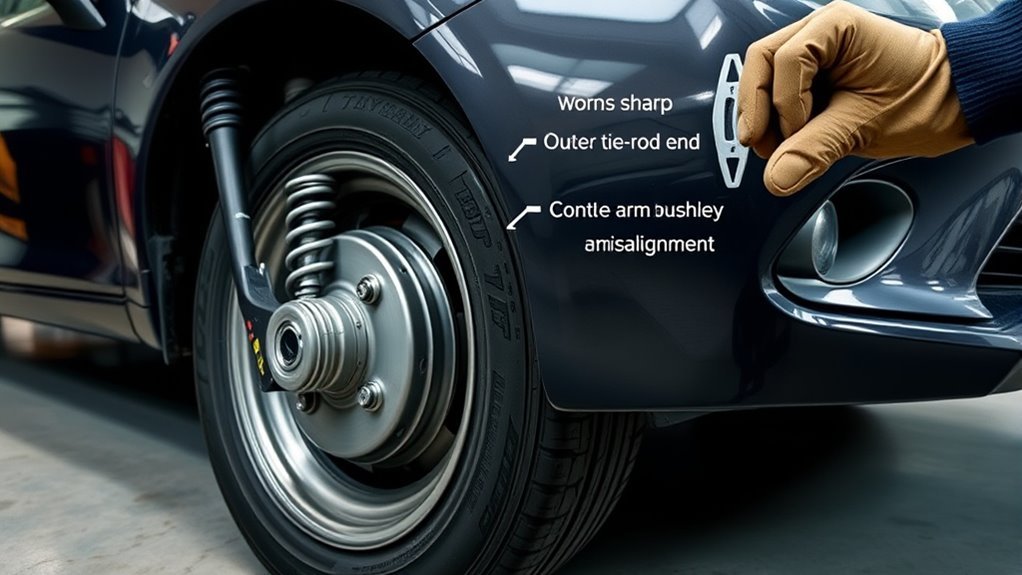
When suspension parts wear out, your Toyota Camry can start feathering tires even if the alignment was recently set. Worn struts and shocks let the tire bounce or skim the pavement, which can form uneven wear patterns. Loose ball joints, tie rods, control-arm bushings, or wheel bearings can let wheel angles shift while the car is moving.
If you overload the car, hit potholes, or drive on rough roads often, the suspension has to work harder and alignment can drift sooner. During suspension maintenance, a technician should inspect for play, leaks, torn rubber, bent components, abnormal ride height, and uneven tire wear before simply replacing the tires.
A fresh alignment will not hold for long if worn steering or suspension parts are still letting the wheel angles move on the road.
- A Camry hopping or floating after a bump
- Grease-darkened or loose ball joints
- Cracked control-arm bushings
- Steering vibration at highway speed
- Feathered tread edges visible under shop lights
How to Prevent Camry Tire Feathering
You can prevent Camry tire feathering by keeping the tires pointed, inflated, and rotated correctly. The goal is simple: keep each tire rolling straight with an even contact patch.
[Products Worth Considering]
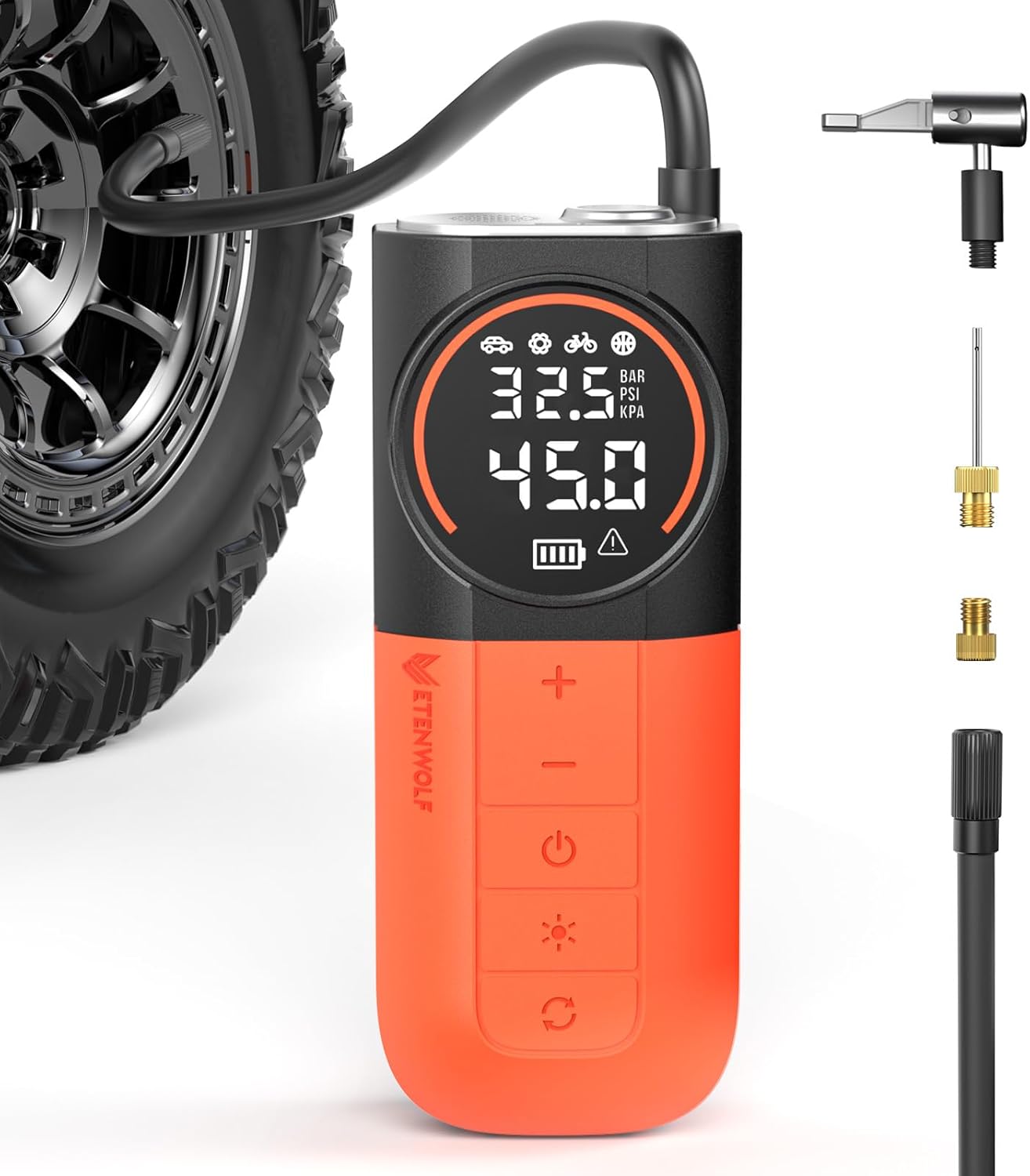
The ETENWOLF S1 cordless tire inflator delivers ultra-fast inflation with up to 160 PSI and a 20 L/min airflow for quicker tire top-offs. Its 5200mAh battery and cooling system support inflating many tires and sports balls on a single charge, while the digital pressure gauge and multi-unit display help you reach the right pressure accurately. With preset modes, pressure memory, an auto-stop feature, and an LED flashlight, it’s built for easy roadside and everyday use.

This portable cordless tire inflator delivers fast, efficient inflation for cars, motorcycles, bikes, and sports balls with a digital pressure gauge. Use the one-click PSI preset with auto shut-off for accurate, hands-free topping to your target pressure up to 150 PSI. It’s compact and rechargeable with a built-in emergency LED light plus valve adapters and accessories for quick, ready-to-go use.
Regular Alignment Checks
Schedule an alignment check when your Camry pulls, the steering wheel sits off-center, the tires start humming, or you see feathered tread. Also check alignment after a strong pothole hit, curb strike, new tires, suspension repair, or any unusual tire wear. Ask for the before-and-after alignment printout so you can see whether toe, camber, caster, or thrust angle was out of range.
- A steering wheel that sits straight on a level road
- Smooth tread edges across each tire
- A calibrated alignment rack in a tire shop bay
- Fresh adjustments after pothole impacts or suspension repairs
Proper Tire Pressure
Proper tire pressure helps prevent the uneven tread wear that feeds feathering. Check all four tires with a reliable gauge at least once a month and before long trips. Measure pressure when the tires are cold, which generally means the car has been parked for several hours.
Use the Tire and Loading Information Label or owner’s manual for the correct pressure. Do not use the maximum pressure printed on the tire sidewall as your target. Correct inflation also supports safer handling, better tread life, and better fuel economy.
Note: A Tire Pressure Monitoring System is helpful, but it is not a replacement for regular pressure checks with a gauge. The warning light may not come on until a tire is already significantly underinflated.
Suspension Inspections
Regular suspension inspections are essential for preventing Camry tire feathering because worn shocks, struts, tie rods, ball joints, bushings, and bearings can create uneven tire contact with the road. Treat suspension maintenance as prevention, not just repair after tire damage appears.
- A bouncing rear end after a speed bump
- Vibration through the steering wheel at cruise
- Greasy, cracked, or loose ball joints under the control arm
- Tire edges that look brushed, saw-toothed, or scalloped
Schedule a professional assessment if you notice these signs, and replace worn parts before installing new tires. New tires can feather quickly if the root cause is still there.
Tire Rotation and Pressure Tips
Rotate your Camry’s tires at the interval listed in your Toyota maintenance guide. If you do not have the guide handy, the NHTSA general tire guidance says that when the vehicle manufacturer recommends rotation, tires are commonly rotated every 5,000 to 8,000 miles or sooner if uneven wear appears. For model-specific information, use Toyota’s official manuals and warranties page.
Keep tire pressure at the Camry’s specified cold pressure, and check it with a reliable gauge. FuelEconomy.gov notes that properly inflated tires are safer, last longer, and can improve gas mileage.
Rotation Schedule
To reduce tire feathering on your Toyota Camry, build tire rotation into your normal service routine. Align rotations with oil changes or other maintenance visits when the mileage interval matches your owner’s maintenance schedule. During each rotation, ask the shop to inspect tread depth, wear pattern, pressure, and balance.
- Fresh tread crossing the pavement evenly
- A torque wrench beside clean lug nuts
- Even sidewalls meeting the road
- A maintenance log marking mileage and tire position
Proper Tire Pressure
Keeping your Toyota Camry’s tires at the manufacturer’s recommended cold PSI helps prevent uneven wear. Check pressure when the tires are cold, then adjust to the specification on the door-jamb label or owner’s manual. Inspect all four tires monthly and before road trips, since small pressure losses can change handling and accelerate wear.
Pressure alone will not fix feathered tires, but it can stop additional damage while you arrange alignment or suspension service. If one tire repeatedly loses pressure, have it inspected for punctures, valve-stem leaks, wheel damage, or bead leaks.
When to Inspect Your Camry’s Tires
Inspect your Camry’s tires at least monthly, before long trips, and whenever you notice noise, vibration, pulling, or a change in ride comfort. Also inspect after a pothole hit or curb strike, because impacts can shift suspension angles and damage tires quickly.
- Tread blocks that feel sharp on one edge
- A steering wheel that sits off-center
- New road hum on smooth pavement
- Tires that look glossy, brushed, cupped, or scalloped on one side
- Uneven tread depth between the inside, center, and outside ribs
Measure tread depth and pressure during the same inspection. If the tread is near 2/32 inch, if wear bars are flush with the tread, or if cords are showing, replace the tire instead of trying to “drive out” the feathering.
Can Feathered Camry Tires Be Fixed?
Feathered tires usually cannot be restored to perfectly even tread. If the feathering is light, correcting the alignment, pressure, rotation schedule, and suspension issue may let the tread wear more evenly over time. If the feathering is severe, noisy, or paired with low tread depth, replacement is usually the better answer.
Do not install new tires until the cause is corrected. Otherwise, the new set can develop the same feathered pattern quickly.
What a Shop Should Check
When you bring a Camry in for tire feathering, ask the technician to check more than just the alignment screen. A complete inspection should include:
- Before-and-after alignment readings for toe, camber, caster, and thrust angle
- Tread depth across the inside, center, and outside of each tire
- Tire pressure set to the door-jamb label
- Wheel balance and signs of bent wheels
- Struts, shocks, ball joints, tie rods, bushings, and wheel bearings
- Evidence of pothole or curb impact
- Rotation pattern and tire position history
This prevents a common mistake: replacing tires without fixing the reason they feathered.
Frequently Asked Questions
How do you stop feathering tires?
Stop feathering by correcting the root cause: set tire pressure to the Camry’s door-jamb label, rotate tires on schedule, inspect suspension and steering parts, balance the wheels if vibration is present, and get a proper alignment. Reducing hard cornering and sudden braking can also slow uneven wear.
What alignment angle causes feathering?
Incorrect toe is the alignment setting most closely associated with feathered, saw-tooth tread wear because the tire scrubs sideways as it rolls. Camber, caster, thrust angle, and worn suspension parts can also affect tread wear, so a full alignment printout is better than checking toe alone.
Is it safe to drive on feathered tires?
Light feathering may be drivable long enough to schedule service, but severe feathering can reduce comfort, increase noise, and hide more serious tire or suspension problems. Do not keep driving on tires with exposed cords, bulges, deep cuts, severe vibration, or tread at 2/32 inch.
Will an alignment fix tire feathering?
An alignment can stop the wear from getting worse if misalignment is the cause, but it will not magically reshape tread that is already badly feathered. If the tire is noisy, badly worn, or near the tread limit, you may still need replacement after correcting the alignment or suspension problem.
Can tire pressure cause feathering?
Incorrect tire pressure can contribute to uneven wear by changing the contact patch. It is not always the only cause of feathering, but it should be checked before alignment service. Use the Camry’s Tire and Loading Information Label or owner’s manual for the correct cold pressure.
Conclusion
In your Camry, tire feathering is often an early sign that alignment, pressure, rotation, or suspension needs attention. Catch it with a hand tread check, confirm cold tire pressure from the Toyota label or manual, and schedule an alignment and suspension inspection if the wear pattern, noise, or vibration continues. Fixing the cause early protects your tires, steering feel, braking traction, and long-term repair budget.
Sources
- NHTSA TireWise — tire pressure, tread depth, rotation, alignment, TPMS, and tire safety guidance.
- Toyota Manuals and Warranties — official Toyota owner’s manual and maintenance guide access for model-specific information.
- Tire Rack Alignment Settings — toe, camber, caster, thrust angle, and how alignment affects tire wear.
- FuelEconomy.gov: Keeping Your Vehicle in Shape — proper tire inflation, safety, tire life, and fuel economy.

Related Articles

Toyota Camry All-Season Tires Explained: What They Can and Can’t Do
In exploring Toyota Camry all-season tires, discover their benefits and limitations—are they really the right choice for your driving needs?
Read More
Toyota Camry Tire Traction in Ice and Snow: A Practical Winter Driving Guide
Learn essential tips for maximizing tire traction on ice and snow in your Toyota Camry, ensuring your winter driving is safe and confident. Discover more now!
Read More
Do Toyota Camry Tires Need Snow Chains? When They Help and When They Don’t
How do snow chains enhance your Toyota Camry's winter driving safety, and when should you avoid using them? Discover the essential details inside!
Read More