Tire Size Chart Explained: Find Your Exact Fit
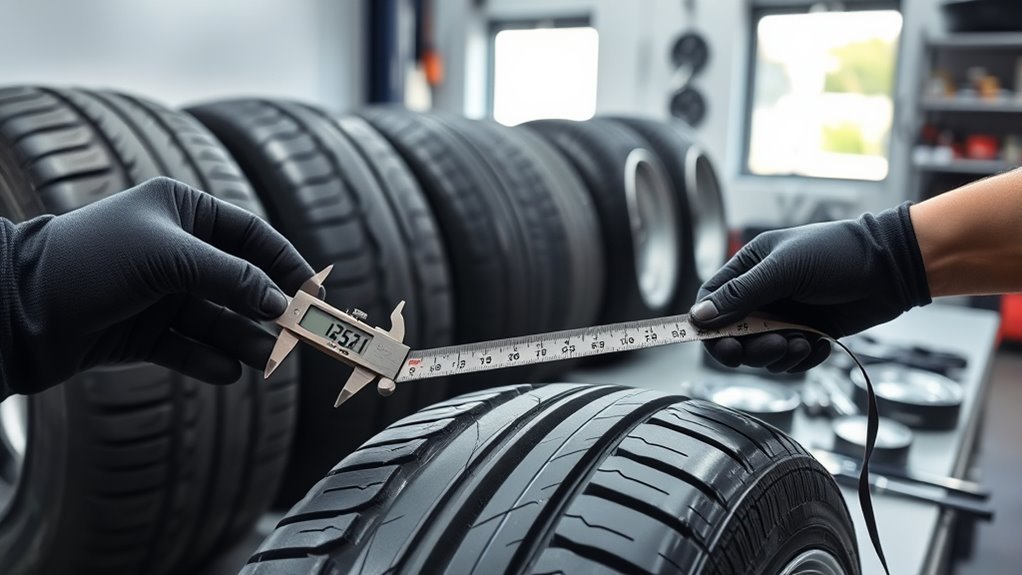
You’ll decode every part of a tire code—type (P, LT), tread width (mm or inches), aspect ratio (%), construction (R/D), rim diameter (inches), plus load index and speed rating—so you can match fit, load capacity, and speedometer accuracy. Use formulas to get sidewall height, overall diameter, circumference and RPM, keep diameter within ~3% of stock, and guarantee load/speed ratings meet or exceed OEM. Continue for detailed substitution rules, clearance checks and maintenance tips.
How to Read a Tire Code: Type, Width, Aspect Ratio, Construction, Rim
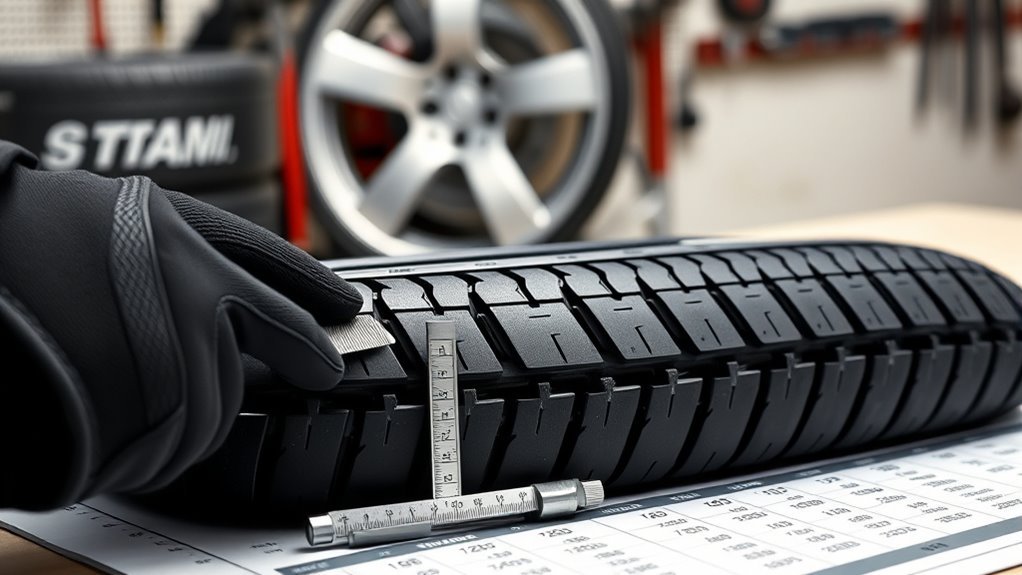
Start by reading the tire code from left to right: the initial letter(s) show the type (e.g., P for passenger, LT for light truck), the three-digit number is the tread width in millimeters (P225 → 225 mm), the following two-digit aspect ratio is the sidewall height as a percentage of that width (70 → sidewall = 0.70 × 225 mm), the construction letter (R for radial, D for bias/diagonal) identifies internal ply orientation, and the final number is the rim diameter in inches (P225/70R16 fits a 16‑inch wheel). You’ll use this tire code breakdown to verify compatibility and performance goals. Width and aspect ratio define contact patch and sidewall behavior; rim diameter guarantees mechanical fit. Construction types—radial versus diagonal/bias—determine flex, heat dispersion, and handling characteristics; radials dominate modern designs for better ride and tread life. After the rim diameter, the code often adds load index and speed rating, which you’ll check separately to match weight capacity and speed capability. Read precisely; choose boldly.
Quick Calculations: Sidewall Height, Overall Diameter, Circumference, RPM
Now we’ll compute sidewall height, circumference, and RPM so you can verify fitment and speedometer effects. Use Sidewall Height = (Section Width × Aspect Ratio) / 100, Overall Diameter = (2 × Sidewall Height) + Rim Diameter, Circumference = Overall Diameter × π. From circumference get revolutions per mile: RPM = 63,360 ÷ Circumference.
Sidewall Height Formula
Because the sidewall sets the tire’s ride height and influences speedometer accuracy, you’ll want to calculate it precisely: use Sidewall Height = (Section Width × Aspect Ratio) / 100. Plug metric width (mm) and aspect ratio (%) to get sidewall height in millimeters. For example, 225 mm × 70% = 157.5 mm sidewall height. Once you have sidewall height, you can determine overall diameter with Overall Diameter = (2 × Sidewall Height) + Rim Diameter (rim in inches). That overall diameter yields circumference via Circumference = Overall Diameter × π (≈3.14), which then gives revolutions per mile: RPM = 63,360 ÷ Circumference. These formulas free you to verify fit and preserve speedometer accuracy without guesswork.
Tire Circumference & RPM
When you calculate sidewall height, overall diameter, and circumference precisely, you can directly compute revolutions per mile (RPM) and predict how a tire will affect speedometer accuracy and drivetrain behavior. Start with Sidewall Height = (Section Width × Aspect Ratio) / 100 to get profile. Then Overall Diameter = (2 × Sidewall Height) + Rim Diameter. Compute Circumference = Overall Diameter × π (≈3.14). Finally RPM = 63,360 ÷ Circumference (in inches). These linked formulas let you quantify how smaller circumferences raise RPM, altering indicated speed and increasing drivetrain cycles. You’ll evaluate tire performance impacts and trade-offs: higher RPM often reduces fuel efficiency and raises mechanical wear; lower RPM can under-report speed but improve highway economy. Use exact numbers to assert control over fitment and freedom on the road.
Load Index & Speed Rating: How Tire Size Affects Safety and Fit
Load index and speed rating are core specifications that determine a tire’s safe carrying capacity and maximum sustained speed; you should read them together because they directly affect vehicle handling, load distribution, and thermal performance. You rely on the load index number to match weight capacity — for example, 89 equals about 1,279 lbs — and the speed rating letter to know sustained-speed heat tolerance. Together they dictate tire performance, tire compatibility, and handling characteristics; mismatched indices compromise safety, handling, and equal load sharing across axles.
- Guarantee uniform load indices across axle pairs to preserve even load distribution and predictable handling.
- Choose speed ratings that meet or exceed your vehicle’s top operational speeds to reduce heat buildup and preserve structural durability.
- Prefer higher indices when you need greater durability or frequent high-load, high-speed use for improved tire performance and longevity.
You’ll make safer, more liberated choices by specifying both ratings when selecting replacements or upgrades.
Metric vs. Flotation vs. LT Sizes : When to Use Each
Tire sizing systems—Metric, Flotation, and LT—serve distinct purposes, so you should match the type to vehicle use: Metric Tires suit passenger cars and crossovers; they’re denoted (often with a “P”) by millimeter width and aspect ratio (e.g., P225/70R16), optimizing handling, comfort, and steady Tire Performance for daily driving. Flotation Tires are specified by inch width (e.g., 30X9.50R15) without an aspect ratio and prioritize Off Road Use—soft sand, mud, and low-pressure traction; they’re not designed for dual applications or conventional highway load sharing. LT Tires carry an “LT” designation and higher Load Capacity for light trucks and work vehicles, engineered for heavier loads and rougher Terrain, improving durability and stability under stress. Match Tire Applications to Vehicle Types: choose Metric for standard passenger needs, Flotation for specialized off-road rigs, and LT for trucks needing greater load-bearing. Always consult an authorized tire retailer before substitutions to verify compatibility and preserve safety.
Choosing Compatible Replacement Tire Sizes and Allowable Substitutions

When choosing replacement tires, check the owner’s manual or doorjamb sticker for the factory size and specifications and use those as your baseline. You can substitute sizes within limits—keep width within ±10% of the original and match rim diameter—while ensuring the new tire’s load index and speed rating meet or exceed the vehicle’s requirements. If aspect ratio or overall diameter changes, expect altered handling and speedometer error, so confirm suitability with an authorized tire retailer.
Acceptable Size Variations
Vehicle compatibility hinges on keeping overall diameter within about 3% of the original to preserve speedometer accuracy and handling; you should treat acceptable size variations as limits, not suggestions. You can change width by roughly ±10 mm—wider tires may need wider rims and reduce fuel efficiency. Aspect ratio shifts up to 10% balance ride comfort and handling without dramatic geometry changes. Temporary spares (“T”) have restricted options and often aren’t suitable for prolonged use. Always confirm load index and speed rating with the owner’s manual or a professional.
- Prioritize overall diameter first to protect tire performance and chassis calibration.
- Adjust width only if rim and fender clearance permit.
- Limit aspect ratio changes to maintain suspension dynamics.
Load And Speed Matching
Although you can swap sizes within limits, always match or exceed the original load index and use an equal-or-higher speed rating to maintain safety and performance. You’ll verify the load index number—e.g., 89 equals 1,279 lbs—to guarantee each replacement tire carries vehicle weight safely. Select a speed rating letter at least equal to the factory rating; downgrading impairs handling at high speeds and risks failure. Size substitutions are allowed only when overall diameter stays within roughly ±3% and the load index remains adequate. Cross-check the owner’s manual or a professional tire retailer for approved alternatives and legal compliance. Make choices that free you from guesswork while preserving structural integrity and dynamic capability.
Rim Width, Pressure & Load: Rules for Proper Fitment
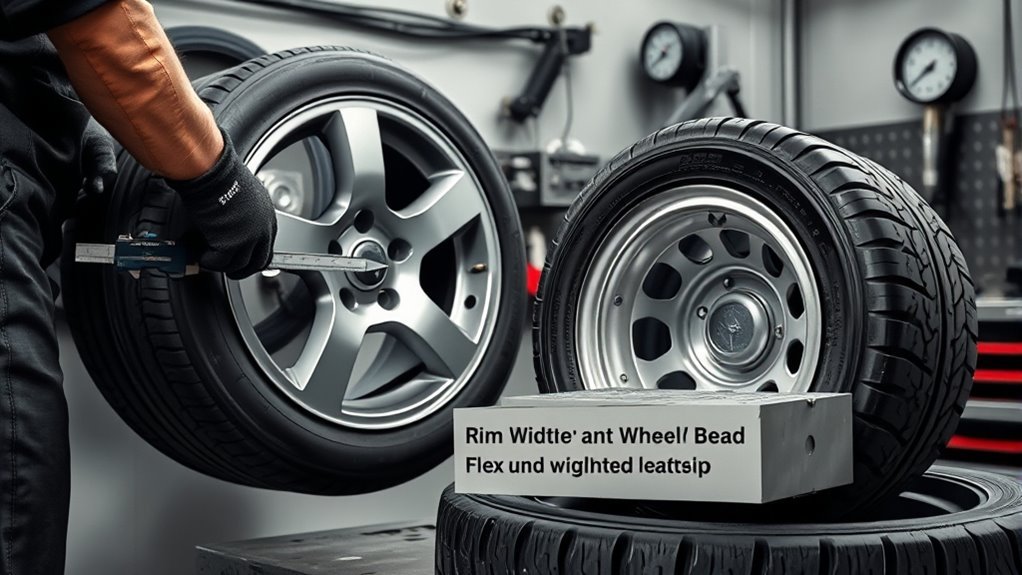
If you want safe, predictable handling, match the tire’s specified rim-width range and proper inflation to the tire’s load rating. You must verify rim compatibility: the rim width should fall within the tire maker’s stated range so the bead seats correctly and handling effects remain as engineered. Maintain pressure maintenance routines using values from the owner’s manual or doorjamb placard; incorrect pressure alters footprint, increases wear, and undermines load capacity.
- Verify rim-tire width pairing (tire width ≈ rim width + 1.5–2 in) to preserve contact patch geometry.
- Follow pressure schedules and inspect frequently to guarantee the load index supports your vehicle’s demands.
- Prioritize load management when carrying cargo or towing; never exceed the tire’s load index at the recommended pressure.
You’ll gain freedom to drive confidently when rim compatibility, pressure maintenance, and load management are disciplined, reducing risk and optimizing performance.
Common Mistakes When Changing Tire Sizes (And How to Fix Them)
Now that you’ve locked in rim compatibility, pressure routines, and load management, note that changing tire sizes introduces specific pitfalls that can degrade safety and performance if you don’t address them. You must check aspect ratio changes: reduced sidewall height alters ride compliance and requires adjusted tire pressure and recalibrated maintenance intervals. Never mix load index ratings; mismatched ratings reduce carrying capacity and risk structural failure. Verify speed ratings to match your driving envelope. Confirm rim diameter compatibility before mounting—incorrect diameter prevents safe installation.
Account for revolutions per mile to avoid speedometer and efficiency surprises. Consider off road suitability and tread patterns: aggressive treads raise noise levels and can worsen fuel use, while season-specific compounds matter for seasonal changes. Use brand comparisons to select consistent construction and predictable wear. Follow clear installation tips: torque lug nuts, balance, and validate alignment. Finally, schedule regular tire maintenance—pressure checks, rotations, and inspections—to preserve safety and deliver the liberated control you want.
Troubleshooting Fitment Issues: Clearance, Speedometer, and Handling
When you change tire sizes, check three fitment areas immediately: clearance, speedometer calibration, and handling dynamics. You’ll perform clearance checks visually and with suspension travel to confirm no rubbing against wells, control arms, or shocks, especially at full lock and under load. Verify load compatibility by matching or exceeding the vehicle’s load index to avoid overstress.
- Inspect wheel well and suspension for contact at full steering lock and compression.
- Calculate circumference differences and plan speedometer recalibration if revolutions-per-mile change.
- Evaluate tire width and aspect ratio tradeoffs for handling dynamics and fuel impact.
For speedometer recalibration, measure rolling circumference or use diagnostic tools to update ECU values. For handling dynamics, prioritize aspect ratio and tire width that maintain intended steering response while minimizing NVH and rolling resistance. If compromises are needed, choose tires that preserve load compatibility and predictable behavior rather than aesthetic oversize.
Frequently Asked Questions
How to Determine What Size Tire Will Fit?
Check your owner’s manual or doorjamb sticker for stock size, measure tire width from sidewall markings, confirm rim diameter, compare replacements with a tire size tool, and verify load index with a tire professional to guarantee safe fitment.
What Is the 7 7 Rule for Tires?
The 7 7 rule says you should replace tires when tire tread reaches 7/32″ or less, since you’ll lose wet traction and hydroplaning resistance; you’ll also reassess load capacity limits because worn tread reduces safe carrying ability.
Conclusion
You’ve decoded the tire DNA and can now match the right boot to your vehicle’s foot. Use precise measurements—width, aspect ratio, rim, load and speed—to keep clearance, handling and odometer truth in check. Swap sizes only within recommended tolerances, minding rim width, pressure and load limits. When doubts creep in, consult manufacturer specs or a pro. Treat fitment like engineering: small errors amplify, so measure, calculate and verify every change.
Related Articles

What Does 700c Mean? Tire Size Meaning for Road Bikes
I’m about to demystify what “700c” actually means for road bike tires—and why rim BSD and tire width matter for fit.
Read More
Tire Aspect Ratio Explained: What the Number Means
Get clear on tire aspect ratios—what the numbers mean for size, ride, and performance, and why one small digit can change everything.
Read More
Inner Tube Size Chart: How to Find the Right Tube
Curious which inner tube fits your wheel and valve type—discover quick sizing tips, common pitfalls, and easy fixes to keep riding confidently.
Read More