
Tire Sidewall Construction Explained for Your RAV4
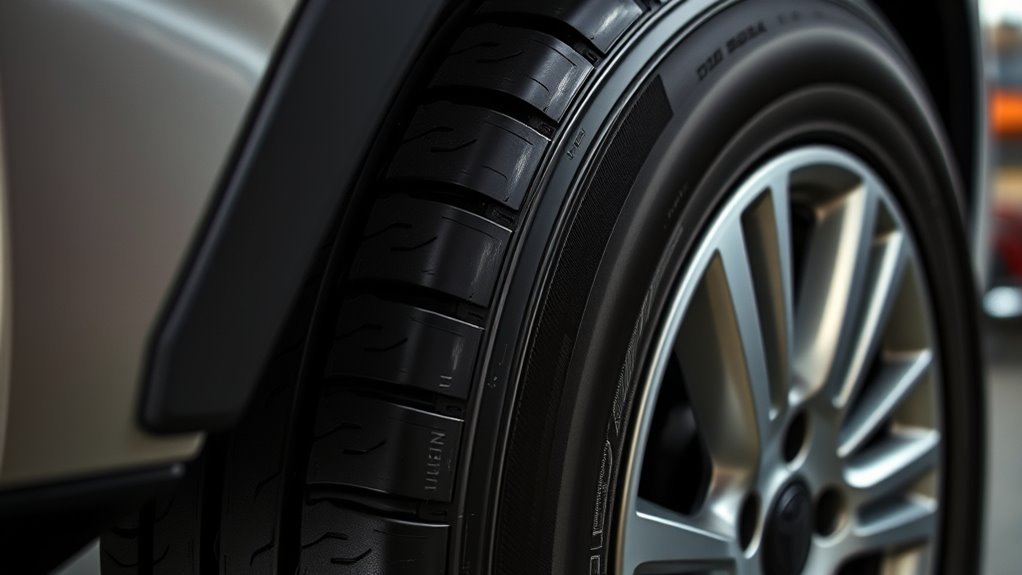
Your RAV4’s sidewall code (e.g., P215/65R17) tells you tire width in mm, aspect ratio as sidewall height percent, radial construction, and wheel diameter in inches, so you can match size to rim. The load index and speed rating show per-tire weight capacity and max sustained speed; DOT and last-four manufacture digits indicate age. Check max load/pressure, UTQG scores and winter markings (M+S, 3PMSF) to pick safe, compatible tires—keep going to learn specifics.
Read Your RAV4’s Main Tire Code (Example: P215/65R17)
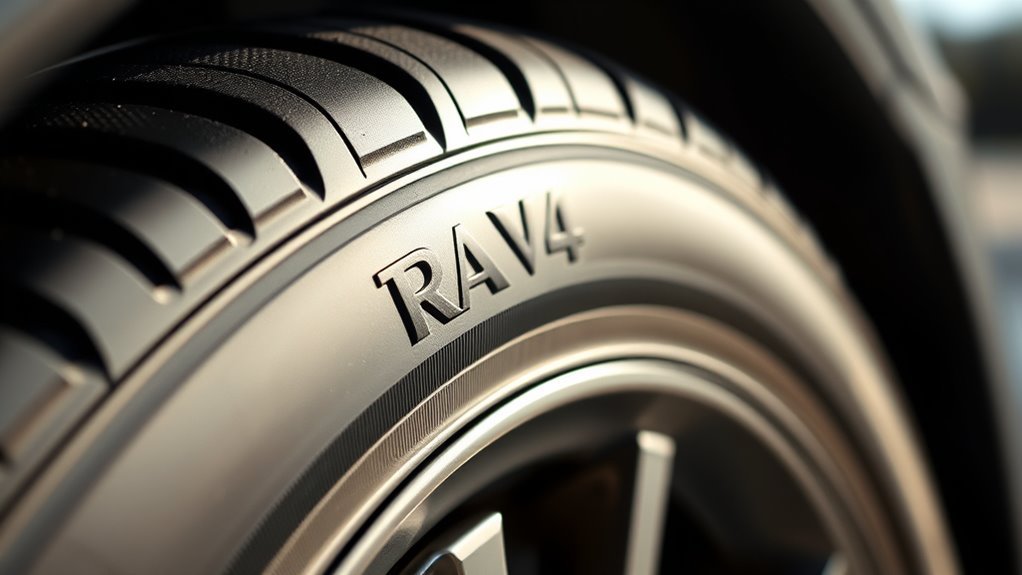
Start by reading the full code stamped on your RAV4’s tire sidewall—example: P215/65R17—because each element tells you a specific specification you need. You’ll see “P” for P‑Metric, confirming the tire’s designed for passenger vehicles like your RAV4. The three digits (215) state the tire width in millimeters; that width influences contact patch, grip, and handling balance. The two‑digit aspect ratio (65) gives the sidewall height as a percentage of width, so a higher ratio means a taller sidewall and a more compliant ride. “R” signals radial construction, the standard that optimizes fuel efficiency and tread life. The final number (17) is wheel diameter in inches and must match your rim for safe fitment. Use this info to guide tire selection, monitor tread wear indicators, and apply tire maintenance tips consistently. Knowing these codes frees you to make confident, safety‑driven decisions about replacements and upkeep.
What the Numbers Mean: Width, Aspect Ratio & Wheel Size
Now that you can read the full tire code on your RAV4, break it into three actionable measurements: width, aspect ratio, and wheel diameter. You’ll use these tire measurements to choose rubber that frees your driving style while preserving safety and fit.
- Width — The first three digits give tire width in millimeters, measured sidewall to sidewall. Wider tires increase contact patch for better grip; they change handling and rolling resistance, so balance traction and economy.
- Aspect ratio — The two-digit percentage after width describes sidewall height relative to width. Lower ratios mean shorter sidewalls, firmer response, and quicker steering; higher ratios add cushioning for rough roads and off-road liberation.
- Wheel diameter — The final number (in inches) must match your rim. Fit is nonnegotiable; mismatched diameters invalidate tire function and compromise control.
Understand these numbers to control the performance implications of any tire choice for your RAV4.
Construction, Load Index & Speed Rating for RAV4 Tires
While reading your RAV4’s tire sidewall you’ll see a letter for construction (usually “R”), a two- or three-digit load index, and a speed-rating letter — each tells you a specific engineering limit you must respect. Radial construction (“R”) aligns plies circumferentially, improving tire performance, fuel economy, ride comfort, and longevity. You’ll rely on the load index (typically 89–99) to confirm each tire supports roughly 1,279–1,609 lb; that’s critical for proper weight distribution when you carry gear or passengers. Speed ratings (commonly H or T) define maximum sustained speeds for safe operation and affect compound and tread choices.
| Marking | Typical Range | Practical Meaning |
|---|---|---|
| Construction | R | Radial plies for stability |
| Load Index | 89–99 | 1,279–1,609 lb per tire |
| Speed Rating | T, H | Safe sustained speed limit |
Choose tires matching these specs to maximize safety, control, and the freedom to travel confidently.
Other Critical Markings: DOT Date, Max Load/Pressure, UTQG & Winter Symbols
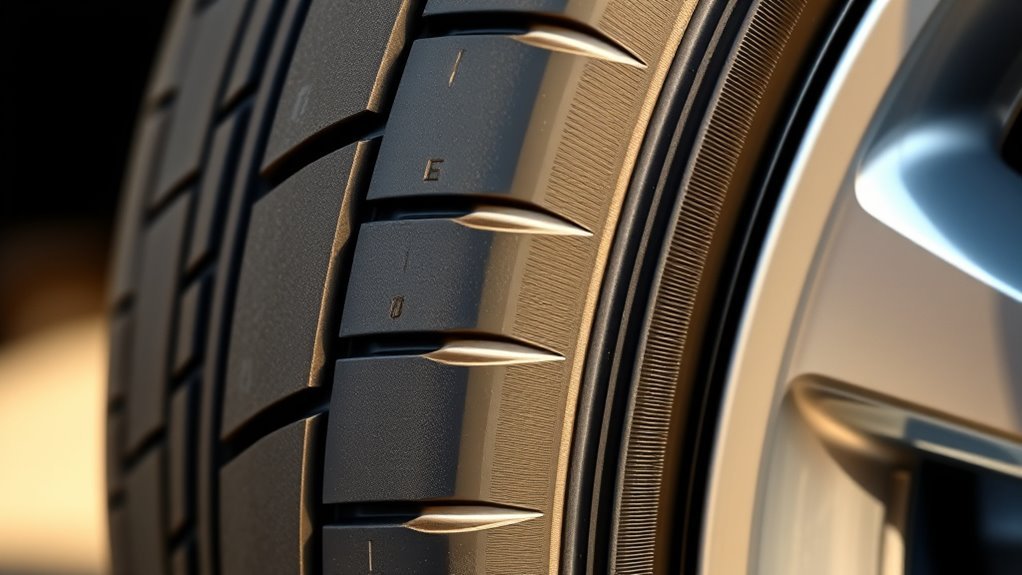
Although they’re smaller and often overlooked, the other sidewall markings carry essential safety and performance data you need to check before fitting or servicing tires on your RAV4. You’ll first locate the DOT code — proof of DOT compliance — whose last four digits show the manufacture week and year; use that to avoid aged rubber. Check maximum load and pressure markings next: they state the design limits and tell you if a tire is standard load (commonly up to 36 PSI) or extra load (up to 42 PSI), critical for safe inflation and cargo freedom. UTQG importance appears as three codes for treadwear, traction, and temperature; they let you compare longevity and grip objectively. For Winter performance, look for M+S for basic capability and the 3PMSF symbol for certified severe-snow traction. Record these markings, match them to your driving needs, and maintain tires to preserve safety and liberation on every road.
- DOT compliance and date
- Load ratings and max pressure
- UTQG importance and Winter performance
Will This Tire Fit My RAV4? Size, Load Capacity & Ride Trade-Offs
How will you know a replacement tire actually fits your RAV4? Start by reading the sidewall size code (e.g., P225/65R17): the width and rim diameter must match your vehicle specifications to guarantee tire compatibility. Next, confirm the load index meets or exceeds the factory requirement—an index of 89, for example, supports ~1,279 pounds per tire; underrating risks structural stress and safety failures.
Assess aspect ratio: lower ratios (shorter sidewalls) sharpen handling and responsiveness; higher ratios cushion road harshness and boost comfort. Align that choice with your driving preferences—prioritize control if you seek spirited handling, or comfort if you value smooth, liberated cruising.
Verify construction: radial (R) tires are standard for durability and daily comfort. Finally, consult your owner’s manual or a tire professional to validate fitment, load capacity, and inflation. Make decisions that free you from uncertainty while keeping safety and performance anchored.
Frequently Asked Questions
What Is the Difference Between 65 and 70 Sidewall?
A 70 sidewall is taller than a 65, so you’ll get more cushioning, ground clearance and a slightly larger overall diameter; you’ll trade sharper handling and some speedometer accuracy, while tire aspect and tread patterns still matter.
Conclusion
By reading your RAV4’s tire code, you get width, aspect ratio and wheel size; by noting construction, load index and speed rating, you match safety and performance; by checking DOT date, max load/pressure, UTQG and winter symbols, you avoid failures. Coincidentally, the tire that fits your rim and meets load limits often gives the ride and economy you want—so you’ll pick a size that balances capacity and comfort, confidently replacing tires without guesswork.

Related Articles

Upsizing Wheels on a Toyota RAV4: Pros, Cons, and Considerations
Boost your Toyota RAV4's performance with larger wheels, but discover the hidden trade-offs that could impact your ride before you decide.
Read More
Can I Change Tire Size on My Toyota RAV4? Rules and Recommendations
Are you considering changing the tire size on your Toyota RAV4? Discover the essential rules and recommendations before making a decision.
Read More
What to Do If the TPMS Light Comes On in Your RAV4
Understand the steps to take when the TPMS light illuminates in your RAV4, as overlooking it could lead to serious tire problems.
Read More