
Tire Pressure for Toyota RAV4 in Winter: Should You Adjust It?
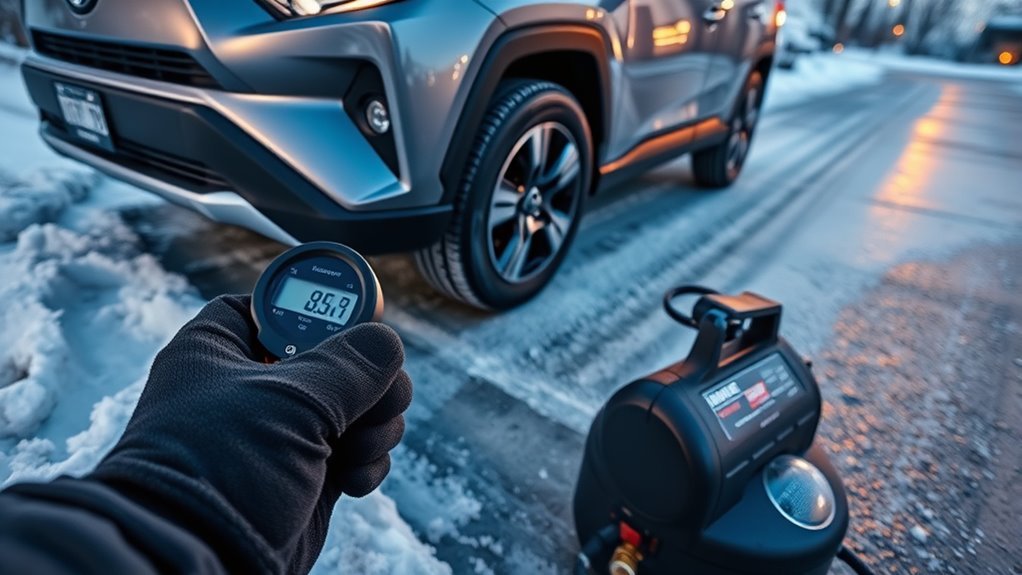
Yes, you should adjust your Toyota RAV4’s tire pressure in winter. Cold weather causes a significant drop in pressure—about 1 psi for every 10°F decrease. Inflating your tires to 2-3 psi above the manufacturer’s recommendation can enhance traction and fuel efficiency. Regular checks every 3-4 weeks are essential to guarantee peak performance and safety. Keep an eye on your tire pressure monitoring system, as it can give false alerts in cold conditions. Find out more about effective tire maintenance strategies for winter driving.
Why Tire Pressure Matters in Winter Conditions
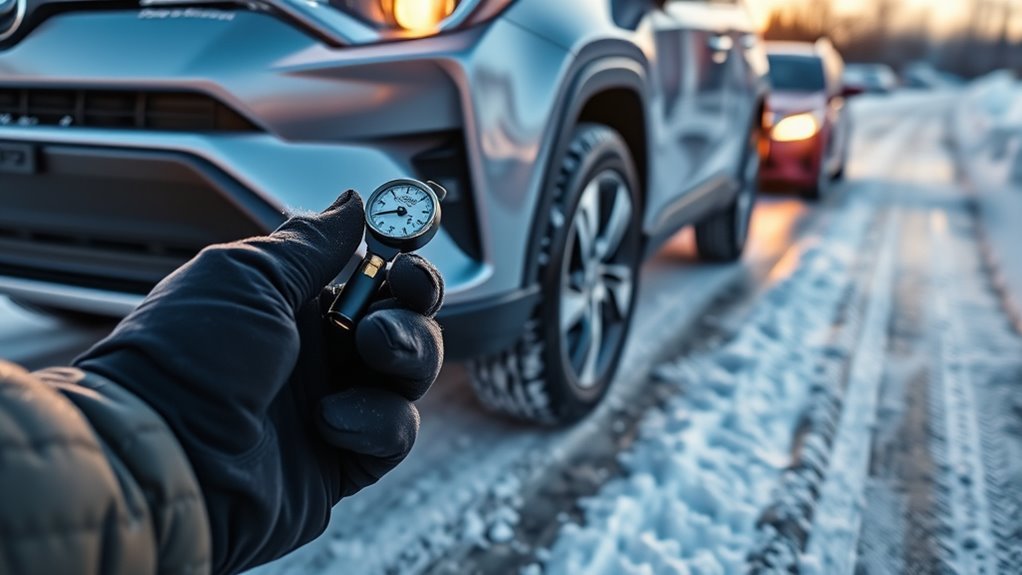
When the temperatures drop, maintaining proper tire pressure becomes critical for your safety and vehicle performance. Cold weather can cause a drop in tire pressure, losing about 1 psi for every 10°F decrease. To enhance tire traction and grip on icy roads, inflate your tires to 2-3 psi above the manufacturer’s recommended pressure. This adjustment not only boosts traction but also improves fuel efficiency, as under-inflated tires increase rolling resistance, leading to higher fuel consumption.
Regularly check your tire pressure every 3-4 weeks during winter, as fluctuations can greatly impact performance and safety. Remember to adjust the pressure before driving; tires expand with heat, potentially giving you misleading readings if checked immediately after use. By prioritizing proper tire pressure, you empower yourself to navigate winter conditions confidently, ensuring both your safety and that of others on the road.
How Cold Weather Impacts Tire Pressure
Cold weather can considerably lower your tire pressure, dropping about 1 psi for every 10°F decrease in temperature. This means your Tire Pressure Monitoring System (TPMS) might trigger false alerts, even if your tires are properly inflated. To guarantee safety and performance, it’s essential to regularly check your tire pressure during winter months, especially before hitting the road.
Temperature-Pressure Relationship
As temperatures drop, tire pressure can considerably decline, impacting your Toyota RAV4’s performance. Understanding the temperature effects on tire pressure is vital, especially in winter. Cold air contracts, reducing tire pressure by about 1 psi for every 10°F decrease. This can lead to reduced traction and handling.
To maintain peak performance, consider these pressure adjustments:
- Check tire pressure regularly during winter months.
- Inflate tires to 2-3 psi above the manufacturer’s specified pressure.
- Be aware that the Tire Pressure Monitoring System (TPMS) may trigger warnings with a 20-25% pressure loss.
- Remember, tires can lose about 1 psi per month, and this rate can increase in colder climates.
Stay proactive and make sure your tires are ready for winter driving!
TPMS Sensitivity Issues
Although winter brings the thrill of snowy adventures, it also introduces challenges for your Toyota RAV4’s tire pressure monitoring system (TPMS). Cold temperatures can drop tire pressure by about 1 psi for every 10°F decrease, often triggering false alerts. The TPMS alerts you when pressure falls 20-25% below recommended levels, but it may misread conditions in winter. After driving, tires can cool and lose around 4 psi, skewing TPMS calibration until they warm up. To combat this, consider adjusting your tire pressure 2-3 psi above the recommended level. Regular monitoring is essential, as the TPMS might not fully account for temperature impacts, leading to potential safety concerns. Stay proactive to enjoy those winter drives!
Essential Tire Pressure Adjustments for Your RAV4 in Winter
When winter hits, adjusting your Toyota RAV4’s tire pressure becomes essential for peak performance and safety. Cold temperatures can cause a drop in tire pressure, leading to under-inflation and compromised handling. To keep your vehicle in top shape, consider these essential adjustments:
- Inflate tires to 2-3 psi above the manufacturer’s specified pressure.
- Check tire pressure every 3-4 weeks during winter months.
- Remember that tire pressure decreases by about 1 psi for every 10°F drop in temperature.
- Always adjust tire pressure before driving for accurate readings.
Common Myths About Tire Pressure and Winter Driving?
Understanding tire pressure myths is essential for safe winter driving, especially for your Toyota RAV4. Let’s debunk some common misconceptions to help you maximize traction and safety.
| Myth | Reality |
|---|---|
| Tire pressure should stay constant | Cold temps can drop pressure by 1 psi for every 10°F drop. |
| Over-inflating improves traction | It reduces road contact, leading to increased wear. |
| TPMS is infallible | It may not reflect cold pressure changes until you drive. |
| Checking pressure once is enough | Monitor every 3-4 weeks for fluctuations. |
| All tires perform equally in winter | Summer tires lose grip below 10°C; winter tires are essential. |
Steps to Effectively Check Your Tire Pressure
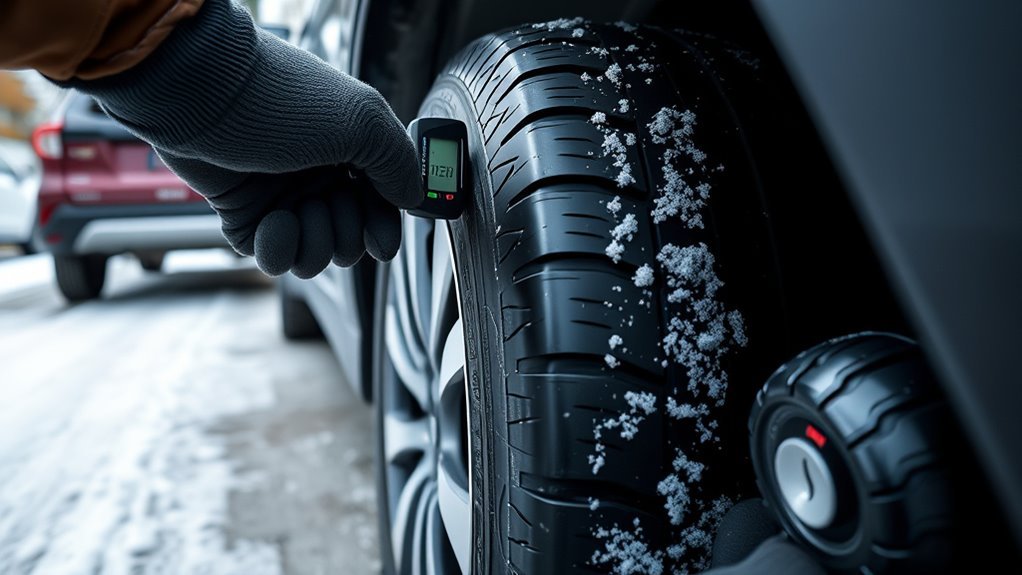
To effectively check your tire pressure, you’ll need a quality gauge and the right timing. Always perform the check when your tires are cold for the most accurate readings, ideally before you hit the road. Keep in mind common measurement mistakes, as even small inaccuracies can affect your Toyota RAV4’s performance.
Essential Tools Needed
Checking your tire pressure effectively requires a few essential tools to guarantee safety and performance, especially in winter conditions. Here’s what you need:
- Tire Pressure Gauges: Invest in a reliable gauge, either digital or analog, for precise measurements.
- Calibration Tools: Regularly calibrate your gauge to maintain accuracy; small pressure drops can impact safety.
- Portable Air Compressor: Keep one at home for convenient inflation, vital in fluctuating winter temperatures.
- Owner’s Manual/Sticker Reference: Consult these for your vehicle’s recommended tire pressure specifications, adjusting accordingly for winter.
Having these air compressor essentials guarantees you can check and adjust your tire pressure effectively, keeping your Toyota RAV4 performing at its best.
Ideal Timing For Checks
Regular tire pressure checks are crucial during winter months, especially given the drastic temperature changes that can affect your RAV4’s performance. Aim for a suitable check frequency of every 3-4 weeks to guarantee your tires maintain proper pressure, as cold weather can lead to significant drops. Always measure tire pressure when your tires are cold; driving can inflate readings by up to 4 psi. For best timing, consider adjusting your tire pressure to 2-3 psi above the manufacturer’s recommendation to combat the chill. Use a quality gauge for accurate readings and regularly inspect your tire conditions, including tread depth, alongside these checks to enhance both safety and performance during winter driving.
Common Measurement Mistakes
While it might seem straightforward, checking your tire pressure can lead to common mistakes that affect accuracy. Avoid these measurement errors to guarantee peak performance:
- Always check pressure when tires are cold; heat from driving can inflate readings.
- Use a quality tire pressure gauge, and make sure it’s calibrated for accuracy.
- Monitor your tire pressure every 3-4 weeks, especially in winter, when temperatures fluctuate.
- Remember that pressure can drop about 1 psi for every 10°F decrease in temperature.
When to Check Your Tire Pressure During Winter
As winter temperatures drop, it’s vital to keep an eye on your tire pressure to secure ideal safety and performance. You should check your tire pressure at least every 3-4 weeks during winter. Cold air can cause pressure to decrease markedly—approximately 1 psi for every 10°F drop. For the most accurate readings, measure your tire pressure before driving, as tires can heat up and inflate when on the road, leading to misleading results.
Regular mid-winter checks are important, especially with fluctuating temperatures that can rapidly affect tire pressure. Adjusting your tires to 2-3 psi above the manufacturer’s recommended level can enhance traction and handling on icy roads. Always refer to the tire pressure specifications on your driver’s door post or in your owner’s manual to verify proper inflation during winter maintenance. Keeping up with tire pressure frequency will help you stay safe and in control this winter.
How TPMS Helps You Keep an Eye on Tire Pressure
The Tire Pressure Monitoring System (TPMS) plays an essential role in maintaining your Toyota RAV4’s performance and safety, especially during winter months. This system alerts you when tire pressure drops by 20-25%, critical for tire safety in chilly conditions. However, be aware that TPMS sensors can sometimes give false warnings in cold weather due to significant pressure loss.
Consider these points to guarantee sensor accuracy:
- Tires can lose about 4 psi when temperatures drop to freezing.
- Regular checks are fundamental during winter to prevent erroneous alerts.
- Minor adjustments to tire pressure can help avoid false warnings.
- Always reset the TPMS after adjusting tire pressures for dependable readings.
Key Strategies for Ensuring Tire Performance in Cold Weather
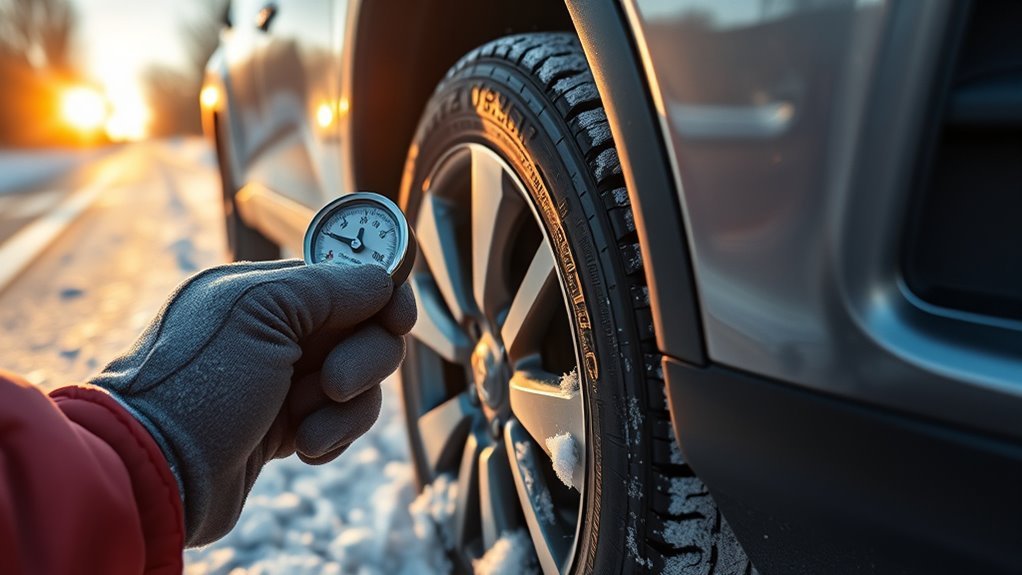
To guarantee peak tire performance in cold weather, you need to adopt a proactive approach to tire maintenance. Start by regularly checking your tire pressure every 3-4 weeks. In winter, inflate your Toyota RAV4 tires to 2-3 psi above the manufacturer’s recommendation to offset pressure drops from the cold. Keep in mind that tire pressure can decrease by about 1 psi for every 10°F drop in temperature, affecting your traction and safety.
Don’t rely solely on your TPMS; manual checks with a reliable gauge provide the most accurate readings. Additionally, verify your tread depth meets safety standards, as adequate tread improves grip on slippery roads. Rotate your tires regularly to promote even wear, enhancing both handling and longevity. By staying vigilant with these strategies, you’ll not only boost your vehicle’s performance but also enjoy a safer, more efficient winter driving experience.
Frequently Asked Questions
What Should Tire Pressure Be in Winter for a Toyota RAV4?
For winter driving, you should maintain your Toyota RAV4’s tire pressure at 2-3 psi above the recommended level. This adjustment compensates for cold temperatures, ensuring better traction and safety on icy roads. Regular checks are essential.
Should I Set My Tire Pressure Higher in the Winter?
Yes, you should set your tire pressure higher in cold weather. This adjustment enhances tire performance, ensuring better traction and handling on icy roads. Regular checks keep your tires safe and efficient throughout winter driving conditions.
What Happens if My RAV4 Tire Pressure Is Too Low?
Imagine gliding on ice—now think low tire pressure. It leads to uneven tire wear, safety concerns, reduced traction, and a higher risk of accidents. Keep your RAV4’s tires properly inflated for a secure ride.
Conclusion
In winter, keeping your Toyota RAV4’s tire pressure in check is essential for safety and performance. As temperatures drop, tire pressure can plummet, leading to decreased traction and handling. Don’t let your tires go flat in the cold—regularly monitor and adjust their pressure to guarantee a smooth ride. With these simple steps, you’ll not only navigate winter roads safely but also avoid any unwanted surprises. Remember, a little prevention goes a long way!

Related Articles

Upsizing Wheels on a Toyota RAV4: Pros, Cons, and Considerations
Boost your Toyota RAV4's performance with larger wheels, but discover the hidden trade-offs that could impact your ride before you decide.
Read More
Can I Change Tire Size on My Toyota RAV4? Rules and Recommendations
Are you considering changing the tire size on your Toyota RAV4? Discover the essential rules and recommendations before making a decision.
Read More
What to Do If the TPMS Light Comes On in Your RAV4
Understand the steps to take when the TPMS light illuminates in your RAV4, as overlooking it could lead to serious tire problems.
Read More