
Tire Plug vs. Patch: When to Use Each and Why It Matters
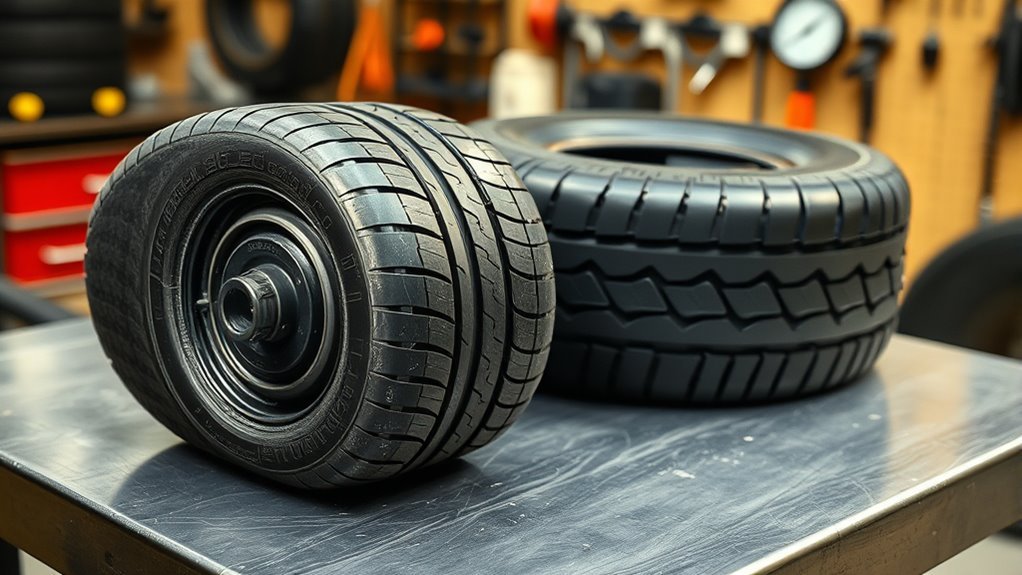
Use a plug only for small center-tread punctures under 1/4″ when you need a quick, temporary seal to stay mobile. Plugs are simple and cheap, but they don’t restore internal structure, so you’ll need to monitor pressure and get a professional follow-up. A patch (or plug-plus-patch) applied with the tire off the rim restores structural integrity and lasts for the tire’s remaining usable life, making it the safer, more durable fix. Keep going for specifics on limits and procedure.
Quick Answer
- Plug: Best for small tread punctures under 1/4″. Fast and cheap, but temporary. Follow up with a shop repair.
- Patch: Bonds to the tire’s inner liner for a long-lasting, structural repair. Requires tire removal.
- Plug-patch combo: The industry-recommended standard per the Tire Industry Association (TIA). Seals from both sides for maximum durability.
- Replace: Required for sidewall damage, punctures larger than 1/4″, or tread worn to 2/32″.
Quick Decision: Plug, Patch, or Replace?
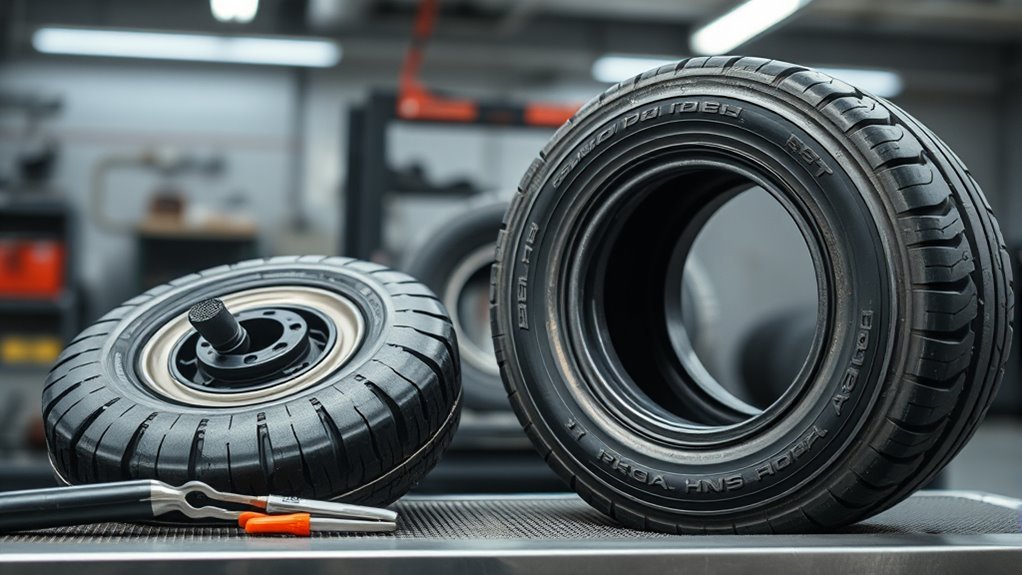
Need a fast call? Start by sizing up the damage: small punctures under 1/4 inch in the center tread may be worth plugging for immediate mobility. Use basic tire maintenance tips to confirm the hole’s size and location before doing anything. Don’t attempt a repair if the sidewall is hit, multiple punctures exist, or tread is down to 2/32″. In those cases, replace the tire.
Think about time, cost, and how long the fix will last. Plugging gets you back on the road with minimal downtime and lower cost, but it’s a temporary measure that won’t address internal damage. Patching requires tire removal and inspection, costs more, and gives a durable, internal seal. Many shops combine plug and patch when hidden damage is possible, which improves reliability.
Focus on puncture prevention too. Regular inspections, proper inflation, and avoiding road debris all reduce the chance of emergency repairs.
Tire Plugs: What They Are and When to Use Them
A tire plug is a flexible rubber strip you insert from the outside to seal small punctures (under 1/4 inch). It’s a quick, low-cost roadside fix that anyone can learn with a reamer and adhesive. You clean and roughen the hole with a reamer, apply adhesive, and insert the plug. Plugs are temporary: they don’t address internal carcass damage and have limited longevity, so monitor pressure and plan a professional follow-up.
| Feature | Use Case | Limitations |
|---|---|---|
| Size | Small punctures (<1/4″) | Not for large holes |
| Cost | $5–$15 kits | Temporary solution |
| Installation | Reamer + adhesive | DIY, needs care |
| Durability | Short-term | Air loss risk |
| Location | Tread center | Not for sidewall |
For long-term safety, follow up with a patch after using a plug.
Tire Patches: What They Are and When to Use Them
A tire patch is a flat rubber piece bonded to the tire’s inner surface after the tire is removed from the rim. It creates a secure seal for punctures up to 1/4″ and restores structural integrity in ways external plugs can’t. The process involves removing the tire, exposing the inner liner, then cleaning, roughening, applying adhesive, and bonding the patch under pressure with proper cure time. This controlled process minimizes failure points that surface repairs leave behind.
Patches work for central tread punctures within size limits, not sidewall damage or large tears. If the tire’s internal condition is uncertain, get a professional assessment. A properly installed patch typically lasts for the tire’s remaining usable life, so you avoid needless replacement. Be precise, skip shortcuts, and choose the repair that preserves safety.
Tire Safety & Durability: Plug vs. Patch Compared
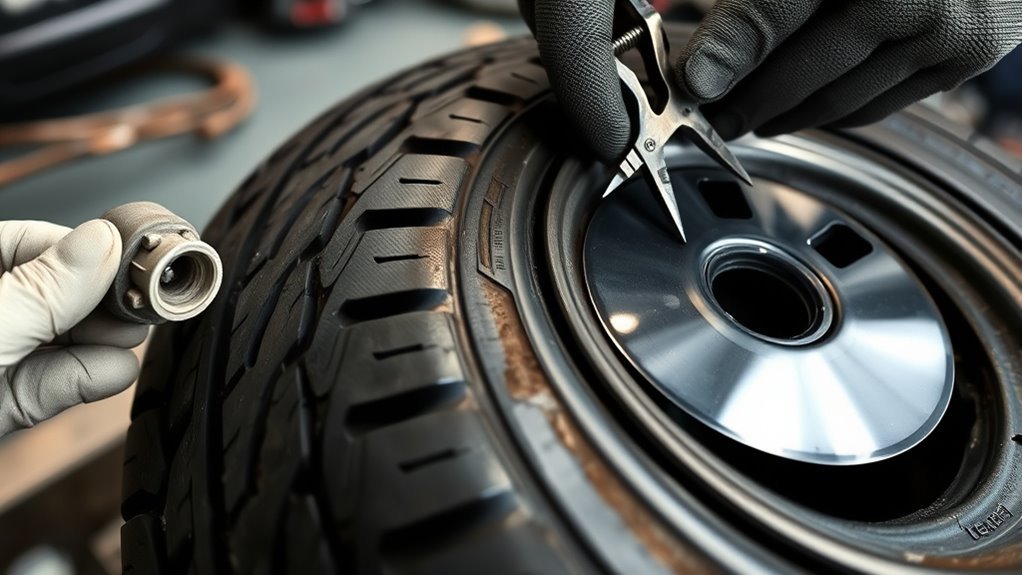
Plugs get you back on the road fast, but patches are the better choice when long-term safety and structural integrity matter most. Patches bond from the inside and resist loosening, lasting for the tire’s remaining usable life if done right. Plugs are temporary, quicker, but risk internal damage and pressure loss.
| Method | Durability | Best Use |
|---|---|---|
| Patch | High, long-term | Structural repairs |
| Plug | Low, temporary | Emergency roadside |
| Combo | Highest | Max seal & liner protection |
Industry standards from the TIA and USTMA favor a patch-plus-plug combo to seal the inner liner and block water intrusion, boosting repair effectiveness. Don’t attempt repairs for holes larger than 0.25″ or sidewall damage, as those aren’t safe. You’ll trade time for reliability: a patch requires tire removal and a 30 to 60 minute shop procedure, but it saves you from repeated fixes and keeps you safer on the road.
DIY vs. Professional Repair: Costs, Tools, and Steps
You’ll need a basic plug kit (plugs, reamer, insertion tool) and an air source for DIY repairs, suitable only for small tread punctures. Pros typically charge $20 to $50 for a full inspection, cleaning, and adhesive patching that also assesses internal damage. Follow precise step-by-step procedures either way and always finish with a leak check using soapy water.
DIY Tool Essentials
Don’t tackle tire repairs without the right kit. At minimum, you’ll need a plug kit (reamer and insertion tool) and a patch kit with adhesive and a patching tool. You’ll also want basic safety gear: gloves, eye protection, and a jack rated for your vehicle. DIY plug kits run $5 to $15 and save money, but they have limits. Combine plug and patch tools for the strongest field repair when possible. Inspect the bead, sidewall, and internal area thoroughly, because hidden damage can defeat a DIY fix. You can handle small punctures yourself, but significant damage or uncertainty means you should call a pro for a complete inspection.
Professional Cost Breakdown
Start by weighing costs against risk: DIY plug kits cost $5 to $15 and let you fix small punctures quickly, while professionals charge about $20 to $50 for a patched repair that’s more durable. Full replacement runs roughly $100 to $300 per tire depending on size and brand. You’ll choose between immediate savings and long-term reliability. DIY works for temporary fixes, but pro service wins on repair longevity and safety.
- DIY plug kit: $5–$15. Minimal tools, fast, limited scope.
- Professional patch: $20–$50. Labor and materials included, superior durability.
- Plug-patch combo: Mid-range cost. Blends affordability with extended life.
- Replacement: $100–$300 per tire. Final option when damage or wear is beyond repair.
Stay practical: inspect regularly to avoid escalated costs.
Step-by-Step Procedures
Match the repair method to the damage. Small, straight punctures in the tread can be temporarily sealed with a $5 to $15 plug kit using basic tools, while larger or angled punctures require the tire be removed and patched ($20 to $50 installed) or replaced.
For DIY plugging: deflate the tire, ream the hole, insert the adhesive-coated plug with the insertion tool, trim excess, and re-inflate. Carry a gauge and test for leaks.
For a professional patch: the shop removes the tire, inspects the cavity, cleans and buffs the area, applies an internal patch combined with a plug if needed, then mounts and balances the wheel. You’re choosing between speed and economy or durability and safety. Go with the latter when it counts.
Real-World Scenarios: Which Repair to Use and Why
When you get a small roadside puncture, a plug lets you seal it fast and get to a safe location for a proper repair. In the shop, technicians remove the tire to install a bonded patch (or a plug-patch combo) for a durable, standards-compliant repair. If the damage is near the sidewall or exceeds 1/4 inch, don’t risk it. Replace the tire.
Emergency Roadside Plugging
If you’re stranded with a slow leak from a small puncture (under 1/4 inch), a tire plug gives you a fast roadside fix: ream the hole, insert a glued plug, and you can get moving again without removing the wheel. Treat the plug as provisional. Plugs don’t reveal or repair internal cord or bead damage, so you’ll need professional inspection as soon as possible.
- Confirm puncture size and location. Plugs suit center tread only.
- Clean and ream the hole. Apply adhesive to the plug.
- Insert plug, trim excess, and recheck pressure.
- Drive cautiously to a shop for a combined plug-and-patch evaluation.
A plug buys you time, but temporary fixes always need follow-up.
Workshop Patch Procedure
Remove the tire from the rim so you can fully inspect the inner liner, cord plies, and bead area before any repair. Patches require a clean, roughened surface and proper adhesive to bond reliably. The full process typically takes 30 to 60 minutes.
Perform a thorough tire inspection to verify damage limits. Patches suit punctures up to 1/4 inch; larger or sidewall failures mean replacement. Prep demands solvent cleaning and abrasion to optimize adhesive bonding. Don’t skip steps. Apply the patch per factory technique, cure and test under pressure, then re-mount and balance. This process preserves safe mobility, but unsafe repairs should be rejected. Replace the tire when damage exceeds safe repair criteria.
Plug-Patch Combo Benefits
A plug-patch combo seals from both sides: you get immediate air retention from the plug and structural reinforcement from the patch. The repair resists leaks and ply separation better than either method alone. This is the preferred approach when you want dependable fixes that hold up over time. The combo provides faster sealing plus inside bonding that addresses hidden ply damage and meets USTMA repair guidelines for punctures under 1/4″. When installed correctly, the repair can last the tire’s remaining usable life.
- Immediate seal: plug stops airflow on contact, preventing further air loss.
- Long-term reinforcement: patch bonds interior plies, reducing separation risk.
- Cost-effective: cheaper than replacement, keeps you on the road.
- Practical fit: ideal for small tread punctures you want fixed right.
How Long Does a Tire Patch Last?
A properly installed patch, especially a plug-patch combo, can last for the tire’s remaining usable life. Most professional repairs hold up for tens of thousands of miles without issue. The key factors are correct surface prep, quality adhesive, and proper cure time. If any of these steps are rushed, the patch is more likely to fail.
Keep in mind that the tire itself has a finite lifespan. Even a perfect patch won’t help if the tread is nearly worn out or the tire is old. Most manufacturers recommend replacing tires after six years regardless of tread depth, so factor tire age into your decision before investing in a repair.
Frequently Asked Questions
Do Tire Shops Use Plugs or Patches?
Most shops use a plug-patch combo, which is the repair method recommended by the TIA and USTMA. A standalone plug or standalone patch is considered an incomplete repair by industry standards. You may still see plug-only fixes at quick-service locations, but a combo repair is always the safer choice.
Can You Drive Long Distances on a Plugged Tire?
A plug is meant as a short-term fix to get you to a repair shop. It’s not designed for highway driving or extended use. Once plugged, drive at moderate speeds and get a professional plug-patch repair as soon as you can.
How Many Times Can a Tire Be Patched?
Most tire shops will patch a tire up to two or three times, as long as the punctures don’t overlap and each one falls within the repairable tread area. If repairs are too close together or the tire has multiple damaged spots, replacement is the safer option.
Conclusion
You’ve got choices: plug for quick, temporary fixes, patch for lasting, internal repairs, and replacement when damage is beyond help. A plug works if you need to get moving now and the puncture is small and centered in the tread. Choose a patch when safety and longevity matter. Replace the tire if the sidewall is cut or the tire is structurally compromised. Pick the method that matches the damage, not just what’s fastest.
Related Articles

When to Replace Tubeless Sealant: Timing & Signs
Be warned: tubeless sealant can fail in weeks or months—learn the signs, testing tips, and exact replacement timing to avoid flats.
Read More
The Penny Test for Tread Depth: How to Do It Right
Better learn the penny test correctly—discover when Lincoln’s head reveals dangerous tread wear and what to do next.
Read More
Tire Rotation Schedule: How Often & Why It Matters
Optimizing tire life? Discover why rotating every 5,000–8,000 miles matters for safety and savings—read on to learn exact patterns and tips.
Read More