Tire Noise and Comfort Explained: What to Expect From Your RAV4

Your RAV4’s tire noise will mostly be broadband roar and periodic whine driven 60–70% by tread design, pressure, wear and alignment rather than the chassis; improper inflation, uneven wear or sidewall damage amplify tonal peaks and vibration. Check pressures cold, inspect tread and sidewalls, verify balance and alignment, and rule out brakes, bearings and suspension play. Quieter outcomes come from low-noise tread patterns, softer compounds and sound deadening—keep going to learn precise tests, fixes and costs.
Why Your RAV4 Is Noisy : Short Answer and Top Fixes
If your RAV4 sounds louder than expected, it’s usually due to tire-related causes: tread design and compound, improper inflation, sidewall damage, or imbalance and alignment issues all measurably affect airborne and structure-borne noise. You should first evaluate tire design — V-shaped tread and softer compounds typically yield lower cabin sound pressure; switching to models like Michelin Primacy MXV4 or Continental ExtremeContact DWS can produce measurable noise reduction. Check and set cold tire pressure to manufacturer specifications, since both over- and under-inflation raise tonal and broadband noise. Inspect sidewalls for bubbles, bulges, or impact damage that transmit disturbance into the chassis. Finally, get routine balancing and alignment: unbalanced masses or misalignment create periodic forces that amplify vibration and perceived loudness. These targeted interventions free you from avoidable noise, improve comfort, and extend tire life while giving you clear, evidence-based steps to reclaim a quieter ride.
Quick Checks on a RAV4 to Rule Out Bearings, Brakes, Suspension
Because most cabin rattles and road roar trace back to drivetrain or wheel components, start with a targeted visual and dynamic check of brakes, suspension, bearings, and tires to quickly eliminate common sources. You’ll begin with a brake inspection: look for thin pads, scoring on rotors, and loose hardware. Next, do a suspension check—inspect struts, shocks, mounts, and control arms for leaks, play, or broken bushings. Visually examine tires for irregular wear or bubbles and confirm manufacturer PSI; underinflation raises noise and reduces control. During a short, controlled drive, note noise when turning or crossing bumps; bearing failure often shows as growl that changes with load. If visual checks pass, prioritize components by risk: bearings and brakes are common, then alignment and tires. Use objective observations and simple tests to free yourself from guesswork; document findings, then address the highest-probability item first or hand off to a technician with clear evidence.
| Item | What to look for |
|---|---|
| Brakes | Pad wear, rotor warp |
| Suspension | Leaks, play, broken bushings |
| Tires | Wear patterns, bubbles |
| Bearings | Growl changing with load |
Test In‑Car: Tell Whine, Roar, or Vibration Apart
After you’ve ruled out brakes, bearings, and suspension, sit in the cabin and run a controlled test to separate whine, roar, and vibration by how they behave under load, speed, and steering inputs. You’ll detect patterns: whine changes with engine load and often tracks specific tread harmonics; roar rises with speed and is linked to uneven wear or aggregate cabin coupling; vibration transmits through steering and floor, indicating imbalance or misalignment. Remember external label decibels won’t match interior perception, so prioritize in‑car evaluation and tire maintenance for effective noise reduction.
- Accelerate at constant RPMs: note tonal whine that shifts with load — inspect tread patterns and pressure.
- Cruise at incremental speeds: map roar amplitude vs. speed — check for uneven wear and cabin resonance.
- Apply slow steering inputs and brake gently: feel vibration sources — verify balance, alignment, and sidewall integrity.
Use results to target maintenance actions that restore control, comfort, and the freedom to drive without intrusive noise.
How Tread and Construction Affect Cabin Noise
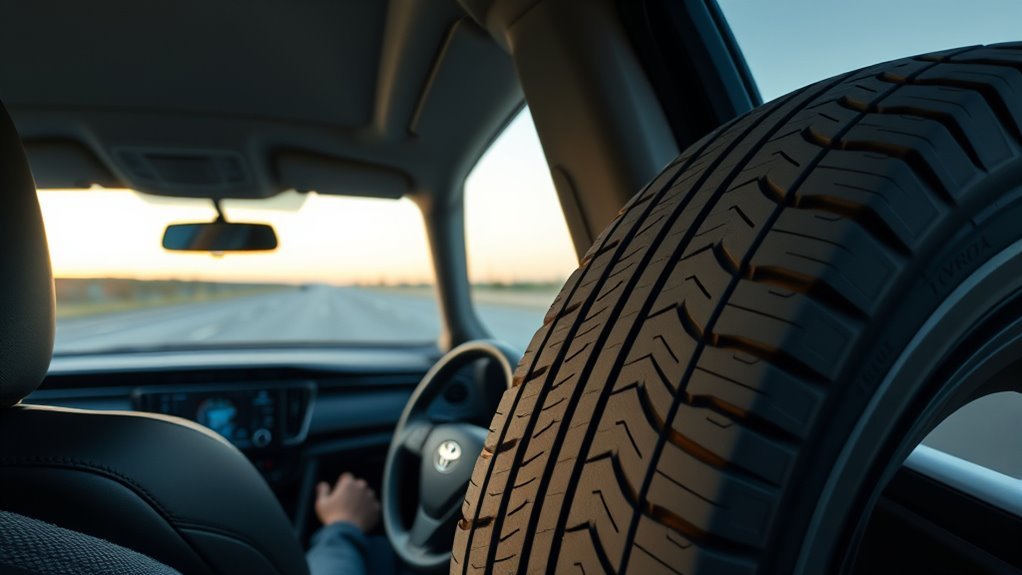
When you’re evaluating tire options for quieter cabin performance, tread geometry and construction matter more than brand alone: You’ll want to prioritize tread design and materials that deliver measurable noise reduction. V-shaped patterns channel water and typically emit less road noise than aggressive, blocky layouts. Softer rubber compounds absorb vibrations; harder compounds transmit more sound into the chassis. Tread spacing and depth alter tonal content: wider gaps usually increase audible peaks as the tire rolls. Structural choices—belting, sidewall stiffness, internal damping—control vibration insulation and consequently cabin sound. Maintain correct pressure; under- or over-inflation raises noise and worsens comfort. Use objective comparison: evaluate patterns, compound durometer, and construction specs to liberate yourself from guesswork and pick tires that align with your comfort goals.
| Feature | Effect on Noise | Action |
|---|---|---|
| V-shaped tread | Lower road noise | Prefer for highway use |
| Compound softness | Higher absorption | Choose softer durometer |
| Tread spacing | More tonal peaks | Avoid wide gaps |
Why Outside Noise Ratings Don’t Match What You Hear Inside
Although outside dB ratings give a standardized measure of tire sound during drive-by tests, they don’t predict what you’ll hear inside the cabin because those tests ignore vehicle-specific transmission paths, interior absorption, and frequency-dependent masking. You need to treat outside dB as one input to tire acoustics, not a verdict. Cabin noise perception depends on how tread pattern energy couples into body panels, how insulation attenuates specific bands, and how your ears weight mid-bass and treble frequencies.
You can reclaim control by understanding measurable drivers of in-cabin sound:
- Tread and construction: V-shaped patterns and softer compounds shift spectral content and reduce transmitted vibration.
- Vehicle systems: insulation, panel stiffness, and suspension change transmission paths and frequency response.
- Operational factors: tire pressure and road texture alter excitation and consequently subjective noise perception.
Use objective data plus targeted in-cabin measurements to choose solutions that align tire acoustics with your comfort and freedom to drive without distraction.
Quiet Tyres RAV4 Owners Recommend (Michelin, Yokohama, Vredestein)
If you want quieter, more comfortable driving in a RAV4, owners consistently point to Michelin, Yokohama, and Vredestein as top choices based on real-world feedback and measured cabin outcomes. You’ll find Michelin Primacy MXV4 and CrossClimate 2 cited for superior low-frequency suppression and consistent comfort across speeds; data and owner reports indicate they outperform many OEM options in perceived cabin quiet. Yokohama YK580 delivers a softer ride and measurable reductions in road noise, appealing if you prioritize smoothness without sacrificing grip. Vredestein Quatrac Pro users note a clear noise improvement after switching from OEM, attributing gains to V-shaped tread geometry that disperses acoustic signatures across frequencies. This tire brands comparison emphasizes tread design and material construction as primary noise reduction techniques. You should still monitor pressure and inspect tread for wear, since ideal inflation and even wear maintain these quieting benefits and preserve the liberated driving experience you want.
How Tyre Pressure and Wheel Alignment Change Noise and Ride
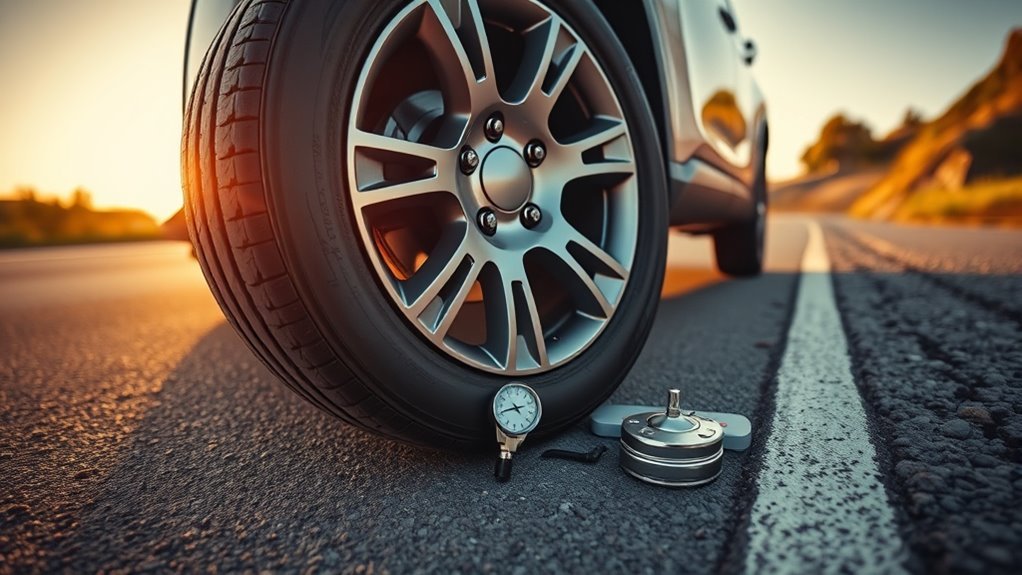
Picking quieter tyres like Michelin or Yokohama helps, but tyre pressure and wheel alignment determine whether those benefits actually reach the cabin. You control noise reduction and ride comfort by keeping tire pressure within the manufacturer-recommended 30–35 PSI range; under-inflation increases noise and harshness, over-inflation raises stiffness and cuts grip. Check pressures cold and adjust regularly to preserve tread contact and consistent acoustic performance.
Misaligned wheels change contact angles, producing uneven wear, higher road noise, and degraded handling. Periodic alignment preserves uniform tread contact, extends tyre life, and sustains noise reduction gains from quiet tyre choices.
- Measure tire pressure cold, restore to spec, and recheck monthly for steady ride comfort and quieter operation.
- Inspect wheel alignment annually or after impacts; correct toe and camber to prevent asymmetric wear and noise increases.
- Combine proper pressure and alignment to maximize handling, longevity, and liberated driving free from avoidable cabin noise.
When Should You File a Warranty Claim or Swap Tyres Yourself?
If you see persistent noise after repeated balance checks or bearing replacements, bubbles in the sidewall, or abnormal wear within the warranty period, you should document the evidence and file a manufacturer claim. If the warranty route doesn’t resolve noise or the cost of claim/repair approaches the price of a known-quiet replacement, consider swapping to quieter tyres like Michelin or Bridgestone yourself. Always follow your vehicle and tyre warranty rules and keep service records to support cost-versus-benefit decisions.
Signs You Should Claim
When should you file a warranty claim versus swapping tires yourself? If early post-installation whirring appears, start a formal tire warranty process and request a noise evaluation from the installer.
- Continuous whirring within a month: document timestamps, speeds, and service feedback; this suggests a manufacturing defect and justifies claim filing.
- Visible sidewall bubbles/bumps or increasing noise on rough roads: these structural signs materially degrade performance and support warranty swap requests.
- Repeated failed balance checks: if balancing, bearings, and alignment are ruled out, the evidence points to tire-related failure—log shop reports and photos to strengthen your case.
You’re empowered to insist on redress when objective data and documented service conclusions indicate a defective tire.
When To Replace Yourself
Having documented noises, shop reports, and any visible tire defects, you can now decide whether to file a warranty claim or replace tires yourself. If tires are relatively new but exhibit continuous noise after balancing and mechanical checks, file a claim—persistent noise often signals a manufacturing defect within warranty timeframes. Replace tires yourself when you see sidewall bubbles, pronounced uneven wear, or pressure-maintenance failures that compromise safety. Monitor tire lifespan by tracking tread depth and performance; if noise reduction is your goal and user feedback identifies quieter replacements, swapping makes sense. Always consult the manufacturer’s warranty terms before action. Act decisively: claim when defect evidence and warranty align; replace when damage, comfort degradation, or performance metrics demand immediate intervention.
Cost Vs Benefit
Because persistent noise after proper balancing and inspections often indicates a covered defect, you should weigh the direct costs of filing a warranty claim against the out-of-pocket expense and downtime of replacing tires yourself. Do a cost analysis: compare expected claim approval likelihood, time to resolution, and any pro-rated charges against immediate replacement costs for quieter models. Inspect tread pattern, sidewall condition, and noise-related defects to justify warranty options. If noise undermines safety or personal freedom to drive comfortably, swapping tires yourself for a known low-noise brand can be rational.
- Quantify likely warranty coverage versus replacement expense.
- Prioritize inspections that provide documentary evidence.
- Choose self-replacement when time, comfort, or brand preference outweigh claim benefits.
Practical Upgrades: Sound Deadening, Tyre Types, and Cost Rundown
Although quieter tires and targeted sound deadening demand an upfront investment, they provide measurable reductions in cabin noise and improved ride comfort for your RAV4. You’ll see clear gains by prioritizing tire upgrades and sound insulation: switching to Michelin CrossClimate 2 or Goodyear EfficientGrip Performance lowers road noise versus standard tyres, and V‑shaped tread patterns further reduce harmonic tire roar across surfaces. Apply mass-loaded sound deadening on floors and inner wheel arches to attenuate structure-borne and airborne noise paths; laboratory and field data show significant decibel reductions when combined with isolation treatments.
Maintain tyre pressure at about 28 PSI for comfort to optimize contact patch and reduce noise intrusion. Expect premium tyres to cost roughly £200 more upfront than economy options, but they’ll deliver sustained lower noise and improved handling—reducing long‑term cost per mile. Choose interventions based on target dB reduction, weight penalty, and your liberation goal: quieter, freer driving with evidence-backed upgrades.
How to Document Noise and a Step‑by‑Step Troubleshooting Flow
Start by recording the noise levels at specified speeds and road surfaces, noting steering or cabin vibrations and any repeatable patterns. Then inspect tires for visible defects, uneven wear, bubbles, and verify pressure, balance, and alignment against manufacturer specs. Use a systematic elimination flow—swap or rotate tires, recheck after each change, and compare notes with other RAV4 owners or professionals to isolate the source.
Record The Noise
When you document tire noise, drive the RAV4 at several speeds and on different surfaces while recording conditions, decibel levels, tire pressure, tread depth, and any visible irregularities so you can correlate symptoms with measurements; capture interior and exterior sound samples and note the wheel position and speed for each clip. Use a smartphone or sound meter app to quantify noise frequency peaks and overall levels, linking readings to tire performance metrics. Log maintenance actions and outcomes to track changes.
- Record: speed, surface, cabin/exterior dB, noise frequency peaks.
- Measure: tire pressure, tread depth, alignment/balance actions, dates.
- Share: consult pros or community with files and log for targeted remediation.
Inspect Physical Signs
Now that you’ve captured sound samples and logged conditions, move on to a systematic physical inspection to link symptoms to measurable defects. You’ll employ tire inspection techniques and noise measurement methods together: use a sound meter app to record levels outside and inside the cabin, then correlate readings with notes on road type and tire pressure. Visually scan sidewalls for bubbles or bumps and document their location with photos; these irregularities often explain airborne or structure-borne noise. Inspect tread for uneven wear patterns and measure depth across the tread to detect alignment or suspension influences. Check cold tire pressures and adjust to manufacturer PSI, recording pre- and post-adjustment noise levels. Keep a concise, dated log so you can trace cause-and-effect and assert control.
Systematic Elimination Steps
Although you’ve already noted conditions, begin by creating a dated, structured log that captures precise noise characteristics—speed ranges, road surface, gear/engine RPM, external versus cabin decibel readings, and exact tire pressures—so you can correlate symptoms to measurements. Use that log to drive systematic tire diagnostics and targeted noise reduction interventions. Inspect tires visually, record pressure cold, and log balance/alignment check results. If persistence remains, document trials replacing tires with quieter patterns.
- Verify: cold pressures, visual defects (bubbles, uneven wear), and repeatable noise thresholds.
- Test: balance and alignment iterations, logging vibration changes at set speeds/RPMs.
- Isolate: swap or fit known quiet tires (V‑pattern) and compare logged decibel and subjective improvements.
Frequently Asked Questions
Does the RAV4 Have a Lot of Road Noise?
Yes, you’ll hear notable road noise; tire types, tread design and pressure influence levels while limited sound insulation matters. Choose quieter tire types like Michelin or Bridgestone and optimize pressure to reclaim cabin calm and control.
Is the 2026 RAV4 Quieter Than the 2025?
Yes — you’ll notice the 2026 RAV4 is quieter than 2025: improved sound insulation, V‑pattern tires and upgraded suspension lower road and engine noise, giving you clearer, less intrusive cabin acoustics for freer driving.
Conclusion
You’ll act like a detective: check bearings, brakes, and suspension first, then isolate tyre noise with a test drive and pressure/alignment tweaks. I once swapped a noisy all‑season for a touring tyre and cut cabin roar by half — a 6 dB drop that felt like closing a window on the highway. Use measurements, photos, and stepwise repairs before claiming warranty; document each step so your RAV4’s comfort upgrades are evidence‑based and repeatable.

Related Articles
Upsizing Wheels on a Toyota RAV4: Pros, Cons, and Considerations
Boost your Toyota RAV4's performance with larger wheels, but discover the hidden trade-offs that could impact your ride before you decide.
Read More
Can I Change Tire Size on My Toyota RAV4? Rules and Recommendations
Are you considering changing the tire size on your Toyota RAV4? Discover the essential rules and recommendations before making a decision.
Read More
What to Do If the TPMS Light Comes On in Your RAV4
Understand the steps to take when the TPMS light illuminates in your RAV4, as overlooking it could lead to serious tire problems.
Read More