Tire Inner Liner Material: What Keeps Air Inside
You rely on a thin, continuous inner liner—usually butyl or halobutyl rubber—to trap air inside modern tubeless tires by forming a low‑permeability barrier that minimizes gas diffusion. Halobutyl offers roughly 30% better retention, letting manufacturers use thinner liners without losing sealing performance. Extrusion method and thickness control affect porosity and durability, so inspection for cuts or delamination is critical. Keep an eye on pressure behavior and defects, and you’ll find more detail on materials and production choices ahead.
Quick Answer: Which Tire Part Holds Air?
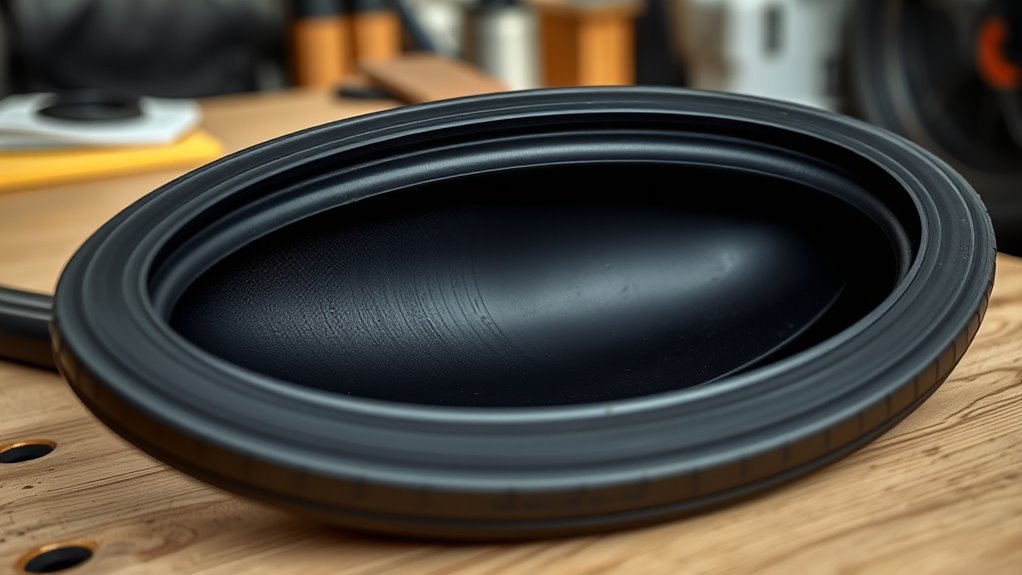
Although the bead helps seal the tire to the rim, the inner liner is the component that actually holds the air in tubeless tires. You should understand that the inner liner is the primary air retention barrier, typically constructed from butyl rubber or engineered polymers that limit permeation and stabilize tire pressure. You’ll note a thinner, optimized liner can lower weight and cost while maintaining impermeability, so material selection balances durability against performance gains. Inspect the liner for cuts, pinholes, or delamination, since compromised integrity directly causes air loss and unpredictable pressure decay. While the bead contributes to rim seating, it doesn’t substitute for the liner’s continuous airtight surface. For those who seek autonomy on the road, maintaining liner health means you control inflation and safety rather than depending on contingency. You should schedule regular checks, prioritize liners engineered for low gas permeability, and treat any damage as immediate cause for repair or replacement.
What an Inner Liner Is and How It Seals Air
You already know the inner liner is the component that holds air in a tubeless tire; here’s how it accomplishes that. You’ll see inner liner functions focus on creating a continuous, low-permeability barrier directly against the casing. Made from halobutyl rubber, the liner minimizes gas diffusion and stabilizes pressure over operational cycles.
- Material barrier: halobutyl chemistry reduces helium-scale permeability, a primary air loss vector.
- Layer thickness: optimized thinness lowers weight while enhancing impermeability and rolling resistance.
- Bonding interface: cohesive adhesion to adjacent plies prevents microchannels that would compromise air sealing mechanisms.
- Manufacturing control: precision extrusion and curing reduce defects, increase durability, and limit waste.
You’ll appreciate that sealing is both chemical and structural: the polymer matrix restricts molecular flow, while laminar integrity prevents mechanical leakage. This combination sustains pressure, improves fuel efficiency, and supports your freedom to travel farther with confidence.
Butyl vs. Halobutyl Inner Liners: Which Retains Air Best?
When comparing butyl and halobutyl inner liners, engineers focus on molecular-scale permeability and practical production constraints to determine which retains air best. You’ll see butyl advantages in baseline air retention and reduced rolling resistance; its polymer matrix limits gas diffusion effectively, so inflation pressure holds longer than with standard rubbers. Halobutyl benefits arise from halogenated chains that further restrict permeation, cutting air loss by roughly 30% versus traditional butyl. You can exploit halobutyl’s superior impermeability to reduce liner thickness and mass without sacrificing retention, improving fuel economy and lowering material cost. However, adopting halobutyl demands tighter extrusion control: defects created during conversion can negate permeability gains. In practice you weigh marginal retention improvements against processing complexity and production yield. For an emancipatory approach to design, choose the compound that maximizes autonomy—air-holding performance, manufacturability, and lifecycle durability—so your tires serve movement without undue constraint.
How Liner Thickness and Production Affect Air Permeability
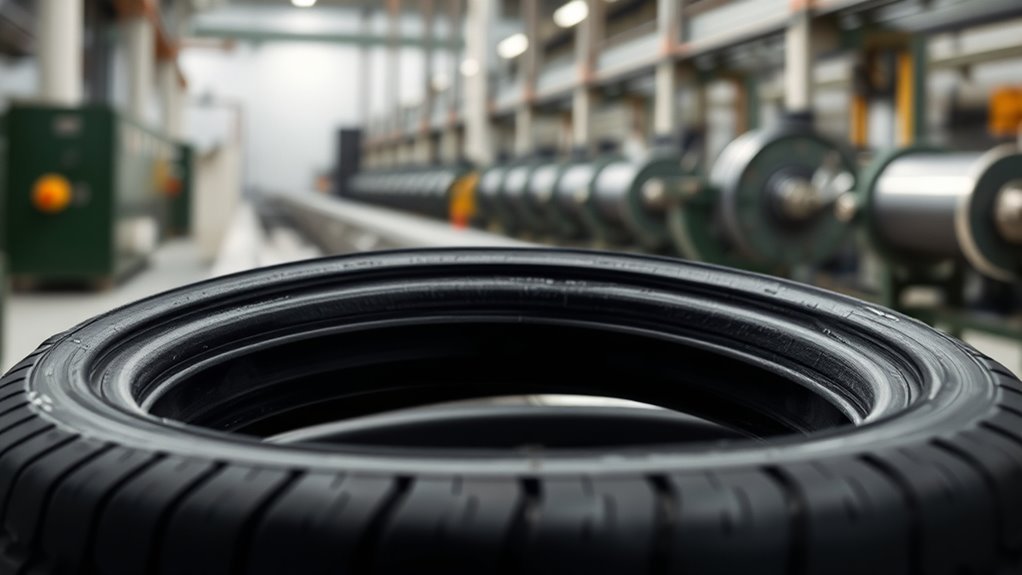
You’ll need to balance liner thickness tradeoffs because thinner liners lower permeability and rolling resistance but can be more sensitive to production variance. Choose production methods—cold feed extrusion for thinner, less porous liners versus hot feed processes that raise porosity—to control air permeability. Maintain precise thickness control and address sticking/stretching during manufacture to prevent local porosity increases and leakage.
Liner Thickness Tradeoffs
Although thinner inner liners often raise concerns about durability, they measurably improve impermeability by reducing air permeability and can cut both material weight and costs, provided production controls are precise. You’ll weigh liner durability against efficiency gains: thinner butyl layers lower gas transmission and reduce mass, aiding fuel freedom without sacrificing seal performance when manufacturing precision is upheld. Cold feed extrusion enables these thinner gauges but demands strict process control to prevent misshaping. Consider four practical tradeoffs you’ll manage:
- Reduced air permeability versus potential mechanical wear.
- Material and cost savings versus tighter manufacturing precision.
- Lower weight and improved fuel efficiency versus need for consistent thickness.
- Enhanced leak resistance versus stricter quality inspection protocols.
You’ll choose thickness to maximize liberation through optimized performance.
Production Method Impact
Having weighed liner thickness tradeoffs, now consider how production method interacts with gauge to determine air permeability. You must assess production techniques precisely: cold feed extrusion yields denser, less permeable butyl structures, enabling reduced gauge without sacrificing air retention, while hot feed tends to introduce porosity that undermines barrier performance. You’ll control thickness tightly during cold feed to prevent misshaping that creates leakage paths. Select advanced polymer formulations compatible with cold extrusion to maximize air retention and meet evolving efficiency standards. Your process controls—temperature, shear, die design—directly influence microstructure and impermeability. Optimize those variables to achieve liberation from compromise: minimal rolling resistance, regulatory compliance, and sustained air retention through disciplined, reproducible production techniques.
Porosity And Permeability
When you combine liner gauge with production method, porosity and air permeability change in predictable ways:
- Thinner liners reduce porosity factors by shortening diffusion paths, lowering air permeability and rolling resistance.
- Cold feed extrusion produces denser butyl with fewer microvoids than hot feed, so your liners retain air longer.
- Precise thickness control during cold feed is essential; small deviations raise permeability and compromise fuel-efficiency gains.
- Specialized materials further suppress leakage; integrate them when permeability testing reveals unacceptable diffusion rates.
You’ll apply quantitative permeability testing to validate design targets and compliance with evolving standards. Adopt these technical controls to free your tire designs from needless air loss, achieving lighter, more efficient, and more liberated performance.
Why Sidewalls, Beads, and Wear Bars Don’t Hold Air
You’ll see the sidewall’s role is structural, engineered to transfer lateral loads and flex without serving as an air barrier. The bead’s function is to form a mechanical seal and secure the tire to the rim, but it relies on the inner liner to provide airtightness. Wear bars are purely wear indicators embedded in the tread and play no part in pressure retention.
Sidewall Structural Role
One key structural element you’ll notice is the sidewall: it links the tread to the bead and provides lateral stiffness and impact compliance, but it isn’t built to hold pressure. You rely on optimized sidewall materials and sidewall design to manage loads and flex without compromising the inner liner’s airtight function. Consider these focused roles:
- Lateral stiffness: controls cornering forces and keeps the tread footprint stable.
- Impact compliance: absorbs shocks to protect the carcass and rim from damage.
- Load distribution: transfers forces between tread and bead, preserving structural integrity.
- Durability signaling: resists cuts and abrasions, supporting safety while freeing the inner liner to maintain pressure.
You’ll see the sidewall’s purpose is mechanical, not pneumatic.
Bead Rim Connection
Think of the bead-rim junction as the mechanical cradle for the tire assembly: it clamps the tire to the wheel and supports structural loads, but it doesn’t retain the inflation— that’s the inner liner’s job. You inspect bead performance by examining how uniformly the bead seats and how consistently it compresses against the rim flange; seating quality influences leakage pathways but doesn’t substitute for an intact inner liner. You evaluate rim compatibility to guarantee proper bead geometry and sealing surface contact. Sidewalls flex and absorb energy; wear bars indicate tread life; none provide an impermeable membrane. For liberation-minded operators, focus on systems: optimize bead and rim mating for mechanical integrity while relying on inner liner materials and manufacturing controls to hold pressure and maintain pneumatic sovereignty.
Wear Bar Indicators
Wear bars are tactile, molded ridges buried in the tread that tell you when rubber depth has fallen to a legally or functionally unsafe level, but they play no role in sealing the tire—air retention is handled by the inner liner while the sidewalls and beads provide structure and rim contact respectively. You rely on wear bar function to judge tread life; it’s a safety cue, not a pressure barrier. Understand these distinctions to assert control over vehicle maintenance and personal freedom on the road.
- Wear bars: monitor tread depth; inform tire safety decisions.
- Sidewalls: provide lateral stability; not airtight.
- Beads: seat to rim; assist seal with inner liner.
- Inner liner: primary airtight barrier; responsible for air retention.
Cold vs. Hot-Feed Extrusion and Its Effect on Liner Quality
Extrusion method critically influences inner-liner performance: hot-feed extrusion dominates production but raises porosity and the risk of air leakage, while cold-feed extrusion yields denser, thinner liners that improve impermeability, reduce rolling resistance, and cut material costs by using less butyl rubber. You’ll weigh trade-offs: hot-feed gives high extrusion efficiency and throughput, but you’ll manage increased defect rates; cold-feed demands tighter control of thickness and stickiness, yet produces superior airtightness and lighter assemblies.
| Parameter | Hot-Feed | Cold-Feed |
|---|---|---|
| Porosity | Higher | Lower |
| Thickness control | Easier | Precise needed |
| Material use | More butyl | Less butyl |
You’ll adopt material innovations and process controls to reduce sticking and stretching in cold-feed lines, improving yield. For a liberating design ethos, prioritize airtightness and resource efficiency; implement targeted innovations to align production capability with performance goals.
Signs of a Failing Inner Liner and Immediate Fixes
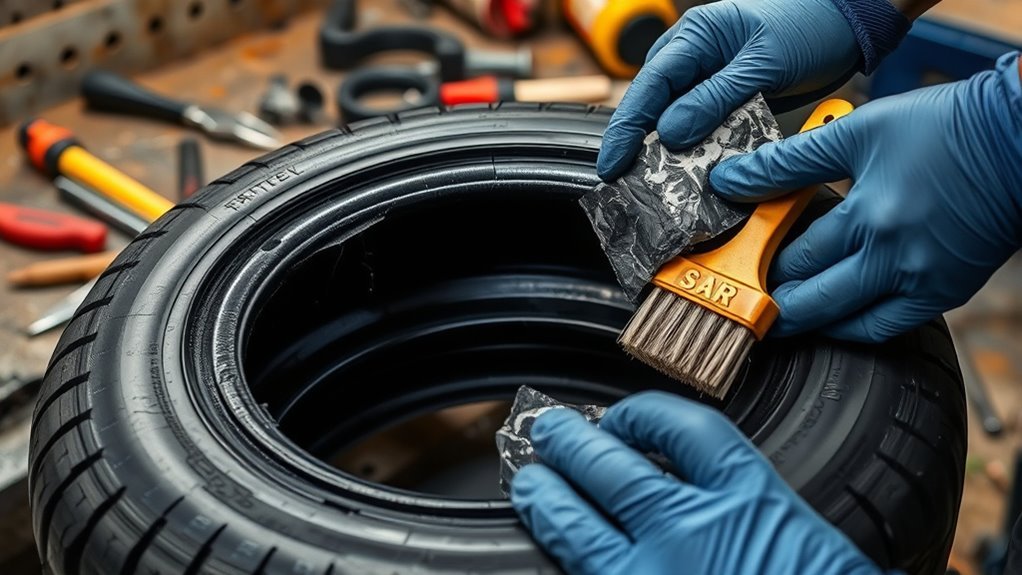
Shifting from production choices to in-service performance, you’ll need to recognize clear indicators that an inner liner is degrading so you can act before a failure becomes hazardous. Inspect tires routinely for inner liner deterioration: visible cracks, bulges, or areas where the casing separates hint at compromised air retention. Monitor pressure trends; recurring low-pressure readings signal progressive leakage.
- Rapid deflation indicators: sudden loss of psi during use—pull over, assess bead and puncture points.
- Visual anomalies: surface cracking or localized bulging—document and avoid prolonged driving.
- Repeated top-ups: frequent inflation to maintain spec—schedule inspection immediately.
- Temporary mitigation: apply an approved tire sealant only to bridge time to professional service.
You’ll treat sealant as an emergency stopgap; it masks breaches but doesn’t restore structural integrity. Seek expert evaluation and replacement if inspection confirms liner breach, prioritizing safe, permanent remediation over prolonged interim fixes.
Choosing and Maintaining Tires for Best Air Retention
When you pick and maintain tires for ideal air retention, prioritize inner liner composition and construction—since butyl rubber liners produced via precise cold-feed extrusion offer superior impermeability, lower weight, and better fuel efficiency. You’ll evaluate specs: liner thickness, extrusion method, and manufacturer-controlled tolerances. Thinner, uniformly extruded liners reduce permeation and improve performance impact by lowering rolling resistance.
Adopt a disciplined regimen of maintenance tips focused on quantifiable checks. Measure tire pressure weekly, log deviations, and correlate pressure loss with service conditions to detect liner compromise. Inspect bead seating and valve integrity; these interfaces often masquerade as liner failure. Preserve inflation to extend tread life, reduce blowout risk, and maintain fuel economy gains achieved by optimal liners. When replacing tires, demand materials and cold-feed traceability data to verify stated impermeability. You’ll liberate operational efficiency by choosing technically superior liners and implementing methodical maintenance that secures air retention and predictable performance impact.
Frequently Asked Questions
What Part of the Layer of a Tire Keeps the Air In?
The inner liner keeps the air in; you rely on its air retention properties to maintain pressure. You’ll appreciate its technical design—halobutyl-based, thin yet impermeable—so you can drive freely with consistent, reliable tire inflation.
What Is the Purpose of the Tire’s Inner Liner?
The inner liner prevents air loss by providing airtight air retention; you rely on its halobutyl composition and controlled thickness to maintain pressure, reduce rolling resistance, and free you from frequent inflation maintenance for reliable mobility.
What Holds Air in a Tire?
The tire holds air via its airtight inner liner and sealed bead, so you’ll rely on precise tire inflation and engineered air retention; materials and assembly control permeability, letting you maintain pressure confidently while maximizing mobility freedom.
Conclusion
You now know the inner liner — a butyl or halobutyl elastomer layer — is the engineered barrier that keeps tire air from diffusing out. Its formulation, thickness, and extrusion quality determine permeability and service life; sidewalls, beads and tread don’t seal air. Want predictable retention? Choose tires with proven halobutyl liners and monitor tire pressure, punctures, and age. Fix leaks promptly and prioritize manufacturing quality for reliable containment.
Related Articles
When to Replace Tubeless Sealant: Timing & Signs
Be warned: tubeless sealant can fail in weeks or months—learn the signs, testing tips, and exact replacement timing to avoid flats.
Read More
The Penny Test for Tread Depth: How to Do It Right
Better learn the penny test correctly—discover when Lincoln’s head reveals dangerous tread wear and what to do next.
Read More
Tire Rotation Schedule: How Often & Why It Matters
Optimizing tire life? Discover why rotating every 5,000–8,000 miles matters for safety and savings—read on to learn exact patterns and tips.
Read More
One Comment