
Sidewall Cracks on Tires: Causes & When to Replace
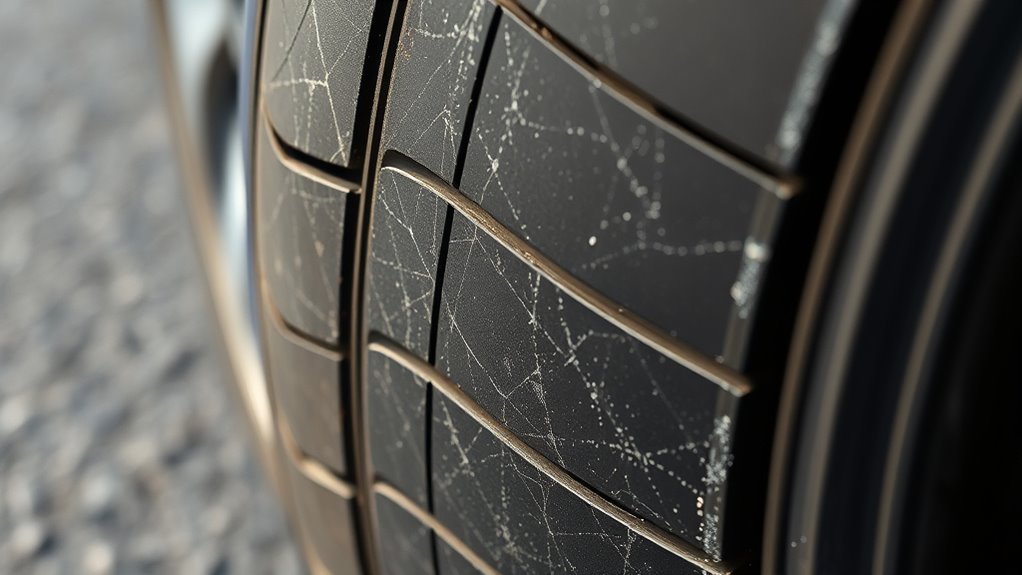
You’ll see sidewall cracks from rubber aging, UV/ozone exposure, temperature swings, chemicals, underinflation or impacts—these factors stiffen and fracture the compound, turning hairline fissures into structural failures. Inspect visually and by touch; deep cracks, fabric exposure, bulges or rapid pressure loss are immediate replacement triggers. Don’t attempt sidewall repairs—only center-tread patches meet standards. Maintain correct pressure and proper storage to slow degradation. Continue for detailed signs, diagnostics and maintenance steps.
What Causes Tire Sidewall Cracks and Dry Rot?
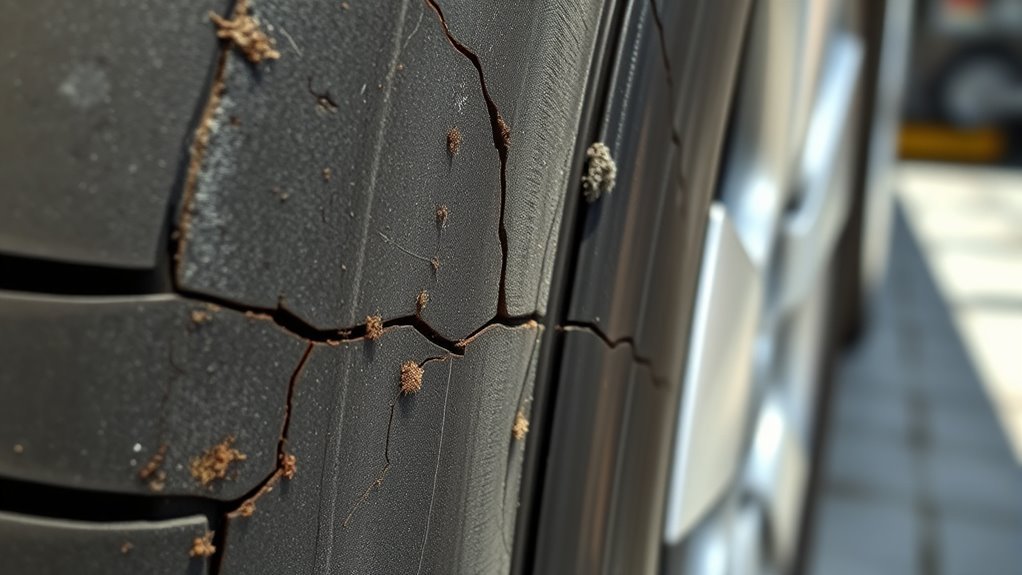
When you see hairline cracks forming on a tire’s sidewall, they’re usually the result of the rubber aging and losing flexibility from oxidation, UV exposure, and weather extremes; this progressive degradation—commonly called dry rot—reduces structural integrity and typically means the tire should be replaced within about 6–10 years. You should understand that rubber deterioration is a chemical and mechanical process: polymers break down under oxygen and ozone attack, and repeated flexing eventually creates microfissures. Environmental factors like intense sun, freezing temperatures, and humidity swings accelerate molecular breakdown. Improper inflation compounds the problem by increasing sidewall stress—underinflation causes excessive flexing, overinflation concentrates loads—while chemical exposure (road salt, oils, brake fluid) further weakens compounds. You’ll want to act deliberately: treat tires as safety-critical components, inspect them routinely, and replace any showing progressive cracking. That disciplined approach frees you from avoidable roadside risks and maintains your autonomy on the road.
How to Spot Dangerous Sidewall and Tread Cracks Quickly
After understanding how rubber degrades, you need a fast, methodical check to spot sidewall and tread cracks that pose immediate danger. You inspect visually and by touch: run your hands along the sidewall and tread edge, looking for hairline cracks and any gap between tread and sidewall. Note crack depth and length; superficial fissures differ from ones exposing fabric or belts. Pay special attention after temperature swings and on tires older than five years. If cracks cluster or grow, act.
Run your hands along sidewalls and tread; note crack depth and length, and seek help if fabric shows.
- You feel anxiety when a crack shows fabric — that’s a clear alarm.
- You crave freedom on the road; visible separation steals that liberty.
- You notice rapid spread after a freeze-thaw cycle and want control.
- You mark tread wear plus cracking as a compounded threat.
- You refuse to ignore multiple growing cracks and demand safety.
Document findings, limit driving, and seek professional evaluation immediately if structural elements are visible.
When You Must Replace a Cracked Tire
Because sidewall integrity is critical to tire safety, you should replace any tire that shows deep, widespread cracking or exposed fabric or belts immediately; these defects indicate structural failure that can cause sudden blowouts. You’ll treat visible cords or steel as non-negotiable evidence for immediate tire replacement. For hairline or surface cracks, carry out a regular safety assessment and document any increase in length or depth; growth warrants replacement before failure occurs. Account for tire age: once a tire reaches roughly 5–7 years, schedule professional inspections, and follow manufacturer limits—some makers advise replacement at 10 years regardless of tread. During assessments, prioritize structural indicators over cosmetic deterioration. If inspection reveals spoke-like deterioration, delamination, bulging adjacent to cracks, or rapid crack progression, replace the tire without delay. You want mobility that liberates, not cages you with risk—make proactive, evidence-based tire replacement decisions to maintain control and safety.
Can Sidewall or Shoulder Damage Be Repaired Safely?
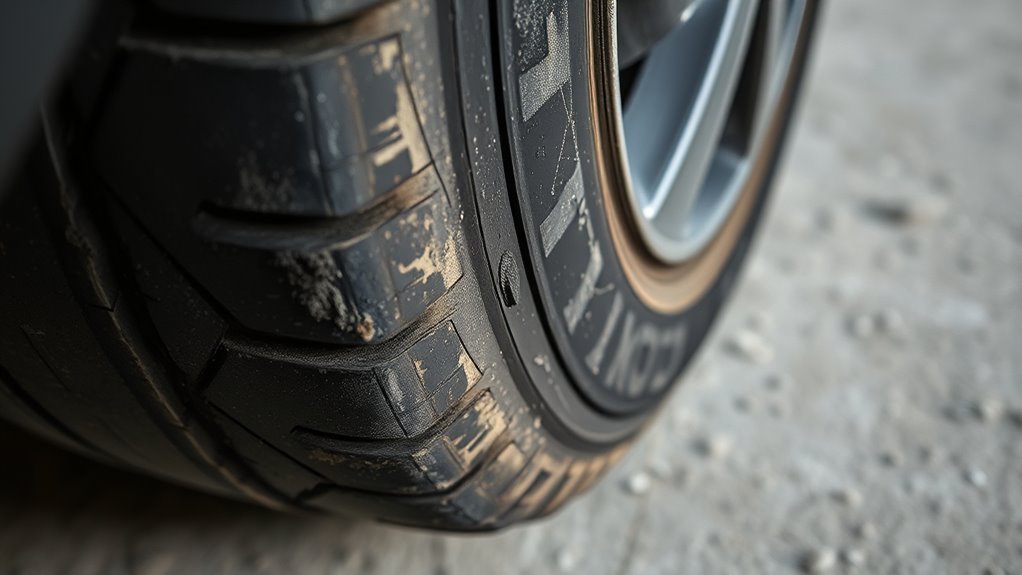
Having determined when cracks demand replacement, you’ll next ask whether sidewall or shoulder damage can be repaired safely. You should know the technical reality: repair methods accepted by USTMA apply only to the center tread; sidewalls and shoulders are excluded. Punctures over 1/4 inch, especially in those areas, are unsafe to fix. Attempting a patch or plug on a sidewall compromises structural integrity and raises serious safety concerns — blowouts and loss of control are real risks.
You need a professional inspection; most drivers can’t reliably assess repairability. Prioritize replacement when damage affects the sidewall or shoulder.
- Fear of being stranded motivates cautious action.
- Anger at shortcuts urges you to reject risky repairs.
- Relief follows decisive replacement.
- Empowerment comes from choosing safety over cost.
- Freedom to travel depends on uncompromised tires.
Choose replacement over risky repairs to protect yourself and others; liberation on the road requires uncompromised safety.
Prevent Tire Sidewall Cracks: Storage, Care, and Pressure Tips
While you can’t stop rubber from aging, you can slow sidewall cracking through deliberate storage and maintenance: You’ll reduce risk by controlling environment, cleaning contaminants, exercising the vehicle, and keeping correct inflation. Prioritize tire storage in shaded or covered areas; use tire covers if you must park outdoors long-term. After snow, mud, or chemical exposure, clean residues promptly to prevent material breakdown. Drive periodically to avoid stagnation that accelerates aging. Implement strict pressure maintenance—check pressures cold and adjust to manufacturer specs; both underinflation and overinflation increase sidewall flex and stress that promote cracks.
| Action | Frequency | Benefit |
|---|---|---|
| Tire storage in shade/cover | Continuous | Reduces UV degradation |
| Use tire covers outdoors | Long-term | Blocks environmental exposure |
| Clean after contaminants | Immediate | Prevents chemical damage |
| Drive periodically | Weekly/monthly | Maintains material flexibility |
| Pressure maintenance | Weekly/cold | Minimizes sidewall stress |
Treat these steps as disciplined practices that free you from avoidable failure.
When to Get a Professional Inspection : What They’ll Check
If you spot sidewall cracks, get a professional inspection so a technician can perform a systematic visual assessment of crack severity, tread depth, and signs of dry rot. They’ll also check for exposed fabric or steel belts and use tools to probe for hidden internal separation or weakening. Don’t wait—tires over five years old or showing brittleness often need an immediate structural evaluation to determine safety or replacement.
Visual Inspection Basics
Because sidewall cracks can signal structural failure, get a professional inspection whenever you spot visible splitting, feel bulges, or notice rapid pressure loss; you’ll protect your freedom on the road. For visual inspection basics, use tire maintenance routines and sharp attention to visual cues before you drive. A technician will:
- Inspect sidewall, tread, and shoulders for cracking or deterioration that undermines safety.
- Measure crack depth and length; exposed inner materials demand immediate replacement.
- Verify uniform wear and confirm tire pressure matches manufacturer specifications.
- Check tire age—tires over five years need closer monitoring for dry rot.
- Look for chemical or environmental damage contributing to sidewall failure.
These checks are technical, decisive, and meant to liberate you from avoidable risk.
Structural And Internal Checks
When you spot sidewall cracking, have a technician perform structural and internal checks immediately, since surface splits can mask cords, belts, or inner liner separation that raise blowout risk. You’ll want an expert to measure crack depth and length, probe for internal damage, and verify that cords and belts aren’t exposed or delaminating. They’ll assess tread thickness and look for dry-rot patterns that compromise structural integrity. Expect them to confirm tire age — replacement is commonly advised after five years regardless of tread — and to inspect for chemical exposure or ozone degradation. Technicians will also review tire pressure history to identify chronic underinflation or abuse. Act quickly: these diagnostics determine whether repair is safe or replacement is mandatory.
Frequently Asked Questions
How Much Sidewall Cracking Is Acceptable?
You shouldn’t accept visible sidewall cracking beyond minor superficial hairlines; you’ll monitor sidewall integrity closely, prioritize tire maintenance, replace tires when cracks deepen, multiply, or expose materials, and get professional inspection for safety and liberation.
Is It Safe to Drive on a Tire With a Crack in the Sidewall?
No — you shouldn’t drive on a sidewall crack; for tire safety, perform a crack assessment immediately. If cracks expose cords or grow in depth/length, replace the tire to avoid sudden failure and preserve your freedom to travel.
When to Worry About Sidewall Damage?
Worry when cracks grow, expose fabric, or appear on tires over five years old; you’ll prioritize tire maintenance, test theories about origins, and act for crack prevention—inspect regularly, replace immediately if structural integrity’s compromised.
Should I Replace My Tires if They Are Cracked?
Yes — you should replace tires with deep, expanding, or fabric-exposing cracks; perform regular tire maintenance, prioritize driving safety, and get older or questionable tires inspected promptly so you can confidently reclaim freedom on the road.
Conclusion
You’ve learned the main causes, inspection cues, and replacement thresholds for sidewall cracks and dry rot — now test the theory that vigilance prevents failures. Regularly check pressure, age, and small fissures; if cracks reach cords, bulge, or deepen, replace immediately. Don’t gamble on patching sidewalls. Store tires cool and dark, maintain proper inflation, and get a professional inspection when in doubt. That disciplined, evidence-based routine measurably reduces blowout risk.
Related Articles
When to Replace Tubeless Sealant: Timing & Signs
Be warned: tubeless sealant can fail in weeks or months—learn the signs, testing tips, and exact replacement timing to avoid flats.
Read More
The Penny Test for Tread Depth: How to Do It Right
Better learn the penny test correctly—discover when Lincoln’s head reveals dangerous tread wear and what to do next.
Read More
Tire Rotation Schedule: How Often & Why It Matters
Optimizing tire life? Discover why rotating every 5,000–8,000 miles matters for safety and savings—read on to learn exact patterns and tips.
Read More