
Run-Flat Tires Explained: Safe Zero-Pressure Driving

Run-flat tires allow you to keep driving after a puncture. Reinforced sidewalls or an internal support ring carry the vehicle’s weight when air pressure drops. Usually, you can drive up to 50 miles at around 50 mph. This lets you avoid changing a tire on the side of the highway. Your vehicle’s TPMS warns you of pressure loss immediately. If you get a flat, drive gently, stick to the manufacturer’s speed and distance limits, and inspect the tire promptly. Internal damage is often hidden—learn more about designs, limits, and maintenance below.
Quick Answer
Run-flat tires use thick sidewalls or internal rings to support your car after a puncture. They typically allow you to drive up to 50 miles at 50 mph with zero air pressure, buying you time to reach a repair shop. However, most run-flats cannot be repaired after a flat and usually cost more than standard tires.
What Run‑Flat Tires Are and Why They Matter

A standard tire puncture usually leaves you stranded. Run-flat tires let you keep moving. You can typically drive up to 50 miles at 50 mph, giving you time to reach a safe spot or a repair shop. The technology uses reinforced sidewalls or internal supports to bear the vehicle weight when pressure drops. Roughly 15% of new U.S. vehicles come equipped with run-flats. Many drivers prefer them because they remove roadside vulnerability. You don’t need a spare, which frees up trunk space and prevents dangerous highway tire swaps. Tire Pressure Monitoring Systems (TPMS) alert you to pressure loss. This immediate warning helps you minimize roadside risk and get off the road safely.
Two Systems Explained: Self‑Supporting vs Support‑Ring Run‑Flat Tires
Run-flat tires generally fall into two categories: the self-supporting design and the support-ring mechanism. Self-supporting tires use reinforced sidewalls to hold up the car. They trade a slightly stiffer ride for a lighter overall weight. Support-ring systems use a hard rubber ring under the tread. This preserves the tire’s shape and ride quality but adds extra weight and changes how the tire is serviced.
Self‑Supporting Design
A self-supporting run-flat uses stiff, reinforced sidewalls to carry the vehicle’s weight after a blowout. This design lets you drive up to 50 miles at 50 mph. Compared to the alternative support-ring design, self-supporting tires are lighter. This lower weight reduces unsprung mass and improves handling. For driving safety, they keep you in control so you can pull over without swapping tires. They rely on your car’s TPMS to notify you of pressure loss. Keep in mind that self-supporting tires are rarely repairable after a puncture. You will almost always need to replace the tire rather than patch it.
Support‑Ring Mechanism
Support-ring run-flats use an internal load-bearing ring instead of stiff sidewalls. When the tire loses air, the vehicle’s weight shifts to a solid rubber insert inside the tire. This keeps the wheel’s shape and allows you to carry heavier loads. You can sometimes drive farther on a support-ring system than a self-supporting design. The main benefits are higher load capacity and predictable handling under stress. You still need a working TPMS to warn you about pressure drops. These tires are heavier, and severe damage usually means replacing the tire. Choose this type if you carry heavy loads and prioritize endurance over weight.
| Attribute | Impact |
|---|---|
| Load capacity | Increased |
| Repairability | Often reduced |
| Weight | Higher |
How Run‑Flat Tires Let You Drive After a Puncture
After a puncture, reinforced sidewalls or an internal ring keep your car’s weight off the flat tread. This allows you to maintain steering and braking control. You rely on the Tire Pressure Monitoring System to alert you when pressure drops so you can assess the situation. Remember that run-flats are rated for limited distances and speeds. Most allow you to drive roughly 50 miles at 50 mph so you can reach a safe location.
Reinforced Sidewall Support
Think of reinforced sidewalls as built-in supports. They keep your car mobile after a flat. Standard tire sidewalls are about ⅛ inch thick, while run-flat sidewalls are often ¾ inch thick. This added thickness preserves tire durability and controls weight distribution when air escapes. The walls use heat-resistant rubber and advanced composites to hold their shape and prevent the tire from slipping off the wheel. Always respect the limits: driving is allowed up to roughly 50 miles at 50 mph. Proper maintenance ensures these sidewalls work correctly when you need them most.
Tire Pressure Monitoring
A Tire Pressure Monitoring System (TPMS) is required for run-flat tires. Because the tire holds its shape so well, you might not notice a puncture without a warning light. The TPMS alerts you to pressure drops instantly, preserving tire safety. When the dashboard sensor reports low pressure, you need to assess the situation. Check your speed and handling, then decide whether to pull over or carefully drive to a shop. TPMS complements the structural reinforcements by delivering the real-time alerts you need to make safe decisions.
Limited Distance And Speed
Because run-flat designs rely on thick rubber to hold up the car, you can only continue driving safely for a limited distance. You typically get 50 miles (80 km) at a maximum of 50 mph (80 km/h). This gives you a safe window to find a repair shop. If you ignore these limits, the tire’s structure will overheat and fail. This compromises your handling and driving safety. Use the allowed distance to find a safe spot and arrange for professional service.
Practical Limits: Speed, Distance, and Manufacturer Rules for Run‑Flats
Run-flat tires keep you moving after a puncture, but only under strict conditions. The standard rule is 50 miles (80 km) at 50 mph (80 km/h). However, exact numbers depend on the brand and model. You must follow your specific manufacturer’s rules for distance and speed ceilings. Both self-supporting and support-ring systems generate a lot of heat when driven without air. You need to adjust your driving habits immediately. Drive slowly, avoid sharp corners, and stay away from heavy braking. This protects the tire’s internal structure. Pushing the tire past its limits guarantees it cannot be repaired. Treat run-flats as an emergency tool, not a permanent fix.
TPMS and Safety: Monitoring Run‑Flat Tire Pressure

When a run-flat loses air, the TPMS warns you to pull over before the tire suffers irreversible damage. You need these real-time alerts to stay aware of the tire’s condition. This monitoring is a critical safety feature. It prevents total blowouts and helps your vehicle’s stability systems respond correctly during a flat.
| Alert Type | Action Required | Benefit |
|---|---|---|
| Rapid loss | Pull over and inspect | Prevents structural failure |
| Slow leak | Schedule repair | Maintains longevity |
| Sensor fault | Service TPMS | Restores monitoring |
| Post‑repair check | Verify pressure | Confirms safety |
Check your tire pressure regularly and never ignore TPMS warnings. Swift action keeps you safe and protects your wheels.
How to Tell if You Have Run-Flat Tires
If your car does not have a spare tire in the trunk, you likely have run-flats. You can confirm this by checking the tire’s sidewall. Look for letters like RSC (Run System Component), SSR (Self-Supporting Runflat), ZP (Zero Pressure), or RFT (Run-Flat Tire). If you are still unsure, check your owner’s manual.
Pros and Cons of Run‑Flat Tires for Daily Use and Trips
Run-flat tires offer distinct advantages and disadvantages for daily driving. The biggest pro is safety. Reinforced sidewalls let you drive 50 miles at 50 mph after a flat. You won’t get stranded, and you don’t have to change a tire on a busy shoulder. This is why roughly 15% of new cars in the U.S. use them.
The downsides are mostly related to comfort and cost. The stiff sidewalls create more road noise and a harsher ride. Run-flats also carry a higher purchase cost and are notoriously difficult to repair. Do a performance comparison when choosing your next set of tires. Weigh the ride quality against the emergency resilience.
Maintenance, Inspection, and Can Run‑Flat Tires Be Repaired?
If you experience a puncture or pressure loss, get the tire inspected right away. Internal damage is hard to see but can easily ruin the tire. Rely on your functional TPMS to alert you, and check your tires manually every 4 to 6 weeks. Maintain correct inflation to extend the life of the tread. Never drive on an under-inflated run-flat unless it’s an absolute emergency.
Can run-flat tires be repaired? Usually, no. Most manufacturers do not recommend repairing a self-supporting run-flat after a puncture. The internal structure breaks down when driven without air. Support-ring systems are sometimes repairable, but only after a strict professional evaluation. Because of safety concerns, always have a trained technician inspect a flat. If there is any doubt about the tire’s integrity, replace it.
Choosing Run‑Flat Tires: Cost, Compatibility, and Alternatives
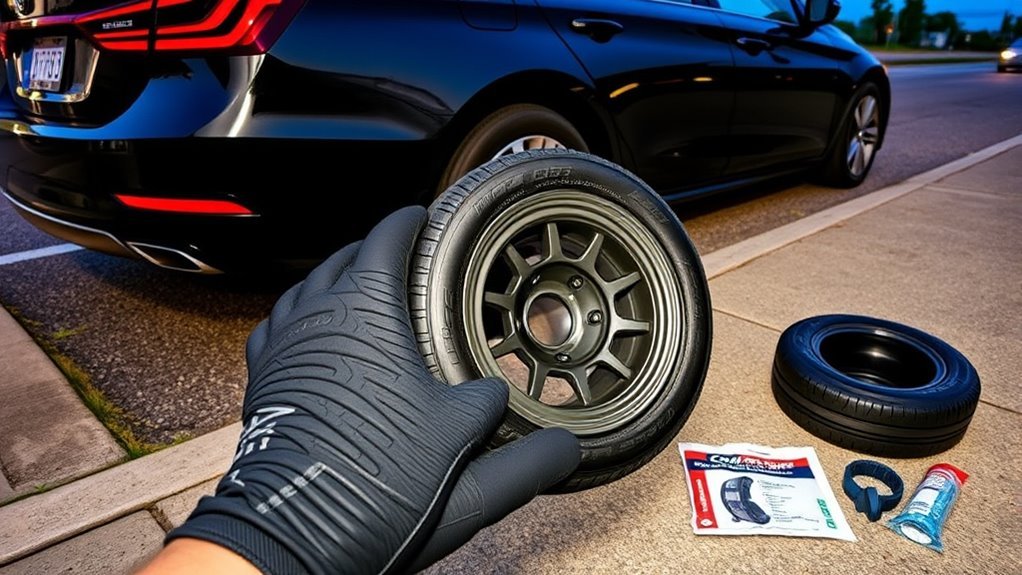
Before buying run-flat tires, consider the cost and your vehicle compatibility. Run-flats typically cost 10% to 30% more than standard tires. Do a cost comparison that factors in their shorter lifespan and the money saved by avoiding tow trucks.
Check your owner’s manual before upgrading. Not all cars support run-flat systems. While they fit on most standard wheels, some vehicles require specific rims designed to handle the extra heat and stiffness.
You also have alternatives. Standard tires paired with a roadside repair kit or a compact spare cost less upfront and provide a smoother ride. However, you will have to fix flats yourself on the side of the road. If you switch from run-flats to standard tires, have a shop calibrate your TPMS.
Frequently Asked Questions
Do Run‑Flat Tires Affect Fuel Economy?
Yes. Run-flat tires are heavier than standard tires, which slightly reduces fuel efficiency. However, the drop is minimal, and many drivers accept the tradeoff for the added safety.
Can Run‑Flat Tires Be Used With a Spare Tire?
Yes, you can carry a conventional spare tire if you have the trunk space. However, using run-flats usually eliminates the need for a spare, which is one of their main advantages.
How Do Run‑Flats Perform in Extreme Cold or Heat?
Run-flats perform well in extreme temperatures. The stiff rubber compounds hold up in the cold, though the ride may feel even firmer. In extreme heat, the tires maintain their structure, but high temperatures can accelerate tread wear.
Are Run‑Flat Tires Noisier Than Regular Tires?
Yes, run-flat tires are slightly louder. The stiff sidewalls transmit more vibration and road noise into the cabin than standard tires. Modern designs have improved this, but standard tires are still quieter.
Do Tire Warranties Cover Run‑Flat-Specific Failures?
Standard tire warranties apply to run-flats, but there are limitations. Most warranties cover manufacturing defects but will not cover a tire that was destroyed because it was driven without air past the recommended distance limit.
Conclusion
Run-flat tires offer a valuable safety net. They allow you to maintain control and drive to a safe location after a blowout. However, you must respect the manufacturer’s speed and distance limits and pay close attention to your TPMS. While a punctured run-flat usually requires a full replacement rather than a cheap patch, the added security is worth it for many drivers. Modern designs have smoothed out the ride quality, making them a practical choice for everyday commuting.
Related Articles
Signs You Need New Tires: Visual & Performance Clues
Lifelong safety starts with spotting tread wear, bulges, or vibration—learn the simple checks that tell you when tires must be replaced.
Read More
Tire Wear Indicator Bars: Built-In Safety Markers Decoded
On the brink of legal tread limits? Discover how tire wear indicator bars reveal danger and when to replace—read on to protect your ride.
Read More
Tire Age Limit: How Old Is Too Old to Drive On?
When should you retire tires—learn the crucial six-year rule, warning signs, and what to check next to avoid sudden failures.
Read More