
Outer Edge Tire Wear: Causes & Alignment Connection
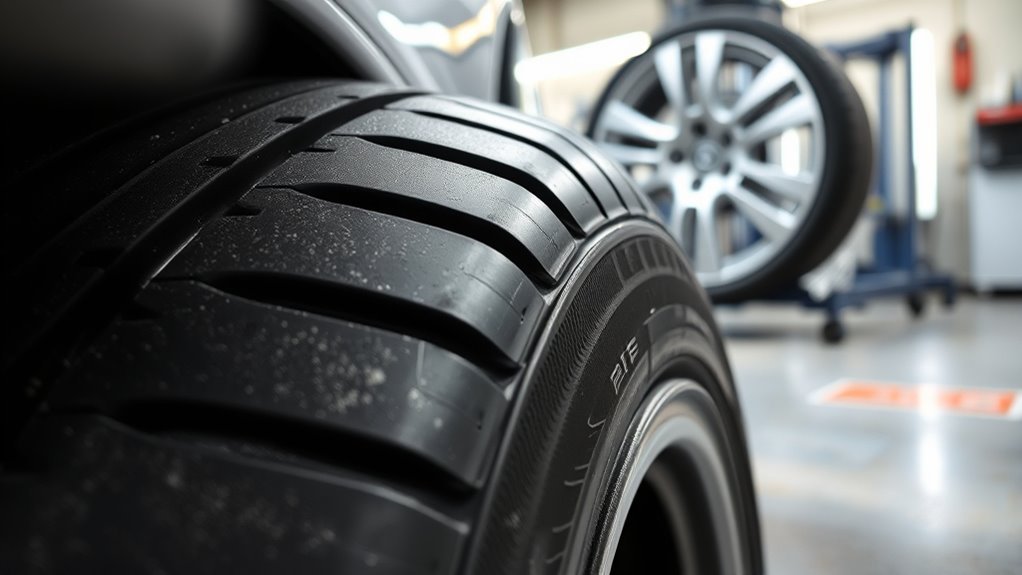
If you see pronounced tread loss on the outer shoulder, you’re likely dealing with alignment, suspension, or inflation problems that shift load and lateral scrub to the outer edge. Check cold tire pressures, measure tread across outer/center/inner, and note vibrations or looseness that suggest worn bearings or suspension parts. Excessive positive camber, incorrect toe, or weak components accelerate outer-edge fatigue. Get a precision alignment and suspension inspection to stop further damage and learn corrective options.
Spotting Outer‑Edge Tire Wear (And Why It Matters)
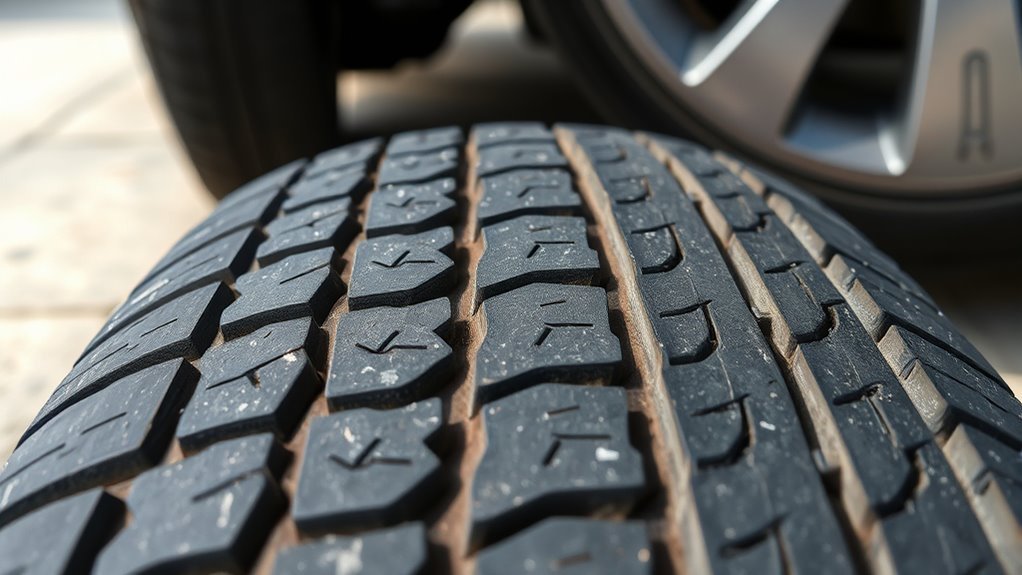
Spotting outer‑edge tire wear means looking for pronounced tread loss along the outer shoulder of the tire, which usually signals improper wheel alignment—most often excessive positive camber or incorrect toe—causing uneven load across the tread. You’ll note a visibly thinner tire tread on the outside edge versus the center and inner shoulder; that asymmetry directly impairs handling safety as contact patch and grip diminish. Aggressive cornering and weak suspension amplify the pattern, so factor driving style into your assessment. Underinflation can concentrate load on the outer shoulder, accelerating wear, so keep pressures at manufacturer specs to limit that effect. Left unchecked, outer-edge deterioration can cut tire life substantially and degrade handling safety by as much as a quarter, increasing rolling resistance and fuel use. When you identify early-stage outer-edge wear, planning alignment correction and suspension inspection preserves tread life, restores predictable handling, and reclaims control over vehicle performance.
Quick Checks You Can Do at Home to Diagnose the Problem
Before you take the car in, run a few simple at‑home checks that quickly narrow the likely causes of outer‑edge wear. First, verify tire pressure with a calibrated gauge when tires are cold; underinflation concentrates load at the outer edges and accelerates wear, so correct pressure immediately if low. Next, measure tread depth across the tire with a gauge—record outer, center, and inner readings; a consistent deficit on the outer edge points to alignment or load issues. Visually inspect sidewalls for cracks, cuts, or bulges; structural damage or suspension stress can manifest there and force uneven contact. Check for uneven wear patterns by rotating tires every 5,000–8,000 miles and noting which positions show outer wear; this helps isolate whether the issue follows a corner or remains with a wheel. These focused checks give you actionable data to demand precise corrective service rather than vague fixes.
How Camber, Toe, and Caster Cause Outer‑Edge Wear
Those quick checks you ran will tell you whether the issue is mechanical or alignment-related; if outer‑edge loss shows up across rotations or after correcting pressure, the suspension geometry is the next suspect. You’ll first examine camber: excessive negative camber tilts the tire so the outer edge bears more load during cornering. A camber adjustment of just 0.5° can raise outer‑edge wear substantially, cutting tire life by as much as 25%. Next, verify toe settings—both toe‑in and toe‑out create lateral scrub that accelerates edge wear when the tire drags instead of rolling freely. Caster influence is subtler; while caster primarily governs steering stability, changes alter steering axis inclination and dynamic camber during turns, indirectly shifting load to the outer tread. Maintain correct tire pressure to isolate geometry effects, then schedule alignment if misalignment persists. Check alignment every 6,000–10,000 miles to protect tread and preserve your freedom to drive without premature replacements.
Other Vehicle Issues That Mimic Alignment‑Related Edge Wear
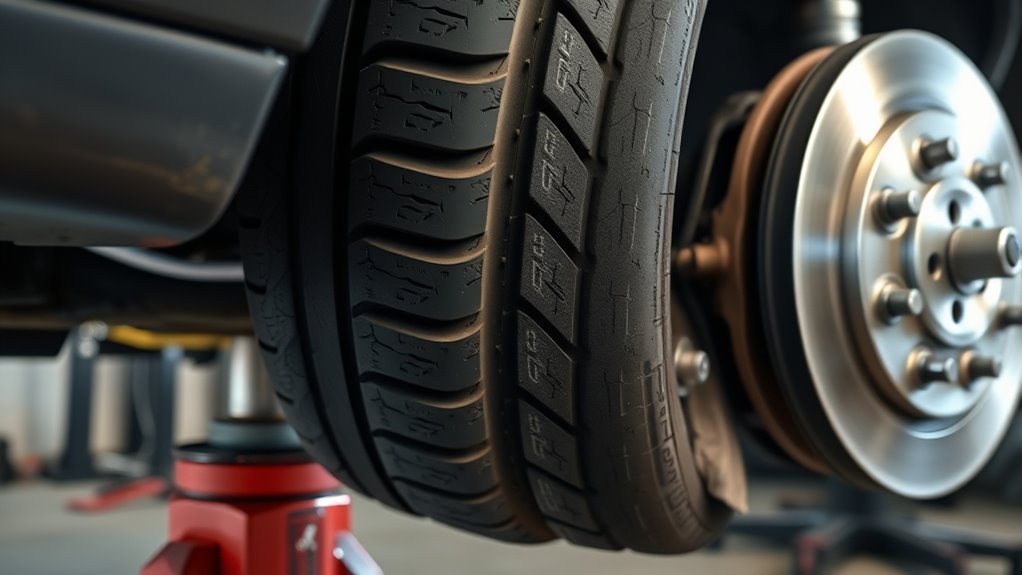
Although alignment problems are a common cause, several other vehicle faults can produce identical outer‑edge wear patterns and lead you to chase the wrong fix. You should inspect related systems before assuming alignment is to blame. Worn suspension issues like deteriorated shocks or struts shift load distribution, accelerating edge wear. Low, sustained tire pressure flattens the contact patch and fatigues outer edges. Faulty wheel bearings induce wobble that mimics camber‑type wear.
- Check for vibration or looseness that suggests poorly balanced tires or failing bearings.
- Monitor tire pressure routinely; underinflation produces outer‑edge deterioration over time.
- Assess your driving habits—repeated aggressive cornering increases lateral forces and chews the outer shoulder.
Be rigorous and liberated in diagnostics: isolate mechanical causes, rule out operator influence, and document findings. This disciplined approach prevents unnecessary part replacement and empowers you to target the real source of edge wear.
Professional Fixes and Tire Options (Alignment, Suspension, Replacement)
Having ruled out other causes, you’ll want to contemplate professional corrective steps and tire choices that directly address outer‑edge wear. Start with a precise alignment check: a technician will quantify camber, toe and thrust angle deviations and reset them to factory or performance specs. After impacts or visible wear, get an immediate alignment service to stop progressive degradation.
Inspect and replace worn suspension components—control arms, bushings, ball joints—to restore kinematic geometry; consider targeted suspension upgrades if stock parts allow excessive compliance. Those fixes normalize contact patch pressure and reduce outer‑edge overload.
On tire selection, choose compounds and constructions optimized for lateral support—performance or touring tires with reinforced shoulder blocks resist outer‑edge breakdown during cornering. Rotate tires at manufacturer intervals to equalize wear patterns while you evaluate replacements.
You’ll liberate vehicle performance and extend tire life by pairing corrective alignment, necessary suspension work, and informed tire selection rather than delaying intervention.
Cost, Maintenance Schedule, and How to Prevent Outer‑Edge Wear
Start by budgeting for alignment and suspension work—expect typical alignment repairs to run $250–$600 depending on camber/toe corrections and any additional parts needed—because timely service prevents accelerated shoulder wear and saves on premature tire replacement. You’ll limit repair costs and reclaim control over operating expenses by monitoring wear and addressing root causes quickly. Follow a disciplined maintenance schedule: check tire pressure weekly (32–35 psi typical) and inspect for outer-edge wear; perform a full alignment/suspension check every 6,000–10,000 miles or annually.
- Weekly tire-pressure checks and visual shoulder inspection to catch early uneven wear.
- Scheduled alignment/suspension inspection at 6k–10k miles or yearly to correct camber/toe deviations.
- Immediate corrective action on detected wear patterns; replace tires when structural integrity is compromised.
These maintenance tips and procedural steps free you from sudden failures, extend tire life (misalignment can cut life by ~25%), and keep repair costs predictable.
Frequently Asked Questions
What Alignment Issue Causes Outer Tire Wear?
Excessive positive Camber Angle and incorrect Toe Settings cause outer tire wear; you’ll notice outer-edge scrubbing when camber tilts outward and toe is misset inward or outward, so you’ll correct alignment to reclaim traction and freedom.
What Will Most Likely Cause a Tire to Wear Excessively on Both Outside Edges?
You’ll most likely get excessive wear on both outer edges from low air pressure combined with excessive positive camber angle; low inflation plus outward tilt increases outer shoulder loading, so adjust air pressure and camber to reclaim tire life.
Conclusion
Outer-edge tire wear signals alignment or suspension trouble you shouldn’t ignore. Studies show up to 70% of premature tire failures stem from misalignment—picture nearly three of every four tires wearing unevenly. Check camber, toe, and caster, inspect for bent components, and correct alignment within manufacturer specs to stop scalloped outer edges and restore contact patch. Schedule alignment every 12–15k miles or after impacts; replace or rotate tires per tread and wear patterns to prevent recurrence.
Related Articles

When to Replace Tubeless Sealant: Timing & Signs
Be warned: tubeless sealant can fail in weeks or months—learn the signs, testing tips, and exact replacement timing to avoid flats.
Read More
The Penny Test for Tread Depth: How to Do It Right
Better learn the penny test correctly—discover when Lincoln’s head reveals dangerous tread wear and what to do next.
Read More
Tire Rotation Schedule: How Often & Why It Matters
Optimizing tire life? Discover why rotating every 5,000–8,000 miles matters for safety and savings—read on to learn exact patterns and tips.
Read More