
Hyundai Sonata Compact Spare vs Full Size Spare Tire Explained
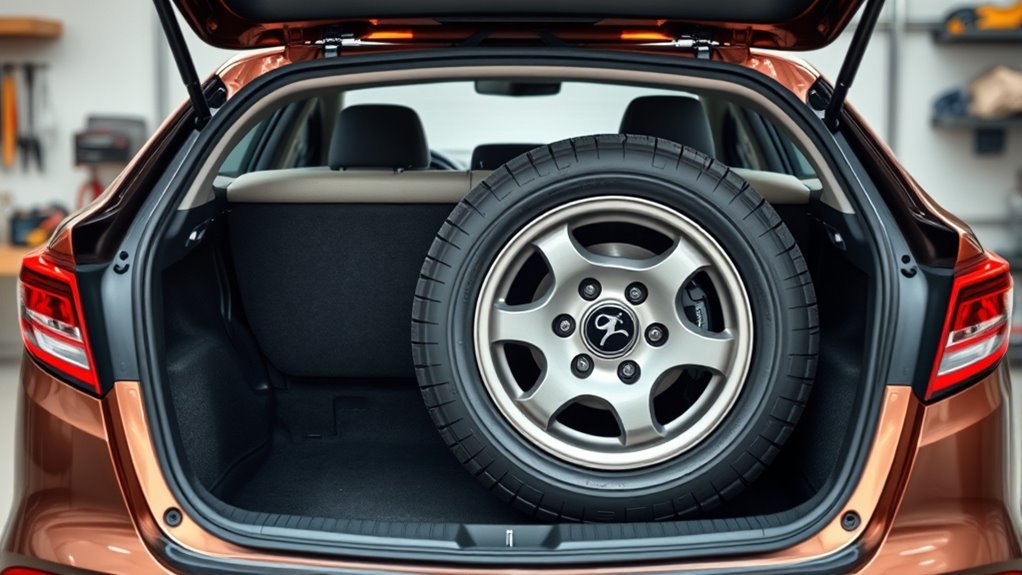
For your Hyundai Sonata, pick a compact “donut” spare if you want space savings and a lightweight emergency wheel for short trips; it’s rated about 50 miles at up to 50 mph and has reduced traction and handling. Choose a full‑size spare if you need normal performance, unlimited distance, predictable steering, and towing reliability, though it takes more trunk room and adds weight. Keep spares inflated, inspected, and compatible with bolt pattern—more specifics follow.
When to Choose a Donut vs a Full‑Size Spare for Your Hyundai Sonata
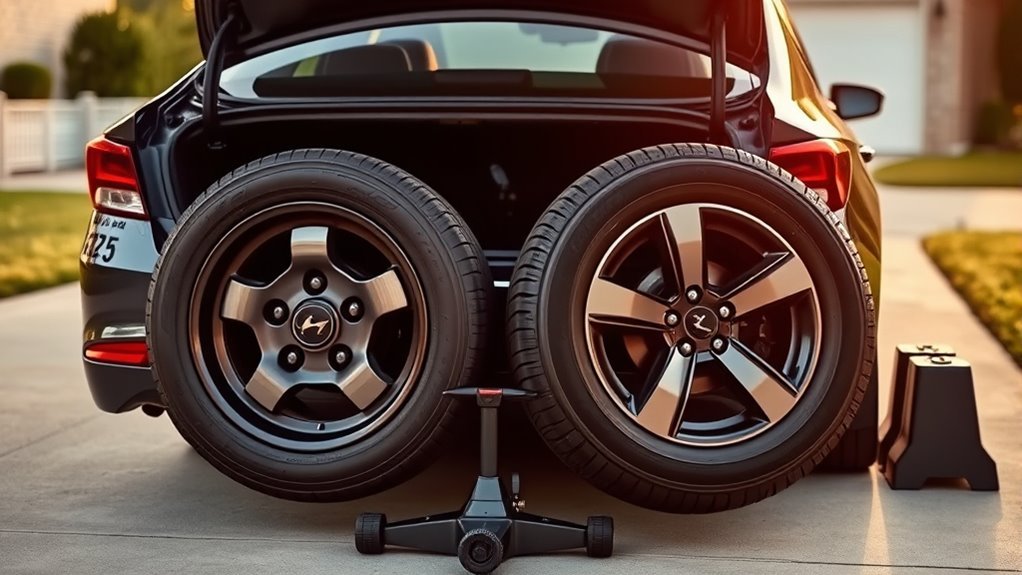
When should you use a donut spare versus a full‑size spare for your Hyundai Sonata? You’ll pick the donut when you need a compact, lightweight solution to get to a repair shop quickly — it’s designed for short emergency preparedness runs, roughly 50 miles at up to 50 mph. Use it to regain mobility, then replace the damaged tire promptly. Opt for a full‑size spare if you value sustained Tire safety and want normal performance, traction, and stability for long-distance travel or remote driving where support isn’t nearby. A full‑size spare removes speed and distance limits, giving you freedom to continue without handling compromises, though it uses more storage space and may slightly affect fuel efficiency. Prioritize the donut for immediate, short trips; choose the full‑size spare when you need reliable, unrestricted driving and peace of mind during extended or isolated journeys.
Compact Spares: How They Work, Speed/Distance, and Handling Limits
When you fit a compact spare on your Sonata, know it’s a temporary, lightweight “donut” designed for reduced speeds (generally up to 50 mph) and short distances (around 50 miles). Expect diminished traction and stability compared with a full‑size tire, so you should drive cautiously and avoid severe weather or aggressive maneuvers. Store the spare inflated and secure in the trunk, and replace the damaged tire with a full‑size one as soon as you reach a repair facility.
Speed And Distance Limits
Although compact spares let you get back on the road quickly, they’re strictly short-term solutions: they’re rated for about 50 miles and a maximum speed of 50 mph to prevent overheating, structural failure, and degraded handling. You should treat that limit as a hard ceiling — plan to replace the spare with a full-size tire as soon as possible. Monitor tire pressure frequently; the spare’s smaller construction tolerates less margin for error. Adjust your route and speed to current driving conditions to avoid prolonged high-speed travel or heavy loads that accelerate wear. Don’t assume the spare will behave like a regular tire: extended use increases risk and can strain drivetrain components. Use the spare to regain mobility and reclaim control, then restore full tire capability promptly.
Handling And Stability Impact
Because compact spares are narrower and lighter than full-size tires, you’ll notice reduced traction and altered handling—especially during cornering, hard braking, or on wet or icy roads. You’ll feel the Sonata pull or understeer more readily; lateral grip drops because contact patch and tread depth are smaller. Maintain correct tire pressure on the spare—check it before you drive—to reduce unpredictable behavior. Drive slower, brake earlier, and avoid abrupt steering inputs; the spare’s limits mean stability margins are reduced. Treat the spare as a controlled escape tool, not a performance tire: its 50 mph/50-mile guideline exists to keep you safe until you can replace it. Prioritize emergency preparedness by planning rapid repair or replacement to restore full handling capability.
Proper Use And Storage
If you must use the Sonata’s compact spare, treat it as a short-term, restricted-use component: it’s sized and tuned for emergency mobility only, with a recommended maximum of about 50 miles at no more than 50 mph. You’ll rely on reduced traction and narrower contact patch, so avoid high speeds, hard cornering, and wet or uneven surfaces. Head directly to repair or replacement; don’t prolong the temporary fit. For storage solutions, keep the donut in its designated trunk compartment, secured and clean to prevent deformation. Perform periodic tire care: check pressure, inspect for dry rot, and rotate or replace if age compromises integrity. Use the spare to regain freedom to reach a safe service location, not as a permanent fix.
Full‑Size Spares: Performance, Fitment, and Long‑Term Use for the Sonata
When you fit a full-size spare on a Sonata, expect matching dimensions and handling that mirror the regular tires for consistent performance and stability. Check bolt pattern, offset, and wheel size to confirm compatibility before driving, since full-size spares occupy more storage and may differ by trim or aftermarket wheels. Maintain the spare like any tire—include it in rotations, monitor pressure and tread, and you can use it long-term without speed restrictions.
Performance And Handling
A full-size spare for the Hyundai Sonata matches your vehicle’s tire specs, so it preserves the car’s designed steering, braking, and stability across speeds and conditions. You maintain predictable handling and traction in varied driving conditions if you monitor tire pressure and rotate the spare into service regularly. A full-size spare removes the speed and distance compromises of a donut and supports confident long-distance travel without modifying mounts.
| Attribute | Benefit |
|---|---|
| Traction & Stability | Mirrors standard tire performance |
| Long-term Use | No enforced speed limits; reliable for trips |
| Maintenance | Rotate and check tire pressure routinely |
You get freedom: swap in a full-size spare and keep control, safety, and longevity aligned with your Sonata’s engineering.
Fitment And Compatibility
You’ve seen how a full-size spare preserves handling and performance; now check how it actually fits and works with your Sonata. A full-size spare matches the factory tire dimensions, so wheel compatibility is straightforward when the spare uses the same bolt pattern, offset, and rim diameter. Confirm it seats in the wheel well and fits your trunk storage without forcing the hatch or cargo area. Because you’ll drive at normal speeds, confirm tire pressure before installation and after a few miles; correct inflation maintains predictable steering and braking. You can use a full-size spare indefinitely until replacement, but integrate it into your tire rotation plan so it shares wear and remains ready. Fitment checks free you from immobilization.
Long‑Term Maintenance
If you plan to keep a full-size spare on your Sonata long-term, integrate it into routine tire care so it stays serviceable and wears evenly. You’ll rotate the spare with your other tires to preserve spare tire longevity and consistent handling. Check fitment for clearance and hitch interference; full-size spares are heavier but give better traction and stability for long distances. Perform tire pressure monitoring regularly and inspect for cuts, bulges, or uneven wear. Replace if age or damage compromises safety. This approach frees you from surprise failures and keeps performance predictable.
| Task | Frequency |
|---|---|
| Rotate spare into set | Every 6,000–8,000 miles |
| Check pressure | Monthly |
| Visual inspection | Monthly |
| Fitment review | At install or mod |
| Replace age/damage | As needed |
Practical Tradeoffs: Trunk Space, Weight, Fuel Economy, and Hitch Fit
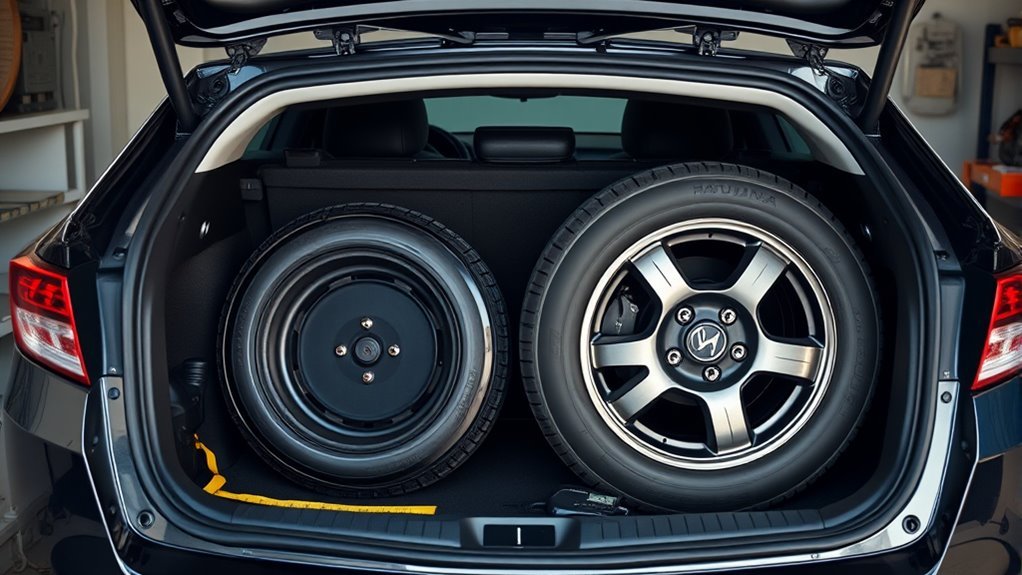
When comparing compact (donut) and full-size spares for your Hyundai Sonata, think about how each option impacts trunk space, vehicle weight, fuel economy, and hitch clearance. You’ll appreciate compact spare advantages: they’re lighter, occupy less trunk volume, and won’t force you to reorganize gear. That reduced mass minimally improves fuel economy and keeps handling predictable when unladen.
Full size drawbacks include greater weight and bulk, which cut into cargo room and can lower miles per gallon as you carry extra load. A full-size spare gives superior traction and stability—critical when towing—but it may hang lower and interfere with hitch components unless you fit a carrier or modify mounting. Compact spares limit you to roughly 50 mph and 50 miles, so they’re a short-term freedom tool rather than a permanent fix. Choose based on whether you prioritize space and economy or durability and towing capability.
Maintenance and Inspection: Rotation, Aging, and Replacement Schedules
1 clear rule: treat your spare like any tire you rely on — rotate a full-size spare with the others every 5,000–7,500 miles, check pressure monthly (including compacts), and inspect for age-related cracking or dry rot since even unused tires degrade after about 5–6 years. You’ll preserve tire longevity and meet essential safety considerations by following schedules and manufacturer guidance.
| Item | Action |
|---|---|
| Rotation | Swap full-size spare every 5,000–7,500 mi |
| Pressure | Check monthly, set to spec |
| Aging | Inspect for cracking; replace at 5–6 yrs |
Rotate to equalize wear and maintain balanced handling. Check compact spares after any use and replace them—compact units aren’t for repeated service. Record installation dates and mileage to track replacement windows. Prioritize manufacturer replacement recommendations; they’re integral to safety considerations and your autonomy on the road. Regular, disciplined inspection frees you from uncertainty and reduces risk when you need a spare.
Buying and Installation Options for the Sonata: OEM Kits, Run‑Flats, and Service Providers
Although you might rely on dealer advice, you can choose between Hyundai OEM compact or full‑size spare kits, aftermarket run‑flat tires, or professional installation services to fit your Sonata; each option affects compatibility, weight, and emergency performance. You’ll order genuine Hyundai spare tire kits online for exact fitment—compact donuts save trunk space and weight, full‑size spares restore normal handling but add mass. Run‑flat tires remove the immediate need for a spare, letting you drive limited miles at reduced speed after a puncture; they trade roadside simplicity for firmer ride and higher cost. For safety and longevity, use certified installation services at a dealership or reputable shop to mount, torque, and balance the spare or run‑flat, and to verify alignment after fitment. Maintain regular pressure and condition checks on whichever solution you choose. Choosing deliberately lets you control mobility, reduce dependency, and stay prepared without compromising vehicle dynamics or emergency readiness.
Frequently Asked Questions
Is It Worth Having a Full-Size Spare?
Yes — you’ll benefit: full size advantages include consistent handling, unlimited use, better traction and stability for long trips; compact limitations restrict speed/distance and handling, so choosing full-size grants freedom and reliable emergency mobility.
What Does Compact Spare Tire Mean?
Think of it as a lifeline: a compact spare tire is a smaller, temporary wheel you’ll use briefly. It offers compact spare benefits like space-saving and lightness, but compact spare limitations include reduced speed and distance.
How Many Miles Can You Drive on a Compact Spare?
You can drive about 50 miles on a compact spare; it’s a short-term solution. Respect compact spare limitations for driving safety, maintain reduced speeds, monitor pressure, and replace with a full-size tire promptly to regain freedom.
Does It Matter What Size Your Spare Tire Is?
Yes — picture uneven grips on wet pavement; you’ll want tire compatibility and heed safety concerns. You’ll choose compact for short, limited-speed use and full-size for sustained stability, comfort, and freedom on long or remote drives.
Conclusion
Think of choosing between a donut and a full‑size spare like picking the right tool for a roadside repair: the donut’s a compact wrench for short, urgent fixes; the full‑size spare’s the complete socket set for longer, reliable use. For your Hyundai Sonata, use a donut only for temporary, limited‑speed runs and minimal handling demands. Prefer a full‑size spare if you’ll drive longer distances, tow, or want original handling and safety restored. Maintain and inspect either regularly.

Related Articles
Is Tire Dressing Safe to Use on Hyundai Sonata Tires?
Safety and shine for your Hyundai Sonata tires can be achieved with tire dressing—discover essential tips and products to ensure flawless application.
Read More
Run Flat vs Regular Tires for Hyundai Sonata: Pros & Cons
Get the lowdown on run-flat and regular tires for your Hyundai Sonata; discover which option suits your driving needs before making a final decision.
Read More
Does Hyundai Sonata Come With Complimentary Tire Rotation?
Find out if the Hyundai Sonata includes complimentary tire rotation services and discover how this benefit can enhance your driving experience.
Read More