
Hydroplaning: Causes, Prevention, and How to Recover Safely
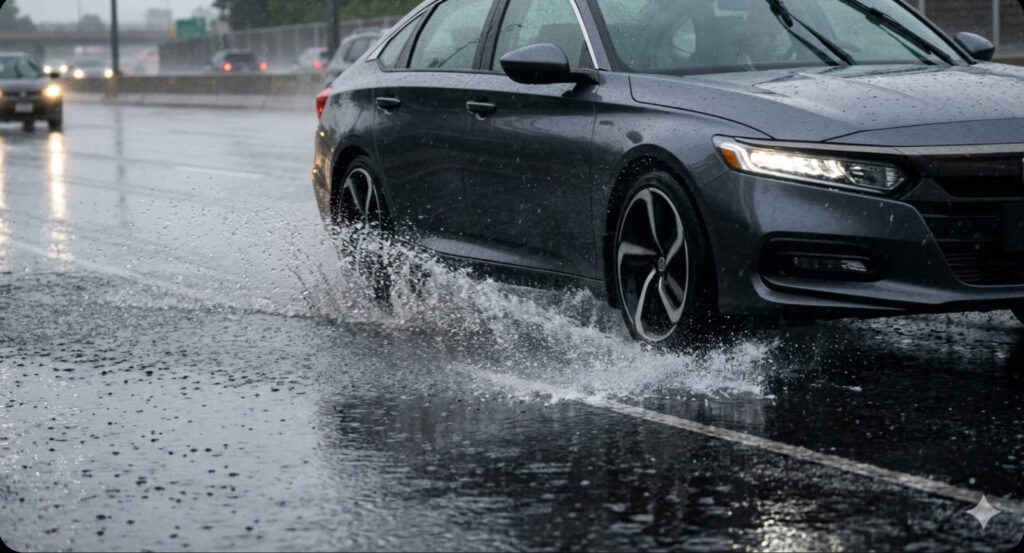
Hydroplaning happens when a layer of water prevents your tires from contacting pavement, stripping steering, braking, and traction. It can start at speeds as low as 35 mph and becomes more likely above 50 mph. Contributing factors include standing water, poor drainage, oily first-rain surfaces, worn or underinflated tires, and high speed. If you start to hydroplane, ease off the accelerator, avoid hard braking or sharp steering, and hold the wheel steady. Reduce speed, increase following distance, and maintain good tread. More detail on all of this below.
Quick Answer
- Hydroplaning starts when water pressure lifts your tires off the road, causing loss of steering and braking.
- Risk increases with speed, worn tread, underinflated tires, and standing water.
- If it happens: lift off the gas, steer gently in the direction you’re sliding, and do not slam the brakes.
- Prevent it by slowing down in wet weather, turning off cruise control, and keeping tires properly inflated and maintained.
- Replace tires before tread depth drops to 2/32 of an inch.
What Hydroplaning Is and Why It Happens
Hydroplaning happens when your tires lose direct contact with the pavement and ride on a thin film of water. When that happens, you lose steering, braking, and traction all at once. It can occur at speeds as low as 35 mph and becomes more likely the faster you go, because higher speeds give water less time to escape through your tire’s tread channels.
Think of it as a straightforward physics problem: vehicle momentum plus insufficient tire contact pressure lets a wedge of water build up under the tread. Tire performance in the wet depends on tread depth and tread pattern to push water out of the way. Worn tires at 2/32 of an inch or less simply can’t do that job. Road conditions matter too. Standing water, pooled runoff, and poor drainage keep the water film thick and prolong the loss of grip. The first 10 to 15 minutes of rain are especially risky because oils and road debris mix with fresh water and reduce surface friction.
Monitoring tread condition and choosing tires designed for reliable water evacuation go a long way toward reducing your risk.
The Three Types of Hydroplaning
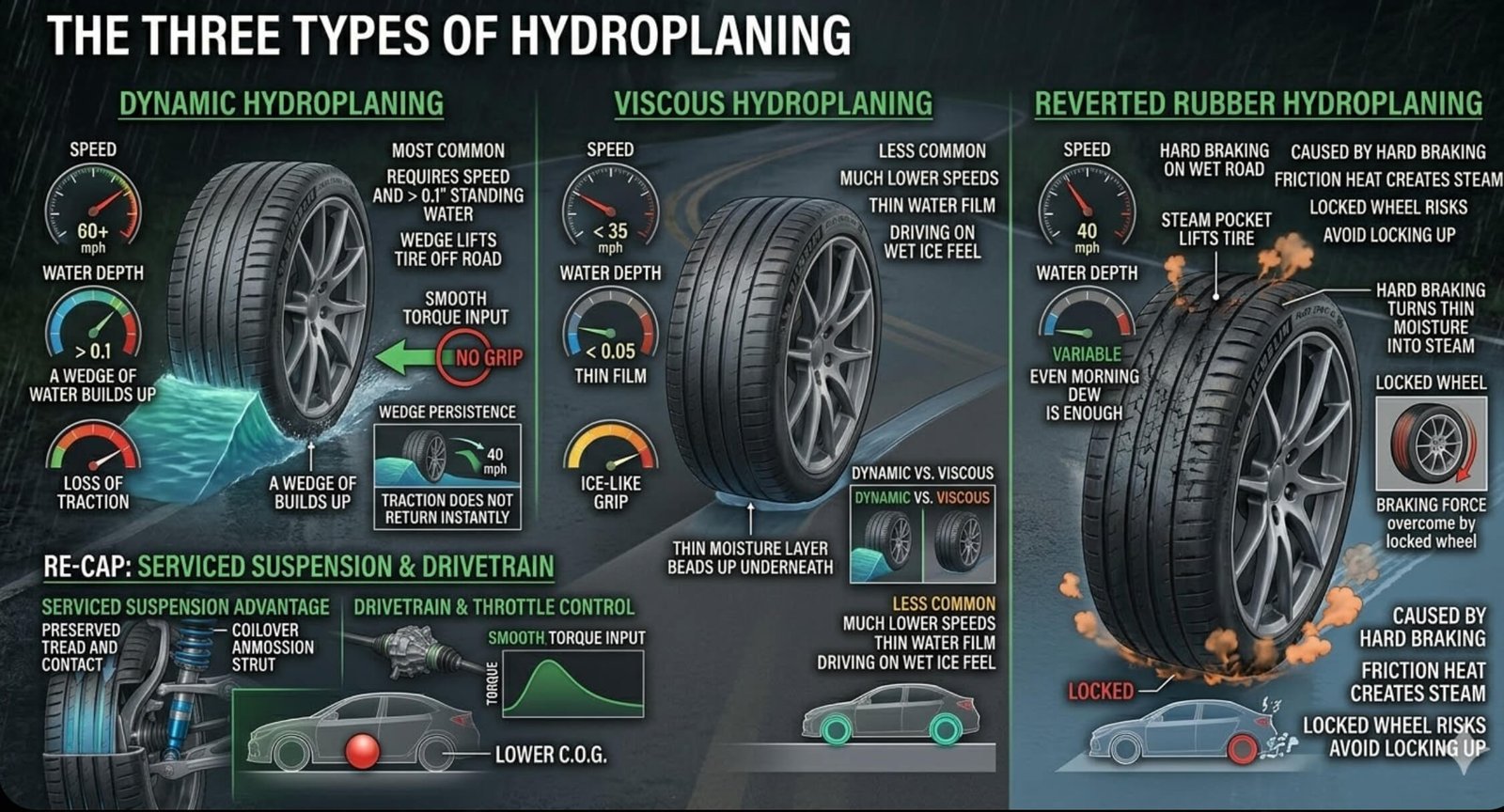
Not all hydroplaning is the same. There are three distinct types, and knowing the difference helps you understand why wet roads can catch drivers off guard even at lower speeds.
Dynamic hydroplaning is the most common type. It requires speed and at least a tenth of an inch of standing water. A wedge of water builds up at the front of the tire contact patch and lifts the tire off the road. This wedge can persist even after you slow down, so traction does not always return instantly.
Viscous hydroplaning can happen at much lower speeds and with far less water, sometimes just a thin film on a smooth surface like new asphalt. The tire pushes water away but the water has nowhere to go and beads up underneath. It is less common than dynamic hydroplaning but tends to feel more like driving on wet ice when it occurs.
Reverted rubber hydroplaning is caused by hard braking on a wet surface. If braking is hard enough to lock the wheels, friction heat can turn the thin moisture layer into steam, creating a pocket that lifts the tire. Even morning dew can be enough to trigger this. It is one more reason to avoid locking up the wheels on a wet road.
Immediate Steps If Your Car Starts Hydroplaning
If your car starts hydroplaning, stay calm. Abrupt reactions, like slamming the brakes or jerking the wheel, make things worse. Gradually ease off the accelerator, let the tires work their way back to the road surface, and keep the steering wheel steady. If you need to brake, apply light and intermittent pressure, or steady pressure if your car has ABS.
Stay Calm, Don’t Panic
When your vehicle loses traction on standing water, the worst thing you can do is react fast and hard. Rapid, forceful steering or braking amplifies instability. Stop accelerating, keep inputs small, and steer gently toward where you want to go. Small, deliberate corrections give the tires a chance to reestablish grip.
If your car has ABS, apply steady brake pressure and let the system modulate the force. Without ABS, use light, rhythmic pumping to avoid locking the wheels. Hydroplaning is usually brief. Staying calm shortens it.
Ease Off The Accelerator
Lift your foot smoothly to let speed drop and allow the tire treads to reestablish contact with the pavement. Do not stomp the brake. Abrupt inputs can worsen a skid. If braking is necessary, use smooth, progressive pressure and let ABS do its job if you have it.
Keep the steering wheel steady while speed falls. Preemptive speed management, combined with good tire maintenance, is always the better option than reacting after hydroplaning has already started.
Steer Smoothly Toward Safety
While you ease off the throttle, keep the wheel steady and steer gently toward your intended path. Do not steer against the slide. Avoid abrupt inputs that can escalate a skid. Apply light brake pressure only if needed, and wait for the tactile feedback that tells you the tires have reconnected with the road. Once they do, make controlled adjustments.
| Action | Intensity | Timing |
|---|---|---|
| Reduce throttle | Gentle | Immediately |
| Steering adjustments | Smooth | Continuous |
| Braking | Light/steady | As needed |
How Fast You Can Hydroplane and Why Speed Matters
Hydroplaning can start at speeds as low as 35 mph, with risk climbing sharply above 50 mph. At 60 to 70 mph, a vehicle can travel 30 to 40 feet without tire contact because the tread cannot evacuate water fast enough. Stopping and steering distances increase significantly. Slowing down in wet conditions is the single most effective thing you can do.
Speed Thresholds For Hydroplaning
Speed, water depth, and tire tread all interact, which is why hydroplaning can catch drivers off guard at speeds they consider safe. Risk starts around 35 mph and increases meaningfully above 50 mph. At 50 mph, tires can displace close to 8 gallons of water per second. Above 60 mph, the tread simply cannot keep up, and a loss of traction can send the vehicle sliding for 30 to 40 feet.
- Low speeds (~35 mph): possible with standing water.
- Moderate speeds (~50 mph): significant risk; heavy water displacement required.
- High speeds (60–70 mph): long uncontrolled travel if traction fails.
Effect Of Speed On Distance
The faster you go, the longer you travel without traction if hydroplaning begins. At 60 to 70 mph, that distance can be 30 to 40 feet. Speed overwhelms tire design and water dispersion capacity, letting a pressurized water film lift the tread off the pavement.
Early rain compounds this. Oil and road dirt reduce traction before the rain has had time to wash the road clean, making speeds above 30 mph risky in the first ten minutes of a storm. The fix is straightforward: reduce speed in wet conditions, inspect tread regularly, and use controlled deceleration when standing water appears.
How Road and Weather Conditions Raise Hydroplaning Risk
When rain first starts, oil and road grime mix with water to form a slippery film. This makes the first 10 to 15 minutes of a storm among the most dangerous driving conditions you can encounter. Standing water deeper than about 0.1 inches raises risk further by sustaining the water film that causes tires to lose contact.
According to the Federal Highway Administration, wet pavement contributes to 75% of weather-related crashes in the United States, with 47% occurring during active rainfall. Poor road drainage and inadequate maintenance create persistent water pockets that make things worse.
Treat the start of rain as high-risk: oil films and pooled water sharply increase hydroplaning danger. Slow down and plan your route accordingly.
- Monitor forecasts and avoid travel during heavy rain when possible.
- Favor routes with good drainage and well-maintained pavement.
- Reduce speed when you see standing water or pooled runoff.
How Tire Tread and Pressure Affect Hydroplaning Risk
Tire condition and inflation directly determine how well your tires channel water and stay in contact with the road. Keeping tread depth well above the legal minimum and keeping pressure within manufacturer specifications are two of the most effective ways to reduce hydroplaning risk.
New tires with roughly 11/32 of an inch of tread can displace nearly 8 gallons of water per second at 50 mph. Tires worn down to 2/32 of an inch or less cannot do this effectively. Check tread depth with a gauge or the penny test and replace tires before you hit that critical threshold.
Underinflation alters the contact patch shape and reduces road adhesion. Overinflation decreases traction too. Measure pressure cold, follow your manufacturer’s recommendations, and watch for uneven tread wear, which often signals an alignment or inflation problem. Consistent maintenance and timely replacement of worn tires make a real difference on wet roads.
How Weight, Suspension, and Drivetrain Influence Hydroplaning
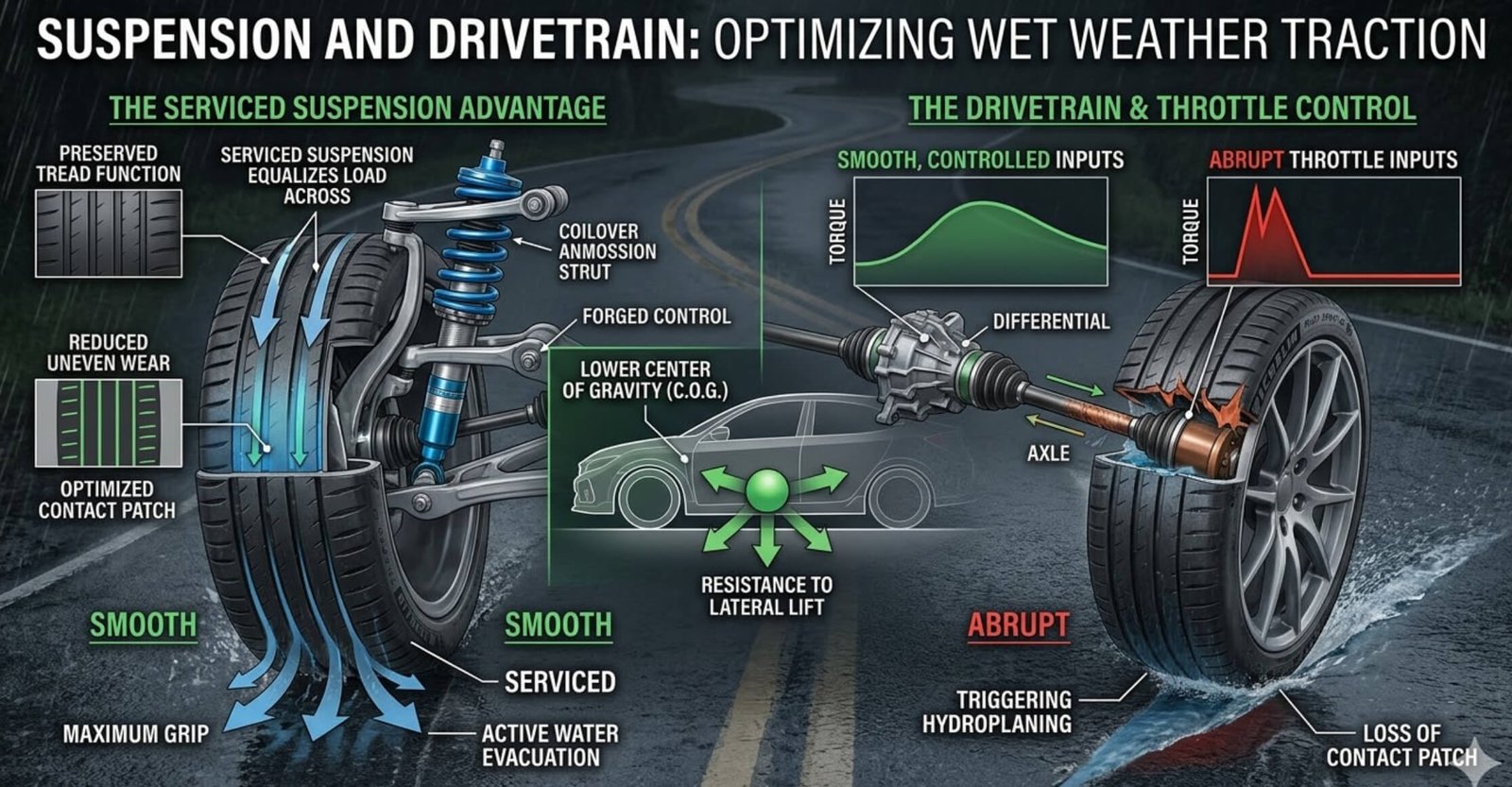
Vehicle mass affects hydroplaning thresholds: heavier vehicles require higher water pressure to lift the tire, so they tend to resist hydroplaning better than lighter ones. Suspension tuning and ride height control how consistently tires stay in contact with the road. Properly damped setups and a lower center of gravity help with water evacuation and grip. Drivetrain layout also matters. AWD distributes torque across more wheels, which can help maintain stability when hydroplaning begins, though it cannot prevent tires from lifting off the road entirely when water depth and speed exceed the tires’ limits.
Vehicle Weight Effects
Heavier vehicles generally displace more water and are less prone to hydroplaning, but suspension tuning, center of gravity, and weight distribution determine whether that advantage holds in practice. A heavy SUV with a high center of gravity or unevenly loaded cargo can lose that benefit quickly. A well-maintained suspension keeps tires engaged with the road. Soft or worn components let contact pressure fluctuate, which increases the risk of slip. AWD helps with traction but does not prevent hydrodynamic lift when water depth and speed push past the grip threshold.
- Check tire contact and pressure regularly.
- Balance loads front-to-back and side-to-side.
- Keep suspension components in good condition.
Suspension And Drivetrain
When weight, suspension condition, and drivetrain work together well, your tires stay in contact with wet pavement more effectively. A serviced suspension equalizes load across the contact patch, preserves tread function, and reduces uneven wear. A lower center of gravity improves stability and resistance to lateral lift.
On the drivetrain side, abrupt throttle inputs, especially in high-power vehicles, can overcome available grip and trigger hydroplaning even when conditions seem manageable. Smooth, controlled throttle inputs that respect the limits of tire grip on wet surfaces are always the safer choice.
How to Recognize Early Signs of Hydroplaning
Catching hydroplaning early gives you more time to respond before control is lost. The most common early sign is a sudden lightness in the steering wheel, which happens as tires lose contact with the pavement. A subtle drift when turning or a floating sensation over wet surfaces are also warning signs. RPMs may rise unexpectedly if the drive wheels lose traction, and traction control may activate.
- Check for sudden steering lightness.
- Feel for bouncing or floating on wet pavement.
- Watch for unexpected drift when turning.
The first 10 to 15 minutes of rain and any visible standing water are the moments to be most alert. Regular tread and pressure checks mean your tires are better positioned to give you a warning before full hydroplaning occurs.
Prevent Hydroplaning While Driving: Speed, Spacing, Lane, and Cruise Control Tips
Slowing by 5 to 10 mph in wet conditions and increasing following distance meaningfully reduces hydroplaning risk. Lower speed gives tires more time to displace water, and more space ahead gives you room to react without hard braking.
A few practical habits help:
Lower speed proactively as soon as precipitation begins, since kinetic energy rises with velocity and impairs water evacuation. Maintain expanded spacing of three to four seconds or more to avoid abrupt braking. Prefer center lanes where possible; right lanes and lanes near curbs tend to collect more runoff. Avoid visible puddles when you can safely do so. Turn off cruise control in wet weather so you have direct throttle control and can modulate speed the moment slip begins. Use progressive braking, gentle and measured, rather than abrupt pedal inputs, to preserve traction and let ABS work efficiently.
Tire Maintenance Checklist to Reduce Hydroplaning (Inspection, Replacement, Rotation)
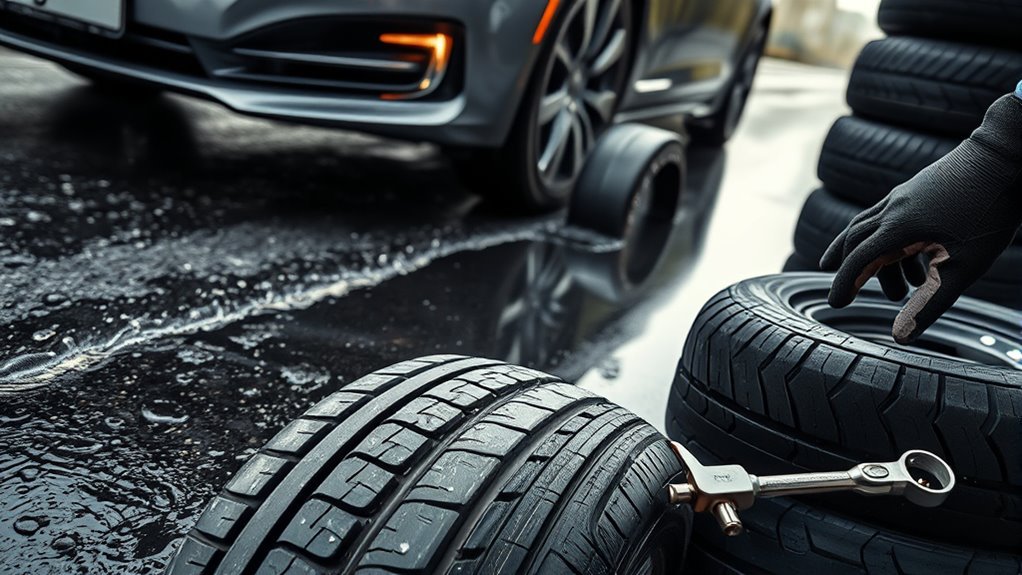
Your tires are the primary interface between your car and wet pavement, so regular maintenance is the most direct way to reduce hydroplaning risk. Inspect tire tread depth frequently. The penny test is a quick way to check: insert a penny into a tread groove with Lincoln’s head pointing down. If any part of his head is covered, you have more than 2/32 of an inch remaining. If his entire head is visible, replace the tires.
Also check for uneven tread wear, which often indicates alignment or suspension issues that reduce water evacuation. Inspect for cuts, bulges, or embedded objects and replace tires promptly when structural integrity is compromised.
Keep tire inflation at manufacturer spec. Both underinflation and overinflation impair the contact patch and increase hydroplaning risk. Check pressure when the tires are cold for an accurate reading.
Rotate tires every 5,000 miles to equalize wear and preserve consistent wet traction. If you are researching new tires, Tire Rack provides detailed wet-performance ratings and user reviews that can help you compare options for your specific vehicle.
- Measure tread depth routinely (penny test).
- Monitor and correct tire inflation to spec.
- Rotate and replace based on wear or damage.
Prepare Your Car for Wet Weather: Brakes, Wipers, Lights, and Professional Checks
Beyond tires, a few other vehicle systems directly affect wet-weather safety. Worn brake pads reduce stopping power on wet roads, so check pad thickness and fluid level and replace components on schedule. Wiper blades should be replaced every six months to maintain clear visibility and reduce reaction time in rain. Check that all lights are working, including headlights, taillights, and turn signals, so other drivers can see you.
| System | Action |
|---|---|
| Brakes | Inspect pads, rotors, fluid; service proactively |
| Wipers | Replace biannually; test sweep and contact |
| Lights | Test all bulbs; clean lenses; replace as needed |
Also clear windshield and sunroof drains so water does not pool and impair traction. Before rainy season, a professional inspection focused on tread depth, inflation, and these systems gives you a solid baseline.
Frequently Asked Questions
What Is Hydroplaning and How to Prevent It?
Hydroplaning is when your tires lose grip and skim across a water surface, causing loss of steering and braking. Prevent it by keeping tires properly inflated and maintained, slowing down by 5 to 10 mph on wet roads, avoiding standing water, and turning off cruise control in rain.
What Are the Two Biggest Causes of Hydroplaning?
The two biggest causes are excessive speed and worn tire tread. When water depth overwhelms the tire’s ability to channel it away, traction is lost. Reducing speed and maintaining tread are the most direct ways to lower the risk.
What Cars Hydroplane the Most?
Lighter vehicles with wide, performance-oriented tires tend to hydroplane more easily. Sports cars are particularly susceptible due to wide tire contact patches and tread patterns optimized for dry grip. Worn tires on any vehicle increase the risk significantly.
Conclusion
Hydroplaning can happen faster than most drivers expect. Keep speed down, increase following distance, avoid standing water, and never use cruise control in heavy rain. Maintain proper tire pressure and tread depth, inspect brakes, wipers, and lights regularly, and rotate or replace tires on schedule. These steps do not eliminate risk entirely, but they reduce it substantially. If it does happen, stay calm, ease off the gas, steer gently in the direction you are sliding, and wait for the tires to reconnect with the road.
Related Articles
Signs You Need New Tires: Visual & Performance Clues
Lifelong safety starts with spotting tread wear, bulges, or vibration—learn the simple checks that tell you when tires must be replaced.
Read More
Tire Wear Indicator Bars: Built-In Safety Markers Decoded
On the brink of legal tread limits? Discover how tire wear indicator bars reveal danger and when to replace—read on to protect your ride.
Read More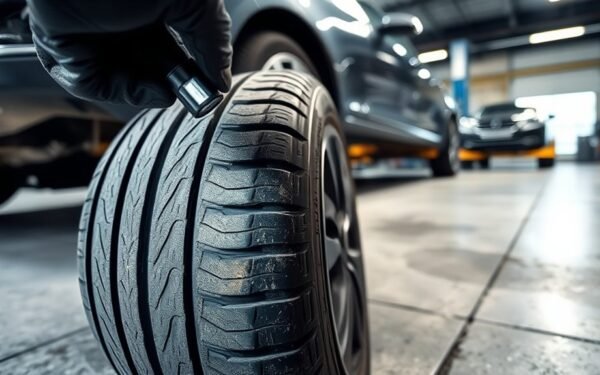
Tire Age Limit: How Old Is Too Old to Drive On?
When should you retire tires—learn the crucial six-year rule, warning signs, and what to check next to avoid sudden failures.
Read More