
How to Store Tires for a Toyota RAV4: Best Practices
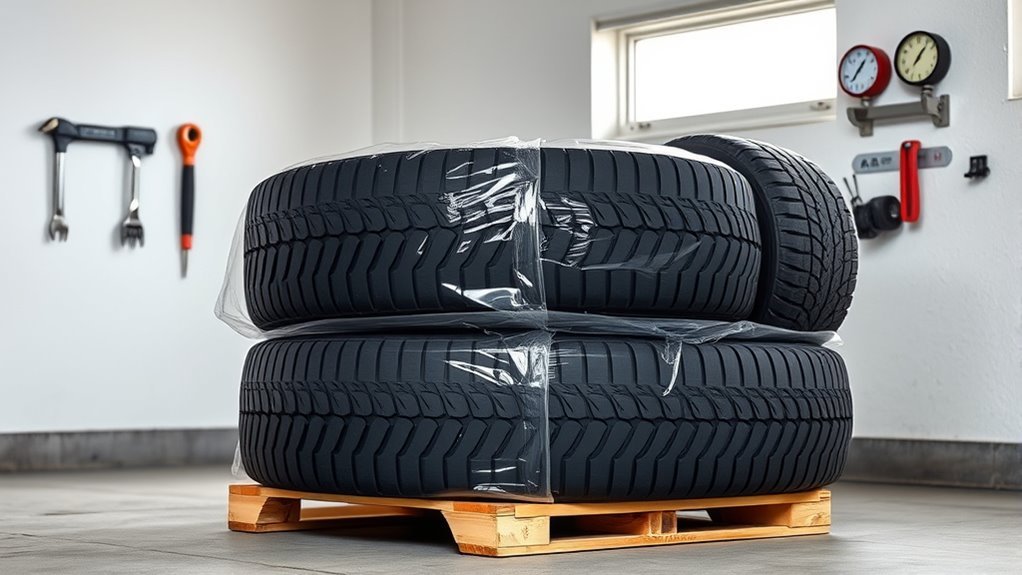
To store your Toyota RAV4 tires properly, start by cleaning them and inspecting for damage. Inflate each tire to the manufacturer-recommended pressure to prevent deformation. Store them indoors in a cool, dry place away from heat sources and UV exposure, keeping them upright or stacked. Avoid common mistakes like storing them flat or neglecting regular checks. Following these best practices can notably enhance tire longevity and performance. Explore additional tips to guarantee your tires stay in top condition.
Why Proper Tire Storage Matters for Your RAV4

Proper tire storage is vital for your Toyota RAV4, as neglecting this aspect can lead to significant damage over time. A poor storage environment can reduce your tires’ lifespan by up to 50%, primarily due to sidewall cracking and loss of flexibility. To safeguard your tires, choose a cool, dry location that shields them from UV light and extreme temperatures, which can degrade rubber compounds. Before storing, make sure your tires are clean and properly inflated to prevent corrosion and flat spots, which enhances safety and performance when you reinstall them. Additionally, consider stacking mounted tires with sidewalls down or hanging them from hooks; this minimizes pressure and retains their shape. Remember, seasonal tire changes are essential for maintaining ideal traction and handling, ensuring your RAV4 remains safe and performs well throughout varying climates year-round. Proper storage not only protects your investment but also liberates your driving experience.
Essential Steps for Tire Storage Preparation
To prepare your tires for storage, start by cleaning them thoroughly to eliminate dirt and contaminants. Next, inspect each tire for any damage, such as cracks or uneven wear, to address issues before they worsen. Finally, use proper packaging techniques to guarantee they remain protected throughout the storage period.
Cleaning Tires Thoroughly
Cleaning your tires thoroughly is essential for effective storage, and it involves a few important steps. Start by washing the tires with warm soapy water; this will effectively remove dirt, grime, and brake dust. Rinse the tires thoroughly to eliminate any soap residue, as leftover soap can lead to corrosion over time. After washing, allow the tires to dry completely—using a microfiber towel can speed up this process and help prevent moisture buildup. It’s critical not to apply tire dressings or chemicals before storage, as these can degrade materials during their hibernation period. Following these tire cleaning steps guarantees your tires remain in peak condition, ready for use when you need them again.
Inspecting for Damage
Before storing your tires, it’s important to inspect them for any signs of damage. Use effective tire inspection techniques to guarantee safety and performance. Follow these damage evaluation methods:
- Check for visible cracks, bulges, or punctures.
- Measure tread depth with a toonie; if the top half of the letters shows, consider replacement.
- Look for uneven wear patterns indicating alignment issues or improper inflation.
- Make sure tires are clean and free from dirt or debris to prevent corrosion.
- Document your findings for future reference, helping you monitor tire condition over time.
Proper Packaging Techniques
Properly packaging your tires is essential for preserving their lifespan and performance during storage. Start by cleaning the tires thoroughly with warm, soapy water to eliminate dirt and contaminants. Once clean, dry them completely with a microfiber towel to prevent moisture buildup. For effective sealing techniques, use airtight bags, such as lawn or leaf bags, to shield your tires from air and moisture exposure. If your tires are mounted, make certain they’re inflated to the manufacturer’s recommended pressure; unmounted tires should be stored upright and side by side.
| Tire Condition | Packaging Method |
|---|---|
| Mounted Tires | Inflate and seal in bags |
| Unmounted Tires | Store upright, side by side |
| All Tires | Clean, dry, and seal |
Best Tire Storage Locations
When storing your RAV4 tires, aim for indoor locations like garages or storage rooms to shield them from moisture and temperature changes. If space is tight, consider professional storage facilities that provide ideal conditions for tire preservation. Avoid outdoor storage to protect against UV exposure and weather damage that can accelerate degradation.
Indoor Storage Options
Storing your Toyota RAV4 tires indoors requires careful selection of the location to confirm their longevity. An ideal indoor climate is essential for effective tire storage solutions. Here are some key considerations:
- Choose a cool, dry garage or storage room with stable temperatures.
- Keep tires away from heat sources like furnaces or radiators.
- Avoid direct sunlight and UV exposure to prevent rubber degradation.
- Use dedicated storage racks or hooks to maintain tire shape and avoid flat spots.
- Verify the area is clean and free from chemicals or solvents that could harm the tires.
Professional Storage Facilities
If you’re looking for a reliable solution to keep your Toyota RAV4 tires in top condition, consider utilizing professional storage facilities. Many local Toyota dealerships offer climate-controlled environments, protecting your tires from harmful UV light and temperature fluctuations. These specialized facilities employ equipment designed to maintain tire integrity, ensuring tire safety and preventing degradation from environmental factors.
How to Store Mounted and Unmounted Tires
To guarantee your Toyota RAV4 tires remain in ideal condition during storage, it’s crucial to understand the differences in storing mounted and unmounted tires.
For mounted tires, inflate them to the manufacturer-recommended pressure and utilize mounted tire hooks or wall racks. This method maximizes space and prevents deformation. In contrast, unmounted tires should be stored upright on their treads, side by side, using proper tire stacking techniques to maintain their shape.
Here are some key tips for both types:
- Confirm all tires are clean and completely dry before storage.
- Avoid direct sunlight and heat sources to prevent material degradation.
- Store in a cool, dry place with consistent temperatures.
- Regularly check on stored tires to assess their condition.
- Rotate storage position occasionally to avoid flat spots.
Best Practices for Ensuring Tire Longevity During Storage
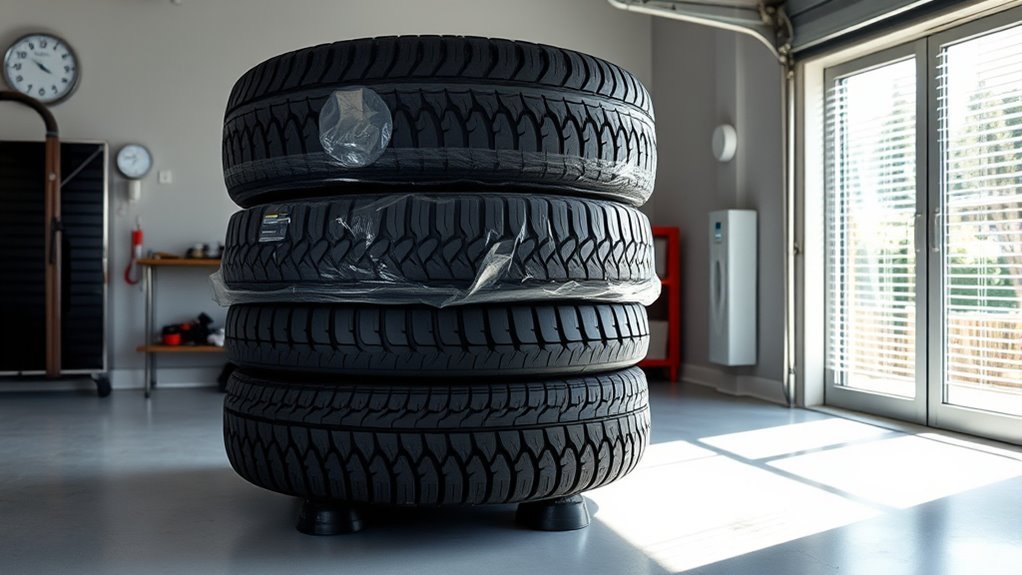
Making certain your tires remain in ideal condition during storage involves several essential practices that can greatly extend their lifespan. Start with proper cleaning; use warm soapy water to remove grime and moisture, then make sure they’re completely dry. For mounted tires, keep them inflated to the manufacturer’s recommended pressure and hang them on hooks or wall racks. If you’re storing unmounted tires, place them upright side by side to avoid deformation.
Maintain a cool, dry, and dark environment to reduce exposure to harmful elements. Regularly inspect your tires for wear or damage, and rotate them monthly for even weight distribution.
Here’s a quick reference table for tire maintenance tips:
| Task | Frequency | Seasonal Usage Considerations |
|---|---|---|
| Clean tires | Before storage | Always, regardless of season |
| Inflate to recommended PSI | Every storage | Check before each seasonal change |
| Inspect for damage | Monthly | Prior to seasonal use |
| Rotate tires | Monthly | Important for prolonged storage life |
Common Tire Storage Blunders and How to Avoid Them
Even with best practices in place, common tire storage blunders can undermine your efforts to protect your tires. To guarantee longevity, avoid these pitfalls:
- Storing tires flat, especially unmounted ones, can damage steel belts and reduce lifespan.
- Failing to clean tires prior to storage allows dirt and brake dust to cause corrosion.
- Exposing tires to direct sunlight or heat accelerates aging and leads to sidewall cracking.
- Neglecting to inflate tires to the manufacturer-recommended pressure can create flat spots.
- Not marking tires for rotation can result in uneven wear, affecting tire alignment and performance.
Using proper storage containers can also enhance protection. Remember, taking these steps not only preserves your tires but also guarantees peak performance when you’re ready for your next drive. Be proactive to liberate your tires from the fate of common storage mistakes.
How to Manage Seasonal Tire Swaps?
As temperatures drop below 7–8°C (45–46°F), it’s crucial to manage your seasonal tire swaps effectively to guarantee superior traction and safety. Start by adhering to your seasonal calendar; switch to winter tires as temperatures fall. Confirm your tires are properly inflated to the manufacturer-recommended pressure before storage.
To maintain shape and prevent flat spots, consider the following:
| Action | Frequency |
|---|---|
| Tire rotation | Monthly if stored vertically |
| Inspect for wear | Before each swap |
| Check pressure | Before each swap |
| Store off-season tires | In a cool, dark place |
If space is tight, a tire storage service from your local Toyota dealer can provide excellent care. By following these guidelines, you’ll guarantee your tires remain in top condition, ready for your next adventure without compromise.
What to Check for Tire Readiness Before Use?
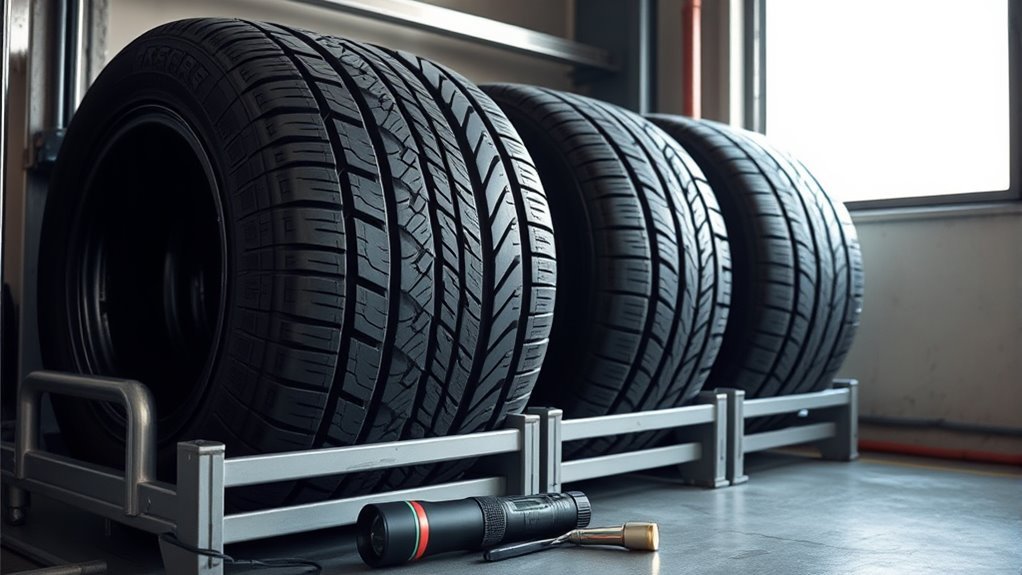
After swapping your tires for the season, checking their readiness before use is essential for safe driving. Here’s what you should inspect:
- Tread Depth: Use a toonie; if the top half of the letters is visible, it indicates low tread and potential safety issues.
- Sidewall Condition: Look for visible cracks, bulges, or deformities, which can signal tire deterioration.
- Tire Pressure: Verify they’re inflated to the manufacturer-recommended pressure. Improper inflation can lead to uneven wear and reduced performance.
- Wear Patterns: Check for signs of uneven wear, which may indicate alignment or suspension issues needing attention.
- Cleanliness: Confirm that the tires are clean and free of debris to prevent corrosion and maintain rubber integrity.
Evaluating Professional Tire Storage Options: Are They Worth It?
Are you considering whether professional tire storage is a smart investment for your Toyota RAV4? Evaluating the cost comparison, you’ll find that storage services typically range from $50 to $150 per season. While this might seem steep, the savings from prolonging your tires’ lifespan can offset the expense. Professional storage offers significant service benefits, including climate-controlled environments that protect against heat, UV light, and moisture—key factors that degrade tires.
Additionally, many dealers offer tire storage as part of a seasonal changeover, ensuring your tires are ready when you need them. This service frees up valuable garage space, promoting better organization at home. Regular inspections during storage can also identify potential issues, keeping your tires in prime condition for safe driving. If you value convenience and peace of mind, professional tire storage could be a worthwhile investment for your RAV4.
Frequently Asked Questions
Is It Better to Store Tires Flat or Upright?
It’s better to store tires upright to extend their lifespan and prevent deformation. Use appropriate storage materials, ensuring they’re clean and dry. Regularly rotate them monthly to maintain shape and performance.
Is It Better to Store Your Tires Inside or Outside?
Storing your tires inside is like shielding a precious gem; it enhances tire longevity. Controlled storage conditions prevent damage from elements and aging, ensuring your tires remain ready for every journey ahead.
How to Keep Tires From Getting Flat Spots During Storage?
To prevent flat spots during storage, inflate your tires to the recommended pressure, use jack stands, and periodically move the vehicle. Guarantee a cool, dry storage environment for effective tire maintenance tips.
Conclusion
In the grand scheme of vehicle maintenance, storing your RAV4’s tires properly isn’t just a chore; it’s a crucial investment in their longevity and performance. By following best practices, you’ll sidestep common pitfalls and guarantee your tires are ready to hit the road when the time comes. Whether you choose to tackle it yourself or enlist professional help, a little foresight goes a long way in preserving the integrity of your tires for seasons to come.

Related Articles

Upsizing Wheels on a Toyota RAV4: Pros, Cons, and Considerations
Boost your Toyota RAV4's performance with larger wheels, but discover the hidden trade-offs that could impact your ride before you decide.
Read More
Can I Change Tire Size on My Toyota RAV4? Rules and Recommendations
Are you considering changing the tire size on your Toyota RAV4? Discover the essential rules and recommendations before making a decision.
Read More
What to Do If the TPMS Light Comes On in Your RAV4
Understand the steps to take when the TPMS light illuminates in your RAV4, as overlooking it could lead to serious tire problems.
Read More