
How to Protect Tires From UV Damage on Your RAV4

You can protect your RAV4’s tires by cleaning them with soap and water, drying them thoroughly, and using a petroleum-free UV protectant like 303 or McKee’s applied with a foam pad to the sidewalls every 3–5 weeks (more often in sunny climates). Avoid petroleum dressings that dry rubber, park in shade or use a cover when possible, and inspect for cracks, bulges, or tread wear regularly; follow these steps and you’ll see how to extend tire life and safety.
Why Protecting RAV4 Tires From UV Matters
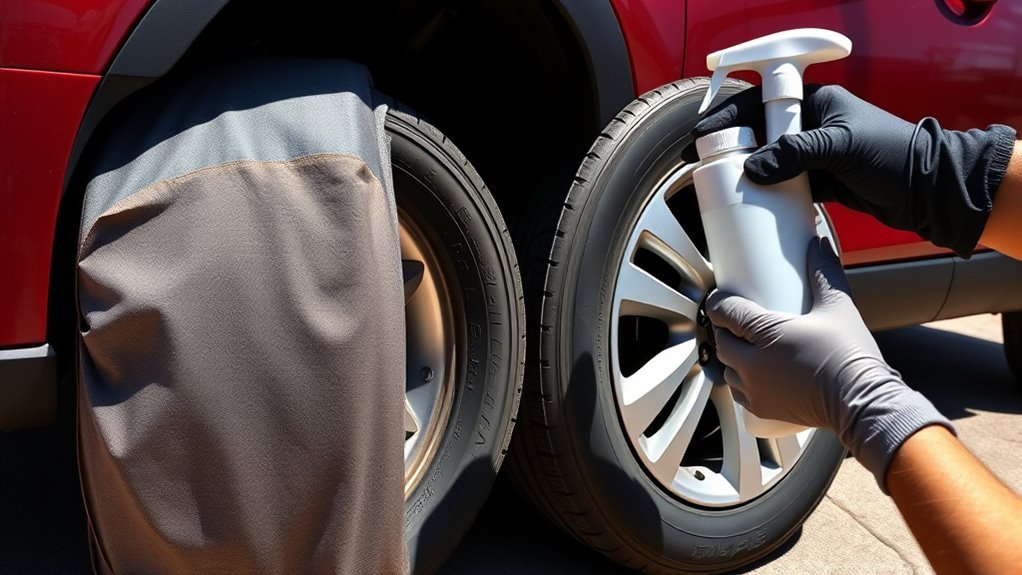
Because UV rays speed up the breakdown of rubber, protecting your RAV4’s tires from sun exposure directly preserves safety and performance. You’ll want to treat tire maintenance as liberation from avoidable failures: UV impact dries and cracks rubber, cutting grip and control, especially in high-sun regions like Las Vegas or Colorado. Sidewalls take most of the hit, so you’ll inspect them often for hairline splits that signal aging. Know that untreated tires can degrade within four years, so routine checks and preventive care aren’t optional — they extend lifespan and keep handling predictable. Apply UV protectants regularly to maintain elasticity and prevent drying, and prioritize sheltering the vehicle when you can. Using a car cover or parking in shade reduces direct sunlight and lowers cumulative UV exposure, protecting both tread and sidewalls. By focusing on these targeted steps, you’ll keep your RAV4 safer, more reliable, and free from the constraints of premature tire decline.
Quick Actions: 3 Things to Do Right Now
Now that you know why UV protection matters for your RAV4’s tires, take three simple actions you can do today to cut sun damage and extend tire life. First, clean each tire with vehicle soap and water to remove grime that worsens UV exposure and undermines protectants. Dry thoroughly so treatments adhere. Second, apply a silicone-based UV protectant like 303 Protectant; follow label directions and plan to reapply every 3–5 weeks for consistent protection and ideal tire longevity. Use a foam applicator and cover sidewalls evenly. Third, avoid petroleum-based tire dressings — they leach rubber oils and speed aging — and park in shade whenever possible to minimize direct sun. These steps are low-effort, immediate, and protect your freedom to drive without premature tire failure. Track tire age as part of routine care so your maintenance supports long-term tire longevity and reduces the chance UV damage forces an unwanted replacement.
Inspecting RAV4 Tires: Signs You Must Replace Them
Start by giving each tire a close, hands-on check for clear replacement signals you shouldn’t ignore. You’ll perform tire maintenance and focused safety checks to free yourself from roadside risk. Run your fingers over tread wear indicators; if tread meets them, replace the tire to restore traction. Scan sidewalls for cracks or cuts — UV-ageing shows here and means replacement before a blowout. Feel for bulges or blisters; those weak spots demand immediate tire removal and replacement. Note uneven wear patterns; they point to alignment problems and often mean you’ll need new tires and an alignment fix. Finally, check the manufacture date; over six years old, swap them regardless of tread.
| Sign | Action |
|---|---|
| Tread at indicators | Replace for traction |
| Sidewall cracks/cuts | Replace to avoid blowout |
| Bulges/blisters | Immediate replacement |
| Uneven wear/age >6 yrs | Replace and fix alignment |
Clean Tires Properly Before Protectant Application
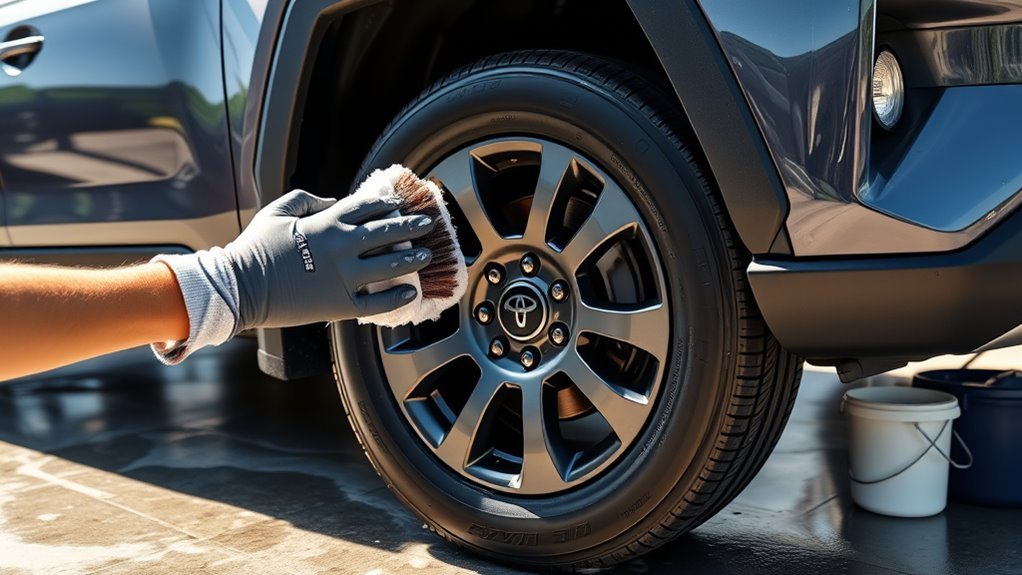
Start by brushing away loose dirt and debris so the cleaner can reach the rubber surface. Use a dedicated tire cleaner to break down oils and old protectant, scrubbing the sidewalls with a soft brush. Rinse thoroughly and let the tires dry completely before applying any UV protectant to avoid streaking and uneven coverage.
Remove Loose Dirt
Brush off loose grit and grime before you apply any protectant so the product can bond properly to the rubber. You’ll want to make tire maintenance a simple ritual: use a soft brush or microfiber cloth to sweep away pebbles, road dust, and flaky residue from the sidewalls and tread edges. Focus on quick, deliberate strokes that dislodge surface contaminants without abrading the rubber. After brushing, rinse thoroughly with water to carry off loosened particles and any soap traces that could block adhesion. Let the tires air-dry fully before the next step—never apply protectant to a wet surface. Consistent dirt removal not only readies the rubber for treatment but also liberates you from premature wear, keeping your RAV4’s tires healthier longer.
Use Dedicated Tire Cleaner
Once you’ve cleared loose grit from the sidewalls, apply a dedicated tire cleaner to remove embedded grime and any leftover dressings so your protectant can bond properly. You’ll see the tire cleaner benefits immediately: surfactant-based formulas break down old dressings, oil, and road film so UV protectants adhere evenly. When choosing products, pick a cleaner labeled safe for rubber and follow the manufacturer’s instructions—concentration and dwell time matter. Clean tires every few weeks or always before applying a protectant to maximize longevity and performance. Use a soft brush to agitate stubborn deposits, targeting treads and sidewalls without scrubbing aggressively. By preparing the surface correctly, you free your RAV4’s tires to accept UV protection that lasts.
Rinse And Dry Thoroughly
Thoroughly rinse each tire with clean water to remove loose dirt, grime, and brake dust so the protectant can bond to bare rubber; use a soft brush or sponge to work at stubborn deposits, paying attention to sidewalls and tread edges. After that, wipe each tire completely with a microfiber towel so moisture won’t interfere with adhesion. Use firm, deliberate strokes and check lug areas and grooves for trapped water. Then let the tires air dry a few minutes in the shade to guarantee no residual dampness before applying your UV protectant. These cleaning techniques are core to reliable tire maintenance: they free the rubber from contaminants, improve protectant performance, and extend tire life so you stay free from premature wear.
Apply Tire Protectants: Step-by-Step for Lasting UV Defense
Before you apply any product, make sure the tires are completely clean and dry so the protectant bonds properly. Use a petroleum-free formula and an applicator pad to spread an even, thin layer over the sidewalls, avoiding overspray. Reapply every 3–5 weeks in summer and keep the RAV4 parked in shade or under a breathable cover to extend protection.
Prep Tires Thoroughly
Start by washing your tires with soap and water to remove dirt, brake dust, and old dressing so the protectant can bond to a clean surface. You’ll want spotless sidewalls and tread edges—use a stiff brush and rinse thoroughly. Choose a petroleum-free UV protectant to protect rubber longevity and support responsible tire maintenance; petroleum formulas can swell and degrade compounds. Instead of spraying, load an applicator pad with product so you control placement and avoid waste. Work methodically, covering each section and wiping excess to prevent sling. Let the surface dry fully before driving. Reapply every 3–5 weeks during strong sun, and inspect regularly for cracking or drying. Consistent prep and checks keep your RAV4’s tires resilient and free.
Apply Protectant Evenly
Once your tires are clean and dry, use an applicator pad to work the protectant into the sidewalls and tread edges, moving in small, overlapping passes so every inch gets covered. You’ll avoid overspray by never spraying directly onto the tire; that preserves nearby surfaces and prevents residue buildup. Work in shade or during cooler hours so the product spreads smoothly without premature drying. Apply with intention — even coverage equals lasting UV defense and a liberated sense of care.
- Use firm, consistent pressure and follow tire dressing techniques that reach creases and lettering.
- Check for missed spots under light; rework any thin areas immediately.
- Keep a microfiber cloth handy to remove excess and guarantee clean lines.
These UV protection methods give you control and durable results.
Maintain Regular Reapplications
Schedule reapplications every 3–5 weeks to keep the protective layer active and guard against UV-related drying and cracking. You’ll clean tires with soap and water first so the protectant adheres; dirt undermines protective benefits and shortens effort payoff. Use a dedicated applicator to spread product evenly, avoiding overspray on rims and paint while ensuring full coverage for consistent tire longevity. Pick a petroleum-free formula like 303 Protectant to prevent chemical breakdown of rubber and extend useful life. Keep a simple calendar reminder and inspect sidewalls monthly; even well-treated tires can start drying after about four years and may need replacement. Regular, disciplined reapplication preserves freedom from frequent repairs and maximizes your RAV4’s reliability.
Best UV Protectants for RAV4 Tires (303, McKee’s, Petroleum-Free)
If you want to keep your RAV4’s tires from cracking and fading in strong sun, choose a proven protectant like 303 or McKee’s 37 and avoid petroleum-based formulas that can speed rubber aging. You’ll protect rubber and assert control over your vehicle’s longevity. For clear tire maintenance and product comparisons, pick petroleum-free options—303 Protectant gives reliable UV defense; McKee’s 37 Gloss Tire Gel SiO2 Enhanced adds durable protection with a sleek finish. Both help preserve appearance and extend tire life in sunny climates.
- 303 Protectant: petroleum-free, strong UV blockers, conservative sheen for a natural look.
- McKee’s 37 SiO2 Gel: long-lasting, glossy finish, repels UV and contaminants effectively.
- Petroleum-free alternatives: avoid distillates that can accelerate rubber aging; choose silicone or SiO2 formulations.
You’ll want to prioritize non-petroleum chemistries and trusted brands to maintain freedom from frequent tire replacements while keeping performance and aesthetics intact.
How Often to Reapply by Climate and Parking Type
Because UV exposure and parking habits directly affect how quickly tire protectants break down, you should tailor reapplication intervals to your climate and where you park. If you leave your RAV4 outdoors in a sunny climate, reapply every 3–4 weeks to preserve tire longevity and prevent UV-driven cracking. In moderate climates with partial shade, aim for every 4–6 weeks; that balances protection with effort. If you park primarily in a garage, a 6–8 week cadence usually keeps protectants effective. After any frequent washing, reapply immediately, since soaps can strip protective layers and expose rubber to sun damage. Factor in seasonal changes: increase frequency in summer, reduce it in low-UV months, but don’t skip entirely. Also respect product labels—some advanced formulations offer longer coverage and can extend intervals. By matching reapplication to exposure and routine, you maintain freedom from frequent repairs and keep your tires functioning confidently and safely.
Parking, Covers, and Shade: Physical Strategies for RAV4 Tires
You’ve set a reapplication rhythm based on sunlight and parking habits, but physical tactics add another layer of protection you can control. Use deliberate parking strategies to keep your RAV4’s rubber in tire shade whenever possible: park under trees, awnings, or inside a garage to cut UV exposure and slow aging. Rotate where you park so no single tire bears constant sun.
- Park in shaded spots or garages first; if none exist, face the vehicle so tires get less direct sun during peak hours.
- Use a breathable car cover for extended parking to block UV and contaminants while allowing moisture to escape.
- Inspect tires routinely for dryness or cracking; move the vehicle periodically to equalize exposure and address issues quickly.
These physical steps free you from passive wear—you’re actively reducing UV stress, extending tire life, and keeping your RAV4 ready for the open road.
Trade-Offs: Manufacturer Guidance, Ingredient Risks, and Appearance vs. Longevity
While protecting tires from sun and contaminants seems straightforward, you’ll face trade-offs between manufacturer guidance, ingredient risks, and how products affect appearance versus longevity. Manufacturers warn that tire age starts at manufacture, so treatments won’t stop inherent aging; you’ll balance that against cosmetic benefits. Many protectants use petroleum distillates that can draw oils from rubber, a core tire treatments risks to weigh. Apply sparingly—monthly or quarterly—to avoid buildup, smearing, and false confidence.
| Benefit | Concern |
|---|---|
| Enhanced shine | Petroleum-based drying |
| Perceived protection | Accelerated aging risk |
| Easier cleaning | Residue buildup |
| Long-lasting formulas (e.g., SiO2 blends) | Requires maintenance, ozone damage persists |
You want freedom from unnecessary worry: choose water-based or SiO2 products, follow manufacturer limits, clean tires before treating, and prioritize longevity over mirror-like shine. That’s how you reclaim control without sacrificing safety.
Frequently Asked Questions
What Protects Tyres From UV?
Tire coatings and protective films shield tyres from UV; you’ll also use petroleum-free UV protectants, wash regularly, reapply every few weeks, and consider breathable covers so your tires stay resilient and you keep driving free.
Conclusion
Protecting your RAV4’s tires from UV is simple: clean, treat, and shelter. You’ll boost safety and tire life without sacrificing looks. Yes, some worry protectants attract dust or change sheen — use a petroleum-free product and buff lightly to avoid greasy buildup. Reapply more often in hot, sunny climates and park in shade or use a cover when you can. A little routine care prevents cracking, uneven wear, and costly replacements down the road.

Related Articles

Upsizing Wheels on a Toyota RAV4: Pros, Cons, and Considerations
Boost your Toyota RAV4's performance with larger wheels, but discover the hidden trade-offs that could impact your ride before you decide.
Read More
Can I Change Tire Size on My Toyota RAV4? Rules and Recommendations
Are you considering changing the tire size on your Toyota RAV4? Discover the essential rules and recommendations before making a decision.
Read More
What to Do If the TPMS Light Comes On in Your RAV4
Understand the steps to take when the TPMS light illuminates in your RAV4, as overlooking it could lead to serious tire problems.
Read More