
How to Fix a Slow Tire Leak on a RAV4: Diagnosis and Repair
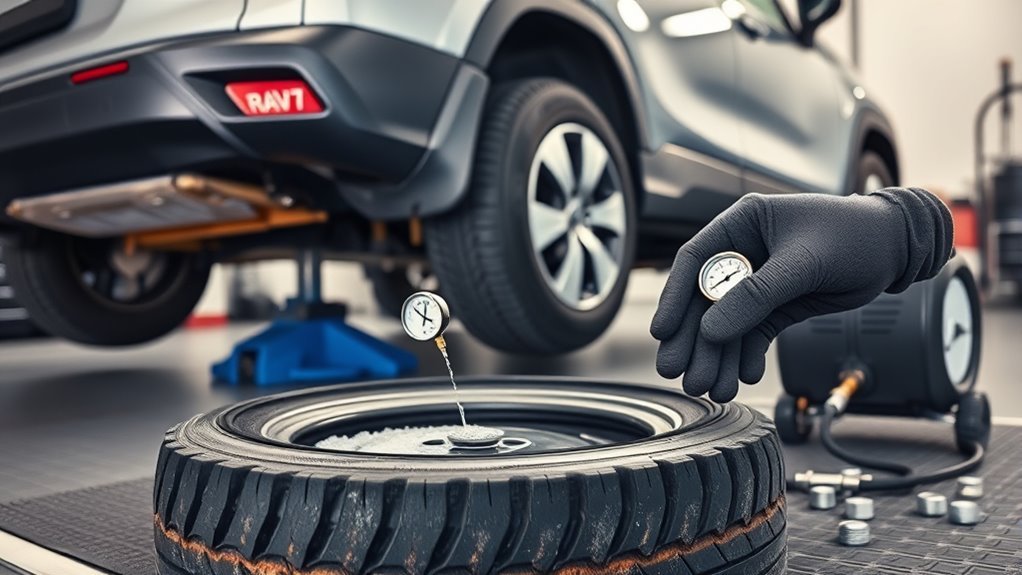
To fix a slow tire leak on your RAV4, start by checking for air pressure loss, visible damage, or uneven wear. Use soapy water to find leaks and inspect valve stems for issues. For small punctures, a tire repair kit works well, while larger punctures may require professional help. Regular maintenance is key to preventing leaks. Want to understand the common causes and best repair techniques? There’s more useful information to explore.
Identifying Slow Tire Leak Symptoms
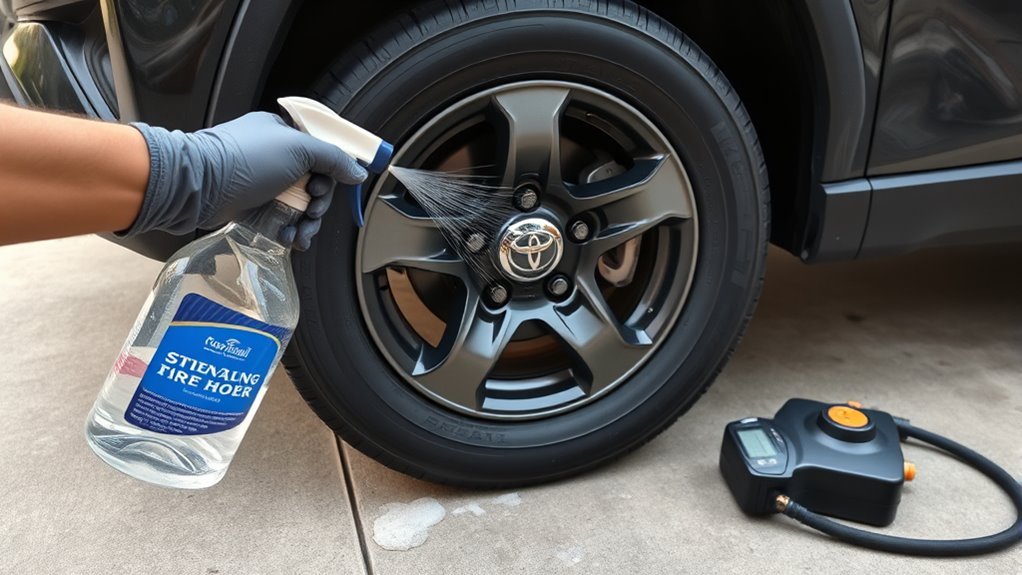
When you notice a gradual loss of air pressure in your RAV4 tires, it’s crucial to identify the symptoms of a slow tire leak. A typical slow leak can cause a drop of about 1.5 PSI per day, often going unnoticed without regular checks. Look for physical signs like visible damage, punctures, or uneven wear patterns on the tire surface. These may indicate potential air loss.
Also, inspect the valve stems for corrosion or blockages, as these are common culprits in slow leaks. For effective leak detection, apply soapy water to suspected areas; escaping air will form bubbles, revealing the source of the leak. Finally, pay attention to dashboard warning lights, such as the Tire Pressure Monitoring System (TPMS), which may illuminate when tire pressure drops considerably, signaling it’s time for immediate inspection. Identifying these symptoms early can help you maintain ideal tire performance and safety.
How to Diagnose Tire Leaks on Your RAV4
After spotting the symptoms of a slow tire leak, the next step is diagnosing the issue accurately. Start with a visual inspection of your tire, focusing on the tread area for punctures or embedded objects. If you suspect a leak, mix a soapy water solution and apply it to the affected areas. Look for bubbles; they indicate escaping air and help you pinpoint the leak’s location. Don’t forget to check the valve stem for any damage or corrosion, as leaks can occur here too. For a thorough assessment, submerge the tire in water—this can reveal hidden leaks that might not show up during a surface inspection. Finally, regularly monitor your tire pressure; losing about 1.5 PSI per day is a clear sign of a slow leak that needs your immediate attention.
Effective DIY Repair Techniques for Small Leaks
When addressing small tire leaks, you’ll find several effective repair methods at your disposal. Tools like tire patches, plugs, and a valve stem replacement kit can make the process straightforward and cost-effective. Understanding these common repair techniques will help you maintain your RAV4’s tire performance efficiently.
Common Repair Methods
To effectively tackle small leaks in your RAV4 tires, you can employ several DIY repair techniques that deliver reliable results. Start with a tire puncture repair kit, which includes a reamer, plug, and sealant, ideal for leaks in the tread area. Use the soapy water method to locate leaks—apply the mixture to suspect areas and watch for bubbles. If the leak’s from the valve stem, replacing the valve core or entire stem is simple and typically requires just pliers. For temporary fixes, consider tire sealant, which can seal punctures up to ¼ inch. Finally, conduct regular inspections and tire pressure checks, especially during seasonal changes, to catch small leaks before they escalate.
Tools Required for Repairs
Gathering the right tools is essential for effectively repairing small leaks in your RAV4 tires. Start with a tire patch kit, which includes patches and adhesive necessary for tire patching techniques. You’ll also need tire levers to help remove the tire from the rim and a portable inflator to restore proper pressure after repairs. For leak detection, carry soapy water; applying it to suspected areas reveals leaks through bubbling. A valve stem tool is vital for replacing damaged valve stems, ensuring the new stem is securely fastened. After completing repairs, always check the tire pressure and inflate to the manufacturer’s recommended PSI. With these essential tools, you’re well-equipped to tackle those pesky leaks effectively.
When to Call in the Pros for Tire Repairs?
If you’re facing a slow tire leak and lack the tools or knowledge to assess it, it’s time to seek professional help. Complex damage, especially near the sidewall or involving multiple punctures, requires expert evaluation to guarantee safety. Regular evaluations by certified technicians not only address immediate issues but also enhance your tires’ longevity and performance.
When to Seek Expertise
While minor tire leaks might seem manageable, knowing when to call in the pros is essential for your safety. If you spot a significant drop in tire pressure—over 25% from the recommended PSI—seek expert help immediately to avoid potential blowouts. Damage near the sidewall or extensive issues typically necessitate professional consultations for tire replacement options. If DIY methods, like using soapy water to find leaks, don’t work, a specialist can conduct a thorough inspection for hidden damage. For punctures in the tread larger than ¼ inch or multiple punctures, it’s advisable to consult a tire expert for proper repair or replacement. Regular inspections by certified technicians can also prevent more extensive repairs down the line.
Complex Damage Assessment
Evaluating complex tire damage can be intimidating, especially when it involves potential safety risks. If you notice a nail or puncture near the sidewall, it’s vital to consult a professional, as repairs here are often unsafe and may require tire replacement. For issues like complex wheel rim damage—bends or cracks—an expert tire rim evaluation is essential to guarantee integrity and prevent future leaks. If the tire bead seal looks compromised, professionals should remount the tire for an airtight fit. Persistent slow leaks after DIY attempts might point to deeper issues; an internal damage assessment by a tire specialist is necessary. If your tire loses pressure markedly—more than 1.5 PSI daily—don’t hesitate to seek professional help.
Safety Risk Evaluation
A significant drop in tire pressure or a hissing sound indicates an urgent need for assessment. If you encounter either, evaluate the risk of a blowout and consider professional help immediately. Driving on a slow leak for more than 180 km can lead to dangerous tire failure, making a professional inspection crucial. Pay special attention if the leak is near the tire’s sidewall or if there’s visible damage; these situations often necessitate repair or replacement for your safety. Regular monitoring of tire pressure can help spot slow leaks, but if DIY fixes fail, consulting an expert is wise. If you lack the tools or expertise, calling a professional guarantees safety precautions are met and reduces the risk of accidents.
Understanding Common Causes of Tire Leaks
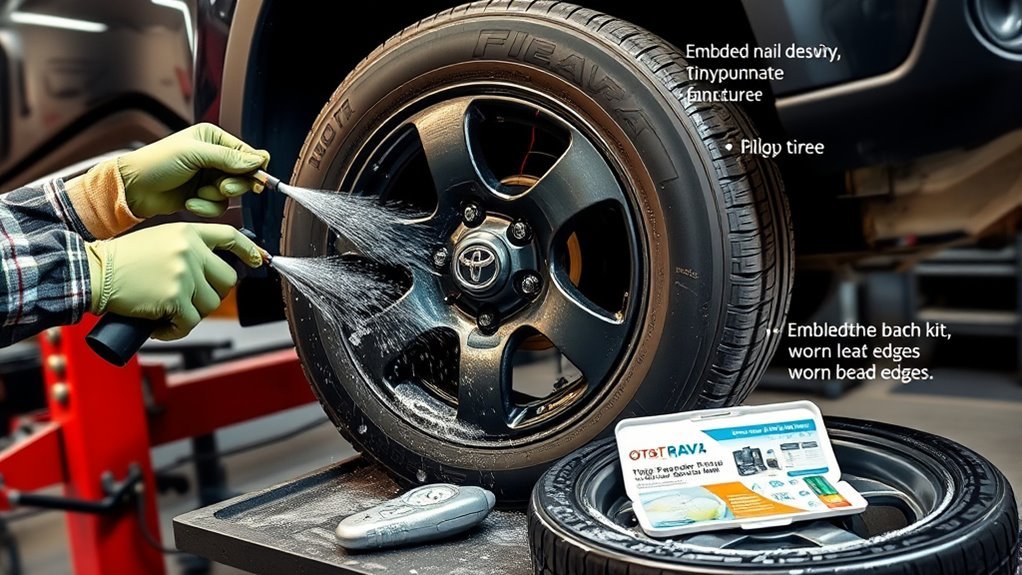
Tire leaks can stem from several common issues that every RAV4 owner should understand. Identifying these causes early can save you time and money, while enhancing your driving experience.
| Cause | Description | Prevention Tips |
|---|---|---|
| Punctures | Sharp objects like nails create small tread holes. | Regularly inspect tires. |
| Valve Stem Damage | Age or impact can cause air escape at connections. | Perform valve maintenance. |
| Tire Bead Leaks | Debris or bent wheels compromise the seal. | Keep wheels clean and check. |
| Sidewall Damage | Temperature changes can worsen leaks. | Monitor for visible cracks. |
Maintaining Tire Health to Prevent Future Leaks
To maintain ideal tire health and prevent future leaks, regular checks and maintenance practices are essential. Start by checking your tire pressure at least once a month, as tires naturally lose about 1 PSI monthly. This proactive approach helps catch slow leaks early. Rotate your tires every 5,000 miles to guarantee even wear and extend their life, reducing the risk of leaks from uneven patterns.
Regularly inspect valve stems for damage or corrosion, as these are common sources of slow leaks that can easily be overlooked. Keep your tires clean and free of debris around the bead seal area; contaminants here can compromise the seal and increase leak risk. Finally, replace tires after 10 years or sooner if tread wear is significant—aging rubber can develop cracks, making them more vulnerable to slow leaks. Prioritizing tire maintenance will empower you to drive with confidence and safety.
Frequently Asked Questions
Can a Very Slow Tire Leak Be Fixed?
Yes, a very slow tire leak can often be fixed. You can apply tire maintenance tips and consider DIY repairs if the puncture’s less than ¼ inch, especially in the tread area. Always prioritize safety!
Can a Slow Leak Be Easily Repaired?
Yes, a slow leak can often be easily repaired. Use leak detection methods to identify the source, then apply tire maintenance tips like patching small punctures or replacing faulty valve stems for effective, cost-efficient solutions.
How Much Does It Cost to Fix a Slow Leak in a Tire?
Fixing a slow tire leak typically costs between $10 and $50, depending on the repair needed. Utilize tire maintenance tips and leak detection methods to identify issues early, ensuring your safety and reducing expenses.
Conclusion
To sum up, addressing a slow tire leak on your RAV4 can save you time and money down the road. By diagnosing the issue early and using effective DIY techniques, you can keep your tires rolling smoothly. Remember, tires are the unsung heroes of your vehicle; neglecting their health can lead to bigger problems. If the leak persists despite your efforts, don’t hesitate to call in the pros. Keeping your tires in top shape guarantees safety and performance on every journey.

Related Articles

Upsizing Wheels on a Toyota RAV4: Pros, Cons, and Considerations
Boost your Toyota RAV4's performance with larger wheels, but discover the hidden trade-offs that could impact your ride before you decide.
Read More
Can I Change Tire Size on My Toyota RAV4? Rules and Recommendations
Are you considering changing the tire size on your Toyota RAV4? Discover the essential rules and recommendations before making a decision.
Read More
What to Do If the TPMS Light Comes On in Your RAV4
Understand the steps to take when the TPMS light illuminates in your RAV4, as overlooking it could lead to serious tire problems.
Read More