
How to Check Tire Age on a Toyota RAV4: Locate the DOT Code
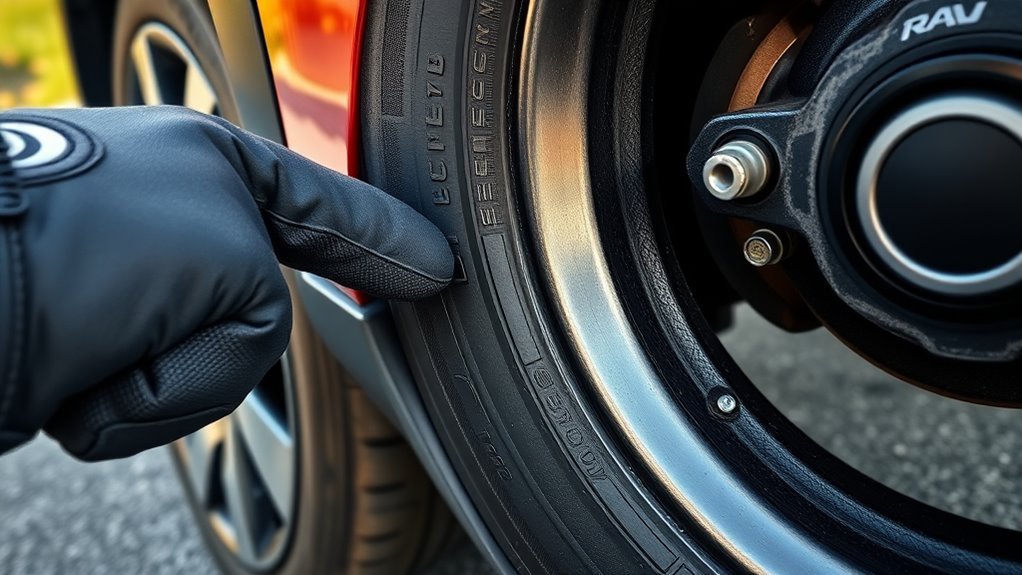
To check the tire age on your Toyota RAV4, locate the DOT code on the tire’s sidewall near the rim. Clean the area for clear visibility, and look for the “DOT” followed by letters and numbers. The last four digits indicate the week and year of manufacture. For instance, “2319” means it was made in the 23rd week of 2019. Understanding this code is essential for evaluating tire safety and lifespan, so you might want to explore more details on tire conditions and safety.
How to Locate the DOT Code on Your Toyota RAV4 Tires
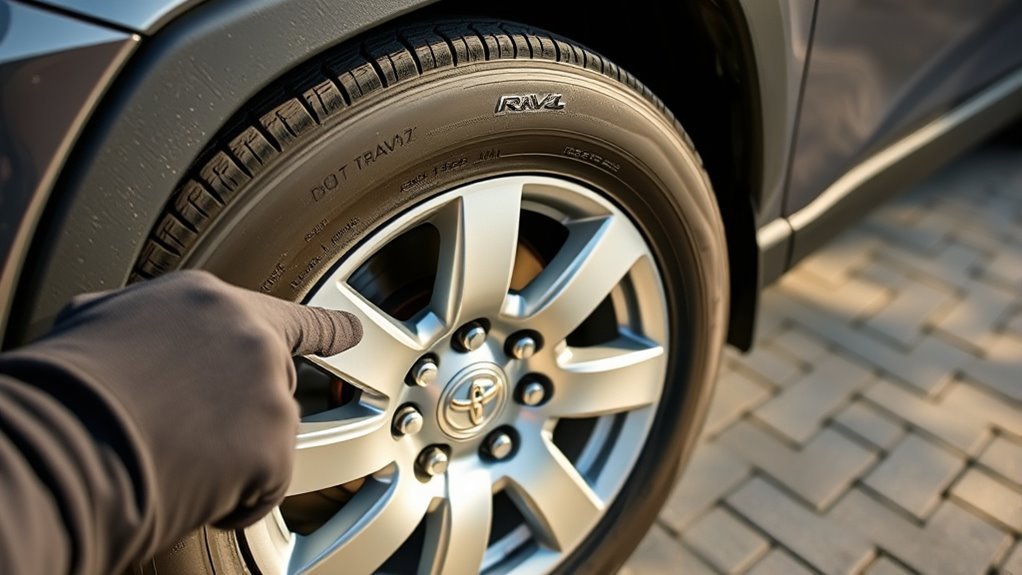
To guarantee your safety on the road, locating the DOT code on your Toyota RAV4 tires is crucial. Start by inspecting the sidewall of each tire, typically near the rim. Look for the letters “DOT,” followed by a series of numbers and letters. The DOT code may be embossed or slightly raised, so make sure it’s free from obstructions like dirt or debris. If you can’t spot it from one angle, examine multiple sides of the tire.
This code contains important information, including the manufacturer’s plant code, tire size, and the last four digits indicating the week and year of manufacture. These details are essential for tire safety checks and compliance assessments, especially concerning potential recalls. Regularly checking this code is one of the best tire maintenance tips you can follow to guarantee your tires remain safe and compliant on the road.
Decoding the DOT Code: Understanding Tire Age and Importance
To guarantee your safety, you need to locate and decode the DOT code on your tires. The last four digits reveal the week and year of manufacture, which is essential for determining tire age. Understanding this information helps you assess whether your tires are still safe for use or nearing the end of their lifespan.
Locating the DOT Code
Finding the DOT code on your Toyota RAV4’s tires is vital for evaluating their age and safety. Start with a sidewall inspection; the DOT code is typically located near the rim. Look for the “DOT” marking, followed by a series of letters and numbers. The last four digits are critical—these indicate the manufacturing date. The first two digits represent the week, while the last two signify the year. For instance, if the code ends with “2319,” the tire was made in the 23rd week of 2019. Regularly checking this code guarantees your tires stay within the recommended 6-10 year lifespan, helping you make informed decisions about tire replacement for peak performance and safety.
Interpreting Tire Age Codes
Decoding the DOT code is essential for understanding your tire’s age and ensuring safety on the road. The last four digits of the DOT code reveal the week and year of manufacture; for example, “4023” indicates the 40th week of 2023. Familiarizing yourself with these codes helps assess tire durability—critical for effective performance. Tires made before 2000 may have a confusing three-digit code, while post-2000 tires consistently use four digits. It’s important to replace tires every 6 to 10 years, regardless of tread depth, due to rubber degradation. Regularly inspecting the DOT code allows you to avoid aged tires, ensuring proper maintenance and enhancing your vehicle’s safety and efficiency.
The Importance of Tire Age for Safety and Performance
Understanding tire age is essential for ensuring both safety and performance in your Toyota RAV4. Tires naturally degrade over time, and even with sufficient tread, older tires can pose significant safety risks. The last four digits of the DOT code indicate when your tires were manufactured, helping you assess their age. Generally, you should replace tires every 6 to 10 years, as rubber deterioration increases the likelihood of blowouts. Signs of aging include drying, cracking, and reduced flexibility, all of which can drastically compromise your vehicle’s handling and braking. The NHTSA recommends inspecting tires at 7 years of age, underscoring the need for regular checks. By understanding and monitoring tire age, you not only safeguard your vehicle’s performance but also protect yourself and others on the road. Prioritizing tire condition can liberate you from the hazards of tire failure.
How to Use the DOT Code to Assess Tire Condition
To assess your tires’ condition accurately, you’ll need to focus on the DOT code printed on the sidewall of each tire. Look for this code near the rim; you might need to check multiple sides for visibility. The last four digits indicate the tire’s manufacturing date, allowing you to determine its age. For instance, “4023” means it was made in the 40th week of 2023. Regularly checking your tires is vital since the NHTSA recommends replacement every 6 to 10 years, regardless of tread depth. If you find tires without a DOT code, be cautious—they may be illegal for public road use and pose safety risks. Understanding the DOT code is one of the essential tire maintenance tips that empowers you to make informed decisions during safety inspections, ensuring peak performance and safety for your Toyota RAV4.
What People Get Wrong About Tire Age and Safety?
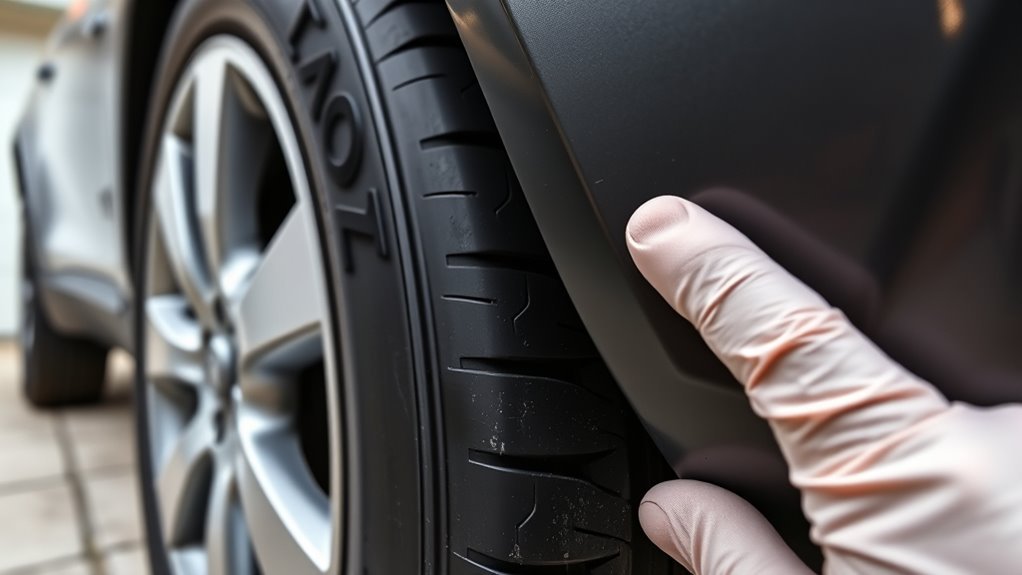
How often do you think about the age of your tires? Many drivers fall victim to tire misconceptions that can jeopardize safety. Just because the tread looks good doesn’t mean the tires are safe. Here are some common myths:
Many drivers overlook tire age, assuming good tread equals safety—don’t fall for this common myth.
- Tires can degrade even without visible wear.
- Age matters, even if tires aren’t used much.
- The last four digits of the DOT code are vital for safety assessments.
- The NHTSA recommends replacing tires every 6 to 10 years.
Ignoring these points can lead to dangerous blowouts or failures. It’s essential to regularly check tire age and not just rely on tread depth. By understanding these safety myths, you empower yourself to make informed decisions about your tires, ensuring a safer driving experience. Don’t let outdated beliefs compromise your safety on the road.
What to Do When Your Tires Are Too Old or Unsafe
When your tires are too old or unsafe, taking immediate action is essential for your safety. Regularly check the last four digits of the DOT code to determine their age; if they’re 6 to 10 years old, consider tire replacement options. Signs of aging, like cracking or discoloration, mean it’s time to replace them right away. Ignoring these indicators can jeopardize your safety on the road.
When buying used tires, always verify the DOT code to avoid acquiring unsafe products. Consult a tire professional for safety inspection tips, ensuring your tires meet performance standards. Routine inspections can help you identify potential issues before they become critical, allowing for timely replacements. Prioritize your safety by staying vigilant about your tire condition and acting promptly when necessary. Your vehicle’s performance relies on healthy tires, so don’t hesitate to take action.
Frequently Asked Questions
Can I Find the DOT Code on All Tire Brands?
Yes, you can find the DOT code on most tire brands. For effective tire maintenance, check this code regularly; it’s an essential safety tip to guarantee your tires are in peak condition.
How Often Should I Check My Tire Age?
You should check your tire age every six months. Regularly inspecting your tires guarantees adherence to tire maintenance tips and tire safety guidelines, keeping your ride smooth and empowering your journeys on the open road.
Does Tire Age Affect Warranty Coverage?
Yes, tire age can affect warranty coverage. Most warranties have limitations related to tire deterioration over time. If your tires exceed recommended age limits, you might find your warranty claims denied or limited.
Can I Replace Just One Tire Based on Age?
You can replace just one tire based on age, but remember, “a chain is only as strong as its weakest link.” Follow tire replacement guidelines and tire safety tips to guarantee peak performance and safety.
What Other Factors Affect Tire Safety Besides Age?
Tire safety isn’t just about age; consider tire tread depth and inflation pressure. Worn tread reduces grip, while improper inflation affects handling and wear. Regular checks guarantee peak performance and enhance your driving experience.
Conclusion
Just like a tree’s rings tell its age, your tires reveal their journey through the DOT code. Ignoring their age is like sailing a ship with frayed sails; you risk your safety and performance. Don’t let the passage of time cloud your judgment. Regularly check the DOT code, and if your tires show signs of age, it’s time to replace them. Keeping your RAV4’s tires fresh is like nurturing a sturdy tree—essential for a safe ride through life’s twists and turns.

Related Articles

Upsizing Wheels on a Toyota RAV4: Pros, Cons, and Considerations
Boost your Toyota RAV4's performance with larger wheels, but discover the hidden trade-offs that could impact your ride before you decide.
Read More
Can I Change Tire Size on My Toyota RAV4? Rules and Recommendations
Are you considering changing the tire size on your Toyota RAV4? Discover the essential rules and recommendations before making a decision.
Read More
What to Do If the TPMS Light Comes On in Your RAV4
Understand the steps to take when the TPMS light illuminates in your RAV4, as overlooking it could lead to serious tire problems.
Read More