
Does AWD Require All Tires the Same Size on a RAV4?
You shouldn’t fit mismatched-diameter tires to a RAV4 AWD because even small differences force the drivetrain and sensors to compensate, causing micro‑slip, torque imbalances, and premature wear. Ideally all four tires match circumference and tread depth within about 1/8–1/4 inch (or keep tread differences under 2–4/32 inch); if one tire is new it may need shaving or replacement. RAV4 Prime’s electronics offer slight flexibility, but matching axle diameters remains critical—keep going to learn practical measuring and repair options.
Can You Replace One Tire on a RAV4 AWD? Quick Answer and Rule of Thumb
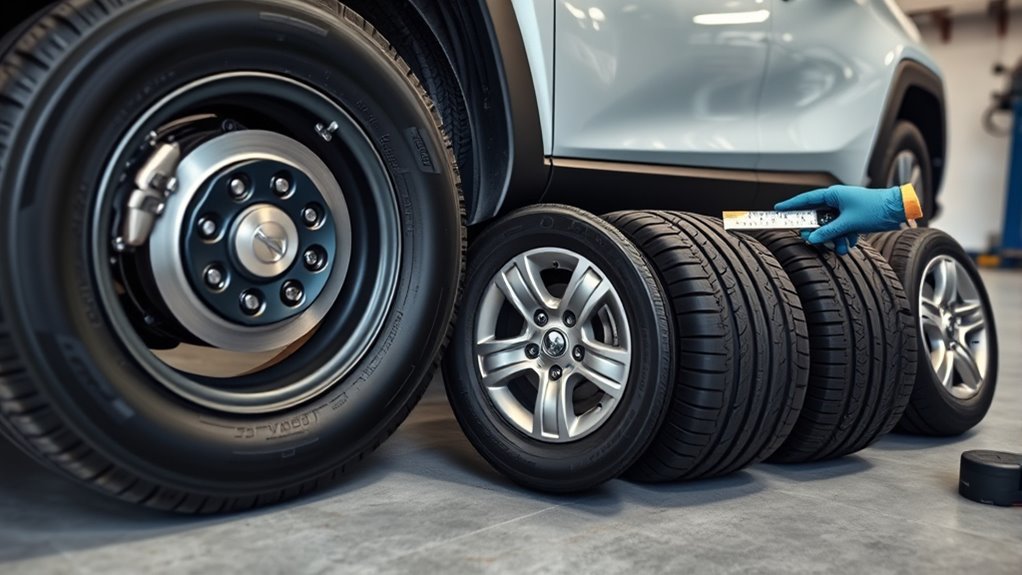
Wondering if you can replace just one tire on a RAV4 AWD? You shouldn’t, as a general rule: mismatched tire diameters strain the drivetrain. You want freedom from unexpected failures, so follow practical tire replacement guidelines. AWD maintenance tips call for all four tires to have closely matched tread depths and sizes to prevent stress on the differential and transfer case. Aim to keep tread depth differences within 2/32 inch across tires; exceeding that increases wear and drivability issues. If circumstances force a single-tire replacement, get the new tire shaved to match the remaining tires’ tread depth, reducing the diameter mismatch and associated torque imbalances. Always consult your owner’s manual for model-specific guidance, since some RAV4 AWD systems have unique requirements. You’ll protect the drivetrain and preserve control by adhering to these concise, technical steps rather than risking liberty-robbing repairs later.
How Different Tire Diameters Damage AWD Systems
If your tires have unequal rolling circumferences, the AWD system forces different axle speeds and you’ll introduce torque imbalances. That mismatch makes the center and side differentials work harder, accelerating wear and risking overheating or seal failure. Even small diameter differences can produce drivability symptoms like shuddering that signal differential overload and pending drivetrain damage.
Unequal Rolling Circumferences
Because AWD systems rely on equal rolling rates, even small differences in tire circumference—on the order of 1/8 inch—force the drivetrain to compensate, increasing stress on differentials, transfer cases, and axles. You’ll want strict tire matching and attention to rolling resistance to prevent persistent torque imbalances that wear components and degrade handling. Unequal rolling circumferences create continuous micro-slip between driven wheels, induce axle windup, and make electronic controls work harder, shortening component life and reducing your freedom to drive without fear of costly failures.
- Check tire diameters and tread depth regularly.
- Rotate and replace in axle-matched sets, not individually.
- Use a caliper or tape to confirm circumference within manufacturer tolerances.
Differential Overload and Wear
When you run different-diameter tires on an AWD RAV4, the drivetrain forces the differential to constantly compensate for mismatched wheel speeds, producing uneven power distribution and localized overload. You’ll introduce differential stress as the unit fights small circumference gaps—sometimes as little as 1/8 inch—to synchronize front and rear axles. That ongoing battle causes binding, shuddering, and accelerated wear on gears and bearings. Heat builds in the transfer case and axles, eroding lubricants and raising failure risk. If you want freedom from roadside breakdowns, match tire sizes to maintain balanced loads across the differential and reduce torque conflict. Proper matching preserves drivetrain longevity, keeps operation smooth, and minimizes costly repairs born from avoidable mechanical strain.
How Much Tread/Circumference Difference Is Safe (In Inches and %)
When checking your RAV4’s tires, keep circumference differences to about 1/4–1/2 inch (ideally no more than 1/8 inch) to avoid driveline strain. Aim for remaining tread depths within roughly 2/32–4/32 inch across all tires and no more than about 30% relative difference between tires. These inch and percent limits help maintain even rolling radii, consistent handling, and reduce differential wear.
Recommended Tread Difference
If you want to protect the RAV4’s AWD driveline, keep tire circumference differences very small — ideally within 1/4 to 1/2 inch (roughly 0.25–0.5 in), with an absolute maximum variation of about 3% in total circumference; even a 1/8‑inch diameter mismatch can introduce noticeable stress over time. You should monitor tread depth and tire wear regularly and replace or rotate tires before differences exceed recommended limits. Aim for no more than 2/32 inch variation in tread depth across tires to maintain balanced rolling diameters and reduce differential strain.
- Check tread depth and tire wear monthly; act at signs of uneven wear.
- Replace pairs or all four to restore uniform circumference; don’t mix sizes.
- Use consistent inflation and rotation to preserve equal rolling speeds.
Safe Circumference Variation
You’ve already seen why matching tread depths and replacing mismatched tires matters; now let’s quantify how close circumferences need to be. For a RAV4 AWD, keep circumference differences between tires to about 1/4 to 1/2 inch max; even 1/8 inch can cause cumulative drivetrain wear. That translates roughly to manufacturers’ guidance of staying within ~3% circumference variance. Maintain tread depth within 2/32 inch across tires to avoid drivability issues and binding in the differential and transfer case. Monitor tire pressure and account for seasonal changes that affect inflation and effective circumference. Inspect and rotate tires proactively; when variability exceeds these limits, replace or match tires to liberate your drivetrain from unnecessary strain and preserve longevity.
Percent Difference Guidelines
Because small perimeter gaps add up through the AWD system, aim to keep tire circumference differences extremely tight: ideally within 1/4 inch (≈0.25″) and no worse than 1/2 inch (≈0.5″) between any two tires. You’ll also monitor percent difference: keep diameter variation below about 3% and tread-depth gaps under 2/32″ to avoid drivetrain strain. Even 1/8″ mismatches can cause progressive wear, so don’t assume small equals safe.
- Check percent difference regularly with a circumference tape or caliper.
- Replace or rotate to maintain tire compatibility across axle pairs.
- Prioritize uniform tread depth to protect the differential and transfer case.
Stay proactive: consistent measurements free you from costly repairs and keep the AWD system liberated to perform.
Measure and Match Tires: Step-by-Step for RAV4 AWD
When checking your RAV4 AWD, measure and compare all four tires so they match within about 1/4–1/2 inch in diameter and no more than 2/32 inch difference in tread depth. You’ll perform precise tire maintenance steps to avoid driveline wear and minimize performance impact.
| Step | Action |
|---|---|
| 1 | Inspect manufacturer size on sidewall |
| 2 | Measure diameter with tape measure |
| 3 | Check tread depth with gauge |
| 4 | Verify and adjust tire pressure |
| 5 | Consult owner’s manual |
Measure diameter at multiple points; record the largest and smallest values per tire. Use a tread depth gauge at three positions across each tread, then note the maximum difference; keep it ≤ 2/32″. Adjust inflation to the recommended PSI before final readings, since pressure alters circumference. If any tire exceeds limits, plan matched replacement. These exact checks protect your AWD system, maintain consistent handling, and let you drive free of avoidable mechanical restriction.
When You Can Replace Two Tires Instead of All Four
After you’ve measured and matched all four tires, you can assess whether replacing only two tires will keep your RAV4 AWD safe and reliable. If tread wear on the existing pair is close to the new tires—within roughly 1/4 to 1/2 inch—you may replace only two, provided you confirm tire compatibility and consult your owner’s manual for model-specific limits. Install the new tires on the rear axle to preserve stability and reduce oversteer risk in slippery conditions. Monitor tread wear and rotate tires so the newer pair moves to the front after some use, promoting even wear across all four. Regular inspections of tread depth and condition are essential to avoid drivetrain strain and fault codes.
If tread depth matches within about 1/4–1/2″, you can fit two new tires—mount them on the rear and monitor wear.
- Verify tread depth differential before purchase
- Install new tires on the rear axle for stability
- Plan rotations to equalize tire wear and compatibility
Make decisions that liberate you from unnecessary cost while protecting handling, AWD components, and legal safety margins.
How Tire Shaving Works to Match a New Tire to Worn Tires
If you need to match new tires to partially worn ones on your RAV4, tire shaving trims the new tire’s tread to the same depth as the existing tires so their rolling diameters align. You’ll see tire shaving benefits immediately: reduced drivetrain stress, consistent traction, and predictable handling because tread depth and diameter are matched. A trained technician removes minimal rubber while preserving the original tread profile, keeping load distribution and contact patch geometry intact. The service typically runs $25–$35 per tire, making it a practical, cost-effective option versus replacing multiple tires prematurely. For AWD systems, uniform rolling diameter prevents torque steer and differential wear, so shaving supports system longevity and performance. You’ll want a shop that measures existing tread depth precisely, targets the same millimeters on the new tire, and documents the change. Follow-up balancing and alignment finalize the work. Use shaving when wear differences are moderate and legal tread depth limits remain respected.
How RAV4 Prime’s AWD Layout Changes Tire-Matching Rules
Because the RAV4 Prime uses an electronically managed AWD system instead of a mechanical center differential, you can be more flexible with tire replacements: the vehicle tolerates some variation between front and rear diameters thanks to its dual gasoline-electric power delivery and electronic torque control. You don’t have to match all four tires exactly as you would on a mechanical AWD, because the e-AWD separates front and rear torque management and compensates electronically. That said, you’ll preserve AWD performance and avoid undue wear by keeping tread depth and rolling circumference reasonably close.
- Prioritize matching axle diameters to minimize sensor and stability control intervention.
- Monitor tread depth and rotate tires to maintain balanced wear for consistent AWD performance.
- Use tire maintenance records to justify mixed-size choices and track lifespan.
You’re freed from strict same-size rules, but you’ll still control handling, efficiency, and longevity through careful measurement and upkeep.
Dealer Policies, Cost, and Liability: What Shops Will and Won’t Do
When you take a RAV4 to a dealer or shop, expect strict rules: many will insist on matching all four tires in size and tread depth for AWD models to limit drivetrain risk and potential liability. You’ll find dealer recommendations that prioritize drivetrain longevity and legal protection; shops often refuse single- or two-tire installs because mismatches produce uneven rotational speeds, increased wear, and potential differential stress. Cost factors shape advice: replacing all four tires upfront can be cheaper over time than staggered replacements that accelerate wear and invite repairs. Liability is real — shops that fit mismatched tires may be on the hook for resultant damage or safety incidents, so they document policies and require waivers when they deviate. You should consult specific dealer policies and follow prescribed tire maintenance intervals, rotating and measuring tread to avoid forced full replacements. That clarity empowers you to make economical, safety-focused choices without ceding control.
Frequently Asked Questions
How Much Difference in Tire Size Is Acceptable on AWD?
You should keep tire size differences under about 1/4 to 1/2 inch circumference (roughly ≤3%); otherwise you’ll risk uneven tire wear and compromised traction performance, stressing the AWD drivetrain and reducing overall vehicle reliability.
Do You Have to Replace All Four Tires on an AWD RAV4?
Yes — you should replace all four tires to protect the drivetrain. Embrace freedom: you’ll prolong AWD life by prioritizing tire rotation and matching tread wear, avoiding mismatched sizes that strain differentials and handling.
What Size Tires Are on a Toyota RAV4 AWD?
You’ll typically find 225/65R17 on a 2009 RAV4 AWD and 235/55R18 on the RAV4 Prime; follow tire specifications to preserve AWD performance, matching sidewall height, width, and load ratings for safe, liberated driving.
Can You Run Different Size Tires on AWD?
Absolutely not—you’ll wreck drivetrain harmony like a thunderclap; you’ll see uneven tire wear and a measurable performance impact, so don’t mix sizes long-term—match diameter and tread to protect AWD reliability and preserve driving freedom.
Conclusion
You can’t just swap one tire on a RAV4 AWD unless the new tire matches the others’ diameter within about 0.5–1%—otherwise the drivetrain takes strain and wear like a wrench in the gears. Measure tread depths and circumference, and match brand, model, and size or have a shop shave or replace tires so all axles match. For Prime hybrids, stricter rules apply. Play it safe: keep all four within spec or replace pairs front/rear.

Related Articles
Upsizing Wheels on a Toyota RAV4: Pros, Cons, and Considerations
Boost your Toyota RAV4's performance with larger wheels, but discover the hidden trade-offs that could impact your ride before you decide.
Read More
Can I Change Tire Size on My Toyota RAV4? Rules and Recommendations
Are you considering changing the tire size on your Toyota RAV4? Discover the essential rules and recommendations before making a decision.
Read More
What to Do If the TPMS Light Comes On in Your RAV4
Understand the steps to take when the TPMS light illuminates in your RAV4, as overlooking it could lead to serious tire problems.
Read More