Disclosure: As an Amazon Associate, we earn from qualifying purchases. If you click a link on this page and make a purchase, we may receive a small commission at no extra cost to you.
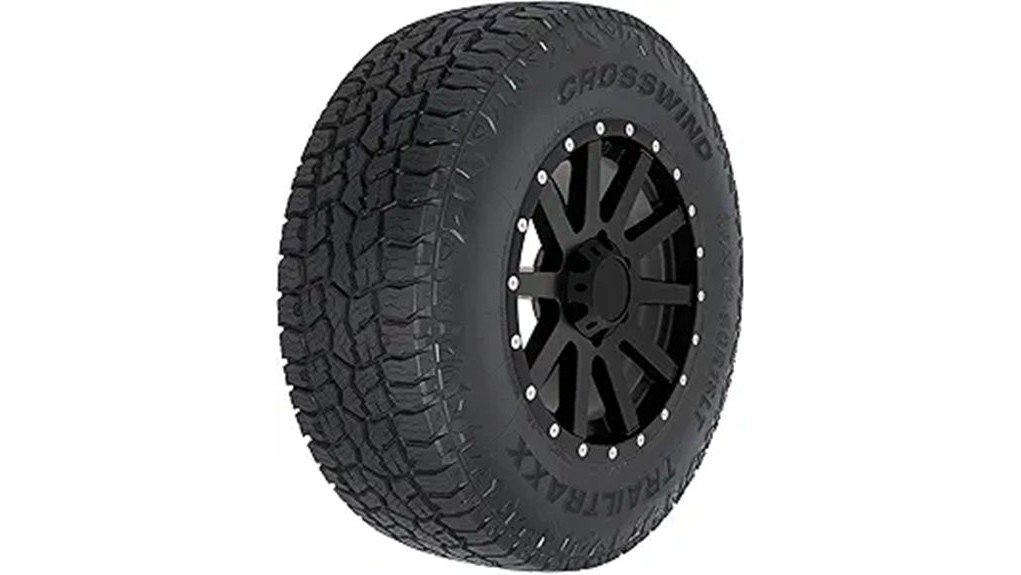
Choosing an all-terrain tire means balancing trail grip, winter traction, road comfort, load capacity, and cost. The Crosswind Trail Traxx 275/65R18 116T targets truck and SUV owners who spend most of their time on pavement but still need useful grip on gravel, dirt, slush, and snow. Its main strengths are a 3PMSF winter rating, an anti-stone tread design, a reinforced sidewall, and a 55,000-mile limited tread warranty. The main limitation is fitment: this standard-load 116T version is not a substitute for an LT or Load Range E tire when your vehicle requires one.
Quick Verdict
Rating: 8.4/10, recommended with fitment caveats
Best For: Daily-driven trucks and SUVs that need affordable all-terrain traction and meaningful snow capability
Bottom Line: The Trail Traxx gives you a strong mix of paved-road usability, loose-surface grip, and 3PMSF winter certification at a value-focused price point. It is a weaker choice for heavy-duty trucks, frequent rock crawling, or drivers who need the sharper ice grip of a dedicated winter tire.
Crosswind Trail Traxx Specifications
| Specification | Detail |
|---|---|
| Brand | Crosswind |
| Model | Trail Traxx, article number CROS-CTL63 |
| Product type | All-terrain, all-weather truck and SUV tire |
| Size | 275/65R18 |
| Service description | 116T |
| Load class | Standard load, not LT or Load Range E |
| Maximum rated load | 2,756 pounds at 36 psi, per tire |
| Speed rating | T, rated up to 118 mph under controlled conditions |
| Tread depth | 13.4/32 inch |
| UTQG | 580 A B |
| Overall diameter | 32.11 inches |
| Section width | 11.0 inches on the specified measuring rim |
| Standard rim | 8.0 inches |
| Sidewall | Black sidewall with reinforced construction |
| Winter certification | Three Peak Mountain Snowflake, 3PMSF |
| Limited tread warranty | 55,000 miles for metric and LT sizes, subject to warranty terms |
| Listed shipping weight | 41.45 pounds per tire |
Before You Buy: Confirm the complete size and service description on your driver-side door placard or owner’s manual. A 275/65R18 tire can physically fit some wheels yet still be wrong for your vehicle if its load index, speed rating, overall diameter, or load class is below the original requirement.
What Is the Crosswind Trail Traxx?
The Crosswind Trail Traxx is an all-terrain tire family for trucks and SUVs. Crosswind offers the line in metric and LT sizes, but this review focuses on the 275/65R18 116T standard-load version. It combines an optimized block pattern, high-density sipes, an anti-stone groove design, and reinforced sidewalls.
The design is meant to cover the space between a quiet highway tire and a more aggressive mud-terrain tire. You get more biting edges and open tread space for loose surfaces, while the tread remains suitable for daily road use. The 3PMSF symbol also confirms that the tire meets the industry’s severe-snow traction test, although it does not make the tire equal to a dedicated winter tire on glare ice.
Key Takeaways
- The 275/65R18 116T version is a standard-load tire with a 2,756-pound maximum rated load per tire at 36 psi.
- The 3PMSF marking makes it a stronger winter option than a basic all-season tire without severe-snow certification.
- High-density sipes, an optimized block pattern, and an anti-stone design support wet, snowy, gravel, and dirt-road use.
- The 55,000-mile limited tread warranty adds value, but road-hazard damage is separate unless your seller provides extra coverage.
- It best suits mixed pavement and light-to-moderate off-road use, not heavy-duty load requirements or specialized rock crawling.
Who Should Buy It?
Best For
- You drive a compatible truck or SUV on pavement, gravel, dirt roads, and occasional trails.
- You need 3PMSF snow capability without buying a dedicated winter set.
- You value a 55,000-mile tread warranty and a lower-cost alternative to premium all-terrain tires.
Skip If
- Your door placard requires an LT tire, Load Range E construction, or a load index above 116.
- You regularly drive on severe ice, deep mud, or technical rock trails that call for a specialized tire.
- You want the quietest possible highway ride and rarely leave paved roads.
Fitment and Compatibility
The 275/65R18 size is used on some versions of popular trucks and SUVs, but vehicle names alone are not enough to confirm fitment. Model year, trim, wheel width, axle rating, suspension changes, and factory tire package all matter. A Ford F-150, Chevrolet Silverado, Jeep Wrangler, Ford Expedition, Chevrolet Tahoe, or Dodge Durango may use this size in some configurations and a different size or load requirement in others.
The 116 load index corresponds to 2,756 pounds per tire at the listed pressure. That capacity must meet or exceed the original tire specification and your loaded vehicle’s needs. Do not install this standard-load version on a heavy-duty truck that calls for an LT275/65R18 123/120Q Load Range E tire, even though the sidewall size looks similar.
Pro Tip: Match all four parts of the service description before ordering: tire size, load index, speed rating, and load class. Also check wheel width and clearance if your truck has a lift, leveling kit, aftermarket wheels, or non-stock suspension parts.
Tread Design and Off-Road Grip
The Trail Traxx uses an optimized block pattern with open grooves and large tread elements. These blocks create edges that can dig into gravel, packed dirt, shallow mud, and uneven access roads. The design is more useful off pavement than a conventional highway-terrain pattern, while still keeping enough tread contact for stable road use.
Crosswind’s anti-stone design is intended to eject small rocks and debris from the grooves. This helps keep the tread channels open and may reduce stone retention on gravel roads. It does not make the casing puncture-proof, so you still need to slow down around sharp rock, construction debris, and exposed trail obstacles.
The reinforced sidewall is another practical feature for rough roads. It is designed to reduce damage from rocks and sharp objects, but this standard-load version should not be treated like a heavy-duty LT tire with high-ply construction. Frequent towing, heavy payloads, or difficult off-road use may justify the LT version instead.
Snow, Rain, and Wet-Road Performance
High-density sipes add thin biting edges across the tread blocks. In wet weather, those edges help the rubber maintain contact as the tread moves through water. In snow, they give the blocks more surfaces to grip packed snow and slush. The open grooves also create paths for water and loose material to leave the footprint.
The 3PMSF symbol is the most meaningful winter detail. It shows that the Trail Traxx passed a standardized severe-snow traction test. That makes it a sensible year-round choice for areas with regular snow, but it does not measure braking on ice or guarantee the same cold-weather grip as a dedicated winter tire made with a specialized compound.
For heavy snowfall, mountain travel, or frequent icy roads, you may still need dedicated winter tires or traction devices permitted by local law. Always adjust speed and following distance to the conditions, regardless of the tire’s certification.
Ride Comfort, Noise, and Handling
Crosswind describes the Trail Traxx as balancing traction, durability, and comfort. The optimized block pattern keeps a broad contact area on the road, which supports predictable steering and stability during normal driving. Its T speed rating also fits common highway use when the tire matches the vehicle’s requirements.
You should still expect some tradeoff compared with a highway-terrain tire. The open tread and larger blocks can produce more sound on coarse pavement, especially as the tread wears. Independent instrumented noise or braking data for this exact size is limited, so claims about class-leading quietness would not be justified.
Proper pressure, alignment, rotation, and balancing have a major effect on ride quality. A tire that is underinflated, overinflated, cupped, or mounted on a bent wheel can feel noisy or unstable even when the tread design is sound.
How It Performs in Real Use
For Daily Commuting
On a compatible truck or SUV, the Trail Traxx offers the road manners you need for commuting while keeping more loose-surface capability than a highway-focused tire. The 13.4/32-inch starting tread depth and stable block layout suit regular pavement use, although fuel economy and noise may not match a less aggressive touring design.
For Gravel and Access Roads
The open grooves, anti-stone features, and reinforced sidewall are most useful on unpaved roads. You should get better debris clearing and edge grip than a closed highway tread. Reduce speed on washboard surfaces and sharp rock because no all-terrain tire can prevent every impact or puncture.
For Winter Travel
The 3PMSF rating and high-density sipes make this tire credible for snow and slush. It works best when tread depth remains healthy and all four tires match. Drivers who face repeated ice, steep mountain passes, or extreme cold should compare dedicated winter tires before relying on an all-terrain set.
For Light Hauling and Towing
The 116 load index can support many half-ton truck and SUV applications when it meets the factory specification. Calculate load with passengers, cargo, hitch weight, and accessories included. For heavier towing or commercial use, choose the load range and service description listed by the vehicle manufacturer rather than upgrading by tire size alone.
Installation, Maintenance, and Safety
Have the tires mounted and balanced by a qualified shop. Ask the installer to inspect wheels, valve stems, lug hardware, and tire age. New tires should be installed as a matched set when possible, and four-wheel-drive or all-wheel-drive vehicles may have strict limits on tread-depth differences.
Use the cold inflation pressure on your vehicle’s door placard, not a pressure copied from a retailer page or another driver’s setup. The 36 psi figure in the tire specification is tied to its rated-load data, but your vehicle manufacturer sets the correct operating pressure for the original configuration.
- Check pressure at least monthly and before towing or long trips.
- Rotate the tires using the interval and pattern in your owner’s manual.
- Inspect for cuts, bulges, embedded objects, uneven wear, and cracking.
- Recheck alignment if the steering pulls or tread wears unevenly.
- Replace tires that reach unsafe tread depth or show structural damage, even if warranty mileage remains.
Pros and Cons
Pros
- 3PMSF certification adds verified severe-snow capability.
- Optimized blocks and high-density sipes support mixed road and trail use.
- Anti-stone grooves help clear rocks, mud, snow, and slush.
- Reinforced sidewalls add protection for gravel and rough access roads.
- 55,000-mile limited tread warranty strengthens the value case.
Cons
- The 116T version is standard load and will not meet every truck’s load requirement.
- An aggressive all-terrain tread can be louder and less efficient than a highway tire.
- 3PMSF certification does not replace dedicated winter tires for frequent ice or extreme conditions.
Is It Worth the Price?
The Crosswind Trail Traxx sits in the value-focused part of the all-terrain market. Its combination of a 55,000-mile limited tread warranty, 3PMSF certification, reinforced sidewalls, and an anti-stone tread design gives you several features normally considered when shopping more expensive models.
It offers the most value when you need one tire for commuting, seasonal snow, gravel roads, and occasional trail use. It is less compelling when your priority is maximum highway quietness, specialized mud or rock performance, or heavy-duty towing that requires an LT construction.
How It Compares to Alternatives
The Falken Wildpeak A/T4W is worth comparing if you tow often and want a premium all-terrain design with extra attention to heat management and loaded stability. The BFGoodrich All-Terrain T/A KO3 is a stronger fit for buyers who prioritize gravel durability and sidewall toughness, while the General Grabber A/TX remains a useful comparison for aggressive all-terrain traction and available studdable sizes.
The Trail Traxx makes the most sense when you want verified snow capability and practical mixed-surface features without paying for a premium brand. Compare the exact size, load class, warranty terms, weight, and installed price rather than choosing by model name alone.
Frequently Asked Questions
Is the Crosswind Trail Traxx 275/65R18 116T an LT tire?
No. This exact 275/65R18 116T version is a standard-load metric tire, even though retailers may describe it as a light-truck or truck/SUV tire. Crosswind also sells LT versions with higher load indexes, so check the full service description before ordering.
What do the 116T numbers mean?
The 116 load index corresponds to a maximum rated load of 2,756 pounds per tire under the specified conditions. The T speed rating is up to 118 mph in controlled testing, but it is not a recommended driving speed and does not override road, load, or weather limits.
Will this tire fit my F-150, Silverado, Wrangler, Tahoe, or Durango?
It may fit certain model years and trims, but the vehicle name alone cannot confirm compatibility. Match the door-placard size, load index, speed rating, load class, wheel width, and clearance, then verify changes caused by aftermarket wheels or suspension parts.
Is the Trail Traxx good in snow?
Yes, it carries the Three Peak Mountain Snowflake symbol and uses high-density sipes for added snow and wet grip. That certification is meaningful for severe-snow traction, but dedicated winter tires remain better suited to repeated ice, very low temperatures, and extreme winter routes.
What pressure should I use?
Use the cold pressure listed on your vehicle’s door placard or in the owner’s manual. Do not automatically use 36 psi simply because it appears with the tire’s rated-load specification, since the correct operating pressure depends on the vehicle and approved tire setup.
Does the warranty include road-hazard damage?
The tire is listed with a 55,000-mile limited tread warranty and an early free-replacement provision for qualifying workmanship or material defects. Punctures, impacts, and other road hazards normally require separate retailer coverage, so review the written warranty before purchase.
Can the Crosswind Trail Traxx be studded?
This exact 275/65R18 116T listing is not identified as studdable. Do not drill or install studs unless the tire is specifically molded and approved for them, and confirm local stud laws before choosing a studded alternative.
What is the UTQG rating?
The verified rating for this standard-load size is 580 A B. UTQG can help compare tires within broad categories, but it does not predict exact mileage because vehicle weight, alignment, pressure, rotation, road surface, and driving habits all affect wear.
The Bottom Line
The Crosswind Trail Traxx 275/65R18 116T is practical for compatible trucks and SUVs that split time among pavement, gravel, dirt roads, and seasonal snow. Buy it for its 3PMSF certification, practical self-cleaning tread, reinforced sidewall, and 55,000-mile limited warranty, but skip it if your vehicle requires an LT or Load Range E tire or you need specialized ice, mud, or rock performance.
Ready to Buy?
Check the latest price, seller details, warranty terms, and exact 275/65R18 116T specification before you decide.